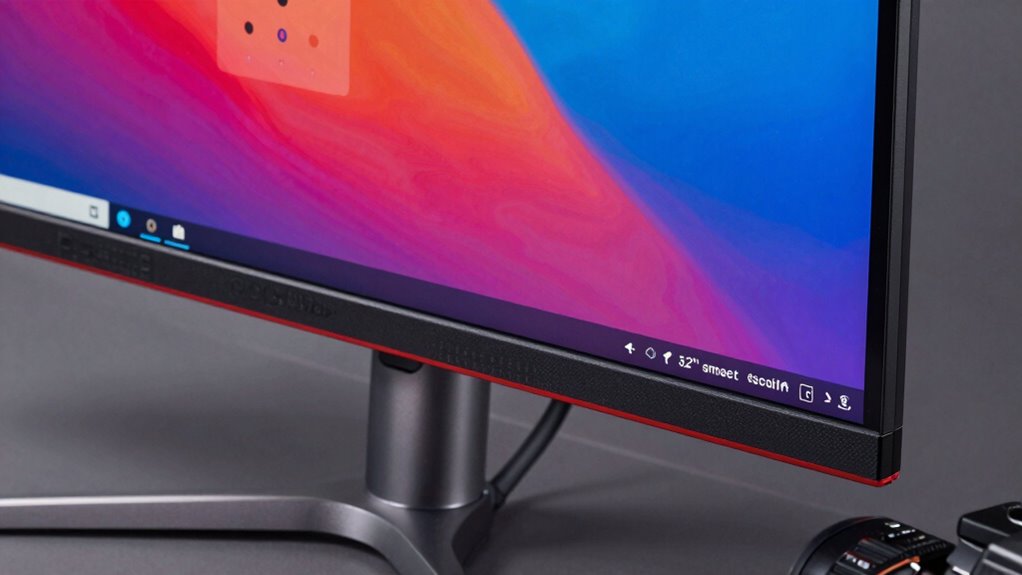

When choosing a 32” 4K monitor, focus on proper scaling settings to reduce eye strain. Adjust the display scaling or text size so that content appears clear and legible without causing pixelation or blurry visuals. Use recommended DPI and font sizes to keep text comfortable for long use. Features like high refresh rates, flicker-free screens, and calibration options also help. Continue exploring to learn more about optimizing your monitor setup for maximum eye comfort.
Key Takeaways
- Ensure proper display scaling (e.g., 125%-150%) to maintain sharp text clarity and reduce eye strain with 4K monitors.
- Adjust text size and UI scaling settings in your operating system for comfortable reading without pixelation.
- Use high-resolution calibration tools to optimize clarity and prevent blurry or pixelated visuals that cause fatigue.
- Select a monitor with adjustable scaling options to fine-tune content size for your workspace and reduce visual effort.
- Combine scaling settings with brightness, contrast, and blue light filters for an ergonomic setup that minimizes eye fatigue.
Why Choosing the Right 4K Monitor Matters for Your Eyes
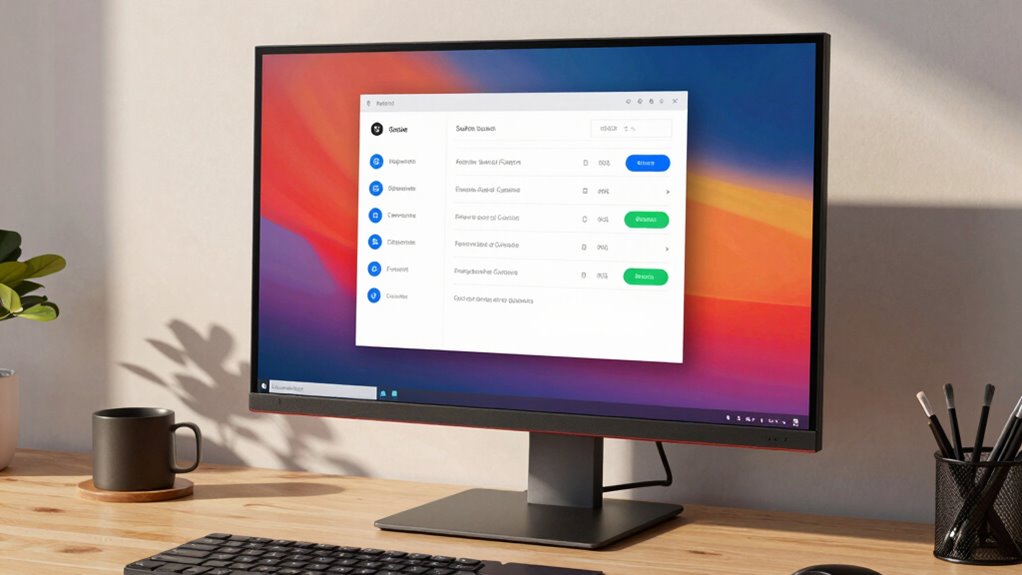
Choosing the right 4K monitor is essential because it can considerably impact your eye health during extended use. Blue light emitted from screens can cause eye fatigue and disrupt your sleep patterns, making it crucial to select a monitor with blue light reduction features. When you choose a monitor that minimizes blue light exposure, you reduce strain on your eyes, especially during long hours of work or gaming. Eye fatigue can lead to headaches and discomfort, lowering your productivity and overall well-being. Look for models with built-in blue light filters or adjustable brightness settings to protect your eyes. Incorporating cycling confidence and gear care tips can help you stay comfortable and maintain focus during long sessions. Additionally, choosing a monitor with ergonomic design features can promote better posture and reduce physical strain during extended use. Using an adjustable monitor stand and understanding screen distance recommendations can further help prevent long-term eye issues, ensuring you work comfortably and healthily. Proper screen calibration can also enhance your viewing comfort and reduce eye strain over time. Regular breaks and eye exercises are also beneficial for maintaining eye health during prolonged screen time.
How Screen Resolution Impacts Eye Comfort
Higher screen resolution can considerably enhance eye comfort by delivering sharper images and smoother text, reducing the need for constant squinting or focusing effort. When your monitor has a higher resolution, your eyes don’t strain to distinguish fine details or blurry edges, which helps prevent fatigue. Additionally, a higher resolution can decrease the amount of blue light emitted, since clearer images often require less brightening. This reduction lowers eye strain and minimizes potential discomfort caused by prolonged exposure to blue light. Keep in mind that a well-calibrated, high-resolution display allows your eyes to process content more naturally, reducing the effort needed to read or view visuals. Proper calibration can further optimize visual comfort during extended use. Incorporating ergonomic design principles into your monitor setup can also support long-term eye health. Furthermore, selecting a display with appropriate contrast ratios enhances overall viewing comfort by providing better differentiation between light and dark areas, easing visual strain during prolonged use. A monitor with adjustable brightness settings can help tailor the display to your ambient lighting conditions, further reducing eye fatigue. Overall, choosing a monitor with an appropriate screen resolution can notably improve your visual comfort during extended use.
Understanding Display Scaling and Text Clarity
While a high-resolution display improves image sharpness and reduces eye strain, it can also introduce scaling challenges. When scaling isn’t properly managed, text may appear blurry or pixelated, making reading uncomfortable. To guarantee clarity, you should calibrate your display’s color settings, which enhances contrast and makes text easier to distinguish. Proper hardware ergonomics also play a role, as positioning your monitor at eye level minimizes the need for excessive scaling adjustments. When text appears fuzzy or difficult to read, it’s often due to improper scaling or poor color calibration. Understanding how display scaling affects text clarity helps you make better choices when selecting a monitor, ensuring that images are sharp, colors are accurate, and your eyes stay comfortable during extended use. Additionally, awareness of visual ergonomics can help you optimize your viewing experience and prevent visual fatigue during long work sessions. Paying attention to monitor calibration settings ensures optimal clarity and reduces strain over time. Moreover, being aware of software scaling settings can help you troubleshoot display issues more effectively.
How to Adjust Text Scaling for Comfortable Reading
Adjusting your text scaling settings is essential for comfortable reading on any monitor. Proper font size and text zoom make it easier to read without straining your eyes. To optimize this, follow these steps:
- Access display settings on your operating system.
- Locate the text scaling or font size option.
- Increase or decrease the text zoom to find a comfortable level.
- Preview the changes and adjust until your text is clear and easy to read.
Additionally, consider Free Floating techniques to ensure your display setup promotes eye health and reduces strain. Being mindful of monitor ergonomics can further help prevent eye fatigue and improve overall comfort during extended use, especially when considering indoor air quality factors that influence overall comfort. Maintaining a comfortable viewing environment that supports ergonomic monitor placement can significantly decrease eye strain over time. Furthermore, optimizing monitor calibration can enhance image clarity and reduce eye effort during prolonged sessions.
Setting DPI and Font Sizes for Better Visual Comfort
To achieve better visual comfort, setting the right DPI (dots per inch) and font sizes is crucial, as they directly affect how easily you can read on your monitor. Adjusting DPI ensures that elements appear sharp and appropriately scaled, reducing eye strain. Proper font readability depends on selecting sizes that aren’t too small or large, enabling effortless reading over extended periods. Additionally, color calibration plays a role in reducing eye fatigue by ensuring accurate colors and minimizing glare, which complements ideal DPI and font size settings. When you fine-tune these settings, you create a balanced display that minimizes eye strain and enhances overall comfort. Regularly updating your monitor settings helps maintain this optimal balance over time. Furthermore, being aware of visual ergonomics can help you optimize your workspace for even better comfort and health. Maintaining an ergonomic monitor position also helps in reducing neck and eye fatigue during long viewing sessions. Incorporating proper lighting into your environment can further reduce glare and eye strain, making your overall setup more comfortable.
Best Brightness Settings to Reduce Eye Strain
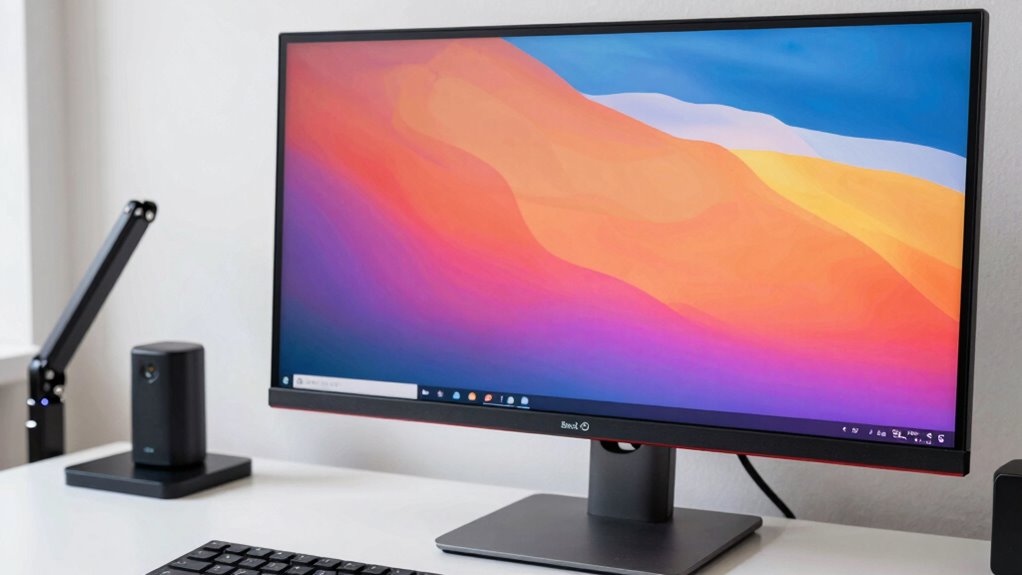
Optimizing your monitor’s brightness setting can substantially reduce eye strain during long periods of use. To achieve this, consider these tips:
Adjust your monitor’s brightness to reduce eye strain and enhance comfort during long hours.
- Match brightness with ambient light to prevent glare and discomfort.
- Use color calibration tools to ensure accurate and comfortable visuals.
- Adjust brightness to avoid high contrast that can tire your eyes.
- Maintain proper monitor ergonomics by positioning your screen at eye level, reducing unnecessary eye movement.
- Incorporate inclusive design principles by selecting monitor settings that accommodate diverse visual needs and preferences, promoting comfort for all users.
A well-calibrated brightness level minimizes eye fatigue and enhances overall comfort. Remember, overly bright or dim screens strain your eyes more, so find a balanced setting. Incorporating good monitor ergonomics and consistent color calibration guarantees your eyes stay comfortable, especially during extended work sessions. Proper brightness is a simple yet essential step toward preventing eye strain.
How Contrast and Color Temperature Affect Eye Comfort
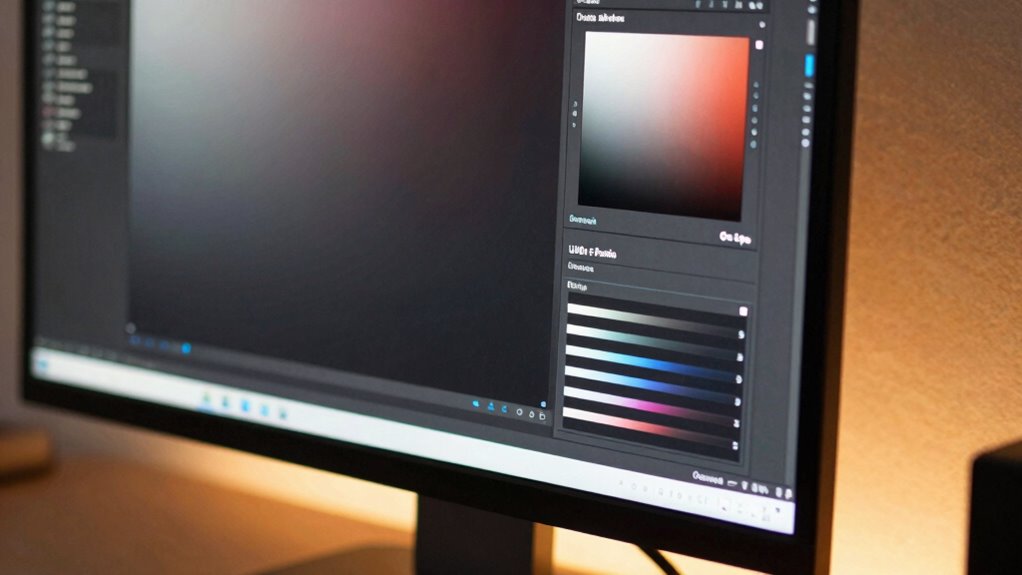
Contrasts and color temperature play a crucial role in how comfortable your eyes feel during extended screen time. High contrast can make text and images clearer, reducing strain from squinting or focusing too hard. However, too much contrast may cause discomfort, so finding a balanced level helps your eyes relax. Color temperature influences the overall warmth or coolness of the display; warmer tones are gentler on your eyes, especially in low-light settings. The contrast impact and color temperature together determine how well your eyes can process information without fatigue. Adjusting these settings to suit your environment and personal preferences can considerably improve comfort. Proper contrast and color temperature help you work longer without experiencing unnecessary eye strain.
Using Blue Light Filters to Minimize Eye Fatigue
Blue light wavelengths from screens can cause eye strain over time, but using blue light filters helps reduce this fatigue. Adjusting your screen brightness also plays a key role in making your eyes more comfortable. Combining these techniques can make a noticeable difference during long hours of screen use.
Blue Light Wavelengths
Since blue light has shorter wavelengths and higher energy, it can contribute to eye strain and fatigue after prolonged screen time. Understanding blue light wavelengths helps you choose better monitors and filters. To minimize eye discomfort, consider these tips:
- Use blue light filters with adjustable wavelength settings to target harmful blue light.
- Opt for monitors with reduced blue light emissions, especially in the 415-455 nm range.
- Check for flicker-free screens to avoid screen flicker that amplifies eye strain.
- Limit exposure during late hours to reduce blue light’s impact on your sleep cycle.
Screen Brightness Adjustments
Adjusting your screen brightness is a simple yet effective way to reduce eye fatigue, especially when combined with blue light filters. Proper brightness levels help match your monitor to ambient lighting, preventing your eyes from constantly adjusting between too bright or too dim screens. To optimize comfort, make sure your display is color calibrated for accurate tones, which minimizes strain caused by color inconsistencies. Consider the lighting in your environment—brighter rooms may require higher brightness, while darker spaces benefit from lower settings. Use automatic brightness adjustments if available, or manually tweak until the screen feels comfortable for extended use. Combining these adjustments with blue light filters can considerably lessen eye fatigue, making long periods in front of the monitor more comfortable and less straining.
How Night Mode Settings Improve Visual Comfort
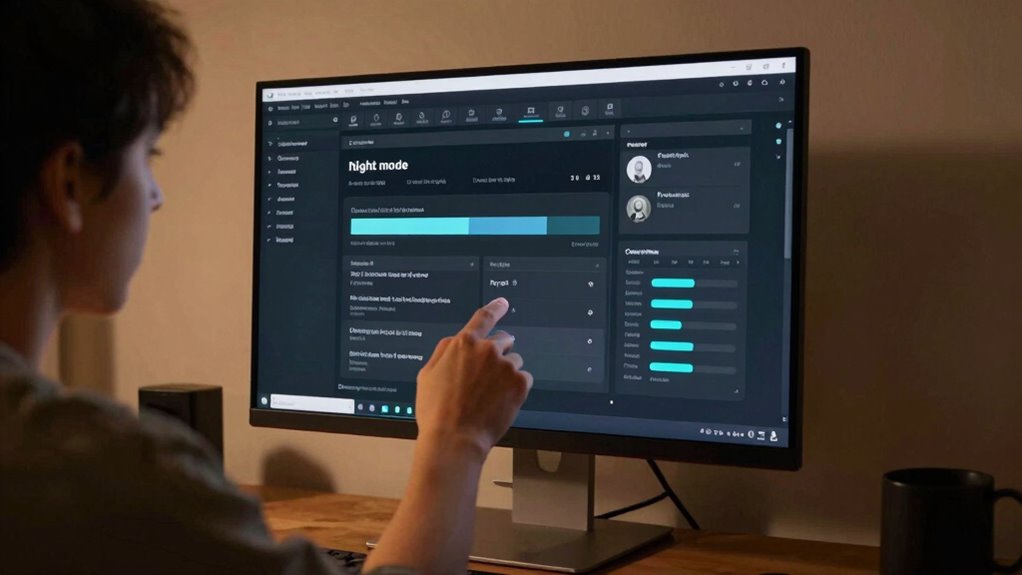
Night mode settings markedly reduce eye strain by decreasing the amount of bright, harsh light emitted from your monitor. They adjust the color temperature to warmer tones, easing your eyes during late hours. Additionally, night mode often features flicker free displays, which eliminate screen flickering that can cause fatigue. To optimize your experience, consider these tips:
- Enable night mode during evening hours to promote relaxation.
- Adjust the color temperature for a warmer, more comfortable hue.
- Use flicker free displays to prevent eye fatigue caused by flickering.
- Combine night mode with other scaling settings for maximum comfort during prolonged use.
These adjustments make your screen easier to look at, reducing discomfort and supporting healthier eye habits.
Adjusting Gamma for a Natural Screen Appearance
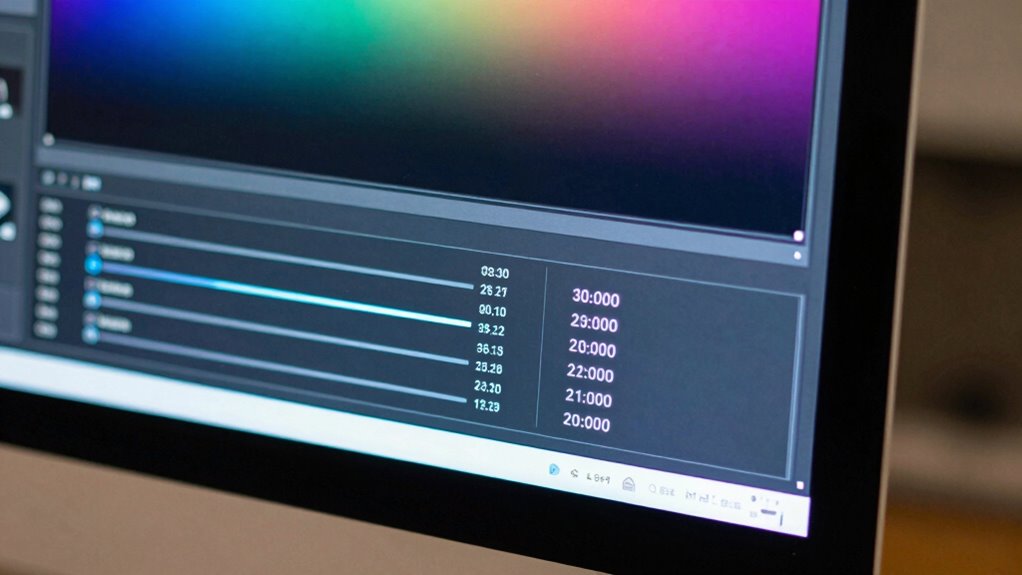
To achieve a natural screen appearance, you need to calibrate your gamma settings carefully. Recognizing the right color balance on your display is essential for accurate visuals. Once you understand these adjustments, your monitor will deliver more lifelike and consistent images.
Calibrating Gamma Settings
Calibrating gamma settings is essential for achieving a natural and accurate screen appearance. Proper gamma adjustment ensures your display shows colors correctly and maintains proper contrast, reducing eye strain. To fine-tune your gamma:
- Access your monitor’s calibration menu or use dedicated calibration software.
- Use test images or built-in tools to evaluate brightness and contrast.
- Adjust the gamma slider until grayscale and color gradients appear smooth without harsh transitions.
- Confirm the changes by viewing familiar images to ensure natural color calibration.
Recognizing Screen Color Balance
Achieving a natural screen appearance depends on recognizing and adjusting your monitor’s color balance, which is closely tied to gamma settings. Proper color calibration ensures that the screen hue appears accurate and consistent, preventing unnatural tints or color shifts. To recognize if your screen color balance is off, observe how natural images and skin tones look—any overly warm or cool tones may indicate a need for adjustment. You can use built-in calibration tools or software to fine-tune your display’s color calibration, aligning the screen hue with real-world colors. Adjusting gamma helps enhance this process, making subtle color differences more visible and accurate. Regularly checking and refining your monitor’s color balance promotes a more comfortable viewing experience and reduces eye strain caused by misleading or imbalanced hues.
Anti-Glare Coatings and Screen Filters to Reduce Reflections
Reflections and glare from ambient light can make it difficult to see your screen clearly, causing eye strain and reducing productivity. To combat this, consider monitors with anti glare coatings or add screen filters. These solutions help minimize reflected light and improve visibility. Here are some options to consider:
- Choose monitors with built-in anti glare coatings for a seamless reduction of reflections.
- Use removable or matte screen filters that attach easily and block glare effectively.
- Adjust your monitor’s brightness and contrast to reduce eye fatigue.
- Position your monitor to avoid direct light sources and minimize reflections on the screen.
Implementing these strategies helps protect your eyes and enhances your viewing comfort during long work sessions.
Proper Monitor Placement for Ergonomic Comfort
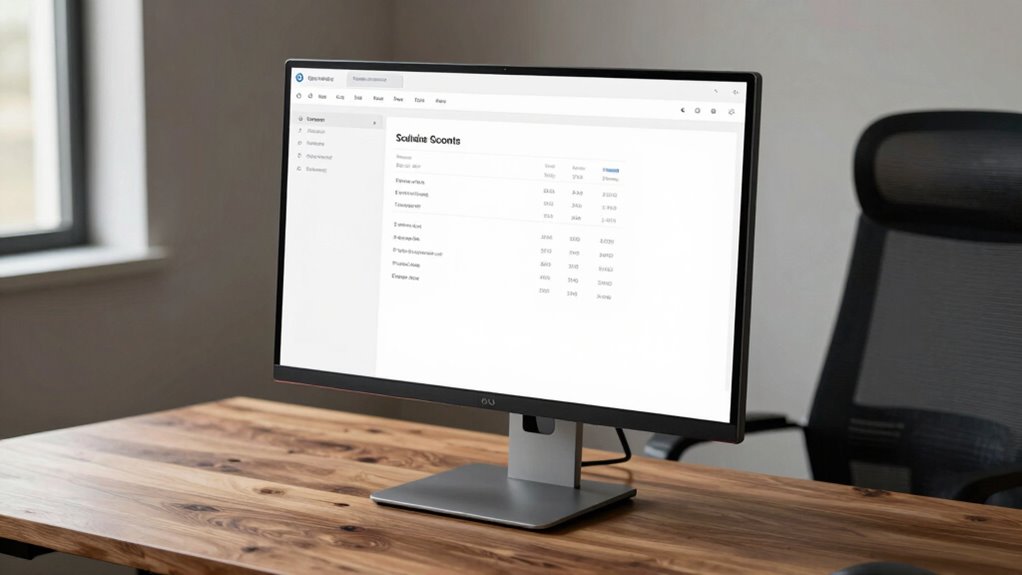
To stay comfortable during long work sessions, you need to position your monitor correctly. Make sure the top of the screen is at eye level, and keep it at an arm’s length away. Adjust your desk height so your shoulders stay relaxed and your posture remains natural.
Eye Level Alignment
Position your monitor so that the top of the screen is at or just below eye level. This helps maintain an ergonomic posture, reducing neck and eye strain. To guarantee proper alignment, consider these steps:
- Adjust your monitor height so your eyes look slightly downward when viewing the center of the screen.
- Keep the monitor directly in front of you to avoid twisting your neck.
- Ensure ambient lighting minimizes glare without creating harsh reflections on the screen.
- Use a stand or adjustable mount to fine-tune height and tilt for comfort.
Proper eye level alignment keeps your head and neck in a neutral position, easing muscle tension. Adjusting your monitor in relation to ambient lighting also prevents the need to lean forward or squint, promoting better ergonomic posture overall.
Optimal Screen Distance
Maintaining the right distance between your eyes and the monitor is essential for ergonomic comfort and reducing eye strain. The ideal screen distance depends largely on your monitor’s size and bezel design. For larger screens, sit about an arm’s length away—typically 20 to 30 inches—to prevent neck and eye fatigue. Smaller screens can be positioned slightly closer without discomfort. A monitor with slim bezels allows you to sit closer without feeling cramped, enhancing focus and minimizing unnecessary head movement. Make sure the monitor is directly in front of you, with your eyes level or slightly below the top edge. Proper placement helps reduce eye strain, improves posture, and ensures you’re not leaning forward or backward excessively. Adjust your distance based on comfort and screen size for the best ergonomic setup.
Proper Desk Height
Ensuring your monitor is set at the correct desk height is key to achieving ergonomic comfort and preventing strain. To do this effectively:
- Adjust your adjustable desk so your monitor’s top aligns with your eye level.
- Keep your ergonomic keyboard at a height that allows your elbows to stay close to your sides, forming about a 90-degree angle.
- Confirm your monitor is about an arm’s length away to reduce eye strain.
- Maintain a slight downward tilt of the monitor to promote a natural neck position.
How to Set the Right Viewing Distance to Prevent Eye Strain

To prevent eye strain, setting the correct viewing distance is essential. Sit comfortably in an ergonomic chair so your eyes are level with the top of your monitor. Keep the monitor about an arm’s length away, roughly 20-30 inches, depending on your vision. This distance reduces eye strain and minimizes the need to squint or lean forward. Make certain your ambient lighting isn’t too bright or causing glare on the screen, which can force your eyes to work harder. Avoid reflections by positioning your monitor perpendicular to windows or light sources. Regularly check your distance and adjust if you notice discomfort, headaches, or blurred vision. Proper positioning, combined with good lighting and ergonomic seating, helps maintain healthy eye habits and prevents strain over long periods.
Benefits of Adjustable Stands and Mounts for Your Monitor
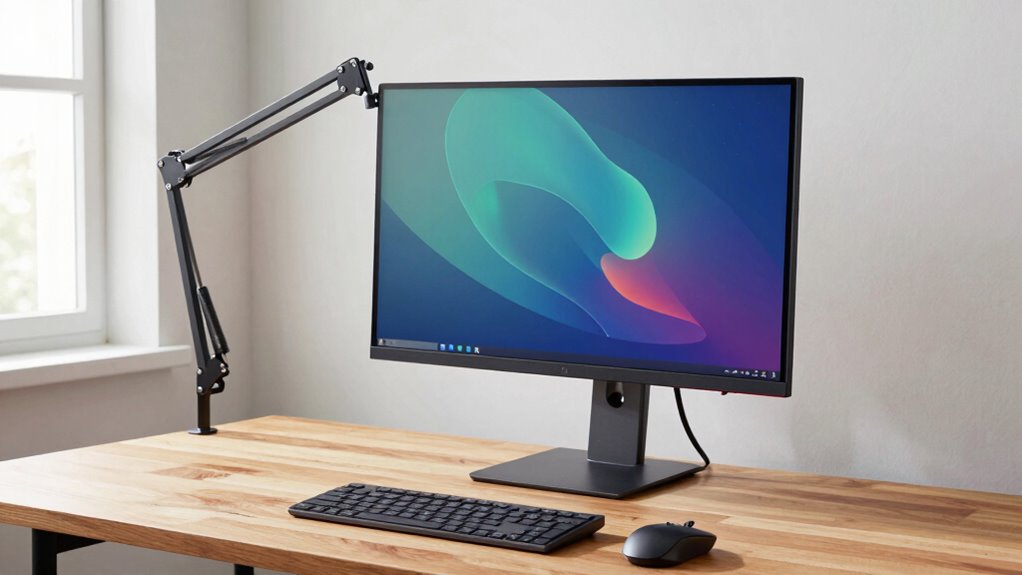
Adjustable stands and mounts help you find the most comfortable and ergonomic position for your monitor. They let you customize the height, tilt, and angle to reduce strain and improve posture. With flexible viewing options, you can work longer and more comfortably throughout the day.
Ergonomic Comfort Enhancement
Using adjustable stands and mounts for your monitor can considerably boost your ergonomic comfort by allowing you to customize the screen height, tilt, and angle. This flexibility helps reduce neck and eye strain, making long work sessions more comfortable. To maximize benefits, consider these ergonomic accessories:
- Fine-tune your monitor’s position to match your eye level.
- Use proper workspace lighting to minimize glare and reflections.
- Incorporate keyboard risers or wrist supports to improve posture.
- Adjust the monitor’s angle regularly to prevent awkward neck movements.
These adjustments create a more natural, comfortable working environment. When combined with thoughtful workspace lighting, adjustable mounts help you maintain proper posture and reduce fatigue, ultimately enhancing your overall ergonomic setup and protecting your eyes.
Flexible Viewing Angles
Flexible viewing angles offered by adjustable stands and mounts give you the freedom to find the perfect screen position, no matter your workspace setup. An adjustable arm allows you to easily tilt, swivel, or raise your monitor, reducing neck strain and improving comfort. A swivel base lets you turn the screen side to side, making it simple to share content or adjust for different tasks. With these features, you can switch between sitting and standing positions effortlessly, maintaining proper eye level and reducing fatigue. Whether you’re working at a desk or in a shared space, adjustable stands and mounts help you customize your viewing experience. This flexibility promotes better posture, minimizes eye strain, and guarantees the best visibility throughout your workday.
Setting Up Multiple Monitors Without Causing Eye Fatigue
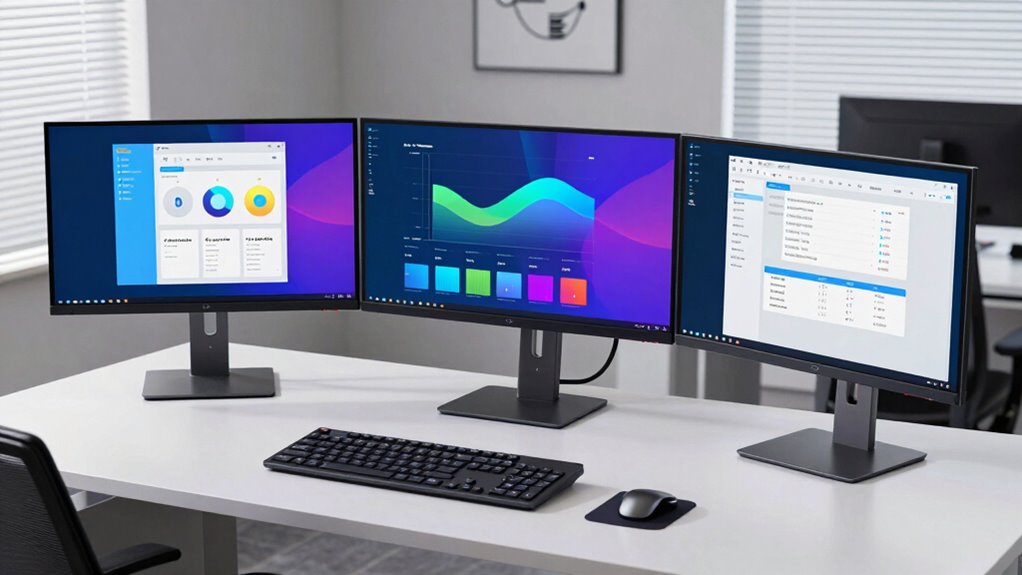
Setting up multiple monitors can boost productivity, but if you don’t position them correctly, you risk eye fatigue and discomfort. To prevent this, follow these steps:
- Align the monitors at the same height, ensuring the top edges are level.
- Place them close enough to avoid excessive head turning.
- Adjust each monitor’s brightness and contrast for consistent viewing.
- Use monitor calibration tools to achieve accurate color calibration, reducing eye strain caused by color inconsistencies.
Additionally, guarantee the screens are angled slightly inward for a natural viewing position. Proper positioning minimizes eye movement and glare, making prolonged use more comfortable. Regularly calibrate your monitors to maintain ideal color accuracy and reduce eye fatigue, especially if you work with detailed visuals or color-sensitive tasks.
How to Configure Windows and Mac Display Scaling Settings
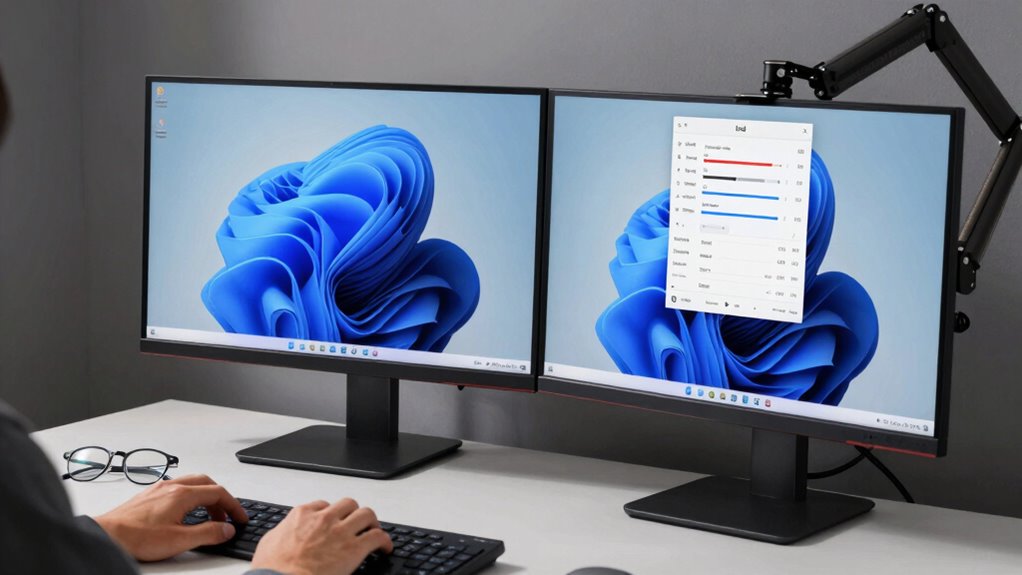
To get the most comfortable viewing experience, you’ll want to adjust your display resolution and text size. On Windows and Mac, these settings let you customize how content appears on your screen. Let’s explore how to fine-tune these options for ideal readability and clarity.
Adjusting Display Resolution
Adjusting your display resolution guarantees that images and text appear sharp and appropriately sized on your screen. To optimize your viewing experience, follow these steps:
- Open your display settings on Windows or Mac.
- Select the recommended resolution for your monitor to ensure clarity.
- Adjust the display refresh rate to reduce flicker and eye strain.
- Perform color calibration to enhance color accuracy and reduce eye fatigue.
Choosing the right resolution helps prevent pixelation and blurry visuals, while proper refresh rate minimizes flickering. These adjustments make your screen easier to read and view for extended periods. Remember, a well-calibrated display not only improves color accuracy but also contributes to a more comfortable viewing experience overall.
Customizing Text Size
Customizing text size is essential for creating a comfortable viewing experience, especially if you find the default display settings too small or too large. By adjusting font customization options, you can improve text readability and reduce eye strain. On Windows, open the Display Settings and select “Scale and Layout” to increase or decrease the size of text, apps, and other items. On Mac, go to System Preferences > Displays, then choose the “Scaled” option to fine-tune text size for better readability. These scaling adjustments make fonts more accessible, whether you prefer larger text for easier reading or smaller text to fit more content on the screen. Properly configuring display scaling ensures a more comfortable, less fatiguing visual experience throughout your work or leisure time.
Tips for Calibrating Your Monitor for Accurate Colors

Calibrating your monitor is essential for achieving true-to-life colors, especially if you work in photography, design, or any color-critical field. Proper color calibration guarantees display accuracy, making your work look consistent across devices. To get started:
- Use a hardware calibration tool for precise color adjustments.
- Access your monitor’s settings menu to set the correct color temperature, ideally 6500K.
- Adjust the brightness and contrast to neutral levels, avoiding overly bright displays.
- Run calibration software to fine-tune gamma and color profiles, ensuring consistent display accuracy.
Regular calibration maintains color integrity over time, preventing drifts that can distort your work’s fidelity. Follow these steps to achieve reliable color accuracy and ensure your monitor displays colors as intended.
Essential Features to Look for in Eye-Friendly 4K Monitors
When choosing an eye-friendly 4K monitor, prioritizing key features can make a significant difference in reducing eye strain and enhancing comfort during long viewing sessions. Look for excellent color calibration capabilities to ensure consistent, accurate colors, which can diminish eye fatigue caused by fluctuating hues. Adjustable monitor mounting options allow you to customize your setup, positioning the screen at eye level and minimizing neck and eye strain. A monitor with flicker-free technology and low blue light settings further protects your eyes during extended use. Additionally, an anti-glare screen reduces reflections, making it easier to focus without squinting. Combining these features ensures your workspace is ergonomic and comfortable, helping you work or enjoy media without unnecessary eye discomfort.
Best Calibration Tools for Clear, Comfortable Displays
To achieve a truly comfortable and accurate display, choosing the right calibration tools is essential. For monitors with curved screens or portable display options, proper calibration guarantees consistent color and brightness. Consider these tools:
- Colorimeters – Ideal for precise calibration of monitors with curved screens, offering accurate color adjustments.
- Spectrophotometers – Provide high-accuracy calibration, perfect for professional work or high-end portable displays.
- Software Calibration Tools – Complement hardware devices and are suitable for quick adjustments on the go.
- All-in-One Calibration Devices – Combine hardware and software for easy, reliable calibration of portable displays and curved monitors.
Using these tools helps reduce eye strain and ensures your display remains clear and comfortable during prolonged use.
Recognizing Signs of Eye Strain and When to Rest
You might notice your eyes feeling tired, dry, or sore after long screen time. Recognizing these signs early helps prevent discomfort from worsening. Remember to take regular breaks to keep your eyes healthy and focused.
Common Symptoms Emerge
Have you noticed your eyes feeling tired or strained after hours of screen time? If so, you might be experiencing common symptoms of eye strain. Watch out for signs like:
- Headaches or eye discomfort after prolonged use
- Blurred vision or difficulty focusing
- Dry or watery eyes, often caused by reduced blinking
- Increased sensitivity to screen glare or ambient lighting
These symptoms can be worsened by excessive screen glare or poor ambient lighting conditions. Recognizing these early signs helps you take timely breaks and adjust your monitor settings. If you notice these symptoms, it’s a good idea to rest your eyes, reduce glare, and optimize lighting to prevent further discomfort. Staying alert to these signs ensures you maintain comfortable, strain-free screen time.
Recognizing Visual Discomfort
Recognizing visual discomfort early can help prevent more serious eye issues. If you notice your color perception becomes dull or distorted, it’s a sign your eyes are strained. Eye fatigue often manifests as dryness, itchiness, or a gritty feeling, especially after long screen sessions. You might also experience blurred vision or difficulty focusing, indicating your eyes are overworked. Pay attention to these signs; they signal that your eyes need a break or adjustments to your monitor’s settings. Ignoring discomfort can lead to headaches or worsening vision problems over time. By staying alert to changes in color perception and signs of eye fatigue, you can take proactive steps to protect your eye health and maintain comfort during extended screen use.
When To Take Breaks
Knowing when to take a break is essential for preventing eye strain from becoming more serious. Pay attention to these signs to guarantee proper eye relaxation:
- You notice blurred vision or difficulty focusing.
- Your eyes feel dry, gritty, or irritated.
- You experience headaches or tension around your forehead.
- You feel fatigued or notice slight double vision.
If any of these occur, step away from your ergonomic desk and look away from the screen for a few minutes. Incorporate eye relaxation techniques, like blinking frequently or focusing on distant objects. Regular breaks help reduce strain, especially during long work sessions. Remember, taking short, frequent pauses keeps your eyes healthy and prevents discomfort from escalating. Stay mindful of these signs and prioritize your eye health.
The 20-20-20 Rule and Other Eye Care Practices
To protect your eyes during long hours of screen time, following the 20-20-20 rule is highly effective. Every 20 minutes, look at something 20 feet away for at least 20 seconds to reduce eye strain. Additionally, guarantee your workspace has proper ambient lighting to minimize glare and reflections on your monitor. An ergonomic keyboard can help you maintain a comfortable posture, preventing neck and eye discomfort. Adjust your monitor’s brightness and contrast to match ambient lighting, avoiding harsh or dim settings. Taking regular breaks, combined with these practices, helps your eyes relax and stay healthy. Incorporating the 20-20-20 rule into your routine is simple and proven to lessen fatigue, especially during extended screen use.
How Refresh Rate and Response Time Influence Eye Comfort
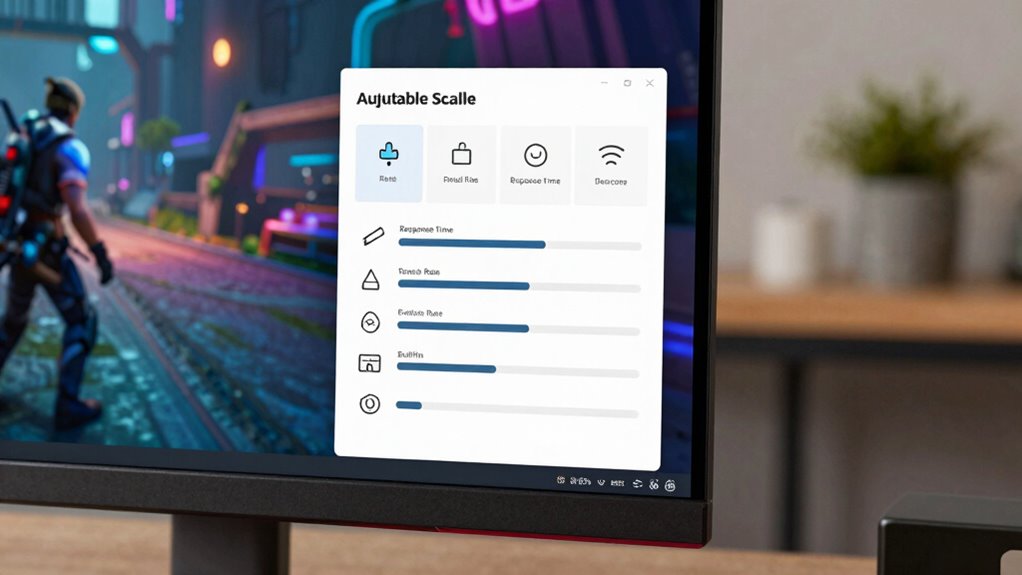
Since your eyes constantly adjust to the flickering and motion on your screen, the refresh rate and response time of your monitor play a critical role in eye comfort. A higher refresh rate reduces flickering, making visuals smoother and less straining. Meanwhile, a lower response time minimizes motion blur, preventing your eyes from constantly refocusing. To optimize comfort, consider these points:
Choosing a monitor with a higher refresh rate and lower response time enhances eye comfort during extended screen use.
- Choose a monitor with at least a 75Hz refresh rate for smoother motion.
- Look for a response time of 5ms or less to reduce blur.
- Higher refresh rates decrease flickering, easing eye fatigue.
- Faster response times ensure quick pixel changes, lessening eye strain during fast-paced activities.
Balancing these factors helps your eyes stay comfortable during prolonged screen use, reducing fatigue and discomfort.
Using Screen Brightness Sensors for Automatic Adjustment
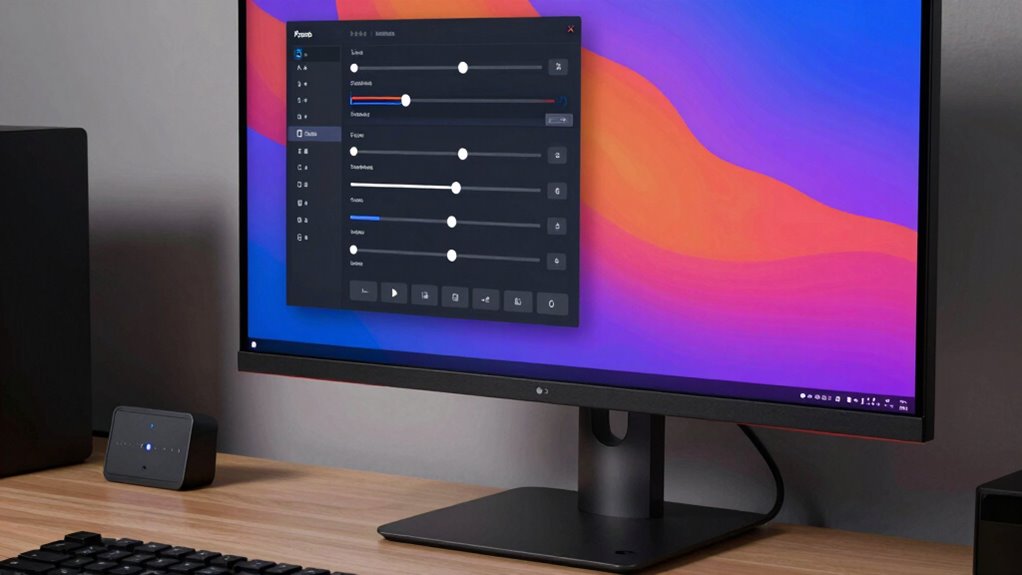
Adjusting your monitor’s brightness manually can be inconvenient and disruptive, especially when moving between different lighting environments. Automatic brightness uses sensors to detect ambient light and adjust the screen’s brightness accordingly, helping reduce eye strain. To guarantee this feature works effectively, proper sensor calibration is essential. When calibrated correctly, the sensor accurately reads your environment, providing seamless adjustments that keep your display comfortable without constant manual tweaks. Many modern monitors come with built-in light sensors, making automatic brightness a convenient option. Keep in mind, though, that sensor calibration might require fine-tuning through your monitor’s settings or software to optimize performance in your specific lighting conditions. Using automatic brightness with well-calibrated sensors simplifies maintaining consistent screen comfort throughout your day.
Top Monitors With Built-In Eye Care Features
If you’re looking for monitors that prioritize your eye health, several models come with built-in eye care features designed to reduce strain and enhance comfort during long hours of use. These monitors often include features like flicker-free screens, blue light filters, and automatic brightness adjustments. To help you choose, consider these top options:
Prioritize eye health with monitors featuring flicker-free screens, blue light filters, and automatic brightness adjustments.
- Monitor with advanced color calibration for accurate visuals.
- Screen with a high refresh rate to minimize flickering and eye fatigue.
- Models that automatically adjust brightness based on ambient lighting.
- Displays that combine blue light reduction with flicker-free technology for ideal comfort.
These features work together to reduce eye strain, making your long work sessions more comfortable and less tiring.
Comparing Popular 4K Monitors for Eye-Friendly Scaling
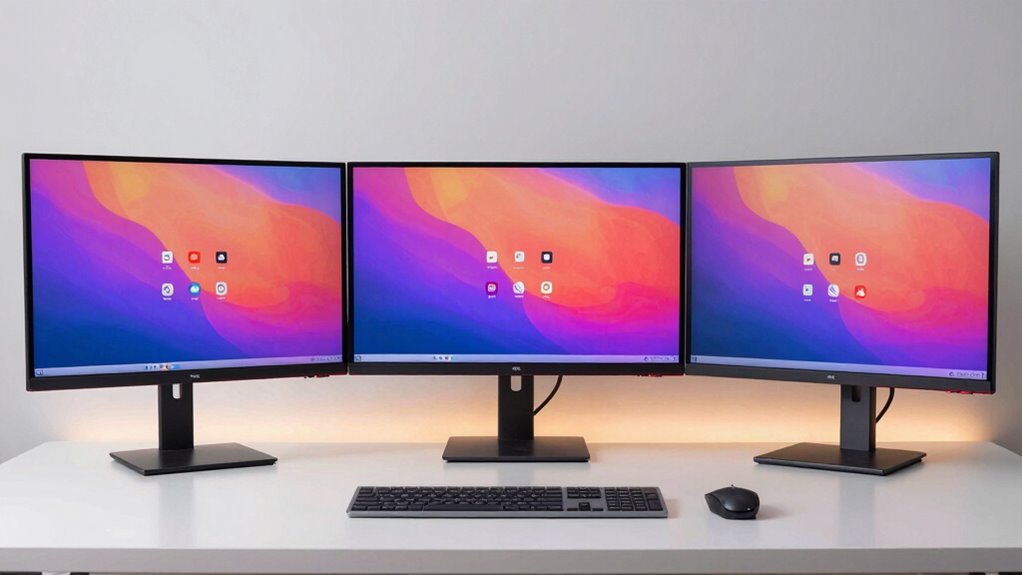
When choosing a 4K monitor for eye-friendly scaling, it’s important to compare models that prioritize sharp visuals and comfortable readability. Look for monitors with excellent color calibration, which guarantees consistent, accurate colors that reduce eye strain during long sessions. A higher refresh rate, ideally 60Hz or above, contributes to smoother visuals, minimizing flicker and eye fatigue. Some popular options include the Dell UltraSharp U2723QE, known for precise color calibration, and the LG 27UN850-W, which offers a good balance of sharpness and refresh rate. These monitors often feature scaling features that maintain clarity at high resolutions, helping your eyes stay comfortable. By focusing on color accuracy and refresh rate, you can select a 4K monitor that supports healthier, more comfortable viewing experiences.
How to Test and Fine-Tune Your Monitor Settings
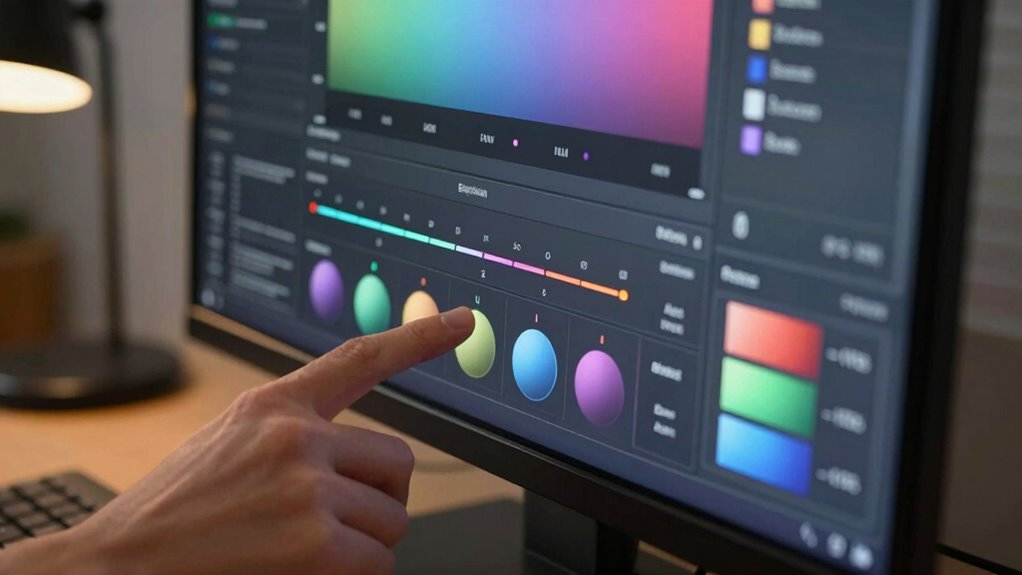
To guarantee your monitor delivers the best possible image quality and reduces eye strain, it’s essential to test and fine-tune its settings accurately. Start by adjusting brightness and contrast to match ambient lighting, lowering glare and eye fatigue. Next, perform color calibration to ensure accurate color reproduction, which minimizes eye strain caused by unnatural hues. Then, evaluate monitor ergonomics by adjusting height, tilt, and distance for ideal comfort. Finally, use built-in test patterns or calibration tools to refine gamma and white balance, ensuring consistent image quality. Regularly revisiting these steps helps maintain perfect display conditions, reducing eye fatigue and improving your overall viewing experience. Proper fine-tuning ensures your monitor supports healthy eye habits and enhances long-term comfort.
Common Mistakes That Cause Eye Strain on 4K Displays
One common mistake that causes eye strain on 4K displays is neglecting proper scaling and resolution settings. When you don’t calibrate your monitor correctly, text and images may appear too small or blurry, forcing your eyes to work harder. This can lead to fatigue and discomfort over time. Additionally, ignoring blue light wavelengths can increase eye strain, especially during long periods of use. Adjusting your monitor’s calibration helps optimize color accuracy and sharpness, reducing eye fatigue. Not setting the display to the native resolution of your monitor can cause pixelation and distortion, further straining your eyes. Always ensure your scaling and resolution are correctly configured to match your monitor’s specifications, and consider blue light filters as part of your eye health strategy.
Troubleshooting Display and Scaling Issues Quickly
When you encounter display or scaling problems, start by adjusting your display scaling settings to make sure everything appears correctly. Next, check if your graphics driver software is up to date, as outdated drivers can cause visual issues. Keeping these elements in check helps resolve most display and scaling troubles quickly.
Adjust Display Scaling Settings
Adjusting display scaling settings can resolve many visual issues that arise when interface elements appear too small or too large. Proper scaling improves monitor ergonomics and ensures comfortable viewing. To optimize your display:
- Access display settings on your device.
- Adjust the scaling percentage to enlarge or reduce interface elements.
- Check color calibration to ensure accurate, eye-friendly colors.
- Test different scaling levels until you find the balance that minimizes eye strain and enhances readability.
Small adjustments can make a significant difference in reducing eye fatigue. Keep in mind, consistent scaling supports better monitor ergonomics and helps prevent visual discomfort during long usage. Fine-tuning these settings ensures your workspace remains comfortable and visually optimized.
Update Graphics Driver Software
Updating your graphics driver software is a key step in resolving display and scaling issues quickly. Outdated drivers can cause blurry images, flickering, or improper scaling, leading to eye strain. To fix this, visit your graphics card manufacturer’s website or use device manager to update your drivers. While you’re at it, ensure your monitor is clean—dust and fingerprints can affect display quality. Good cable management also prevents signal interference, which can distort images or cause flickering. Here’s a quick reference:
| Action | Benefit |
|---|---|
| Update Graphics Driver | Fixes display glitches and scaling errors |
| Monitor Cleaning | Improves clarity and reduces eye strain |
| Cable Management | Ensures stable signal and clear visuals |
Emerging Technologies for Eye-Friendly 4K Monitors
Emerging technologies are making 4K monitors more eye-friendly by reducing strain and enhancing comfort during prolonged use. These advancements target issues like eye fatigue and color calibration, ensuring a better viewing experience.
- Blue Light Filtering – Reduces eye fatigue by minimizing blue light exposure, making long sessions more comfortable.
- Adaptive Brightness – Automatically adjusts screen brightness based on ambient light, decreasing eye strain.
- Advanced Color Calibration – Ensures accurate colors, reducing the need for constant adjustments and helping your eyes adapt smoothly.
- Flicker-Free Technology – Eliminates screen flickering, which can cause eye fatigue and discomfort over time.
These innovations help you work or enjoy content longer without compromising eye health or visual clarity.
Tips for Maintaining Eye Health During Long Screen Sessions
To protect your eyes during long screen sessions, start by adjusting your monitor’s brightness to match your environment. Remember to follow the 20-20-20 rule: every 20 minutes, look at something 20 feet away for at least 20 seconds. Additionally, position your screen at eye level and at an arm’s length to reduce strain.
Adjust Brightness Settings
Adjusting your screen brightness to match your environment helps reduce eye strain during long sessions. Proper brightness levels prevent your eyes from working harder to see, especially when ambient lighting varies. To maximize your display:
- Use auto-brightness or manually set brightness to match your room’s lighting.
- Ensure your monitor’s color calibration is accurate, reducing strain caused by unnatural hues.
- Adjust the screen refresh rate to ensure smooth visuals, easing eye fatigue.
- Regularly update your monitor’s settings to maintain ideal contrast and prevent glare.
Balancing brightness with your environment and color calibration helps your eyes stay comfortable. Keeping these settings in check minimizes eye fatigue during extended use, making your screen time healthier and more productive.
Follow the 20-20-20 Rule
Long periods of staring at a screen can cause eye strain, but you can protect your vision by following the 20-20-20 rule. Every 20 minutes, look at something 20 feet away for at least 20 seconds. This simple habit relaxes your eye muscles and reduces fatigue. To make it easier, adjust your workspace with proper ambient lighting—avoid harsh glare or overly dim lighting—and consider using an ergonomic keyboard to maintain good posture, which also minimizes strain. Incorporate breaks into your routine to prevent eye discomfort and maintain focus. Staying consistent with these tips helps preserve your eye health during long screen sessions. Remember, small adjustments like following the 20-20-20 rule can notably reduce eye fatigue and improve your overall comfort.
Use Proper Screen Positioning
Proper screen positioning is essential for protecting your eye health during extended computer use. To optimize your setup, consider these tips:
- Place your monitor on a sturdy monitor stand so the top of the screen is at or just below eye level, reducing neck strain.
- Keep the monitor about an arm’s length away to prevent eye fatigue.
- Adjust the monitor angle so you view it slightly downward, minimizing glare and reflections.
- Organize your desk ergonomics to ensure your keyboard and mouse allow relaxed shoulders and elbows.
Using a monitor stand helps achieve ideal height and angle, while good desk ergonomics support comfortable, sustained focus. Proper positioning minimizes eye strain and promotes overall comfort during long screen sessions.
Recommended Accessories to Enhance Viewing Comfort
To make your viewing experience more comfortable, incorporating the right accessories can make a significant difference. Start with color calibration tools to ensure your monitor displays accurate, soothing colors, reducing eye strain caused by harsh or mismatched hues. Additionally, ergonomic accessories like adjustable monitor arms, wrist supports, and anti-glare screens help position your monitor correctly and minimize physical discomfort. These accessories promote better posture and reduce tension around your neck, shoulders, and eyes. A good quality blue light filter or glasses can further lessen eye fatigue during extended use. Investing in these accessories creates a more comfortable setup, allowing you to focus on your work or entertainment without unnecessary strain or distraction.
Final Checklist for Choosing an Eye-Friendly 4K Monitor
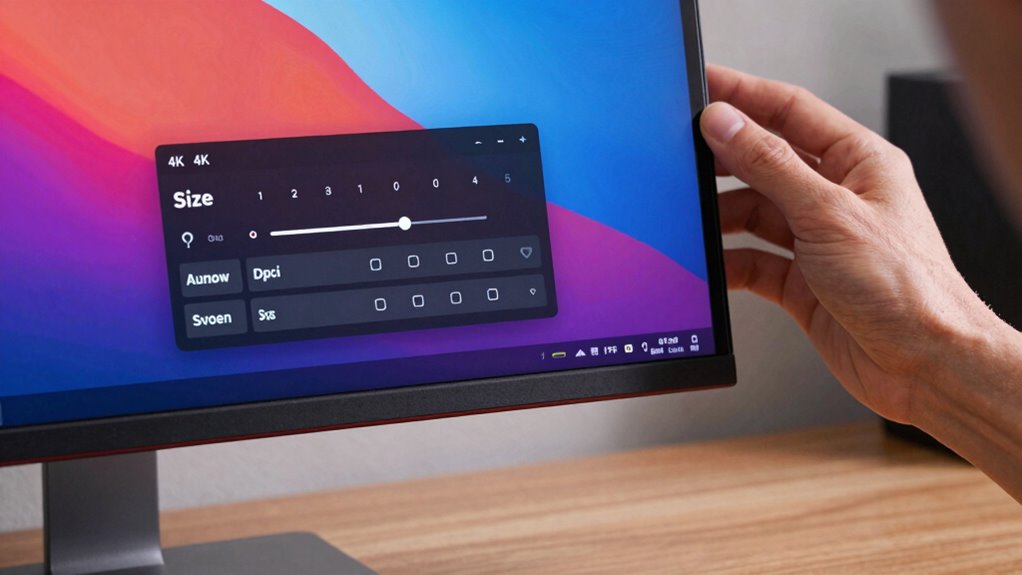
When selecting an eye-friendly 4K monitor, verifying key features can make all the difference in reducing eye strain and enhancing your viewing comfort. First, make certain it has adjustable brightness and color temperature settings to match your environment. Second, check for flicker-free technology and blue light filters to protect your eyes during long sessions. Third, prioritize ergonomic accessories like adjustable stands and anti-glare screens to maintain proper posture and minimize glare. Fourth, consider the monitor’s resolution and size to support ideal visual acuity without causing strain. By focusing on these features, you’ll create a comfortable, eye-friendly workspace that supports your health and productivity. Always test the monitor’s settings and ergonomics before committing to ensure it meets your specific needs.
Frequently Asked Questions
How Does Monitor Size Influence Eye Strain During Extended Use?
A larger monitor can diminish eye strain if you adjust the resolution and screen brightness properly. When the monitor size fits your viewing distance, you avoid squinting and unnecessary eye movement. Keep the resolution high enough to maintain clear text and images, and adjust brightness to match ambient light. This balance ensures comfortable extended use, minimizing fatigue and preventing eye discomfort during long periods in front of your screen.
Can Specific Monitor Brands Better Support Eye Health?
Some monitor brands do better support eye health because of their reputation for quality and ergonomic features. Look for brands known for adjustable stands, blue light filters, and flicker-free technology, which help reduce eye strain. Reputable brands like Dell, ASUS, and BenQ prioritize ergonomic designs and eye-friendly features, making them a smart choice for extended use. Choosing a trusted brand guarantees you get a monitor that promotes your eye health effectively.
What Role Does Ambient Lighting Play in Preventing Eye Fatigue?
Ambient lighting plays a vital role in preventing eye fatigue by reducing glare and harsh contrasts on your screen. When your environment is well-lit with soft, indirect light, your eyes don’t have to strain as much to focus. This setup minimizes reflections and glare that can cause discomfort. By balancing ambient lighting with your monitor brightness, you create a comfortable viewing space that helps keep your eyes healthy during long use.
Are There Ergonomic Accessories That Complement Scaling Settings?
A stitch in time saves nine, so investing in ergonomic accessories is essential. You can enhance your eye comfort with eye-friendly peripherals like adjustable monitor arms, anti-glare screens, and ergonomic keyboards. These accessories promote proper posture and reduce strain, working in harmony with ideal scaling settings. Together, they create a comfortable workspace, helping you prevent eye fatigue and stay productive for hours on end.
How Often Should I Recalibrate My Monitor for Optimal Eye Comfort?
You should recalibrate your monitor every few weeks to maintain ideal eye comfort. Regular monitor calibration ensures that colors, brightness, and contrast stay consistent, reducing eye strain over time. If you notice colors appearing off or your eyes feeling tired sooner, it’s time to recalibrate. Keeping your monitor properly calibrated helps prevent eye fatigue, especially during long work or gaming sessions, and ensures a comfortable viewing experience.
Conclusion
Choosing the right 4K monitor isn’t just about sharp visuals; it’s about safeguarding your vision for the long haul. By understanding scaling, adjusting settings, and embracing eye-friendly tech, you hold the power to prevent strain and fatigue. Remember, your eyes are your window to the world—treat them wisely. After all, a clear view today ensures a brighter, healthier tomorrow. Invest in your vision now, so it never fades into the background.