
When choosing a docking station, understanding the difference between Thunderbolt and USB‑C helps you avoid compatibility issues. Thunderbolt offers faster speeds (up to 40 Gbps) and supports high-performance tasks, but not all USB‑C ports are compatible. USB‑C is more common and versatile but varies in capabilities. Matching your device’s connection type and features is key—if you want to prevent connection headaches, more details await as you explore this topic further.
Key Takeaways
- Thunderbolt offers faster data transfer (up to 40 Gbps) and supports more advanced features than standard USB-C.
- Not all USB-C ports support Thunderbolt, making compatibility and performance dependent on device specifications.
- Choosing the right docking station requires matching its connection standard (Thunderbolt or USB-C) to your device’s port.
- Using an incompatible dock or cable can cause connection issues, limited functionality, or reduced performance.
- Verify device and dock compatibility, and avoid mixing standards to prevent compatibility pitfalls.
What’s the Difference Between Thunderbolt and USB‑C Docking Stations?
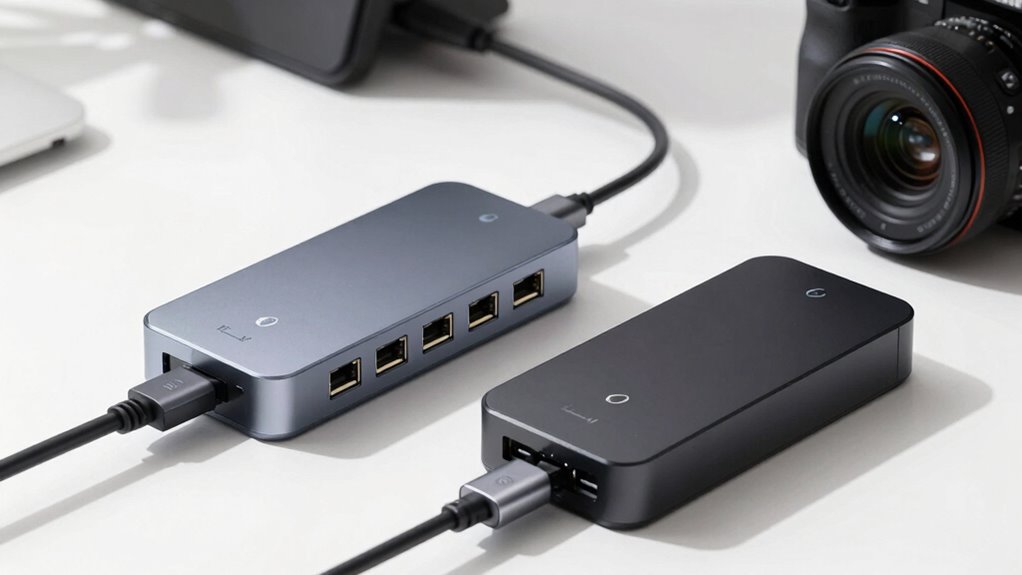
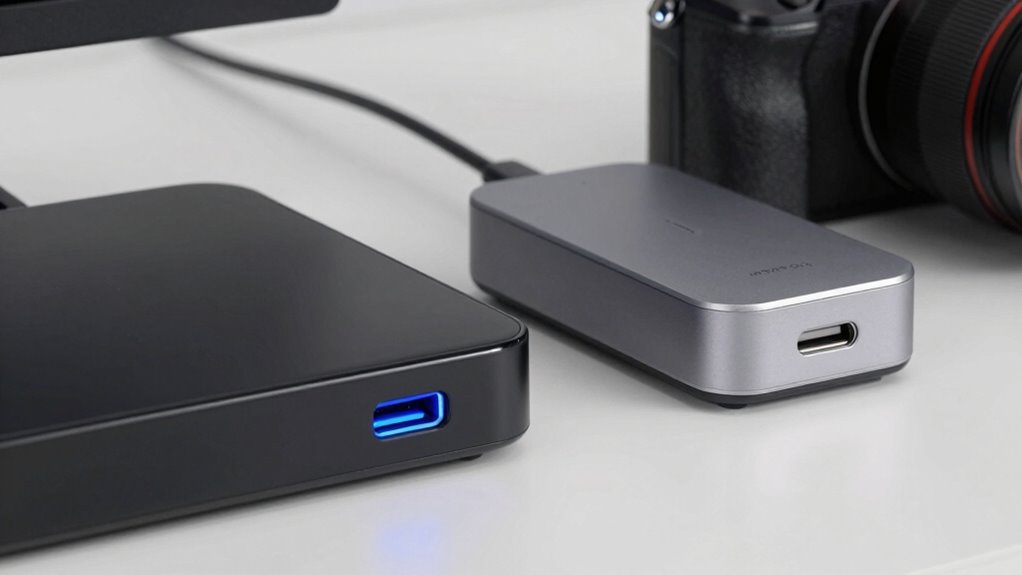
When choosing a docking station, understanding the difference between Thunderbolt and USB‑C is essential because they offer different levels of speed and capabilities. The connector differences are significant, affecting how devices communicate and transfer data. Thunderbolt connectors are designed for high performance, supporting faster data transfer speeds—up to 40 Gbps—making them ideal for demanding tasks like video editing or large file transfers. USB‑C connectors are more versatile and widely compatible, with data transfer speeds ranging from 5 Gbps to 20 Gbps depending on the version. While USB‑C ports are common on many devices, not all support Thunderbolt’s higher speeds. Recognizing these differences helps you choose the right docking station for your needs, ensuring optimal performance and future-proofing your setup. Additionally, understanding contrast ratio is important for selecting projectors that deliver deep blacks and bright whites, enhancing your visual experience.
Do Compatibility Issues Affect Your Docking Station Setup?
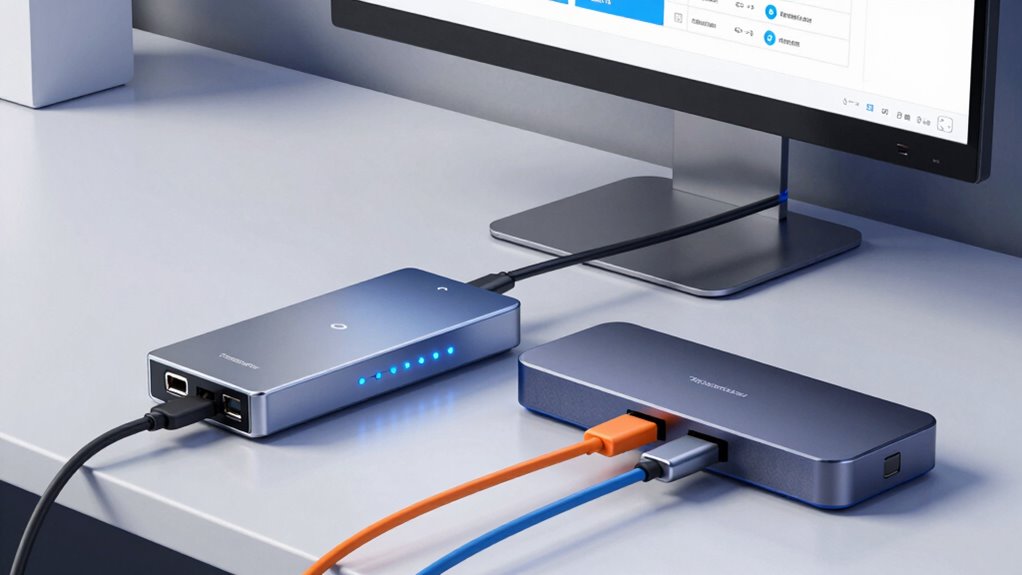
Compatibility issues can substantially impact how well your docking station works with your devices. If your device doesn’t support the right port standards or incompatible hardware, you might face connection failures or limited functionality. Check whether your device supports the docking station’s device compatibility requirements, especially for video output, data transfer, and charging. Port standards vary—some devices use Thunderbolt, others USB-C—so ensure they match. The table below highlights common compatibility concerns:
| Device Type | Compatible Port Standards | Potential Issue |
|---|---|---|
| Laptop | Thunderbolt 3/4, USB-C | Missing port support |
| External Monitor | DisplayPort, HDMI | Unsupported video standards |
| USB Devices | USB 3.1, USB-C | Outdated ports |
| Power Supply | Power Delivery (PD) | Insufficient charging capacity |
| Operating System | Windows, macOS | Driver support |
Additionally, device compatibility can vary based on the device’s manufacturer and model, making it essential to verify specifications before purchasing.
What Factors Should You Consider When Choosing a Dock?
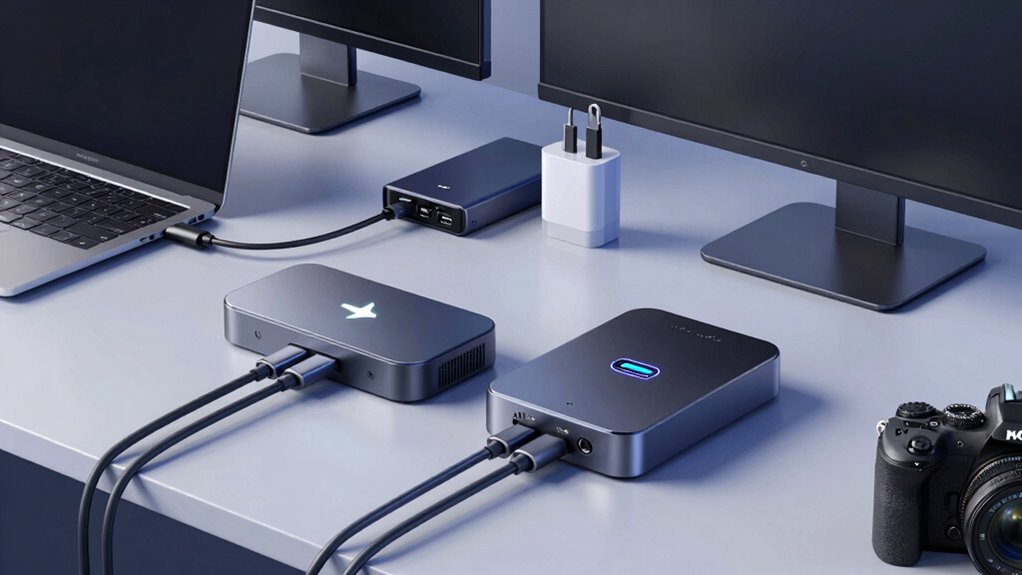
Choosing the right docking station requires careful consideration of several key factors to guarantee it meets your needs. First, assess the display resolution you require; if you work with high-definition or 4K displays, ensure the dock supports these resolutions without compromising performance. Power delivery is equally important—select a dock that can supply enough wattage to charge your laptop and peripherals simultaneously, reducing the need for extra chargers. Consider the number and types of ports you need, such as HDMI, DisplayPort, USB-A, or Ethernet, to connect all your devices seamlessly. Compatibility with your device’s connection standards (Thunderbolt or USB-C) is essential to avoid issues. By focusing on display resolution, power delivery, and port options, you’ll find a dock that suits your workflow and minimizes frustration.
How Can You Avoid Common Compatibility Pitfalls?
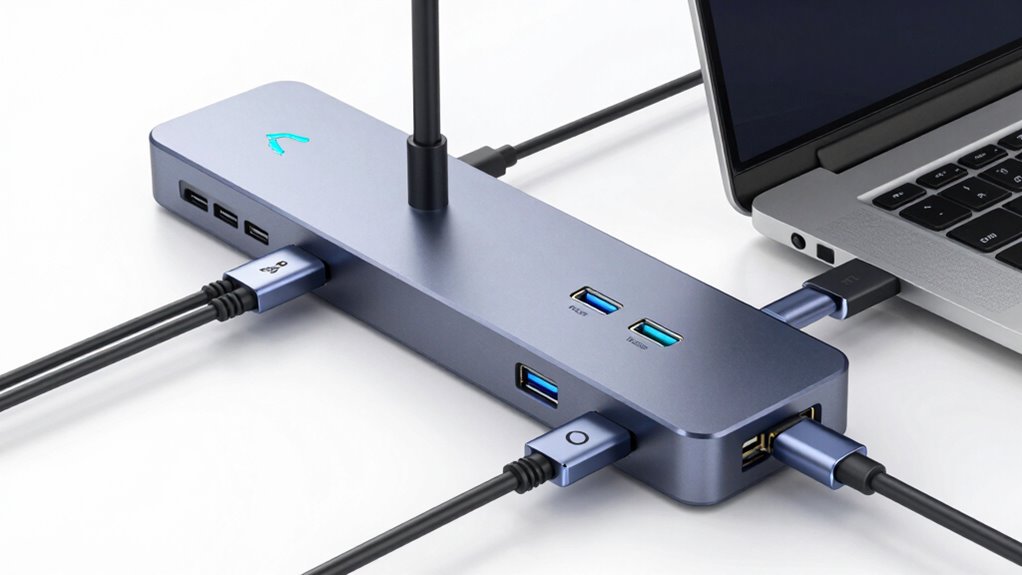
To avoid common compatibility pitfalls, you need to double-check that your dock supports your device’s connection standards and hardware specifications. Ensuring compatibility involves more than just the physical ports. Pay attention to software compatibility, as some docks require specific drivers or firmware updates. Using incompatible hardware adapters can also cause issues, so verify they support your device’s standards. Additionally, understanding the horsepower of electric dirt bikes can help you select the appropriate power requirements for your setup. Consider these tips: – Confirm your device’s connection type (USB-C, Thunderbolt) matches the dock’s specifications – Check for updated drivers or firmware for your operating system – Use certified hardware adapters designed for your connection standard – Read user reviews for real-world compatibility insights – Be aware of connection standards to ensure seamless integration between devices, especially when dealing with power requirements for high-demand peripherals. Also, reviewing the hardware specifications of your peripherals can help prevent mismatches that lead to connectivity issues.
Adding clear documentation and understanding device compatibility can further reduce the risk of mismatches and ensure your setup performs reliably.
Tips for Seamless Connectivity With Your Docking Station
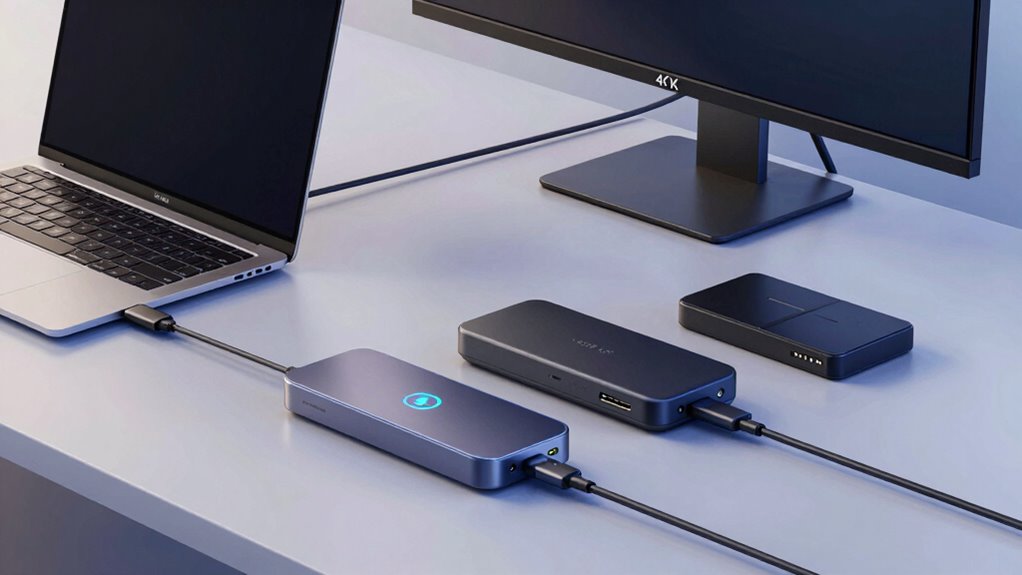
To guarantee your docking station works smoothly, start by confirming it’s compatible with your device before buying. Next, manage your cables effectively to prevent clutter and connection issues. Finally, keep your device drivers up to date to maintain peak performance and avoid connectivity hiccups. Additionally, understanding the connection standards can help you choose the right dock for your setup. Being aware of compatibility considerations can further prevent potential issues and ensure seamless operation. Recognizing the importance of digital compatibility can help you avoid frustrating setbacks and optimize your workflow. Paying attention to hardware requirements can also assist in preventing disruptions and ensuring reliable performance. Moreover, understanding nail biology differences can inform how you care for your device’s features and longevity, paralleling the importance of tailored connectivity solutions.
Confirm Compatibility Before Purchase
Before purchasing a docking station, confirming compatibility with your devices is essential for seamless connectivity. Check that the dock’s adapter compatibility matches your laptop or tablet’s ports and supported standards. Verify the power requirements to ensure your device can supply enough energy without overloading the dock. Additionally, understanding your device’s ergonomics and workflow can help you choose a setup that minimizes strain and maximizes efficiency. Consider these tips:
- Confirm the dock supports your device’s connector type (USB-C or Thunderbolt)
- Ensure the dock’s specifications meet your power needs
- Check if your device needs specific adapter compatibility
- Read reviews to verify device compatibility with similar devices
- Be aware of outdated standards that may limit connectivity options or performance.
- Recognize the importance of passive voice detection in documentation to prevent misunderstandings.
- Be mindful of compatibility standards to prevent connection issues and ensure reliable operation.
Taking these steps prevents surprises and guarantees smooth operation. Knowing your device’s power requirements and connector type helps avoid connectivity issues, ensuring your dock works flawlessly every time.
Optimize Cable Management Strategies
Effective cable management is key to maintaining a tidy workspace and ensuring your docking station functions without interruptions. Start by using cable organizers or clips to keep cables neatly bundled and prevent tangling. Labeling cables helps you identify connections quickly, saving time when plugging or unplugging devices. Keep frequently used cables within easy reach, and route them along edges or behind your desk to reduce clutter. Consider using a cable sleeve or conduit to hide excess length and create a streamlined look. Regularly check your setup to prevent loose connections that can cause disruptions. Good cable organization not only enhances aesthetics but also reduces the risk of damage and disconnections. Additionally, understanding the differences between connection types like Thunderbolt and USB‑C can help you choose compatible accessories and avoid the compatibility trap. Knowing the connection standards can further inform your choices for seamless device integration. Using cable management tools can simplify maintaining an organized setup and adapt to evolving device needs. Incorporating proper cable routing techniques can further optimize your workspace and prevent accidental disconnections. Implementing standardized cable labeling can improve troubleshooting efficiency and setup consistency. With clutter reduction, your workspace remains efficient, making your dock’s seamless connectivity effortless.
Regularly Update Device Drivers
Keeping your device drivers up to date is essential for maintaining seamless connectivity with your docking station. Outdated drivers can cause compatibility issues and disrupt your workflow. Regularly check for software updates from your device manufacturer and operating system. Staying current ensures better driver compatibility and peak performance. Routine maintenance of drivers can prevent unexpected connectivity problems and improve overall device performance.
- Enable automatic updates when possible to save time
- Visit manufacturer websites for the latest driver releases
- Use device management tools to identify outdated drivers
- Restart your computer after updates to ensure proper installation
Which Docking Station Is Right for Your Needs?
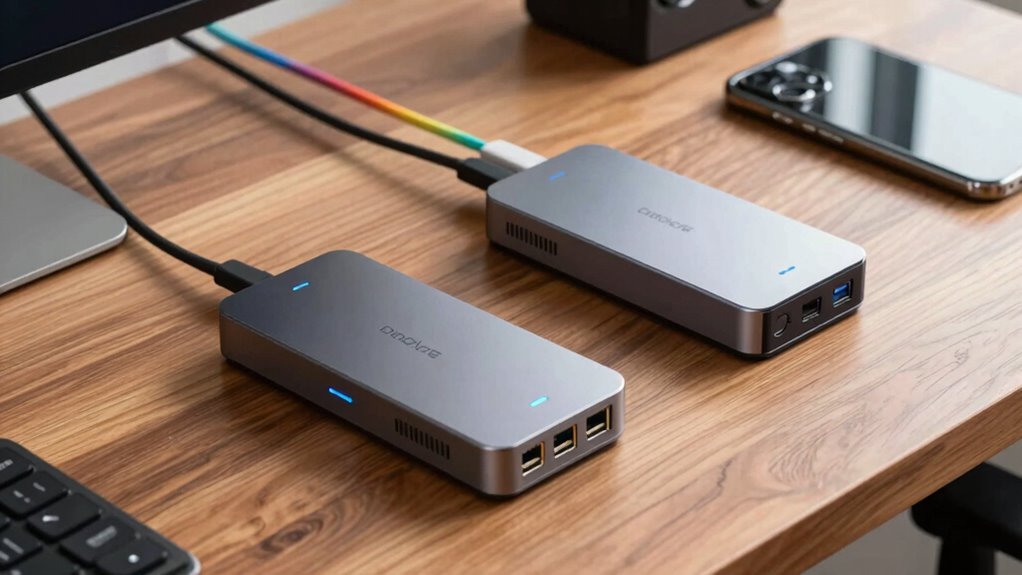
Choosing the right docking station depends on your specific needs and how you plan to use it. If you need extensive port expansion or reliable power delivery, select a model that supports those features. For instance, Thunderbolt docks offer high data transfer speeds and multiple ports, ideal for professionals. USB-C docks are versatile and often more affordable for basic connectivity. Consider whether you’ll connect peripherals like monitors, external drives, or charging devices. Your choice should match your device compatibility and workflow demands.
| Feature | Best For |
|---|---|
| Port Expansion | Connecting multiple peripherals |
| Power Delivery | Charging your laptop or devices |
| Compatibility | Ensuring seamless connection |
| Speed & Performance | High-speed data transfer |
Frequently Asked Questions
Can a Thunderbolt Dock Work With Usb-C-Only Laptops?
A Thunderbolt dock generally won’t work seamlessly with USB-C-only laptops due to compatibility issues and hardware limitations. Thunderbolt docks require specific Thunderbolt ports, which are different from standard USB-C ports. If your laptop only has USB-C, you might face problems connecting a Thunderbolt dock, as it’s designed for Thunderbolt’s advanced features. To avoid compatibility issues, choose a dock specifically made for USB-C if your device doesn’t support Thunderbolt.
Are There Differences in Data Transfer Speeds Between Thunderbolt and Usb‑C Docks?
Yes, there are differences in data transfer speeds between Thunderbolt and USB‑C docks. Thunderbolt offers higher data throughput, typically up to 40 Gbps, allowing faster transfer of large files and better performance for demanding tasks. USB‑C docks usually max out at lower speeds, around 10-20 Gbps. These transfer limitations can impact your workflow, especially if you regularly handle high-volume data or need quick, reliable connections.
Do All Thunderbolt Docks Support Daisy-Chaining Multiple Devices?
Not all Thunderbolt docks support daisy chaining multiple devices. You might think your dock can do it, but device compatibility varies. Some Thunderbolt docks are designed specifically for daisy chaining, allowing you to connect several peripherals seamlessly. Others might only support a single device at a time. Check your dock’s specifications carefully—assuming it supports daisy chaining without confirmation could lead to unexpected limitations, so stay informed before connecting multiple devices.
How Do Power Delivery Capabilities Vary Between Thunderbolt and Usb‑C Docks?
Thunderbolt docks generally offer higher power delivery and charging capacity compared to USB‑C docks, often supporting up to 100W for fast charging your devices. USB‑C docks usually provide lower power delivery, around 60W or less, which might be enough for charging smaller devices but less effective for laptops. When choosing a dock, consider your device’s power needs to make sure it gets sufficient charging and power delivery capabilities.
Is Software or Driver Support Necessary for Optimal Dock Performance?
Imagine your dock as a well-tuned engine, needing the right fuel to run smoothly. Driver updates and firmware compatibility guarantee this engine performs at its best. Yes, software and driver support are essential for peak dock performance, preventing glitches and maximizing data transfer. Keep your drivers current, and check firmware compatibility regularly, so your dock seamlessly powers your devices and keeps everything running like a finely oiled machine.
Conclusion
Choosing between Thunderbolt and USB‑C docking stations doesn’t have to be intimidating. By understanding compatibility nuances and considering your unique needs, you can create a setup that feels almost effortless. Think of it as finding the perfect match—a connection that gently supports your workflow without unnecessary hurdles. With a little insight, you’ll discover a seamless experience that makes your tech feel like an extension of yourself, turning everyday tasks into moments of quiet satisfaction.