Choosing between a bowl-lift and tilt-head stand mixer depends on your baking needs and kitchen space. If you often make large batches or heavy doughs, a bowl-lift model offers stability and larger capacity. For easier access and compact storage, a tilt-head mixer works well for small to medium tasks. To guarantee you pick the right one the first time, understanding their key differences can make all the difference—more details are just ahead.
Key Takeaways
- Choose a bowl-lift mixer for large batches, heavy doughs, and maximum stability during intense mixing tasks.
- Opt for a tilt-head mixer if you prioritize easy access, quick ingredient addition, and space-saving design.
- Consider capacity needs: bowl-lift models support bigger bowls, while tilt-heads suit smaller kitchens.
- For durability and powerful performance on heavy loads, bowl-lift models are preferable.
- For convenience, portability, and simpler storage, tilt-head mixers are typically better choices.
What’s the Difference? Bowl-Lift vs Tilt-Head Mixers Explained

When choosing between a bowl-lift and a tilt-head mixer, understanding their differences is essential. The attachment mechanism varies: bowl-lift models have a sturdy mechanism that raises and lowers the entire bowl, offering stability during heavy mixing. Tilt-head mixers feature a hinged head that tilts back, allowing easy access to the bowl and attachments. Mixer capacity is another key factor; bowl-lift models often support larger bowls, making them ideal for big batches, while tilt-head mixers are typically more compact, suitable for moderate quantities. Your choice depends on your baking needs—whether you prioritize stability and capacity or ease of access and versatility. Knowing these differences helps you select the right mixer that fits your kitchen workflow and baking volume. Additionally, attachment compatibility is an important consideration, as it influences the versatility and expandability of your mixer over time. Considering motor power can also impact performance, especially when handling dense doughs or multiple attachments.
How to Choose the Best Stand Mixer for Your Baking Style and Kitchen

Choosing the right stand mixer depends on your specific baking habits and kitchen space. If you bake frequently or handle heavy doughs, consider commercial models that offer durability and higher power. These are ideal for serious bakers but tend to be larger and more expensive. If your baking is more casual or limited to small batches, budget options can meet your needs without breaking the bank. Think about your available counter space and whether you prefer a bowl-lift or tilt-head design, as each suits different kitchen layouts. Also, consider accessories and attachments that match your baking style. By evaluating these factors, you can select a stand mixer that fits your frequency of use, recipe requirements, and kitchen environment, ensuring it becomes a reliable baking partner.
Pros and Cons of Bowl-Lift Stand Mixers
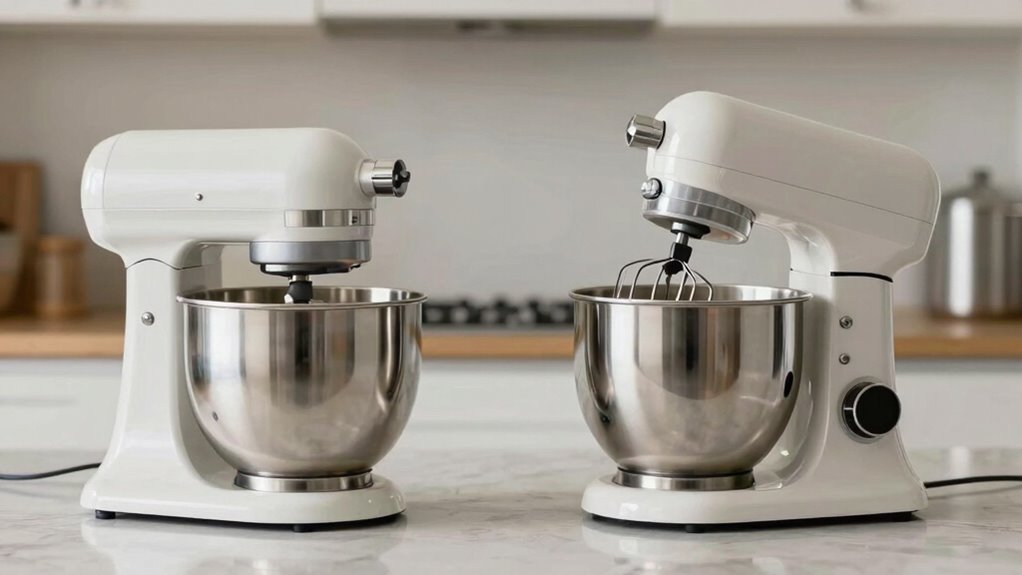
Bowl-lift stand mixers are popular for their stability and powerful performance, especially when handling heavy or large batches of dough. They’re built for durability, but you should consider potential durability concerns over time, especially with frequent heavy use. Proper maintenance can extend their lifespan and keep them functioning optimally. The sturdy design often means more weight, making them less portable and harder to store in smaller kitchens. Storage considerations are important; their large size can take up significant counter or cabinet space. While they excel in mixing large quantities, their bulk can be a drawback if you have limited space. Despite these factors, their robust construction and stability make them ideal for serious bakers. Just weigh the storage and durability aspects carefully to ensure it fits your kitchen and baking needs. Additionally, the design versatility of bowl-lift mixers allows for easier attachment changes, enhancing their functionality for diverse baking tasks.
Advantages and Disadvantages of Tilt-Head Mixers
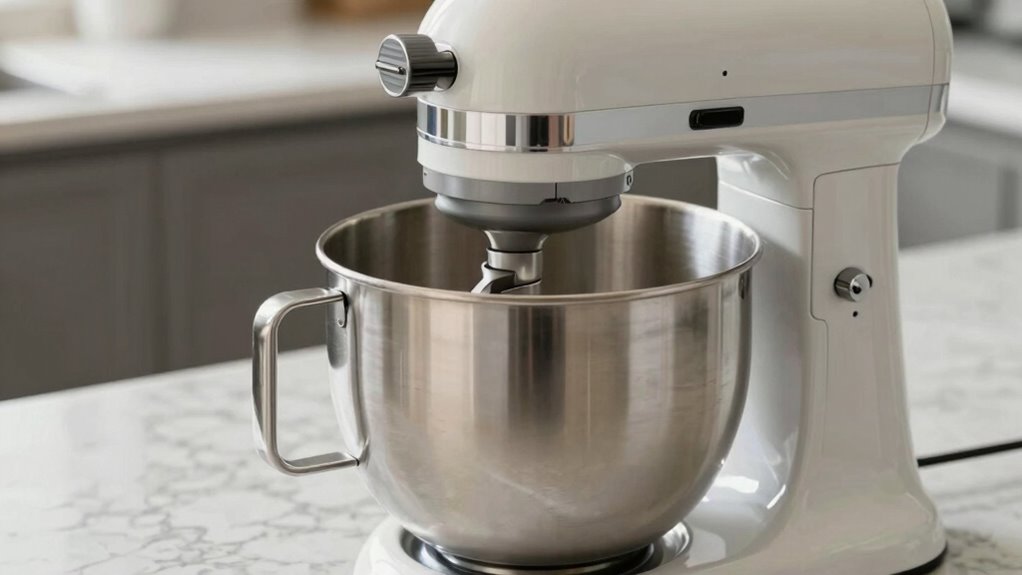
Tilt-head mixers are appreciated for their convenient design, allowing easy access to the bowl and beaters without removing any parts. This ease of access makes adding ingredients and cleaning up quicker and more straightforward. However, the motor stability in tilt-head mixers can sometimes be less secure, especially when mixing heavy doughs, which might cause wobbling or uneven operation. Despite this, their lighter weight and simple adjustments make them ideal for frequent use and small to medium batches. The design also helps with quick adjustments and changing attachments. But, keep in mind that the tilt mechanism can wear out over time, potentially affecting stability and durability. Additionally, motor stability issues can arise during demanding tasks, impacting performance. Overall, tilt-head mixers excel in convenience but might compromise a bit on motor stability during demanding tasks. For those who prioritize ergonomic design, this feature enhances ease of use but can sometimes lead to increased wear and tear. Moreover, understanding the spiritual significance behind certain kitchen tools can add an extra layer of intention to your baking experience.
Tips for Picking the Perfect Stand Mixer for Your Home Kitchen
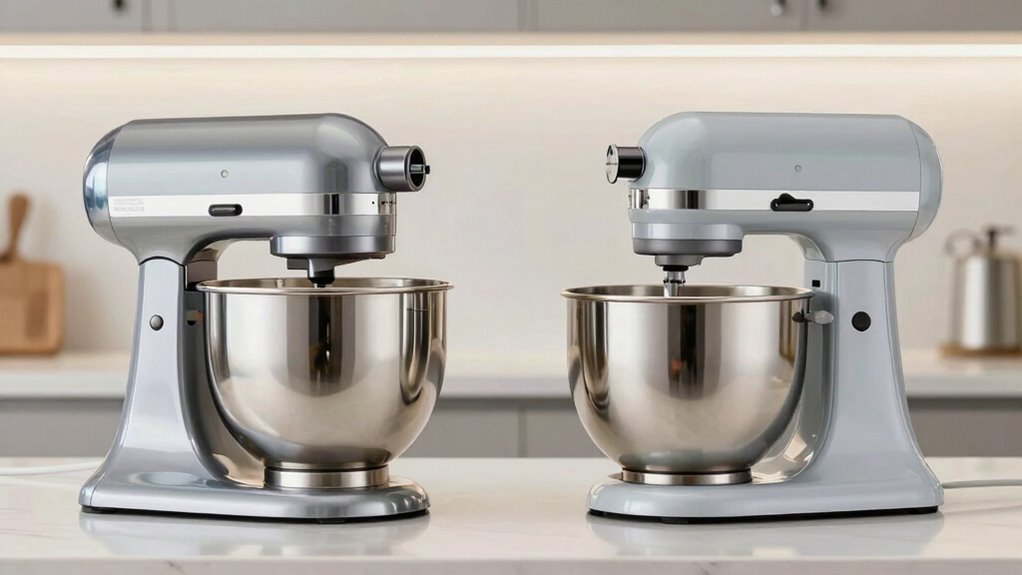
To find the perfect stand mixer for your home kitchen, you need to contemplate your cooking habits and specific needs. Consider how often you’ll use it, the types of recipes you prepare, and your space constraints.
Assess your cooking habits and space to choose the ideal stand mixer for your kitchen needs.
Here are tips to guide your choice:
- Check available color options to match your kitchen decor.
- Research brand reputation to ensure reliability and quality.
- Evaluate motor power to handle your typical mixing tasks.
- Decide between bowl-lift and tilt-head models based on ease of use and maintenance.
Prioritizing these factors helps you select a mixer that’s both functional and stylish, ensuring it fits seamlessly into your culinary routine.
Frequently Asked Questions
Which Type of Mixer Is Better for Heavy Doughs?
For heavy doughs, a bowl-lift mixer is better because it offers a stronger motor and more stability. Its design allows it to handle thick, dense mixtures without straining, making it ideal for bread or large batches. You’ll find it easier to mix heavy doughs efficiently, with less risk of motor burnout. So, if you’re frequently working with tough doughs, a bowl-lift model is the smart choice to meet your needs.
How Does Mixer Size Impact Kitchen Space and Storage?
The size of your mixer directly affects your counter space and storage options. A larger mixer takes up more room, making it harder to keep your kitchen organized, especially if space is limited. If you have a small kitchen, opt for a compact model that fits easily into cabinets or shelves. Conversely, a bigger mixer might be worth it if you frequently bake and need extra capacity, but always consider available storage options first.
Are There Differences in Noise Levels Between Bowl-Lift and Tilt-Head Models?
Ever wonder about the noise comparison between bowl-lift and tilt-head models? Generally, tilt-head mixers tend to produce slightly lower sound levels, making them quieter during operation. Bowl-lift models can be a bit louder, especially under heavy loads. If minimizing noise is a priority in your kitchen, you might prefer a tilt-head design. Still, both types are designed to operate smoothly, so choose based on your space and convenience needs.
Can Both Mixers Handle Multiple Attachments Effectively?
Yes, both mixers handle multiple attachments effectively, but attachment versatility depends on the model’s accessory compatibility. Tilt-head mixers generally allow easier access to add or switch attachments, making them more versatile for different tasks. Bowl-lift models are sturdy for heavier attachments, but compatibility can be more limited. Consider your needs for accessory versatility to choose the one that best fits your baking and cooking routines.
What Maintenance Is Required for Each Mixer Type?
You need to regularly clean your mixer to maintain attachment versatility and guarantee smooth operation. For a tilt-head, wipe the head and attachments after each use, and occasionally lubricate moving parts. For a bowl-lift, focus on cleaning the lifting mechanism and attachments thoroughly. Both require minimal maintenance, but keeping all parts dry and free of residue helps prevent rust and keeps your mixer functioning at its best.
Conclusion
Choosing between a bowl-lift and tilt-head stand mixer is like finding the perfect partner in your baking adventures. Imagine effortlessly gliding a spatula around a sturdy bowl or smoothly tilting your mixer back to reveal its treasure trove of ingredients. Whichever you pick, you’re setting yourself up for delicious creations and happy baking days. So, trust your instincts, visualize your kitchen scene, and select the mixer that’ll turn your baking dreams into reality.