
To dial in your espresso without wasting beans, start by understanding that finer grinds increase extraction time and flavor, while coarser grinds speed things up. Make small adjustments by tweaking the grind setting and observing shot times—aim for about 25-30 seconds. Consistently calibrate your grinder and keep beans fresh to avoid waste. If you want to fine-tune your process and get perfect shots every time, keep exploring these expert tips.
Key Takeaways
- Start with a baseline grind setting, then make small adjustments based on shot timing and flavor.
- Finer grinds increase extraction time; coarser grinds decrease it; tweak gradually to find optimal results.
- Consistently evaluate extraction by taste and shot duration to avoid waste and achieve balanced flavor.
- Regularly calibrate your grinder to maintain precise settings and prevent unnecessary bean waste.
- Keep detailed notes of adjustments to efficiently dial in your espresso without wasting beans.
How Grind Size Affects Your Espresso Extraction
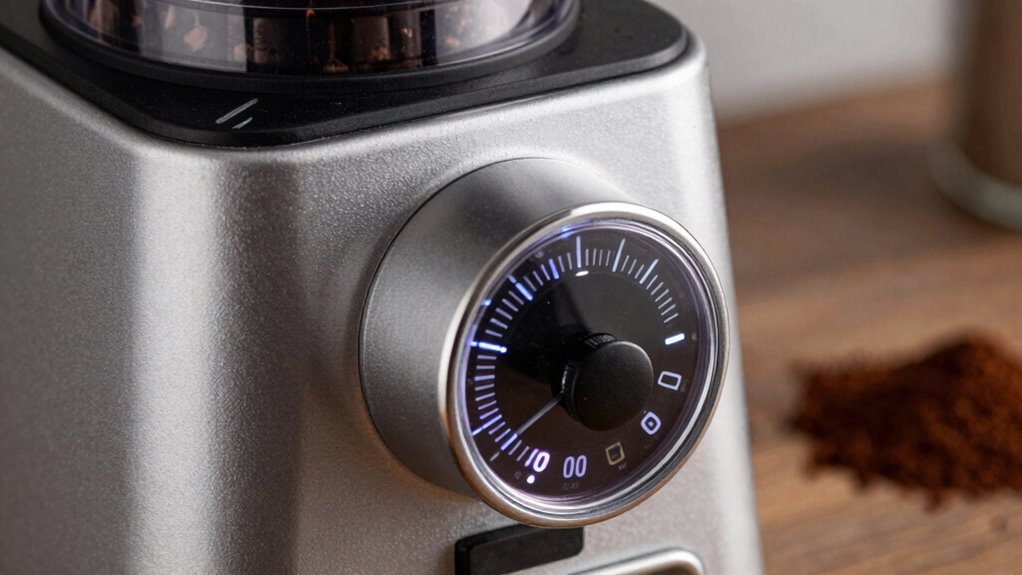
The grind size of your coffee beans directly influences how water interacts with the coffee during extraction, affecting the flavor and strength of your espresso. When your grind is too fine, water struggles to flow through, requiring a consistent tamping pressure to prevent channeling. Conversely, a coarser grind allows water to pass too quickly, leading to under-extraction. Brew temperature also plays a role; higher temperatures help extract more flavor from finer grinds, but too high can cause bitterness. Adjusting tamping pressure ensures even compaction, promoting uniform extraction. If your espresso tastes sour or weak, try a slightly finer grind and verify your tamping pressure. Consistent grind size is essential for predictable extraction results. Additionally, maintaining a stable Brew temperature can improve extraction consistency. Proper tamping technique helps ensure even water flow and optimal extraction. To further refine your process, paying attention to extraction time can help you achieve a more balanced shot. Conversely, if it’s bitter or over-extracted, coarsen the grind or reduce tamping force. Fine-tuning these elements optimizes extraction and flavor. Proper grind adjustment can help you achieve a balanced shot without wasting beans.
How to Choose the Right Grind Setting for Your Beans and Machine
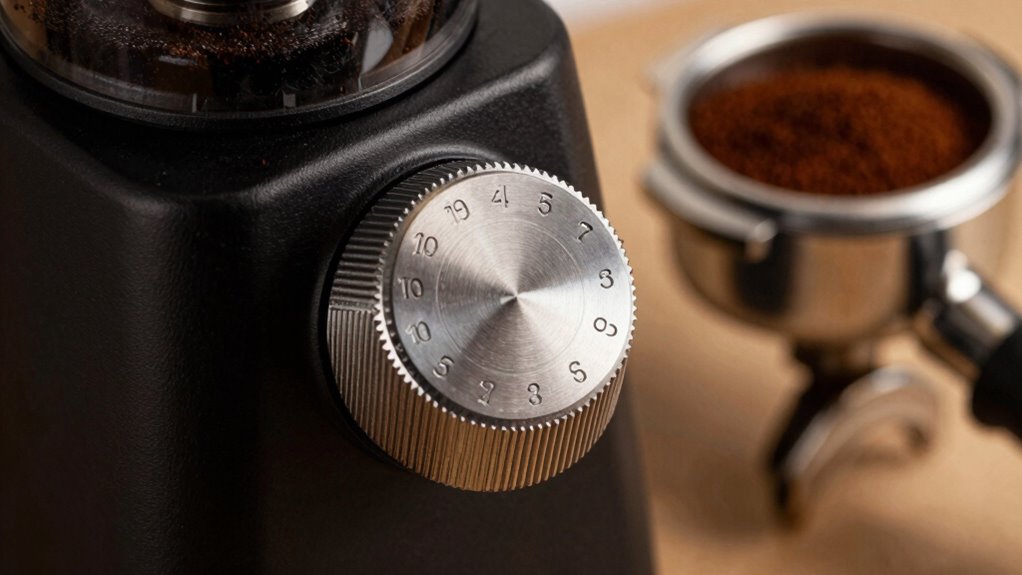
Choosing the right grind setting depends on your specific beans and espresso machine, as both factors profoundly influence extraction. Fresh beans often require a slightly coarser grind to prevent over-extraction, while older beans might need a finer setting to boost flavor. When selecting your grind, envision these scenarios:
- A coarse grind resembling sea salt, ideal for a quick, bright shot.
- A medium grind similar to sand, balancing flavor and extraction.
- A fine grind like powdered sugar, perfect for rich, intense espresso.
Think about your beans’ freshness and how your machine handles different textures; these choices directly impact coffee flavor. Adjust your grind gradually, paying attention to the extraction and aroma, to dial in the perfect setting for your beans. Paying attention to the extraction process helps ensure you achieve the best flavor profile from your coffee. Recognizing how grind size affects extraction can help you troubleshoot and refine your espresso technique. Additionally, understanding the brewing variables involved can further improve your results.
Step-by-Step: Dialing in Your Grinder for Perfect Espresso
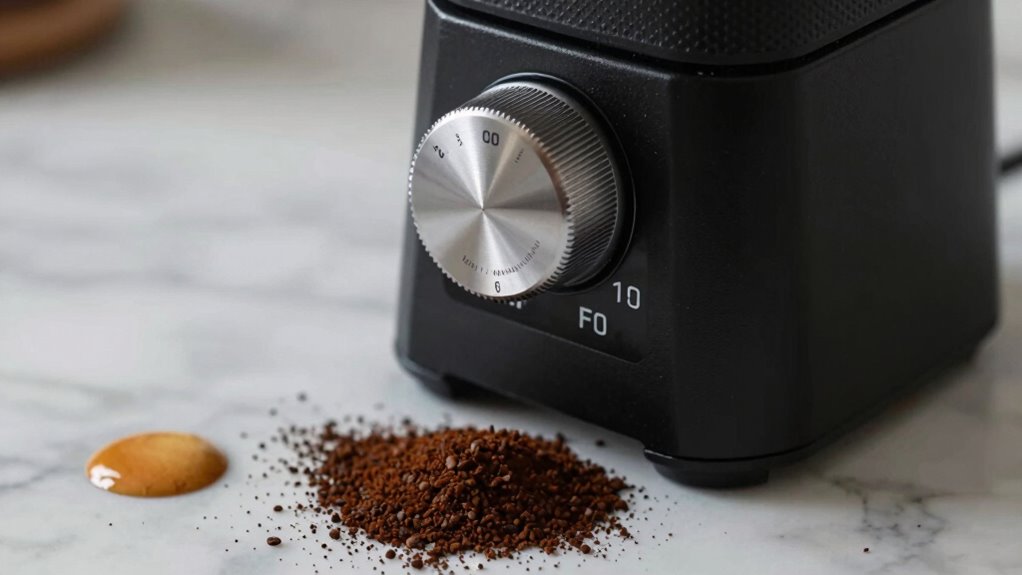
To achieve a perfect espresso shot, you need to carefully dial in your grinder by making small, deliberate adjustments. Start with a baseline grind setting, then pull a shot to evaluate. Focus on grinder calibration to guarantee consistency—small tweaks can considerably impact extraction. Adjust the grind size finer or coarser based on your results: a too-fast shot suggests coarser grounds, while a too-slow shot indicates a need for a finer grind. Taste your espresso to refine flavor profiling; sweetness, acidity, and body reveal whether you’re on the right track. Keep notes of each adjustment to track progress. This systematic approach helps you fine-tune your grinder, assuring maximum flavor extraction and a balanced, satisfying espresso every time. Understanding fan culture can also help enthusiasts appreciate the community dynamics behind their favorite brewing methods.
Common Grinding Problems and How to Fix Them
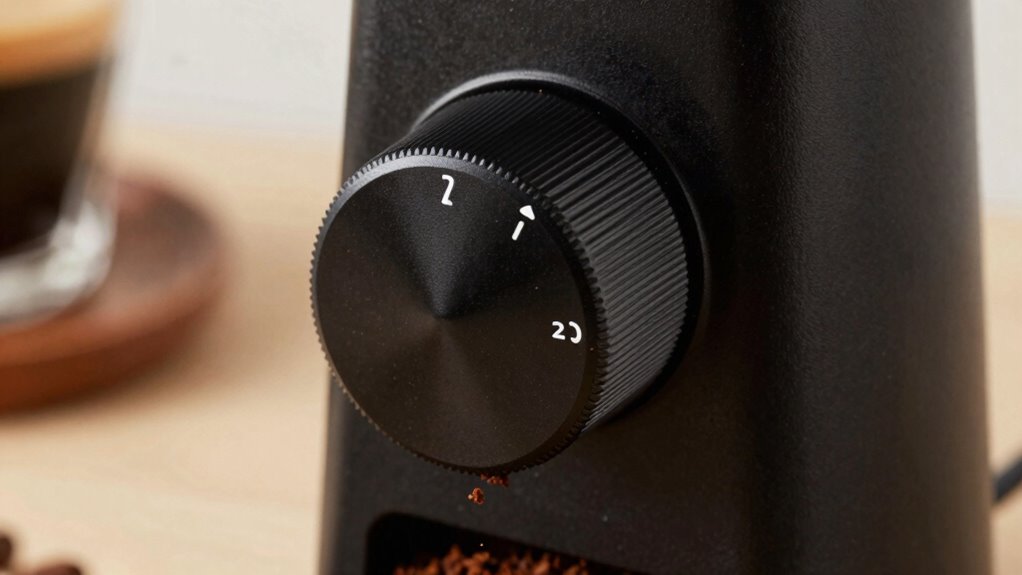
Even with careful calibration, grinding issues can still disrupt your coffee’s flavor and consistency. Common problems include inconsistent grind size, excessive grind noise, and burr misalignment. When your grinder makes strange sounds, it often signals burr issues or debris blocking the burrs. To fix this, start by turning off the machine and inspecting burr alignment; misaligned burrs can cause uneven grinds and increased noise. If you notice a strange grind noise or uneven particles, realign the burrs following your grinder’s manual. Also, check for trapped coffee grounds or debris that could clog the mechanism. Regular cleaning and proper burr alignment guarantee smooth operation and consistent grind size. Additionally, understanding the grinding process can help you diagnose and prevent issues proactively. Addressing these issues keeps your grinder running quietly and producing the perfect grind for each brew. Proper maintenance and burr alignment are essential for optimal performance and longevity of your grinder. Taking the time to learn about grinder components can also help you identify potential problems early and ensure your equipment operates at peak efficiency. Being aware of your grinder’s design can further assist in troubleshooting and maintenance efforts. Having a good understanding of measurement tools can also aid in calibrating and maintaining your grinder for best results.
Tips for Consistent Grinding and Saving Beans
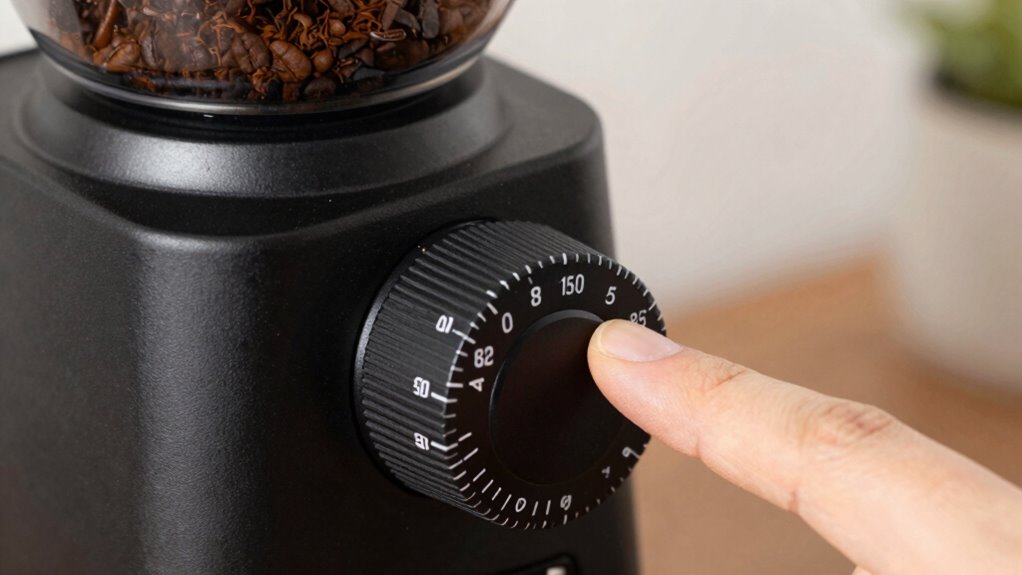
Achieving consistent grinding and conserving your coffee beans requires a few simple but effective strategies. First, regularly calibrate your grinder to ensure the grind size stays precise, which helps maintain flavor and extraction quality. Consistent calibration prevents over- or under-extraction, saving beans and improving taste. Second, pay attention to bean freshness—use beans within their ideal period, as older beans tend to produce uneven grinds and waste. Store beans properly in an airtight container away from light and moisture. Third, understanding grind size adjustment is essential, as small tweaks lead to more consistent results and less wasted coffee. Small adjustments to grind size can make a significant difference in extraction and flavor, so take your time to dial in your settings. Proper grinder calibration ensures optimal performance and consistency in your brewing process. Lastly, make small adjustments to your grinder rather than large jumps, which helps keep your grind consistent. By sticking to these tips, you’ll improve your espresso quality while reducing waste, all thanks to better grinder calibration and mindful bean management.
Frequently Asked Questions
How Often Should I Clean My Coffee Grinder for Optimal Results?
You should clean your coffee grinder every 1-2 weeks to maintain ideal results. Regular maintenance routines prevent old coffee residue from affecting flavor and grind consistency. Use appropriate cleaning tools, like a brush or compressed air, to remove leftover grounds and oils. If you notice uneven grinding or stale taste, increase cleaning frequency. Consistent cleaning ensures your grinder performs well and helps you consistently dial in perfect espresso shots.
Can I Use the Same Grind Setting for Different Espresso Beans?
You shouldn’t use the same grind setting for different espresso beans because bean freshness and roast level affect grind stability. Even if beans look similar, their moisture and oil content vary, requiring adjustments to optimize extraction. Changing beans means tweaking your grind to match their unique characteristics, ensuring your espresso tastes perfect. Don’t rely on a single setting; instead, experiment each time for the best flavor, maximizing your coffee experience.
What Impact Does Humidity Have on Grind Consistency?
Humidity effects your grind consistency by causing moisture absorption in your beans and grinder components. When humidity is high, beans absorb moisture, making them harder to grind evenly and potentially leading to inconsistent extraction. Conversely, low humidity keeps beans dry, but too little moisture can cause static and clumping. To maintain consistent grind size, store your beans in a cool, dry place and adjust your grinder settings as needed based on humidity levels.
How Does Altitude Affect Grind Size and Extraction?
Altitude affects grind size and extraction because the air pressure is lower, making water boil at a lower temperature and altering brewing dynamics. You should modify your grind size to be slightly finer at higher altitudes to maintain proper extraction. For altitude brewing, keep a close eye on your shot times and make grind adjustments as needed. This ensures consistent flavor and prevents under- or over-extraction.
Is There a Difference Between Blade and Burr Grinders for Espresso?
Think of your grinder as a musical instrument—burrs produce a harmonious, consistent grind, perfect for espresso, while blade grinders are more like noisy drums, less precise. Burr grinders guarantee better flavor preservation and require regular grinder maintenance to stay sharp. For a smooth, rich shot, choose a burr grinder, as it offers uniform grind size, leading to better extraction and flavor clarity. Blade grinders just can’t match that precision.
Conclusion
Mastering your grinder is like tuning a musical instrument—you’ll create a harmonious symphony of flavors. When you dial in the perfect grind, each shot becomes a melody, rich and balanced. Don’t fear the occasional misstep; it’s part of the journey toward espresso perfection. With patience and practice, you’ll orchestrate a brew that sings, transforming simple beans into a masterpiece. Keep experimenting and enjoy the art of grinding—your perfect cup awaits.