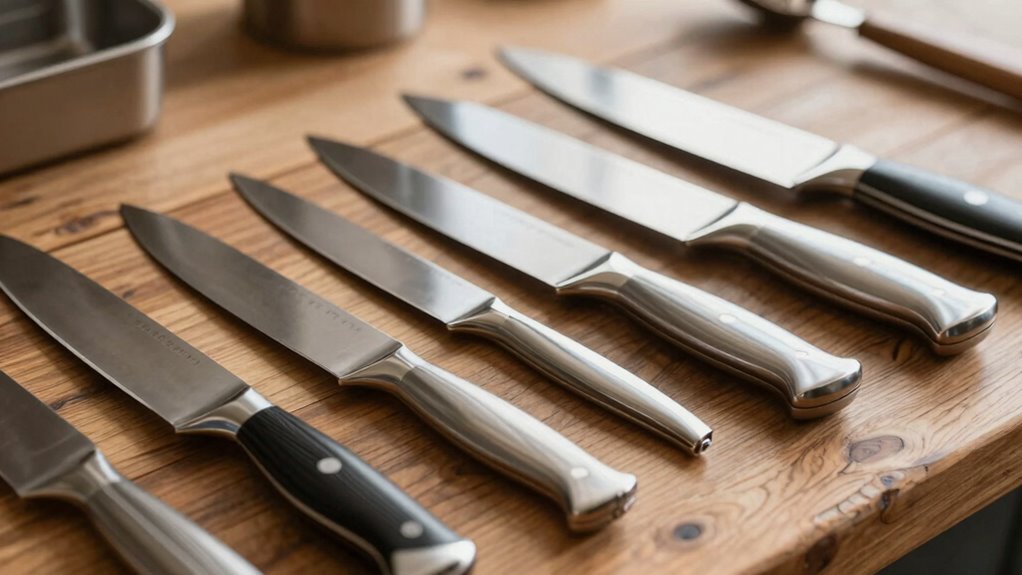

When choosing a chef knife set, focus on high-quality steel that balances hardness, corrosion resistance, and edge retention to guarantee lasting sharpness and easy maintenance. Opt for stainless or high-carbon steels based on your cooking style and willingness to care for your knives. Consider blade hardness and how often you’ll sharpen or hone your knives. If you’re interested in learning how to pick the best steel for your needs and keep your knives in top shape, keep exploring.
Key Takeaways
- Choose high-carbon steel for sharpness and edge retention, but prepare for regular maintenance and rust prevention.
- Opt for stainless steel for durability, corrosion resistance, and easier care, ideal for frequent use.
- Consider powder steel for a balance of strength, sharpness, and corrosion resistance, especially for professional chefs.
- Match blade hardness with your skill level and maintenance willingness; harder blades stay sharp longer but may be brittle.
- Properly maintain your knife with regular cleaning, honing, and correct storage to prolong performance and prevent rust.
What Makes a High-Quality Chef Knife Steel?
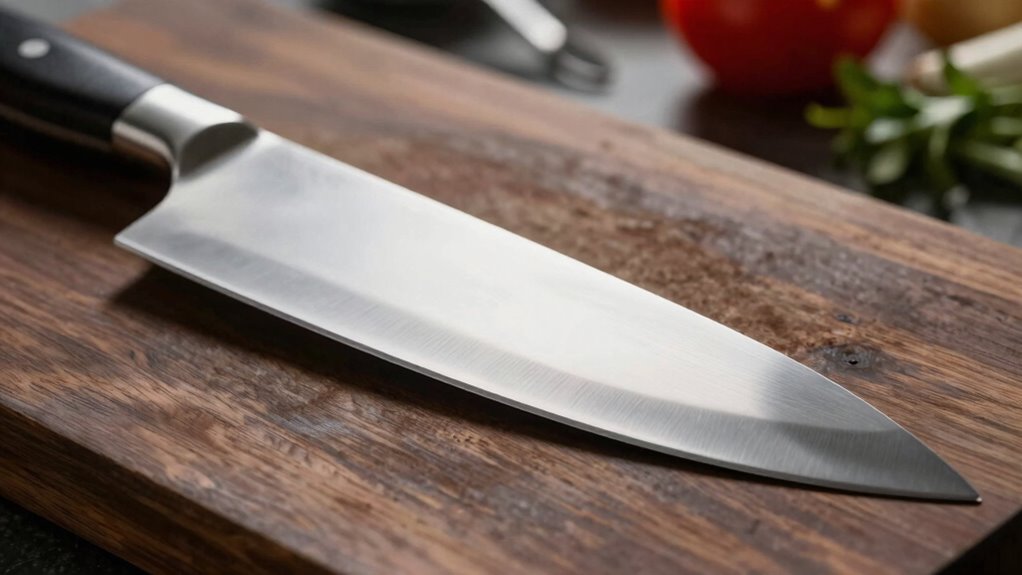
A high-quality chef knife steel combines the right balance of hardness, corrosion resistance, and edge retention. These qualities guarantee your knife stays sharp longer, making prep work safer and more efficient. When considering the knife handle, choose one that offers a secure, comfortable grip to prevent slipping during use—an essential aspect of kitchen safety. The steel’s composition affects how well your knife resists rust and stains, which is vital for maintaining hygiene. A durable steel that holds its edge reduces the need for frequent sharpening, lowering risks of accidental slips caused by dull blades. Overall, selecting a steel that complements a well-designed handle enhances your control and safety while cooking, giving you confidence with every cut. Understanding steel properties helps you make an informed choice for long-term satisfaction.
Best Steel Types for Chef Knives and Their Pros and Cons
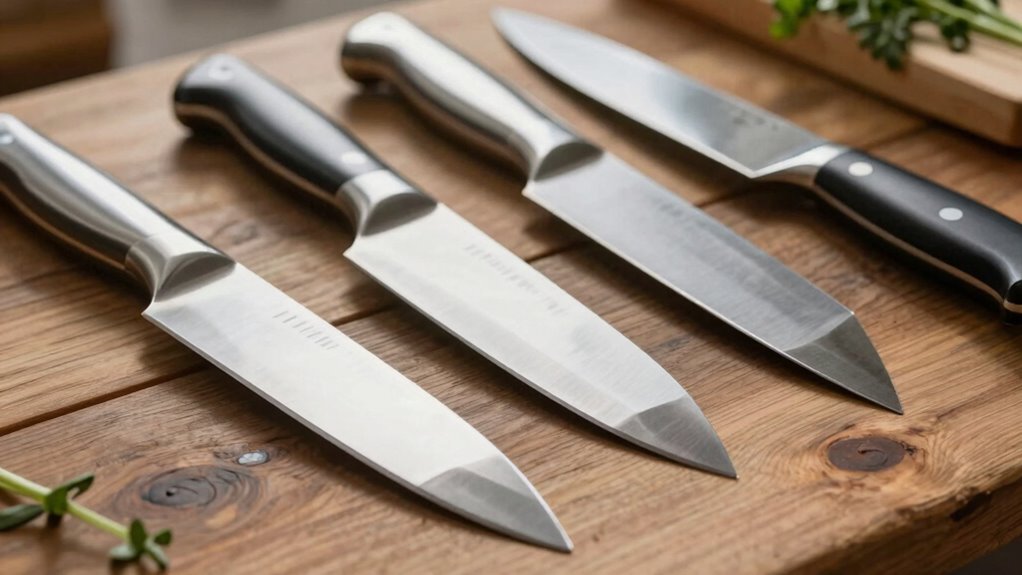
Choosing the right steel can considerably impact your knife’s performance. High-carbon steel offers excellent edge retention but requires more maintenance, while stainless steel provides durability with less upkeep. Powder steel combines strength and sharpness, giving you the best of both worlds, but it may come at a higher cost. Additionally, understanding metal composition can help you select a knife that balances performance and ease of care. Being aware of blade hardness can also influence how well your knife maintains its edge over time.
High-Carbon Steel Advantages
High-carbon steel stands out as one of the top choices for chef knives because it offers exceptional sharpness and edge retention. Its steel composition allows you to achieve a precise cutting edge that stays sharp longer, making prep work smoother. This steel type enables you to hone and sharpen your knife easily, ensuring it performs at its best. Plus, high-carbon steel often develops a beautiful patina over time, adding character.
| Advantage | Emotion Evoked |
|---|---|
| Superior sharpness | Confidence in your cut |
| Excellent edge retention | Trust in durability |
| Easy to sharpen | Satisfaction in maintenance |
Stainless Steel Durability
Stainless steel knives are renowned for their impressive durability, making them a popular choice in busy kitchens. Their stainless steel composition combines iron with elements like chromium, which enhances corrosion resistance. This composition also contributes to their overall toughness and resilience, allowing them to withstand daily use without easily chipping or breaking. This means your knife is less likely to rust or stain over time, even with frequent use and exposure to moisture. The durability of stainless steel also depends on its specific grade; higher-grade options tend to withstand daily wear and tear better, maintaining sharpness longer. Additionally, the composition of stainless steel plays a crucial role in its corrosion resistance and overall performance. Understanding steel grades can help you select the best knives for your needs and ensure long-lasting performance. Good quality stainless steel often features additives like molybdenum, which further improve corrosion resistance in harsh environments. The manufacturing process also influences the final quality and durability of the knife, making it an important factor to consider. While stainless steel knives are generally easy to maintain and resist corrosion, they may require more frequent sharpening compared to harder steels. Overall, their corrosion resistance and tough composition make them reliable for everyday tasks, ensuring your knife set remains functional and attractive for years.
Powder Steel Benefits
Powder steel has gained popularity among professional chefs and enthusiasts because of its exceptional edge retention and toughness. Its unique manufacturing process involves metal bonding at a microscopic level, creating a uniform, dense structure. This results in a blade that stays sharp longer and resists chipping. The powder metallurgy process allows for precise control over alloy composition, enhancing corrosion resistance and durability.
- Superior edge retention due to uniform microstructure
- Increased toughness from refined grain size
- Better corrosion resistance through controlled alloying
How Hard Should Your Chef Knife Be? Blade Hardness Explained
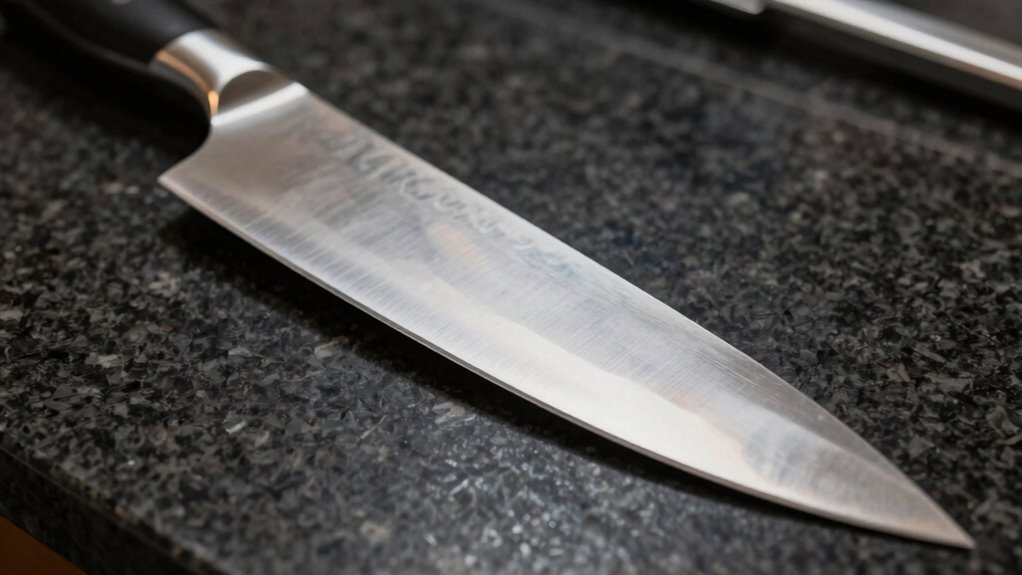
The hardness of your knife affects how sharp the edge stays and how easily it cuts. While a harder blade offers better edge retention, it can be more brittle and prone to chipping. Balancing hardness with durability and maintenance needs guarantees your knife performs reliably in the kitchen. Choosing the right steel type is crucial for achieving optimal performance and longevity. Additionally, understanding blade hardness standards can help you select a knife that meets your specific culinary needs.
Hardness and Edge Sharpness
Choosing the right hardness for your chef knife is essential because it directly impacts how sharp the blade stays and how durable it remains over time. Harder blades tend to hold a sharper edge longer but can be more brittle, reducing blade flexibility. Softer steels are more forgiving, offering greater flexibility but dull more quickly. When selecting steel, consider color options like high-carbon or stainless steel, which often indicate different hardness levels. Keep in mind:
- Higher hardness improves edge retention but may reduce blade flexibility.
- Different steel color options suggest varying alloy compositions and hardness.
- Striking a balance ensures your knife remains sharp and resilient during use.
Understanding these factors helps you choose a blade that maintains sharpness without sacrificing durability or flexibility, aligning with your cooking needs.
Durability Versus Flexibility
Hardness levels in chef knife steel directly influence how well the blade balances durability and flexibility. A harder blade stays sharper longer but may become brittle, risking chips or cracks. Softer steels offer more flexibility, reducing breakage, but need frequent sharpening. Your choice affects blade ergonomics, as a stiff blade requires confident handling, while a flexible one demands precise control. Handle materials also play a role, providing comfort and grip regardless of hardness. Consider this table:
| Hardness Level | Durability | Flexibility | Best For |
|---|---|---|---|
| High (60+) | Very durable | Less flexible | Fine slicing, precision |
| Medium (55-60) | Balanced | Moderate | Versatile kitchen work |
| Low (<55) | Less durable | Very flexible | Heavy-duty tasks |
Choosing the right blade hardness can significantly impact your culinary efficiency and safety.
Blade Maintenance Needs
Understanding how hard your chef knife should be is essential for maintaining its performance and longevity. Harder blades, typically in the high 50s to low 60s on the Rockwell scale, resist dulling but require more careful blade polishing to avoid chipping. Softer blades are easier to sharpen and maintain but may need more frequent honing. Consider handle ergonomics, as a well-designed handle reduces fatigue during extended use and complements blade hardness for ideal control. To keep your knife in top shape, focus on:
- Regular blade polishing to prevent dullness and maintain sharpness
- Balancing blade hardness with ease of sharpening
- Ensuring handle ergonomics support comfortable, precise cuts
Why Edge Retention and Easy Sharpening Matter
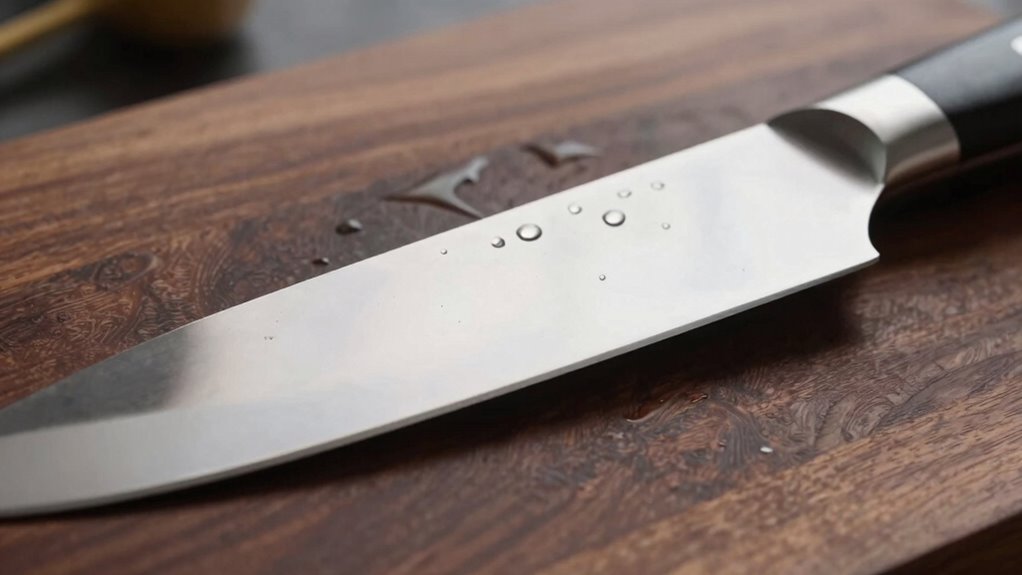
Edge retention and easy sharpening are crucial because they directly impact your efficiency and satisfaction in the kitchen. A knife that holds its edge longer reduces the frequency of honing, so you spend less time resharpening and more time preparing meals. When sharpening is straightforward, you can quickly restore a razor-sharp edge without frustration. This consistency keeps your cuts clean and precise, improving overall blade aesthetics. Additionally, a well-maintained edge ensures the handle remains comfortable to use, since less force is needed to cut through ingredients. Choosing a steel that balances edge retention with ease of sharpening helps you maintain a sharp, attractive knife that performs reliably, making your cooking experience smoother and more enjoyable. Proper selection of steel quality is essential for achieving these benefits and ensuring your knife set endures over time. A well-chosen steel also minimizes the need for frequent sharpening, saving you time and effort in the long run. Moreover, understanding the composition of steel can help you select a material that aligns with your specific usage and maintenance preferences. Additionally, the technology used in manufacturing can influence both edge retention and sharpening ease, further impacting your maintenance routine. Selecting the right steel type can also help prevent premature dulling and improve the overall lifespan of your knives.
Which Steels Resist Rust and Corrosion in the Kitchen?

Are you looking for a chef knife steel that can withstand the moisture and mess of a busy kitchen? If rust and corrosion are concerns, look for steels with high corrosion resistance. These steels are ideal for frequent use and less demanding knife storage, reducing maintenance. Common options include stainless steels like 440C, VG10, and AUS-10, which resist rust better than high-carbon steels. Keep in mind, steel color options can also hint at corrosion resistance—lighter hues often indicate stainless varieties. To prolong your knife’s life, store it properly, avoid exposure to water, and clean it promptly. Remember, choosing a steel with good corrosion resistance means less worry about rust, ensuring your knife stays sharp and reliable for years.
How to Choose the Right Chef Knife Steel for Your Cooking Style and Budget
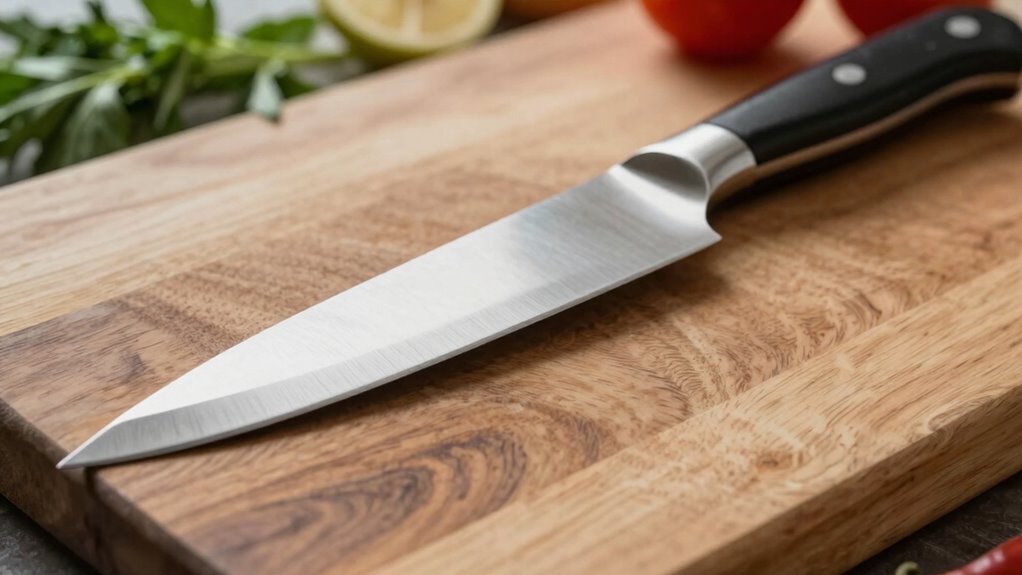
Choosing the right chef knife steel depends largely on how you cook and what fits your budget. Many kitchen knife myths suggest that more expensive steels are always better, but understanding the chef knife history reveals that different steels suit different needs. For example, high-carbon steels offer exceptional edge retention but require more maintenance, ideal if you prioritize sharpness and durability. Lower-cost stainless steels are easier to care for and resist rust, perfect for everyday use. Consider your cooking style—if you handle delicate slicing, a softer steel might be sufficient; for heavy-duty chopping, a tougher, harder steel makes sense. Additionally, steel composition influences corrosion resistance and ease of sharpening, helping you choose a knife that aligns with your maintenance preferences. Understanding steel properties can help you select a steel that balances performance, maintenance, and cost, ensuring your knife serves you well without regrets.
Caring for Your Chef Knife Steel: Maintenance Tips for Longevity
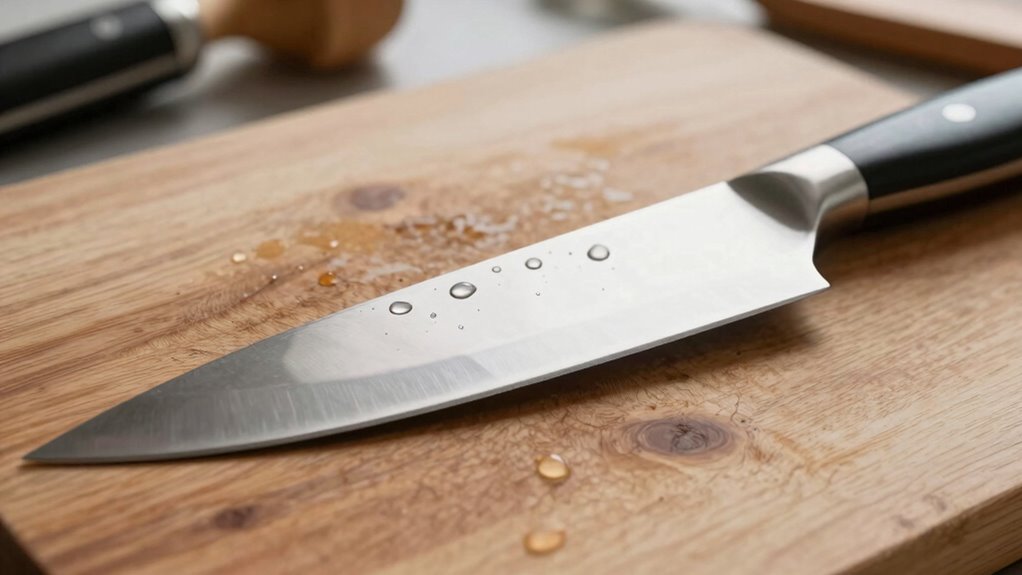
Proper maintenance is essential to keep your chef knife steel performing at its best and lasting for years. To do this, understand that different metal alloys require specific care, and maintaining blade ergonomics enhances safety and comfort during use. Regularly clean your knife with warm water and mild detergent to prevent corrosion. Honing the blade restores its edge, while occasional sharpening keeps it razor-sharp. Avoid cutting on hard surfaces like glass or stone, which can damage the blade. Also, store your knife properly—preferably in a sheath or knife block—to prevent unnecessary dulling. Remember: protective storage helps preserve your knife’s integrity over time. Choose the right cleaning method based on the metal alloy. Maintain proper blade ergonomics for safety and efficiency. Regularly inspect and care for your knife to extend its lifespan. Additionally, understanding blade maintenance techniques can further enhance your knife’s longevity and performance.
Frequently Asked Questions
How Does Steel Composition Affect Knife Performance?
Steel composition directly influences your knife’s performance. Higher steel hardness means the blade stays sharper longer but can be more brittle. If corrosion resistance is a priority, choose steels with elements like chromium, which help prevent rust. Balancing hardness and corrosion resistance guarantees your knife remains sharp and durable without excessive maintenance, making your cooking experience smoother and more enjoyable.
What Are Common Myths About Chef Knife Steels?
Don’t believe the hype—myth debunking shows many steel misconceptions out there. People often think all high-carbon steels are automatically better or that stainless steels are dull and hard to sharpen. The truth is, steel quality varies greatly, and performance depends on the specific alloy and heat treatment, not just labels. You can get a sharp, durable knife if you understand the facts beyond these common myths.
Is Japanese or Western Steel Better for Home Cooks?
Japanese steel often offers exceptional sharpness and edge retention, making it a great choice for home cooks who want precision. Western steel tends to be tougher and easier to sharpen, ideal if you prefer durability. If you’re considering ceramic alternatives, they stay sharp longer but are more fragile. To keep your knife performing well, learn proper knife sharpening techniques, regardless of steel type, and regularly hone your blades.
Can Steel Type Influence the Knife’s Weight and Balance?
Yes, steel type can influence a knife’s weight and balance impact. Heavier steels increase the overall steel weight, making the knife feel more substantial, while lighter steels improve maneuverability. The steel’s density affects the balance point, which can make slicing easier or more tiring over time. When choosing a knife, consider how steel weight impacts your comfort and precision, ensuring you select a balanced tool suited to your cooking style.
How Do I Identify Genuine High-Quality Steel in Stores?
High-quality steel stands out when you compare stainless durability with the right carbon content. Look for knives labeled with grades like VG10, SG2, or AUS-10, which indicate premium steel. Examine the markings on the blade, ensuring they’re etched, not stamped, for authenticity. Feel the weight—genuine high-quality steel often balances well and feels solid. Trust your senses: a sharp, refined edge and a smooth finish signal authentic, durable steel.
Conclusion
Choosing the right chef knife steel is like finding a trusted partner in the kitchen. It might take a bit of exploration, but with patience, you’ll discover the perfect match that elevates your cooking journey. By understanding steel qualities and caring for your knife, you’ll enjoy many delightful culinary moments. Remember, the best blade isn’t just about steel—it’s about how it complements your skills and style. Happy slicing!