Pellet grills create smoke by burning hardwood pellets, which release flavorful smoke that infuses your meat. To get better smoke, choose high-quality pellets like hickory or fruit woods, keep the lid closed, and maintain steady, low temperatures. Features like adjustable augers and proper airflow also help produce more smoke. If you want to maximize flavor and smoke output, understanding how these parts work and using the right techniques can make a big difference—stay tuned to learn more.
Key Takeaways
- Pellet grills create smoke by combusting hardwood pellets, infusing meat with smoky flavor and forming a smoke ring.
- Using high-quality hardwood pellets like hickory or fruit woods enhances smoke production and flavor richness.
- Adjustable settings for temperature and auger speed regulate pellet feed and optimize smoke output during cooking.
- Proper grill maintenance and cleaning ensure good airflow, consistent combustion, and better smoke generation.
- Keeping the lid closed and maintaining low, steady temperatures maximize smoke exposure and enhance flavor infusion.
How Do Pellet Grills Create Smoke and Flavor?

Pellet grills create smoke and flavor through a simple yet effective process. When you select specific wood pellet types, you influence the flavor profile of your cooked food. Different woods, like hickory or apple, release distinct aromas as they burn. As the pellets heat and combust, they produce smoke that infuses your meat with rich, smoky flavor. This process also promotes smoke ring formation, a pinkish layer just beneath the surface of smoked meats, which signals proper smoke exposure. The steady feed of pellets ensures consistent smoke production, allowing flavors to develop evenly. Understanding the wood pellet types and their impact on smoke helps you customize your grilling results. Additionally, mastering pellet feed rates can optimize smoke production and enhance flavor development. Proper capacity and watt-hour management ensures your pellet grill operates efficiently during longer cooking sessions, maintaining consistent smoke and temperature. Being aware of combustion efficiency can further improve your smoke quality and overall grilling experience.
What Features Help Your Pellet Grill Smoke Better?
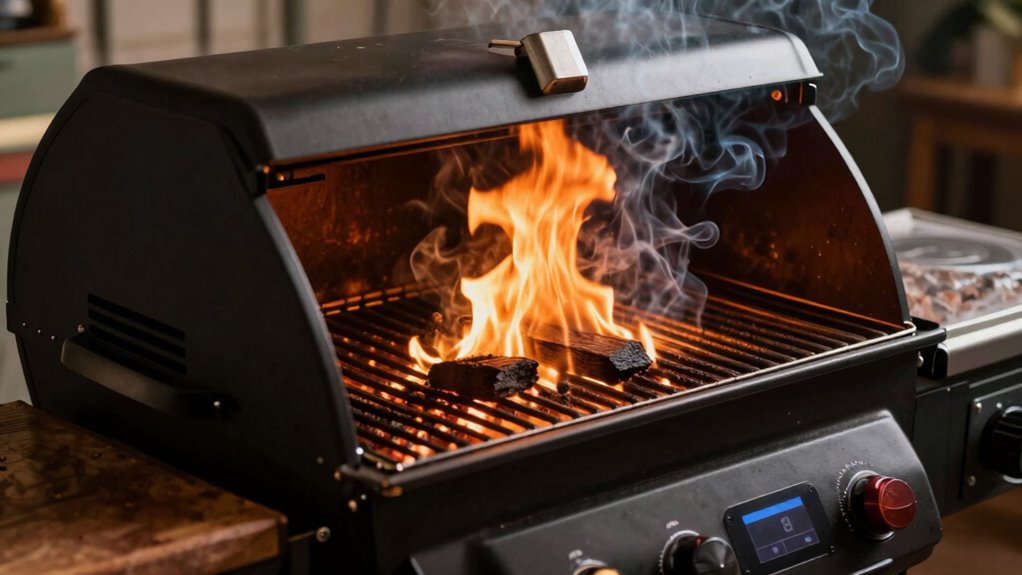
To enhance your pellet grill’s ability to produce rich, consistent smoke, focusing on key features can make a significant difference. One important factor is selecting the right wood pellet varieties, as different woods impart unique flavors and smoke intensities. Hardwoods like hickory or mesquite typically produce more smoke, aiding in better smoke ring formation. Features such as adjustable augers and precise temperature controls also help regulate the smoke output, ensuring steady smoke production without over-smoking your food. A well-designed burn pot can improve combustion efficiency, creating cleaner smoke that promotes better smoke ring formation. Additionally, some grills include smoke enhancement modes or smoke chambers, which maximize smoke exposure. By paying attention to these features, you’ll enjoy a richer, more flavorful smoking experience with impressive smoke rings.
How Can You Maximize Smoke Flavor on Your Pellet Grill?
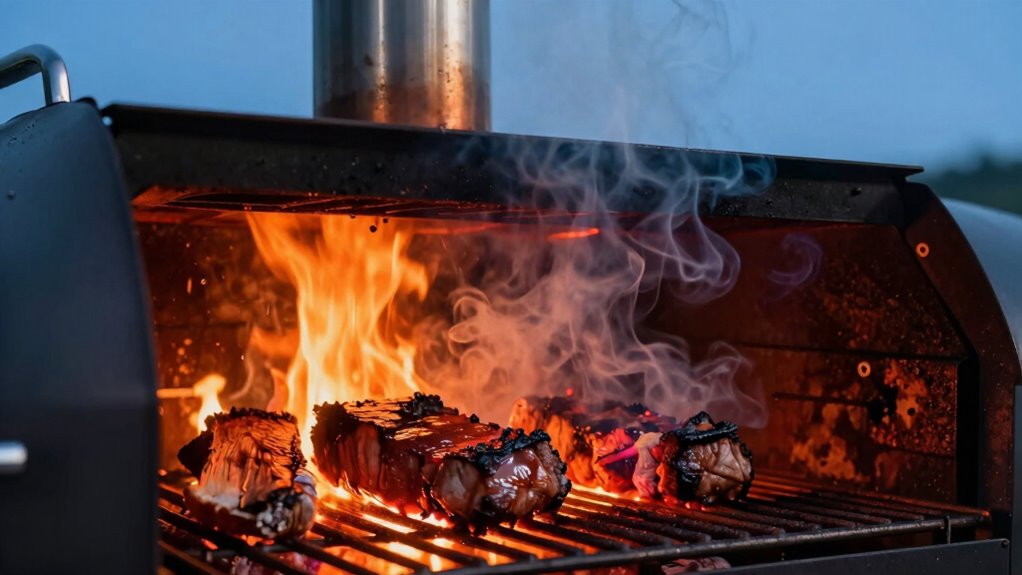
Maximizing smoke flavor on your pellet grill involves more than just selecting the right wood pellets; it requires strategic techniques to enhance smoke exposure. To deepen the smoke ring and boost flavor, start by choosing quality wood pellet choices that produce a strong, clean smoke. Maintain a low and steady cooking temperature to encourage consistent smoke production. Avoid opening the lid too often, as this interrupts the smoky environment. You can also increase smoke by running the grill in a slightly longer smoke setting or by manually adding extra wood pellets during the cook. Remember, the goal is to create a continuous flow of smoke that penetrates the meat, giving you that rich, smoky flavor every time. Additionally, understanding how microplastics in dust can impact air quality highlights the importance of maintaining a clean cooking environment and proper ventilation. Ensuring proper grill maintenance can also help optimize smoke production and flavor consistency. Using proper ventilation techniques can further improve air quality and smoke efficiency during your grilling sessions. Incorporating smoke production strategies and being mindful of air quality concerns can help you achieve a more robust smoky flavor and better overall results.
Why Isn’t My Pellet Grill Producing Enough Smoke?

If your pellet grill isn’t producing enough smoke, several factors could be at play. One common issue is pellet quality; low-quality pellets often burn inefficiently and produce less smoke. Make sure you’re using high-quality pellets designed for ideal combustion. Additionally, grill maintenance plays a vital role—clogged or dirty components can hinder proper airflow and combustion, reducing smoke output. Regularly clean the firepot, burn pot, and auger system to guarantee smooth operation. Also, check that the pellet hopper isn’t running low, as insufficient pellets can cause inconsistent burning. Adjusting the grill’s temperature settings may help, but addressing pellet quality and keeping your grill well-maintained are key to increasing smoke production and achieving better flavor. Proper pellet storage also helps prevent moisture absorption, which can negatively impact smoke and burn efficiency. Ensuring proper airflow management is essential, as it directly influences the amount of smoke your grill produces and how evenly it cooks. Understanding how combustion efficiency impacts smoke output can help you optimize your grilling process. Using high-quality pellets can significantly improve smoke output and overall grilling results.
Tips for Improving Smoke Output and Flavor in Pellet Grilling
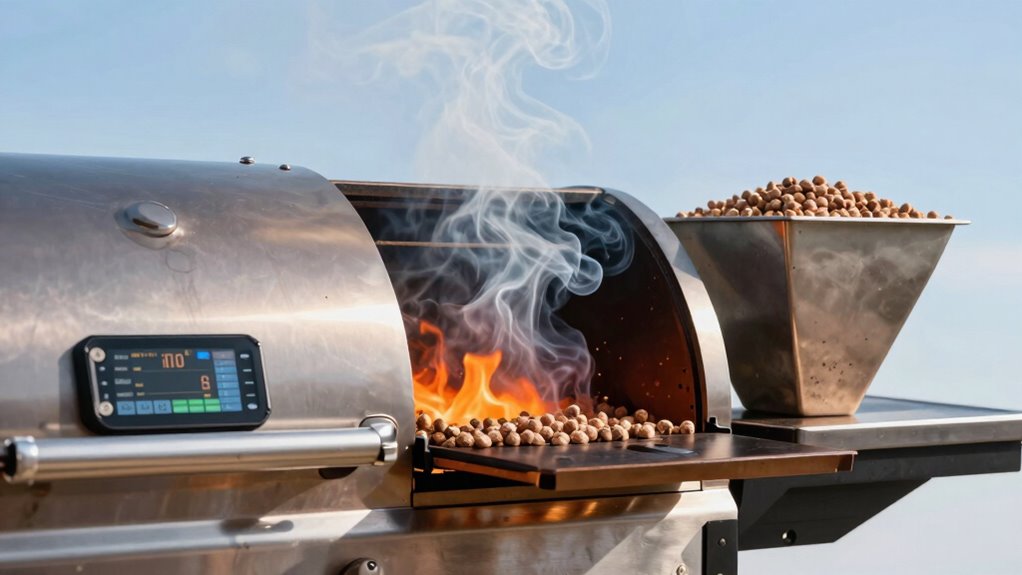
Improving smoke output and flavor in your pellet grill often starts with paying attention to the type of pellets you use. Choose high-quality wood pellets that are 100% hardwood, as these produce richer smoke and help develop a better smoke ring on your meat. To enhance smoke flavor, try using pellets made from fruit or mesquite woods, which add unique aroma profiles. Keep your grill’s lid closed as much as possible to trap smoke and allow flavors to penetrate. Adjust the temperature to stay in the lower range, promoting more consistent smoke production. Regularly clean your grill to prevent ash buildup, which can hinder smoke output. These steps ensure you get ideal smoke flavor and achieve a desirable smoke ring on your cooked meats.
Frequently Asked Questions
Can I Use Different Types of Wood Pellets for Specific Flavors?
Yes, you can use different types of wood pellet varieties for specific flavors to enhance flavor customization. Using different wood pellet varieties like hickory, apple, or mesquite adds unique smoky notes to your food. Experimenting with various wood pellets allows you to achieve the desired flavor profile, whether it’s a mild, sweet, or bold smoky taste. Just make sure the pellets are food-grade and compatible with your pellet grill for the best results.
How Does Ambient Temperature Affect Smoke Production in Pellet Grills?
Ambient temperature impacts smoke production in your pellet grill by causing temperature fluctuations that affect how the pellets burn. Colder air slows down combustion, reducing smoke output, while warmer temperatures boost airflow dynamics, increasing smoke production. You should monitor outdoor conditions and adjust the grill’s vents or pellet feed rate to maintain consistent smoke. This helps make sure your food gets that rich, smoky flavor regardless of temperature changes outside.
Are There Maintenance Tips to Enhance Smoke Quality Over Time?
To keep your pellet grill smoking well, follow regular cleaning routines and store pellets properly. For instance, a hobbyist noticed improved smoke quality after cleaning out ash buildup and switching to dry, well-stored pellets. You should clean the fire pot and grates regularly to prevent blockages and guarantee airflow. Store pellets in a cool, dry place to maintain their quality, which directly impacts smoke production and flavor.
What Are Common Mistakes That Reduce Smoke Output?
You often reduce smoke output by neglecting pellet moisture and grill calibration. If your pellets are too dry, they produce less smoke, so keep them stored properly. Additionally, miscalibrated grills may burn pellets unevenly, lowering smoke. Regularly check and adjust your grill’s settings, and store pellets in airtight containers to maintain moisture. Proper calibration and moisture levels guarantee consistent smoke production, making your grilling experience much better.
Is It Possible to Use a Pellet Grill for Cold Smoking?
You can absolutely turn your pellet grill into a cold-smoking powerhouse! Just lower the temperature way down, almost to a whisper, and use smoke enhancement techniques to keep the smoke flowing without cooking your food. Cold smoking with a pellet grill creates an intense smoky flavor that’s unforgettable, like a flavor explosion in your mouth. Just remember, patience is key—your grill can become a cold-smoking legend if you master these tricks!
Conclusion
Think of your pellet grill as a storyteller, weaving smoke and flavor into every bite. When you understand how it creates smoke and how to enhance it, you’re not just cooking—you’re crafting memories. With patience and care, you access the true potential of your grill, turning simple ingredients into a symphony of taste. Remember, the magic isn’t just in the smoke; it’s in the passion you bring to every meal.