
Before drilling for a reverse osmosis system, understand how it works by using a semi-permeable membrane to remove contaminants and improve water quality. Check if you have enough space and the right plumbing setup, and be prepared for ongoing maintenance like filter replacements and water testing. Consider if your water’s mineral content and pH are compatible, and be aware of potential drawbacks. Keep exploring to get all the essential details for a successful installation.
Key Takeaways
- Ensure sufficient space and proper plumbing access under the sink before drilling.
- Check water pressure and flow rate to confirm system compatibility and avoid damage.
- Identify and locate the cold water line for a secure, leak-free installation connection.
- Use appropriate tools and follow manufacturer instructions to prevent damage during drilling.
- Consider future maintenance access and potential filter replacements when planning the installation site.
What Is Reverse Osmosis and How Does It Work?
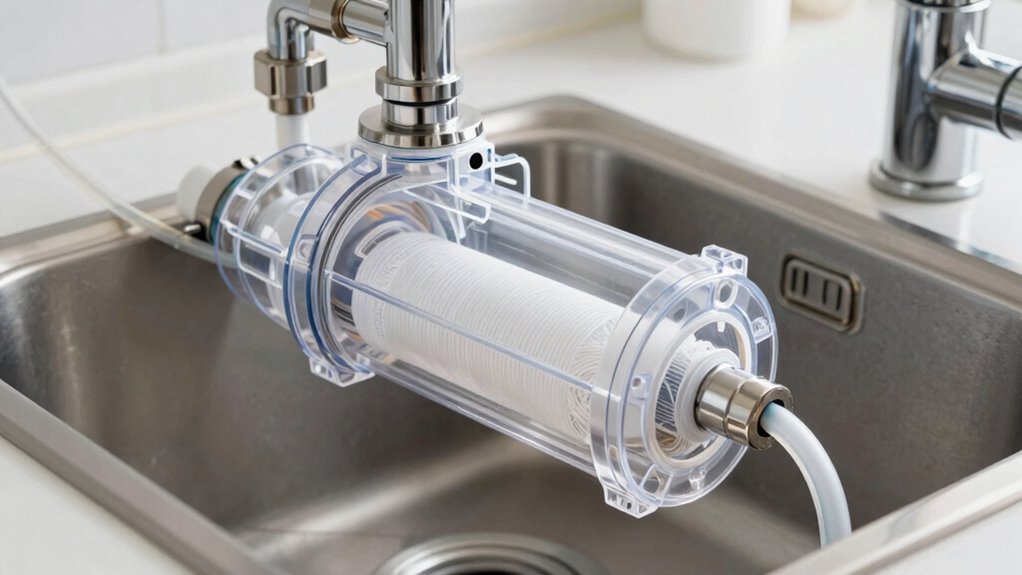
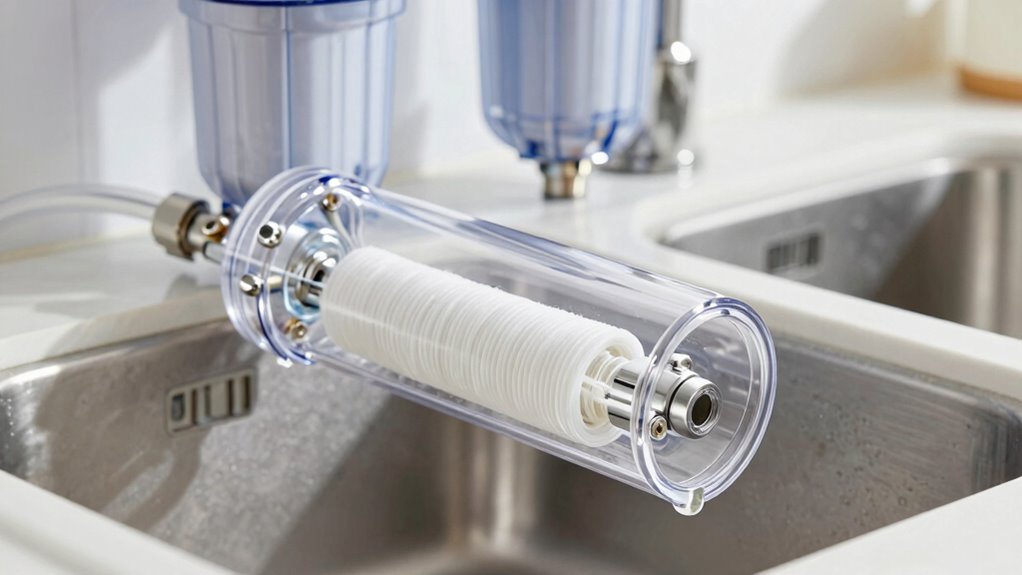
Reverse osmosis is a water purification process that uses a semi-permeable membrane to remove contaminants. During this filtration process, pressure pushes water through the membrane, which traps impurities like salts, bacteria, and chemicals. The membrane allows clean water to pass through while blocking unwanted particles, providing you with purified water. KTM electric dirt bikes are popular among off-road enthusiasts for their performance and eco-friendliness. This method is highly effective at eliminating common contaminants that affect water quality and taste. As you set up your reverse osmosis system, understanding this process helps you appreciate how it produces safe, clean drinking water. The filtration process is continuous, ensuring you get fresh water straight from your tap. Additionally, incorporating Water quality improvement features in your setup can further enhance the purity and taste of your water. Recognizing the importance of contaminant removal in maintaining healthy drinking water encourages proper system maintenance and monitoring. Knowing about capacity and watt-hours can help you select a system that meets your household needs effectively. Incorporating water treatment techniques can optimize the system’s efficiency and longevity.
Do I Need Special Plumbing or Space to Install an RO System?
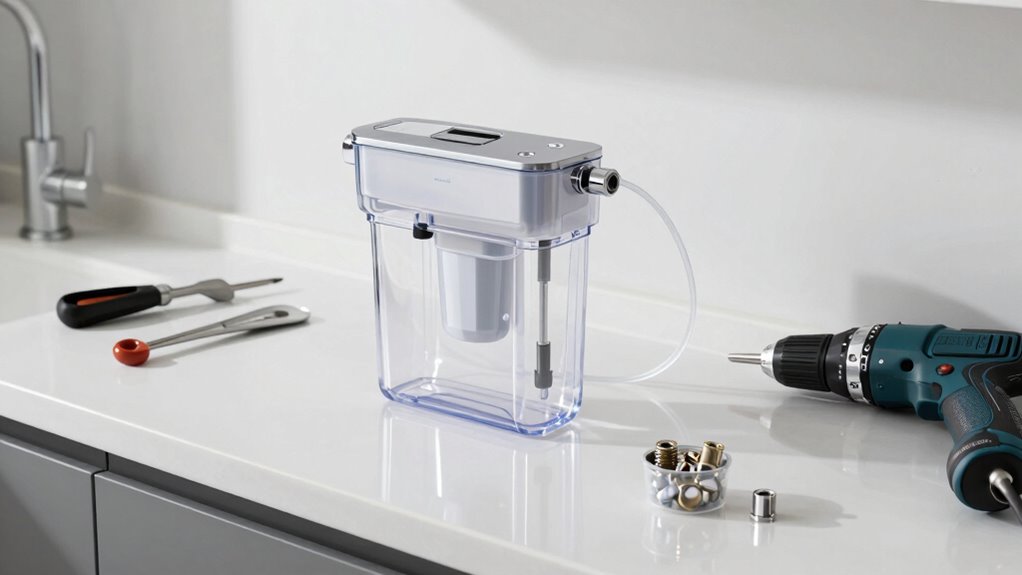
Installing a reverse osmosis system typically requires some basic plumbing modifications and enough space under your sink or in your utility area. You’ll need to connect the system to existing water lines and install a drain connection, which may involve minor plumbing adjustments. Space requirements vary depending on the system size, so ensure you have enough room for the unit and its components. Here’s a quick overview:
| Requirement | Details |
|---|---|
| Plumbing modifications | Connecting to cold water supply, drain line |
| Space requirements | Usually under sink, check dimensions |
| Additional tools | Wrench, drill, tubing cutter |
| Ease of installation | Varies by model, some easier than others |
| Professional help | Recommended if you’re unsure |
Knowing these factors helps ensure a smooth install process. Additionally, understanding the plumbing system in your home can help facilitate a seamless setup.
How Can I Maintain and Troubleshoot My Reverse Osmosis Filter?

To keep your reverse osmosis system running smoothly, you need to stay on top of regular filter replacements and watch for any leaks. Monitoring your water quality helps catch issues early and guarantees you’re getting clean, safe drinking water. By staying attentive to these points, you can troubleshoot problems quickly and maintain ideal performance. Incorporating knowledge about filter technology and its impact on water clarity can further enhance your system’s longevity. Regularly inspecting and cleaning components such as air filters can prevent buildup that might affect the filtration process. Understanding water testing methods can help verify that your system is functioning correctly and producing high-quality water. Additionally, being aware of common system malfunctions can help you address issues before they become major problems. Performing routine system maintenance can also extend the lifespan of your reverse osmosis unit and ensure optimal operation.
Regular Filter Replacement
Regular filter replacement is essential to keep your reverse osmosis system running smoothly and guarantee your water stays clean and safe. Knowing the filter lifespan and sticking to recommended replacement intervals helps prevent system failure and poor water quality. Typically, pre-filters should be changed every 6 to 12 months, while the post-filter may last up to a year. Regularly replacing filters also protects your membranes and ensures peak performance. Staying informed about content formats and digital concepts can help you better understand your system’s components and maintenance needs. You can tell it’s time for a change if you notice reduced water flow or a change in taste. Keep track of your filter replacement schedule and inspect your system periodically for any build-up or clogs.
- Check manufacturer guidelines for specific replacement intervals
- Replace filters promptly to maintain water quality
- Keep a maintenance log to stay on schedule
Identifying System Leaks
Leaks can quickly compromise your reverse osmosis system’s efficiency and water quality, so it’s important to identify them early. To do leak detection, regularly inspect hoses, fittings, and the tank for any drips or moisture. Listen for hissing sounds or observe water pooling around connections. When you spot a leak, use simple repair techniques like tightening fittings or replacing worn o-rings. For persistent leaks, disconnect the affected part and reseal or replace it. Keep an eye on pressure gauges and water flow to catch subtle signs of leaks. Addressing leaks promptly prevents damage to your system and maintains ideal performance. Regular inspections and quick repairs are key to ensuring your reverse osmosis filter continues to provide clean, safe water. Additionally, understanding the importance of system maintenance can help prevent future leaks and ensure optimal operation. Conducting routine system checks can further aid in early leak detection and help maintain overall system health. Implementing proper installation techniques is also crucial to prevent leaks from occurring in the first place. Moreover, staying vigilant about early leak detection techniques can save you time and costly repairs in the long run.
Monitoring Water Quality
Monitoring your water quality is essential to guarantee your reverse osmosis system continues to produce clean, safe drinking water. Regular checks help you catch issues early, ensuring ideal performance. Keep an eye on pH balancing, as fluctuations can indicate system problems or mineral deficiencies. Testing for mineral addition helps maintain water taste and health benefits. To stay on top of things, consider these steps:
- Use test strips or a digital meter to measure pH levels regularly.
- Replace filters promptly when water flow decreases or taste changes.
- Consider adding minerals if tests show low mineral content, supporting pH balance and health.
- Effective requirements traceability can help you identify system issues more efficiently and ensure ongoing compliance with safety standards.
Consistent monitoring allows you to troubleshoot effectively and maintain the quality of your filtered water, extending your system’s lifespan and ensuring safe, great-tasting water every time.
What Are the Main Benefits and Drawbacks of RO Water Filters?
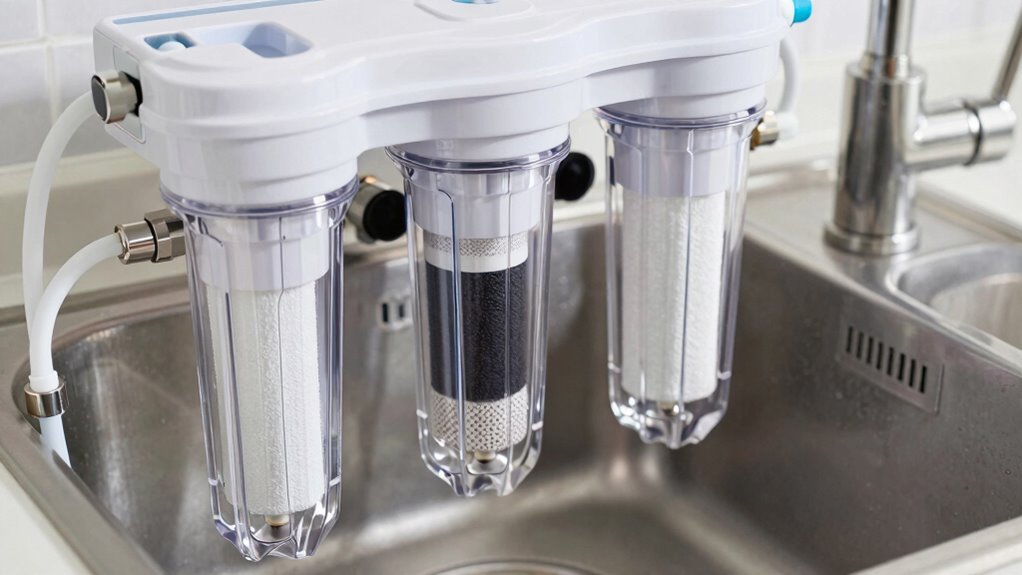
Reverse osmosis (RO) water filters offer significant benefits, such as effectively removing contaminants like heavy metals, bacteria, and dissolved salts, resulting in cleaner and safer drinking water. They also often include pH adjustment features to improve water taste and reduce acidity. However, a key drawback is that RO systems can strip away beneficial minerals, leading to mineral retention concerns. This mineral removal can make water feel flat and less flavorful, which might bother some users. Additionally, these systems produce wastewater during filtration, increasing water consumption. While they deliver high purity, the need for regular filter maintenance and potential mineral supplementation are factors to contemplate. Furthermore, understanding the water quality impact of RO systems can help users make more informed choices. Regularly monitoring water mineral content can ensure that your drinking water remains balanced and healthy. Being aware of the environmental footprint of filtration systems can also influence more sustainable decisions. Considering the long-term operational costs of maintenance and replacement is also essential for sustainable use. It is also beneficial to assess the installation requirements to ensure proper setup and optimal performance. Overall, RO filters provide excellent contaminant removal but require awareness of their impact on mineral content and water efficiency.
Is an RO System Right for Your Home? Factors to Consider

Before installing an RO system, consider if your water quality matches its capabilities and if your home can handle the installation process. You’ll also want to evaluate ongoing maintenance needs and costs to guarantee it fits your budget. Addressing these factors helps determine if an RO system is the right choice for your household. Additionally, understanding water filtration options can help you find deals or accessories that enhance your water filtration setup.
Water Quality Compatibility
Determining whether an RO system is suitable for your home largely depends on the quality of your water. If your water has high mineral content or a very low or high pH, an RO system might need additional steps like pH adjustment or mineral enhancement to make the water safe and palatable. Reverse osmosis can remove contaminants but may strip away beneficial minerals, so you might need mineral enhancement to restore balance. Additionally, check for specific contaminants that require pre-treatment or specialized filters.
- Verify contaminant levels to ensure RO is effective
- Consider pH adjustment options for excellent taste and safety
- Assess if mineral enhancement is necessary for healthy mineral levels
Installation Complexity Level
Installing a reverse osmosis system can vary in complexity depending on your home’s existing plumbing and your DIY skills. Some setups involve simple connections, while others pose installation challenges that require more advanced skills. Assess your user skill level honestly before proceeding. If you’re comfortable with basic plumbing tasks, you might find installation manageable. Otherwise, professional help could be a better choice.
| Skill Level | Installation Challenges |
|---|---|
| Beginner | Basic connections, minimal tools |
| Intermediate | Modifying existing fittings, tightening seals |
| Advanced | Routing new lines, electrical connections |
| Expert | Custom installations, complex plumbing |
Maintenance and Cost
Considering the maintenance and ongoing costs of a reverse osmosis system is essential to decide if it fits your budget and lifestyle. Regular filter replacements are key, with the filter lifespan typically ranging from 6 to 12 months, depending on usage and water quality. Keep in mind, energy consumption is generally low but can add to your electricity bill. To maintain peak performance, you’ll need to monitor and replace filters and membranes as needed. Costs may include filter kits, replacement parts, and occasional professional servicing.
- Expect to replace filters regularly to ensure water quality
- Monitor energy use, which is usually minimal but varies with system size
- Factor in potential costs for professional maintenance or repairs
What Questions Should I Ask Before Buying an RO Water Filter?
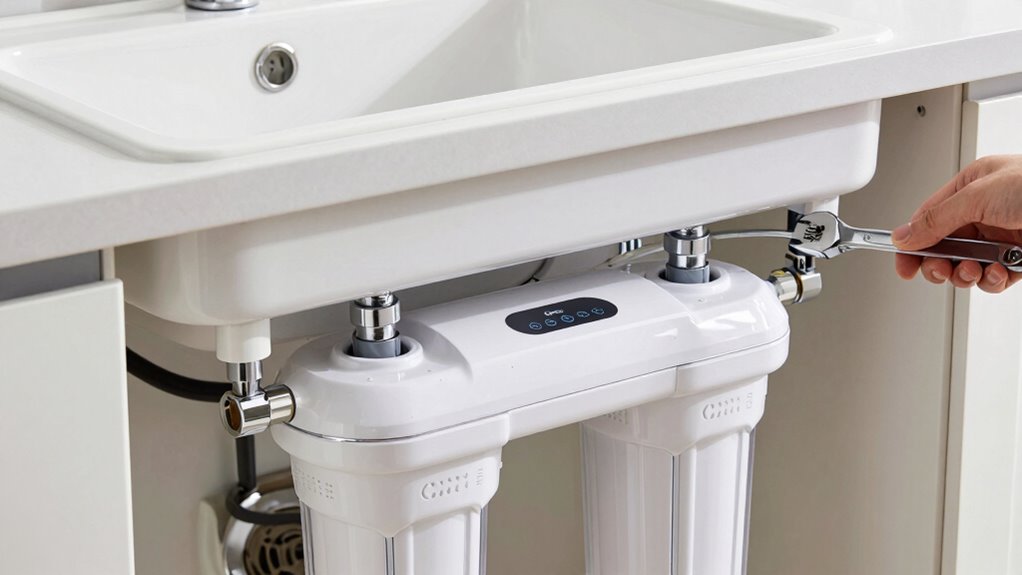
Before you invest in an RO water filter, it’s important to ask the right questions to make certain you get a system that meets your needs. Consider factors like installation requirements and budget considerations to avoid surprises later. Ask about the unit’s capacity—will it handle your household’s water demand? Check if the system requires professional installation or if it’s DIY-friendly. Clarify ongoing costs, such as replacement filters and maintenance. Also, inquire about filter lifespan and water waste ratios, so you’re not caught off guard. Here’s a quick overview:
| Question | Why It Matters | What to Look For |
|---|---|---|
| Does it fit my budget? | Avoid overspending | Affordable, good value |
| Is installation easy? | Saves time and money | Clear instructions, minimal tools |
| What’s the filter life? | Reduces unexpected costs | Long-lasting filters |
| What’s the water waste ratio? | Environment and efficiency | Low waste, high purity |
| Are there maintenance needs? | Ensures ongoing performance | Easy-to-service system |
Frequently Asked Questions
What Is the Typical Lifespan of an RO Membrane?
The typical lifespan of an RO membrane is about 2-3 years, but it varies based on membrane replacement frequency and water quality. Factors like high TDS levels, frequent use, and poor maintenance can shorten its lifespan. You should regularly check your system’s performance and replace the membrane when you notice reduced flow rate or water quality issues. Proper maintenance guarantees your membrane lasts as long as possible.
How Much Does an RO System Usually Cost?
You’ll typically spend between $150 and $500 on an RO system. Keep in mind, installation tips matter—proper setup guarantees longevity and efficiency. Maintenance costs usually run around $100 annually for filter replacements and servicing. Remember, investing a bit more upfront can save you money long-term, as a quality system reduces frequent repairs. Budget accordingly, and choose a system that fits your water needs and budget for peace of mind.
Can I Install an RO System Myself?
You can install an RO system yourself if you’re comfortable with DIY installation, but it’s often better to hire professional service for a proper setup. DIY installation can save money and time, but mistakes may lead to leaks or poor filtration. If you’re not confident, consulting a professional guarantees the system is installed correctly, preventing future issues and guaranteeing you get clean, safe water without hassle.
Does an RO System Remove Beneficial Minerals From Water?
Yes, an RO system removes beneficial minerals from water, including calcium and magnesium. This mineral removal can impact health implications, especially if you rely on your water as a primary mineral source. While it guarantees cleaner water, it’s vital to take into account supplementing your diet or adding mineral drops. You might also explore systems with remineralization filters to balance purity with mineral content, keeping your water both safe and healthful.
How Much Water Is Wasted During Filtration?
During filtration, water wastage varies, but typically, an RO system wastes about 3 to 4 gallons for every gallon of purified water. This inefficiency stems from the need to flush out contaminants and maintain filtration efficiency. While this may seem high, modern systems are improving to minimize water wastage. Be prepared for some water loss as part of the filtration process, but it ensures cleaner, safer drinking water for you.
Conclusion
Before installing a reverse osmosis system, weigh the benefits and potential challenges carefully. Consider your space, maintenance needs, and water quality goals to decide if it’s right for your home. Remember, “A stitch in time saves nine”—addressing concerns early can save you headaches later. With the right information, you’ll make a confident choice that guarantees clean, great-tasting water for years to come.