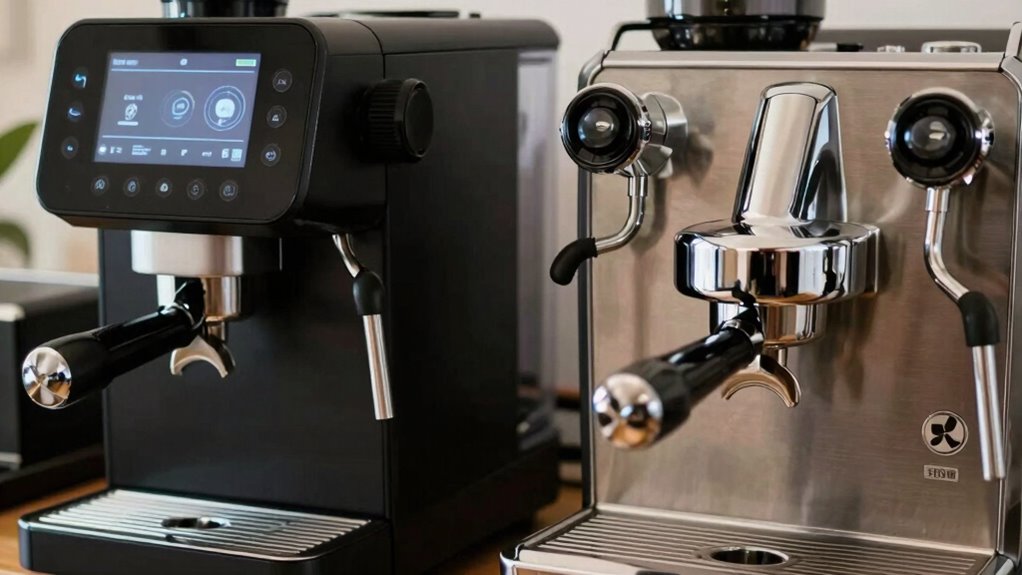

Super-automatic espresso machines do everything at the push of a button, making them perfect if you want convenience and consistent results with minimal effort. Semi-automatic machines require more hands-on control, giving you the flexibility to adjust grind size, tamping, and brewing time for personalized flavors. If you’re after simplicity or customization depends on your skill level and goals. Keep exploring to see which type suits your lifestyle best.
Key Takeaways
- Super-automatics handle all brewing steps automatically, while semi-automatics require manual control for grinding, tamping, and brewing.
- Semi-automatics offer more customization and control over flavor, whereas super-automatics prioritize convenience and consistency.
- Super-automatics are ideal for beginners and busy lifestyles, needing minimal user involvement; semi-automatics suit enthusiasts who enjoy tinkering.
- Maintenance for super-automatics is generally easier with automated cleaning cycles; semi-automatics demand manual cleaning and adjustments.
- Cost varies: super-automatics typically range $1,000–$3,000, semi-automatics $500–$1,500, affecting long-term investment choices.
What Are Super-Automatic and Semi-Automatic Espresso Machines?

Have you ever wondered what sets super-automatic and semi-automatic espresso machines apart? The main difference lies in how much control you have over the brewing process. Super-automatic machines handle almost everything at the push of a button, providing consistent coffee flavor with minimal effort. They’re built for convenience and often feature durable construction to withstand daily use, ensuring long-term reliability. Semi-automatic machines give you more control, allowing you to manually operate the grind, tamp, and extraction times. While they may require more skill, they often produce richer coffee flavor because you can fine-tune each step. Both types are designed with durability in mind, but their operational differences impact how you experience brewing and the long-term reliability of the machine. Incorporating precision control can further enhance your brewing experience, especially with semi-automatic models.
How Do These Machines Differ in Operation?
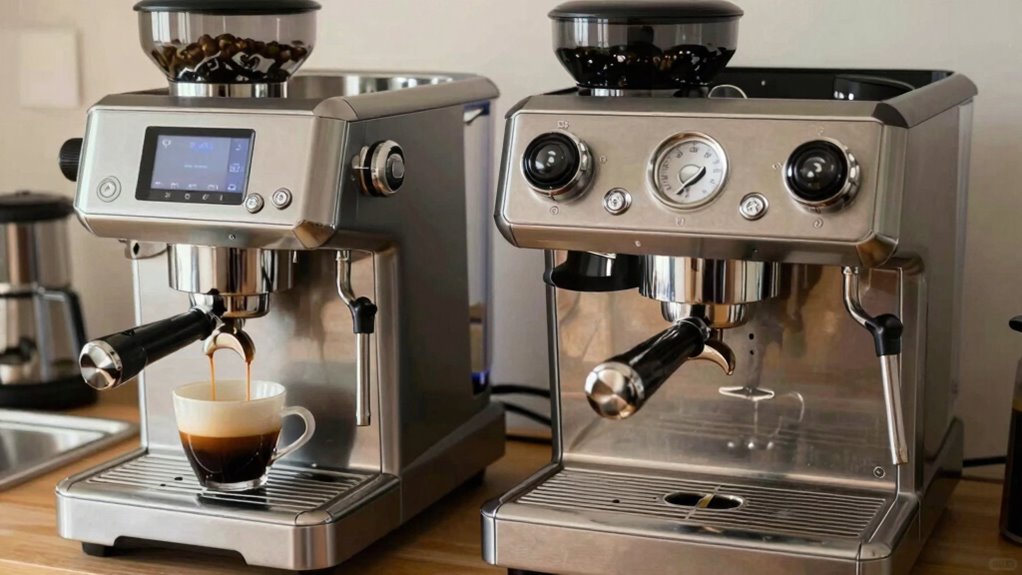
Super-automatic and semi-automatic espresso machines operate quite differently, reflecting their distinct approaches to brewing. Super-automatic machines handle almost everything with automation features, from grinding beans to frothing milk, often at the push of a button. You simply load the beans, select your options, and let the machine do the rest. In contrast, semi-automatic machines give you manual control over key steps, like tamping, brewing, and steaming. You operate the machine’s controls, making adjustments based on your preferences. This means you’re more involved in the process, shaping the final flavor and texture. While super-automatics prioritize convenience, semi-automatics offer a hands-on experience and greater control, appealing to those who enjoy crafting their espresso with precision.
Are Super-Automatic Machines Good for Beginners?
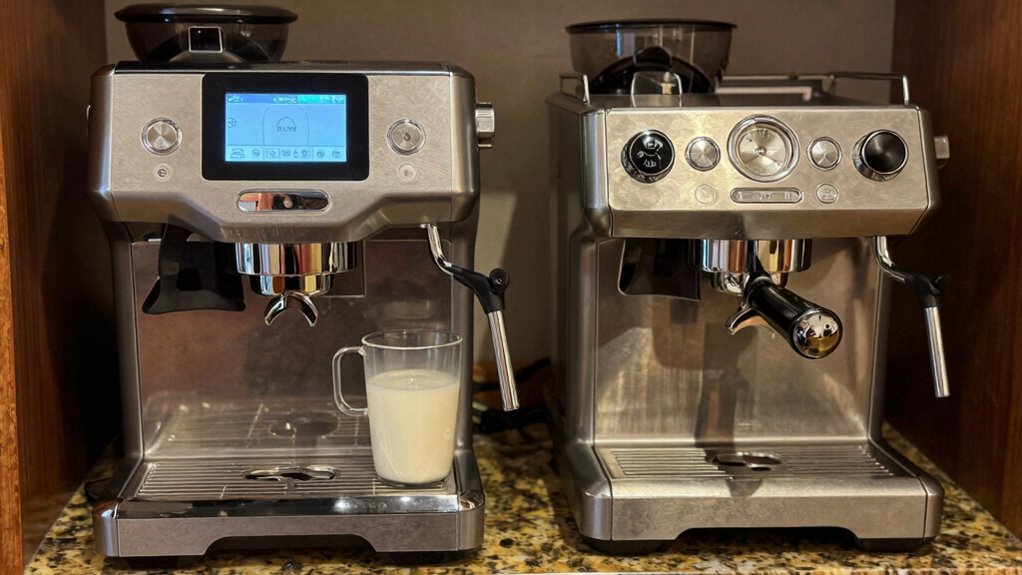
If you’re new to making espresso, super-automatic machines can be an excellent choice because they simplify the process and require minimal skill. Their compact machine size makes them ideal for home use, fitting easily on countertops without taking up too much space. These machines handle everything from grinding beans to steaming milk at the push of a button, making them user-friendly for beginners. Additionally, choosing a model from a reputable brand ensures reliability and consistent results, which is *vital* when you’re just starting out. While some may worry about the complexity of larger machines, super-automatics are designed with simplicity in mind. Understanding the different dog breeds can help you select equipment that suits your lifestyle and needs. Overall, if you want a straightforward, fuss-free espresso experience, super-automatic machines are a smart option for beginners.
What Are the Main Advantages and Disadvantages of Each Type?
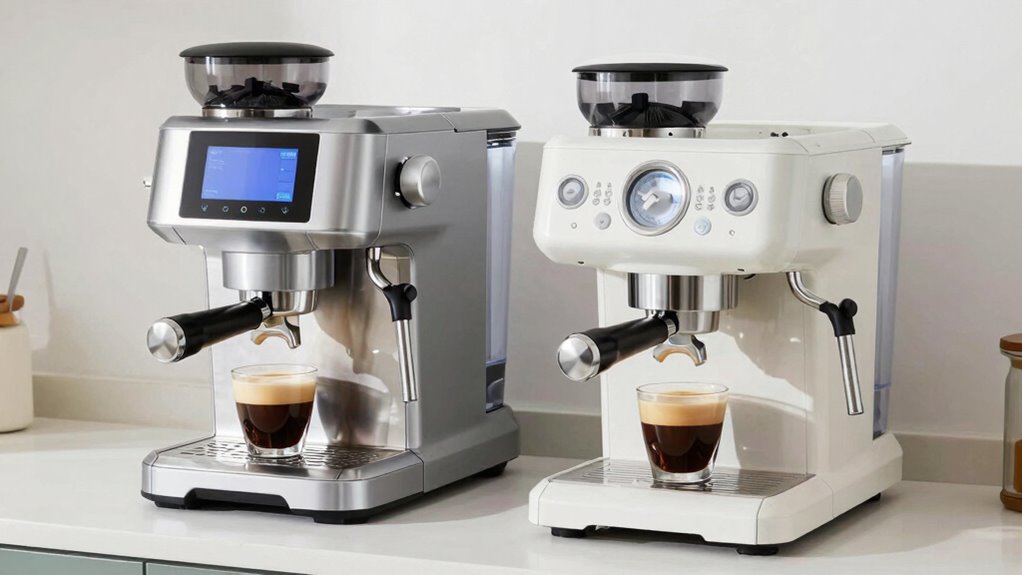
What are the main advantages and disadvantages of each type of espresso machine? Super-automatic machines excel in user experience, offering quick, hands-free brewing with consistent flavor. However, they can be less flexible and harder to customize, limiting your control. Semi-automatic machines provide more control over brewing variables, allowing you to fine-tune flavor and extraction but require more skill and effort.
Super-automatic machines offer convenience and consistency, while semi-automatics provide customizable control with more effort.
Consider these points:
- Super-automatics ensure flavor consistency with minimal effort
- Semi-automatics allow customization for personalized taste
- User experience is simpler with super-automatics
- Semi-automatics demand learning and skill
- Maintenance and repairs may vary in complexity
Choosing depends on whether you prioritize convenience or control in your espresso routine.
How Much Do Super-Automatic and Semi-Automatic Espresso Machines Cost?

The cost of espresso machines varies widely depending on their features and complexity. When comparing prices, you’ll notice super-automatic machines typically fall within the $1,000 to $3,000 range, offering convenience and advanced features. Semi-automatic models are usually more affordable, often priced between $500 and $1,500. Your affordability factors include your budget, desired control level, and how much maintenance you’re willing to handle. While super-automatics provide quick, hands-free operation, semi-automatics require more user input but cost less upfront. Keep in mind, higher-priced models often include better build quality, more features, and durability. Understanding this pricing comparison helps you choose a machine that balances your needs and budget without paying extra for unnecessary features. Additionally, Free Floating techniques can enhance your brewing setup by optimizing space and efficiency.
Which Machine Offers More Control and Customization?
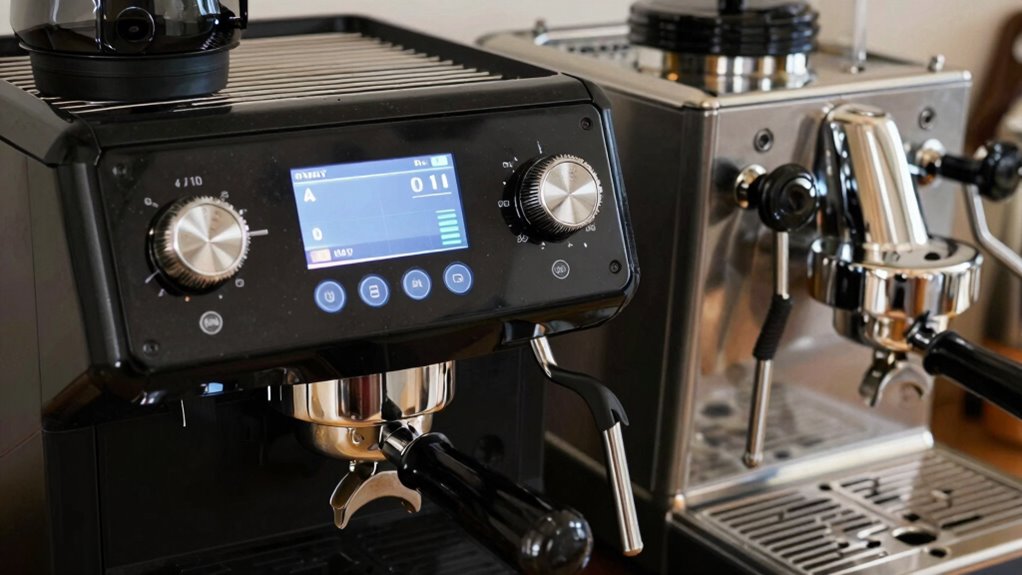
When it comes to control and customization, semi-automatic espresso machines generally give you more hands-on options than super-automatic models. This means you can fine-tune variables like grind size, tamping pressure, and brewing time to optimize brew quality. With semi-automatics, you have direct control over each shot, allowing you to experiment and perfect your espresso. This often results in better brew quality and can extend the machine’s durability since fewer complex components are involved. Additionally, you can customize the extraction process for different beans or preferences. However, this requires more skill and attention. If you enjoy tinkering and want maximum control, semi-automatic machines suit you best. They provide the flexibility needed to craft personalized espresso experiences.
Is Maintenance and Cleaning Easier on One Type Than the Other?

Cleaning and maintaining your espresso machine can be straightforward or time-consuming, depending on the type you choose. Super-automatic models often require less frequent cleaning because they handle much of the process themselves, while semi-automatics may need more regular upkeep. Consider how much time you’re willing to invest in maintenance when comparing these options.
Ease of Cleaning
Is maintaining your espresso machine a straightforward task? When it comes to cleaning routines, super-automatic machines often have the edge, thanks to automated features that handle many tasks. They usually require less disassembly and manual scrubbing, making daily upkeep simpler. Semi-automatic machines may need more hands-on cleaning, like descaling and rinsing parts manually, which can be time-consuming. Proper cleaning routines directly impact machine longevity, so choosing one that’s easier to maintain can save you effort in the long run. Additionally, automated cleaning cycles reduce user effort and ensure thorough maintenance. As automation advances, the role of AI ethicist jobs in designing smarter cleaning systems that prioritize safety and user privacy is becoming increasingly relevant. Moreover, some machines incorporate advanced sensors to monitor cleanliness levels, further simplifying maintenance tasks. Incorporating smart cleaning technology can also help detect potential issues early, preventing costly repairs later. These innovations contribute to a more hassle-free user experience by streamlining routine maintenance.
Maintenance Frequency
Super-automatic machines generally require less frequent maintenance because their automated features handle many tasks, such as cleaning cycles and descaling alerts. This automation reduces the time you spend on routine upkeep, but you still need to monitor components like grinder quality and water filtration. High-quality grinders tend to clog less and produce better coffee, which means fewer cleaning sessions. Regularly replacing water filters helps prevent mineral buildup and prolongs machine life, reducing maintenance frequency. Unlike semi-automatic models, which often need manual cleaning of brew groups and grinders, super-automatics streamline this process, making maintenance quicker and easier. Staying attentive to grinder performance and water filtration guarantees your machine runs smoothly and consistently. Additionally, many models feature automatic rinsing and cleaning programs that further simplify maintenance routines. Proper use of machine sensors can also alert you to potential issues early, minimizing unexpected repairs and downtime.
Which Espresso Machine Is Right for Your Lifestyle and Brewing Goals?
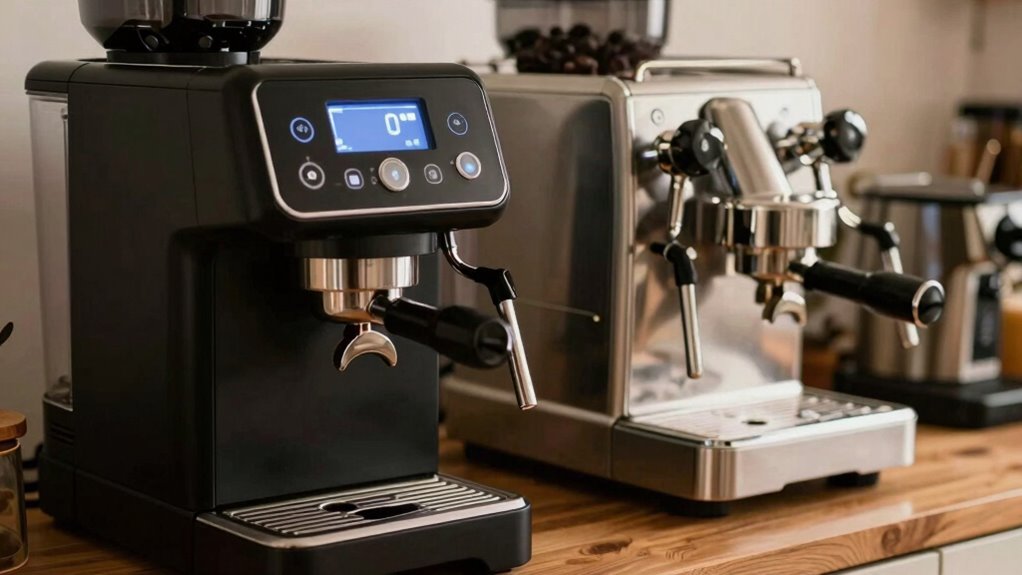
Choosing the right espresso machine depends on your lifestyle and brewing goals. Consider how much you value ease of use, how much you want to customize your drinks, and your budget. These factors will help you find the perfect fit for your coffee routine. Additionally, understanding coffee gear and how it impacts extraction can help you make more informed decisions. For example, selecting the appropriate grinder can significantly influence the flavor and quality of your espresso.
Ease of Use
When selecting an espresso machine, considering how much effort you want to put into brewing can make a big difference in your daily routine. Super-automatic machines excel in ease of use, handling grinding requirements, brewing, and milk frothing at the push of a button. Semi-automatic machines require more hands-on control, meaning you’ll need to grind beans and manually froth milk, which can be rewarding or time-consuming depending on your preference. Think about your comfort level with these tasks and how much time you want to spend.
Key points to consider:
- Level of automation for grinding and frothing
- Ease of operation with one-touch functions
- Time required for manual milk frothing
- Learning curve for semi-automatic control
- Intuitive interface for quick brewing
Customization Options
Your lifestyle and brewing goals play a crucial role in determining which espresso machine offers the right level of customization. If you value control over grinding clarity, semi-automatic machines allow you to adjust grind size and tamping pressure, giving you more precision for your perfect shot. Milk frothing options vary too—manual frothing on semi-automatics lets you create tailored textures, while super-automatics often come with pre-set frothing modes suitable for quick drinks. Consider how much you enjoy tinkering with your brew; if you thrive on fine-tuning each element, a semi-automatic offers more flexibility. Conversely, if convenience is your priority, a super-automatic’s built-in features simplify the process without sacrificing quality. Your choice ultimately depends on how hands-on you want to be with coffee customization and milk frothing.
Budget Considerations
Budget considerations play a significant role in selecting the right espresso machine for your lifestyle and brewing goals. Your budget influences not only the initial purchase but also ongoing costs like coffee bean quality and maintenance. A higher-end machine with better warranty coverage can save you money long-term by reducing repairs and ensuring consistent performance. Semi-automatic machines often cost less upfront, but super-automatic models may offer more convenience for busy mornings. Consider these points:
- Cost of coffee beans and their quality
- Warranty coverage and service support
- Maintenance and replacement parts
- Features that match your brewing skills
- Long-term durability and reliability
Balancing these factors helps you choose an espresso machine that fits your budget while meeting your coffee expectations.
Frequently Asked Questions
Can I Upgrade a Semi-Automatic Machine to a Super-Automatic Model?
You can’t directly upgrade a semi-automatic machine to a super-automatic model because of upgrade compatibility issues. These machines have different internal components and control systems, making machine modification complex and usually impractical. Instead, if you want the convenience of a super-automatic, consider purchasing a new machine designed for that purpose. Upgrading isn’t a feasible or cost-effective option, so starting fresh is the best approach.
Do Super-Automatic Machines Use More Energy Than Semi-Automatic Ones?
Think of super-automatic machines as energy hogs at a buffet—they tend to use more energy than semi-automatic ones. They often have additional features like grinders and milk frothers that draw extra power, affecting overall energy consumption. While both types prioritize power efficiency, super-automatics generally consume more energy because of their complex components and automation. If saving energy is key, semi-automatics might be the smarter, more efficient choice for you.
Are There Specific Brands Known for Quality in Each Machine Type?
You’ll find that brands like Jura and Saeco are known for quality super-automatic machines, praised for their durability and ease of use. For semi-automatic options, Breville and Gaggia often receive high customer reviews for performance and craftsmanship. When choosing, consider brand reputation and customer feedback, as these factors help guarantee you get a machine that fits your needs and offers consistent, quality espresso every time.
How Long Does It Typically Take to Brew a Shot on Each Machine?
Imagine the rich aroma filling your kitchen as your machine begins its work. On a super-automatic, shot brewing duration is quick, usually around 25-30 seconds, thanks to its automated process. In contrast, semi-automatic machines give you more control, so your shot brewing time might stretch to 30-40 seconds. The brew time differences let you decide if you want convenience or hands-on control for your perfect espresso.
What Features Should I Look for When Choosing Between the Two?
When choosing between a super-automatic and semi-automatic espresso machine, focus on user-friendliness and maintenance needs. If you want easy operation, go for a super-automatic with one-touch brewing and built-in grinders. For more control, semi-automatic machines offer manual features but require regular cleaning and descaling. Consider your skill level, how much effort you’re willing to put in, and the features that best match your espresso-making style.
Conclusion
Choosing between super-automatic and semi-automatic espresso machines is like picking a trusted partner—one guides you effortlessly, while the other invites you to craft your masterpiece. Consider your skill level, control desires, and daily routine. Whichever you choose, remember it’s about brewing joy, not just coffee. With the right machine, you’ll turn your kitchen into a cozy café, where every cup tells your unique story—delivering warmth and comfort with each sip.