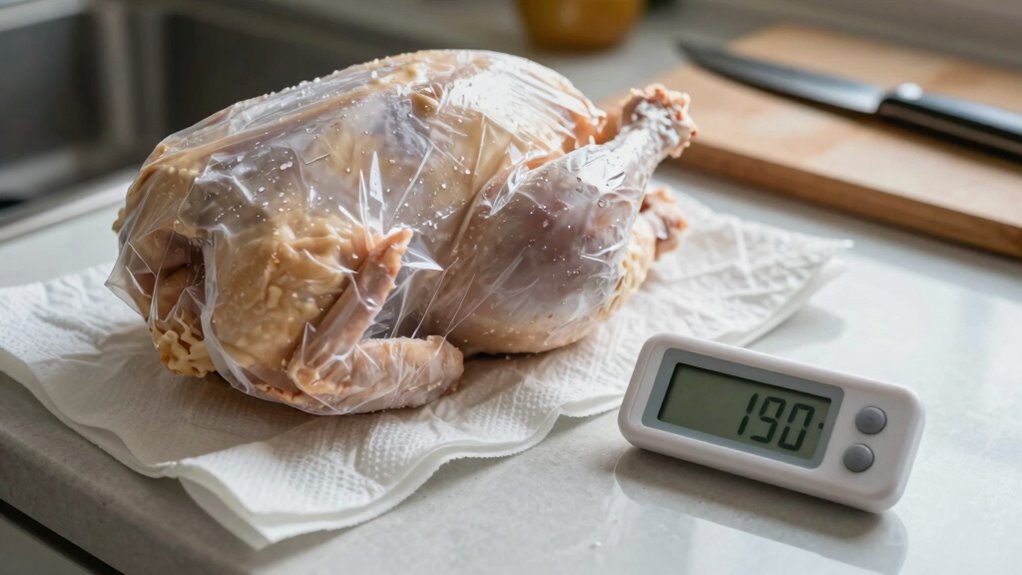

The biggest shortcut that causes most food poisoning is leaving food at room temperature to thaw. It might seem quick, but this practice lets bacteria multiply rapidly in the temperature danger zone (40°F-140°F). Instead, use safe methods like thawing in the refrigerator, cold water, or microwave, which keep your food safe and fresh. Want to avoid risking your health? Continue to discover proven techniques for safe, bacteria-free thawing.
Key Takeaways
- Thawing food at room temperature is a common shortcut that significantly increases bacteria growth and food poisoning risk.
- Unsafe thawing methods, like leaving food out, allow bacteria to thrive in the temperature danger zone (40°F–140°F).
- Proper thawing techniques such as refrigerator, cold water, or microwave thawing prevent bacterial multiplication.
- Rushing thawing processes or neglecting safe methods can lead to cross-contamination and foodborne illnesses.
- Planning ahead and following approved thawing steps are essential to avoid the most common causes of food poisoning.
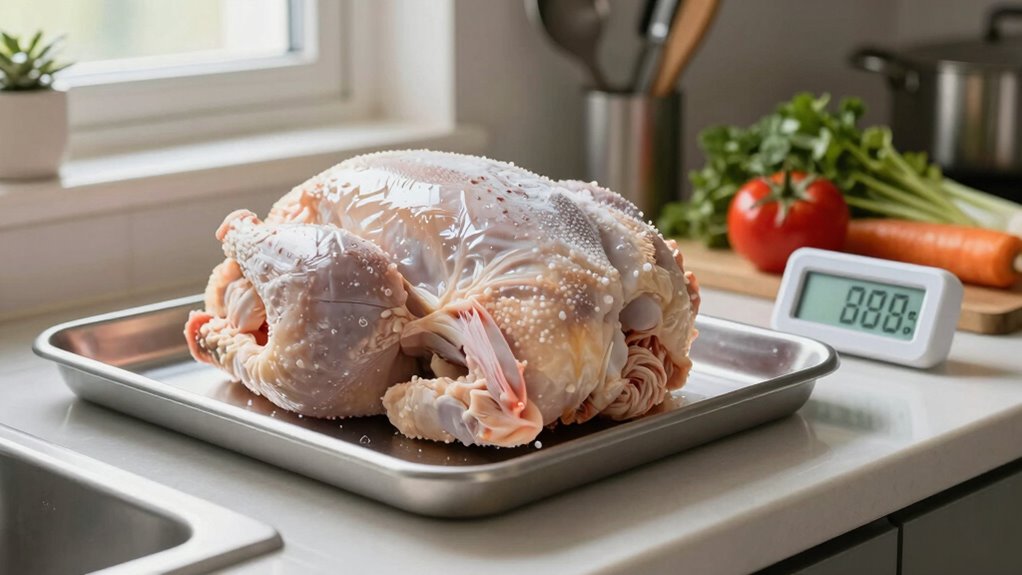
Thawing food safely is essential to prevent bacteria growth and guarantee your meals are both delicious and safe to eat. When you rush or ignore proper methods, you risk cross-contamination and foodborne illnesses. Knowing the right thawing techniques is indispensable for maintaining food safety in your kitchen. The most common mistake people make is using unsafe methods, such as leaving food out at room temperature, which creates an ideal environment for bacteria to multiply rapidly. To prevent this, you should always plan ahead and use approved thawing techniques that keep food at safe temperatures.
Proper thawing techniques are key to preventing bacteria growth and ensuring food safety.
One of the safest ways to thaw food is in the refrigerator. This method requires some planning because it takes the longest—usually a day or more, depending on the size of the item. However, it’s the most reliable for maintaining food safety because the cold environment prevents bacteria from growing. When you thaw meat, poultry, or seafood this way, ensure your refrigerator is set to 40°F (4°C) or lower. Keep the food in its original packaging or place it in a leak-proof container to prevent any drips from contaminating other items. Once thawed, cook the food promptly to avoid any bacteria that may have started to grow during the process.
Another effective thawing technique is using cold water. This method is faster than refrigerator thawing but still safe if done correctly. Submerge the food in a leak-proof plastic bag, ensuring it’s sealed tightly. Then, place the bag in cold water, changing the water every 30 minutes to keep it cold. This method is suitable for smaller items like chicken breasts or steaks. It allows you to thaw food more quickly while still keeping it at a safe temperature, reducing the risk of bacteria growth. Once thawed, cook the food immediately to guarantee safety.
The microwave is the quickest thawing technique, ideal when you’re short on time. Use the defrost setting on your microwave, following the manufacturer’s instructions. Be aware that some parts of the food may start to cook during this process, so it’s important to cook the food immediately afterward. Thawing in the microwave can sometimes lead to uneven defrosting, which can create bacteria-friendly environments if not handled properly.
Avoid leaving food out on the counter to thaw, as this invites bacteria to flourish. It might seem convenient, but the temperature danger zone (40°F-140°F) is where bacteria thrive. Proper thawing techniques are simple but indispensable to food safety. By planning ahead and using the right methods, you keep your meals safe to eat and prevent the shortcut that can cause most food poisoning. Proper thawing methods are a key component of food safety awareness and help you avoid risky practices.
Frequently Asked Questions
Can I Thaw Food at Room Temperature Safely?
You shouldn’t thaw food at room temperature because of the hazards involved. Room temperature hazards include bacteria rapidly multiplying, which can cause food poisoning. Instead, use safe thawing techniques like refrigerating, using the microwave, or placing food in cold water. These methods keep your food at safe temperatures, preventing bacterial growth and ensuring your meals stay safe to eat. Always prioritize safe thawing practices to protect yourself and your family.
What Signs Indicate Food Has Been Thawed Improperly?
You can tell food has been thawed improperly if it develops a strange odor, slimy texture, or discoloration, signaling compromised food safety. Pay attention to thawing methods; unsafe techniques like leaving food at room temperature can cause bacteria growth. Always thaw food in the refrigerator, cold water, or microwave to guarantee proper food safety. If in doubt, discard the item to avoid food poisoning risks.
Is It Safe to Refreeze Partially Thawed Meat?
If you partially thaw meat, it’s generally safe to refreeze it if you’ve cooked it thoroughly afterward, but avoid refreezing raw meat that’s only partially thawed. For example, a person once refroze chicken after partial thawing, risking bacteria growth. For food safety, always follow proper thawing methods—like fridge or cold water thawing—and understand that refreezing raw meat can compromise quality and safety.
How Long Can Thawed Food Be Stored Before Cooking?
You should cook or refrigerate thawed food within 1 to 2 days to guarantee food safety. Proper food storage is vital; keep items in the fridge at 40°F or below, and avoid leaving them out longer. Once cooked, you can typically store leftovers for 3 to 4 days. For longer freezer life, always label and date your items, and consume them before the recommended storage time.
Are Microwave Thawing Methods Suitable for All Food Types?
Microwave thawing isn’t suitable for all food types because it can cause uneven heating, leading to hot spots and cold spots. This uneven microwave texture increases the risk of bacteria survival or growth if not cooked immediately afterward. Foods like meats, seafood, and poultry are more prone to these issues. For best safety and quality, consider thawing these items in the fridge or cold water instead, where heat distributes more evenly.
Conclusion
So, next time you’re in a rush and decide to thaw food on the counter, remember that shortcuts often come with a hefty price. Ironically, the very method that saves you a few minutes can lead to food poisoning, ruining your plans — and your health. It’s funny how the safest choices require patience, yet we often ignore them for convenience. Ultimately, taking the time to thaw properly is the smartest, most ironic move you can make.