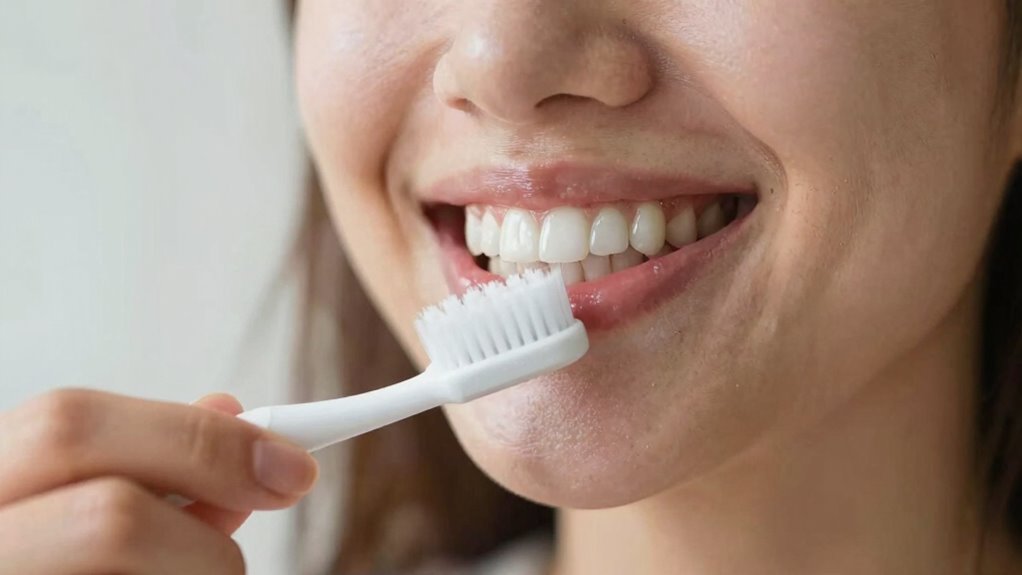

To make your brushing more effective, it’s key to time it right. Brush in the morning to remove overnight plaque and freshen your breath, and before bed to clear out food particles and reduce bacteria while you sleep. Avoid brushing immediately after acidic meals to protect your enamel. Simple tweaks in your routine boost your oral health—stick around to discover how perfect timing can make all the difference.
Key Takeaways
- Brush at least twice daily, especially before bed, to remove plaque and prevent bacterial growth overnight.
- Wait 30 minutes after eating acidic foods or drinks before brushing to protect enamel.
- Floss before brushing to loosen debris and enhance fluoride absorption.
- Avoid rinsing immediately after brushing; wait a few minutes to let fluoride strengthen teeth.
- Consistently maintain your routine at set times, such as after breakfast and before bed, for optimal oral health.
Why When You Brush Matters for Your Oral Health
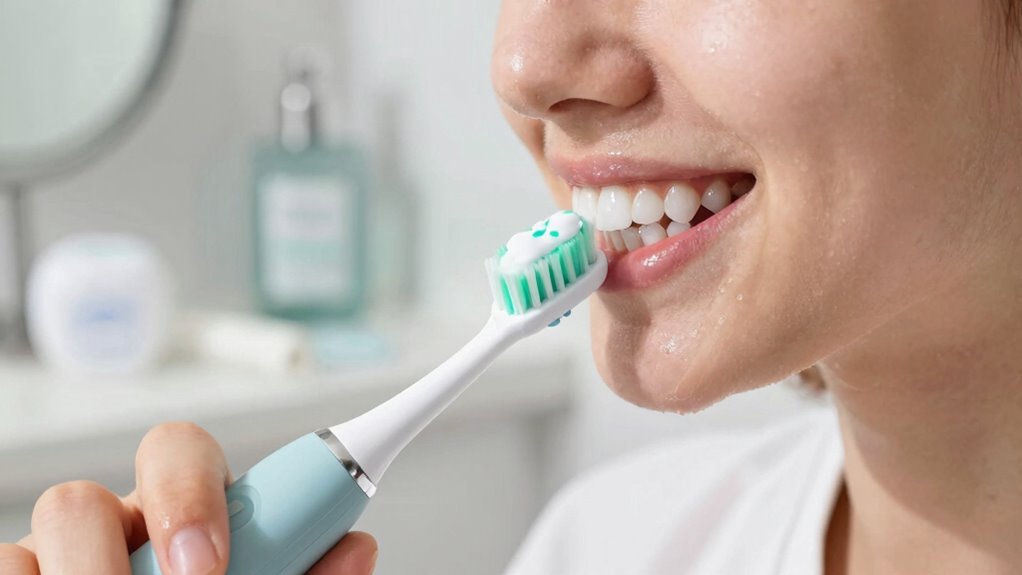
The timing of when you brush your teeth can considerably impact your oral health. Brushing at the right time helps effectively remove plaque and reduces oral bacteria that build up throughout the day. If you brush too soon after eating, especially acidic foods or drinks, you might weaken your enamel, making it easier for bacteria to cause damage. On the other hand, brushing before bed is vital because it clears away food particles and plaque accumulated during the day, preventing bacteria from thriving overnight. Regular brushing at appropriate times ensures that plaque doesn’t harden into tartar, which is harder to remove and can lead to cavities and gum disease. Proper timing maximizes plaque removal and keeps oral bacteria levels in check for healthier teeth and gums. Understanding dental enamel and its vulnerability can help inform better brushing practices. Additionally, being aware of acidic foods and their effects can help you plan your brushing schedule more effectively. Incorporating proper oral hygiene techniques into your routine can further enhance your dental health and prevent future issues. Knowing the best brushing practices according to your routine can optimize your oral hygiene for long-term health, especially when considering plaque accumulation patterns throughout the day.
When Is the Best Time of Day to Brush for a Healthy Smile?

Choosing the right time of day to brush your teeth can make a noticeable difference in your oral health. Incorporating brushing into your morning routines helps remove plaque buildup from overnight and freshens your breath for the day ahead. Brushing after breakfast can also help eliminate food particles and acids that attack enamel. However, don’t skip brushing at night—your nighttime habits are essential because saliva production slows down while you sleep, allowing plaque and bacteria to thrive. Brushing before bed clears away debris and reduces the risk of cavities and gum disease. Additionally, proper brushing technique ensures you effectively clean all surfaces of your teeth. The key is consistency; brushing twice daily at appropriate times ensures your mouth stays healthy and protected around the clock. Regularly cleaning your tongue can also reduce bacteria and improve overall oral health. Maintaining a balanced oral hygiene routine helps prevent issues before they develop and supports long-term dental health. For example, establishing a consistent schedule can make it easier to stick with good habits. Remember, both morning and nighttime routines are indispensable for a truly healthy smile.
Easy Tricks to Time Your Brushing for Better Results

Timing your brushing sessions effectively can substantially boost your oral health, but it’s easier than you might think with a few simple tricks. First, coordinate your brushing with your flossing schedule—ideally, floss before brushing to loosen debris and maximize fluoride absorption. Consistency is key, so set a specific time each day, like after breakfast or before bed, to reinforce good habits. Additionally, pay attention to mouthwash timing; using mouthwash after brushing ensures that it reaches your teeth and gums without rinsing away beneficial fluoride from your toothpaste. Avoid rinsing immediately after brushing; wait a few minutes to let the fluoride work. These small adjustments help your oral care routine become more effective and give you a healthier, brighter smile.
Common Mistakes When Timing Your Brushing and How to Avoid Them
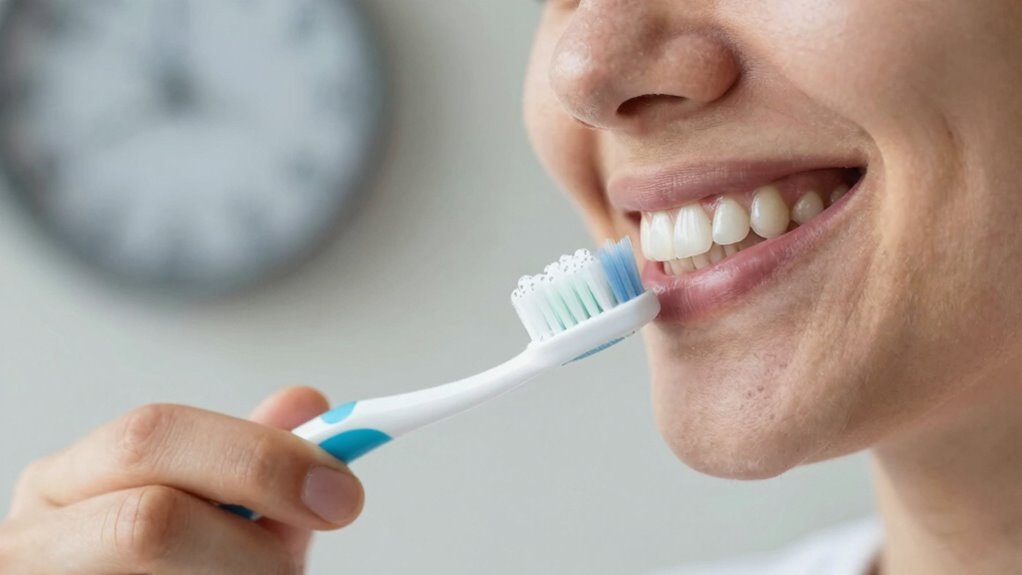
Many people make common mistakes when timing their brushing, which can reduce its effectiveness. One frequent timing mistake is rushing through brushing or not giving enough time for each session. Skipping brushing at the right times, like right after meals or before bed, also hampers your oral health. Poor brushing habits, such as inconsistent timing or neglecting to brush twice daily, weaken your teeth and gums. Another mistake is using a too-hard brush or applying excessive pressure, which can damage enamel despite proper timing. To avoid these errors, develop a consistent routine with proper timing—brushing twice a day for two minutes each time—and be mindful of your technique. Proper brushing habits and technique are essential for maintaining oral health. Correcting these brushing habits ensures you maximize the benefits of effective timing, including understanding nail biology and its relation to overall hygiene, which can indirectly impact oral health. Additionally, understanding free floating bacteria and how it interacts with your mouth can help you develop better oral hygiene practices. Being aware of the mouth’s microbiome can also guide you in choosing the right oral care products tailored to your needs to further enhance your routine.
Extra Tips to Keep Your Teeth and Gums Healthy Beyond Just Timing
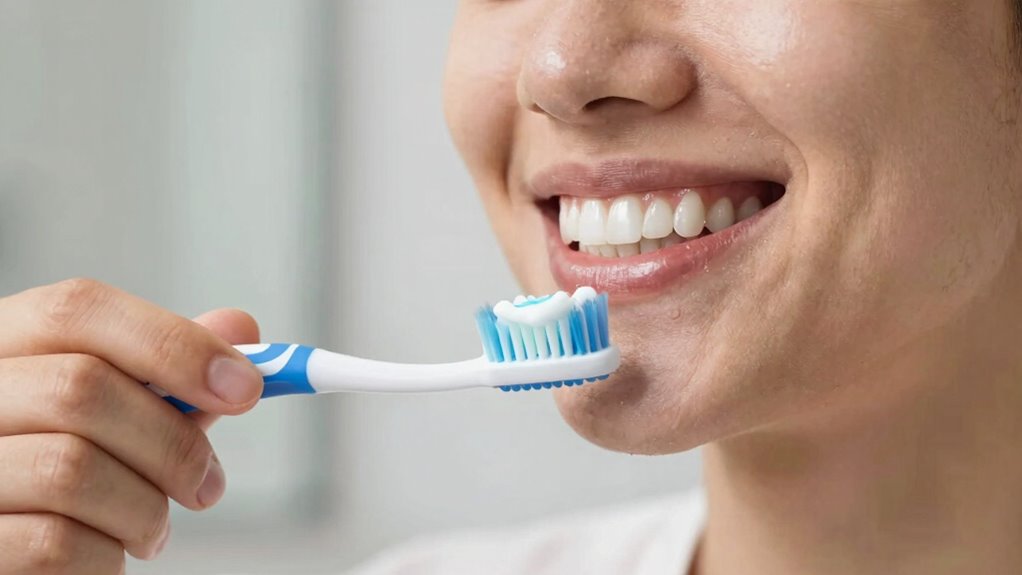
While proper brushing timing is essential, maintaining your oral health also depends on other habits and practices. Incorporating fluoride benefits into your routine helps strengthen tooth enamel and prevent cavities. Use fluoride toothpaste and consider mouth rinses with fluoride for added protection. Additionally, don’t overlook tongue cleaning; bacteria on your tongue can contribute to bad breath and plaque buildup. Gently scraping or brushing your tongue daily improves overall oral hygiene and reduces the risk of gum disease. Regular flossing is equally important, as it removes debris and plaque between teeth where a toothbrush can’t reach. Incorporating discover a free tool to transform text capitalization styles into your routine ensures that products like mouth rinses and toothbrushes are effective, providing better protection for your teeth and gums. Incorporating testing accuracy into your routine ensures that products like mouth rinses and toothbrushes are effective, providing better protection for your teeth and gums. Combining these habits with your ideal brushing timing creates a thorough approach to keeping your teeth and gums healthy and protected long-term. Incorporating proper oral care routines can further enhance your recovery and overall oral health.
Frequently Asked Questions
How Does Saliva Production Affect the Optimal Brushing Time?
Saliva flow plays a key role in determining the most advantageous time to brush your teeth. When your saliva production is high, it helps maintain pH balance and naturally cleanses your mouth, making brushing more effective. You should wait until saliva flow decreases, usually after eating or drinking, to avoid disrupting the pH balance. Brushing during ideal saliva production maximizes cleaning and protects your enamel.
Can Brushing at Different Times of Day Impact Enamel Strength?
Brushing at different times of day can impact enamel strength by affecting fluoride absorption and enamel remineralization. For example, brushing in the evening allows fluoride to stay longer on your teeth overnight, enhancing remineralization. Morning brushing helps remove plaque and food debris, protecting enamel. Regularly timing your brushing guarantees the best fluoride absorption, strengthening your enamel and reducing decay risk. So, consider brushing both morning and night for the best enamel health.
Is There a Recommended Duration for Brushing Based on Timing?
Did you know that brushing for at least two minutes can remove up to 21% more plaque? The recommended timing for brushing duration is two minutes, ideally twice a day, to maximize enamel protection. Keep in mind, longer brushing sessions don’t necessarily mean better cleaning, so stick to the two-minute mark to keep your teeth healthy without overdoing it. Consistent timing ensures *guaranteed* oral health benefits.
Does the Timing of Brushing Influence Breath Freshness Throughout the Day?
Yes, the timing of brushing impacts your breath freshness and helps combat mouth odor. Brushing right after waking up removes bacteria that cause bad breath, giving you that fresh morning feeling. If you brush too long before breakfast, your mouth might feel less fresh later. To maintain morning freshness, brush thoroughly for two minutes right after waking, and consider rinsing or brushing again after meals for lasting freshness throughout the day.
How Does Individual Sleep Patterns Affect the Ideal Brushing Schedule?
Your sleep patterns, especially sleep consistency, influence your ideal brushing schedule. If you’re a night owl, brushing before bed helps remove accumulated plaque and bacteria, ensuring fresh breath in the morning. Consistent sleep routines support oral health by reducing disturbances that can lead to oral issues. Adjust your brushing time to align with your sleep habits, so you maintain healthy teeth and gums, no matter your sleep schedule.
Conclusion
Remember, timing your brushing is like tuning an instrument—you’ll notice the harmony in your smile. When you catch those moments just right, your teeth shine brighter and your gums feel healthier, almost like a fresh breeze after a rainstorm. So, make brushing a part of your daily rhythm, and watch your oral health flourish. With a little mindful timing, your smile becomes a radiant sunrise, ready to light up every room you enter.