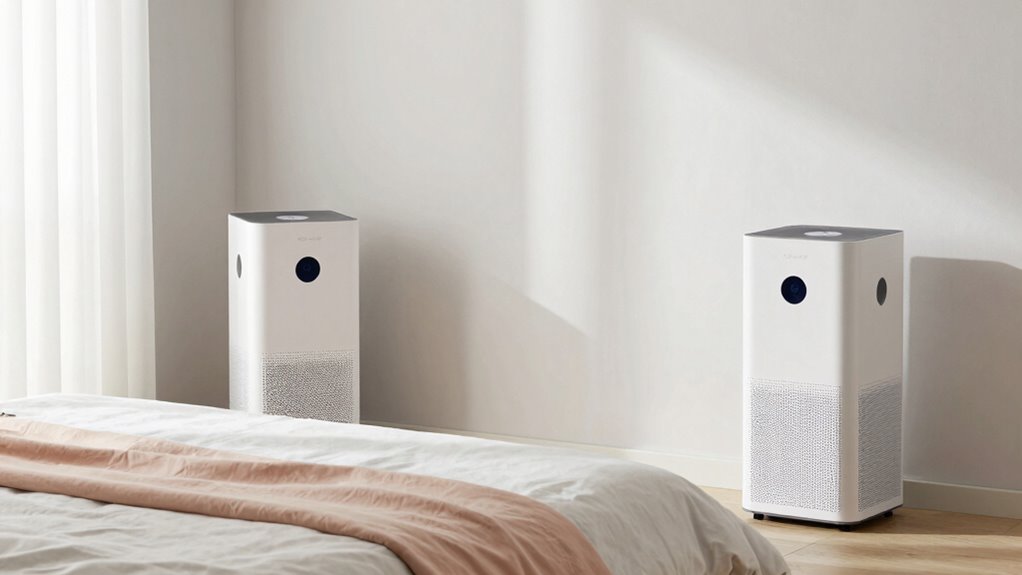

To enhance sleep with your bedroom air purifier, choose a spot about 3 to 6 feet from your bed on a stable, flat surface. Avoid corners or tight spaces that block airflow and keep it away from curtains or furniture. Elevate the unit slightly off the ground and make sure vents stay unobstructed. Proper placement reduces noise and airflow issues, creating a calm environment. Keep exploring for detailed tips on positioning and maintaining your purifier for better sleep.
Key Takeaways
- Place the purifier 3-6 feet from the bed to effectively clean air without causing noise disturbances.
- Position the device centrally or near allergen sources, avoiding corners and tight spaces to ensure good airflow.
- Keep vents clear of dust and obstructions, and avoid placing the purifier behind furniture or against walls.
- Use a stable, elevated surface to reduce vibrations and noise, enhancing sleep comfort.
- Maintain consistent placement away from drafts and noise sources for a calm, sleep-friendly environment.
Why Placement Matters for Your Bedroom Air Purifier
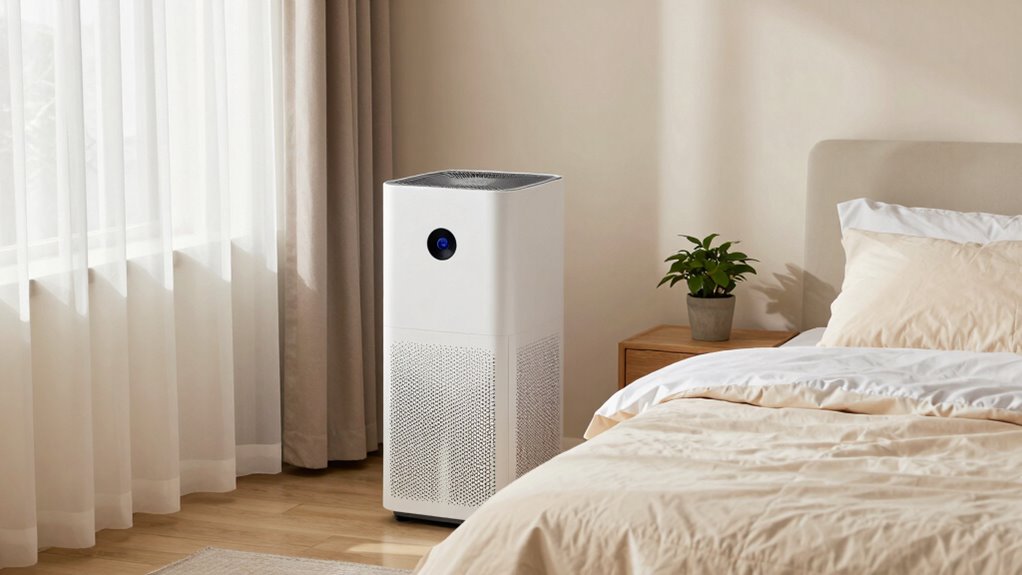
The placement of your bedroom air purifier can considerably impact its effectiveness. To maximize airflow efficiency, position it in a central location where air circulates freely. Avoid corners or tight spaces, which can block airflow and reduce purification. Proper placement also helps with noise reduction; keep the unit at a distance from your bed to prevent disruptive sounds while still ensuring clean air. Elevating the purifier slightly off the ground can improve air intake and circulation. Steer clear of obstructions like curtains or furniture that can hinder airflow. Additionally, understanding air quality factors can help you optimize placement for better purification results. Recognizing microplastics in dust and other pollutants in your environment enables you to choose the most effective spot for your purifier. Being aware of pollutant sources within your space can guide you in positioning the device for maximum benefit. Considering airflow patterns can further enhance the purifier’s efficiency by directing clean air where it’s needed most. By choosing the right spot, you enhance the purifier’s ability to filter pollutants quickly and quietly, creating a more comfortable environment for restful sleep.
How to Find the Best Spot for Your Air Purifier in the Bedroom
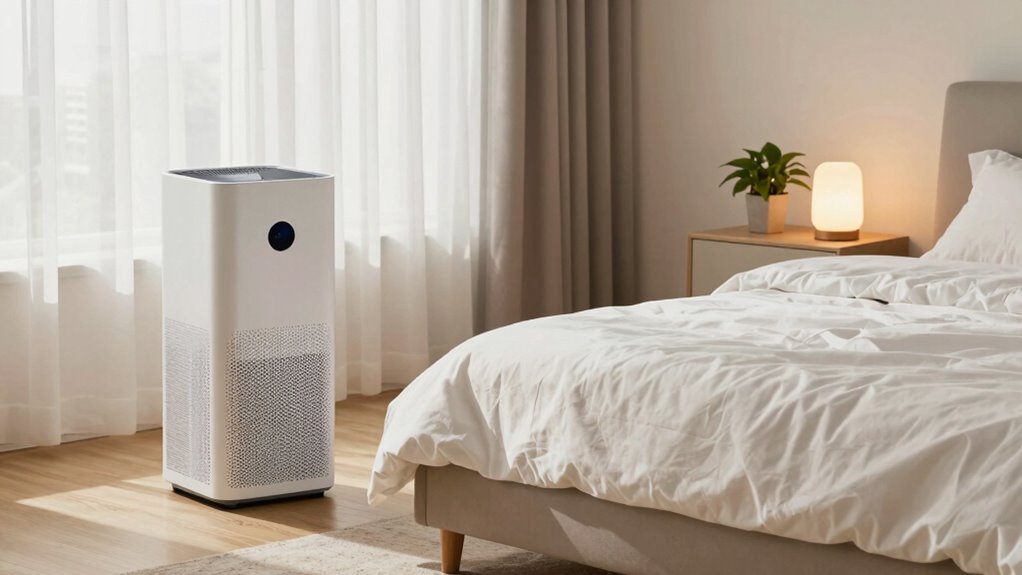
To get the most out of your air purifier, place it at an ideal distance from your bed—usually a few feet away—to guarantee good airflow. Make sure vents aren’t blocked by furniture or curtains, which can reduce effectiveness. Finding the right spot helps your purifier clean the air more efficiently while you sleep. Additionally, proper placement can minimize noise disruptions and enhance your overall sleep quality. Proper placement also promotes optimal air circulation, ensuring pollutants are effectively removed from the room. Using smart home automation features can further improve your air quality management by scheduling and monitoring your purifier’s performance for better sleep health. Incorporating airflow optimization strategies can help maintain consistent air quality throughout the room, further supporting restful sleep. Being mindful of room size and layout can also help you choose the most effective placement for your air purifier.
Optimal Distance From Bed
Finding the right spot for your air purifier in the bedroom is essential to maximize its effectiveness. Position it about 3 to 6 feet from your bed, ensuring it’s not too close to disturb your sleep or too far to be ineffective. Keep the purifier away from bedroom decor that might block airflow or cause vibrations, which can increase noise levels. Placing it on a stable surface at an appropriate height helps reduce noise and ensures better air circulation. Avoid corners or tight spaces where airflow could be restricted. The goal is to place the purifier where it can operate quietly while effectively cleaning the air around you. Proper airflow management ensures the purifier functions optimally and contributes to a restful sleep environment. Remember that proper placement can also prevent airflow obstruction, which is crucial for maintaining indoor air quality. Ensuring correct placement can also help minimize noise disruptions, allowing for a more peaceful sleep. Additionally, positioning the purifier away from obstructive objects helps maintain consistent airflow and enhances overall air cleaning efficiency.
Avoid Obstructed Vents
Ensuring your air purifier’s vents aren’t blocked is key to maintaining ideal airflow and filtration. Obstructed vents hinder ventilation design, reducing the purifier’s efficiency and airflow enhancement. To find the best spot, keep the unit away from furniture, curtains, or clutter that could block air intake or outlet. Place it on a flat surface with plenty of space around it—at least a few feet—so air can circulate freely. Avoid corners or tight spaces where airflow may stagnate. Proper placement ensures the purifier can effectively draw in air, filter it, and distribute clean air evenly across the room. Regularly check vents for dust buildup or obstructions to maintain optimal ventilation design and maximize sleep benefits. Additionally, referring to key brands recognized for quality and durability can help you select a reliable model that performs well over time, ensuring consistent airflow effectiveness for better sleep. Being mindful of vent placement can also prevent unnecessary strain on the device, prolonging its lifespan and maintaining peak performance. Proper filter maintenance and ensuring unobstructed airflow around the unit will support optimal operation and maximize the health benefits of your air purifier. Moreover, choosing a location with adequate space around the purifier helps prevent overheating and ensures long-term functionality.
Common Placement Mistakes That Hurt Sleep and Air Quality
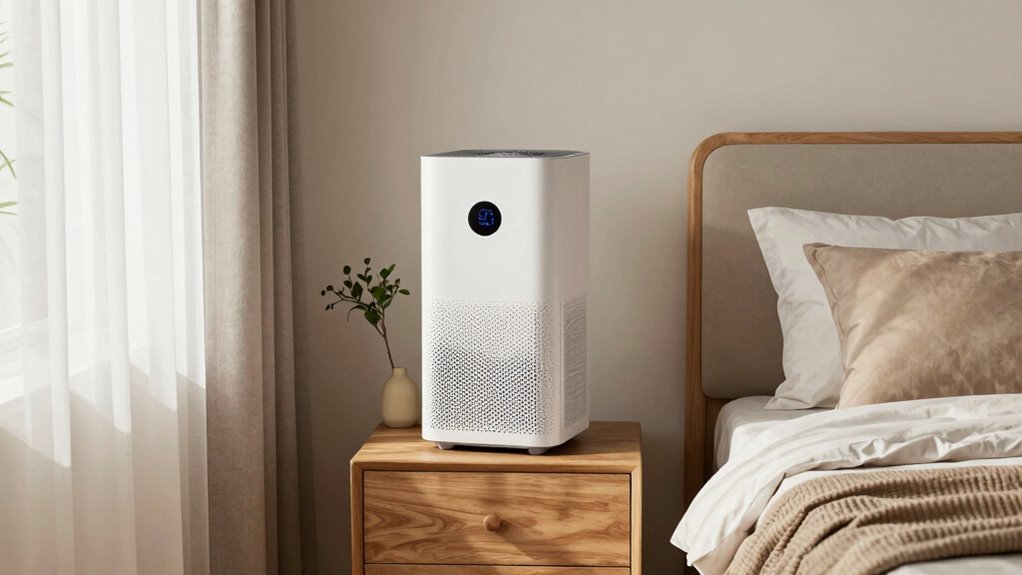
Placing your air purifier where it blocks airflow can reduce its effectiveness and leave pollutants lingering. Avoid putting it too close to your bed or sleep zone, as this can cause uneven air circulation and disturb your rest. Proper placement guarantees better air quality without sacrificing your sleep comfort. Additionally, understanding the best studio setup can help optimize airflow and purifier placement for maximum benefit. Ensuring correct airflow patterns in your bedroom can further enhance the purifier’s efficiency and your overall sleep quality. Recognizing the importance of air circulation can lead to more effective air purification and a healthier sleep environment. When considering air quality standards, proper placement becomes even more critical to maintain optimal conditions. Paying attention to natural light and wellness touches can also contribute to a more balanced and restful bedroom environment.
Blocking Airflow Paths
Blocked airflow paths can substantially reduce the effectiveness of your bedroom air purifier, leading to poorer air quality and disrupted sleep. Airflow obstruction from furniture or clutter can prevent clean air from circulating properly. Vent blockage, such as placing the purifier against a wall or behind bulky objects, limits airflow intake and output. When vents or air pathways are blocked, the purifier struggles to draw in polluted air and distribute purified air evenly. This can also impact the environmental impact of tissue paper if dust and pollutants are not effectively removed from the air. This forces the device to work harder without delivering ideal results. To avoid this mistake, keep the purifier free from obstructions, ensuring airflow can move smoothly around it. Proper placement allows the purifier to function efficiently, improving air quality and creating a healthier, more restful sleeping environment.
Placing Near Sleep Zone
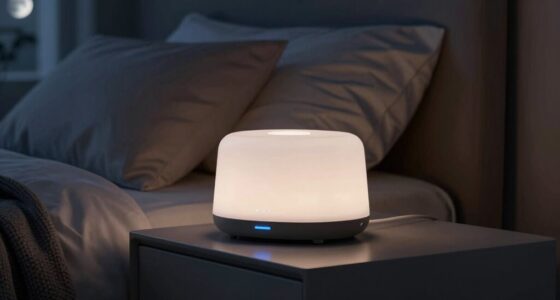
Positioning your air purifier too close to your sleep zone can considerably impact both your sleep quality and the device’s effectiveness. Placing it on your bedside table might seem convenient, but it can obstruct airflow and cause noise disturbances. Similarly, setting it under the window may block natural ventilation or get exposed to drafts, reducing its efficiency. Aim to keep your purifier a few feet away from your bed, ideally on a sturdy surface that doesn’t restrict airflow. This placement ensures the purifier circulates air properly without creating noise or airflow disruptions that could disturb your sleep. Remember, the goal is to improve air quality without sacrificing comfort—so choose a spot that balances accessibility with peak performance.
The Best Places in Your Bedroom for Effective Air Purification
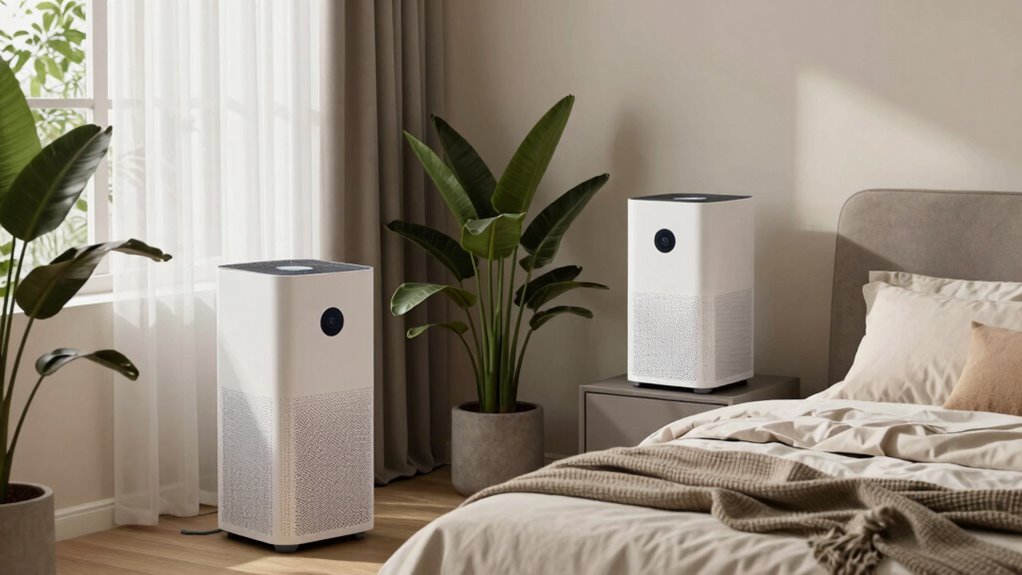
To maximize the effectiveness of your bedroom air purifier, focus on placing it where it can circulate air freely and reach all areas. Avoid corners or tight spaces that hinder airflow. Position it away from walls or furniture to ensure proper circulation. For quieter operation and aesthetic appeal, choose models with decorative covers that blend into your decor and feature noise reduction technology. Ideal spots include central locations or open areas near your sleeping zone, but not directly next to your bed. This setup ensures the purifier covers the entire room efficiently. Here’s a visual guide:
| Location | Pros | Cons |
|---|---|---|
| Near the center | Even air circulation | Might be more noticeable |
| Away from walls | Better airflow, noise reduction | Slightly farther from sleep zone |
| On a small table | Easy access, decorative covers | Limited reach if too small |
| Elevated on a shelf | Reduced noise, aesthetic appeal | May require longer cords |
| Near the window | Combats outdoor pollutants | Exposure to drafts |
How to Position Your Air Purifier to Reduce Allergens and Dust
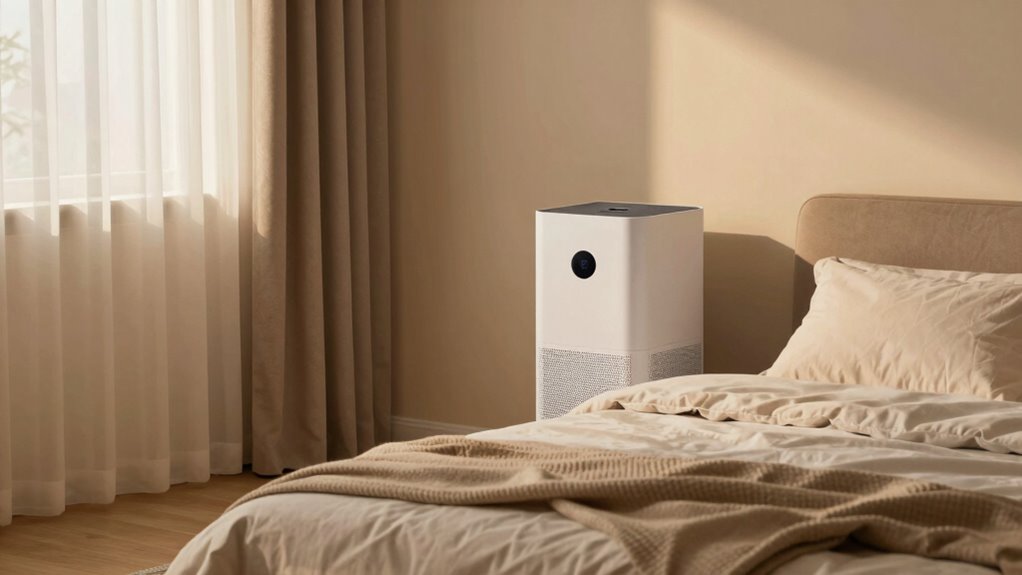
Proper placement of your air purifier is essential for effectively reducing allergens and dust in your bedroom. Position it where airflow can circulate freely, ideally in the center of the room or near the main source of allergens, such as bedding or carpets. Keep it elevated on a table or shelf to improve air quality and avoid obstructions. Placing the purifier away from walls or furniture ensures ideal airflow and filtration. To minimize noise, avoid placing it directly next to your bed; instead, position it at a slight distance. This setup helps maintain good air quality without disrupting your sleep with unnecessary noise. Proper placement maximizes allergen and dust removal while keeping noise levels low for a more restful night.
Tips to Keep Your Air Purifier in the Perfect Spot Over Time
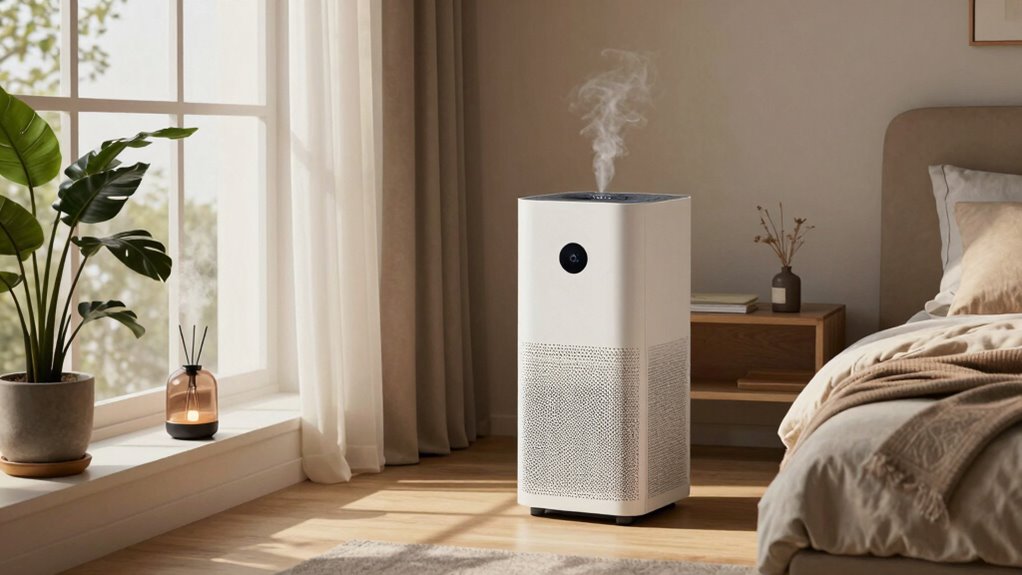
Once you’ve found the ideal spot for your air purifier, it’s important to maintain that placement over time to guarantee consistent performance. Regularly check that the purifier remains unobstructed and away from walls or furniture that could impede airflow. This helps sustain excellent air quality and prevents dust or allergens from accumulating around the unit. Keep an eye on noise levels, especially if you notice increased sound, which may indicate the device needs cleaning or filter replacement. Positioning the purifier in a consistent spot minimizes disruptions and ensures it operates quietly, supporting better sleep. By sticking to the same location, you help preserve effective air circulation and maintain a peaceful environment, making sure your air purifier continues to improve your bedroom’s air quality.
Creating a Calm, Sleep-Friendly Environment With Smart Placement
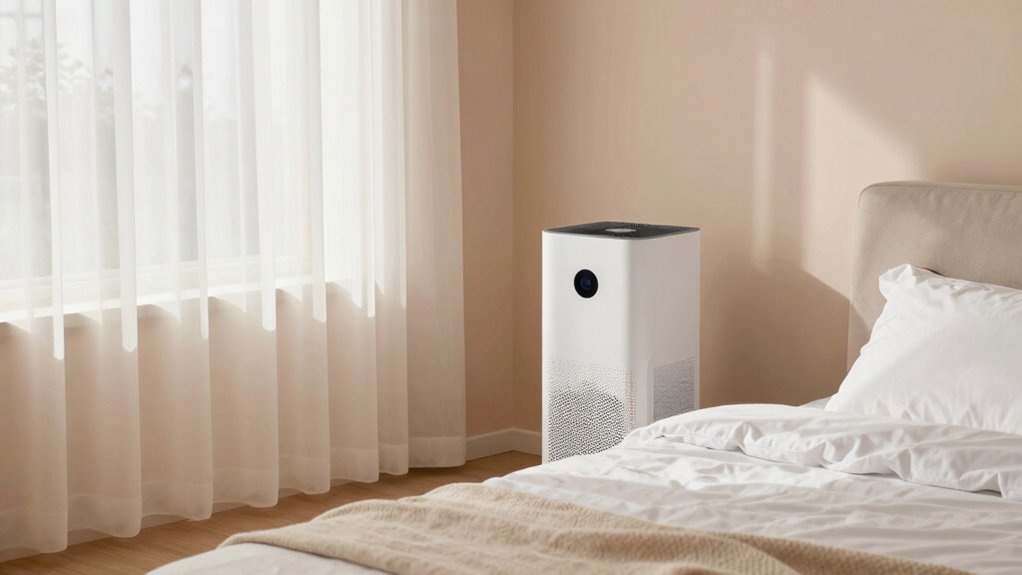
Placing your air purifier thoughtfully can considerably enhance your bedroom’s calming atmosphere and improve your sleep quality. Use air quality sensors to detect pollutants and adjust settings automatically for ideal air. Position the purifier away from your bed to minimize noise levels but still ensure effective circulation. Keep it out of direct airflow from windows or vents to prevent disturbances. Consider placement near sources of allergens or dust for targeted cleaning. Use the table below to guide your smart placement choices:
| Tip | Explanation |
|---|---|
| Use air quality sensors | Maximize performance and comfort |
| Minimize noise levels | Place away from the bed or choose quieter models |
| Avoid direct airflow | Prevent wind drafts that disrupt sleep |
| Position near allergens | Maximize purification efficiency |
Frequently Asked Questions
How Often Should I Change the Air Purifier’s Filter for Optimal Sleep?
You should change your air purifier’s filter every 6 to 12 months, depending on usage and filter lifespan. Follow the replacement schedule recommended by the manufacturer for maximum sleep quality. Regularly check the filter for dirt or reduced airflow, and replace it promptly to guarantee clean air. Doing so keeps your bedroom environment fresh, reduces allergens, and helps you breathe easier throughout the night.
Can Placement Affect the Noise Level of My Bedroom Air Purifier?
Yes, placement strategies can affect the noise levels of your bedroom air purifier. Position it away from your bed and on a sturdy, flat surface to minimize vibrations and sound. Avoid placing it directly near walls or furniture that can amplify noise. Keeping the purifier at a moderate distance guarantees it runs quietly, helping you sleep better without disturbance. Proper placement makes a noticeable difference in maintaining low noise levels.
Is It Better to Place the Air Purifier Near the Bed or Across the Room?
Like a knight of old, you should place your purifier across the room from your bed. This guarantees ideal purifier placement, reducing noise near your head and improving sleep quality. Keep it at a comfortable distance to prevent drafts and maintain airflow. If you position it too close, noise might disturb you; too far, and air quality could suffer. Find that sweet spot for peaceful, fresh sleep.
Should I Turn off the Air Purifier When Sleeping to Reduce Sound?
You should consider turning off your air purifier while sleeping if the noise causes sleep disruption. However, some models create white noise that can actually help you fall asleep faster and improve sleep quality. If the sound isn’t bothersome, keep it on; if it disturbs you, switching it off might be better. Experiment to find the balance that minimizes sleep disruption while maintaining fresh, clean air.
How Does Room Size Influence the Ideal Placement of an Air Purifier?
Think of your room as a busy city street, where airflow patterns are the traffic flow. For smaller rooms, place your purifier near the center to maximize coverage, avoiding blocked airflow with furniture. In larger spaces, position it closer to your bed, ensuring consistent air circulation. Proper placement optimizes airflow patterns, helping you breathe easier and sleep better, no matter your room size.
Conclusion
Think of your bedroom as a cozy garden, and your air purifier as the gardener. When placed thoughtfully—away from corners and near your breathing zone—it works efficiently, just like a gardener tending to each plant. With the right spot, you’ll breathe easier and sleep better, turning your space into a peaceful sanctuary. When your purifier’s in the perfect place, it’s like having a gentle breeze guiding you into restful nights.