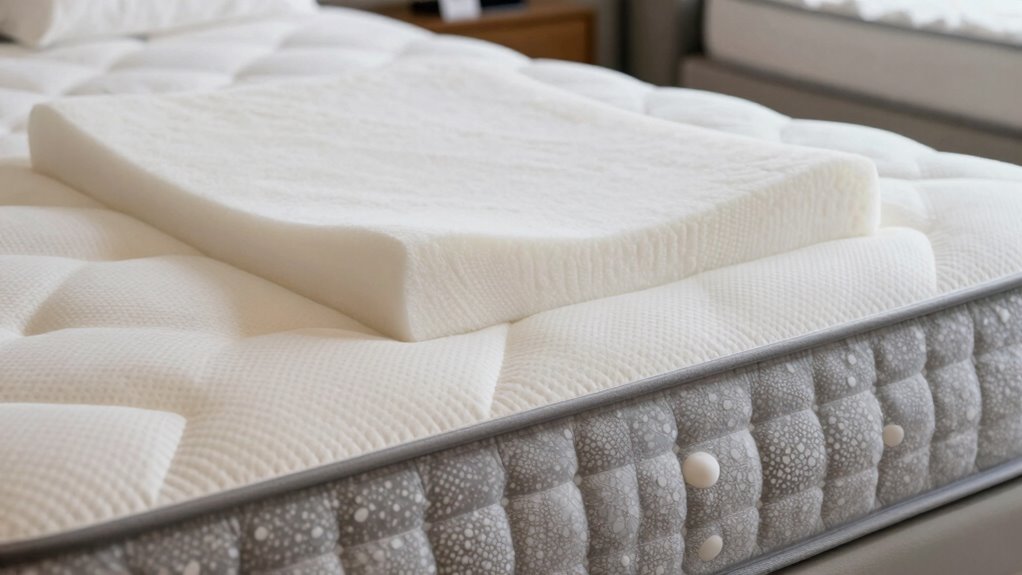

When shopping for a mattress, focus on the materials that support your health, durability, and comfort rather than just firmness. Look for natural, high-quality options like latex or dense memory foam for long-lasting support, and materials that promote airflow and hypoallergenic benefits. Supportive coils and well-stitched foams improve durability, while eco-friendly layers guarantee a healthier sleep environment. If you’re interested in making smarter choices, you’ll find key insights on how quality materials impact your sleep experience.
Key Takeaways
- Mattress materials affect airflow, moisture control, and allergy prevention, impacting overall sleep hygiene and ease of maintenance.
- Material quality, such as dense foam or natural latex, determines durability, longevity, and overall value.
- Memory foam and gel-infused foam offer adaptive pressure relief and temperature regulation for enhanced comfort.
- Supportiveness varies with materials; firmer options suit stomach sleepers, while softer layers benefit side sleepers.
- Eco-friendly and well-constructed materials ensure durability, support, and a healthier sleep environment over time.
What Mattress Material Is Best for Your Sleep Needs?
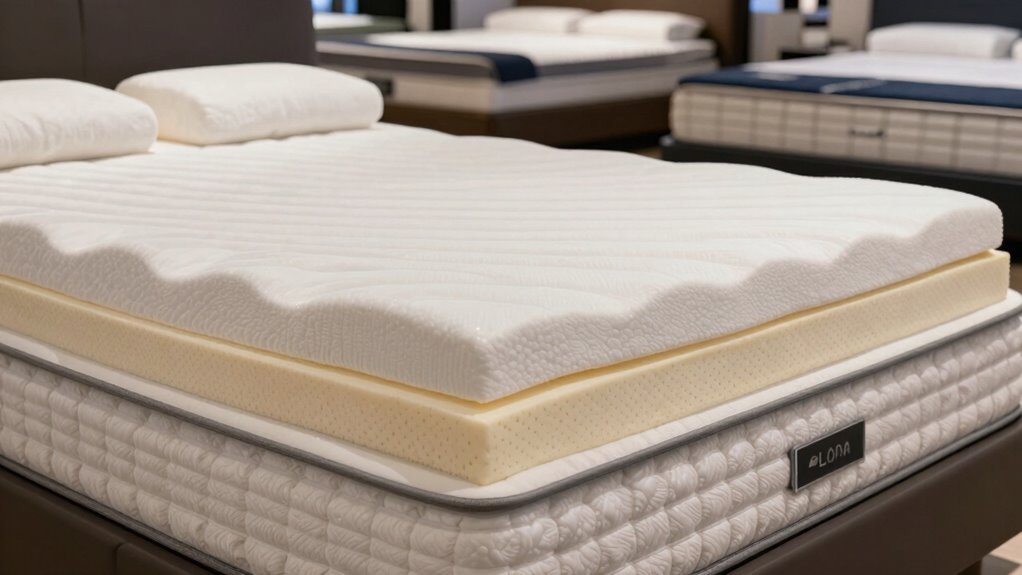
Choosing the right mattress material depends on your specific sleep needs and preferences. Your choice impacts your sleep hygiene by influencing airflow and moisture control, which can prevent allergies and promote healthier rest. Consider materials that are easy to maintain, as proper mattress maintenance extends its lifespan and keeps it clean. For example, hypoallergenic options like latex can reduce dust mites, supporting better sleep hygiene. Memory foam molds to your body, offering pressure relief but may require regular cleaning to prevent odor buildup. Innerspring mattresses provide breathability but need more frequent upkeep to prevent dust accumulation. Additionally, selecting materials that promote airflow and moisture control can help maintain optimal sleep conditions. Exploring regional flavors and chicory/coffee insights can even inspire relaxing bedtime routines that enhance sleep quality. Incorporating material durability into your decision ensures your mattress remains supportive over time, reducing the need for frequent replacements. Moreover, choosing a material with easy cleaning features can further improve your overall sleep environment. To optimize your sleep environment, consider ventilation and temperature regulation features that many modern mattresses offer. Ultimately, selecting a material aligned with your lifestyle ensures better sleep quality and a healthier sleep environment.
Understanding the Different Types of Mattress Materials
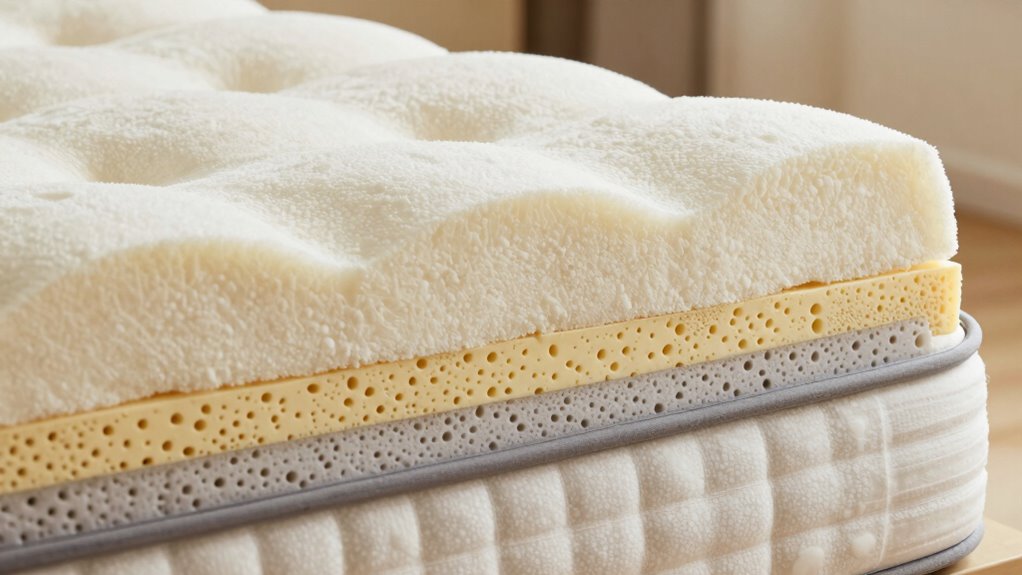
Understanding the different types of mattress materials is vital for making an informed decision about your sleep environment. Knowing the material helps you choose a mattress that suits your comfort preferences, durability needs, and budget. For instance, memory foam and latex offer different feels and support levels. Additionally, considering bed frame compatibility is essential—some materials, like latex or hybrid mattresses, require specific frame types. Mattress size options also matter; larger sizes like king or queen need sturdy frames to support weight and prevent sagging. Being aware of these factors ensures your mattress fits your bed frame and sleeping habits. Furthermore, selecting materials with good resilience and durability can extend the lifespan of your mattress, ensuring it remains supportive over time. Incorporating material composition knowledge can also help you identify eco-friendly options and hypoallergenic features. A thorough understanding of these factors helps in making an informed choice, ensuring your investment provides comfort and longevity. Recognizing the importance of air quality considerations can also help you select materials that reduce allergens and improve ventilation, contributing to better sleep health. Additionally, understanding the material manufacturing process can guide you toward more sustainable and safe options. Ultimately, understanding your options empowers you to select a material that provides both comfort and longevity, making your investment worthwhile.
How Memory Foam and Gel Infused Foam Enhance Comfort and Support
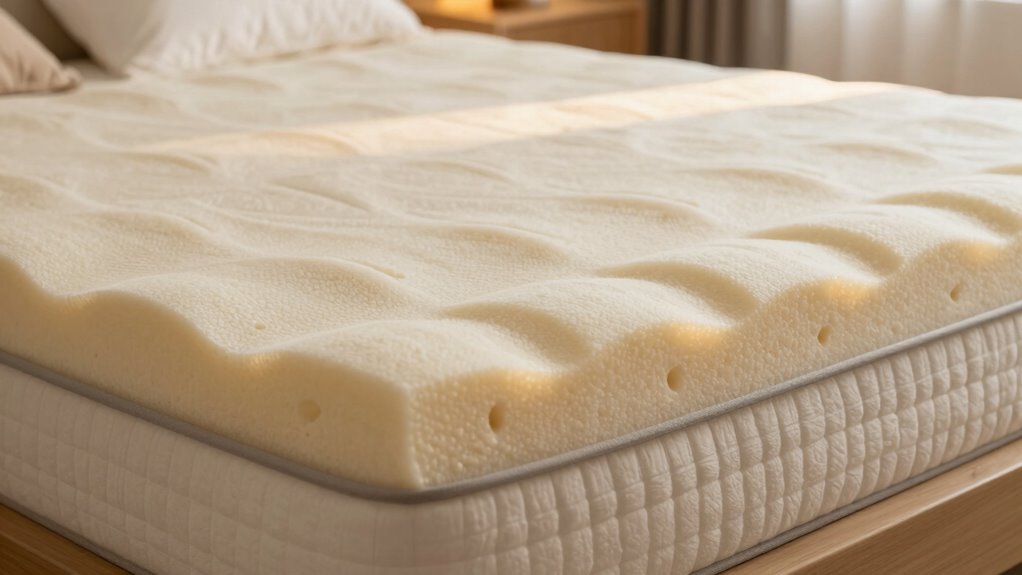
Memory foam and gel infused foam provide adaptive pressure relief, helping you stay comfortable throughout the night. They also regulate temperature, so you won’t wake up feeling too hot or cold. These features work together to enhance both comfort and support for a better sleep experience. Additionally, the material composition influences durability and longevity, ensuring your mattress maintains its supportive qualities over time. Using high-quality materials can also streamline cleaning and maintenance, making your mattress easier to care for in the long run. Incorporating temperature regulation features such as gel infusions can further optimize sleep comfort by actively managing heat build-up. Exploring eco-friendly materials can also contribute to sustainability and better indoor air quality. Incorporating mobility-friendly features into your mattress can also support easier movement and help prevent stiffness in the morning.
Adaptive Pressure Relief
Adaptive pressure relief is essential for a more comfortable and supportive sleep experience, especially when using memory foam or gel-infused foam. These materials contour to your body, easing pressure points and reducing discomfort. Picture lying down and feeling:
- The gentle cradle around your shoulders and hips, aligning your spine perfectly.
- The immediate relief from lingering aches, as the foam distributes your weight evenly.
- The seamless blend of support and softness, enhancing bedroom aesthetics by creating a sleek, inviting look.
- Incorporating traditional healing principles, such as holistic health practices, can further enhance your overall sleep wellness and alignment with natural rhythms.
- The color temperature adjustments of your mattress setup can also influence how your body perceives comfort and support, creating a more personalized sleep environment.
- Additionally, the use of adaptive materials ensures your mattress responds dynamically to your movements throughout the night, providing consistent support.
- Understanding the importance of pressure point relief can help you select the most effective materials and design features for your sleep needs.
Choosing the right mattress size options can also improve pressure relief, ensuring you have enough space to move freely. With adaptive pressure relief, your mattress not only supports your body but also complements your bedroom’s style, making your sleep environment both functional and visually appealing.
Temperature Regulation Benefits
Have you ever wondered why some mattresses stay cool all night while others trap heat? Memory foam and gel-infused foam are designed to improve temperature regulation, helping you stay comfortable. These materials wick away heat and promote airflow, reducing the likelihood of overheating. When shopping, consider bed frame compatibility to ensure proper ventilation and support, which also affect cooling. Gel-infused options are available in various mattress size options, so you can find one that fits your space and preferences. This combination of advanced materials and appropriate bed frame choice helps maintain a cooler sleep environment, enhancing comfort and support. Additionally, choosing mattresses with air systems like ventilated foam can further improve airflow and temperature control. Incorporating specialized materials can optimize cooling performance, ensuring you stay comfortable throughout the night. For optimal temperature regulation, look for features like breathable fabrics or cooling covers, which can complement the mattress’s core materials. Using advanced cooling technologies is another way to maximize airflow and temperature management. Including moisture-wicking fabrics can also help keep sleepers dry and comfortable. Ultimately, choosing a mattress with these features makes a noticeable difference in how well you rest through the night.
Which Mattress Materials Are Most Durable and Long-Lasting?
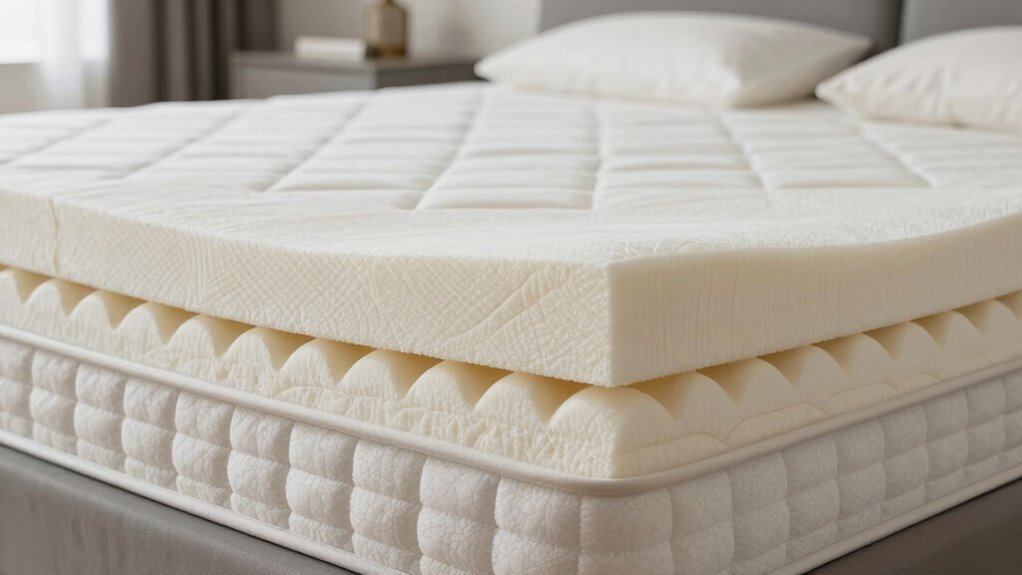
When choosing a mattress, durability and long-lasting performance are key factors to contemplate. You want materials that resist sagging and maintain support over time. Look for beds made from high-quality options like:
- Memory foam with dense, reinforced cores that preserve shape after years of use.
- Latex offers natural resilience, bouncing back quickly without losing firmness.
- Innerspring coils constructed with sturdy, tempered steel for durability and consistent support.
- Selecting materials with proper ventilation can enhance durability by preventing moisture buildup and mold growth, extending the lifespan of your mattress.
Keep in mind, your mattress needs to fit your bed frame compatibility and mattress size options, ensuring proper support and longevity. Choosing durable materials ensures your investment lasts longer, reduces replacement frequency, and keeps your sleep setup solid, no matter your preferred size.
Are Certain Mattress Materials Better for Your Health and Allergies?
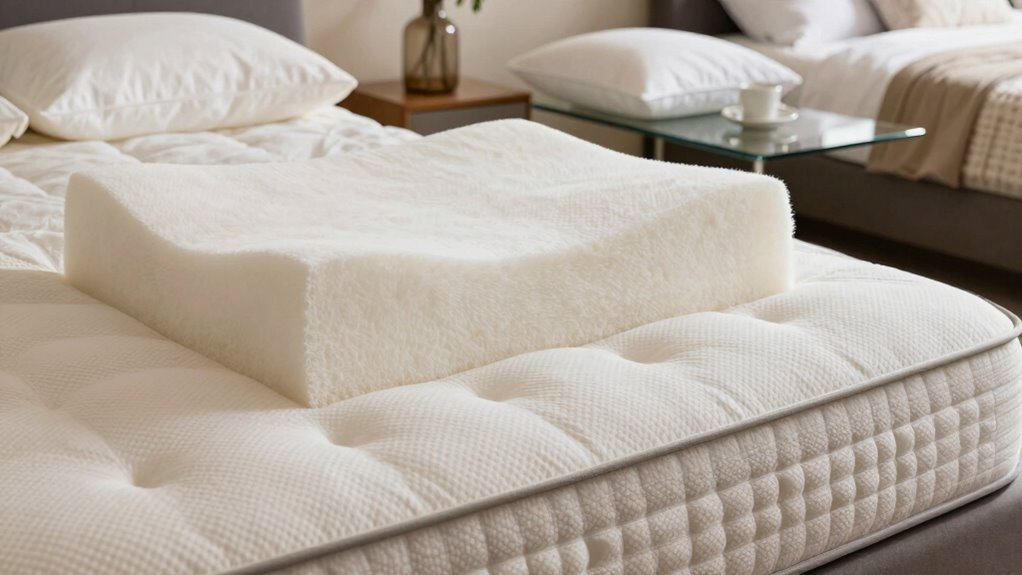
Are certain mattress materials better for your health and allergies? Yes, some options can help reduce allergy symptoms and promote better sleep. Hypoallergenic fabrics, like organic cotton or wool, resist dust mites and mold, making them ideal if you’re sensitive. Look for mattresses made with eco-friendly materials, such as natural latex or plant-based foams, which contain fewer chemicals and volatile organic compounds (VOCs). These materials minimize exposure to toxins that can trigger allergies or respiratory issues. Avoid synthetic materials that may off-gas fumes or harbor allergens. Choosing mattresses with hypoallergenic fabrics and eco-friendly components can create a healthier sleep environment, especially if you struggle with allergies or asthma. Prioritizing these materials helps you sleep more comfortably and safely.
Choosing Mattress Materials Based on Your Sleep Position and Body Type
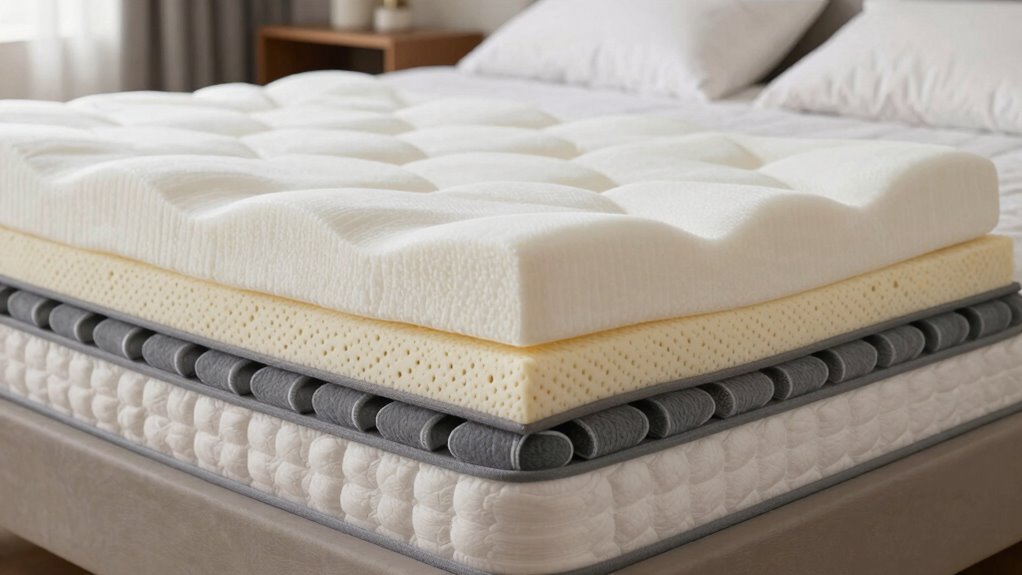
Your sleep position and body type play a vital role in selecting the right mattress materials. Different positions require varying support levels, and your body’s shape affects how materials respond. Choosing wisely guarantees you stay comfortable and well-supported throughout the night.
Support Needs by Sleep Position
Choosing the right mattress materials depends heavily on your sleep position and body type, as these factors influence how your body interacts with the mattress’s support system. For stomach sleepers, you’ll want a firm sleep surface that prevents your hips from sinking too deeply, maintaining proper spinal alignment. Side sleepers benefit from a softer feel that cushions shoulders and hips, reducing pressure points. Back sleepers need a balanced support that keeps the spine aligned without sacrificing comfort. Visualize:
- A firm, supportive surface for stomach sleeping.
- A plush, contouring layer for side sleeping.
- A medium-firm surface that stabilizes back sleepers.
These support needs affect your overall sleep quality and should be considered when evaluating mattress warranty coverage, ensuring your investment provides lasting support tailored to your sleep position.
Material Suitability for Body Type
Selecting the right mattress materials depends on how your body interacts with the sleep surface, especially considering your body type and sleep position. If you have a heavier build, opt for firmer materials like latex or high-density foam that provide better support and prevent sinking. Lighter individuals might prefer softer, more contouring materials such as memory foam or hybrid options. Your body type also influences bed frame compatibility; verify your frame can support the mattress material without compromising support or durability. Additionally, mattress size options should accommodate your body size and sleep style, promoting proper alignment and comfort. Tailoring your choice to your body type ensures better pressure relief, support, and overall sleep quality.
How Material Quality Affects Mattress Cost and Value
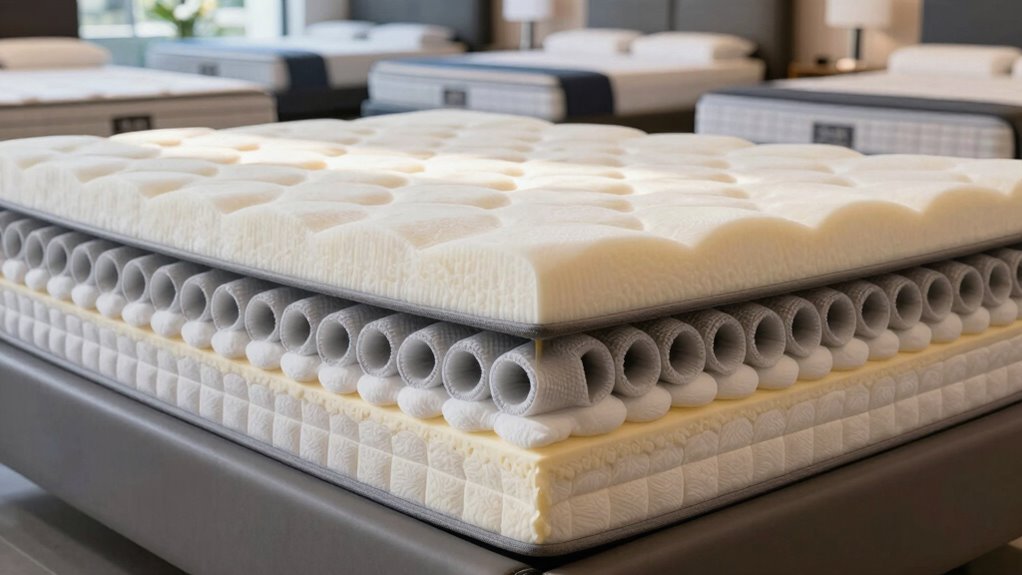
The quality of mattress materials directly impacts both the price and the overall value of the bed. Higher-quality materials often translate into better durability, comfort, and longevity, which can justify a higher investment. When choosing a mattress, consider how material quality influences your bedroom decor and mattress size considerations. Imagine:
- Thick, dense memory foam that molds perfectly to your body and lasts years.
- Natural latex with a springy feel that resists sagging and keeps its shape.
- Reinforced coils built with premium steel for enhanced support and minimal noise.
Investing in better materials means paying more upfront, but you’ll enjoy longer-lasting comfort and fewer replacements. This approach maximizes your bedroom’s aesthetic appeal while ensuring the mattress meets your needs over time.
How to Spot Quality Mattress Materials When Shopping

When shopping for a mattress, being able to recognize quality materials can save you from costly mistakes and guarantee you get lasting comfort. Start by checking the mattress’s fabric and comfort layers—look for dense, well-stitched foam or high-quality latex that won’t sag quickly. Inspect the coil system if present; tempered steel coils with a consistent shape indicate durability. Also, consider bed frame compatibility to ensure the mattress fits securely and supports proper alignment. Don’t forget to select the right mattress size; a larger size often requires sturdier materials to prevent sagging. Quality materials typically feel dense and firm yet responsive. Avoid mattresses with thin, flimsy covers or cheap foam that easily deform. Spotting these signs helps you choose a durable, comfortable mattress suited to your needs.
Final Tips: How to Prioritize Material Quality Over Firmness for Better Sleep
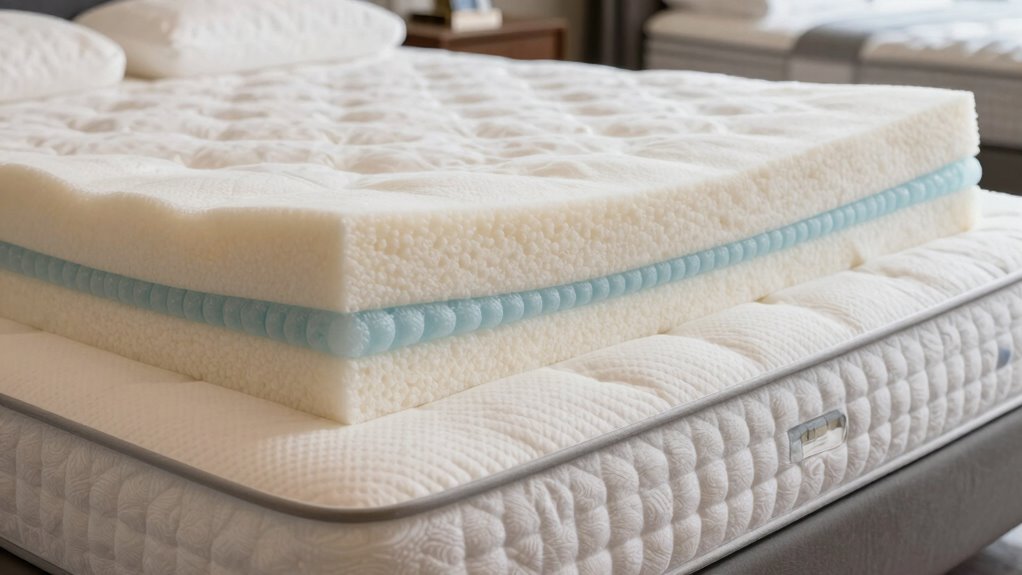
Ever wonder why some mattresses feel comfortable at first but quickly lose their support? It’s often because you focused on firmness rather than material quality. To prioritize quality, start by checking bed frame compatibility—ensure the mattress suits your frame to avoid sagging. Next, consider mattress size considerations—bigger isn’t always better if materials can’t support the extra weight. Finally, examine the layers: look for high-density foam, natural latex, or durable coils that maintain support over time. These materials resist sagging and provide lasting comfort. Remember, a quality mattress with the right materials will adapt better to your body and sleeping position, regardless of firmness. Prioritizing material quality over firmness gives you a more restful, supportive sleep for years to come.
Frequently Asked Questions
How Do Different Mattress Materials Impact Motion Transfer and Sleep Disturbance?
Different mattress materials markedly affect motion transfer and sleep disturbance. Foam with high density absorbs movement better, reducing disturbances, while lower-density foam allows more motion. Coil count also plays a role; higher coil counts in innerspring mattresses provide better motion isolation, minimizing transfer. You’ll notice less disruption when choosing a mattress with dense foam layers or a high coil count, leading to a more restful sleep free from partner movements.
Are Eco-Friendly Mattress Materials Available, and Are They More Durable?
Yes, eco-friendly options are widely available, and many prioritize sustainable materials like organic cotton, natural latex, or recycled fibers. These eco-friendly mattresses often offer comparable durability to traditional ones, though durability can vary based on materials used. Generally, natural latex and organic materials tend to be more durable, making them a smart choice if you’re seeking sustainability without sacrificing longevity. Always check durability comparisons before making your final decision.
Can Specific Materials Help Alleviate Common Sleep Issues Like Back Pain?
You can definitely find specific materials to help ease back pain. Memory foam molds to your body’s shape, providing targeted support, while latex comfort offers resilient, pressure-relieving support. Together, these materials can keep your spine aligned and reduce discomfort. Don’t put all your eggs in one basket—try a mattress with these materials to hit two birds with one stone, helping you sleep better and wake up pain-free.
What Are the Signs of Low-Quality Versus High-Quality Mattress Material?
You can spot low-quality mattress material by examining foam quality—it often feels less supportive and breaks down quickly. High-quality foam maintains its shape and resilience over time. Also, check fabric durability; cheap fabrics tend to pill, tear, or fade faster. If materials show signs of wear easily, they’re likely low quality. Invest in durable fabrics and high-grade foam for better comfort, support, and longevity in your mattress.
How Often Should Mattress Materials Be Replaced to Maintain Comfort and Hygiene?
You should replace your mattress every 7 to 10 years to maintain comfort and hygiene. Regularly changing it helps prevent bed bug infestation and reduces allergen buildup, both of which can impact your health. If you notice sagging, persistent odors, or allergies worsening, it’s time for a new mattress sooner. Proper replacement guarantees you sleep comfortably and stay protected from potential health issues caused by old, worn-out materials.
Conclusion
Remember, focusing on mattress materials is your secret weapon for better sleep—far more powerful than just chasing firmness. By choosing high-quality materials, you’re investing in a sleep experience so divine it could make sleeping on clouds feel like a rough draft. Don’t let flashy labels fool you—prioritize what truly matters beneath the surface. Your perfect mattress is out there, waiting to transform your nights into the best sleep of your life!