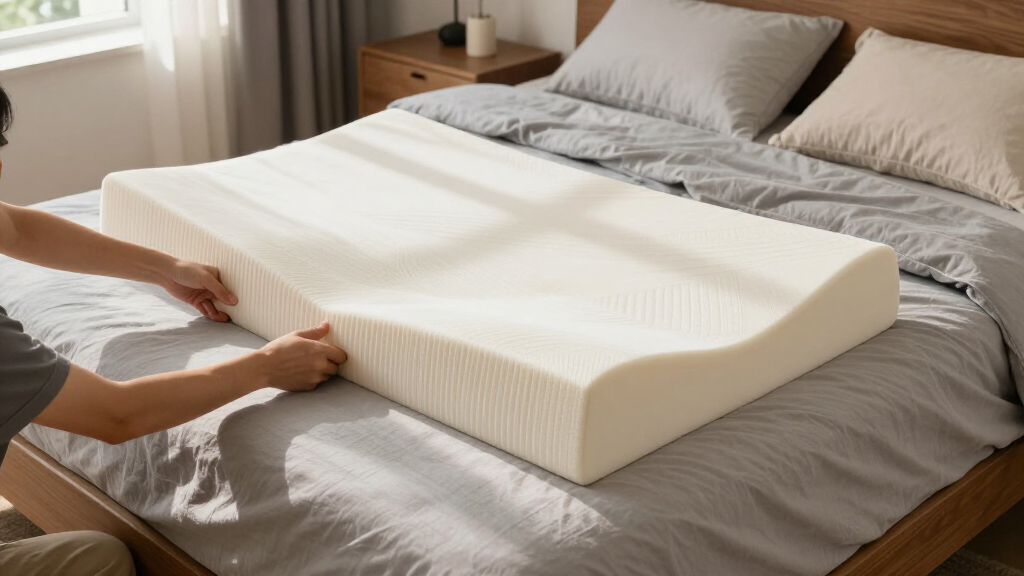

This guide provides step-by-step instructions to adjust an adjustable memory foam mattress for optimal comfort and support. Suitable for new owners or anyone wanting to fine-tune their mattress, it covers the necessary actions to achieve a personalized sleep surface. Whether you want a firmer feel or a more reclined position, following these steps will help you set up your mattress correctly.

Get health and wellness essentials delivered free — and shop member deals
- Fast, free delivery on millions of items
- Access to Prime Big Deal Days deals on October 6–7
- Prime Video, Amazon Music and more included

ESHINE Queen Mattress for Back Pain & Pressure Relief, 14” Gel Memory Foam
- ✔ Size: Queen (60"×80")
- ✔ Thickness: 14 inches
- ✔ Material: Gel Memory Foam, Support Foam, Cooling Fabric

Firm Queen Mattress – 14 Inch Memory Foam with Orthopedic Lumbar Support
- ✔ Size: Queen
- ✔ Thickness: 14 inches
- ✔ Material: Memory Foam

EGOHOME 10 Inch Queen Mattress with Memory Foam and Cooling Green Tea Gel
- ✔ Size: 80”L x 60”W
- ✔ Material: Memory Foam
- ✔ Certifications: CertiPUR-US
Difficulty: Beginner | Time: 20-30 minutes
What You’ll Need
Tools & Materials:
- Remote control or adjustment mechanism (usually included with the mattress)
- User manual (if available)
Knowledge:
- Basic familiarity with your mattress model and its adjustment features
Have the mattress plugged in and within reach of a power outlet. Read any specific instructions provided by the manufacturer for your model to avoid damage or improper adjustments.
ESHINE Queen Mattress for Back Pain & Pressure Relief, 14” Gel Memory Foam
<p>The <strong>ESHINE Queen Mattress</strong> stands out for its innovative 6-layer design, combining breathable cooling fabric with green tea-infused memory foam and supportive foam layers. It effectively alleviates back, hip, and shoulder pressure, making it ideal for sleepers who prioritize pressure relief and a cooler sleep environment. Compared to the firmer options, its plushness offers more comfort for side sleepers, though it may not suit those seeking a very firm bed. The setup is straightforward, but it may take up to 48 hours for full expansion. Its main tradeoff is the limited long-term durability data, which makes it less ideal for heavy or long-term use.</p>
Pros:
- Effective pressure relief for back, hips, and shoulders
- Breathable, cooling fabric for a cooler sleep
- Easy to set up with unboxing and expansion process
- CertiPUR-US certified for safety and quality
Cons:
- May take up to 48 hours to fully expand
- Some users may prefer different firmness levels
- Limited information on durability over long-term use
Best for: Sleepers needing pressure relief and cooling, especially side sleepers or those with back pain.
Not ideal for: Users seeking a very firm mattress or long-term durability insights.
Bottom line: A versatile choice for pressure relief and cooling, best suited for side sleepers and those with back discomfort.
“A versatile choice for pressure relief and cooling, best suited for side sleepers and those with back discomfort.”
Firm Queen Mattress – 14 Inch Memory Foam with Orthopedic Lumbar Support
<p>The <strong>Firm Queen Mattress</strong> is designed for those who prioritize spinal support and motion isolation. Its multi-layer memory foam supports spine alignment, making it ideal for back and stomach sleepers who prefer a firmer feel. Unlike the plush pressure-relief models, this mattress offers a more solid, supportive experience that minimizes motion transfer—great for couples. However, its firmness may be too rigid for side sleepers or those who dislike a hard feel. The 365-night trial and 10-year warranty provide reassurance, but the price point is not specified, which could be a consideration for budget-conscious buyers.</p>
Pros:
- Provides excellent support and spinal alignment
- Reduces motion transfer for undisturbed sleep
- Breathable gel-infused foam promotes airflow
- CertiPUR-US certified for safety
Cons:
- May be too firm for softer preference sleepers
- No adjustable firmness options
- Price not specified in the description
Best for: Back and stomach sleepers who need firm support and spinal alignment.
Not ideal for: Side sleepers or those seeking a softer, more plush mattress.
Bottom line: Ideal for sleepers who need a supportive, firm mattress with excellent motion isolation.
“Ideal for sleepers who need a supportive, firm mattress with excellent motion isolation.”
EGOHOME 10 Inch Queen Mattress with Memory Foam and Cooling Green Tea Gel
<p>The <strong>EGOHOME 10-Inch Queen Mattress</strong> offers a balanced blend of support and cooling, infused with green tea gel for temperature regulation. Its breathable bubble hole structure promotes airflow, making it suitable for hot sleepers or those who fluctuate between different sleep positions. While it provides good spinal alignment, the lighter profile and more basic construction mean it may lack the edge support found in thicker or more advanced models. The initial off-gassing smell is a minor drawback, and its weight could pose challenges for some users when moving or unboxing.</p>
Pros:
- Provides excellent support and spinal alignment
- Infused with cooling green tea gel for temperature regulation
- Breathable design promotes airflow and deep sleep
- Stable comfort unaffected by temperature changes
Cons:
- May have limited edge support
- Potential off-gassing smell initially
- Weight of mattress could be heavy for some users
Best for: Hot sleepers or those seeking temperature stability and versatile, balanced support.
Not ideal for: Heavy users needing robust edge support or long-term durability data.
Bottom line: A great all-around option for temperature regulation and support, suitable for hot sleepers and versatile positioners.
“A great all-around option for temperature regulation and support, suitable for hot sleepers and versatile positioners.”
As an Amazon Associate we earn from qualifying purchases.
Before You Start
Ensure the mattress is on a flat, stable surface. Remove any bedding or accessories that might interfere with adjustment. Confirm that the mattress is plugged in, and the remote control or adjustment panel has working batteries or power. Do not attempt adjustments if the mattress or its electronics appear damaged.
Step-by-Step Instructions
Step 1: Identify the adjustment controls
Locate the remote control or control panel on your mattress, typically positioned on the side or near the head of the bed. Familiarize yourself with the buttons or switches labeled for head incline, foot incline, or firmness adjustment.
Tip: Consult the user manual if the labels are unclear or missing. Some mattresses have app controls—ensure your device is connected if applicable.
Check: You can clearly see and understand the function of each control button or switch.
Step 2: Set the initial position
Press the ‘Flat’ or ‘Reset’ button if available to return the mattress to a neutral, flat position. This provides a consistent starting point for adjustments.
Tip: Use this step especially if previous adjustments have been made or the mattress feels uneven.
Check: The mattress surface appears flat and level; the head and foot sections are aligned horizontally.
Step 3: Adjust the head section
Press the button labeled for head incline or elevation to raise or lower the head of the mattress until you find a comfortable position. Typically, a slight incline around 15-30 degrees is suitable for reading or watching TV.
Tip: Make small adjustments, test the position, and wait a few seconds for the mattress to respond before making further changes.
Check: The head section moves smoothly and remains at the desired incline without slipping or jerking.
Step 4: Adjust the foot section
Press the control button for the foot incline to elevate or lower the foot of the mattress. Aim for a slight elevation if you experience swelling or prefer a more elevated leg position, or leave it flat for standard sleeping.
Tip: Adjust gradually, and avoid extreme angles to prevent strain or damage to the mechanism.
Check: The foot section moves smoothly and holds the new position steadily.
Step 5: Set firmness level (if adjustable)
If your mattress has adjustable firmness, use the designated button or dial to increase or decrease firmness. Adjust until you feel comfortable and supported, generally a medium-firm setting for most sleepers.
Tip: Adjust in small increments, testing each setting for comfort before proceeding further.
Check: The firmness level remains consistent after adjustment, and the mattress responds correctly to changes.
Step 6: Fine-tune your positions
Make small, incremental adjustments to head, foot, and firmness controls until you achieve a comfortable, supportive sleeping position that relieves pressure points and feels natural.
Tip: Combine different settings for personalized comfort, such as elevating the head while slightly raising the legs for better circulation.
Check: The mattress holds the chosen positions steadily without drifting or slipping back to previous settings.
Step 7: Save preferred settings (if available)
If your mattress or control system allows saving presets, store your preferred positions for quick future adjustments. Follow the manufacturer’s instructions for saving settings.
Tip: Label or remember your preferred settings for different activities like sleeping, reading, or watching TV.
Check: Your preset settings activate correctly when selected, and the mattress responds accordingly.
Common Mistakes to Avoid
- Adjusting the mattress too quickly or forcefully — Make small, deliberate adjustments and wait for the mattress to respond before changing further.
- Ignoring manufacturer instructions — Read the user manual thoroughly to understand the control functions and safety precautions specific to your mattress model.
- Over-adjusting or setting extreme positions — Aim for moderate, comfortable positions rather than maximum angles to avoid damaging the mechanism or causing discomfort.
Troubleshooting
Problem: The mattress does not respond to control inputs
Solution: Check that the mattress is plugged in and powered on. Replace batteries in the remote if applicable. Reset the control system if possible.
Problem: The mattress moves but does not hold the position
Solution: Ensure the control buttons are held long enough for the system to register. Verify there are no obstructions or mechanical issues.
Problem: Unusual noises during adjustment
Solution: Stop adjustments immediately. Check for obstructions or debris around the adjustment mechanism. Contact customer support if noise persists.
What Success Looks Like
The mattress adjusts smoothly to your preferred positions and holds them steadily without slipping or jerking. All selected positions are comfortable and supported, with no unusual sounds or movements. The controls respond reliably, and preset configurations activate correctly.
Next Steps
Regularly test and adjust your mattress as needed for comfort. Keep the control mechanisms clean and functional. Refer to the manufacturer’s maintenance advice, and contact support if you experience persistent issues. Use your preferred settings consistently for optimal sleep quality.
Frequently Asked Questions
Can I adjust my memory foam mattress while sleeping?
Yes, but it is best to make adjustments while you are awake and alert to avoid sudden movements that could cause discomfort or damage.
How often should I readjust my mattress?
Adjust your mattress whenever your comfort needs change, or seasonally to accommodate different sleep preferences or health conditions.
What if my mattress doesn’t respond to the remote control?
Check power connections and batteries, reset the control system, and verify there are no obstructions. Contact customer support if problems persist.
Can I use my mattress’s adjustment features with bedding on?
It is best to remove bedding and accessories for precise adjustments to prevent interference and ensure safety.
Cold & flu season Picks
humidifiers
As an affiliate, we earn on qualifying purchases.