

To fix neck pain, focus on choosing a pillow with the right loft, fill type, and support based on your sleep position. Your pillow’s height should keep your neck aligned with your spine—moderate for back sleepers, low for stomach, and higher for side sleepers. The fill material affects support and comfort. Knowing the key measurement, like pillow height, helps you find the perfect match. Keep exploring to discover how to select and adjust your pillow for better neck health.
Key Takeaways
- Proper pillow loft aligns your neck with the spine, reducing strain and preventing neck pain.
- Choose the fill type based on support needs: memory foam, latex, down, or synthetic.
- Measure pillow height against your sleep position to ensure it maintains neutral cervical spine alignment.
- Test pillow support by lying in your usual sleep position to check if your neck stays in a natural, comfortable position.
- Regularly adjust or replace your pillow to maintain optimal loft and support, preventing long-term neck discomfort.
How Pillow Loft Affects Neck Support and Sleep Quality
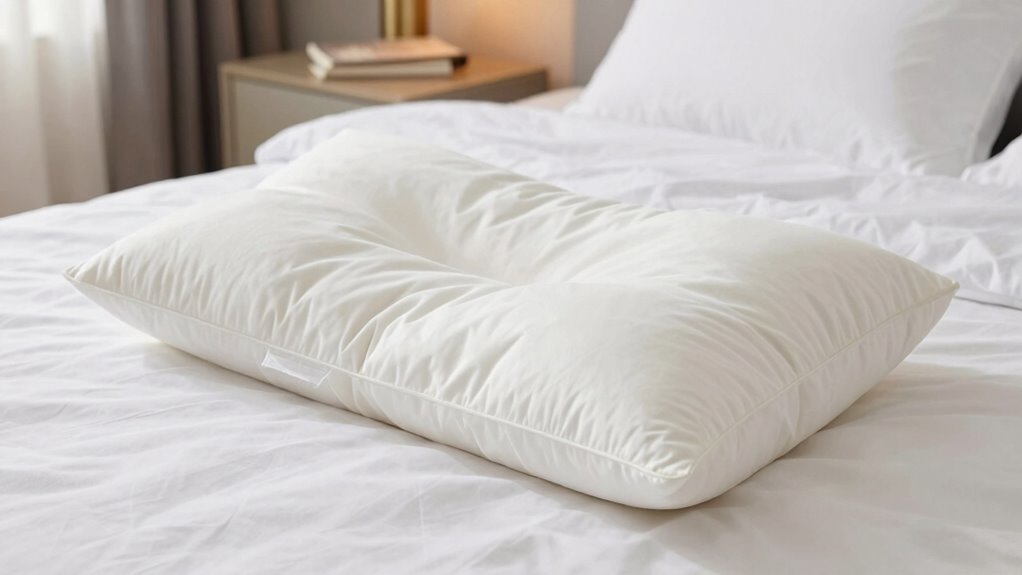
The loft of your pillow plays a crucial role in supporting your neck and ensuring restful sleep. Your pillow’s loft determines how well your head and neck align with your spine, directly impacting your sleep posture. If the loft is too high, it can cause your neck to bend unnaturally, leading to discomfort or pain. Conversely, a pillow with too low a loft may not provide enough support, causing your head to sink and your neck to strain. The right pillow loft helps maintain proper spinal alignment, reducing pressure points and promoting better sleep quality. Choosing a pillow with an appropriate loft based on your sleep position ensures your neck stays supported throughout the night, so you wake up refreshed and free from pain. proper spinal alignment is essential for minimizing discomfort and maintaining overall neck health during sleep. Additionally, understanding pillow firmness and loft can help optimize your sleep environment for maximum comfort. When selecting a pillow, considering ergonomic design principles can further enhance neck support and overall sleep quality. Being aware of sleep posture can also guide you in choosing the ideal loft for your needs. Furthermore, selecting the correct pillow fill can influence the loft and overall comfort, ensuring optimal support throughout the night.
What Are the Different Pillow Fill Types and Their Pros and Cons?

Different pillow fill types offer various benefits and drawbacks to suit your sleep needs. Memory foam provides excellent support and contouring, but can feel warm and heavy. Down and feather pillows are soft and luxurious, while latex and synthetic options balance durability and affordability—each with their own advantages. Additionally, understanding how these fills impact sleep quality can help you make a more informed choice. For example, some fills may be better suited for pressure relief or maintaining proper spinal alignment. Selecting the right fill also involves considering personal comfort preferences, which can vary greatly from person to person. Recognizing how pillow firmness affects your sleep can further help you find the most suitable option.
Memory Foam Advantages
Memory foam pillows mold to your head and neck, providing personalized support that can help reduce pressure points and improve sleep comfort. This contouring ability guarantees your spine stays aligned, which may ease neck pain and stiffness. Memory foam responds to your body heat, softening to better support your unique shape. It’s durable and retains its shape over time, maintaining consistent support night after night. These pillows are also excellent at isolating motion, so your movements won’t disturb your partner. However, some people find memory foam too warm or feel it retains heat, which can affect sleep quality. Overall, memory foam offers tailored support that promotes better sleep comfort, especially if you need relief from pressure or neck discomfort. Additionally, choosing a memory foam pillow with breathable covers can help mitigate heat retention and enhance sleep quality. Incorporating pressure relief strategies can further improve comfort and sleep quality for those using memory foam pillows.
Down and Feather Benefits
Down and feather fills are popular choices for those seeking plush, lightweight pillows that offer a soft and luxurious feel. Down and feather, often combined, provide excellent loft and support while remaining breathable. The feather benefits include durability and the ability to mold to your head and neck, offering personalized comfort. These pillows tend to be lightweight yet supportive, making them ideal for side or back sleepers. However, they require regular fluffing to maintain their loft and can sometimes cause allergies if not properly treated. Proper maintenance is essential to prolong their lifespan and ensure continued comfort. Additionally, using hypoallergenic treatments can help reduce allergy concerns associated with feather pillows. Down and feather fills also tend to be more expensive but offer longevity and a classic, cozy feel. Overall, they’re a great option if you want a soft, supportive pillow that adapts to your sleep posture. Natural filling materials contribute to their breathability and comfort, making them a popular choice among different pillow fill types.
Latex and Synthetic Options
Latex and synthetic pillows offer versatile options for those seeking supportive yet affordable bedding. Latex pillows are naturally resilient, providing consistent support and excellent bounce, which helps maintain proper neck alignment. Synthetic options, such as memory foam or polyester, are often budget-friendly and easily mold to your sleep position. Both types require a pillow case that promotes breathability and helps regulate sleep temperature. Proper pillow maintenance ensures longevity and optimal comfort. | Pillow Type | Pros | Cons | |————–|——-|——-| | Latex | Durable, natural, supportive | Heavier, can be expensive | | Synthetic | Affordable, lightweight | Less durable, may trap heat | | Both | Easy to clean, supportive | Potential for heat retention | | Ideal Use | Side and back sleepers | Not ideal for hot sleepers
How Does Measuring Pillow Loft Help Reduce Neck Pain?

Measuring pillow loft is essential because it helps you select a pillow that properly supports your neck and spine. When you understand your ideal loft, you improve pillow ergonomics, ensuring your neck stays in a neutral position. Proper loft supports your sleep posture by preventing your head from tilting too far forward or backward, which can strain muscles and cause pain. An accurate measurement guides you to choose a pillow that aligns your cervical spine, reducing tension and discomfort. When your pillow matches your specific needs, you minimize the risk of neck stiffness and soreness over time. By focusing on loft, you optimize your sleep setup, making it easier to wake up refreshed without neck pain. This simple step is key to better sleep health and long-term comfort. Additionally, choosing the right loft can complement other protective styling strategies to further enhance overall neck and spine health. Understanding pillow ergonomics can also help you make more informed decisions when shopping for sleep gear. Moreover, knowing your ideal pillow height can lead to improved sleep quality and overall well-being. Recognizing the natural curvature of the neck is also important, as it ensures your pillow supports your unique anatomical needs. Incorporating proper pillow fit into your sleep routine can further prevent discomfort and promote spinal alignment.
How Can You Find the Best Pillow Loft Based on Your Sleep Position?

Your sleep position plays a key role in choosing the right pillow loft. If you sleep on your side, a higher loft provides needed support; back sleepers benefit from a moderate height, while stomach sleepers usually prefer a low-profile pillow. Picking the right loft guarantees better comfort and helps prevent neck strain. Additionally, selecting a pillow with the appropriate supportive features can further enhance sleep quality and reduce discomfort. Ensuring your pillow maintains proper alignment during sleep can also significantly decrease neck pain and improve overall rest. Proper pillow timing and positioning are essential for achieving optimal neck support and comfort throughout the night. Understanding eco-friendly materials used in pillow manufacturing can also help you make more sustainable choices for your health and the environment.
Side Sleepers: Ideal Loft
Finding the right pillow loft is essential for side sleepers to maintain proper spinal alignment and prevent discomfort. A pillow that’s too high or too low can strain your neck and shoulders. For side sleepers, a loft between 4 to 6 inches often works best, filling the space between your neck and mattress without tilting your head. When choosing a pillow, consider pillow aesthetics—look for designs and decorative covers that match your bedroom decor while offering the support you need. A well-chosen loft ensures your head stays aligned with your spine, reducing pressure points. Keep in mind, the right loft isn’t just about comfort but also about maintaining healthy posture throughout the night. Your pillow should support both function and style seamlessly.
Back Sleepers: Moderate Support
Since back sleepers tend to keep their head and neck in a neutral position, choosing a pillow with moderate loft helps maintain proper spinal alignment without pushing the head too high or letting it sink too low. This balance enhances pillow comfort and supports healthy sleep hygiene by reducing neck strain. Look for a pillow that offers enough support to keep your neck aligned with your spine, but isn’t too firm or too soft.
| Support Level | Pillow Loft | Ideal For |
|---|---|---|
| Moderate | 4-5 inches | Back sleepers seeking balanced support |
This approach helps prevent neck pain and promotes restful sleep by aligning your head, neck, and spine effectively.
Stomach Sleepers: Low Profile
Because stomach sleepers typically keep their head turned to one side and their neck in a flexed position, a low-profile pillow helps prevent strain and keeps the spine aligned. When choosing based on sleeping positions, look for pillows with a minimal loft that don’t elevate your head too much. This maintains proper neck alignment and reduces discomfort. Pillow aesthetics matter too—select a design that complements your bedroom decor without sacrificing support. A flatter pillow minimizes the risk of neck strain and allows for easier breathing. Keep in mind that the right low-profile pillow should feel comfortable and support your natural sleeping position, ensuring you wake up refreshed. Finding the perfect loft for stomach sleepers balances function with aesthetics, promoting healthier sleep.
How Do Pillow Firmness and Fill Density Support Your Neck?

Pillow firmness and fill density directly influence how well your neck is supported throughout the night. Choosing the right combination helps align your spine and improves sleep ergonomics.
Here’s how they work:
- Pillow materials determine firmness—memory foam, latex, or down each offer different support levels.
- Fill density affects support; higher density fills provide firmer, more stable support, ideal for side sleepers.
- Support level must match your sleeping position and personal preference to prevent neck strain.
If your pillow is too soft, your neck may sag; if too firm, it can cause pressure points. Selecting the right firmness and fill density guarantees consistent neck support and enhances sleep comfort.
Common Pillow Size and Shape Mistakes That Lead to Neck Strain

Choosing the right pillow size and shape is just as important as selecting the correct firmness and fill density. Using a pillow that’s too small or too flat can cause your neck to bend unnaturally, leading to strain and discomfort. Conversely, an overly thick or stiff pillow pushes your head out of alignment. Many people neglect pillow hygiene and maintenance, allowing dust mites and bacteria to accumulate, which can worsen neck pain and reduce pillow effectiveness. Incorrect sizes also make it harder to maintain proper posture throughout the night. Regularly washing and replacing your pillow helps preserve its shape and support. Paying attention to size and shape ensures your pillow promotes proper alignment, reducing neck strain and improving overall sleep quality.
Tips for Choosing Pillows to Keep Your Neck Properly Aligned

Ensuring your neck stays properly aligned during sleep starts with selecting a pillow that supports your natural position. To do this effectively, consider these tips:
Proper sleep support begins with choosing a pillow that aligns with your natural neck position.
- Choose a pillow with the right loft to match your sleep position—side sleepers need higher loft, back sleepers medium, stomach sleepers lower.
- Prioritize fill type that maintains support without losing shape over time, ensuring consistent alignment.
- Opt for pillow aesthetics that blend with your sleep environment, creating a calming space that encourages restful sleep.
How to Test and Adjust Pillows in Stores Using the Key Measurement?

When testing pillows in stores, the key measurement to focus on is the height or loft that aligns with your sleep position. Proper pillow sizing guarantees your neck stays in a neutral position, supporting good sleep ergonomics. To test, lie down in your usual sleep pose and observe how well the pillow supports your head and neck. It should fill the space between your mattress and your head without causing strain. Adjust the pillow’s position or try different loft levels if possible. Don’t rely solely on feel; measure the pillow’s height against your ideal sleep ergonomics. This approach helps you find a pillow that maintains proper alignment, reducing neck pain and improving overall sleep quality.
How to Adjust Your Pillow Over Time to Prevent Neck Pain Reoccurrence?
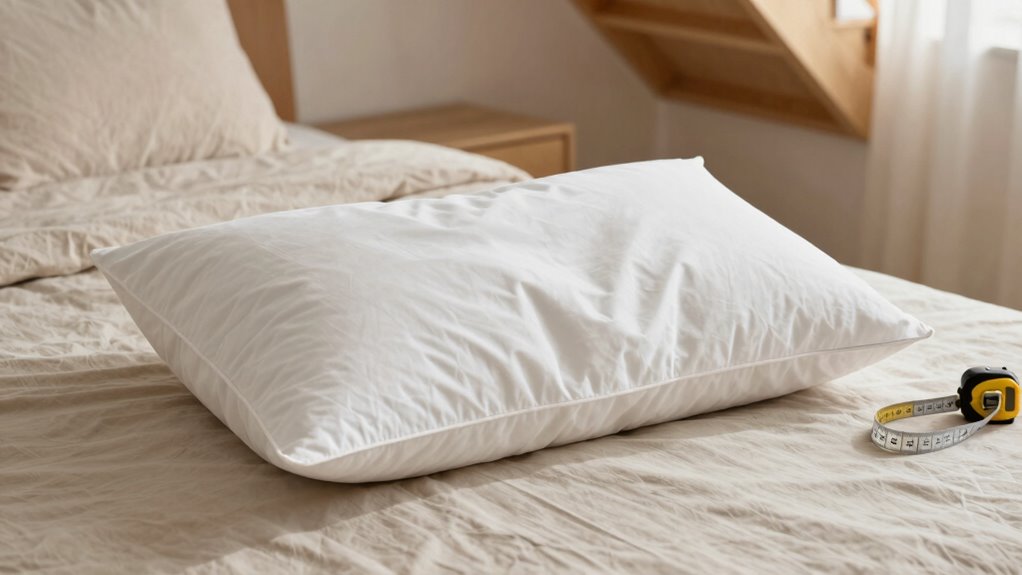
As your sleep needs and habits evolve, regularly adjusting your pillow is essential to prevent neck pain from returning. Proper pillow maintenance and good sleep hygiene ensure ongoing comfort and support. To stay on track:
- Check your pillow’s loft and fill every few months, replacing or fluffing as needed to maintain proper support.
- Experiment with slight adjustments—add or remove filling—to keep your neck aligned with your spine.
- Wash your pillow regularly to prevent allergens and maintain hygiene, which supports healthy sleep habits.
Frequently Asked Questions
How Often Should I Replace My Pillow for Optimal Neck Support?
You should replace your pillow every 1 to 2 years to maintain ideal neck support. Pillow durability varies based on materials and usage, but over time, even the best pillows lose their shape and support. With a variety of sleeping surfaces available, it’s essential to choose a pillow that suits your sleep style and replace it regularly to prevent neck pain and guarantee restful sleep. Keep an eye on sagging or flattening for signs it’s time to swap.
Can Different Sleep Positions Require Different Pillow Lofts?
Yes, your sleep posture influences the ideal pillow loft. If you’re a side sleeper, you need a higher loft and firmer pillow to fill the space between your neck and mattress. Back sleepers benefit from medium loft and firmness, while stomach sleepers prefer a low loft and softer pillow. Adjusting pillow firmness and loft based on your sleep posture helps support proper neck alignment and reduces pain.
What Are Signs My Pillow Isn’t Providing Proper Neck Alignment?
Did you know that 75% of people experience neck pain from improper pillows? If your pillow causes persistent neck stiffness, headaches, or you wake up feeling worse, it’s a sign it’s not aligned properly. Poor pillow materials and bad sleep hygiene can worsen these issues. To fix this, guarantee your pillow supports natural neck curves, stays supportive overnight, and promotes good sleep habits for healthier mornings.
Does Pillow Shape Impact Neck Pain Relief?
Yes, pillow shape impacts neck pain relief because it influences sleep ergonomics and neck support. A well-designed pillow shape aligns your head and neck properly, reducing strain and discomfort. The right pillow design considers your sleep position and anatomy, ensuring ideal support. By choosing a pillow with a shape that matches your needs, you can improve sleep quality and decrease neck pain, making your rest more restorative.
Are Specialty Pillows Necessary for Chronic Neck Pain Sufferers?
Sometimes, finding relief feels like a coincidence, but for chronic neck pain sufferers, specialty pillows can be a game-changer. You might discover that these tailored options provide better support and alignment, addressing specific issues regular pillows can’t. While not always necessary, investing in specialty pillows offers targeted relief, helping you sleep more peacefully and reducing pain over time. It’s worth exploring if standard options haven’t worked for you.
Conclusion
Choosing the right pillow isn’t just a small detail—it’s the secret weapon against relentless neck pain, sleepless nights, and morning stiffness. Get it wrong, and you could be trapped in a never-ending cycle of discomfort that turns your bed into a battleground. But find the perfect loft, fill, and size, and you’ll wake up feeling like you’ve conquered the world. Don’t settle—your neck’s comfort and your best sleep are worth fighting for!