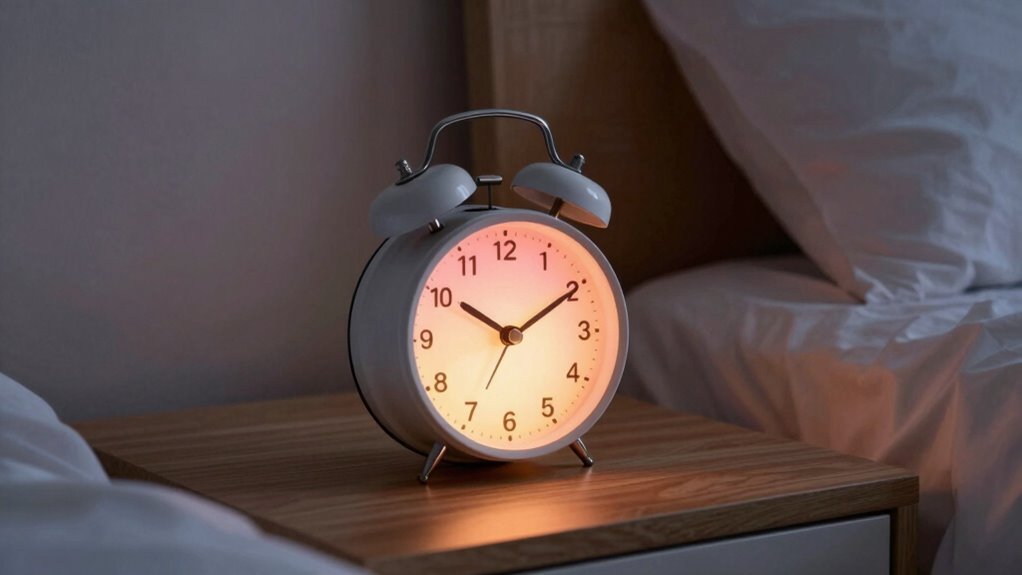

To wake up gently with a sunrise alarm clock, set the light to gradually increase to about 200-300 lux using warm tones of 2,700K–3,000K. Personalize the timing for a 30-60 minute dawn simulation, and consider using graded dimming to ease into wakefulness. Keep the alarm volume low and adjust it until comfortable. If you want to learn how to fine-tune your settings for the most invigorating start, there’s more to discover here.
Key Takeaways
- Brightness levels around 200-300 lux mimic natural dawn for effective wake-up stimulation.
- Warm light tones (2,700K–3,000K) create a soothing, natural sunrise experience.
- Gradual light increase over 30-60 minutes supports circadian rhythm and prevents startling.
- Personalize light intensity and timing to match individual sleep cycles for optimal alertness.
- Combining gentle light with low-volume alarm minimizes morning stress and enhances wakefulness.
Why Sunrise Alarm Clocks Are a Gentle Way to Wake Up
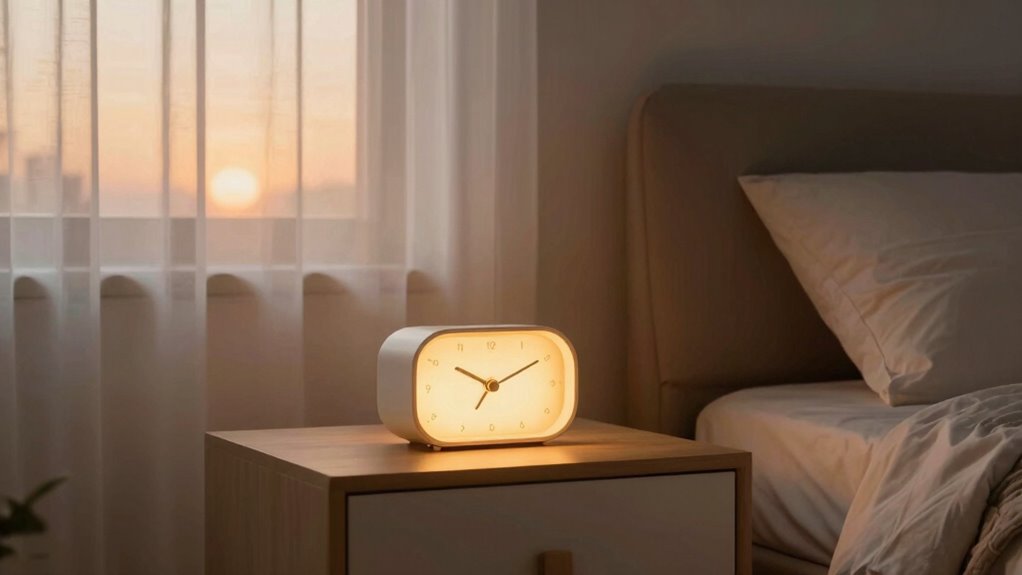
Sunrise alarm clocks offer a gentle way to wake up because they simulate the natural rising of the sun, gradually increasing light in your room. This gentle illumination supports good sleep hygiene by helping your body shift smoothly from sleep to wakefulness. When you wake up gradually, you’re less likely to feel groggy or startled, making it easier to start your day calmly. Incorporating a sunrise clock into your morning routine encourages healthy sleep patterns, helping your body develop healthier sleep habits. Unlike loud alarms that jolt you awake, these clocks promote a more natural awakening, reducing stress and improving overall sleep quality. Over time, this mindful approach can lead to better rest and a more energized, balanced start to each day. Additionally, the light settings of sunrise clocks can often be customized to suit your personal preference, further enhancing your waking experience. Proper light exposure in the morning is also linked to regulating your circadian rhythm, supporting overall well-being. In fact, light therapy has been shown to be effective in treating certain sleep disorders and mood-related issues. Moreover, the ability to control the light intensity allows users to tailor their wake-up experience even further, maximizing the benefits of naturalistic light exposure.
How Sunrise Clocks Mimic Natural Light to Start Your Day
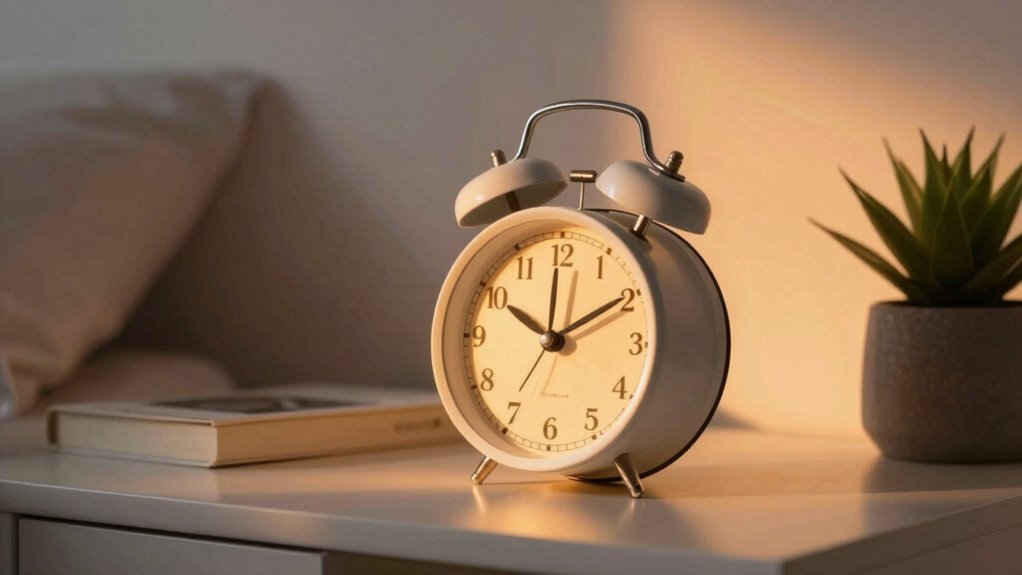
Sunrise clocks gradually increase light to mimic the natural dawn, helping you wake up more peacefully. This gentle illumination signals your body that it’s time to start the day, just like the rising sun outside. By simulating a natural dawn, these clocks make waking up feel less abrupt and more invigorating. Additionally, the light settings can be customized to suit your preferences, further improving your wake-up experience. Incorporating inclusive casting ensures that these devices are designed to appeal to a diverse range of users, promoting a more equitable and accessible experience for everyone. To enhance their effectiveness, some models also include features like dawn simulation patterns, which can be tailored to better align with individual sleep cycles and natural rhythms. Understanding the importance of light therapy can also help users maximize the benefits of sunrise alarm clocks for overall well-being. Adjusting light intensity levels can further optimize the waking process based on personal comfort and sensitivity.
Gradual Light Increase
As dawn approaches, sunrise alarm clocks gradually brighten to imitate the natural shift from darkness to daylight. This slow increase in light helps regulate your sleep cycles, signaling your body to wake up more naturally. The gradual light change also reduces the shock of waking suddenly, making it easier to start your day feeling refreshed. Many clocks synchronize the light intensity with your preferred wake-up time, creating a sunrise effect that mimics natural dawn. Additionally, these clocks often adjust alarm volume in tandem, starting softly and increasing gradually to ensure you wake gently without startling you. This combination of gradual light and alarm volume helps align your wake-up process with your body’s internal rhythms, making mornings less stressful and more in tune with your natural sleep patterns. Incorporating color temperature adjustments can further enhance the realism of the sunrise simulation, promoting a more natural awakening experience. A light spectrum that closely resembles natural sunlight can also improve your overall waking experience by stimulating your body’s circadian rhythms more effectively. Furthermore, some models incorporate smart technology to optimize the sunrise experience based on your sleep history, further supporting healthy sleep cycles. Interestingly, research shows that light therapy can also be used effectively to combat seasonal affective disorder and improve mood upon waking. Implementing these features can lead to a more restorative mornings and a healthier start to your day.
Mimics Natural Dawn
Sunrise alarm clocks are designed to replicate the natural progression of daylight, helping your body wake more smoothly. By mimicking the gradual increase of natural dawn, these clocks align with your sleep cycles, signaling your body to wake up at the right moment. This gentle light helps you shift out of deep sleep, reducing grogginess and improving sleep quality. When your body perceives the light as a sunrise, it triggers the release of hormones that promote alertness without sudden shocks. Over time, consistent use can help regulate your circadian rhythm, making waking up easier and more natural. Incorporating luxurious sleep accessories such as high-end bedding or sound machines can further enhance your waking experience. Additionally, using sleep environment optimizations like blackout curtains or cooling mattresses can promote more restorative sleep, making the dawn wake-up process even more effective. Understanding how light therapy impacts your biological clock can also help optimize your morning routines. For example, exposure to natural light simulation during the wake-up process can significantly boost your mood and energy levels throughout the day. Employing biological rhythm regulation techniques can enhance the effectiveness of light-based wake-up methods. Instead of abrupt alarms, mimicking natural dawn encourages a more restful sleep and a refreshed start to your day.
What Are the Best Brightness Settings for a Gentle Wake-Up
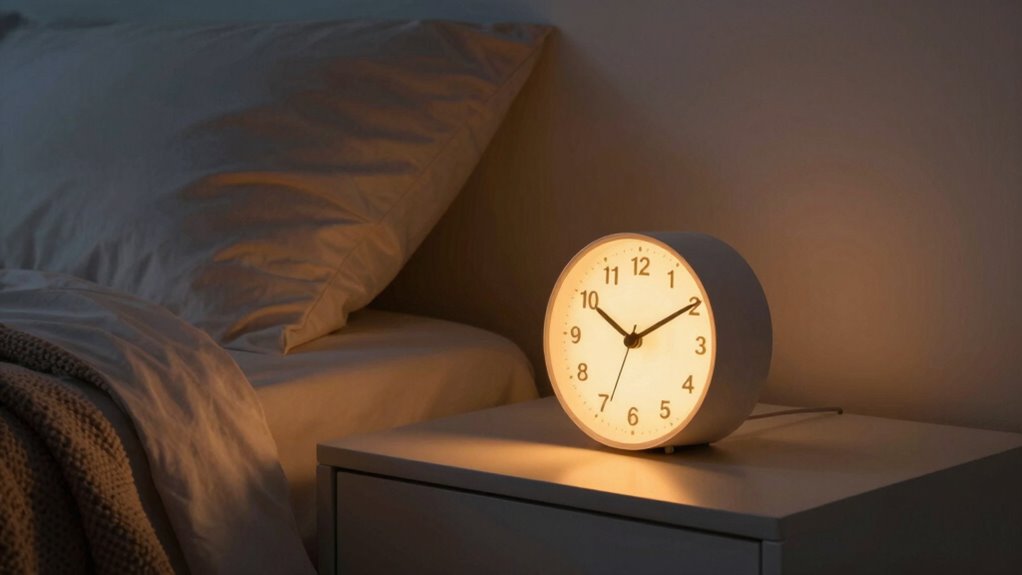
Finding the right brightness level is key to waking up gently without startling yourself. You should aim for an ideal setting that gradually increases to mimic natural sunlight. Personalizing the light intensity helps you start your day comfortably and feel more refreshed. Incorporating smart lock features can also enhance your morning routine by securely automating your home access. Additionally, selecting appropriate light settings can prevent abrupt awakenings and promote better overall sleep quality. Adjusting the light spectrum to include warmer tones can further simulate natural dawn, making the wake-up process even more soothing. Understanding the yarn for scarves can also inspire cozy mornings, pairing well with a gentle light to start your day. Using the correct brightness levels ensures a smoother transition from sleep to wakefulness, making your mornings more comfortable.
Optimal Brightness Levels
Choosing the right brightness level is key to waking up gently without startling yourself. For a natural start, set your sunrise clock to a brightness that mimics dawn, around 200-300 lux, aligning with the light spectrum’s warmer tones. This gradual increase eases your body into wakefulness. Keep in mind, the alarm volume should complement the light; too loud, and it defeats the gentle purpose. Ideally, set the volume low enough to wake you comfortably without causing shock. Adjusting brightness and alarm volume together creates a soothing environment that leverages light’s spectrum and sound levels for a smooth awakening.
| Brightness Level | Recommended Setting |
|---|---|
| Low | 100-200 lux |
| Moderate | 200-300 lux |
| Bright | 300-500 lux |
| Very Bright | 500+ lux |
Personalizing Light Intensity
Personalizing your light intensity guarantees a gentle and effective wake-up. Adjusting the brightness to match your preferences helps you wake naturally without startling your system. Consider the color temperature—warm tones (around 2,700K to 3,000K) promote relaxation and improve sleep quality, making it easier to wake refreshed. As the light gradually increases, keeping it at a lower intensity initially prevents abrupt awakenings. You can then increase brightness slowly to avoid disruption. Fine-tuning these settings ensures the light mimics natural sunrise, supporting your sleep cycles and reducing grogginess. Remember, the goal is a smooth progression from sleep to wakefulness, so personalize your light intensity based on how sensitive you are to light and your comfort level.
How to Adjust Light Intensity for Maximum Refreshment
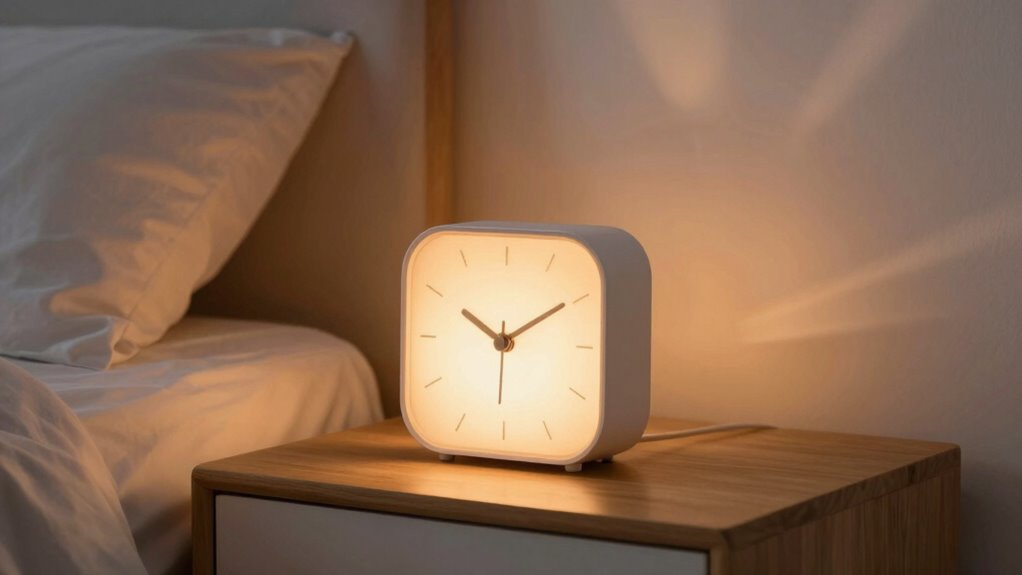
Adjusting the light intensity on your sunrise alarm clock is key to waking up feeling refreshed. To optimize your sleep cycles, set the light to gradually increase in brightness, mimicking natural sunrise patterns. This gentle progression helps signal your body to wake up naturally, reducing grogginess. Light therapy works best when the intensity matches your comfort level, so start with a lower setting and increase gradually until it feels right. If the light is too dim, you might miss the cue to wake up, while too bright can cause discomfort. Find a balance that stimulates your circadian rhythm without overwhelming your senses. Proper adjustment guarantees you wake up energized, making the most of your alarm clock’s benefits for a more refreshed morning.
Using Graded Dimming to Reduce Morning Stress
Using graded dimming as part of your morning wake-up routine can considerably reduce stress and make waking up more comfortable. Gradually decreasing light intensity mimics natural dawn, easing your transition from sleep to wakefulness. This approach supports better sleep hygiene by preventing abrupt awakenings and promoting relaxation. Incorporating light therapy through dimming helps regulate your circadian rhythm, reducing morning anxiety. To visualize the benefits, consider this table:
| Light Level | Effect on Stress | Sleep Hygiene Impact |
|---|---|---|
| Bright | Sudden awakening | Disrupts sleep cycles |
| Moderate | Gentle wake-up | Supports relaxation |
| Dim | Low stress | Enhances sleep quality |
Gradual dimming eases your body into wakefulness, creating a calmer, more invigorating start to your day.
Setting the Right Duration for Sunrise Simulation
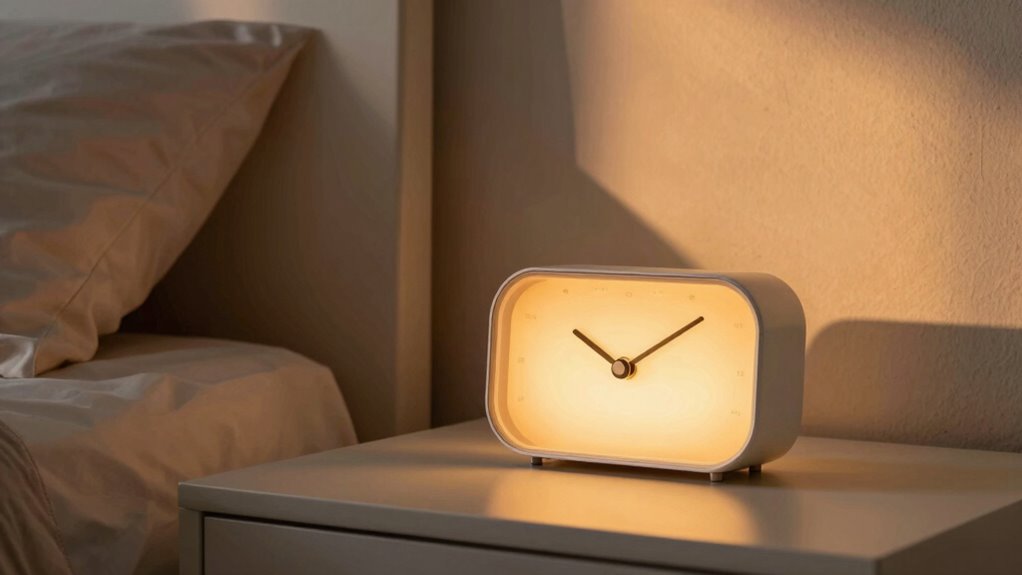
Choosing the right duration for your sunrise simulation is essential to waking up naturally and comfortably. If it’s too quick, you might feel startled or groggy; if it’s too slow, you may oversleep or disrupt your sleep cycle. To achieve ideal timing consistency, aim for a gradual light increase over 30 to 60 minutes. This allows your body to gently transition from sleep to wakefulness, aligning with your natural sleep cycle. Consider these emotional benefits:
- Feel energized and ready for the day
- Wake up without abruptness or stress
- Maintain a consistent, invigorating sleep routine
Adjust the duration based on your personal preference and how sensitive you are to light changes, always prioritizing a smooth, natural awakening.
Common Mistakes When Setting Up Your Sunrise Alarm

Many people often overlook common mistakes when setting up their sunrise alarm, which can undermine the effectiveness of the wake-up process. One mistake is ignoring your sleep patterns; setting the light too early or late can disrupt your natural rhythm. Another is neglecting the alarm volume, making it either too faint or startlingly loud, which affects your comfort and response.
| Mistake | Impact |
|---|---|
| Ignoring sleep patterns | Wakes you at the wrong time, causing grogginess |
| Setting the alarm volume too high | Startles you awake, increasing stress levels |
Ensuring your light gradually increases in harmony with your sleep cycle and adjusting volume appropriately helps you wake up refreshed and alert.
Tips for Customizing Light and Sound Settings for Better Mornings
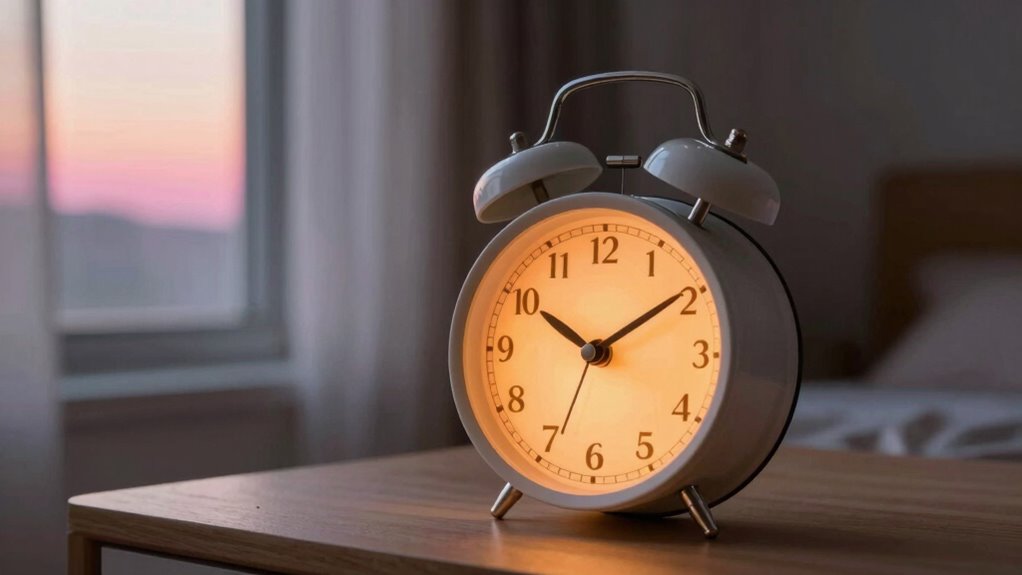
To wake up feeling refreshed, it’s essential to customize your light and sound settings to suit your preferences and sleep habits. A well-tuned smart home sunrise alarm can boost your sleep hygiene and make mornings more pleasant. Adjust the light intensity gradually to mimic natural sunrise, easing your progression from sleep to wakefulness. Choose sounds that motivate you without startling, like gentle nature noises or soft music. Experiment with different brightness and sound levels until you find what energizes you most.
- Feel truly motivated to start your day with a gentle wake-up that aligns with your body’s rhythm
- Create a calming environment that encourages restful sleep and reduces morning stress
- Enjoy seamless integration with your smart home system for effortless mornings
Frequently Asked Questions
Can Sunrise Alarm Clocks Be Used for People With Sleep Disorders?
Yes, sunrise alarm clocks can be helpful for sleep disorder treatment by promoting circadian rhythm adjustment. You might find that the gradual light increase assists in regulating your sleep-wake cycle, especially if you struggle with insomnia or delayed sleep phase syndrome. However, it’s important to consult a healthcare professional to ensure this method complements your overall treatment plan, as individual needs vary.
Are Sunrise Alarm Clocks Effective for Heavy Sleepers?
Yes, sunrise alarm clocks can be effective for heavy sleepers if you incorporate light therapy into your sleep routine. You might need a higher brightness setting or longer wake-up light exposure to truly rouse you. Improving sleep hygiene, like sticking to a consistent schedule and avoiding screens before bed, enhances their effectiveness. Experimenting with different light intensities can help you wake up more naturally, even if you’re a deep sleeper.
Do Sunrise Alarm Clocks Work in Completely Dark Rooms?
Yes, sunrise alarm clocks can still wake you up even in completely dark rooms. They use adjustable light intensity that gradually brightens, simulating a sunrise so realistic it’s almost magical. The key is setting the right light level for your room’s darkness, ensuring the gentle glow penetrates even the darkest spaces. So, no matter how pitch-black your room is, these clocks will stir you awake with their soothing, increasing light.
How Long Should I Set the Sunrise Simulation for Optimal Wake-Up?
You should set your sunrise simulation for about 30 minutes to optimize wake-up timing. This light duration gradually brightens your room, mimicking natural sunrise and gently nudging you awake. If you want a more gradual wake-up, extend the light duration to 40 minutes. Adjust based on your sleep cycle and preferences, but generally, 30 to 40 minutes of gradual light exposure helps you wake up feeling refreshed and alert.
Are There Any Health Benefits Associated With Using Sunrise Alarm Clocks?
Using sunrise alarm clocks can improve your health by helping regulate melatonin production, which supports better sleep cycles. As the gentle light wakes you gradually, your body responds more naturally, reducing sleep disruption. Additionally, exposure to morning light can boost mood by increasing serotonin levels, making you feel more alert and positive throughout the day. Overall, integrating a sunrise alarm clock into your routine promotes both better sleep and mental well-being.
Conclusion
Embracing sunrise alarm clocks can truly transform your mornings, easing you into wakefulness with natural light. Some believe that exposure to gradual light resets your circadian rhythm, making waking easier and more invigorating. By customizing brightness and duration, you align your wake-up routine with your body’s natural rhythms. So, give it a try—your mornings might become less stressful and more rejuvenating, proving that a gentle start really can make all the difference in how you face the day.