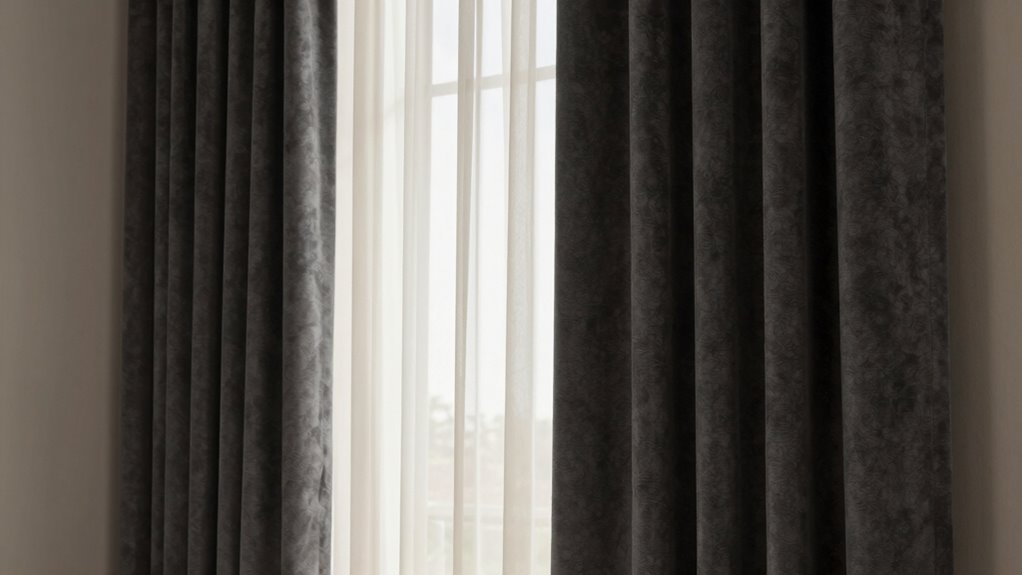

Thermal blackout curtains save more energy than standard blackout options because they are designed with insulating layers that trap warm air and reduce heat transfer through windows. They help keep your home warmer in winter and cooler in summer, lowering heating and cooling costs. While standard blackout curtains block light and provide privacy, they don’t offer the same insulation benefits. For a closer look at which option best fits your needs, continue exploring the details below.
Key Takeaways
- Thermal blackout curtains have layered insulating materials that significantly reduce heat transfer compared to standard blackout curtains.
- Proper installation of both curtain types, including covering entire window frames, enhances their energy-saving effectiveness.
- Thermal blackout curtains trap warm air near windows, lowering heating costs more effectively than standard blackout curtains.
- Standard blackout curtains offer minimal insulation, providing limited energy savings despite blocking light and drafts.
- Investing in high-quality thermal blackout curtains yields greater long-term energy savings than standard blackout options.
Which Blackout Curtains Save More Energy: Thermal or Standard?
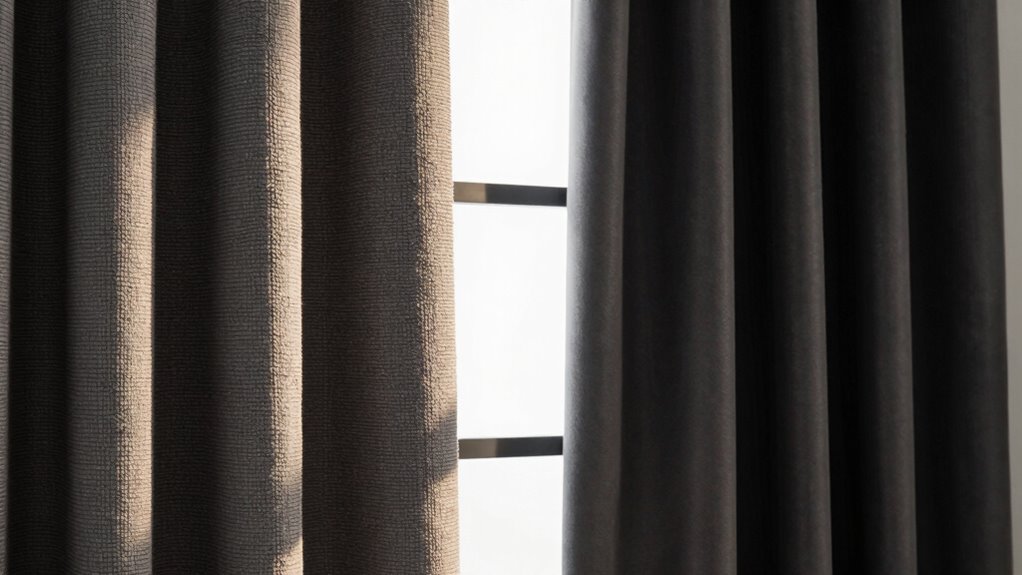
Have you ever wondered which blackout curtains help you save more energy—thermal or standard? The answer hinges on material comparison. Thermal curtains typically feature a layered design with insulating foam or reflective coatings, enhancing their energy efficiency. Thermal insulation properties play a significant role in reducing heat transfer, making them more effective for energy conservation. When installing, ensure the curtains cover the entire window frame, extending a few inches beyond for better insulation. Use a sturdy curtain rod and hang the curtains close to the ceiling to minimize gaps. Proper installation maximizes energy savings, especially with thermal curtains, which are designed to reduce heat transfer. Choosing appropriate fixtures like high-quality curtain rods can also improve the effectiveness of your blackout curtains. Additionally, considering installation techniques can further optimize their energy-saving benefits. Proper curtain placement and sealing gaps along the edges can significantly enhance their thermal performance. Ensuring that the material composition of your curtains aligns with your energy goals is essential. Ultimately, choosing thermal blackout curtains offers a more effective way to conserve energy indoors.
How Do Thermal Blackout Curtains Help Keep Your Home Warm?
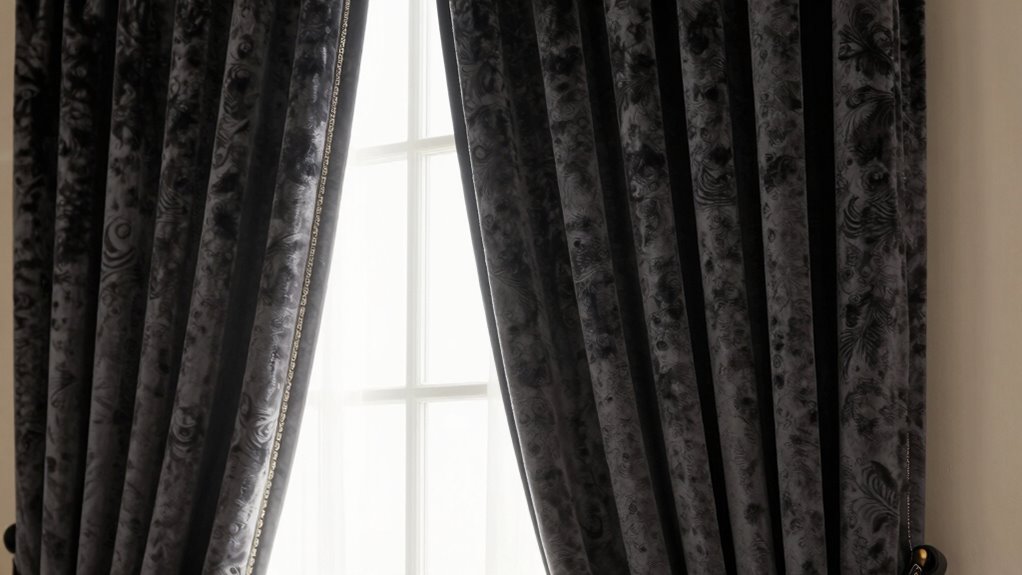
Thermal blackout curtains help keep your home warm by creating a barrier that reduces heat loss through your windows. Their insulation effectiveness depends on the density and layered design, which trap air and prevent drafts. This layered structure enhances overall insulation, ensuring your living space stays warmer longer, especially during colder months. To understand their impact better, consider this table:
| Feature | Benefit |
|---|---|
| Dense Fabrics | Enhance insulation effectiveness |
| Multiple Layers | Increase heat retention |
| Insulating Backing | Minimize heat transfer through windows |
| Tight Fit | Reduce drafts and air leaks |
| Reflective Surfaces | Bounce heat back into the room |
These features work together to help your home stay cozy, saving energy and reducing heating costs. Proper installation also plays a crucial role in maximizing their energy-saving benefits, ensuring that the thermal properties of the curtains are fully utilized. Additionally, selecting curtains with insulation capabilities can further improve their performance in maintaining indoor warmth. Incorporating proper curtain installation can optimize their effectiveness and provide better energy savings.
Can Standard Blackout Curtains Actually Reduce Heating Costs?
Standard blackout curtains can indeed help reduce heating costs, even if they lack the layered insulation of specialized thermal options. The curtain material plays a key role; thicker fabrics like polyester or velvet block more heat loss. When you hang blackout curtains, they create a barrier between your window frame and the room, minimizing drafts and heat escape. They’re effective at trapping warm air near the window, especially if they extend beyond the window frame and reach the floor. While they may not match the efficiency of thermal curtains, they still provide noticeable savings by reducing the workload on your heating system. Proper curtain installation techniques can further enhance their energy-saving benefits. Using appropriate fabric weights can maximize their insulating properties. Additionally, choosing curtains with layered insulation or adding weatherstripping around windows can further amplify these effects and boost your savings.
What Factors Matter Most When Choosing Energy-Saving Blackout Curtains?
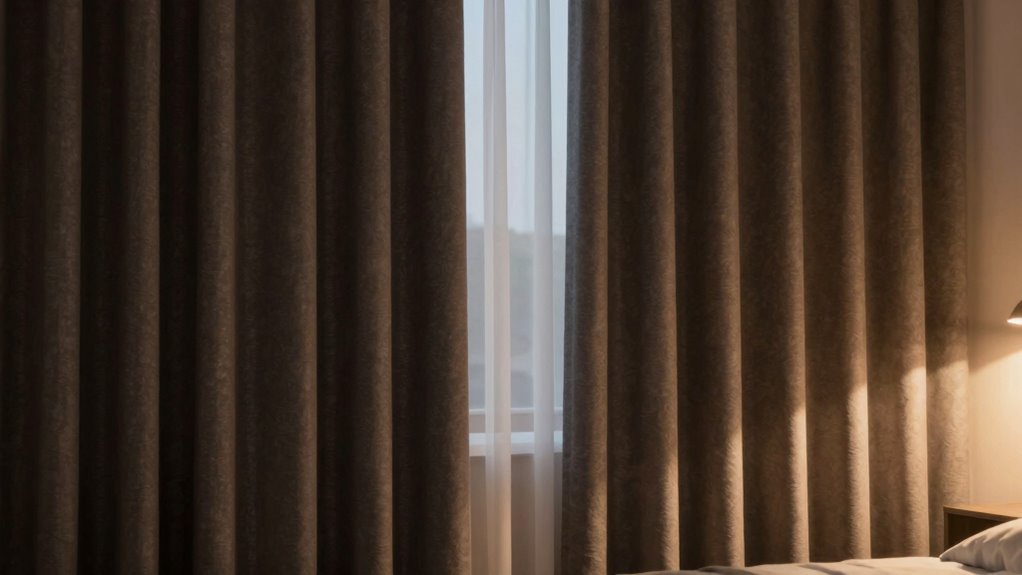
Choosing the right energy-saving blackout curtains depends on several key factors that influence their effectiveness. Material durability is essential—you want curtains that withstand daily use without tearing or fading, ensuring long-term energy savings. Look for high-quality fabrics that resist wear and maintain their insulating properties over time. Aesthetic appeal also matters, as your curtains should complement your room’s decor. Since you’ll be choosing blackout curtains for both function and style, find a design and color that fit your space while still offering the thermal benefits. Additionally, consider the curtain’s weight and lining, which directly impact their insulating ability. Properly care for your curtains can extend their lifespan and preserve their energy-saving qualities. Regular maintenance can prevent damage from dust and dirt, helping to maintain optimal thermal performance. Understanding the material composition of your curtains can help you select options that maximize insulation and durability. Being aware of energy efficiency ratings can further guide you toward the most effective choices to reduce energy costs. Incorporating knowledge of reliance on cloud services can help you understand the importance of consistent energy use and efficiency in your home systems. Balancing durability, appearance, and performance will help you select the best blackout curtains to reduce energy costs effectively.
Which Type of Blackout Curtain Is the Best Investment for Your Home?
When investing in blackout curtains for your home, it’s essential to evaluate which type offers the best balance of energy efficiency, durability, and style. The right choice depends on your priorities—whether you value long-lasting fabric durability, enhanced aesthetic appeal, or superior insulation. For a smart investment, consider curtains made from high-quality materials that resist wear and tear while complementing your decor. Incorporating whole-home water systems can also improve your home’s overall energy efficiency by optimizing moisture and temperature regulation. Some key points to keep in mind: – Fabric durability ensures your curtains last through seasons of use – Aesthetic appeal helps your space look polished and cohesive – Energy-saving features boost your home’s comfort and lower bills. Additionally, choosing curtains with thermal insulation properties can significantly reduce heat transfer, leading to better energy savings in the long run. Incorporating insulation materials into your curtain design further enhances their ability to prevent heat loss. Modern innovations in material technology have made it possible to create curtains that are both stylish and highly effective at insulating. In fact, advancements in fabric engineering have led to the development of blackout curtains that offer superior energy savings without sacrificing style. Ultimately, selecting blackout curtains that combine these qualities results in a worthwhile investment, providing both beauty and function for years to come.
Frequently Asked Questions
Are Blackout Curtains Effective in Reducing Cooling Costs During Summer?
Yes, blackout curtains effectively reduce cooling costs during summer by providing solar shading and thermal insulation. They block out intense sunlight, preventing heat from entering your space, which keeps your room cooler naturally. Their thermal insulation properties help maintain a consistent indoor temperature, reducing the need for air conditioning. By using blackout curtains, you can save energy and lower your cooling bills while enjoying a more comfortable environment during hot months.
How Long Does It Take to See Energy Savings After Installing Blackout Curtains?
Installing blackout curtains is like flipping a switch—energy savings can appear quickly. You might notice cooler rooms within a few days, especially during summer. Typically, you’ll see a noticeable energy savings timeline within one to two weeks, as the curtains block heat from entering. The installation timeline is quick, often just an hour or two, so you can start saving energy almost immediately after hanging them.
Do Blackout Curtains Impact Indoor Air Quality or Ventilation?
Blackout curtains can slightly impact indoor air quality and ventilation if they block airflow or trap dust and allergens. You might notice reduced ventilation quality if they cover vents or windows that promote air circulation. To minimize this, make sure your curtains don’t obstruct vents or windows used for fresh air. Regular cleaning helps maintain good indoor air and ventilation, keeping your space healthy and comfortable.
Can Blackout Curtains Be Combined With Other Energy-Saving Window Treatments?
Think of your window treatments as a cozy sweater for your home. You can definitely combine blackout curtains with other energy-saving options like layered insulation and window film. These layers work together to block drafts, reduce heat transfer, and boost energy efficiency. By layering these treatments, you maximize your savings and create a more comfortable space year-round, all while cutting down on energy bills.
What Maintenance Is Required to Keep Blackout Curtains Energy-Efficient?
To keep your blackout curtains energy-efficient, regularly clean the fabric according to the manufacturer’s instructions, typically with gentle vacuuming or spot cleaning. Avoid harsh chemicals that could damage the fabric. Proper maintenance extends the curtain lifespan and maintains their thermal properties. Additionally, check for any tears or wear, and repair them promptly to ensure continuous insulation. Well-maintained curtains help maximize energy savings and keep your space comfortable year-round.
Conclusion
Choosing between thermal and standard blackout curtains is like selecting a shield for your home’s energy fortress. Thermal curtains act as a warm embrace, locking in heat like a loyal guardian, while standard curtains offer a simpler barrier. Your decision reflects your home’s story—whether you want a fortress of comfort or a cost-effective shield. Invest wisely, and let your curtains be the silent guardians of your energy savings and cozy sanctuary.