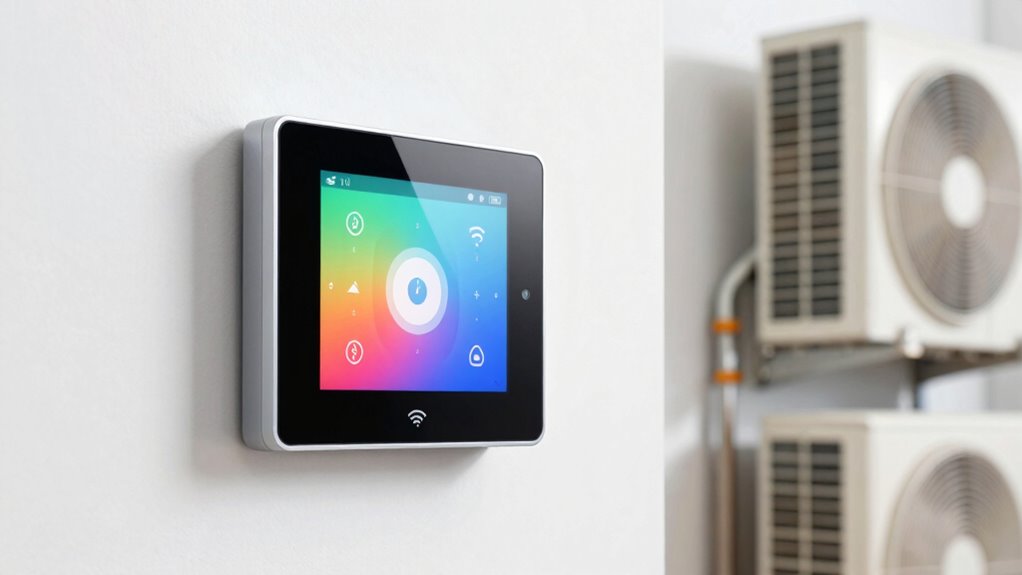

To guarantee your heat pump works smoothly with a smart thermostat, check its compatibility with wireless protocols like Wi-Fi, Z-Wave, or Zigbee, and confirm it supports features such as remote control and scheduling. Verify wiring requirements, especially if a C-wire is needed, and confirm electrical specs like voltage and amperage. Proper installation and professional help can prevent issues. Keep exploring to discover detailed tips for a seamless smart thermostat upgrade.
Key Takeaways
- Verify the heat pump supports smart thermostat integration through manufacturer specifications and compatibility lists.
- Check if the system wiring includes a common wire (C-wire) required for smart thermostat power.
- Confirm voltage compatibility, typically 24V AC, matches the thermostat’s electrical requirements.
- Ensure the thermostat supports wireless protocols like Wi-Fi, Z-Wave, or Zigbee for seamless communication.
- Consider professional installation to ensure proper wiring, calibration, and long-term system performance.
Do Heat Pumps Work With Smart Thermostats?

Are heat pumps compatible with smart thermostats? Yes, many modern heat pumps can work seamlessly with smart thermostats, thanks to smart sensors and Wi-Fi connectivity. These features allow you to control your system remotely and optimize its performance. Smart sensors detect temperature changes and help maintain consistent comfort levels, while Wi-Fi connectivity enables you to manage settings from your smartphone or voice commands. Additionally, system compatibility can influence how well your control interface displays information, ensuring you see precise system statuses. Compatibility varies depending on the model; some heat pumps require specific smart thermostats or additional adapters. Before purchasing, check if your heat pump supports smart sensors and Wi-Fi features to ensure proper integration. When compatible, this combination offers enhanced energy efficiency, convenience, and precise temperature control, making your heating and cooling system smarter and more responsive to your needs. Proper system integration also involves understanding compatibility requirements to ensure smooth operation and avoid potential issues.
How to Check If Your Heat Pump Is Compatible
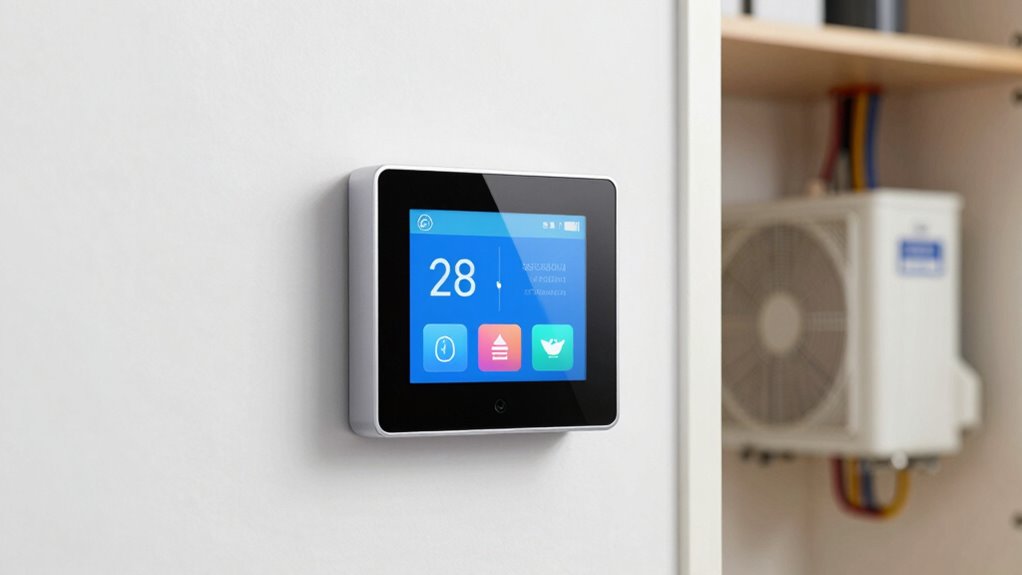
To determine if your heat pump is compatible with a smart thermostat, start by checking the model specifications and manufacturer’s documentation. Look for details on temperature sensors and wiring diagrams, as these are vital for integration. Compatibility often depends on whether your system has the necessary sensors to communicate with the thermostat, and if the wiring setup supports smart control features. Additionally, reviewing DIY safety tips can help ensure that any installation or troubleshooting is conducted safely and effectively. Verifying system compatibility can also involve consulting your heat pump’s user manual or contacting the manufacturer directly to confirm support for smart thermostats. Ensuring your system supports smart control features can streamline the setup process and improve overall functionality. Understanding system wiring configurations can further facilitate seamless integration.
Electrical Specs You Need for a Smart Thermostat
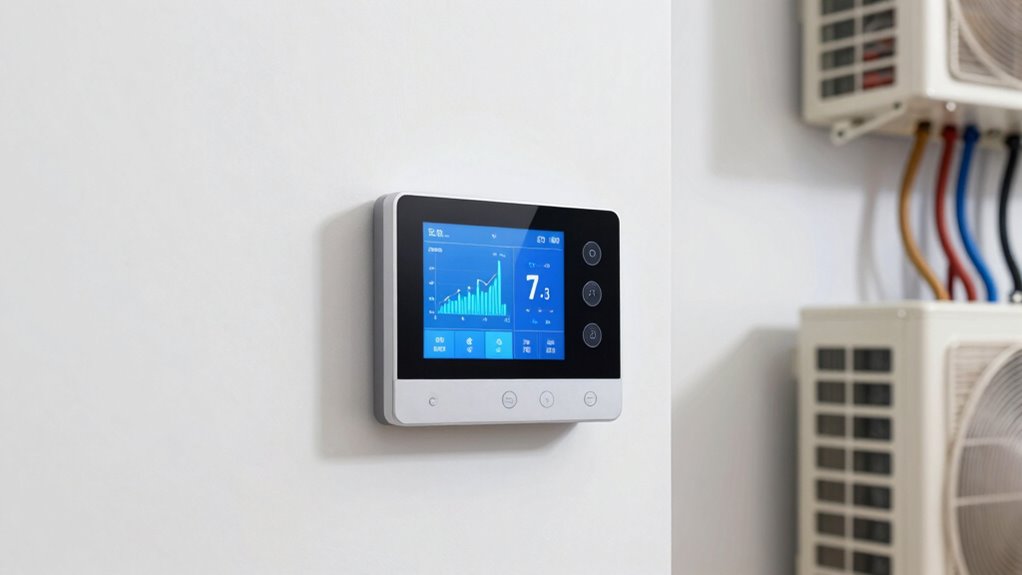
Before choosing a smart thermostat, you need to verify your system meets certain electrical specs. Check that your voltage falls within the compatible range, your wiring type is correct, and the amperage can handle the device. Getting these details right ensures smooth operation and easy installation. Additionally, ensure your system includes the necessary safety features, such as proper grounding, to prevent electrical issues. Confirming your system’s electrical compatibility helps avoid potential malfunctions or damage. It’s also beneficial to review your system’s flow capacity to ensure the thermostat can operate effectively with your heat pump. Being aware of available data storage options can help in maintaining backup settings and firmware updates for your smart device. Proper safety precautions should also be followed during installation to minimize risks.
Compatible Voltage Range
Understanding the compatible voltage range is vital when selecting a smart thermostat for your heat pump, as it guarantees proper functionality and safety. Confirming your device matches the voltage range prevents electrical issues and protects your system. Check your heat pump’s electrical compatibility to avoid costly mistakes. Electrical compatibility is essential to ensure your thermostat operates reliably and safely within your system’s parameters. Additionally, verifying the voltage specifications can help prevent potential damage caused by mismatched electrical requirements. Knowing your system’s power supply can also aid in selecting the most suitable thermostat model for optimal performance. Being aware of industry standards can further guide you in choosing a compatible and safe device. Moreover, understanding voltage regulation can help maintain consistent performance and extend the lifespan of your heating system.
Correct Wiring Type
Ensuring your smart thermostat has the correct wiring type is key to its proper operation and safety. Many modern thermostats support wireless sensors, allowing you to expand control options without rewiring. However, check if your heat pump system’s wiring matches the thermostat’s requirements for reliable power and signal transmission. Some thermostats require a C-wire (common wire) for consistent power, especially if you want voice control features or integration with smart home systems. Without proper wiring, features like wireless sensors or voice control may not function correctly, leading to connectivity issues or system failures. Confirm your wiring type before installation to avoid complications. Proper wiring ensures seamless communication between your heat pump and smart thermostat, enabling you to enjoy advanced control options with confidence. Additionally, understanding the smart home compatibility of your system can help prevent future integration problems. Being aware of your system wiring can help troubleshoot issues more efficiently if problems arise later. It’s also helpful to review the installation instructions carefully to ensure all wiring connections are made correctly. A thorough understanding of your electrical specifications can further facilitate troubleshooting and upgrades, especially when considering system upgrades or future expansions.
Amperage Compatibility
Your smart thermostat must be compatible with your heat pump’s amperage to function correctly and safely. If the amperage is too high or too low, it can cause malfunctions or safety hazards. Check the heat pump’s electrical specs to confirm voltage compatibility and that your thermostat’s wiring standards match your system. Proper amperage alignment guarantees reliable operation and prevents damage to your equipment. Simple Tips for Thriving Plants and Pest-Free Gardens can provide additional guidance on maintaining a safe and efficient system.
What Control Systems Do Heat Pumps Use?
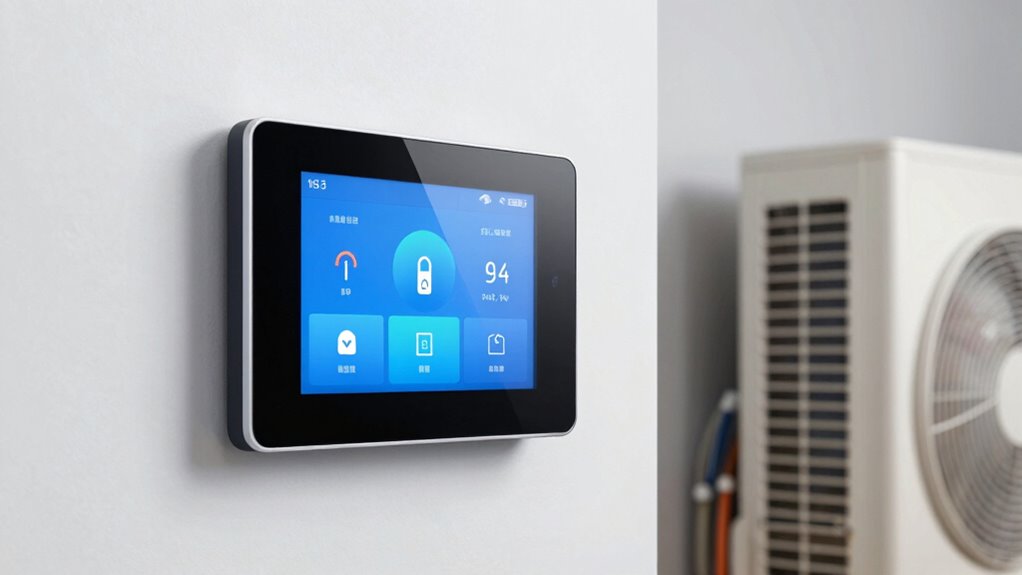
Heat pumps use different control system types to manage their operation, from basic thermostats to advanced building automation systems. To guarantee your smart thermostat works properly, you need to take into account compatibility requirements and integration options. Understanding these control systems helps you choose the right setup for your heat pump.
Control System Types
Heat pumps typically use sophisticated control systems to maintain ideal indoor temperatures and maximize efficiency. These systems include various types, such as programmable thermostats, Wi-Fi-enabled controllers, and smart home integrations. Wireless connectivity allows you to control your heat pump remotely, giving you convenience and peace of mind. The user interface is vital, as it determines how easily you can set your preferences and monitor system performance.
Imagine feeling confident knowing your system responds instantly to your commands or adapts seamlessly to your schedule. You can enjoy:
- Effortless remote control via smartphone
- Intuitive interfaces that simplify adjustments
- Seamless integration with your existing smart home devices
These control system types put comfort and control directly in your hands.
Compatibility Requirements
To guarantee a control system works effectively with a heat pump, compatibility requirements must be carefully considered. First, confirm the control system supports the specific wiring and communication protocols your heat pump uses, such as proprietary signals or standard ones like Wi-Fi or Z-Wave. This is essential for maintaining energy efficiency, as incompatible controls can cause the system to run inefficiently or fail to optimize heating and cooling. Additionally, check that the user interface is intuitive and accessible, allowing you to easily adjust settings and monitor performance. Compatibility also involves verifying that the thermostat can handle the heat pump’s power requirements without causing electrical issues. Meeting these requirements ensures seamless operation, maximizes energy savings, and provides a user-friendly experience.
Integration Options
Understanding the integration options available for smart thermostats helps guarantee your control system works smoothly with your heat pump. Most heat pumps use specific control systems that rely on wireless protocols like Wi-Fi, Zigbee, or Z-Wave, ensuring seamless communication with your smart thermostat. When choosing an integration option, consider the aesthetic design; a sleek, modern thermostat can enhance your home’s look. Compatibility depends on whether your heat pump supports these wireless protocols and if the thermostat can connect effortlessly.
- Feel confident knowing your system adapts effortlessly, providing comfort at your fingertips
- Enjoy a clean, stylish design that complements your home decor
- Experience peace of mind with reliable, hassle-free control over your heat pump
Wiring Setups That Affect Compatibility
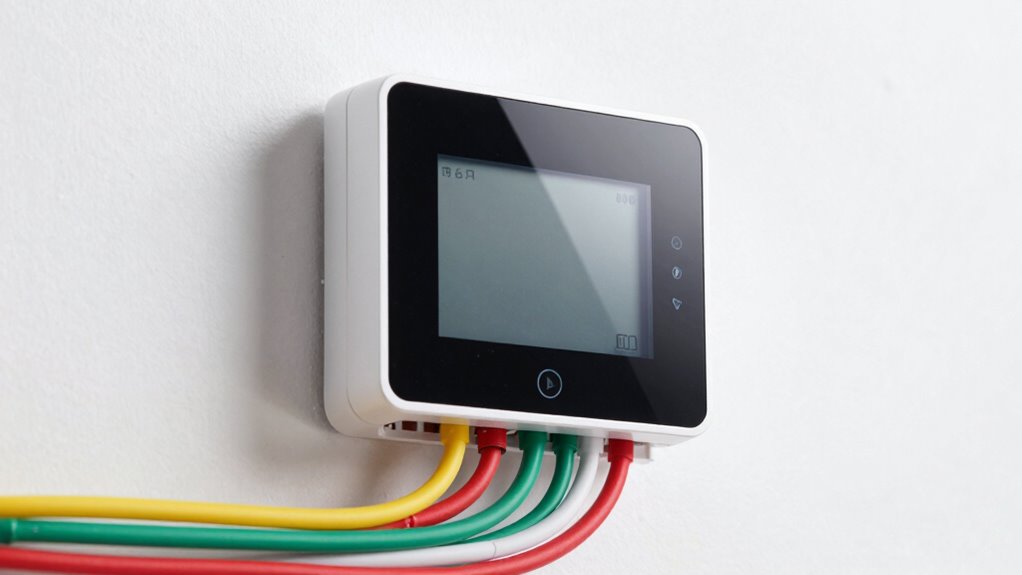
Wiring setups play a essential role in determining whether a smart thermostat is compatible with your heat pump system. Your wiring diagram must match the thermostat’s requirements to guarantee proper operation. Some heat pumps use common wire setups, while others require specific wiring configurations, so check your current wiring diagram carefully. Voltage compatibility is also critical; most smart thermostats operate on 24V AC, but some systems may have different voltage levels that can cause compatibility issues. If your wiring setup differs considerably or uses high-voltage lines, you might need an adapter or professional assistance. Confirming your wiring matches the thermostat’s specifications helps prevent installation problems and assures your system functions efficiently. Always verify your wiring diagram and voltage compatibility before purchasing or installing a smart thermostat.
Features That Make a Thermostat Compatible With Heat Pumps
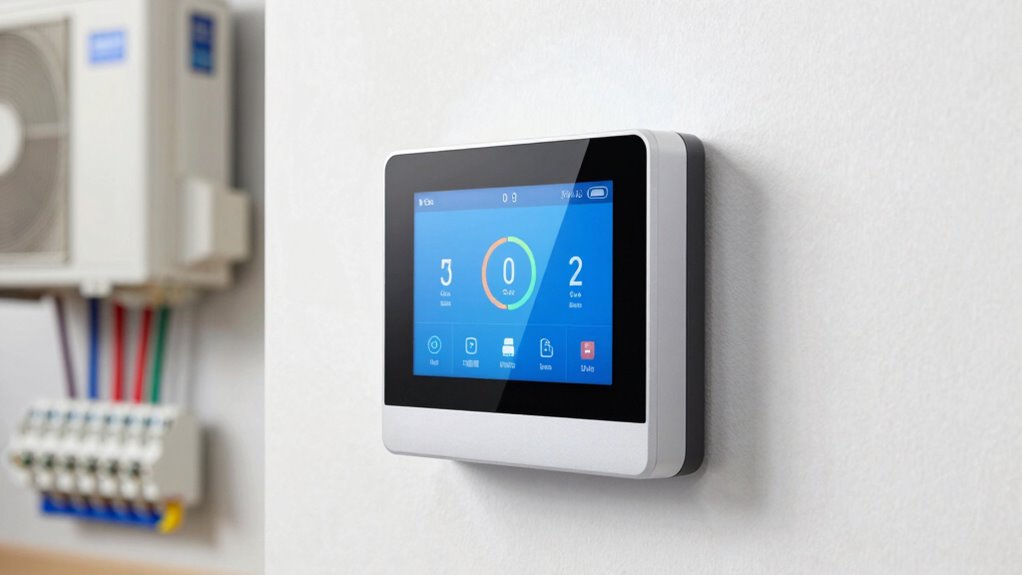
When choosing a smart thermostat for your heat pump, essential features guarantee compatibility and ideal performance. Look for models that prioritize energy efficiency, helping you save on utility bills while reducing your carbon footprint. A user-friendly interface is vital, making it easy to set schedules and monitor your system’s performance without frustration. Features that enhance compatibility include advanced sensors for precise temperature control, adaptive learning capabilities that optimize comfort, and compatibility with your home automation system. These features ensure your heat pump operates smoothly, efficiently, and reliably. With the right features, your smart thermostat becomes a powerful tool to improve comfort, lower energy costs, and simplify your daily routine.
Troubleshooting Connection and Compatibility Issues
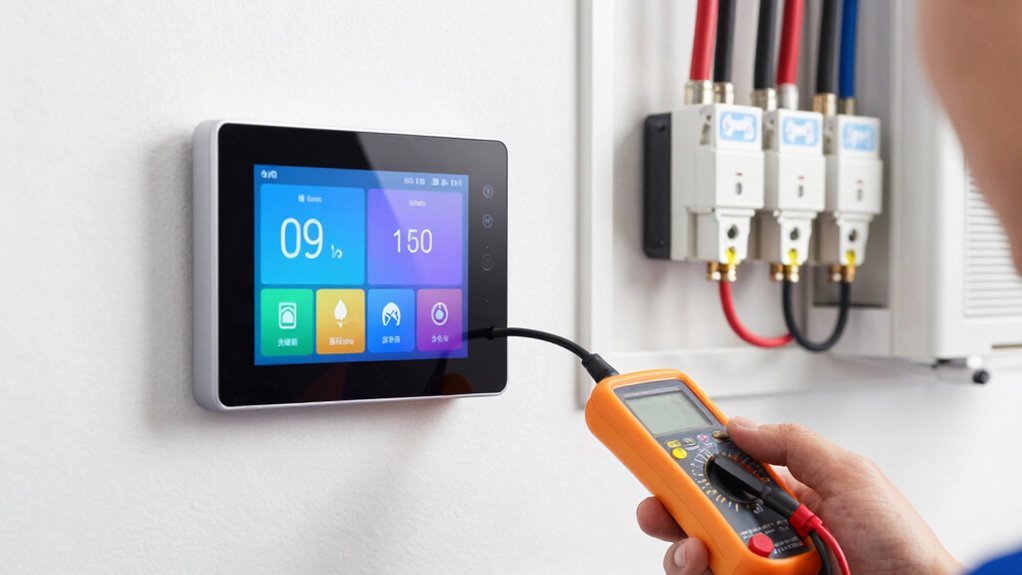
Connection and compatibility issues can disrupt your smart thermostat’s performance, but troubleshooting them often involves straightforward steps. First, verify your thermostat is properly connected to Wi-Fi and that your network is stable. Restart your router and reconnect the device if needed. Check if your thermostat supports your heat pump model and review the manufacturer’s compatibility list. If smart scheduling or energy monitoring features aren’t working correctly, confirm that these settings are enabled and configured properly. Sometimes, firmware updates are necessary to fix bugs or improve connectivity. Also, verify your thermostat’s power source is consistent. If issues persist, resetting the device and re-establishing connections can resolve many problems. Clear communication between your thermostat and heat pump is key to maintaining reliable, efficient operation.
Where to Find Compatibility Resources and Lists
To find the most accurate compatibility resources and lists for your smart thermostat and heat pump, start by visiting the manufacturer’s official website. There, you’ll discover detailed guides and compatibility charts to guarantee your system maximizes energy efficiency and offers a seamless user interface.
Check the manufacturer’s website for compatibility guides and charts to ensure optimal system performance.
- Review official lists to avoid frustration and wasted time, helping you make confident, informed decisions.
- Access dedicated customer support to get personalized advice tailored to your setup.
- Explore user reviews and community forums to see real-world experiences and tips.
Can You Upgrade Your System for Better Compatibility?
Upgrading your system can substantially improve compatibility with modern smart thermostats, but it’s essential to evaluate whether your current heat pump supports such enhancements. An upgrade can boost energy efficiency, helping you save on utility bills while maintaining comfort. Check if your heat pump’s control system or wiring can accommodate new components or features. Improving the user interface—such as adding a smart thermostat with a touchscreen or better app integration—can make control more intuitive. If your current system lacks these capabilities, a retrofit might be worthwhile. However, make certain the upgrade aligns with your heat pump’s specifications and your budget. Consulting a professional can help determine if an upgrade will truly enhance compatibility and overall system performance.
Final Checklist: Ensuring Your System and Thermostat Play Nice
Before installing your smart thermostat, make sure your system meets compatibility requirements to avoid surprises. Proper installation is key, so consider professional help to guarantee everything connects correctly. Checking these points upfront helps your heat pump and thermostat work smoothly together from day one.
Compatibility Requirements
Ensuring your smart thermostat is compatible with your heat pump is essential for smooth operation and ideal energy savings. Compatibility impacts not just functionality but also your overall experience, including energy efficiency and ease of use. To make sure your system and thermostat work seamlessly, check for these key requirements:
- Confirm the thermostat supports your heat pump’s wiring and control type to prevent any operational hiccups.
- Verify that the user interface is intuitive, so you can easily set schedules and monitor energy use without frustration.
- Ensure the thermostat can communicate with your heat pump’s specific features, maximizing energy savings and comfort.
Meeting these requirements guarantees your system runs efficiently, saving you money while providing a simple, user-friendly experience.
Professional Installation Tips
A professional installation guarantees your smart thermostat and heat pump work together reliably and efficiently. An experienced technician ensures proper wiring and configuration, optimizing energy efficiency and system performance. They’ll verify that the user interface is set up correctly, making it easy for you to control and monitor your system. Proper calibration during installation helps prevent issues like short cycling or uneven heating and cooling. Additionally, a professional can recommend settings that maximize energy savings without sacrificing comfort. They’ll also check compatibility with your existing wiring and smart home system, avoiding costly errors. Trusting a professional ensures your thermostat’s features, such as scheduling and remote access, are fully functional, making your heat pump more responsive, energy-efficient, and user-friendly in the long run.
Frequently Asked Questions
Can I Use a Smart Thermostat With an Older Heat Pump Model?
Yes, you can use a smart thermostat with an older heat pump model, but you might face wiring challenges due to legacy systems. Older units often lack modern wiring configurations, so you’ll need to verify if your system’s wiring is compatible. It’s a good idea to consult your heat pump’s manual or a professional to guarantee the smart thermostat will work seamlessly and avoid potential compatibility issues.
What Are Common Signs of Incompatibility Between Thermostats and Heat Pumps?
You might face incompatibility if you notice voltage issues or wiring mismatches. Voltage problems can cause the thermostat to malfunction or not power on properly. Wiring mismatches, like incompatible terminal connections, can prevent the thermostat from controlling your heat pump effectively. If your system experiences frequent resets, inconsistent heating or cooling, or if installation feels complicated, these signs suggest the thermostat may not be compatible with your heat pump.
Do All Smart Thermostats Support Multi-Stage Heat Pump Systems?
Not all smart thermostats support multistage control or zoning capabilities for heat pump systems. To guarantee compatibility, look for models explicitly designed for multistage control, which manage multiple stages of heating and cooling effectively. Zoning capabilities allow you to customize temperature zones, but only some smart thermostats offer this feature. Always check the product specifications to confirm it supports your heat pump’s multistage system and zoning needs before purchasing.
Is Professional Installation Necessary for Integrating Smart Thermostats With Heat Pumps?
You don’t necessarily need professional installation to integrate a smart thermostat with your heat pump. Many models support DIY installation and offer wireless connectivity, making setup straightforward. However, if you’re unfamiliar with electrical wiring or your system’s specifics, consulting an expert can guarantee proper setup and avoid potential issues. Whether you do it yourself or hire a professional, verify the thermostat is compatible with your heat pump for maximum performance.
How Does Climate Affect Smart Thermostat Compatibility With Heat Pumps?
Climate substantially affects your smart thermostat’s compatibility with heat pumps. In different climate zones, seasonal variations can cause temperature swings that impact how your system responds. You’ll want a thermostat designed to handle these fluctuations, especially in very hot or cold areas. Make sure your chosen smart thermostat supports your local climate conditions for ideal performance and efficiency throughout the year.
Conclusion
Think of your heat pump and smart thermostat as dancers in a finely choreographed ballet. When they’re perfectly in sync, your home’s comfort flows seamlessly. By checking compatibility and wiring details, you guarantee they move together gracefully. Don’t let technical mismatches trip you up—use the resources available to keep the performance flawless. With the right setup, you’ll enjoy a harmonious, efficient system that responds to your needs like a well-rehearsed masterpiece.