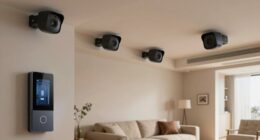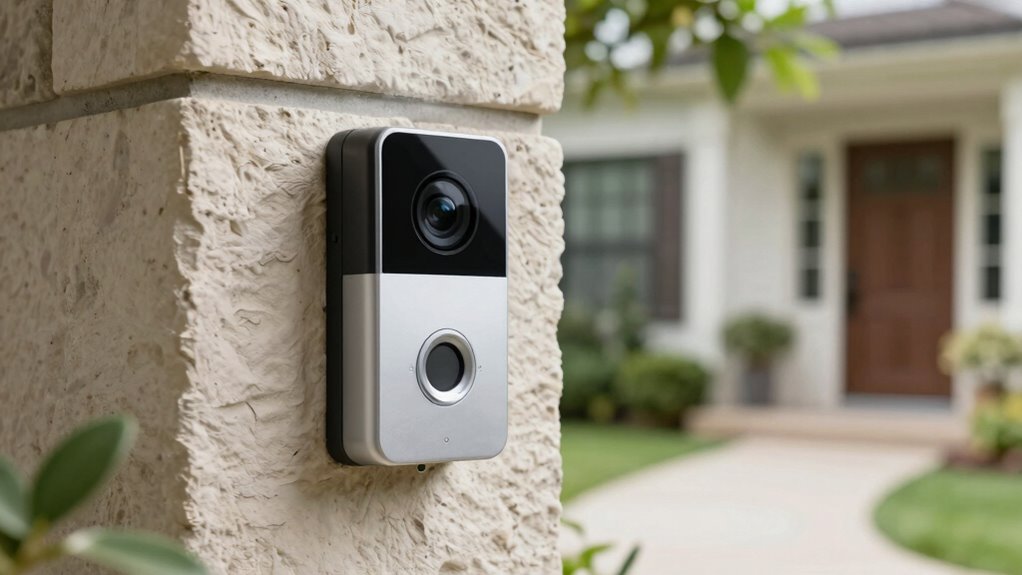
To prevent missed motion alerts, focus on adjusting your video doorbell’s angle using the angle trick: tilt the camera slightly downward, positioning it at about 4-5 feet high to best capture visitors at face level. Avoid obstructions, glare, or harsh backlighting, and use visual markers to fine-tune the view. Proper placement and tilt make a big difference, and if you keep going, you’ll discover more expert tips to guarantee reliable detection.
Key Takeaways
- Position the doorbell slightly above eye level (4-5 ft) with a slight downward tilt to optimize motion detection coverage.
- Adjust the camera angle to eliminate blind spots caused by nearby bushes, furniture, or other obstructions.
- Ensure the field of view includes key entry points while avoiding direct sunlight or harsh backlighting.
- Regularly test and fine-tune the tilt during different times of day to prevent false alerts and missed motion.
- Use minor angle adjustments in combination with accessories like wide-angle lenses or supplementary lighting for reliable detection.
Why Proper Video Doorbell Placement Matters for Detection
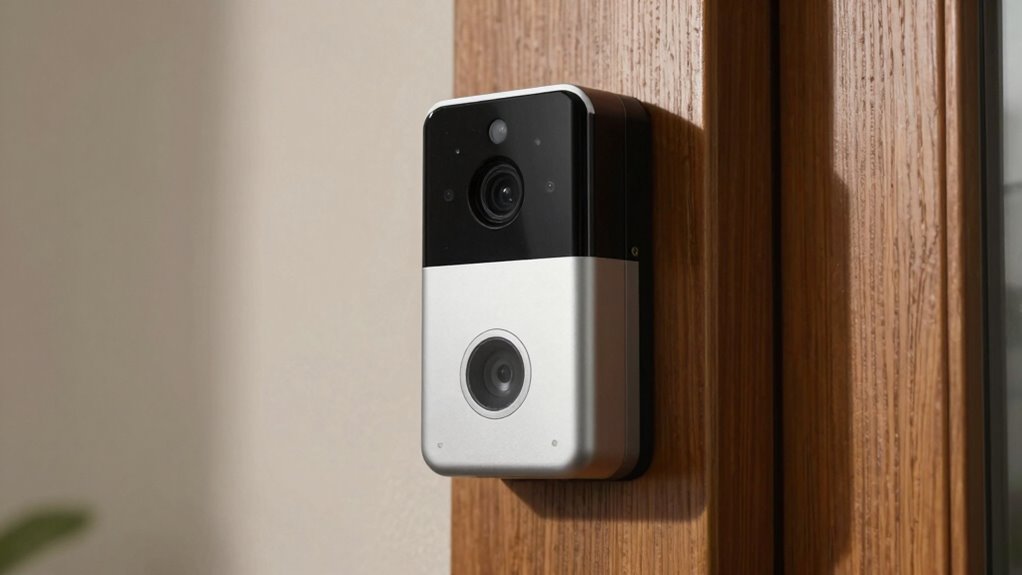
Proper placement of your video doorbell is essential because it directly impacts its ability to detect visitors accurately. You need to consider lighting conditions; placing the doorbell where it’s well-lit during the day helps it distinguish people from shadows or moving objects. Avoid areas with harsh backlighting or direct sunlight, which can cause glare and reduce detection accuracy. Weatherproofing essentials are also critical—ensure your doorbell is protected from rain, snow, and extreme temperatures to prevent false alerts or damage. Position it under an overhang or sheltered spot if possible, so weather elements don’t interfere with motion detection. Correct placement that accounts for lighting considerations and weatherproofing ensures your doorbell functions reliably, providing proactive security without missed alerts or unnecessary false alarms. Additionally, understanding Free Floating concepts can help optimize the placement for various outdoor environments. Proper sensor positioning can further enhance detection accuracy and reduce false alerts caused by environmental factors, especially when considering cabling solutions to ensure reliable connections. Being aware of environmental factors can also help you choose the best location for consistent performance, and considering installation height can influence detection zones and effectiveness.
How to Find the Best Angle for Your Doorbell

To find the best angle for your doorbell, start by positioning it to capture the most important area, like the walkway or porch. Make sure there are no obstructions blocking the view, such as plants or decorations. Additionally, adjusting the camera angle can significantly improve the accuracy of motion detection and reduce false alerts. Proper placement ensures consistent activation when someone approaches. Incorporating digital frames or interactive murals into your entrance area can also enhance visibility and aesthetic appeal. For Victorian steampunk enthusiasts, consider integrating ornate hardware or vintage design elements to complement your home’s unique style. Understanding the net worth of your devices can also help in selecting a model that offers the best performance within your budget. Finally, test the motion detection to guarantee it activates consistently when someone approaches.
Optimal Camera Angle
Finding the best angle for your video doorbell is essential to guarantee clear footage and effective security. To maximize visibility, consider lighting challenges that can cast shadows or create glare, making it hard to see visitors. Use proper mounting techniques to position the camera slightly above eye level, which prevents obstructions and enhances the field of view. Adjust the angle so the camera captures visitors as they approach, not just at the door. Here’s a quick guide:
| Placement Tip | Why It Matters | Example |
|---|---|---|
| Mount slightly above eye level | Better view, fewer obstructions | 5-6 feet high |
| Avoid direct sunlight | Reduces glare and overexposure | Position to sidestep direct light sources |
| Consider lighting at night | Ensures clear night footage | Use porch lights or infrared features |
| Tilt downward slightly | Covers walkway and doorstep | Prevents missed arrivals |
Additionally, understanding camera angles can help you optimize your placement for the best coverage. Proper camera placement can also prevent common blind spots and ensure you catch every visitor. Experimenting with different camera tilt angles can significantly reduce missed motion alerts and enhance overall security, especially when considering camera positioning to cover key areas effectively. Being aware of digital distractions can also help you stay attentive to your security setup and avoid overlooking important alerts.
Avoid Obstructions
Obstructions can severely compromise your doorbell’s footage, so it’s important to choose an angle that keeps pathways clear. Items like overgrown bushes, hanging decorations, or parked vehicles can block the view, making it harder to capture clear motion alerts. Additionally, lighting issues can create shadows or glare that obscure motion detection, so position your doorbell where it benefits from consistent lighting, preferably during daylight hours. Weather impacts like rain, snow, or ice can also obscure the camera lens or damage the device, so avoid placing it where weather elements frequently collect or where debris might accumulate. Ensuring a clear, unobstructed view not only improves footage quality but also reduces false alerts caused by environmental factors. Keep pathways visible and protected from weather-related obstructions for the best results. Regularly cleaning dust, microplastics, and debris from the camera lens can further enhance image clarity and detection accuracy. Incorporating proper placement techniques can significantly improve your doorbell’s overall performance and reliability. Additionally, considering angle adjustment can help optimize coverage and minimize blind spots. Using adjustable mounts or brackets can facilitate easier angle changes as needed to adapt to changing conditions. To further enhance the effectiveness, consider lighting conditions to ensure optimal visibility at all times.
Test Motion Detection
Testing your motion detection is essential to guarantee your doorbell accurately captures activity. To do this, walk past your doorbell during different times of the day and observe whether it registers your movement. Adjust the angle if you notice missed alerts or false triggers, keeping privacy concerns in mind—avoid filming neighbors or public spaces. Make sure the camera’s field of view is optimized to reduce unnecessary motion detection, which can drain battery life faster. Regular testing helps you find the right angle that balances detection sensitivity with privacy and battery efficiency. Additionally, proper placement can significantly improve detection accuracy and prevent false alarms. Remember, a well-positioned doorbell with proper testing can prevent missed visitors and reduce false alarms, ensuring your device works reliably while respecting privacy and conserving power. Conducting ongoing motion detection testing is vital to adapt to changing conditions and maintain optimal performance. Being aware of privacy considerations also helps ensure your setup complies with legal and community standards. Incorporating advanced detection features can further enhance reliability and reduce false positives over time. Also, utilizing software updates regularly can improve detection capabilities and overall device stability.
Common Mistakes That Reduce Motion Detection Effectiveness
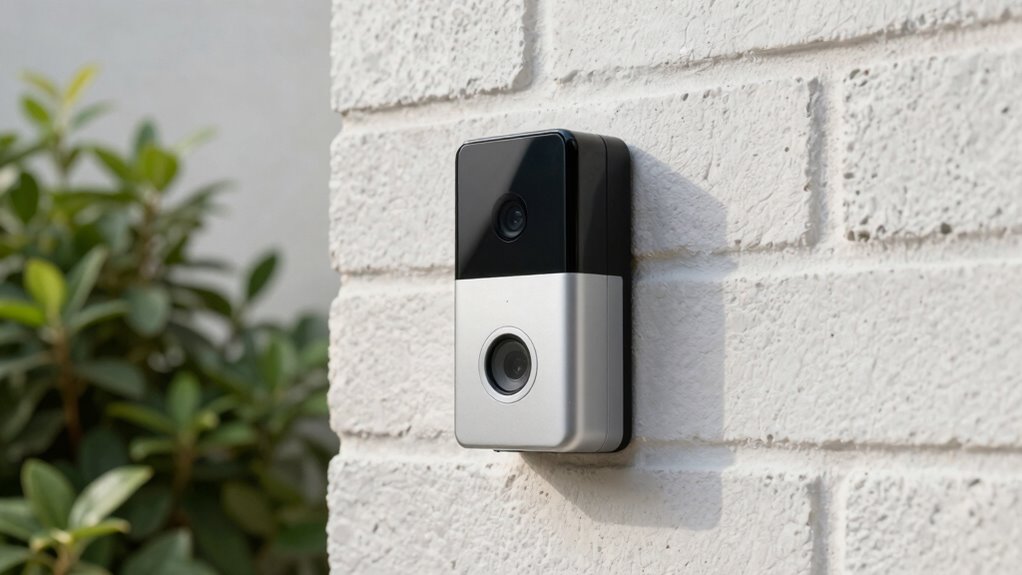
Incorrect camera angles can cause your doorbell to miss important motion. Obstructed viewpoints, like overgrown bushes or parked cars, also reduce detection accuracy. Poor lighting conditions further hinder the camera’s ability to recognize movement clearly.
Incorrect Camera Angles
When your video doorbell isn’t capturing motion effectively, one common mistake is choosing the wrong camera angle. If you set the camera too high or too low, it may miss important activity at eye level, like someone approaching your door. Adjusting the camera height to face the expected path guarantees better detection. Additionally, outdoor lighting plays a crucial role; poor lighting or glare can cause the camera to misinterpret motion or fail to pick up movement altogether. Avoid pointing the camera directly into bright sunlight or harsh lights, as this can create shadows or overexposure, reducing detection accuracy. Proper camera angle and lighting help the motion sensors work as intended, ensuring you don’t miss visitors or deliveries. Fine-tuning these elements makes a significant difference in alert reliability.
Obstructed Viewpoints
Obstructions like plants, signs, or porch furniture can block your video doorbell’s view, markedly reducing its ability to detect motion. When objects block the camera angles, the doorbell can’t see approaching visitors or movement, leading to missed alerts. Make sure the camera has a clear, unobstructed line of sight, and regularly trim or reposition any nearby objects. Lighting conditions also play a role; shadows or overhanging structures can cast dark areas that hinder motion detection. Adjust the angle of your camera so it avoids direct sunlight or reflective surfaces that cause glare. By keeping the view open and optimizing camera angles, you improve detection accuracy. Remember, even small obstructions can considerably impact performance, so maintain a clear, well-lit field of view for effective motion alerts.
Poor Lighting Conditions
Poor lighting conditions can considerably impair your video doorbell’s ability to detect motion accurately. Lighting challenges, such as low light or uneven illumination, make it harder for the camera to distinguish moving objects from the background. To combat this, ensure your doorbell is positioned to maximize natural or artificial light, avoiding shadows and glare. Adjust your camera angles to reduce backlighting or areas with poor visibility. Installing additional lighting or choosing a location with better illumination can improve detection performance at night or in dim conditions. Remember, even small adjustments in camera angles can substantially enhance how well your doorbell detects motion, especially in tricky lighting situations. Proper placement and lighting considerations help ensure you get alerts when someone approaches, regardless of the time of day.
How to Use Visual Markers to Adjust Your Doorbell’s View
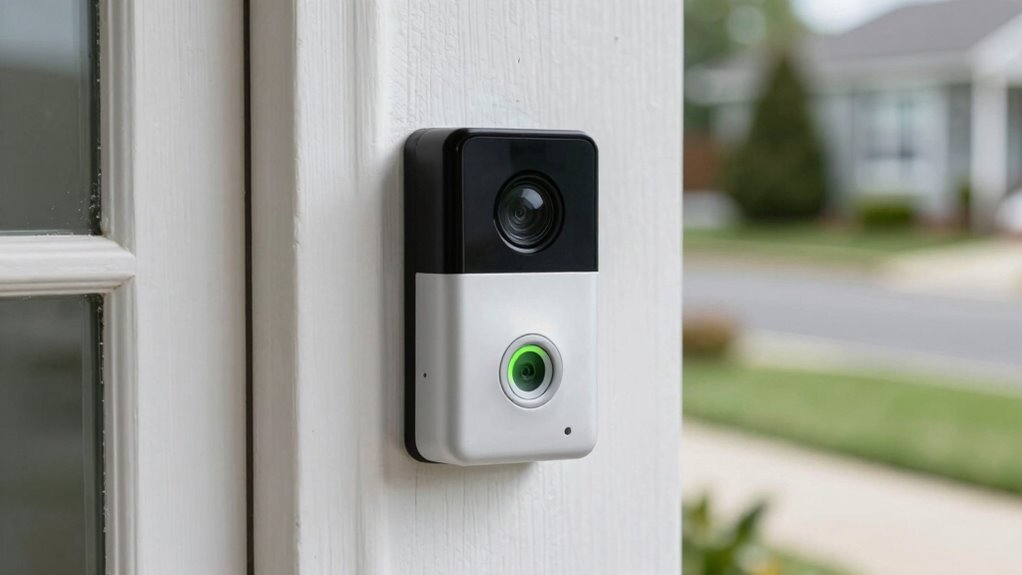
Using visual markers is a straightforward way to fine-tune your doorbell’s camera angle. Place easy-to-see objects, like chalk marks or tape, in the area you want to monitor. These markers help you evaluate the camera’s view during different lighting conditions, ensuring visibility in low light or bright sunlight. Adjust your doorbell until the markers are clearly visible on the live feed, considering your camera resolution. Higher resolution cameras display more detail, so set your markers accordingly. This method allows you to confirm that your doorbell captures the desired area without blind spots. By using visual markers, you can make precise adjustments that improve motion detection accuracy and reduce missed alerts, regardless of lighting or camera quality.
Step-by-Step: How to Adjust Your Doorbell’s Viewing Angle

To guarantee your doorbell captures the desired area, start by carefully loosening the mounting screws that hold it in place. Next, gently tilt or rotate the device to improve its view, ensuring it covers key entry points while respecting privacy concerns. When adjusting, consider the outdoor installation environment to prevent glare or obstructions. Use the table below for suitable angles based on your setup:
| Scenario | Recommended Angle | Key Considerations |
|---|---|---|
| Front door, high traffic | Slight downward tilt | Avoid capturing neighbors’ property |
| Side entrance | Horizontal shift | Keep privacy concerns in check |
| Porch area | Upward tilt | Minimize missed motion detection |
| Walkway view | Wide angle | Prevent blind spots |
| Driveway | Downward tilt | Reduce false alerts from street |
Adjust carefully, then tighten the screws securely for outdoor installation stability.
Tips for Testing and Confirming Your Doorbell Is Properly Positioned

Once you’ve adjusted your doorbell’s position, make sure to test its view to verify it captures the area you want. Check the lighting conditions during different times of day, as shadows or glare can affect visibility and motion detection. Observe how well the camera mounting height works—too high or low might miss important details or create blind spots. Walk through the scene, noting if the camera covers the intended zone without gaps. Use your app to review footage or live feeds, confirming the coverage. Adjust the angle if needed, guaranteeing the doorbell detects motion reliably without false alerts caused by poor positioning. Repeating these tests helps you fine-tune placement, so your doorbell functions ideally in varying lighting and positioning scenarios.
How the Right Placement Can Minimize False Alarms
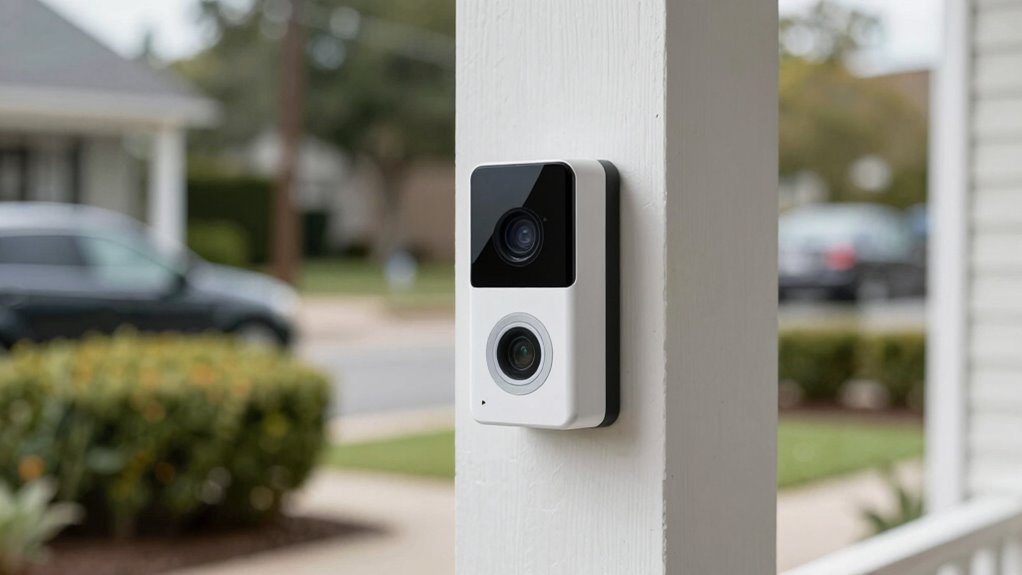
Proper placement of your video doorbell plays a crucial role in minimizing false alarms. If your doorbell faces direct sunlight during the day, bright lighting conditions can cause motion sensors to trigger unnecessarily. Similarly, poor lighting or shadows may lead to false alerts at night. Consider positioning your doorbell where lighting remains consistent, avoiding glare or dark spots. Weather impact also matters; placing the device in an area protected from rain, snow, or wind helps prevent false triggers caused by weather conditions like blowing debris or falling snow. By strategically choosing a spot with stable lighting and minimal weather interference, you reduce the chances of false alarms, ensuring your doorbell accurately detects genuine motion at your doorstep.
When to Reposition or Upgrade Your Doorbell for Better Coverage

If you notice blind spots or coverage gaps around your door, it’s time to consider repositioning your doorbell. Upgrading features like wider angles or better night vision can also improve security. Regularly evaluating your setup ensures you get the best coverage and alerts.
Assess Coverage Gaps
Identifying coverage gaps is essential to ensuring your video doorbell provides reliable security. Start by checking for lighting issues that might obscure the camera’s view during different times of day, especially at night or in shaded areas. Poor lighting can cause motion alerts to be missed or false triggers. Additionally, weather considerations like rain, snow, or fog can impact visibility and motion detection accuracy. If the camera frequently loses sight of visitors or doesn’t alert you promptly, it’s time to reassess its placement. Reposition the doorbell to avoid shadowed spots or areas prone to weather interference. Upgrading to a model with better low-light or weather-resistant features might also be necessary if coverage gaps persist despite adjustments. Regularly evaluate your setup to maintain ideal security.
Identify Blind Spots
Blind spots become evident when your doorbell fails to detect visitors or sends delayed alerts, indicating it’s time to contemplate repositioning or upgrading. A hidden blind spot often results from an unfavorable camera angle that doesn’t cover key areas. Check whether your current placement overlooks vital entry points or pathways. If you notice frequent missed motion alerts or visitors appearing suddenly on your footage, it’s a clear sign of a blind spot. Adjust the camera angle to maximize coverage of your porch and walkway. Sometimes, a slight repositioning can eliminate these blind spots and improve detection. If repositioning doesn’t help, consider upgrading to a doorbell with a wider field of view or better motion detection capabilities. Ensuring your camera angle captures every approach keeps you informed and prevents surprises.
Consider Upgrading Features
When repositioning your doorbell doesn’t resolve coverage issues, upgrading its features can make a significant difference. Consider enhancing motion sensors to detect movement more accurately or improving camera resolution for clearer footage. These upgrades can help you catch more activity and reduce false alerts. If your current doorbell’s motion sensors are outdated or overly sensitive, a new model with smarter detection can save you from constant false alarms. Similarly, higher camera resolution ensures sharper images, making identification easier.
| Feature to Upgrade | Benefit |
|---|---|
| Advanced motion sensors | More precise detection, fewer false alerts |
| 4K camera resolution | Clearer, more detailed footage |
| Night vision quality | Better visibility in low light |
Top Accessories to Improve Your Doorbell’s Field of View

To get the most out of your video doorbell, consider adding accessories that enhance its field of view. Wide-angle lens attachments are a popular choice, expanding the camera’s coverage area and reducing blind spots. To optimize performance in different lighting conditions, install adjustable or supplementary lighting, such as motion-activated floodlights or LED strips, ensuring clear visibility day and night. Weather considerations also matter; weatherproof housings or rain shields protect your doorbell from rain, snow, and dust, maintaining clear footage and preventing damage. These accessories help your doorbell adapt to various environmental factors, ensuring consistent motion detection and high-quality video capture. With the right accessories, you’ll maximize your doorbell’s effectiveness and never miss an important event at your doorstep.
Final Tips for Perfect Doorbell Placement and Detection
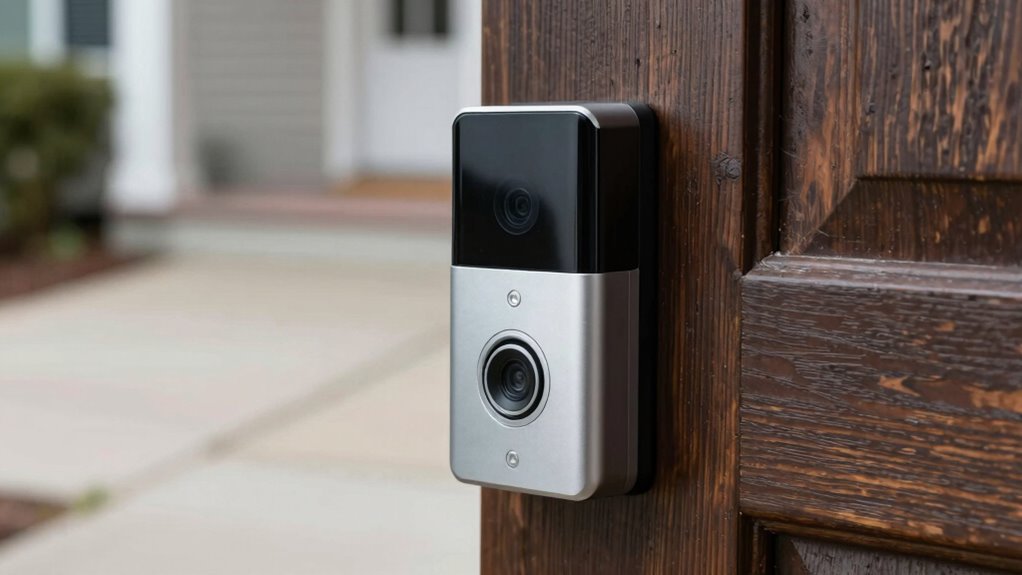
Optimizing your doorbell placement is key to guaranteeing reliable detection and clear footage. Start by setting the camera height so it captures faces at eye level, around 4 to 5 feet high. Too high, and visitors might appear too small; too low, and it may miss taller individuals. Consider lighting conditions—avoid placing the doorbell where direct sunlight causes glare or shadows hide motion. If possible, position it where natural light illuminates visitors without washing out the image. Ascertain the area is free of obstructions like bushes or porch furniture that could block motion detection. Regularly test your setup during different times of day to confirm detection accuracy. These final adjustments help prevent missed alerts and assure your doorbell captures high-quality footage.
Frequently Asked Questions
How Does Lighting Affect Motion Detection Accuracy for Doorbells?
Lighting conditions greatly impact your doorbell’s motion detection accuracy. Poor or uneven lighting can cause false alerts or missed motions, especially if the camera sensitivity isn’t adjusted properly. Bright sunlight or shadows may confuse the sensor, so you should fine-tune the sensitivity settings based on your lighting. Ensuring consistent, adequate lighting around your door helps your doorbell detect motion reliably, reducing missed alerts and false positives.
Can Weather Conditions Impact My Doorbell’s Detection Capabilities?
Weather conditions can definitely impact your doorbell’s detection capabilities. Rain, snow, or fog can interfere with the sensor calibration, making it harder for the motion sensor to detect movement accurately. Plus, extreme cold or heat may affect your doorbell’s power supply, causing false alerts or missed detections. To keep everything working smoothly, verify your doorbell’s sensor calibration is correct and check that your power supply remains consistent despite weather changes.
Is There an Ideal Height to Install a Video Doorbell?
Perfect positioning prevents problems. When it comes to doorbell height, aim for about 48 inches from the ground. This height offers an essential camera angle, capturing faces and footprints clearly without too much sky or ground in the shot. You’ll get better motion alerts and clearer video, reducing false alarms. Keep your camera at a consistent height, and you’ll catch key moments with confidence and clarity.
How Do Different Door Materials Influence Motion Alert Effectiveness?
Different door materials can impact your motion alerts because some cause detection interference. For instance, metal doors may reflect or block signals, reducing detection accuracy, while wooden or vinyl doors typically allow better motion detection. You should test your doorbell’s sensitivity after installation, especially on metal doors, to make certain alerts aren’t missed. Adjusting the angle or height can also help mitigate detection interference caused by the door material.
What Maintenance Routines Can Preserve Optimal Doorbell Detection Performance?
Think of your doorbell as a watchful guardian; to keep it sharp, you need regular maintenance. Clean the camera lens and sensors frequently to prevent dirt from blocking detection. Also, check for and install firmware updates promptly — they’re like vitamins that boost your doorbell’s performance. By following these routines, you guarantee your doorbell stays alert and responsive, catching every motion just like a vigilant guardian should.
Conclusion
Proper placement of your video doorbell is key to catching every motion. Did you know that ideal angles can reduce missed alerts by up to 50%? By finding the right view and avoiding common mistakes, you’ll guarantee better security and fewer false alarms. Take the time to adjust and upgrade as needed — your doorbell’s coverage will thank you. Stay vigilant and keep your home protected with smarter placement choices!