
Travel sleep hacks can help you rest better in new places. To start, use earplugs, a sleep mask, and familiar pillows to block noise and light. Adjust the room to a cool, dark environment and stick to a routine that signals bedtime. Stay hydrated and aim to sync your sleep schedule to the local time. For more easy tricks to beat jet lag and create a relaxing night, keep exploring these tips.
Key Takeaways
- Use earplugs, eye masks, and white noise apps to block out unfamiliar sounds and light.
- Maintain a consistent sleep routine and incorporate calming scents like lavender to signal relaxation.
- Adjust room lighting, temperature, and bedding to mimic your home environment for comfort.
- Stay hydrated, avoid caffeine and alcohol, and align your sleep schedule with the local time zone.
- Practice relaxation techniques such as deep breathing or meditation before bed to ease travel-related stress.
What Are the Biggest Sleep Challenges When Traveling?
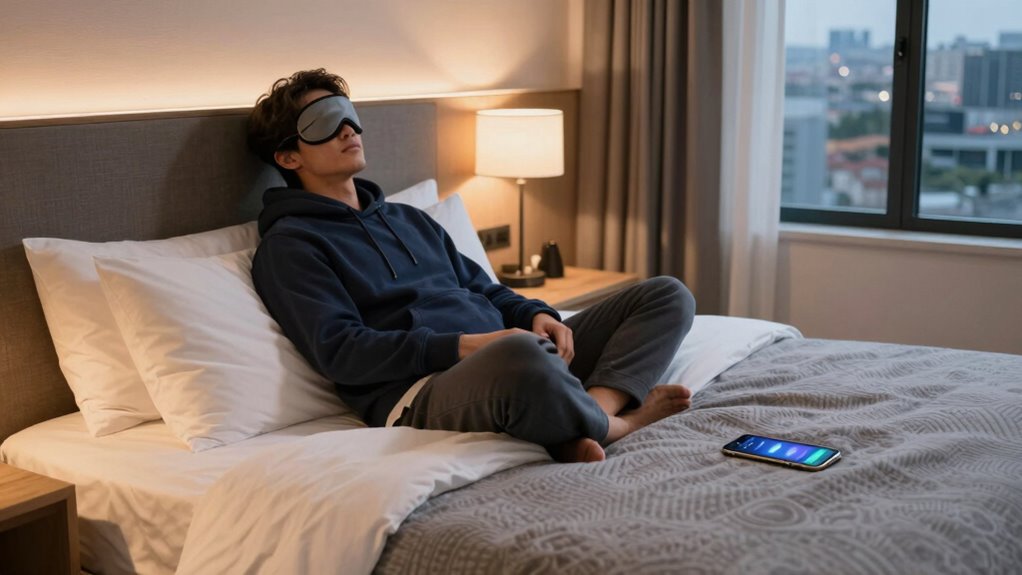
Traveling often disrupts your usual sleep routine, making it hard to fall asleep and stay asleep. One major challenge is adjusting your sleep environment, which may be noisy, bright, or uncomfortable compared to your home setup. These unfamiliar surroundings can cause travel anxiety, making it even tougher to relax and drift off. Your body clocks get thrown off by time zone changes, further complicating restful sleep. You might find yourself lying awake because of unfamiliar sounds or an uncomfortable mattress. Additionally, the stress of traveling — juggling plans, packing, or maneuvering airports — heightens your alertness and hampers sleep quality. All these factors combined create a perfect storm that makes maintaining your regular sleep habits difficult, leaving you tired and less prepared for your adventures. Understanding the importance of cultural accommodations can help you create a sleep-friendly environment even while abroad. Incorporating sleep environment adjustments, such as blackout curtains or white noise machines, can significantly improve your chances of restful sleep in unfamiliar settings. Being aware of personal sleep needs and preparing in advance can also help mitigate some of these challenges. Recognizing the impact of circadian rhythms on sleep patterns can further guide you in planning your rest during travel. Additionally, choosing accommodations that prioritize sleep comfort can make a substantial difference in your overall travel experience.
How Can You Make Your Hotel or Accommodation More Sleep-Friendly?
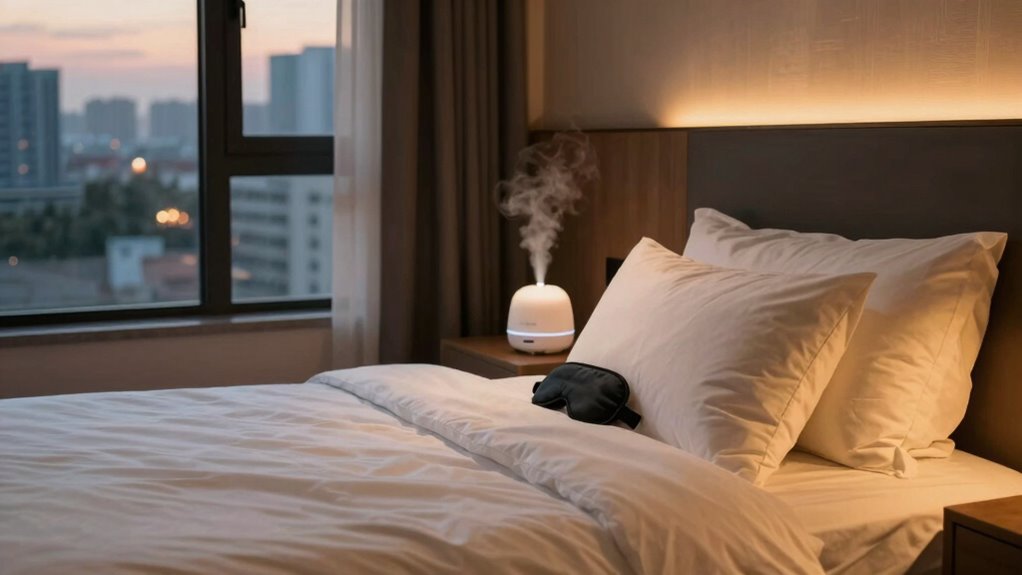
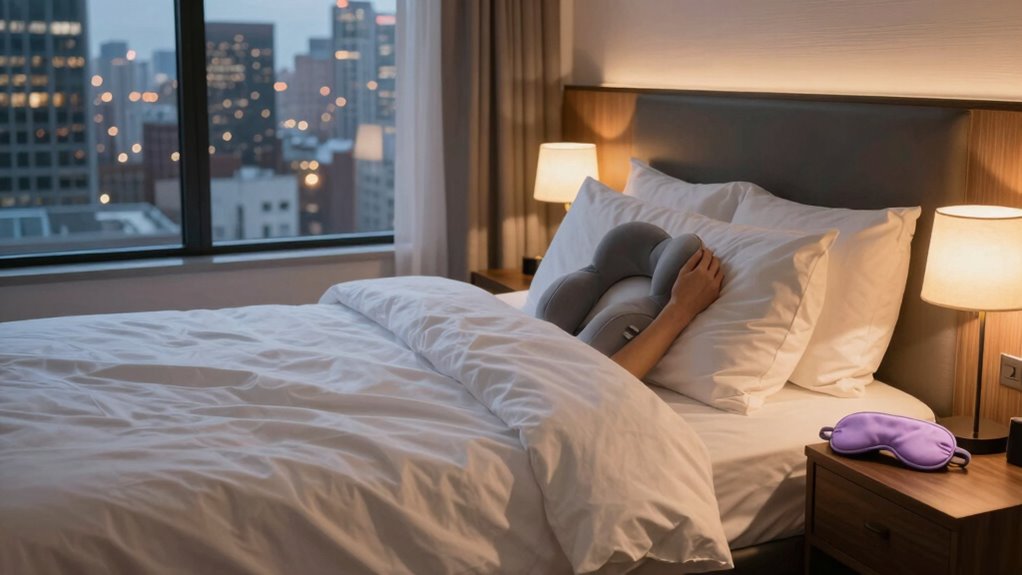
To make your hotel or accommodation more sleep-friendly, start by creating an environment that mimics the comfort of home. Focus on noise control—bring earplugs or a white noise app to block disruptive sounds. Guarantee your sleep environment is dark and cool, adjusting the curtains and thermostat if possible. Use a travel pillow and familiar bedding to enhance comfort. Consider setting a sleep routine, even away from home, to signal your body it’s time to rest. Incorporating calming scents like lavender can also promote relaxation and improve sleep quality for a restful night. Paying attention to decor and ambiance can help create a more soothing atmosphere conducive to better sleep. Additionally, incorporating some basic DIY tools like a portable fan or blackout curtains can further customize your sleep environment for optimal comfort. Understanding how to optimize your sleep environment can significantly impact your rest quality while traveling.
Adding some soundproofing techniques to your travel setup can further reduce noise disturbances and enhance sleep quality during your trip.
Easy Sleep Hacks to Beat Jet Lag and Travel Disruptions
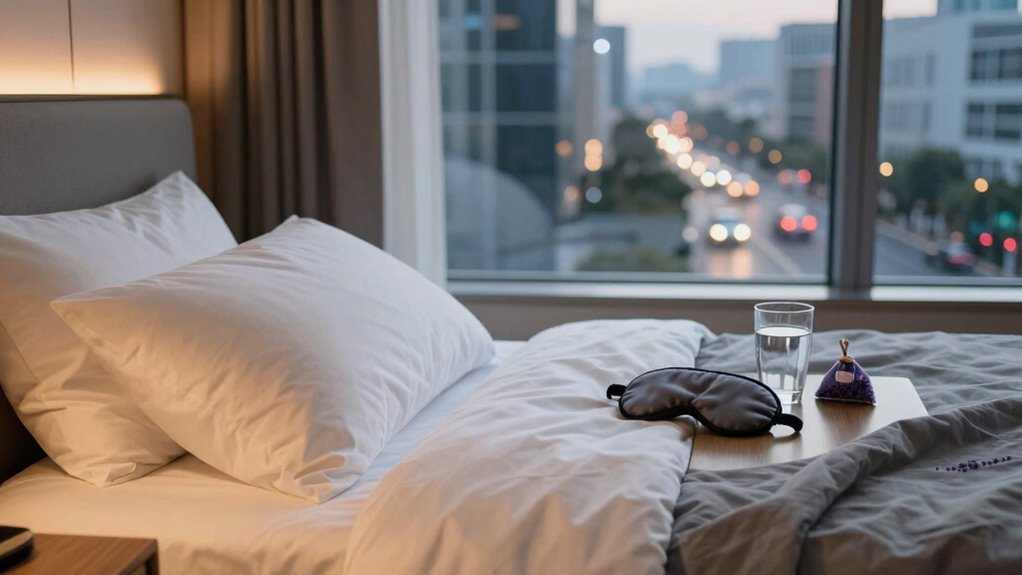
Jet lag and travel disruptions can throw off your sleep schedule, but simple strategies can help you adapt quickly. Focus on creating a conducive sleep environment by adjusting the room’s lighting and temperature to match your destination’s time zone. Use travel accessories like earplugs and an eye mask to block out noise and light, making it easier to fall asleep regardless of the surroundings. Staying hydrated and avoiding caffeine or alcohol also aids in resetting your internal clock. If possible, try to sync your sleep times with the local schedule upon arrival. Incorporating Free Floating strategies can also help your body adjust more naturally to new environments. These quick adjustments can reduce jet lag symptoms and minimize travel disruptions, helping you rest better and feel more refreshed for your adventures. Additionally, being mindful of your sleep environment can significantly improve your rest quality while traveling. Understanding how sleep cycles function in different time zones can further optimize your adaptation process and promote biological rhythm synchronization.
Building a Relaxing Bedtime Routine on the Go
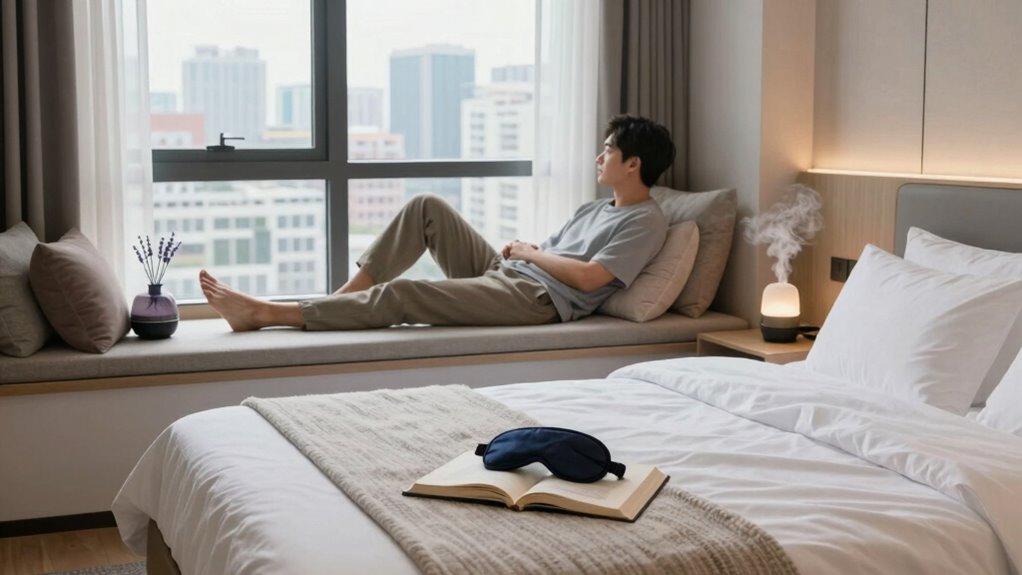
After adjusting your environment to minimize noise and light, creating a relaxing bedtime routine can further signal to your body that it’s time to wind down. You might try simple meditation techniques, such as deep breathing or progressive muscle relaxation, to calm your mind. Incorporate aromatherapy options like lavender or chamomile essential oils, which can help promote relaxation and reduce stress. Keep your routine consistent, even on the go, by packing a small diffuser or using scent-infused travel pillows. Avoid screens and caffeine at least an hour before bed. Instead, focus on calming activities that prepare your body for sleep, helping you drift off more easily despite unfamiliar surroundings. This routine helps your body recognize sleep cues, making rest more restful and restorative. To enhance your ability to identify passive voice in your writing, consider using an online detection tool, which can improve clarity and effectiveness. Additionally, ensuring your sleep environment is safe and comfortable can further support restful sleep during travel. Paying attention to your sleep safety tips can prevent potential hazards and ensure a secure sleeping space. Incorporating a consistent bedtime routine signals your body that it’s time to relax, even in unfamiliar settings. Remember that maintaining awareness of pinball machine weights and other environmental factors can help you create a safer and more comfortable sleep setup.
Planning Ahead: Tips for Better Sleep on Future Trips
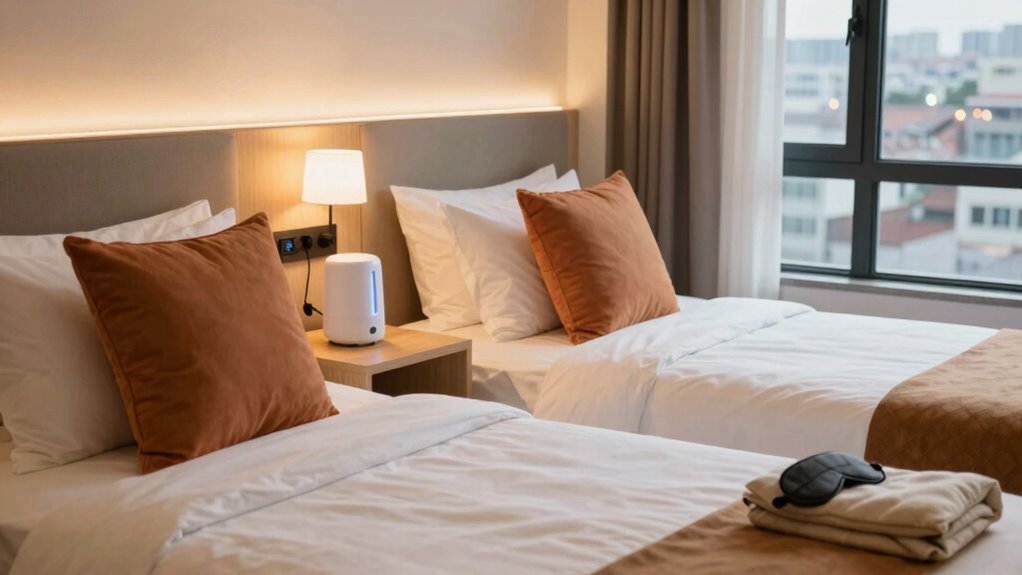
Planning ahead can make a significant difference in guaranteeing better sleep during your trips. Start by packing essentials like a sleep mask, noise-canceling headphones, and a familiar pillow to create a comfortable environment. Review your travel itinerary to identify potential sleep disruptions, such as long layovers or late arrivals. Being aware of digital content formats and digital concepts can help you optimize your pre-trip preparations for more restful sleep. To prepare effectively, consider these tips: 1. Pack familiar sleep essentials to maintain your sleep routine. 2. Adjust your schedule gradually before departure to sync with your destination’s time zone. 3. Research your accommodation to ensure it offers a quiet, dark sleeping environment. Additionally, understanding influencor strategies for effective communication can help you better coordinate your travel plans and expectations. Utilizing techniques like sleep environment optimization can further improve your rest while traveling. Familiarizing yourself with sleep science principles can also provide insights into how to adapt your habits for better rest in unfamiliar settings. Incorporating connected fitness tools such as sleep trackers can give you personalized insights to improve your sleep quality on the go.
Frequently Asked Questions
What Are Some Common Sleep Disorders That Worsen During Travel?
When you travel, sleep disorders like sleep apnea and insomnia management often worsen because of unfamiliar environments and disrupted routines. Sleep apnea can become more problematic if your sleep quality drops, leading to breathing interruptions. Meanwhile, insomnia worsens as stress and anxiety increase, making it harder to fall asleep. To combat this, stick to your sleep routine, use earplugs or masks, and consider consulting a healthcare professional for personalized advice.
How Does Travel Affect Different Age Groups’ Sleep Patterns?
Travel affects different age groups’ sleep patterns by disrupting their usual routines. Teens often struggle with maintaining consistent sleep schedules, making jet lag more challenging for them. Seniors, on the other hand, may find it harder to get senior rest due to unfamiliar surroundings and disrupted circadian rhythms. You might notice that travel causes teens to stay awake longer and seniors to experience more fragmented sleep, impacting overall rest quality.
Are There Specific Medications That Can Help Improve Travel Sleep?
You can consider medication options like melatonin or low-dose antihistamines, but always prioritize sleep aid safety. Consult your doctor before using any sleep aids to confirm they’re suitable for you and won’t interact with other medications. These options might help you fall asleep faster and stay asleep, but remember, they should be used sparingly and as part of a broader strategy for adjusting to new time zones and environments.
How Can Travelers Manage Sleep Anxiety Before and During Trips?
To manage sleep anxiety before and during your trip, practice relaxation techniques like deep breathing or progressive muscle relaxation daily, especially during your pre-travel routines. Establish calming habits such as reading or listening to soothing music before bed. When anxiety hits, focus on grounding yourself with mindfulness. Stick to familiar routines, avoid caffeine, and create a comfortable sleep environment, helping you stay relaxed and sleep better even in new places.
What Are the Best Travel Pillows for Maintaining Proper Neck Alignment?
Think of your neck as a fragile tower, needing solid support to stay upright. The best travel pillows feature memory foam and ergonomic design, offering tailored comfort and proper neck alignment. I once used a memory foam pillow with an ergonomic shape on a long flight, and my neck felt so much better. Prioritize these features to avoid stiffness and wake up refreshed, no matter where you travel.
Conclusion
So, now that you’re equipped with all these genius sleep hacks, you’re practically a travel sleep ninja. Just remember, no matter how many tricks you master, there’s always that one hotel pillow that seems to have a vendetta against your neck. But hey, who needs perfect sleep when you can just pretend you’re on a relaxing adventure… even if you’re secretly counting sheep in the airport lounge? Sweet dreams—and happy travels!