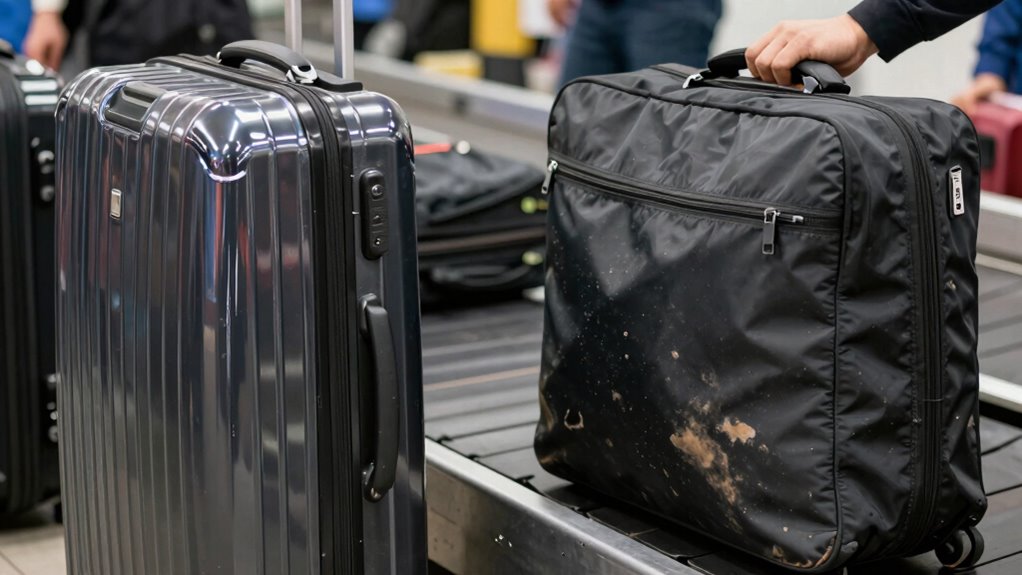

You’ll find that hard shell luggage offers better impact resistance and durability during rough baggage handling, thanks to its rigid exterior that absorbs shocks and resists punctures. Soft shell bags are lighter and more flexible, but they’re more prone to tears or fabric damage if tossed or overstuffed. Overall, hard shells typically survive baggage tosses better, keeping your belongings safer. To discover which option suits your travel style best, explore more details below.
Key Takeaways
- Hard shell luggage offers superior impact resistance, better protecting contents during rough baggage handling.
- Soft shell luggage is more vulnerable to tears, snags, and zipper damage under rough handling conditions.
- Hard shells distribute shocks evenly, reducing damage from impacts and rough tosses by baggage handlers.
- Soft shells may absorb impacts but are more prone to structural damage like tears and punctures.
- Both types can survive baggage handling with proper packing, but hard shells generally withstand rougher treatment better.
How Do Hard Shell and Soft Shell Luggage Differ in Construction and Durability?

Hard shell and soft shell luggage differ markedly in their construction and durability. With hard shells, you get a rigid exterior that offers excellent protection against impacts, but the quality of zippers can vary, affecting overall durability. Soft shell luggage, made from flexible fabrics, tends to have more vulnerable zippers, though they often feature additional compartments for convenience. When it comes to wheels, hard shell suitcases usually have robust, wheel durability designed for rough handling, but their rigidity can sometimes cause cracking if mishandled. Soft shells often have reinforced wheels that absorb shocks better, though they may wear faster over time. Additionally, considering the environmental impact of tissue paper, some manufacturers are now producing more sustainable, eco-friendly luggage options. Furthermore, the material durability of both types can be influenced by exposure to harsh weather conditions, which can accelerate wear and tear. Ultimately, your choice depends on whether you prioritize impact resistance or flexibility, but both types can be durable if you pay attention to the quality of zippers and wheel construction.
Which Luggage Keeps Your Items Safer During Rough Handling?
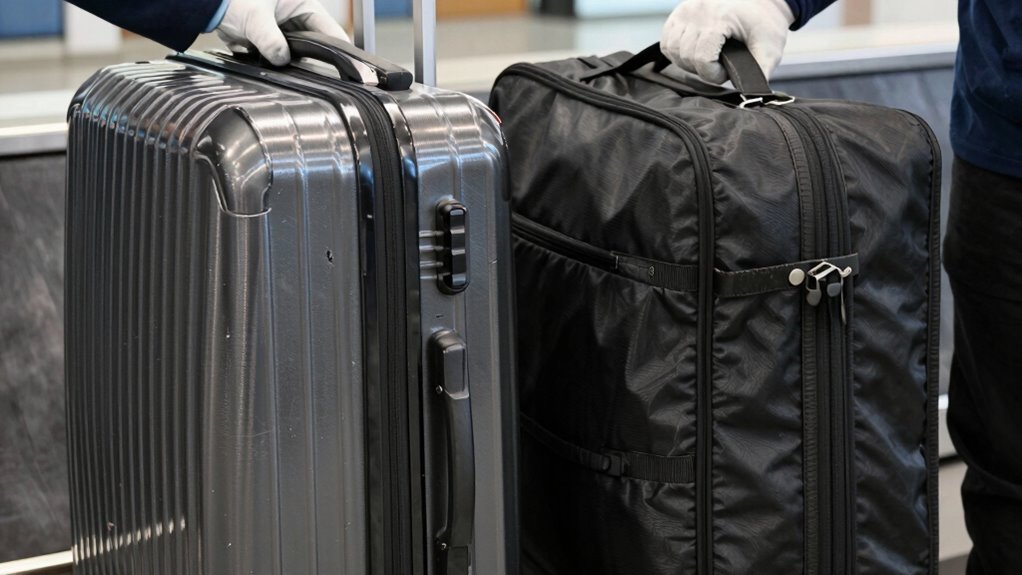
When it comes to withstanding rough handling, hard shell luggage generally offers better protection for your belongings because its rigid exterior absorbs shocks and resists crushing. Its security features, like integrated locks and sturdy shells, help prevent theft and accidental damage. Soft shell luggage, while flexible, may give way under extreme pressure, risking your items’ safety. However, consider weight considerations—hard shell cases tend to be heavier, which can affect your airline weight limits. If you prioritize maximum protection during rough handling, a hard shell suitcase is your best bet. It’s designed to withstand impacts and maintain structural integrity, ensuring your items stay safe even in the toughest baggage handling conditions. Additionally, projector technology advancements demonstrate how durable materials contribute to overall protection, emphasizing the importance of sturdy construction for safeguarding valuable items. Strong material durability plays a crucial role in enhancing the protective qualities of luggage, especially when combined with shock absorption features. Furthermore, innovations in material science continue to improve the resilience of luggage materials, making them more resistant to damage. Ultimately, hard shells provide a more secure enclosure for your valuables in rough travel scenarios.
How Do Hard and Soft Shell Suitcases Perform in Baggage Handling Tests?
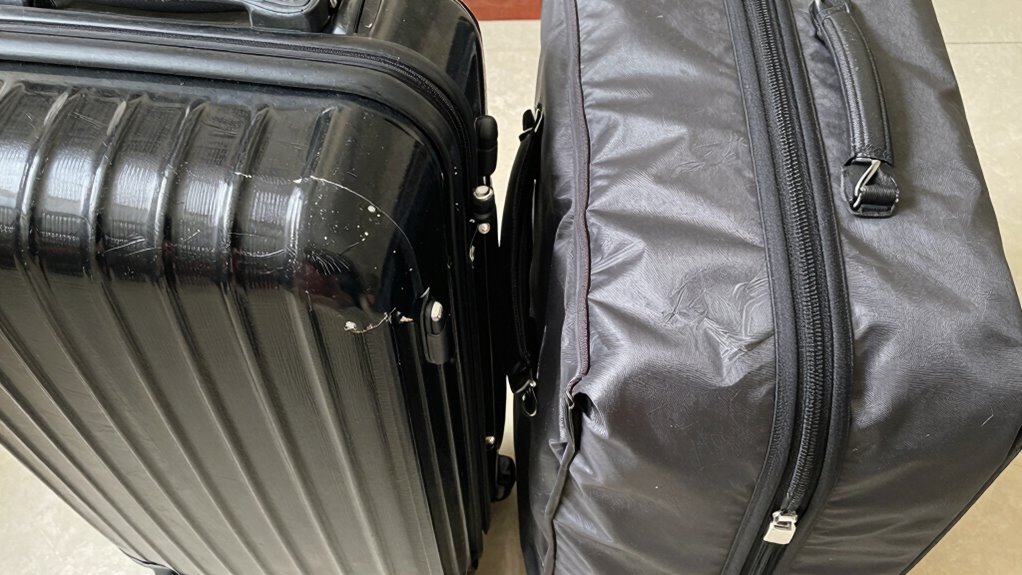
When baggage handlers rough up your suitcase, you’ll notice differences in impact resistance between hard and soft shells. Hard cases often withstand impacts better but may show more noticeable damage, while soft shells tend to absorb shocks with less visible wear. Understanding these performance differences helps you choose luggage that better endures rough handling. Additionally, considering damage prevention methods can further protect your belongings during transit. Proper packing techniques and choosing luggage with reinforced corners can also significantly reduce damage risk during baggage handling. Being aware of the impact absorption properties of each material can guide you in selecting the most durable option for your travel needs.
Impact Resistance Comparison
Although soft shell suitcases often feel more flexible, their impact resistance varies markedly from their hard shell counterparts during baggage handling tests. Hard shells, made from durable materials like polycarbonate or aluminum, excel in absorbing shocks and resisting crushing forces. Their rigid structure distributes impact more evenly, reducing the risk of damage. Soft shell suitcases, typically crafted from flexible fabrics like nylon or polyester, tend to absorb impact differently. While lighter and more forgiving, they may not withstand heavy impacts as well, especially if the material composition isn’t reinforced. Weight considerations also influence impact resistance; softer materials often allow for lighter designs but at the potential cost of durability. Additionally, impact resistance in luggage can be significantly enhanced with features like reinforced corners or internal padding. Overall, hard shells generally perform better in impact resistance during rough handling, offering more reliable protection for your belongings.
Damage Appearance Differences
In baggage handling tests, the appearance of damage on hard and soft shell suitcases often reveals their different vulnerabilities. Hard shells typically show cracks or dents, especially around zippers and handles, which are common stress points. Soft shells, on the other hand, may develop tears, snags, or punctures, especially if they catch on sharp objects or rough handling. The color and design of your luggage also influence damage visibility; darker colors hide scuffs better, while lighter shades show scratches more clearly. Hard shells tend to maintain a uniform look despite impacts, whereas soft shells often show more obvious signs of wear. Overall, soft luggage might display more cosmetic damage, but hard shells can suffer from structural cracks that are less visible at first glance.
Pros and Cons of Soft Shell Suitcases for Baggage Tosses?
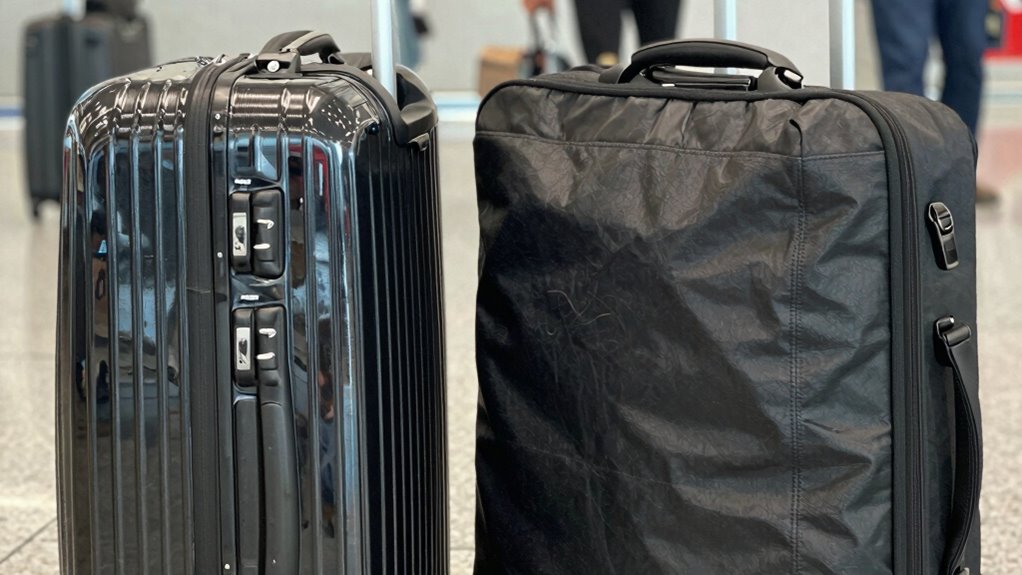
Soft shell suitcases are more flexible during handling, which can help absorb impacts. However, this flexibility also means they’re more vulnerable to damage if tossed roughly. You need to weigh the convenience of give against the potential risk to your belongings. Additionally, home design details such as reinforced corners can help mitigate damage during rough handling. Considering luggage material durability can also inform your choice for better protection. Proper packing techniques can further influence how well your items are protected inside the suitcase. Being aware of cable failure and handling practices can provide insights into how luggage might endure rough baggage handling. Furthermore, understanding impact resistance of materials can help select luggage better suited for frequent baggage tosses.
Flexibility During Handling
Soft shell luggage tends to be more forgiving during handling, especially when baggage is tossed or stacked. Its material flexibility allows it to bend and absorb impacts better than rigid cases, reducing the risk of cracking or breaking. This handling adaptability means soft shells can adapt to rougher treatment without immediate damage, giving you some peace of mind during busy baggage processes. You’ll notice that soft shells can be squeezed into tight spaces or stacked more easily, making them more versatile in tight storage areas. However, this flexibility can also mean that the suitcase may deform slightly over time if mishandled frequently. Overall, if you value adaptability and resilience during rough handling, soft shell luggage offers clear advantages in flexibility during handling.
Risk of Damage
While soft shell luggage offers flexibility during handling, it also comes with specific risks when subjected to baggage tosses. Zippers and locks can be vulnerable, especially if thrown or stacked roughly, increasing the chance of breakage or misalignment. Soft shells tend to absorb impacts better than hard shells, but their fabric can still tear or fray if mishandled. Weight considerations also matter; lightweight soft suitcases are more prone to damage if overloaded, as excess weight strains seams and zippers. Additionally, uneven distribution of contents can cause stress points, risking tears and zipper failures. Durability is a key factor to consider when choosing soft shell luggage for rough handling. Proper packing techniques and understanding impact resistance can help mitigate potential damage during rough baggage handling. Using appropriate packing strategies can further reduce the risk of damage during handling. Overall, soft shell luggage requires careful packing and handling to mitigate damage risks during rough baggage handling, making it less resilient against aggressive baggage tosses compared to sturdier hard shell options.
When Is a Hard Shell Suitcase More Durable and the Safer Choice?
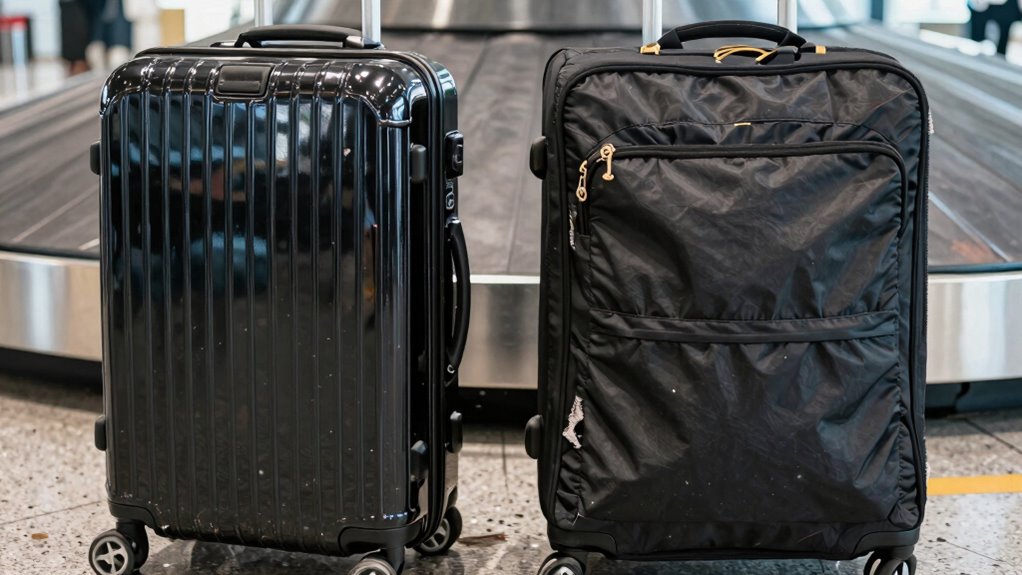
A hard shell suitcase is often the safer choice when durability is a top priority, especially if you travel frequently or handle your luggage roughly. Its sturdy exterior provides better protection against impacts and rough handling by baggage handlers, reducing the risk of damage. If you prioritize secure travel accessories, a hard shell can keep your belongings safe from crushing or punctures. Additionally, its rigid surface helps maintain luggage organization, preventing your belongings from shifting or spilling inside. When durability matters most—such as during long trips or in busy airports—a hard shell offers peace of mind. While it may be heavier, its protective qualities make it a reliable option for travelers who want to ensure their luggage survives rough treatment and keeps their items intact. Understanding the importance of protective gear can help travelers choose the right luggage for their needs.
How Do Features Like Flexibility and Expandability Affect Durability?
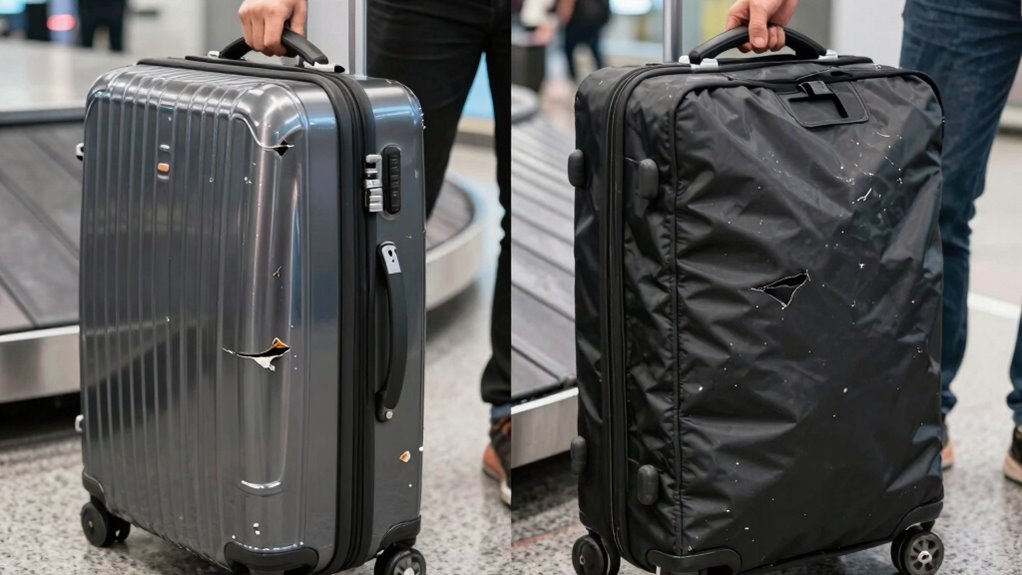
Features like flexibility and expandability can considerably influence a suitcase’s durability, especially when it comes to how well it withstands everyday wear and tear. Expandability allows you to pack more without overstuffing, but it can sometimes weaken the bag’s structure if not designed properly. The design quality of the expansion mechanism is crucial in maintaining durability over time. Flexibility in soft-shell luggage helps absorb shocks and impacts from rough handling, reducing the risk of damage. However, too much flexibility might make the suitcase less resistant to punctures or tears over time. On the other hand, rigid hard-shell models tend to be less flexible but offer solid protection. Balancing expandability and flexibility is key—choose a bag that adapts to your packing needs without compromising its ability to endure rough handling. Material Strength also plays a crucial role in how well a suitcase survives baggage handlers’ rough treatment. Additionally, understanding the flexibility of materials can help you select luggage that best suits your travel habits and handling conditions. Proper maintenance and choosing high-quality materials can further enhance a suitcase’s long-term durability.
Which Luggage Type Offers the Best Balance of Protection and Practicality?
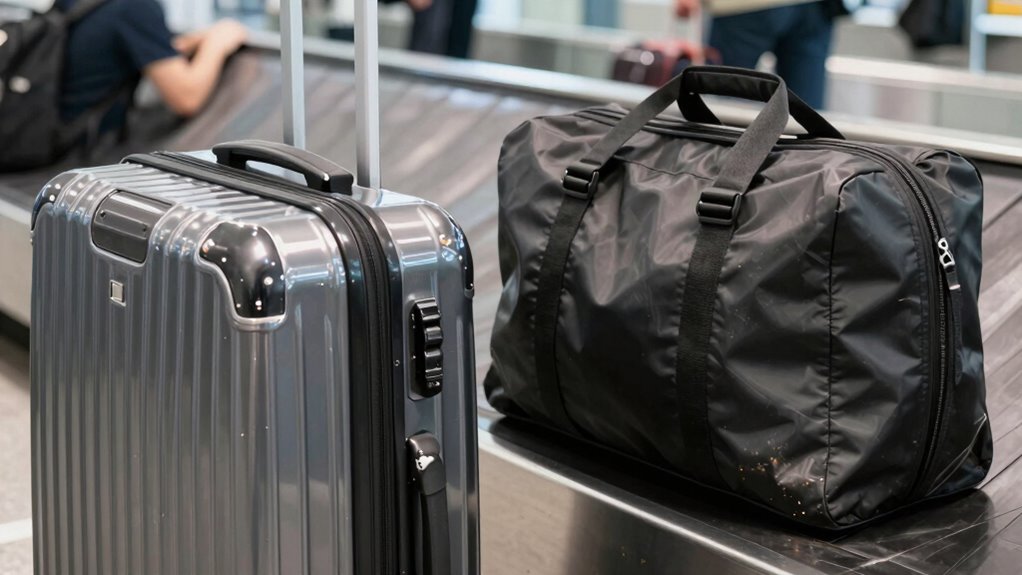
Choosing between hard-shell and soft-shell luggage depends on finding the right balance between protection and practicality. Hard shells excel in safeguarding valuables and resisting rough handling, thanks to sturdy security features. They’re often more durable but tend to be heavier, which impacts weight considerations during travel. Soft shells, on the other hand, are lighter and more flexible, making them easier to pack and carry. They often include external pockets for quick access, adding to practicality. When selecting, consider your security needs and how much weight you’re willing to carry. Both types can offer useful features, but your choice hinges on balancing protection and practicality. Additionally, soft-shell luggage can be more accommodating for expandability, allowing for extra packing capacity if needed.
Frequently Asked Questions
Which Luggage Type Is More Resistant to Scratches and Dents?
Hard shell luggage is more resistant to scratches and dents because of its material resilience, especially if made from polycarbonate or aluminum. It withstands rough baggage handling better, keeping its surface intact. Soft shell luggage, often made from fabric or nylon, is more prone to scratches and dents. If you want durable protection against baggage handling, opt for hard shell, as it offers superior scratch resistance and better resists impact damage.
How Do Weight and Size Impact Luggage Durability During Handling?
Imagine you’re in a vintage movie scene—weight and size do influence your luggage’s durability during handling. Heavier bags with poor weight distribution are more likely to get damaged or burst open. Smaller, well-sized luggage fits better on conveyor belts, reducing strain. Choose lightweight materials and adhere to size constraints to minimize impact. Proper packing and balanced weight distribution protect your belongings and ensure your luggage survives the roughest baggage handling.
Are There Specific Brands Known for More Durable Hard or Soft Luggage?
Some brands are known for durability based on their reputation and customer reviews. For hard luggage, brands like Rimowa and Samsonite stand out for their sturdy construction and longevity. Soft luggage users often praise Briggs & Riley and Tumi for their tough fabrics and reliable zippers. You should consider these brands if you want luggage that withstands rough baggage handling, as they consistently receive high marks for durability.
How Does Luggage Material Affect Ease of Repair After Damage?
Your luggage’s material can make or break your travel experience. Soft shells, with their incredible flexibility, are almost like elastic bands—easily patched and repaired. Hard shells, though sturdy, are less forgiving—more prone to cracking and harder to fix. So, if you want repairability ease, go for flexible soft materials. They bend, stretch, and bounce back, saving you from the headache of costly repairs.
What Are the Maintenance Requirements for Extending Luggage Lifespan?
To extend your luggage’s lifespan, regularly clean it using gentle luggage cleaning solutions, especially after trips. Store your luggage in a cool, dry place, ideally upright or on its side, to prevent warping. Check zippers, handles, and wheels for damage and repair minor issues promptly. Following storage tips and keeping your luggage clean helps maintain its durability, ensuring it stays functional and looking good for many journeys ahead.
Conclusion
Ultimately, choosing between hard and soft shell luggage depends on your travel style. While neither is perfect, soft shells may gently handle those unexpected tosses, and hard shells offer sturdy protection when things get rough. Think of it like picking a reliable friend—each has its quirks, but with a little care, either can serve you well on your journeys. Trust your instincts, pack smart, and enjoy smoother travels ahead.