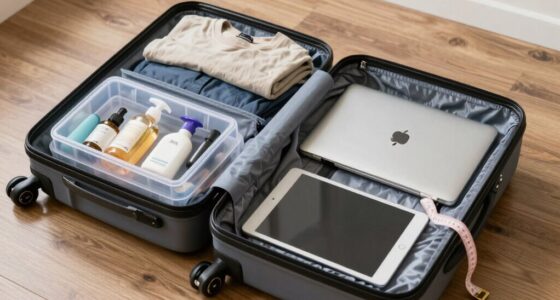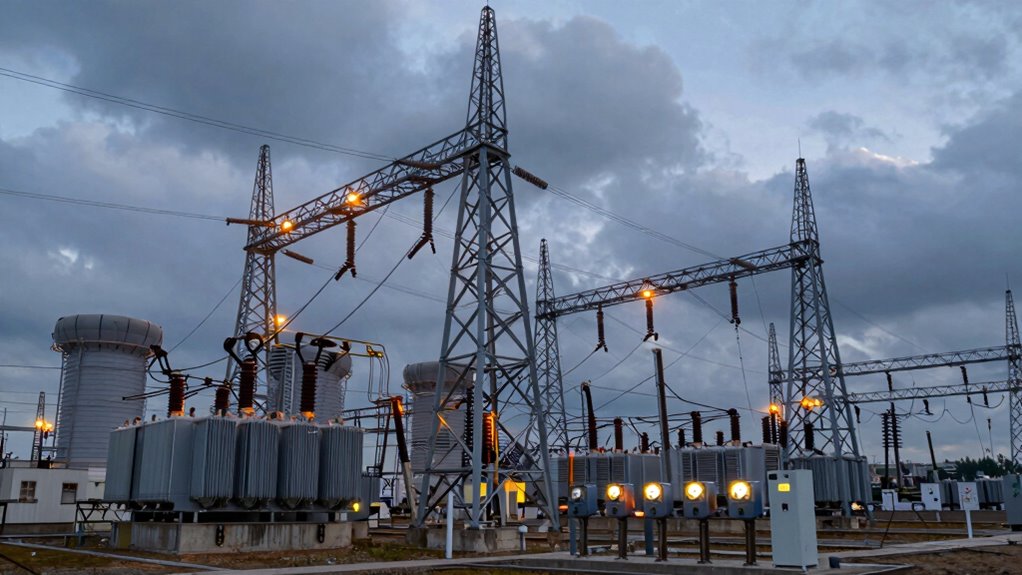

When choosing a travel power station, understanding Watt-hours and Watts helps prevent damage to your gear. Watt-hours tell you how much energy the battery stores, while Watts indicate the power output, affecting charging speed and device safety. Select a station with the right capacity for your devices, and always check compatibility. Keep safety in mind by avoiding overloads. Explore more tips to optimize your power station use and protect your gear efficiently.
Key Takeaways
- Match device wattage and voltage requirements to the power station’s output to prevent damage.
- Choose a power station with sufficient watt-hours for your device usage duration.
- Avoid overloading outlets by distributing power evenly and not connecting too many high-watt devices.
- Use compatible cables and adapters, and check device specs to prevent electrical frying.
- Monitor power draw during use and adhere to manufacturer guidelines for safe operation.
What Are Watt-Hours and Watts, and How Do They Affect Your Power Station Choices?
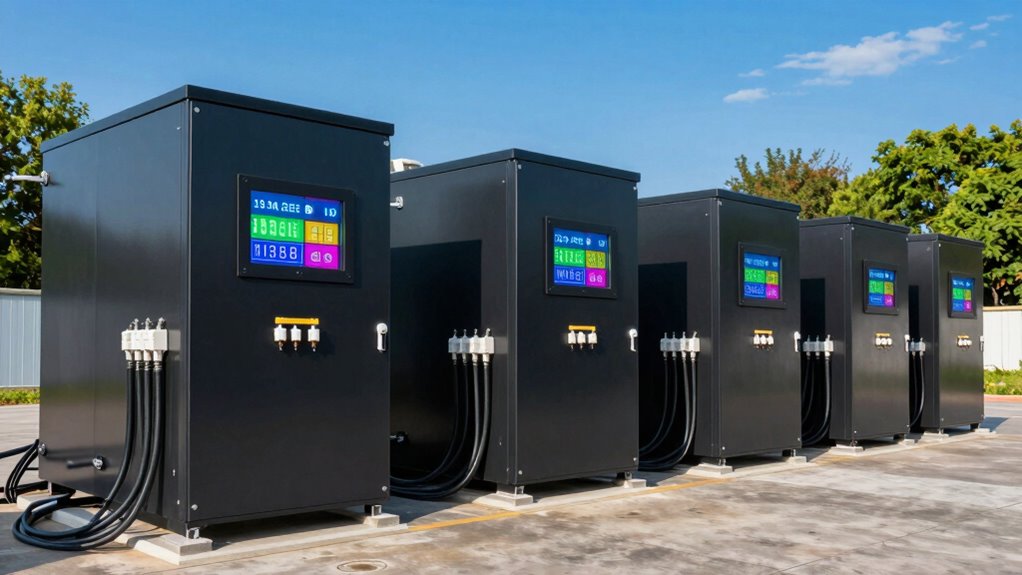
Understanding the difference between watt-hours (Wh) and watts (W) is key to choosing the right power station for your needs. Watt-hours measure battery capacity, indicating how much energy the station can store, which affects how long it can power your devices. Watts, on the other hand, show the power output, influencing how quickly your devices charge and how many devices you can run simultaneously. A higher battery capacity means longer usage, while a higher wattage allows for faster charging speeds and handling more demanding devices. Knowing these specs helps you select a power station that matches your travel needs without overloading or underperforming. Recognizing the power output capabilities is essential for ensuring your devices operate safely and efficiently during your trips. Additionally, understanding the horsepower of electric dirt bikes can be useful if you’re considering portable power sources for off-road adventures, as some models require higher wattage for optimal performance. Balancing battery capacity and charging speed guarantees you stay powered up without surprises or delays, and considering power station efficiency can further optimize your energy usage during travel.
How to Pick the Right Portable Power Station for Your Travel Needs
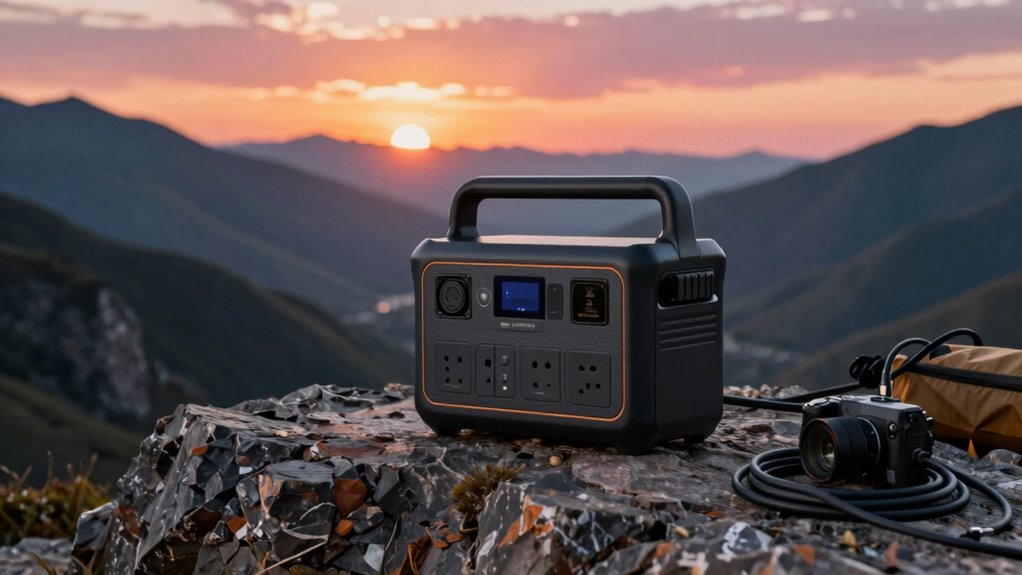
Choosing the right portable power station depends on how you plan to use it during your travels. First, consider your device needs—if you’ll power small gadgets or multiple devices, select a station with adequate watt-hours and output capacity. Solar compatibility is key if you want renewable charging options; verify the station supports solar panels you can carry easily. Weight considerations matter if you’re backpacking or moving frequently, so opt for a lightweight model that balances power and portability. Think about where you’ll use it—if off-grid adventures are common, prioritize models designed for outdoor use with sturdy build quality. By evaluating your device requirements, solar compatibility, and weight constraints, you’ll find a portable power station tailored to your travel lifestyle. Additionally, understanding power storage standards ensures your gear remains safe and reliable during use and charging. Knowing how watt-hours relate to your device power needs can help you select a model that won’t leave you stranded without juice.
Safe Tips for Using Power Stations Without Damaging Your Devices
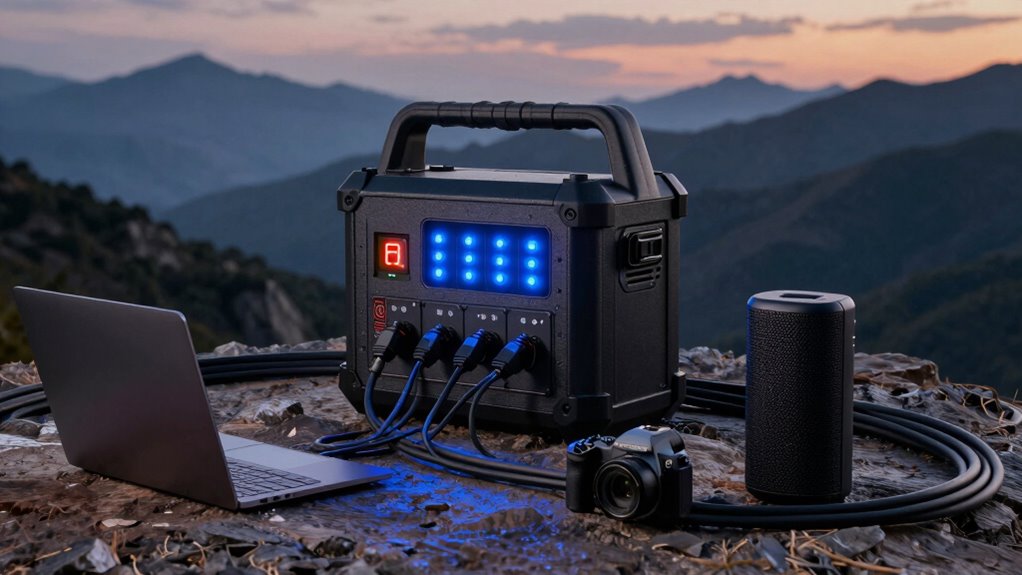
To prevent damage to your devices when using a power station, it’s essential to follow proper safety practices. First, always check your device compatibility to ensure the power station’s output matches your device’s requirements. Next, prioritize battery safety by avoiding overcharging or discharging your devices excessively. Here are some tips:
Ensure device safety by matching compatibility, avoiding overcharging, and monitoring temperature during power station use.
- Use the correct charging cables and adapters
- Monitor the power station’s output to prevent overloads
- Avoid connecting incompatible devices that may draw too much power
- Keep an eye on temperature levels to prevent overheating
- Be aware of support and boundaries to ensure safe and effective device use during travel. Additionally, understanding cryptid mysteries can help you enjoy local folklore responsibly without risking damage to portable devices in warm environments. Maintaining awareness of power management best practices can further extend your device lifespan and safety during adventures.
How to Connect Multiple Devices and Match Their Power Needs
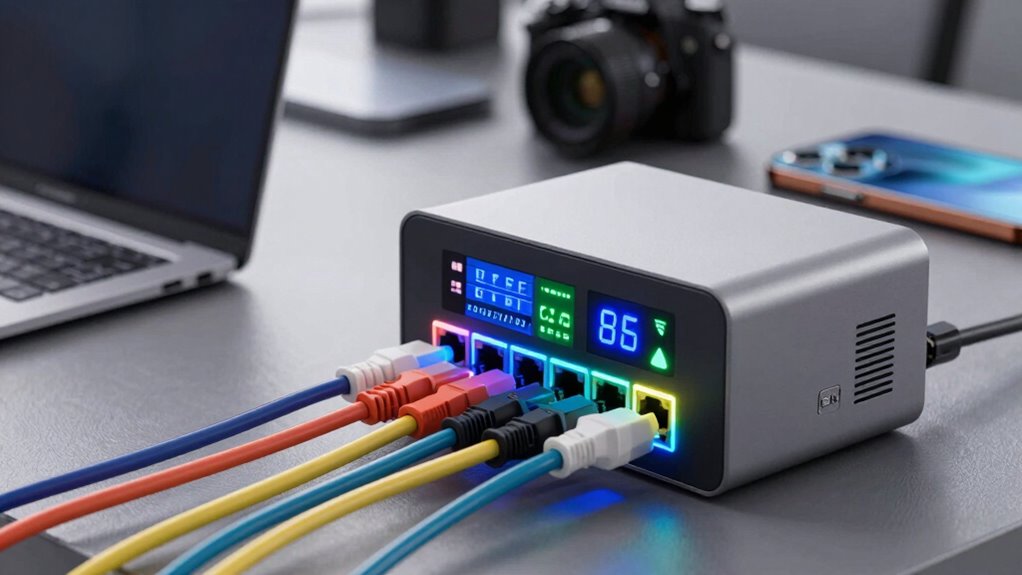
Connecting multiple devices to a power station requires careful attention to their individual power needs. First, check each device’s power requirements and make sure your power station can handle the total load. Device compatibility matters; confirm that your devices’ plugs and voltage ratings match the station’s outlets and output specs. To prevent overloading, distribute power evenly across available outlets, using adapters if necessary. Avoid plugging high-wattage devices simultaneously unless your station supports it. Use a power strip with built-in surge protection for multiple smaller devices, but don’t exceed the station’s maximum wattage. Monitoring your total power draw helps prevent damage or shutdowns. Proper power distribution ensures all your gear stays charged safely without risking overloads or damage. Maintaining awareness of your power station’s capacity helps you achieve safe and effective device usage during your travels. Additionally, understanding power management techniques can optimize your energy use and prolong the life of your gear. Being aware of your Device compatibility ensures safe and reliable operation, especially when dealing with diverse electronics. Regularly checking your device specifications before connecting can prevent accidental overloads and potential damage. Incorporating efficiency tips can also help maximize your power source’s longevity and performance.
Top Tips to Maximize Battery Life and Keep Your Gear Powered on the Go
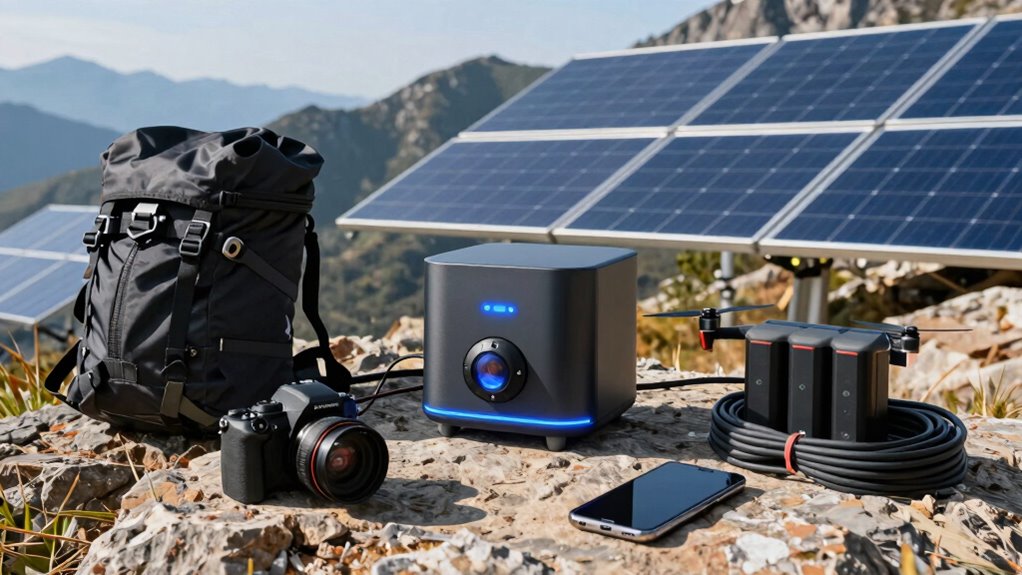
Maximizing your battery life while on the go requires strategic planning and mindful usage. To extend your gear’s power, consider leveraging portable solar options to recharge during daylight. Keep an eye on your device’s battery capacity and avoid unnecessary drain by closing unused apps and lowering screen brightness. Use power-saving modes whenever possible to conserve energy. Additionally, pack a reliable power station with ample watt-hours to handle multiple devices. Always prioritize charging devices when your battery is above 50% to prevent deep discharges that reduce lifespan. Remember to regularly clean solar panels for maximum efficiency and store your gear in cool, shaded areas to prevent overheating. By following these tips, you’ll keep your gear powered longer and make the most of your portable power solutions.
Frequently Asked Questions
Can I Use a Power Station While Charging It Simultaneously?
Yes, you can use a power station while charging it, especially if it’s solar compatible. Just keep in mind the battery capacity; if it’s low, using it while charging might drain it faster. Make sure to use a suitable charger and avoid overloading the system. This way, you’ll keep your devices running smoothly without risking damage to your power station or gear.
What Are the Signs My Device Is Overpowered or Underpowered?
You’ll notice if your device is overpowered when it runs too hot, sparks, or shuts down unexpectedly, indicating excess power consumption. Underpowered devices may not operate properly, showing sluggish performance or not turning on at all. To avoid this, check your device compatibility with your power station’s wattage output. Always match the wattage requirements to avoid damage and ensure safe, efficient operation.
How Do Temperature Extremes Affect Power Station Performance?
Temperature extremes can turn your power station into a fragile glass, shattering performance if not careful. When it’s too hot or cold, your device struggles with temperature stability, potentially causing thermal management issues. High heat can reduce battery efficiency, while cold temperatures slow down chemical reactions, decreasing output. To keep your gear safe, store it in moderate conditions and avoid exposing it to extreme temperatures, ensuring reliable power wherever your adventures take you.
Are There Eco-Friendly Options for Portable Power Stations?
Yes, eco-friendly options for portable power stations exist. You can choose models that use solar charging, allowing you to recharge sustainably without relying on grid power. Additionally, look for stations with biodegradable batteries, which reduce environmental impact when disposed of. These options help you stay green while keeping your devices powered on the go, making your travels more environmentally responsible.
What Maintenance Is Required to Prolong My Power Station’s Lifespan?
Did you know that proper maintenance can double your power station’s lifespan? To keep it in top shape, regularly calibrate the battery to guarantee accurate readings. Keep dust prevention in mind by cleaning vents and ports with a soft cloth. Avoid overcharging or fully discharging, and store it in a cool, dry place. These simple steps help maintain efficiency and prolong your device’s life on every adventure.
Conclusion
Choosing the right power station isn’t just about watt-hours or watts—it’s about understanding how they work together to keep your gear safe and charged. By matching your device’s needs and following simple safety tips, you avoid frying your devices and get the most out of your battery life. Think of it like a dance: when you match the rhythm, everything flows smoothly. Stay informed, stay safe, and keep your adventures powered!