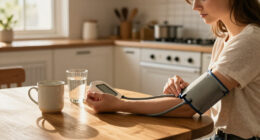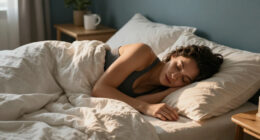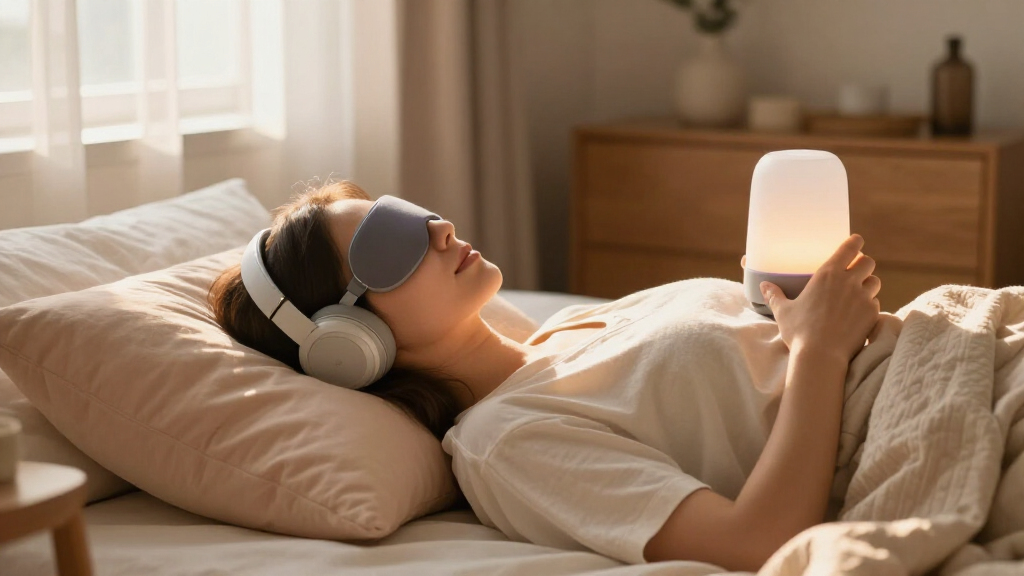

Sleep aid devices for relaxation come in several distinct flavors — handheld microcurrent tools, guided breathing lights, and sound machines — and the right one depends on whether your restlessness is physical, mental, or environmental. The Dodow Sleep Aid Device earns the best overall spot for its simple, well-proven guided-breathing approach that works for nearly anyone without side effects, while the Helight Red Light Therapy Device stands out as the premium option for deeper, screen-related sleep disruption and the Soother Sound Machine delivers the best value for families. The main tradeoff in this category: active devices demand your participation but target the root of restlessness, while passive ones run in the background but don’t retrain your wind-down habits. Read on for the full breakdown of all 14 picks, including who each one suits and who should skip it.

Get health and wellness essentials delivered free with Prime
- Fast, free delivery on millions of items
- Prime Video, Amazon Music and more included
- Member-only deals all year
Key Takeaways
- Guided breathing lights (Dodow, Sharper Image Fast Asleep) delivered the most consistent relaxation results across user types because they actively slow your breathing rather than masking the problem.
- Handheld microcurrent devices (Glowco CalmCarry, Gen2, Kuuleyn) varied widely in quality — dual-mode models with USB-C charging outperformed single-mode copies at nearly the same price.
- Sound machines only make sense if environmental noise is your sleep disruptor; if racing thoughts are the issue, a breathing light or pulse device works better.
- The combination devices (sleep aid plus hand warmer, night light hybrids) are jack-of-all-trades options that underperform dedicated single-purpose picks.
- Red light therapy sits at the premium end and pairs best with evening screen exposure problems — it’s an investment that only pays off for a specific sleep profile.
| Glowco CalmCarry Sleep Aid Device |  | Best for Families | Device Type: Handheld microcurrent relaxation device | Technology: Microcurrent pulses | Controls: Simple button controls with adjustable intensity | VIEW LATEST PRICE | See Our Full Breakdown |
| Soother Sleep Sound Machine Night Light |  | Best Value Sound Machine | Number of Sounds: 30 | Night Light Colors: 12 | Brightness Levels: 10 | VIEW LATEST PRICE | See Our Full Breakdown |
| Helight Red Light Therapy Sleep Device |  | Best Premium Light Therapy | Wavelength: 630 nanometers pure red light | Cycle Duration: 28 minutes | Power Source: USB-C rechargeable battery | VIEW LATEST PRICE | See Our Full Breakdown |
| Color Noise Sound Machine with 10 Night Light Colors |  | Best Set-and-Forget Option | Number of Sounds: 25 | Night Light Colors: 10 | Volume Levels: 32 | VIEW LATEST PRICE | See Our Full Breakdown |
| Sleep Aid Device with LED, Portable Wristband |  | Best Wearable Design | Device Type: Wearable pulse sleep aid | Material: Plastic, textile | Device Size: 3.2 x 1.7 x 1.1 inches | VIEW LATEST PRICE | See Our Full Breakdown |
| Gen2 Relaxation Device – Handheld Portable Sleep Device with Dual Mode Gentle Pulse (Pink) |  | Best for Families | Modes: Dual relaxation modes | Power Source: USB-C rechargeable | Material: Premium smooth silicone | VIEW LATEST PRICE | See Our Full Breakdown |
| Handheld Relaxation Tool, USB Rechargeable for Adults |  | Best Ultralight Pick | Weight: 30g | Power Source: USB rechargeable | Intensity Levels: 3 adjustable levels | VIEW LATEST PRICE | See Our Full Breakdown |
| Kuuleyn Handheld Sleep Aid Device for Adults – Insomnia Relief and Relaxation |  | Best Two-Mode Versatility | Material: ABS, stainless steel | Weight: 136g / 4.8oz | Battery Capacity: 500mAh | VIEW LATEST PRICE | See Our Full Breakdown |
| Compact Handheld Sleep Aid Device, Portable Stress Calming Relaxation Tool (Orange) |  | Best Budget Starter | Design: Ergonomic handheld shape | Size: Pocket-sized | Battery: Rechargeable, long-lasting | VIEW LATEST PRICE | See Our Full Breakdown |
| Sleep Aid and Hand Warmer Device, 1000mAh Capacity, 20-Minute Auto Shutoff (White) |  | Best Dual-Function Pick | Battery Capacity: 1000mAh | Battery Life: Up to 85 hours | Auto Shutoff: 20 minutes | VIEW LATEST PRICE | See Our Full Breakdown |
| Mindfulness Guided Visual Meditation Breathing Light with Night Light |  | Best Design Pick | Material: ABS | Lighting: Multiple modes with brightness adjustment | Power Source: Built-in rechargeable battery | VIEW LATEST PRICE | See Our Full Breakdown |
| Dodow Sleep Aid Device – Guided Breathing Light for Faster Sleep |  | Best Guided Breathing Trainer | Session Modes: 8 and 20 minutes | Guided Sessions: Yes | Light Color: Blue | VIEW LATEST PRICE | See Our Full Breakdown |
| Sleep Aid Device Handheld Sleep Relaxation Wristband |  | Best Wearable Format | Design: Wristband with adjustable display | Form Factor: Wearable | Portability: Small and lightweight | VIEW LATEST PRICE | See Our Full Breakdown |
| Sharper Image Fast Asleep Sleep Aid Device with Dimmable LED Light |  | Best Travel Companion | Light Type: Dimmable LED | Portability: Travel-friendly compact design | Techniques: Breathing exercises with light cues | VIEW LATEST PRICE | See Our Full Breakdown |
More Details on Our Top Picks
Glowco CalmCarry Sleep Aid Device
What sets the Glowco CalmCarry apart in a crowded field of handheld pulse devices is its age rating of 3+, which almost no competitor in this roundup can claim. Compared with the Handheld Relaxation Tool and similar adult-only devices, this one makes sense for households where both a parent and a child struggle to wind down. The adjustable intensity means a younger user can start gentle while an adult dials it up, and the battery covers roughly 30 sessions per charge, so it survives a week of family use without hunting for a cable. The tradeoff is supervision: since there’s no automatic shut-off, an adult has to manage session length, which is more hands-on than the timer-driven sound machines elsewhere in this guide.
Pros:- Safe for children aged 3+ with adult supervision, rare in this category
- Adjustable microcurrent intensity for personalized comfort
- Up to 30 sessions per USB charge
- Compact enough for pockets, purses, or travel bags
Cons:- No automatic shut-off, so session length requires manual management
- Effectiveness varies widely with individual sensitivity to microcurrent
- Young children cannot use it unsupervised
Best for: Parents who want one shared relaxation device for themselves and school-age children
Not ideal for: Anyone wanting a set-and-forget bedtime routine — the lack of auto shut-off means sessions must be ended manually
- Device Type:Handheld microcurrent relaxation device
- Technology:Microcurrent pulses
- Controls:Simple button controls with adjustable intensity
- Rechargeable:Yes, USB
- Battery Life:Up to 30 sessions per charge
- Age Suitability:Adults and children 3+
- Portability:Compact, lightweight, handheld
Our verdict“This pick makes the most sense for families who want a single shared calming tool rather than buying separate adult and kid devices.”
Soother Sleep Sound Machine Night Light
For pure variety per dollar, the Soother Sleep Sound Machine is hard to beat in this batch. Its 30 sounds — including white, pink, and brown noise — outpace the 25 sounds on the Color Noise Sound Machine, and the 12-color night light with 10 brightness levels gives it real dual-purpose appeal for nurseries and guest rooms alike. The timer with a gradual fade is a thoughtful touch: rather than cutting sound abruptly, it eases the room into silence, which matters for light sleepers. Compared with pulse-based options like the Glowco CalmCarry, this targets the auditory side of relaxation instead of physical sensation. The compromises are basic controls and a menu of sounds large enough that some buyers will never explore half of it.
Pros:- 30 sounds including white, pink, and brown noise
- 12-color night light with 10 brightness levels
- Timer with gradual fade instead of abrupt shutdown
- Portable design with both AC adapter and USB charging
Cons:- Sound quality varies with room acoustics and placement
- Basic controls lack the memory function found on rival models
- 30-sound menu can feel overwhelming to scroll at bedtime
Best for: Budget-conscious buyers who want maximum sound and lighting options for a nursery or bedroom
Not ideal for: Tinkerers who want fine-grained audio control or app connectivity — the controls are deliberately simple
- Number of Sounds:30
- Night Light Colors:12
- Brightness Levels:10
- Timer Settings:1h, 2h, 3h, 4h, continuous
- Power Options:AC adapter or USB charging
- Portability:Yes, travel-friendly
- Intended Users:Baby, kids, and adults
Our verdict“If sound variety on a budget is the priority, this delivers more options than anything else at its price point.”
Helight Red Light Therapy Sleep Device
The Helight takes a different scientific angle than everything else here: instead of masking noise or delivering pulses, it uses a precise 630nm red light wavelength in a fixed 28-minute cycle to cue the body toward sleep. That protocol-driven approach is what justifies its premium positioning over simpler visual devices like the Dodow or the Sharper Image Fast Asleep, both of which rely on guided breathing or dimmable light without a specific wavelength claim. Its USB-C rechargeable, travel-friendly build makes it a plausible companion for jet lag recovery. But buyers should go in with realistic expectations: the maker notes full effects can take up to 21 days, and the device needs complete darkness — no sleep masks, no screens, no bedside lamps glowing alongside it.
Pros:- Specific 630nm wavelength and 28-minute protocol rather than vague light claims
- USB-C rechargeable and genuinely travel-friendly
- Natural approach that pairs well with other sleep aids
Cons:- Full effects may take up to 21 days of consistent use
- Incompatible with sleep masks and requires a fully dark room
- Higher price than sound machines and pulse devices in this roundup
Best for: Buyers willing to invest in a protocol-based light therapy routine and commit to a dark bedroom for three weeks
Not ideal for: Anyone who sleeps with a mask or shares a lit room — the device requires darkness to work as designed
- Wavelength:630 nanometers pure red light
- Cycle Duration:28 minutes
- Power Source:USB-C rechargeable battery
- Size:Compact and portable
- Typical Results Timeline:Up to 21 days for full effect
- Usage Requirement:Complete darkness; not compatible with sleep masks
Our verdict“This is the pick for patient buyers who want a science-anchored light routine rather than an instant-fix gadget.”
Color Noise Sound Machine with 10 Night Light Colors
Where the Soother wins on raw sound count, this Color Noise Sound Machine wins on everyday convenience. Its memory function recalls your last sound, volume, and light settings — a genuine quality-of-life advantage over the Soother, since bedtime routines with kids go badly when you’re re-scrolling menus in the dark. With 32 volume levels and five timer options, it offers finer volume control than most rivals, and it carries FCC, CE, and RoHS certifications that budget sound machines rarely document. The catch is power: unlike portable rechargeable options such as the Helight or Glowco CalmCarry, there’s no battery operation mentioned, so it lives on a nightstand tethered to an outlet and isn’t a true travel pick.
Pros:- Memory function restores last-used sound, volume, and light settings
- 32 volume levels for precise nighttime tuning
- FCC, CE, and RoHS safety certifications
- 25 sounds and 10-color adjustable night light in one compact unit
Cons:- No battery operation mentioned, requiring a constant outlet connection
- Multiple features may confuse very young children using it solo
- Sound quality specifics are thin compared with dedicated audio brands
Best for: Parents or couples who want a nightstand device that remembers their exact settings night after night
Not ideal for: Frequent travelers — with no battery operation, it needs a constant power supply
- Number of Sounds:25
- Night Light Colors:10
- Volume Levels:32
- Timers:5 (1h, 2h, 3h, 4h, continuous)
- Brightness Adjustment:Yes
- Memory Function:Yes
- Power Source:Adapter and USB cable included
- Certifications:FCC, CE, RoHS
Our verdict“For a permanent bedside setup that just works the same way every night, this beats flashier portable rivals on convenience.”
Sleep Aid Device with LED, Portable Wristband
Most handheld sleep devices require you to hold them, which is exactly where this wristband-style sleep aid differs. Its adjustable 9.8-inch wrist strap means it stays in place hands-free — a real advantage over pocket devices like the Compact Handheld Sleep Aid Device or the Gen2 Relaxation Device, which occupy a hand during a session. The clear LED display makes settings visible without guesswork, and the Type-C charging keeps it current with modern cables. That said, transparency is its weak point: battery life is unspecified, and there’s no published data on long-term effectiveness, so buyers are trusting the category more than the spec sheet. Finding the right pulse setting also takes manual trial and error, which demands more patience than the preset protocols on the Helight.
Pros:- Wrist-worn design frees both hands during use
- Adjustable strap fits a wide range of wrist sizes
- LED display shows settings clearly in low light
- Type-C charging with a lightweight 3.2-inch body
Cons:- Battery life is not specified by the manufacturer
- No published data on long-term effectiveness
- Optimal settings require manual trial and adjustment
Best for: Buyers who want a hands-free wearable they can wear while reading or drifting off, without holding a gadget
Not ideal for: Spec-driven shoppers — unspecified battery life and no effectiveness data make this a leap of faith
- Device Type:Wearable pulse sleep aid
- Material:Plastic, textile
- Device Size:3.2 x 1.7 x 1.1 inches
- Wrist Strap:9.8 inches, adjustable
- Power Interface:Type-C
- Battery Life:Not specified
- Display:LED
- Color:White
Our verdict“If wearing beats holding for your wind-down routine, this is the most practical form factor here — just accept the thin spec sheet.”
Gen2 Relaxation Device – Handheld Portable Sleep Device with Dual Mode Gentle Pulse (Pink)
This option stands out for one reason no competitor in this lineup can match: it’s rated safe for ages 3 and up with supervision, making it the only gentle-pulse device here that works for a household rather than a single adult. The dual relaxation modes give it more flexibility than the single-purpose Kuuleyn device, and its smooth silicone body feels far more kid-friendly than the Kuuleyn’s hard ABS and stainless steel shell. Compared with the basic handheld tool from product 7, the Gen2 adds fast USB-C charging, which matters when multiple family members share one device.
The tradeoff is honest: this is a wellness tool, not a medical device, and like most pulse-based options it needs consistent daily use before benefits appear. Buyers expecting immediate insomnia relief should look at the Helight red light lamp instead.
Pros:- Safe for children ages 3+ with adult supervision — unique in this category
- Dual relaxation modes for different calming needs
- Soft silicone body that’s comfortable for small hands
- Fast USB-C charging beats older micro-USB rivals
Cons:- Not a medical device, so no claims of treating insomnia or anxiety
- Benefits build gradually and require daily consistent use
Best for: Parents who want one shared relaxation device that both they and their school-age kids can use at bedtime
Not ideal for: Adults with serious insomnia who want clinically-oriented features — this is wellness-only with no intensity data or sleep tracking
- Modes:Dual relaxation modes
- Power Source:USB-C rechargeable
- Material:Premium smooth silicone
- Age Range:3+ years with supervision
- Design:Ergonomic, compact, lightweight
- Operation:One-button control
Our verdict“Families sharing a single gentle-pulse relaxation device will get the most value here, while solo adults with sleep disorders should pass.”
Handheld Relaxation Tool, USB Rechargeable for Adults
At just 30 grams, this is the featherweight of the roundup — lighter than the Kuuleyn by more than 100 grams and lighter than anything else in this batch. For anyone who wants a relaxation tool that disappears into a pocket, purse, or carry-on, that weight difference is the whole story. The three adjustable levels also give it more tuning range than the orange pocket-sized device from product 9, which offers no customization at all.
What you give up is depth. There’s no app, no modes beyond intensity, and it’s adults-only, unlike the Gen2 Relaxation Device. Compared with the dual-function hand warmer model from product 10, this feels like a stripped-down specialist — deliberately minimal rather than feature-rich. Buyers who want extra utility should skip it; buyers who want zero friction will appreciate exactly that.
Pros:- At 30g, the lightest and most packable option in this lineup
- Three adjustable levels for tuning intensity
- One-button operation with essentially no learning curve
- USB rechargeable with no cables to carry daily
Cons:- Adult use only, unlike the family-friendly Gen2
- No app integration or advanced functions beyond basic levels
Best for: Commuters and frequent travelers who want the lightest possible pocket relaxation tool with basic intensity control
Not ideal for: Anyone expecting smart features, app connectivity, or child-friendly use — this is a bare-bones adult-only device
- Weight:30g
- Power Source:USB rechargeable
- Intensity Levels:3 adjustable levels
- Control:One-button operation
- Use Case:Adults, daily relaxation and travel
Our verdict“This makes the most sense for minimalists who value portability above all else and already know that simple pulse routines work for them.”
Kuuleyn Handheld Sleep Aid Device for Adults – Insomnia Relief and Relaxation
The Kuuleyn earns its spot by pairing relaxation and activity modes, framing itself as more than a sleep gadget — it targets daytime tension, headaches, and anxiety alongside bedtime use. That dual purpose puts it ahead of the single-track orange pocket model from product 9, though it still can’t match the 30g handheld tool’s portability at 4.8 ounces. Its stainless steel contact surface gives it a more durable, premium feel than the silicone Gen2, which matters for buyers who keep a device on a desk or in a bag all day.
Two things hold it back. The manual is thin on guidance, so new users may struggle to position and use it correctly — a real issue when placement drives results. And like most devices here, effectiveness varies from person to person, so it’s best treated as an experiment rather than a guaranteed fix. The Sharpe-minded buyer wanting structured guidance might prefer the Dodow breathing light instead.
Pros:- Two distinct modes cover both relaxation and daytime alertness needs
- Stainless steel and ABS build feels sturdier than soft silicone rivals
- Addresses headaches and anxiety alongside sleep
- 500mAh lithium battery supports all-day portability
Cons:- Limited instructions leave users guessing on optimal placement and use
- Results vary noticeably between individuals
- Heavier than ultralight alternatives at 4.8 ounces
Best for: Adults who want one device that handles both daytime tension relief and nighttime wind-down routines
Not ideal for: First-time buyers who need thorough instructions — the sparse manual makes proper use harder to figure out
- Material:ABS, stainless steel
- Weight:136g / 4.8oz
- Battery Capacity:500mAh
- Battery Type:Lithium (model 902030)
- Modes:Relaxation and activity modes
- Charging:USB cable included
- In the Box:Device, USB cable, English manual
Our verdict“A sensible pick for experienced users who want mode flexibility and don’t mind figuring out technique on their own.”
Compact Handheld Sleep Aid Device, Portable Stress Calming Relaxation Tool (Orange)
This is the roundup’s low-commitment entry point: pocket-sized, one button, orange, and uncomplicated. Unlike the Kuuleyn, which asks you to learn two modes and read between the lines of a thin manual, this device works the moment you press it — micro-sensory rhythms do the work with no settings to fiddle with. Its flexible charging is a quiet advantage: it draws power from a power bank, laptop, or adapter, so it travels anywhere without a dedicated charger, matching the 30g handheld tool’s travel-friendliness.
The compromises are real, though. There’s no customization whatsoever — one intensity, one rhythm — while the 30g tool at least offers three levels. And it won’t touch serious sleep problems; anyone with chronic insomnia needs something more substantial, like the Helight red light therapy lamp. Think of this as a way to test whether pulse-style relaxation suits you before spending more.
Pros:- Genuinely pocket-sized and travel-ready
- One-button operation with zero setup or learning curve
- Charges from power banks, laptops, or wall adapters
- Ergonomic shape fits comfortably in hand
Cons:- No intensity or mode customization at all
- Not effective for significant sleep disorders
- Needs charging before first use, so it’s not usable out of the box
Best for: Curious first-timers who want to try pulse-based relaxation cheaply before investing in a premium device
Not ideal for: People with chronic or severe insomnia — this is a light calming tool, not a treatment
- Design:Ergonomic handheld shape
- Size:Pocket-sized
- Battery:Rechargeable, long-lasting
- Charging:USB port — power bank, laptop, or adapter
- Operation:One-button control
- Color:Orange
Our verdict“A cheap, low-risk way to sample this category — just don’t expect it to replace a real sleep solution.”
Sleep Aid and Hand Warmer Device, 1000mAh Capacity, 20-Minute Auto Shutoff (White)
No other product in this lineup does two jobs at once. The built-in hand warmer makes this a year-round companion — soothing warmth on a cold commute, relaxation routine at night — while every rival here, from the Gen2 to the Kuuleyn, is single-purpose. The 1000mAh battery rated for up to 85 hours dwarfs the Kuuleyn’s 500mAh cell, meaning far fewer charging cycles for daily users. The 20-minute auto shutoff adds a safety layer none of the other pulse devices advertise, which matters for anyone who drifts off mid-session.
That same shutoff is also the limitation: sessions are capped at 20 minutes, so users who prefer longer wind-down routines will find it restrictive. And the manufacturer is vague about the adjustable strength levels, giving less tuning confidence than the 30g handheld tool’s clearly defined three settings. It’s a trade of precision for versatility.
Pros:- Unique dual function as both sleep aid and hand warmer
- Up to 85 hours of battery life from a 1000mAh cell
- 20-minute auto shutoff prevents overnight drain and adds safety
- Compact 85×49×38mm body slips into any bag
Cons:- Sessions hard-capped at 20 minutes per use
- Strength levels are poorly documented compared with rivals
- Requires regular recharging with heavy hand-warmer use
Best for: Cold-handed users and anyone who wants a single device that doubles as everyday winter warmth and a bedtime relaxation tool
Not ideal for: People who want long, untimed relaxation sessions or clearly documented intensity settings — the 20-minute cap and vague specs will frustrate them
- Battery Capacity:1000mAh
- Battery Life:Up to 85 hours
- Auto Shutoff:20 minutes
- Size:85×49×38mm
- Color:White
- Functions:Sleep aid with adjustable strength levels plus hand warmer
Our verdict“If warmth is as appealing to you as relaxation, this two-in-one justifies its spot — pure sleep-focused buyers should look elsewhere.”
Mindfulness Guided Visual Meditation Breathing Light with Night Light
Among the light-based options here, this one stands out for treating relaxation as a visual experience rather than just a timer. The Möbius strip-inspired form gives it a sculptural quality that a plain puck like the Dodow simply can’t match — it earns its place on a shelf even when switched off. The built-in rechargeable battery and included hanging rope mean it works as a portable night light, a meditation anchor, or ambient decor at a desk, which makes it more flexible than ceiling-dependent devices. The tradeoff is depth: unlike the Dodow’s structured breathing sessions, this is freeform. You set the mood and the pace yourself, so buyers wanting guided structure may feel untethered, and the lighting presets are fewer than a sound-and-light machine like the Soother offers.
Pros:- Striking sculptural design that works as decor even when off
- Rechargeable battery with hanging rope for flexible placement
- Multifunctional: night light, meditation focus, and mood lighting in one
- Portable enough for office, home, and outdoor use
Cons:- Lighting modes are limited compared with multi-color rivals
- No structured guidance — you supply your own breathing or meditation pacing
- Needs regular recharging for cordless use
Best for: Design-conscious buyers who want a calming light that doubles as decor for meditation corners, bedrooms, or office desks
Not ideal for: Anyone wanting structured, guided sleep programs — this is ambient lighting, not a coaching device
- Material:ABS
- Lighting:Multiple modes with brightness adjustment
- Power Source:Built-in rechargeable battery
- Design:Möbius strip inspired
- Included Accessories:Stand, hanging rope, charging cable, instructions, crystal energy stone
- Use Cases:Night light, sleep aid, meditation, stress relief
Our verdict“A fit for buyers who value aesthetics and mood-setting over guided sleep coaching.”
Dodow Sleep Aid Device – Guided Breathing Light for Faster Sleep
The Dodow is the most method-driven device in this lineup. Instead of vague mood lighting, it projects an expanding and contracting blue halo that slows your breathing to a proven relaxation rhythm — an actual protocol, not just ambiance. Compared with the Mindfulness Möbius light, which leaves pacing entirely to you, the Dodow’s 8- and 20-minute sessions give your restless brain something concrete to follow, which is why it tends to suit overthinkers who can’t settle on their own. Touch controls keep it dead simple at 2 a.m., and its footprint fits any nightstand. The honest catch: it’s a one-trick device with no sound, no color variety, and no app, and it depends on a ceiling or wall to project onto — a factor for anyone with vaulted ceilings or a very bright bedroom.
Pros:- Structured 8- and 20-minute guided breathing sessions
- Simple touch-sensitive operation, even half-asleep
- Compact nightstand footprint with no setup
- Teaches a breathing technique that works independently of the device over time
Cons:- Requires a suitable ceiling or wall for projection
- Results take practice and vary person to person
- Single-function: no sounds, colors, or smart features
Best for: Racing-mind sleepers who want a structured breathing routine without apps or wearables
Not ideal for: People with high ceilings or bright rooms, or anyone wanting sound and light variety in one device
- Session Modes:8 and 20 minutes
- Guided Sessions:Yes
- Light Color:Blue
- Controls:Touch-sensitive
- Setup:Projects onto ceiling or wall
- Included:Usage guide
Our verdict“The pick for buyers who want an actual sleep method rather than mood lighting.”
Sleep Aid Device Handheld Sleep Relaxation Wristband
Wearing your relaxation device instead of placing it on a nightstand is this wristband’s whole argument, and it’s a real one. Unlike the Dodow, which stays anchored to your bedroom, or the pocket-size handhelds like the Compact Handheld Sleep Aid Device, this goes on the wrist — usable on a commute, a flight, or at a desk without anyone noticing. The adjustable display lets you tune settings on the go, and USB recharging keeps it travel-ready. My main hesitation is transparency: unlike the CalmCarry or the Gen2 Relaxation Device, which clearly describe their microcurrent and pulse approaches, this listing is thin on how the technology actually works, and there’s little review history to lean on. Buyers who research carefully may want more certainty before trusting their sleep routine to it.
Pros:- Wrist-worn and hands-free, usable anywhere
- Adjustable settings via built-in display
- Small and lightweight for travel
- USB rechargeable
Cons:- Sparse technical details on how the relaxation technology works
- No established user reviews or ratings yet
- Limited functionality compared with more fully specified rivals
Best for: Frequent travelers and commuters who want discreet, wearable relaxation on the move
Not ideal for: Research-driven buyers who need documented technology and user reviews before purchasing
- Design:Wristband with adjustable display
- Form Factor:Wearable
- Portability:Small and lightweight
- Power:USB rechargeable
- Settings:Adjustable
- Use Environments:Home, work, travel
Our verdict“A gamble for on-the-go relaxation that suits mobile lifestyles better than cautious buyers.”
Sharper Image Fast Asleep Sleep Aid Device with Dimmable LED Light
This is the grab-and-go option of the batch. Where the Möbius meditation light wants a permanent spot on your shelf and the Dodow needs a ceiling, the Sharper Image Fast Asleep is built around portability — it pairs a dimmable LED with breathing cues you can run in a hotel room, on a train, or during a midday unwind. The dimmable light matters more than it sounds: it lets you dial brightness down to a level that won’t jolt an already-tired brain, something fixed-brightness handheld rivals don’t offer. The tradeoff is polish. Specifications are thin, there’s no companion app or tracking, and unlike the Dodow’s guided protocol, the breathing techniques assume you already know how to pace yourself. It’s a capable tool for building a routine, not a coach that builds one for you.
Pros:- Genuinely travel-friendly size and design
- Dimmable LED for customized, sleep-friendly brightness
- Combines light and breathing techniques for stress relief
- Recognizable brand with accessible support channels
Cons:- Minimal published specifications
- Assumes prior familiarity with breathing techniques
- No app, tracking, or digital features
Best for: Business travelers and frequent trip-takers who want a lightweight, familiar-brand relaxation tool in their bag
Not ideal for: Data-minded buyers expecting app connectivity or detailed specifications
- Light Type:Dimmable LED
- Portability:Travel-friendly compact design
- Techniques:Breathing exercises with light cues
- Intended Use:Stress relief, relaxation, sleep support
- Digital Features:None
- Brand:Sharper Image
Our verdict“The right pick if your relaxation routine needs to fit in carry-on luggage.”
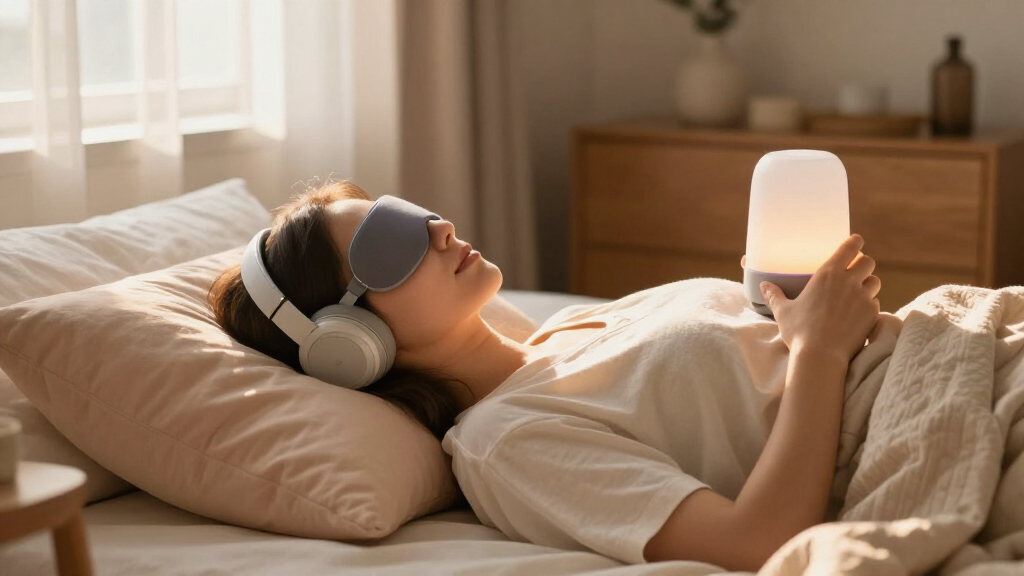
How We Picked
I evaluated these 14 devices against four buyer-relevant criteria. Relaxation effectiveness came first: does the device actually address a known mechanism of restlessness — pacing breathing, calming the nervous system through gentle pulses, masking disruptive noise, or supporting melatonin production — rather than just being a gadget with sleep branding? Usability came second, because a sleep aid that requires fiddling with settings at bedtime defeats its own purpose; devices with intuitive one-or-two-button operation ranked higher than feature-heavy units.
Build quality and practicality formed the third lens: charging standard (USB-C beats micro-USB and disposable batteries), auto-shutoff timers, portability for travel, and whether claims about durability held up across the price spectrum. Finally, value for money determined the ranking order within each type — several sub-$30 handhelds matched or beat units costing twice as much, while a few expensive devices justified their price only for specific sleep profiles. The result is a ranked lineup ordered by how well each device serves its ideal buyer, not by price or popularity.
Factors to Consider When Choosing Sleep Aid Devices For Relaxation
Before picking a specific device, it helps to understand what actually keeps you up — because each category of sleep aid addresses a different link in the relaxation chain, and buying the wrong type is the most common mistake in this category.Match the Device Type to Your Sleep Problem
The single biggest mistake buyers make is grabbing whatever device is trending without diagnosing their own restlessness first. Microcurrent handhelds target physical tension and a racing nervous system; they suit people whose bodies feel wound up even when their minds are calm. Guided breathing lights work best for mental overactivity — the runaway thoughts that start the moment your head hits the pillow — because paced breathing is a proven way to shift the body toward rest. Sound machines solve environmental problems: snoring partners, street noise, or a house that’s too quiet. If you can’t name your main disruptor, start with a cheap breathing light before investing in anything premium.
Active Versus Passive: The Commitment Tradeoff
Buyers often overlook that some devices require nightly participation while others run on their own. Handheld pulse devices and breathing lights demand 8–20 minutes of active use, which builds a healthy wind-down ritual but fails completely if you’re inconsistent. Sound machines and red light lamps work passively in the background, making them better for people with unpredictable schedules or low willpower at bedtime. The honest tradeoff: active devices tend to produce longer-lasting habit change, while passive ones offer reliable results with zero effort. Couples should also consider whether a passive device’s light or sound will bother a partner — a breathing light pulsing on the ceiling affects both people in the room.
Charging, Timers, and Everyday Practicality
The details that decide whether a device gets used after week two are mundane but real. USB-C charging is now standard on better handhelds, and anything still using disposable batteries or proprietary cables adds friction that kills habits. Auto-shutoff timers matter more than they seem: a device that runs all night wastes charge and can disrupt sleep later in the night, while a 20-minute timer matches the length of a typical wind-down. Portability is worth weighing if you travel — pocket-size pulse devices travel easily, while plug-in red light panels and sound machines mostly stay home. Check whether the brightness and intensity settings actually adjust low enough for nighttime use; several budget units only dim to a level that’s still too bright for a dark bedroom.
Where Price Actually Buys Quality
This category spans roughly $15 to $150, and the value curve is uneven. Between $20 and $40, handheld microcurrent devices are largely similar clones with different branding, so paying more in that band rarely buys better results. Genuine quality jumps appear at the premium end — red light therapy with a true 630nm wavelength, or guided-light devices with proper pacing programs — where the extra cost reflects real engineering. A reasonable rule: spend under $40 to experiment with a mechanism you haven’t tried, and only invest $100+ once you know that mechanism works for you. Avoid the mid-range trap of $60–80 combo devices that split their budget across multiple mediocre features.
Safety and Realistic Expectations
Most of these devices are low-risk, but a few points deserve care. Microcurrent devices marketed for adults and kids should be checked for intensity levels appropriate to the user — and anyone with a pacemaker or heart condition should avoid pulse devices entirely, checking with a doctor first. Red light devices should be certified for eye safety and never stared at directly. Perhaps more importantly, calibrate expectations: none of these products treat clinical insomnia, and any device claiming to ‘cure’ sleep problems is overpromising. They are relaxation aids that improve your wind-down, which for many people is enough — but persistent insomnia lasting weeks deserves a conversation with a healthcare provider, not a taller stack of gadgets.
Frequently Asked Questions
Is a handheld microcurrent device or a guided breathing light better for falling asleep faster?
It depends on whether your barrier is physical or mental. Microcurrent devices like the Glowco CalmCarry and Gen2 work through gentle pulses that calm a tense, wired-up nervous system — ideal if your body feels keyed up even when your mind is quiet. Guided breathing lights like the Dodow slow your breathing rate from around 11 breaths per minute down to 6, which triggers a natural relaxation response — better if racing thoughts are what keep you up. Many people actually respond to both mechanisms, so a reasonable approach is starting with the cheaper option (usually the breathing light) and adding the other only if results plateau after a few weeks.
Are cheap sleep aid devices under $25 worth buying, or will I just replace them?
The under-$25 segment is a mixed bag with a clear pattern: simple passive devices hold up fine, while feature-loaded cheap devices usually disappoint. A basic sound machine or simple breathing light at that price can serve you well for years because there’s little to break or get wrong. The budget handheld pulse devices are more of a gamble — many are clones with inconsistent intensity output and short battery life, though a few, like the Kuuleyn, punch above their price. My practical advice: at this price, buy from a retailer with easy returns, test the device for two weeks, and treat anything that feels flimsy on arrival as a return rather than something to live with.
Can these devices help with anxiety-related sleep problems, or only general insomnia?
Anxiety-driven sleeplessness is actually where several of these devices perform best, because they work through calming mechanisms rather than sedation. The Mindfulness Guided Breathing Light and the Handheld Relaxation Tool were both designed with anxiety relief in mind, using paced breathing and gentle pulse stimulation to interrupt the physical stress response before bed. That said, there’s an honest limit: these tools help with situational, evening-level anxiety — the kind that spikes when you lie down — but they are not substitutes for treating an anxiety disorder. If anxious thoughts regularly keep you awake past midnight or wake you during the night, pair a device with proper anxiety support from a professional rather than expecting the gadget to carry the full load.
Do sleep aid devices work for kids, and which are safe for children?
Some do, and the type matters more than the marketing. Sound machines with night lights — like the Soother with its 30 sounds and 12 colors — are the safest and most effective choice for young children, since they’re entirely passive and create a soothing bedtime environment. The Glowco CalmCarry and Gen2 are explicitly rated for kids, but for pulse devices I’d still start at the gentlest intensity level and check with a pediatrician for younger children. Guided breathing lights can genuinely help school-age kids who struggle to settle, turning bedtime into a game of following the light rather than a battle. What to avoid: red light therapy devices and anything requiring precise positioning aren’t designed with children’s eye safety in mind.
How long should I use a sleep aid device before deciding it doesn’t work?
Give any device a fair trial of two to three weeks of consistent nightly use before judging it, because most of these mechanisms work through habit formation rather than instant effects. Guided breathing lights typically show results within the first week — slower sleep onset is often noticeable quickly — while microcurrent devices and red light therapy can take longer as their effects are cumulative. Track something simple, like how long it takes you to fall asleep, rather than relying on morning impressions, which are unreliable. If you’ve used a device consistently for three weeks with no change in that metric, the mechanism probably doesn’t match your sleep problem, and switching device types will serve you better than switching brands within the same type.
Conclusion
After comparing all 14 devices, the right pick comes down to matching the mechanism to your sleep profile. Best overall goes to the Dodow Sleep Aid Device, because guided breathing is proven, side-effect-free, and works for the widest range of people. Best value is the Soother Sound Machine, which packs 30 sounds and a night light into a family-friendly price — though it only earns that title if noise is your disruptor. Best premium belongs to the Helight Red Light Therapy Device, a genuine investment that pays off specifically for people whose sleep is disrupted by evening screen exposure. Best for beginners is the Sharper Image Fast Asleep, an accessible, low-commitment breathing light that lets you test the mechanism cheaply. For specific needs: the Glowco CalmCarry suits travelers and anyone with tension-based restlessness, the Gen2 is the pick for shared use between adults and kids, and the Hand Warmer combo device fits anyone who wants a winter-friendly two-in-one despite its compromises. Whatever you choose, buy from a retailer with easy returns, commit to a three-week trial, and remember that the best device is the one whose mechanism matches why you’re actually awake.
Halloween Picks
halloween
As an affiliate, we earn on qualifying purchases.