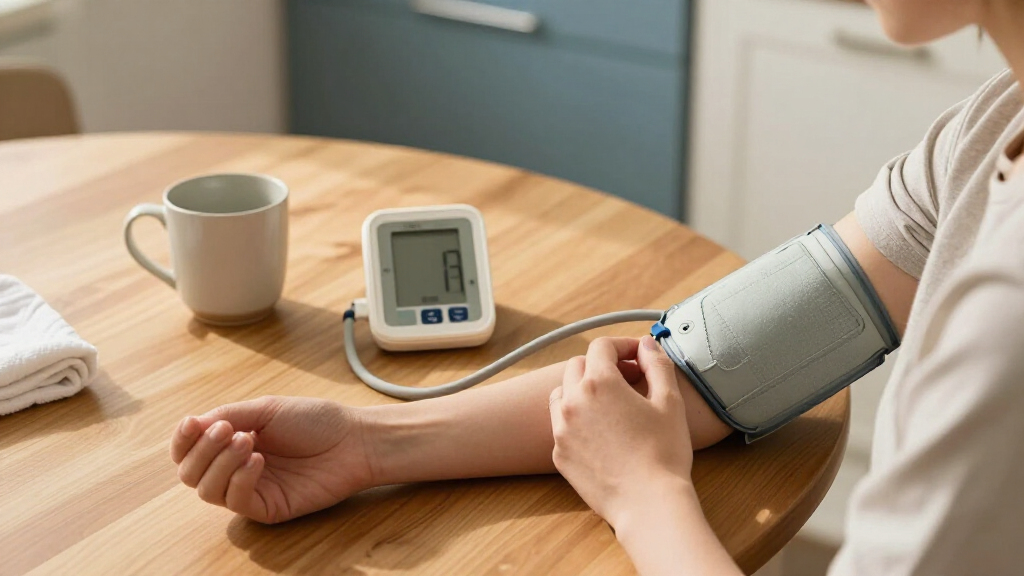

For most home users, I’d start with the OMRON Platinum for its feature-rich upper-arm design; the iHealth Track is a strong alternative if you want a wide-range cuff and app connection, while the OMRON Bronze suits buyers who prefer a simpler setup. The biggest tradeoffs are between connected features and straightforward operation, and between standard cuffs and models offering broader fit options. Wrist monitors can be easier to pack, but they require careful positioning during a reading. I compare all 15 options by fit, usability, features, and practical limitations below. Read on for the full breakdown and guidance on choosing a monitor that fits your home routine.

Get health and wellness essentials delivered free with Prime
- Fast, free delivery on millions of items
- Prime Video, Amazon Music and more included
- Member-only deals all year
Key Takeaways
- OMRON Platinum leads this lineup for buyers who want a feature-rich upper-arm monitor, while the simpler OMRON Bronze is a better fit for a basic routine.
- The iHealth Track stands out for its wide-range cuff and app connection; choose it when recording readings digitally matters more than keeping the setup self-contained.
- The Invaxe pairs a 4.5-inch backlit screen with an adjustable 9–17-inch cuff, making display visibility and cuff range its defining strengths.
- Voice prompts on the Paramed offer a different kind of accessibility from app-based guidance, though buyers should decide whether spoken feedback suits their household.
- The Oklar wrist monitor is the compact choice, while the upper-arm models across the roundup are better suited to readers prioritizing a familiar arm-cuff format.
| Invaxe Automatic Upper Arm Blood Pressure Monitor with 4.5″ Backlit Screen and Adjustable 9-17″ Cuff |  | Best for Easy Reading | Display: 4.5-inch backlit LCD | Memory: 2 users, 199 readings each | Cuff: Fits arm circumferences from 9 to 17 inches | VIEW LATEST PRICE | See Our Full Breakdown |
| Blood Pressure Monitor with Adjustable Arm Cuff and Storage Bag |  | Best for Straightforward Shared Use | Memory: 2 users, 120 readings each | Cuff: Fits arm circumferences from 8.7 to 16.5 inches | Power: Type-C cable or 3 AA batteries | VIEW LATEST PRICE | See Our Full Breakdown |
| Sinocare Upper Arm Blood Pressure Monitor with Adjustable Cuff |  | Best for Guided Readings | Display: 3.6 inches | Memory: 2 users, up to 99 readings per user | Cuff: Fits arm circumferences from 8.6 to 16.5 inches | VIEW LATEST PRICE | See Our Full Breakdown |
| OMRON Platinum Blood Pressure Monitor with Upper Arm Cuff |  | Best for Connected Heart-Rhythm Tracking | Model: OMRON Platinum | Cuff: Wide-range D-ring cuff, fits arms 9 to 17 inches | Memory: 2 users, 100 readings per user | VIEW LATEST PRICE | See Our Full Breakdown |
| OMRON Iron Upper Arm Blood Pressure Monitor |  | Best for Simple One-Touch Checks | Type: Upper arm blood pressure monitor | Cuff: Wide-range D-ring cuff, fits arms 9 to 17 inches | Operation: One-touch | VIEW LATEST PRICE | See Our Full Breakdown |
| Paramed Automatic Upper Arm Blood Pressure Monitor with Large LCD and Voice Broadcast |  | Best for Low-Vision Users | Cuff Size: 8.7 – 16.5 inches | Memory Capacity: 120 readings | User Profiles: 2 | VIEW LATEST PRICE | See Our Full Breakdown |
| iHealth Neo Wireless Blood Pressure Monitor |  | Best Portable Smart Pick | Type: Upper Arm Blood Pressure Monitor | Connectivity: Bluetooth 4.0 | Battery: 950mAh Rechargeable Lithium | VIEW LATEST PRICE | See Our Full Breakdown |
| Oklar Upper Arm Blood Pressure Monitor for Home Use |  | Best Budget Arm Monitor | Measurement type: Upper arm blood pressure | Operation: One-button | Display: Backlit LED | VIEW LATEST PRICE | See Our Full Breakdown |
| OMRON Silver Upper Arm Blood Pressure Monitor |  | Best for Heart Health Monitoring | Cuff fit: 9–17 in arms | On-device storage: Up to 30 readings | Connectivity: Bluetooth | VIEW LATEST PRICE | See Our Full Breakdown |
| Oklar Rechargeable Wrist Blood Pressure Monitor |  | Best Compact Wrist Option | Measurement time: About 35 seconds | Memory: Up to 240 readings for two users | Display: Large backlit LED | VIEW LATEST PRICE | See Our Full Breakdown |
| Blood Pressure Monitor for Home Use, Upper Arm, Standard & XL Cuffs |  | Best for Larger Arms | Cuff Sizes: Standard (8.7–16.5 in), XL (12.6–20.5 in) | User Profiles: 3 (A, B, C) | Memory Capacity: 199 readings per user | VIEW LATEST PRICE | See Our Full Breakdown |
| Alcedo Blood Pressure Monitor for Home Use, Upper Arm Cuff BP Machine |  | Best for Low-Vision Users | Measurement type: Automatic upper arm | Display: LCD with clear number readout | Voice Broadcast: Live reading broadcast with adjustable volume | VIEW LATEST PRICE | See Our Full Breakdown |
| OMRON Bronze Upper Arm Blood Pressure Monitor |  | Best Brand Trust | Measurement type: Upper-arm blood pressure | Memory: Up to 14 readings on the monitor | Connectivity: Bluetooth | VIEW LATEST PRICE | See Our Full Breakdown |
| AILE Upper Arm Blood Pressure Monitor |  | Best Budget Simplicity | Measurement type: Automatic upper arm | Cuff fit: 8.7–16.5 in (22–42 cm) | Memory: 2 users, 99 readings per user | VIEW LATEST PRICE | See Our Full Breakdown |
| iHealth Track Smart Upper Arm Blood Pressure Monitor with Wide-Range Cuff |  | Best Smart Display | Display: Large, multi-color backlit display | Operation: Two-button controls | On-device storage: Up to 99 readings | VIEW LATEST PRICE | See Our Full Breakdown |
| blood pressure monitors for home | Display | Power | Memory |
|---|---|---|---|
| Invaxe Automatic Upper Arm Blo | 4.5-inch backlit LCD | USB or 4 AAA batteries | 2 users, 199 readings each |
| Blood Pressure Monitor with Ad | Large digital display | Type-C cable or 3 AA batteries | 2 users, 120 readings each |
| Sinocare Upper Arm Blood Press | 3.6 inches | 4 AAA batteries or Type-C charging port | 2 users, up to 99 readings per user |
| OMRON Platinum Blood Pressure | — | AC adapter or 4 AA batteries | 2 users, 100 readings per user |
| OMRON Iron Upper Arm Blood Pre | — | — | Capacity not specified |
| Paramed Automatic Upper Arm Bl | Large LCD | — | — |
| iHealth Neo Wireless Blood Pre | — | — | — |
| Oklar Upper Arm Blood Pressure | Backlit LED | 3 AA batteries or Type-C cable | Up to 240 readings total; 120 per user |
| OMRON Silver Upper Arm Blood P | — | Four AA batteries | — |
| Oklar Rechargeable Wrist Blood | Large backlit LED | Built-in rechargeable battery; Type-C charging cable included | Up to 240 readings for two users |
| Blood Pressure Monitor for Hom | Large backlit LED with color indicator | — | — |
| Alcedo Blood Pressure Monitor | LCD with clear number readout | — | — |
| OMRON Bronze Upper Arm Blood P | — | Four AA batteries | Up to 14 readings on the monitor |
| AILE Upper Arm Blood Pressure | Large digital display | 4 AAA batteries or external power | 2 users, 99 readings per user |
| iHealth Track Smart Upper Arm | Large, multi-color backlit display | 4 AAA batteries (included) | — |
More Details on Our Top Picks
Invaxe Automatic Upper Arm Blood Pressure Monitor with 4.5″ Backlit Screen and Adjustable 9-17″ Cuff
The Invaxe makes the most sense for home users who want readings they can see at a glance: its 4.5-inch backlit display is larger than the Sinocare’s 3.6-inch screen, which can help in dim rooms or for anyone who finds small digits difficult to read. Its 199 readings per user also leave more history on the device than the OMRON Platinum’s 100 per user, while the three-reading average can give a steadier reference than focusing on a single measurement. A cuff fitting 9–17 inches and USB or battery power add flexibility around the house or on trips. The tradeoff is that it lacks the Platinum’s listed Bluetooth app syncing and AFib screening, and the USB power adapter is not included. Choose it for readability and on-device records; skip it if connected tracking is a priority.
Pros:- Large 4.5-inch backlit display with oversized numbers
- Stores 199 readings for each of two users
- Cuff fits arm circumferences from 9 to 17 inches
- USB or AAA battery power supports different home and travel setups
Cons:- USB power adapter is not included
- No listed Bluetooth or app integration
- Its feature set does not include the OMRON Platinum’s AFib screening
Best for: Two-person households that want a large, readable screen and substantial on-device reading history
Not ideal for: Buyers who want Bluetooth tracking or AFib screening, or who expect an AC adapter to be included
- Display:4.5-inch backlit LCD
- Memory:2 users, 199 readings each
- Cuff:Fits arm circumferences from 9 to 17 inches
- Power:USB or 4 AAA batteries
- Reading features:Average of last 3 readings; irregular heartbeat detection
- Other features:Auto-off
- Warranty:Lifetime
- Included accessory:Portable carrying case
Our verdict“Pick the Invaxe if screen readability and generous on-device history matter more than app syncing or AFib screening.”
Blood Pressure Monitor with Adjustable Arm Cuff and Storage Bag
This monitor suits two people who want separate measurement histories and a simple setup without depending on a phone app. The Type-C cable or 3 AA batteries give it a practical choice of power, and the included storage bag keeps the cuff and monitor together between readings. Its cuff fits 8.7–16.5 inches, a slightly broader lower-end fit than the Invaxe’s 9–17-inch range, though the Invaxe stores more readings per person: 199 versus this model’s 120. Compared with the Sinocare, the supplied cable and bag make the package more ready to use, but the product details do not list posture detection or irregular heartbeat alerts. It is a sensible pick for basic shared home tracking; buyers who want specific measurement alerts or app-connected records should look elsewhere.
Pros:- Separate memory for two users
- Stores up to 120 readings per user
- Type-C cable or 3 AA batteries provide flexible power
- Storage bag and Type-C cord are included
Cons:- Stores fewer readings per user than the Invaxe
- No listed Bluetooth connectivity or app integration
- Product details do not list posture detection or irregular heartbeat alerts
Best for: Couples or housemates who want separate reading records and a ready-to-store, cable-powered home monitor
Not ideal for: Users who want app syncing, posture guidance, or listed irregular heartbeat alerts
- Memory:2 users, 120 readings each
- Cuff:Fits arm circumferences from 8.7 to 16.5 inches
- Power:Type-C cable or 3 AA batteries
- Display:Large digital display
- Included items:Monitor, cuff, Type-C cord, manual, user guide, storage bag
Our verdict“Choose this model for uncomplicated two-person tracking with a cable and storage bag included.”
Sinocare Upper Arm Blood Pressure Monitor with Adjustable Cuff
The Sinocare is the more guidance-focused choice among the basic monitors here. Its posture detection can help flag positioning issues during home measurements, while color-coded indicators make the result easier to interpret at a glance. That gives it a different appeal from the Invaxe, which emphasizes a bigger screen and more memory, and the simpler OMRON Iron, whose listed features focus on one-touch readings and movement alerts. Sinocare stores 99 readings for each of two users and uses a 3.6-inch display, so it offers less screen space and history than the Invaxe. Its cuff covers 8.6–16.5 inches, and power can come from AAA batteries or Type-C. The cable is not included, so plan on supplying one if you prefer charging over batteries.
Pros:- Posture detection can flag positioning problems
- Color-coded blood pressure indicators aid quick interpretation
- Stores up to 99 readings for each of two users
- Cuff fits arm circumferences from 8.6 to 16.5 inches
Cons:- Type-C cable is not included
- 3.6-inch display is smaller than the Invaxe’s 4.5-inch screen
- Less memory per user than the Invaxe
Best for: Home users who want posture prompts and color-coded readings while keeping separate histories for two people
Not ideal for: Buyers who prioritize a very large display, extensive on-device history, or an included Type-C cable
- Display:3.6 inches
- Memory:2 users, up to 99 readings per user
- Cuff:Fits arm circumferences from 8.6 to 16.5 inches
- Power:4 AAA batteries or Type-C charging port
- Cuff pressure accuracy:±3 mmHg (±0.4 kPa)
- Pulse rate accuracy:±5%
- Features:One-button operation, posture detection, irregular heartbeat alerts, color-coded indicators
- Color:Black
Our verdict“Pick the Sinocare if posture guidance and at-a-glance indicators matter more than a larger screen or longer device history.”
OMRON Platinum Blood Pressure Monitor with Upper Arm Cuff
The OMRON Platinum is the most feature-rich option in this group for people who want home readings connected to a longer-term tracking routine. Its AFib detection screens for atrial fibrillation with each reading, while Bluetooth syncing adds app records and compatibility with Apple Health and Google Fit. The High Morning Average Indicator is aimed at users who want to watch morning readings over time; it is most useful when readings are taken consistently. Compared with the OMRON Iron, the Platinum adds app connectivity, two-person memory, and specialized indicators, while the Iron keeps to simpler one-touch operation. The tradeoff is that the Platinum stores 100 readings per user on the device, fewer than the Invaxe, and extended history depends on the app. It also asks for more setup and daily follow-through than a basic monitor.
Pros:- AFib detection with every reading
- Bluetooth syncs with OMRON Connect, Apple Health, and Google Fit
- High Morning Average Indicator supports routine morning tracking
- Includes a 9–17-inch D-ring cuff, AC adapter, case, and batteries
Cons:- On-device memory is limited to 100 readings per user
- Unlimited reading storage depends on the OMRON Connect app
- Morning trend features rely on taking readings consistently
Best for: People who want app-connected home tracking, AFib screening, and a dedicated indicator for morning averages
Not ideal for: Buyers who want a minimal setup, more than 100 readings per user stored on-device, or do not want to use an app
- Model:OMRON Platinum
- Cuff:Wide-range D-ring cuff, fits arms 9 to 17 inches
- Memory:2 users, 100 readings per user
- Connectivity:Bluetooth; OMRON Connect app; Apple Health and Google Fit compatibility
- Special features:AFib Detection, High Morning Average Indicator, TruRead Technology
- Power:AC adapter or 4 AA batteries
- Included items:Monitor, D-ring cuff, AC adapter, storage case, instruction manual, quick start guide, batteries
Our verdict“Choose the Platinum if you will use its app and want AFib screening and morning trend features in one home monitor.”
OMRON Iron Upper Arm Blood Pressure Monitor
The OMRON Iron is aimed at buyers who want a straightforward upper-arm monitor and do not need a phone-based record. Its one-touch operation keeps the routine simple, while body movement detection can alert users to a potential source of an unreliable reading. The wide-range 9–17-inch D-ring cuff also gives it a fit range comparable to the OMRON Platinum and Invaxe. Where the Platinum is built around AFib screening, Bluetooth, and two-user tracking, the Iron’s listed feature set is leaner: it detects irregular heartbeats but does not list app connectivity or memory capacity. That simplicity can suit occasional checks, but it gives households less support for reviewing readings over time. Choose it for uncomplicated operation; look to the Platinum or Invaxe if shared records are important.
Pros:- One-touch operation keeps measurements straightforward
- Body movement detection can flag a potential reading issue
- Irregular heartbeat detection is included
- Cuff fits arm circumferences from 9 to 17 inches
Cons:- No listed Bluetooth connectivity or app integration
- Memory capacity and multi-user support are not specified
- Fewer tracking features than the OMRON Platinum
Best for: Individuals who want quick, one-touch home readings with movement and irregular heartbeat alerts
Not ideal for: Two-person households or users who want app syncing and documented reading storage
- Type:Upper arm blood pressure monitor
- Cuff:Wide-range D-ring cuff, fits arms 9 to 17 inches
- Operation:One-touch
- Accuracy feature:Advanced Accuracy Technology
- Alerts:Irregular heartbeat detection and body movement detection
- Connectivity:Bluetooth or app integration not listed
- Memory:Capacity not specified
- Brand:OMRON
Our verdict“Pick the OMRON Iron for simple one-touch checks, but choose the Platinum if you need connected two-person tracking.”
Paramed Automatic Upper Arm Blood Pressure Monitor with Large LCD and Voice Broadcast
This option stands out for its oversized LCD and voice broadcast, which announce readings aloud — a genuine advantage for buyers with visual impairments that most rivals, like the iHealth Neo, don’t offer at all. The self-checking cuff (8.7–16.5 inches) flags incorrect placement before you measure, which matters more than most features because a poorly positioned cuff is the leading cause of inaccurate home readings. Compared with the Oklar home monitor, the Paramed trades a backlit screen for bigger digits and buttons, prioritizing legibility over nightstand convenience. The tradeoff is simplicity over smarts: there’s no app, no Bluetooth, and no trend export, so anyone who wants long-term digital tracking should look elsewhere.
Pros:- Voice broadcast announces results aloud for low-vision users
- Self-checking cuff catches improper placement before measuring
- Batteries and carrying bag included, so it works out of the box
- Wide 8.7–16.5 inch cuff range fits most arm sizes
Cons:- No Bluetooth or app connectivity for tracking trends over time
- Voice broadcast can be intrusive for users who don’t need it
Best for: Older adults or visually impaired users who need spoken readings and oversized controls rather than app connectivity
Not ideal for: Data-driven trackers who want to export trends and share reports with a doctor — there’s no app or Bluetooth here
- Cuff Size:8.7 – 16.5 inches
- Memory Capacity:120 readings
- User Profiles:2
- Display:Large LCD
- Features:Voice Broadcast, Self-checking cuff, Low Battery Indicator
- Included Accessories:Carrying bag, 4 AA batteries
Our verdict“This is the pick for buyers who need spoken readings and big buttons more than smart features.”
iHealth Neo Wireless Blood Pressure Monitor
Where most monitors in this roundup are plastic boxes that live on a nightstand, the ultra-thin iHealth Neo is built to travel — it slips into a bag the way the Paramed or Oklar arm monitors simply can’t. It’s clinically validated with no calibration required, which puts its accuracy credentials ahead of budget alternatives like the Oklar wrist model, and the MyVitals app exports data to CSV, XLS, or PDF for sharing with a doctor. The rechargeable battery lasts up to 130 measurements, beating the disposable-battery approach of the OMRON Silver. The real tradeoff: full functionality depends on a smartphone, and the 30–60 second measurement feels slower than the Oklar arm monitor’s sub-minute pace with instant on-device display.
Pros:- Clinically validated accuracy with no calibration required
- Ultra-thin, lightweight body is genuinely pocketable
- Rechargeable battery delivers up to 130 measurements per charge
- Exports data as CSV, XLS, or PDF for doctors
Cons:- Full data features require smartphone and app
- 30–60 second measurement feels slow compared with faster rivals
Best for: Frequent travelers and smartphone-comfortable users who want validated readings synced and exported digitally
Not ideal for: Anyone without a smartphone or unwilling to use an app — on-device data management is minimal
- Type:Upper Arm Blood Pressure Monitor
- Connectivity:Bluetooth 4.0
- Battery:950mAh Rechargeable Lithium
- Battery Life:Up to 130 measurements per charge
- Measurement Time:30 to 60 seconds
- App Compatibility:MyVitals App
- Data Export Formats:CSV, XLS, PDF
- Calibration:No calibration required
Our verdict“This model makes the most sense for connected users who value portability and digital records over standalone simplicity.”
Oklar Upper Arm Blood Pressure Monitor for Home Use
This is the straightforward value play: one-button operation, a backlit LED display, and 240 readings of two-user memory — double the on-device storage of the OMRON Silver, at a simpler feature set. The backlit screen is a genuine step up from the Paramed’s non-illuminated LCD for anyone measuring in a dim bedroom. Compared with the iHealth Neo, you lose app syncing and clinical validation, but you gain a standalone device a grandparent can operate without a phone. The compromises are honest ones: it’s not rechargeable, and the Type-C cable only powers the unit when batteries aren’t installed — an odd arrangement that means you’re effectively buying AA batteries forever. The cuff also caps at 15.7 inches, tighter than the Silver’s 17-inch range.
Pros:- Genuinely simple one-button operation for any skill level
- Backlit display with large, clear digits
- 240 total readings across two user profiles
- Runs on AA batteries or the included Type-C cable
Cons:- Not rechargeable despite having a Type-C port
- Cuff maxes out at 15.7 inches, smaller than several rivals
Best for: Budget-minded households wanting a simple two-user arm monitor with no app required
Not ideal for: Users with larger arms above 15.7 inches or anyone wanting rechargeable convenience
- Measurement type:Upper arm blood pressure
- Operation:One-button
- Display:Backlit LED
- Reading time:Within 1 minute
- Memory:Up to 240 readings total; 120 per user
- Users:2
- Power:3 AA batteries or Type-C cable
- Cuff range:8.7–15.7 in (22–40 cm)
Our verdict“A solid no-frills choice for two-user households that want basics done well without paying for smart features.”
OMRON Silver Upper Arm Blood Pressure Monitor
The Silver’s differentiator isn’t storage or screen size — it’s clinical-grade detection. Alongside blood pressure, it flags irregular heartbeats and hypertension indicators, turning a routine reading into an early-warning check that budget models like the Oklar arm monitor don’t attempt. OMRON’s brand reliability and the ComFit cuff (9–17 inches) give it the widest practical fit range in this batch, and Bluetooth syncing to the OMRON Connect app means trends and doctor-ready reports live in your pocket like the iHealth Neo. The obvious weak point is on-device memory capped at 30 readings — a fraction of the Oklar’s 240 — so if you don’t use the app, your history vanishes quickly. Compared with the iHealth Neo, it trades portability and export flexibility for detection features and a trusted name.
Pros:- Detects irregular heartbeats alongside blood pressure
- Hypertension indicator flags elevated readings instantly
- OMRON Connect app builds shareable trend reports
- Wide 9–17 inch ComFit cuff fits most arms
Cons:- Only 30 readings of on-device storage
- Full value depends on using the companion app
Best for: Users tracking cardiovascular risk who want irregular heartbeat and hypertension alerts plus app-based trend reports
Not ideal for: App-averse buyers — with only 30 stored readings on the device, skipping Bluetooth severely limits your history
- Cuff fit:9–17 in arms
- On-device storage:Up to 30 readings
- Connectivity:Bluetooth
- App:OMRON Connect
- Power:Four AA batteries
- Included accessories:ComFit cuff, storage case, instruction manual, quick start guide
Our verdict“The safest choice for buyers who want arrhythmia and hypertension alerts backed by a clinically established brand.”
Oklar Rechargeable Wrist Blood Pressure Monitor
For buyers who find arm cuffs painful or impractical — say, very large upper arms or arthritic shoulders — this wrist-worn monitor solves a real problem none of the arm models here address. It measures in about 35 seconds, carries 240 readings for two users, and unlike its sibling Oklar arm monitor, it’s genuinely rechargeable via Type-C. Voice broadcast and a backlit display round out an accessible package. The tradeoff is inherent to the format: wrist readings are more position-sensitive than upper arm measurements, so accuracy demands keeping the wrist at heart level — a discipline many users skip. Budget-conscious buyers should also note the charging adapter isn’t included. If accuracy is the priority over convenience, the OMRON Silver or iHealth Neo are safer bets.
Pros:- Wrist design suits users who find arm cuffs painful or impractical
- True rechargeable battery with Type-C charging
- 240 readings of two-user memory
- Voice broadcast plus large backlit display
Cons:- Wrist measurements are more sensitive to arm position than upper arm readings
- Charging adapter not included
Best for: Users who can’t tolerate arm cuffs or need a compact travel monitor and will follow positioning guidance
Not ideal for: Accuracy-first users managing a hypertension diagnosis — arm monitors like the OMRON Silver are more forgiving
- Measurement time:About 35 seconds
- Memory:Up to 240 readings for two users
- Display:Large backlit LED
- Power:Built-in rechargeable battery; Type-C charging cable included
- Charging adapter:Not included
- Wrist cuff range:4.92 to 8.46 inches
- Automatic shutoff:After 60 seconds of inactivity
Our verdict“A reasonable pick when arm cuffs don’t work for you, provided you’re disciplined about wrist positioning.”
Blood Pressure Monitor for Home Use, Upper Arm, Standard & XL Cuffs
Most monitors in this roundup cap out at a 16.5-inch arm circumference, which leaves bigger-arm buyers stranded or forced to buy a second cuff. This option solves that by shipping with both a standard and an XL cuff (up to 20.5 inches), something no other pick here does out of the box. The large backlit display with color-coded indicators makes interpretation straightforward for seniors who just want a quick visual cue, and three user profiles with 199 memory slots each give it more onboard storage than the AILE or iHealth Track. The tradeoff: unlike a rechargeable model, the USB-C cable is power-only, so you’ll still be feeding it AAA batteries long term.
Pros:- Includes both standard (8.7–16.5 in) and XL (12.6–20.5 in) cuffs in the box
- Three user profiles with 199 memory readings each — more than most rivals
- Large backlit LED display with color-coded indicator for quick interpretation
- Clinically tested to ISO 81060-2 accuracy standards
Cons:- USB-C provides power only and does not recharge the batteries
- Color indicator is a reference tool and can’t replace professional medical interpretation
Best for: Households with larger arm sizes or mixed arm circumferences who don’t want to buy a separate XL cuff
Not ideal for: Buyers who want rechargeable convenience — the USB-C connection powers the device but never charges it
- Cuff Sizes:Standard (8.7–16.5 in), XL (12.6–20.5 in)
- User Profiles:3 (A, B, C)
- Memory Capacity:199 readings per user
- Display:Large backlit LED with color indicator
- Power Source:4 AAA batteries (included) or USB-C cable (included)
- Certification:ISO 81060-2
- Included Accessories:Standard cuff, XL cuff, storage bag, batteries, USB-C cable, quick guide, user manual
Our verdict“If a standard cuff has ever felt too tight or read inconsistently, this dual-cuff bundle is the most practical choice in the lineup.”
Alcedo Blood Pressure Monitor for Home Use, Upper Arm Cuff BP Machine
The standout feature here is the live voice broadcast of readings with adjustable volume — a genuine differentiator in a lineup where the OMRON Bronze and AILE rely entirely on visual displays. For anyone with low vision or a family member who struggles to read small screens, hearing the numbers spoken aloud removes the main point of friction in home monitoring. It also automatically averages three measurements for a more reliable result, and its cuff-position and movement-detection symbols help catch the errors that skew readings. Compared with the Paramed voice-broadcast model, the Alcedo pairs that audio output with dual-user memory (120 readings each), though its LCD lacks the backlight of the B0FGCHWY6T pick. FSA/HSA eligibility is a nice practical bonus.
Pros:- Voice broadcast of readings with adjustable volume for low-vision users
- Automatically averages 3 values for more precise measurement
- Cuff-position and movement-detection alerts help prevent inaccurate readings
- Two-user mode with 120 stored readings each; FSA/HSA eligible
Cons:- No Bluetooth or app connectivity for long-term trend tracking
- Display lacks a backlight, making it harder to read in dim rooms
Best for: Seniors or low-vision users who need spoken readings rather than a screen they can’t read
Not ideal for: App-based trackers — there’s no Bluetooth or cloud syncing, so all data stays on the device
- Measurement type:Automatic upper arm
- Display:LCD with clear number readout
- Voice Broadcast:Live reading broadcast with adjustable volume
- User Profiles:2
- Memory Capacity:120 readings per user
- Cuff Fit:8.7–16.5 in arm circumference
- Averaging:Automatic 3-reading average
- Payment Eligibility:FSA/HSA eligible
Our verdict“The strongest choice in this group when hearing your numbers matters more than syncing them.”
OMRON Bronze Upper Arm Blood Pressure Monitor
OMRON is the brand most doctors actually recognize, and the Bronze brings that clinical credibility to a budget-friendly tier. Compared with the OMRON Platinum, you give up the high-contrast display and expansive memory, but you keep the essentials: Advanced Accuracy Technology, irregular heartbeat detection, and a hypertension indicator that flags elevated readings. Where it beats the unbranded picks like the AILE is Bluetooth syncing to the OMRON Connect app, which also feeds Apple Health and Google Fit — so your data survives even though the device itself only holds 14 readings. That tiny onboard memory is the real tradeoff: without your phone, you lose history fast. Still, for buyers who want a name their physician trusts at a lower price point, this is the entry point.
Pros:- OMRON brand credibility and Advanced Accuracy Technology
- Bluetooth syncing with OMRON Connect, Apple Health, and Google Fit
- Irregular heartbeat detection and hypertension indicator alerts
- Wide-range D-ring cuff fits arms from 9 to 17 inches
Cons:- On-device memory limited to just 14 readings
- No AC adapter option — battery power only
Best for: Buyers who want a doctor-recognized brand with app tracking at the brand’s most affordable tier
Not ideal for: Anyone who won’t use the companion app — 14 on-device readings vanish quickly
- Measurement type:Upper-arm blood pressure
- Memory:Up to 14 readings on the monitor
- Connectivity:Bluetooth
- App compatibility:OMRON Connect, Apple Health, Google Fit
- Cuff size:Fits arms 9–17 inches
- Power:Four AA batteries
- Features:Advanced Accuracy Technology, irregular heartbeat detection, hypertension indicator
- Included:Monitor, wide-range D-ring cuff, storage case, manual, quick start guide, batteries
Our verdict“The cheapest way into OMRON’s ecosystem without losing app-based tracking or accuracy alerts.”
AILE Upper Arm Blood Pressure Monitor
This is the no-frills pick for buyers who just want a number and don’t care about apps or voice. The AILE does one thing well: one-touch automatic operation with a large digital display showing systolic, diastolic, and pulse clearly. Its dual-user memory with 99 dated readings each puts it well ahead of the OMRON Bronze’s 14-reading limit — without requiring a smartphone to preserve history. Compared with the Alcedo, you lose the voice broadcast and three-reading averaging, but gain a lighter, simpler device at a lower cost. The tradeoffs are predictably basic: 4 AAA batteries that need replacing, no backlight, and a cuff capped at 16.5 inches, so larger arms should step up to the dual-cuff B0FGCHWY6T instead. For straightforward daily checks, it gets the job done.
Pros:- One-touch automatic operation with no learning curve
- Large digital display showing systolic, diastolic, and pulse
- Two-user memory with 99 dated readings each — far more than the OMRON Bronze holds
- Runs on batteries or external power
Cons:- Requires 4 AAA batteries that need periodic replacement
- Cuff limited to 8.7–16.5 inch arms
- No backlight or connectivity features
Best for: Budget-minded buyers who want simple, app-free readings with basic two-person memory
Not ideal for: Larger arms or data-hungry users — the 16.5-inch cuff cap and dated-only storage limit long-term use
- Measurement type:Automatic upper arm
- Cuff fit:8.7–16.5 in (22–42 cm)
- Memory:2 users, 99 readings per user
- Display:Large digital display
- Power:4 AAA batteries or external power
- Weight:13.4 oz
- Dimensions:5.5 × 3.8 × 2.7 in
Our verdict“A dependable bare-basics monitor for one or two people who just want their numbers without extras.”
iHealth Track Smart Upper Arm Blood Pressure Monitor with Wide-Range Cuff
The iHealth Track splits the difference between the OMRON Bronze’s app dependence and the AILE’s total lack of connectivity. Its large multi-color backlit display color-codes readings at a glance, while optional Bluetooth syncing to iOS and Android apps adds trend charts — but only when you want them, since 99 readings live on the device itself. Two-button operation keeps it approachable, and heart rhythm disturbance alerts mirror the OMRON’s irregular heartbeat detection. Meeting the ESH 2010 performance standard gives it credible accuracy credentials alongside its smart features. The catches: app syncing demands a reasonably modern smartphone and Bluetooth 4.0+, and the manual deserves a careful read before first use — sloppy technique is the most common cause of confusing readings on any monitor.
Pros:- Large, color-coded backlit display for at-a-glance interpretation
- 99 on-device readings plus optional Bluetooth app syncing
- Automatic alerts for detected heart rhythm disturbances
- Meets ESH 2010 performance standards with a 12-month warranty
Cons:- App features require a compatible smartphone and Bluetooth
- Manual must be read carefully before first use for accurate results
Best for: Buyers who want a readable color display now and optional app tracking later
Not ideal for: Anyone without a compatible smartphone who’d be paying for connectivity they can’t use
- Display:Large, multi-color backlit display
- Operation:Two-button controls
- On-device storage:Up to 99 readings
- Connectivity:Bluetooth 4.0 or later
- App compatibility:iOS 12.0 or later; Android 9.0 or later
- Cuff fit:8.7–16.5 in (22–42 cm)
- Power:4 AAA batteries (included)
- Standards:Meets ESH 2010 performance standards
- Warranty:12 months
Our verdict“The best balance of standalone usability and smart features for buyers who aren’t ready to go fully app-dependent.”
How We Picked
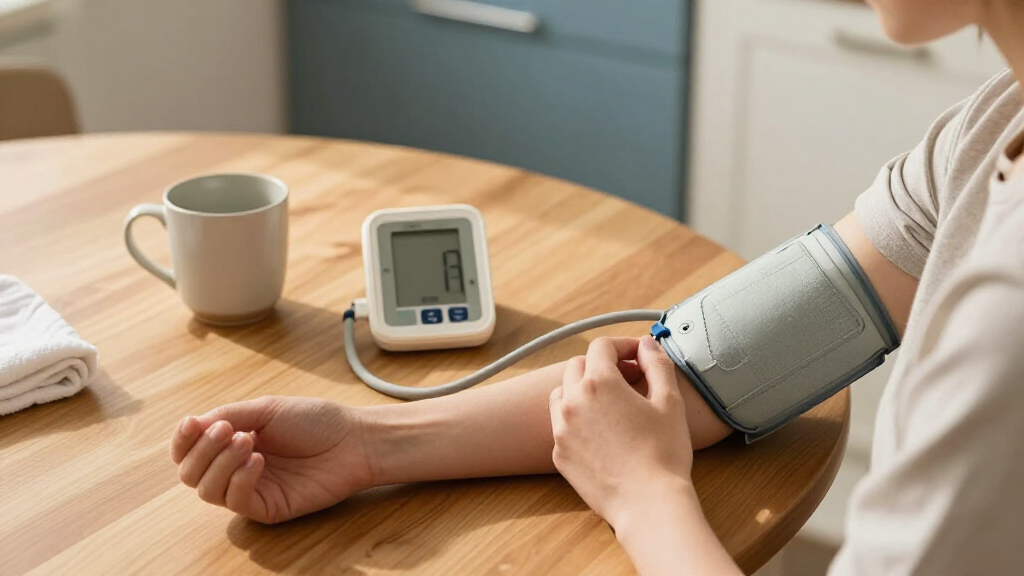
I ranked these monitors around the needs of a home routine: cuff fit, readable results, manageable setup, and useful ways to store or review readings. Upper-arm models form the core of the list because they suit buyers looking for a conventional home cuff, while the wrist option earns a distinct place for portability. I gave extra weight to details that can change day-to-day use, such as the Invaxe’s large backlit display, the Paramed’s voice broadcast, and the iHealth models’ connected features.
Ranking also reflects tradeoffs rather than feature counts alone. A wide-range cuff can serve more users, but buyers still need to verify their arm measurement against the stated fit range. App features add a digital record, while a straightforward monitor may be easier to use without a phone. Product names and provided descriptions do not establish clinical validation, so I recommend checking for recognized validation and discussing home readings with a clinician when accuracy requirements matter.
Factors to Consider When Choosing Blood Pressure Monitors For Home
I’d choose a home monitor by starting with fit and routine, then weighing convenience features. These broader checks can prevent a device from becoming difficult to use or producing readings that are hard to interpret.
Measure Your Arm Before Choosing a Cuff
Measure around the upper arm where the cuff will sit, following the monitor maker’s instructions, and compare that number with the cuff’s stated range. A cuff that is too small or too large can undermine the value of a careful reading. A wide-range cuff, such as the one listed for the iHealth Track, may accommodate more users, but the exact fit still matters. If several people in a household will share a monitor, check that the cuff range works for each person rather than assuming one size fits everyone. Some listings offer standard and XL cuffs, which may be useful when users have different arm sizes. When fit is uncertain, ask a clinician or pharmacist to help check the cuff placement and size.
Decide Whether You Need Upper-Arm or Wrist Measurement
Upper-arm monitors are the familiar choice for many home routines, while a wrist model can be easier to carry or use when an upper-arm cuff is uncomfortable. Wrist readings depend heavily on keeping the device at heart level, so posture and positioning can make the routine less forgiving. That makes a compact wrist monitor a practical option for specific mobility or travel needs, but it may not be the simplest first choice for everyday use. Before buying, check the guidance from your clinician about which type is suitable for you. If you choose wrist measurement, rehearse the recommended posture and repeat it consistently. Convenience counts only if you can use the monitor in the way its instructions require.
Check Validation and Measurement Guidance
A clear display and a long feature list do not establish that a monitor has been independently validated for accuracy. Look for validation information from a recognized source and confirm that the exact model is covered. Ask your clinician whether the device is appropriate for your needs, especially if readings will inform treatment decisions. At an appointment, bring the monitor and compare its readings with the clinic’s equipment under guidance. This check can uncover cuff-fit or technique problems that a product comparison cannot resolve. Keep using the measurement method and schedule recommended by your care team.
Match the Interface to the Person Taking Readings
Think about who will use the monitor and what makes the process manageable for them. A large backlit display, as on the Invaxe, may help someone who finds small screens difficult to read, while the Paramed adds spoken results for users who prefer audio feedback. Extra prompts can help some people but may feel distracting to others. If multiple people share a device, check how it handles separate user records and whether results are easy to tell apart. A simple interface can be more useful than advanced functions that no one in the household wants to operate. Consider the full routine, including cuff placement, starting a reading, and finding the result afterward.
Choose How You Want to Track Readings
Decide whether you want readings stored on the monitor, written in a log, or synced to a phone. An app-connected option such as the iHealth Track can make digital records easier to share, but it also adds phone setup and account or compatibility questions. Before relying on an app, check which phone systems it supports and whether its record export suits your clinician’s workflow. A paper log may be a better match for people who want a low-tech routine or do not carry a smartphone. Whichever method you choose, record readings at the times your care team recommends and note relevant context when asked. The best tracking approach is one you can keep using consistently.
Plan for Power, Storage, and Long-Term Use
Check how the monitor is powered and what upkeep it needs before settling on a model. Rechargeable devices reduce the need to keep spare batteries on hand, while battery-powered units can be easier to use during a power outage or away from a charging cable. A storage bag helps keep the cuff and monitor together, but it does not replace checking the cuff and tubing for wear. Look at the warranty, support information, and replacement-cuff availability for the specific model. If the monitor will stay in one room, screen clarity and accessible storage may matter more than portability. For travel, size and charging needs become more influential.
Frequently Asked Questions
Should I choose an app-connected monitor or one that works on its own?
An app-connected monitor can make it easier to keep and share a digital history, which may help if your clinician asks you to bring a series of readings. It also means checking phone compatibility and learning an extra setup step. A standalone device may suit someone who wants to take a reading without opening an app or managing a phone connection. You can also keep readings in a paper log if your monitor does not store them in the way you need. Choose the route that fits the record-keeping method you will maintain.
Is a wide-range cuff enough if more than one person will use the monitor?
Not by itself: each user should measure their arm and confirm it falls within the cuff’s stated range. A wide-range cuff, such as the one listed with the iHealth Track, may suit more users, but it does not guarantee a correct fit for everyone. Check whether the monitor supports separate user records so readings do not get mixed together. Shared use also means each person needs to follow the same positioning and measurement instructions. If a user’s arm measurement falls outside the available range, ask a clinician about an appropriate alternative.
When does a wrist monitor make more sense than an upper-arm model?
A wrist monitor can be useful when portability is a priority or an upper-arm cuff is difficult for someone to put on. Its readings depend on correct wrist placement and posture, which can be harder to repeat consistently. Ask a clinician whether wrist measurement suits your situation before choosing one for routine tracking. If you use it, follow the manufacturer’s positioning steps and keep the wrist at the advised height. For a shared household device, an upper-arm model may be easier to use across different routines if its cuff fits each person.
How can I tell whether a monitor’s readings are suitable for my care plan?
First, check whether the exact model has validation listed by a recognized source; a feature-rich display alone does not answer that question. Ask your clinician whether the monitor and cuff type are appropriate for you. Bring the device to an appointment and ask to compare its readings with the clinic’s equipment while a professional checks your technique. Follow the schedule and instructions from your care team when taking readings at home. Do not change medication based on a home reading without guidance from the clinician responsible for your care.
What should I prioritize if I have trouble reading a small screen?
Look for a large, high-contrast screen and check whether it is backlit if readings may be taken in dim rooms. The Invaxe lists a 4.5-inch backlit display, while the Paramed adds spoken results for buyers who find audio helpful. Decide whether spoken feedback works in your home, especially if readings are taken near other people. If possible, inspect the display in person or confirm the screen dimensions and controls from the product information. Also check whether the result is easy to find after the reading ends.
Conclusion
For the strongest all-around feature set in this lineup, I’d choose the OMRON Platinum as best overall, subject to checking validation and cuff fit for your needs. The Invaxe is my best value-style pick for readers who want a large backlit screen and adjustable cuff; the product details here do not establish its price, so compare current offers separately. For a premium connected routine, consider the iHealth Track, while the OMRON Bronze is the more approachable choice for someone who wants a straightforward upper-arm monitor. The Paramed makes the most sense when voice feedback is a priority, and the Oklar wrist monitor is the compact pick for portability when wrist use is appropriate. Whichever model you select, verify cuff fit and validation status, then follow your clinician’s instructions for taking and recording readings.
Halloween Picks
halloween
As an affiliate, we earn on qualifying purchases.