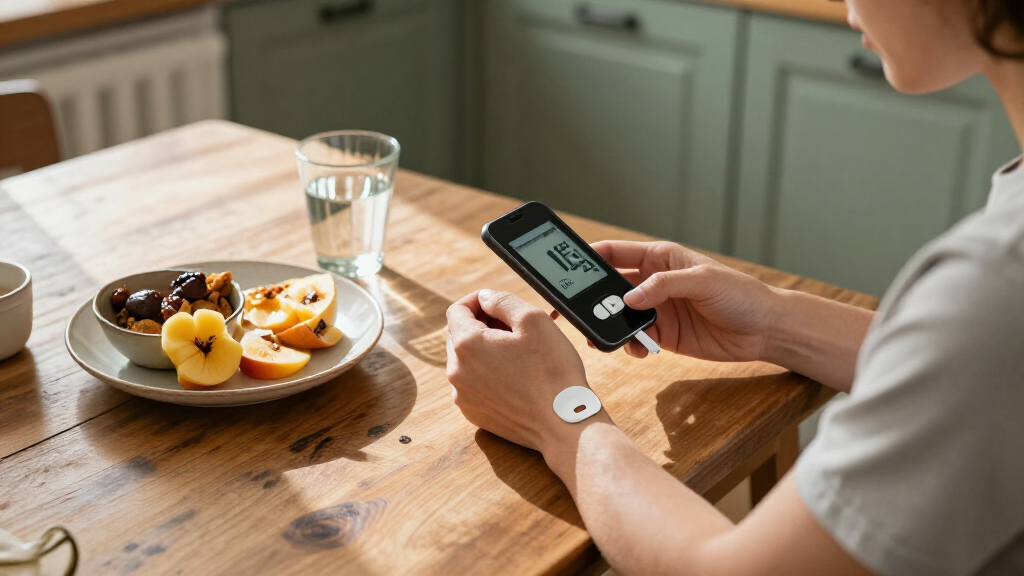

Choosing a continuous glucose monitor for diabetes starts with a safety check: these four products are not intended for people who use insulin, and some are described as tools for glucose awareness rather than diabetes treatment. For adults who fit the products’ stated use, Stelo’s two-sensor pack is my practical pick for longer stated wear and a larger supply, while the Lingo 2-Pack suits people who want app-led food and lifestyle feedback. The single Stelo sensor is a smaller commitment, but it offers less replacement runway than a two-pack. I rank these options by intended use, sensor duration, app compatibility, pack format, and how clearly each product’s limits are presented. The main tradeoff is straightforward: longer advertised wear and more sensors can reduce replacement interruptions, but neither makes a device appropriate for insulin-treated diabetes or a substitute for clinical monitoring advice.

Get health and wellness essentials delivered free with Prime
- Fast, free delivery on millions of items
- Prime Video, Amazon Music and more included
- Member-only deals all year
Key Takeaways
- Stelo 2-Pack offers two sensors rated for up to 15 days each, making it the strongest choice here for longer stated wear and fewer immediate reorders.
- Lingo 2-Pack is a better match for adults focused on food, activity, and glucose-pattern awareness, not diabetes diagnosis or insulin dosing.
- Stelo 1-Pack has the same stated 15-day sensor duration as the Stelo two-pack, but a single sensor leaves less room for early failure or a gap between replacements.
- Both Stelo and Lingo support iOS and Android according to the supplied product details; check the current app and phone requirements before buying.
- None of these four is presented as suitable for insulin users; people who need treatment-guiding glucose readings should ask their clinician about an appropriate prescribed CGM.
| Stelo Glucose Biosensor & App – 2-Pack (Up to 15 Days Each). iOS & Android |  | Best Overall for Non-Insulin Adults Seeking Longer Stated Wear | Wear time: Up to 15 days per sensor | Pack size: 2 biosensors | Phone compatibility: iOS and Android | VIEW LATEST PRICE | See Our Full Breakdown |
| Lingo Continuous Glucose Monitor (CGM) 2-Pack |  | Best for Food and Lifestyle Pattern Awareness | Monitoring duration: Up to 14 days per sensor | Pack size: 2 monitors | Phone compatibility: iOS and Android | VIEW LATEST PRICE | See Our Full Breakdown |
| Stelo 1 Pack Continuous Glucose Monitoring Sensor |  | Best Single-Sensor Option for Trying Stelo | Sensor duration: Up to 15 days | Pack size: 1 sensor | Brand: Stelo | VIEW LATEST PRICE | See Our Full Breakdown |
| Lingo Continuous Glucose Monitor (CGM), 24/7 Glucose Tracking |  | Best Single-Sensor Lingo Entry Point | Sensor lifespan: Up to 14 days | Pack format: 1 sensor | Phone compatibility: iOS and Android | VIEW LATEST PRICE | See Our Full Breakdown |
| continuous glucose monitors for diabete | Pack size | Phone compatibility | Water resistance | Age restriction |
|---|---|---|---|---|
| Stelo Glucose Biosensor & App | 2 biosensors | iOS and Android | — | — |
| Lingo Continuous Glucose Monit | 2 monitors | iOS and Android | Yes, according to the listing | 18+ |
| Stelo 1 Pack Continuous Glucos | 1 sensor | — | — | — |
| Lingo Continuous Glucose Monit | — | iOS and Android | Water-resistant | 18+ |
More Details on Our Top Picks
Stelo Glucose Biosensor & App – 2-Pack (Up to 15 Days Each). iOS & Android
I rank the Stelo 2-Pack first because its combination of two sensors and up to 15 days of wear per sensor gives eligible buyers the longest stated coverage in this group. The Stelo app is described as offering real-time information, insights, and personalized coaching, so it aims to do more than show a changing glucose value. For an adult who wants ongoing glucose awareness and fits the product’s stated non-insulin use, that pairing of data and guidance is a practical starting point.
Compared with the Stelo single-sensor listing, this pack gives you a second sensor ready for later use, which can reduce the chance of an immediate gap when the first one reaches its labeled duration. It also edges the Lingo options on stated sensor life: Stelo lists up to 15 days, versus up to 14 for Lingo. That is a modest difference, not a promise of a full extra day in practice. The product details warn that some Stelo sensors may not last the full 15 days, so I would not plan essential care around the maximum claim.
The main boundary is suitability. This device is described as not for people on insulin or dialysis, and its role should not be confused with a prescribed CGM used to guide treatment. Waterproof construction and support for iOS and Android broaden its everyday fit, but users still need to store and handle sensors within the listed temperature range. I would choose it over the Lingo two-pack when the extra stated wear day and coaching are more useful than Lingo’s lifestyle-focused framing; I would skip both brands if insulin treatment requires a different device.
Pros:- Includes two sensors rated for up to 15 days each.
- Works with iOS and Android devices.
- Waterproof design supports continuous wear during ordinary water exposure.
- App includes real-time data, insights, and personalized coaching.
Cons:- Not suitable for people on insulin or dialysis, per the supplied product information.
- Some sensors may not last the full 15 days.
- Requires careful handling and storage within its stated temperature range.
Best for: Adults 18 and older who do not use insulin or dialysis and want two sensors, app-based insights, and the longest stated wear time in this comparison.
Not ideal for: People who use insulin or dialysis, anyone needing a clinician-prescribed CGM for treatment decisions, and buyers who need each sensor to last its full labeled duration.
- Wear time:Up to 15 days per sensor
- Pack size:2 biosensors
- Phone compatibility:iOS and Android
- Water protection:Waterproof, according to the listing
- Intended use restriction:Not for people on insulin or dialysis, according to supplied details
- App features:Real-time data, insights, and personalized coaching
- Storage temperature:36°F to 86°F
Our verdict“For eligible non-insulin adults, I rank the Stelo 2-Pack first for its two-sensor format, app coaching, and longest stated wear, while its use restrictions remain decisive.”
Lingo Continuous Glucose Monitor (CGM) 2-Pack
The Lingo 2-Pack is my second pick and the clearest choice for adults who want glucose information framed around food and daily habits. Its app is described as helping users understand how meals and lifestyle affect glucose, which gives it a different emphasis from Stelo’s stated personalized coaching. Both can connect a sensor to a phone, but Lingo’s appeal is the behavior-feedback angle rather than a longer advertised wear window.
Each Lingo sensor is rated for up to 14 days, one day less than Stelo’s stated maximum. That gap may matter to someone trying to limit sensor changes, although real wear can be shorter for either brand. The two-pack supplies a second monitor, making it a more useful ongoing option than a single sensor when the buyer already knows the Lingo approach suits them. The sensor attaches to the back of the arm, is described as water-resistant, and avoids routine finger pricks for its continuous readings.
I rank it below Stelo because its stated wear time is shorter and the listing is explicit that Lingo is not for diagnosis or insulin use. That is not a minor caveat for someone shopping under a diabetes-care query: Lingo may help an eligible adult observe patterns, but it should not stand in for a prescribed management system or professional advice. Compared with the single Stelo sensor, Lingo gives you two devices and a stronger lifestyle-learning pitch; compared with the Stelo two-pack, it has a shorter rated duration. Its HSA/FSA eligibility may be useful for eligible purchasers, but buyers should confirm their own plan rules.
Pros:- Two sensors, each rated for up to 14 days.
- App supports tracking food and lifestyle patterns alongside glucose data.
- Back-of-arm sensor is described as painless to attach and water-resistant.
- Listed as compatible with iOS and Android and eligible for HSA/FSA use.
Cons:- Not intended to diagnose disease or for people using insulin.
- A sensor may last less than the stated maximum of 14 days.
- Its listed wear duration is shorter than Stelo’s up-to-15-day claim.
Best for: Adults 18 and older who are not using insulin and want two sensors plus app prompts for connecting glucose patterns with food and lifestyle.
Not ideal for: People using insulin, buyers seeking a diagnostic tool or treatment-guiding CGM, and anyone prioritizing the longest stated sensor duration.
- Monitoring duration:Up to 14 days per sensor
- Pack size:2 monitors
- Phone compatibility:iOS and Android
- Sensor placement:Back of the arm
- Water resistance:Yes, according to the listing
- Age restriction:18+
- Use restriction:Not for diagnosis or users on insulin, per supplied details
- Payment eligibility:HSA/FSA eligible, according to the listing
Our verdict“I would choose the Lingo 2-Pack over a single sensor when lifestyle feedback is the goal, but not as a replacement for diabetes treatment monitoring.”
Stelo 1 Pack Continuous Glucose Monitoring Sensor
The Stelo 1-Pack has a narrow but useful role: it gives an eligible buyer one sensor with the same stated up-to-15-day duration associated with Stelo, without committing to the two-sensor format. That makes it easier to assess whether the app and wearing experience fit a person’s routine before choosing a larger supply. It still requires a compatible device, and the supplied product details do not spell out the phone requirements as fully as the Stelo two-pack listing, so I would check current compatibility before ordering.
Against the Stelo 2-Pack, the key difference is not the listed wear time but the amount of backup. One sensor means there is no second unit in the box if the first ends early or reaches its labeled endpoint. That matters because this listing includes a general concern about sensor accuracy, while the two-pack’s product information also acknowledges that some units may not last their full duration. A single pack can make sense as an initial trial, but it is less forgiving for someone who wants continued tracking without arranging a replacement.
Its place at number three reflects that tradeoff and the limited listing detail, rather than a claim that its readings are inherently worse than the other Stelo product. Both Stelo entries are associated with non-insulin use; the single pack’s description calls it helpful for diabetes management, but that wording should not override product eligibility or a clinician’s care plan. Compared with Lingo’s two-pack, the single Stelo gives a longer stated sensor life but fewer sensors and less explicit information about app coaching or platform support. I would pick it for a limited trial, not as my first choice for a dependable multi-sensor supply.
Pros:- One sensor is listed for up to 15 days of wear.
- Provides continuous readings without routine finger pricks, according to the description.
- A single-unit format limits the initial commitment to one sensor.
- Can suit buyers who want to assess the Stelo system before selecting a larger pack.
Cons:- Only one sensor is included, leaving no in-box replacement if it ends early.
- Requires a compatible device, with compatibility details limited in the supplied listing.
- The listing notes concerns about sensor accuracy without enough detail to resolve them.
Best for: An adult who fits Stelo’s stated use and wants one sensor to try the system before buying a multi-sensor pack.
Not ideal for: People who need a continuous sensor supply, anyone using insulin, or buyers who want detailed compatibility and app information in the product listing.
- Sensor duration:Up to 15 days
- Pack size:1 sensor
- Brand:Stelo
- Sensor type:Continuous glucose monitoring sensor
- Device requirement:Compatible device required
- Part number:STP-XN-001
Our verdict“I see the Stelo 1-Pack as a trial-sized entry point, while the two-pack is the more practical Stelo choice for buyers who already expect ongoing use.”
Lingo Continuous Glucose Monitor (CGM), 24/7 Glucose Tracking
This single-sensor Lingo listing is the lower-commitment way to explore Lingo’s glucose and lifestyle tracking. It is rated for up to 14 days, attaches to the back of the arm, and sends information to the Lingo app. The listing also names Apple Health and Health Connect integration, a useful distinction for people who want glucose information alongside other health records. It is described as available without a prescription, but that does not make it a diagnostic device or a fit for every diabetes-care plan.
Compared with the Lingo 2-Pack, this option offers less sensor coverage but the same general app and lifestyle focus. That makes it a reasonable first step for someone who wants to learn whether Lingo’s interface and pattern feedback are useful before choosing multiple sensors. It also has a stated early-replacement provision if a sensor stops working ahead of schedule, though buyers should check the current terms and process rather than assuming every short-lived sensor qualifies.
I rank it fourth because the other three products provide more sensors or longer stated wear for the intended ongoing use, while Lingo’s own product information warns that a sensor may last less than 14 days. Like the Lingo two-pack, it is not intended for people using insulin or for diagnosing disease, and it is limited to adults 18 and older. Its iOS and Android support and health-app integrations are appealing, but they do not change those restrictions. If Lingo’s feedback style is the priority and one sensor is enough for an initial trial, this listing is more sensible than buying two at once; if uninterrupted coverage matters, I would compare the two-pack instead.
Pros:- One sensor is rated for up to 14 days.
- Compatible with iOS and Android, with Apple Health and Health Connect integration listed.
- Water-resistant sensor attaches to the back of the arm.
- Listing describes a free replacement if the sensor stops working early; check current terms.
Cons:- Not intended for users on insulin or for diagnosing disease.
- A sensor may not last the full 14 days.
- One sensor offers less continuity than the Lingo 2-Pack.
Best for: Adults 18 and older who do not use insulin and want to try Lingo’s app, health integrations, and lifestyle-oriented feedback with one sensor.
Not ideal for: People using insulin, anyone who needs a diagnostic or treatment-guiding device, and buyers who want a second sensor ready for ongoing wear.
- Sensor lifespan:Up to 14 days
- Pack format:1 sensor
- Phone compatibility:iOS and Android
- Health integrations:Apple Health and Health Connect
- Water resistance:Water-resistant
- Prescription:No prescription needed, according to the listing
- Age restriction:18+
- Replacement note:Listing describes free replacement for early sensor failure; verify current terms
Our verdict“I recommend this Lingo listing only as a one-sensor trial for eligible adults who want its lifestyle app, not as a substitute for prescribed diabetes monitoring.”
How We Picked
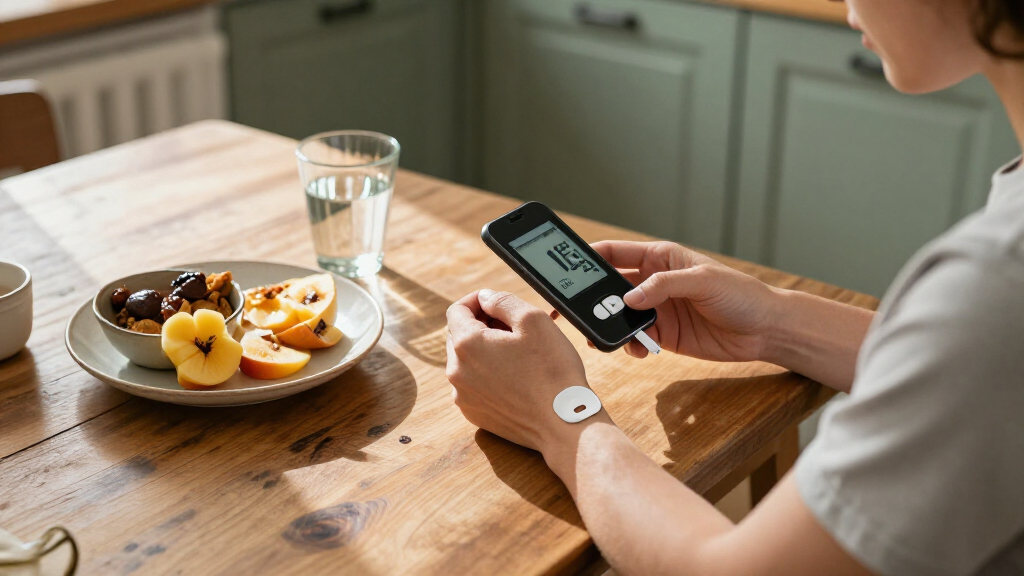
I ranked these four products around the question that matters most for a glucose monitor: does its stated use match the buyer’s diabetes-care needs? The product information supplied for these devices describes restrictions for people on insulin, and the Lingo listings also say they are not for diagnosing disease. That puts suitability ahead of app features or wear-time claims. A CGM’s data can influence health decisions, so buyers should follow the product labeling and their clinician’s instructions rather than treating an awareness-focused app as a diabetes treatment plan.
After intended use, I compared wear time and number of sensors. Stelo lists up to 15 days per sensor, while Lingo lists up to 14 days. The two-pack products offer more sensor supply than the single Stelo listing, but an advertised duration is not a guarantee that every sensor will last that long. The Stelo two-pack information specifically notes that some sensors may end before day 15; Lingo listings also state that sensors can last less than the maximum duration.
I also weighed phone compatibility, app purpose, and wearing conditions. Both brands are described as supporting iOS and Android, and both are water-resistant or waterproof according to the individual listing. Stelo highlights data insights and personalized coaching; Lingo emphasizes links between glucose patterns and food or lifestyle choices. I gave each format a distinct role rather than treating a two-pack as automatically better for every buyer. My ranking is a buying guide, not medical advice: product indications, availability, and app support can change, so verify current labeling and discuss diabetes monitoring choices with a qualified clinician.
| continuous glucose monitors for diabete | Water resistance |
|---|---|
| Stelo Glucose Biosensor & App | — |
| Lingo Continuous Glucose Monit | Yes, according to the listing |
| Stelo 1 Pack Continuous Glucos | — |
| Lingo Continuous Glucose Monit | Water-resistant |
Factors to Consider When Choosing Continuous Glucose Monitors For Diabetes
For a CGM purchase, I would start with what decisions the device is meant to support, then compare wear time, sensor count, app compatibility, and replacement terms. The four products here are aimed at adults who fit their stated use restrictions; they should not be treated as interchangeable with every prescription CGM.
Match the device to your diabetes treatment
This is the first filter, not a footnote. The supplied Stelo details say the device is not suitable for people on insulin or dialysis; both Lingo listings say they are not intended for insulin users, and Lingo is not a diagnostic tool. If you use insulin, rely on CGM alarms for treatment decisions, or need a device prescribed for diabetes management, ask your clinician which system matches your care plan. Do not use an awareness-focused monitor to change medication unless your healthcare professional has specifically instructed you to do so.
Compare stated sensor life with the number of sensors
Stelo lists up to 15 days per sensor, while Lingo lists up to 14 days. Those are maximum stated wear periods, not guarantees that a sensor will complete every day. A two-pack gives you a second unit but does not automatically provide uninterrupted monitoring: early sensor failure, activation timing, and replacement availability can still create gaps. The Stelo two-pack offers the longest stated duration and two sensors; its single-sensor counterpart keeps the same duration but has no in-box backup. Lingo follows the same pack distinction at a one-day-shorter stated maximum.
Choose an app based on the questions you want to answer
Stelo’s product information highlights real-time data, insights, and personalized coaching. Lingo emphasizes connections between glucose patterns, food, and lifestyle, with health-app integrations listed for one of the products. Think about whether you want coaching, food-pattern reflection, or simply a way to view ongoing readings. App functions, compatibility, and regional availability may change, so check the current app listing and device requirements for your phone before purchasing. An app’s interpretation is not the same as individual medical advice.
Check wear conditions and replacement support
Both brands describe their sensors as water-resistant or waterproof, but those labels do not replace reading the manufacturer’s directions for bathing, swimming, exercise, and sensor care. Stelo’s two-pack listing specifies a storage range of 36°F to 86°F and calls for careful handling. Lingo’s single-sensor listing describes a replacement if a sensor fails early; check the current eligibility rules, reporting window, and process. For either brand, confirm where the sensor is worn and follow the included application instructions.
Decide whether a single sensor or a two-pack fits your plan
A single sensor can make sense when you want to learn whether an app and wearable sensor fit your routine. It is less suited to someone who expects ongoing tracking, since the next sensor requires a separate purchase and may not be immediately available. The two-packs provide more sensors in the same product choice, but buy only if the device matches your intended use and your clinician’s guidance. For an initial trial, compare Stelo’s longer stated wear with Lingo’s lifestyle-oriented app framing; for continued use, compare replacement logistics as carefully as the sensor count.
Frequently Asked Questions
Can I use these CGMs if I take insulin?
The supplied product information says these options are not intended for people using insulin; the Stelo two-pack details also exclude people on dialysis. If you use insulin, ask your healthcare professional about a CGM specifically cleared and prescribed for your needs. Do not substitute one of these products for your prescribed monitoring system or use its readings to alter treatment without medical direction.
Which product has the longest stated sensor wear?
The two Stelo listings state up to 15 days per sensor, compared with up to 14 days for the Lingo listings. That is the longest advertised duration in this group, not a guarantee that every sensor will last for the full period. The Stelo two-pack includes two sensors, while the Stelo single-pack includes one.
Do these products diagnose diabetes?
The Lingo product information explicitly says it is not intended to diagnose disease. The products in this roundup are presented as glucose-monitoring or awareness tools for adults who fit their stated eligibility, not as substitutes for a clinician’s diagnosis. If you have symptoms, abnormal glucose results, or questions about diabetes, consult a qualified healthcare professional rather than relying on a consumer app for diagnosis.
Do I need a prescription, and will my phone work?
The single-sensor Lingo listing says no prescription is needed, and the product details for Stelo and Lingo list iOS and Android compatibility in their respective descriptions. Phone models, operating-system versions, app features, and regional access can change. Check the current manufacturer requirements and app listing before buying, especially if you plan to use a less common phone or older operating system.
Should I choose a one-sensor or two-sensor pack?
A one-sensor pack may suit an eligible adult who wants to try the wearable and its app before choosing a longer supply. A two-pack offers another sensor in the box, which can be more convenient for ongoing use, but it does not guarantee uninterrupted tracking or that each sensor will reach its maximum wear time. I would select the pack size only after confirming the product is appropriate for your health needs and checking how replacements are handled.
Conclusion
My first recommendation is Stelo 2-Pack for adults who fit its non-insulin use restrictions and want two sensors with the longest stated wear period in this comparison. Choose the Lingo 2-Pack instead if your priority is observing how food and everyday habits relate to glucose patterns. For a smaller first step, the Stelo 1-Pack gives you one sensor with the same stated duration as the Stelo two-pack, while the Lingo single sensor is the more focused trial for someone interested in Lingo’s app and health integrations. If you use insulin, need a diagnostic test, or depend on CGM data to guide treatment, skip these options until your clinician confirms an appropriate device. The best choice here is the one whose stated use matches your care plan—not simply the one with the longest wear claim.
Cold & flu season Picks
humidifiers
As an affiliate, we earn on qualifying purchases.