

Your afternoon slump is caused by natural body rhythms, habits, and environment that lower your energy and focus. Factors like irregular meals, dehydration, too much sitting, and poor sleep make it worse. Small lifestyle tweaks—like eating regularly, hydrating, taking movement breaks, and adjusting lighting—can boost your energy. Understanding these causes helps you manage your energy better without just blaming motivation. Keep going to discover practical ways to stay alert and productive during those sluggish hours.
Key Takeaways
- The afternoon slump is driven by natural circadian rhythms, hormonal fluctuations, and evolutionary energy conservation cues.
- Lifestyle habits like dehydration, irregular meals, and prolonged sitting worsen energy dips.
- Small environmental adjustments, such as improved lighting and workspace organization, can boost alertness.
- Incorporating movement, deep breathing, and mindfulness breaks helps maintain focus without relying solely on motivation.
- Prioritizing quality sleep and consistent routines supports stable energy levels and reduces afternoon fatigue.
What Causes the Afternoon Energy Dip? Understanding Your Body’s Rhythms
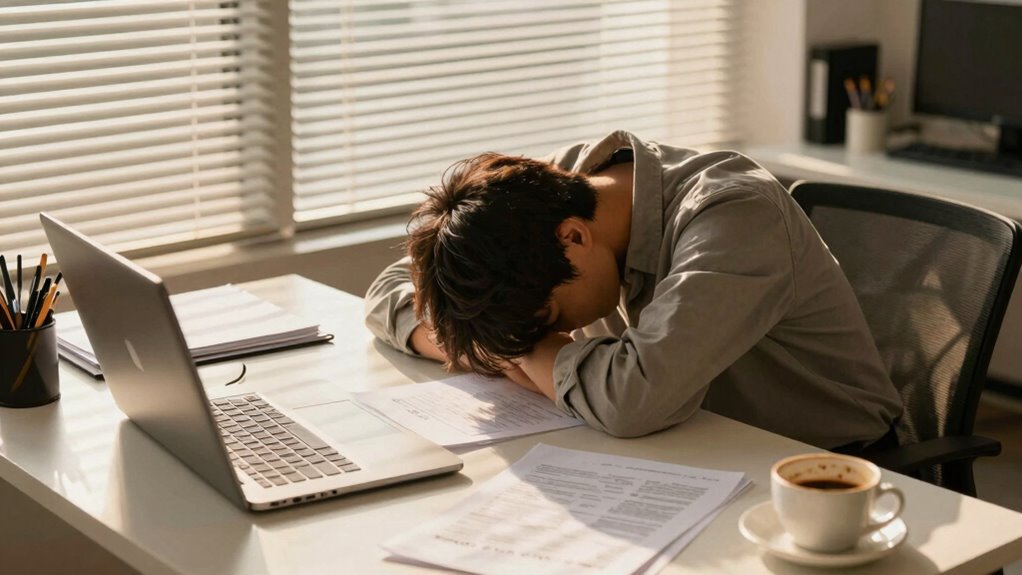
Many people experience a noticeable drop in energy during the afternoon, and this isn’t just random; it’s rooted in your body’s natural rhythms. Your circadian rhythms, which follow a roughly 24-hour cycle, regulate your sleep-wake patterns and alertness levels. During the afternoon, these rhythms cause hormonal fluctuations, particularly a dip in hormones like cortisol and an increase in others like melatonin. This hormonal shift leads to feelings of tiredness and decreased focus. Your body is fundamentally wired to slow down temporarily, aligning with evolutionary cues to rest or conserve energy. Recognizing these rhythms allows you to better manage your energy throughout the day. Additionally, understanding your body’s technological integration can help you adapt your daily routines to optimize alertness and productivity. Being aware of these natural cycles can also inform work scheduling to align tasks with periods of higher alertness.
How Your Habits Make Energy Slumps Worse

If you’re not drinking enough water or eating at irregular times, your energy levels can crash even further in the afternoon. Sitting for long periods without moving keeps your blood flow sluggish and drains your stamina. Small habits like these can turn a normal slump into a persistent energy drain. Incorporating proper air fryer accessories can help you prepare healthy snacks easily, reducing the temptation to skip meals or opt for less nutritious options. Additionally, staying active through regular physical activity can boost your overall energy and prevent fatigue. Improving engine efficiency through simple lifestyle changes can also help maintain your energy levels throughout the day. Recognizing energy management as a vital leadership skill empowers you to maintain productivity and avoid burnout. To support sustained energy, consider optimizing your environment with features like home theater projector setups, which can create a relaxing space that encourages breaks and mental refreshment.
Poor Hydration Habits
Dehydration often sneaks up on you when you neglect your hydration habits, making energy slumps feel even more overwhelming. When you don’t drink enough water, your electrolyte balance becomes disrupted, impairing nerve function and reducing energy levels. Poor hydration can lead to feelings of fatigue, brain fog, and decreased focus, intensifying the afternoon slump. Consistently neglecting hydration habits means your body struggles to maintain ideal fluid levels, making it harder to stay alert and energized. To combat this, prioritize drinking water throughout the day and include electrolyte-rich drinks if needed. Keeping your hydration habits consistent helps support proper electrolyte balance, ensuring your body functions smoothly and reducing the severity of energy dips later in the day. Additionally, maintaining adequate hydration is essential for supporting electric bike performance and overall energy levels, especially during physically demanding activities. Proper hydration also plays a key role in fluid regulation, which is vital for maintaining your body’s internal balance and preventing energy dips. Staying well-hydrated is also crucial for metabolic processes, which directly influence how efficiently your body produces and uses energy throughout the day. Ensuring optimal hydration can also prevent the onset of dehydration-related muscle fatigue, which further diminishes energy and performance.
Irregular Meal Timing
Irregular meal timing can considerably worsen your energy slumps by causing blood sugar fluctuations that leave you feeling tired and sluggish. When your eating schedule is unpredictable, your body struggles to maintain stable blood glucose levels, leading to dips in energy mid-afternoon. Skipping meals or delaying them can trigger hunger cravings and overeating later, further destabilizing your energy. Consistently eating at regular intervals helps your body anticipate when fuel will arrive, keeping blood sugar steady. Establishing a consistent meal timing routine prevents sudden drops in energy and supports sustained focus. Proper gear maintenance and a balanced eating schedule work together to give your body the steady fuel it needs to power through the day without hitting those dreaded energy lows. Maintaining a stable blood sugar level through regular meals also reduces cravings and minimizes the likelihood of overeating, which can cause further energy dips. Incorporating balanced macronutrients into each meal can further stabilize energy levels and improve overall vitality. Additionally, using energy-efficient appliances can help ensure your environment supports your health goals by reducing unnecessary energy consumption.
Sedentary Lifestyle Choices
When you spend long hours sitting without moving, your energy levels can take a nosedive, making those afternoon slumps even worse. Poor desk posture and excessive sitting duration strain your body, leading to fatigue and decreased focus. Sitting for extended periods reduces blood flow, causing your muscles to stiffen and your mind to feel sluggish. If you don’t take regular breaks or adjust your sitting habits, you’ll likely experience sharper energy dips later in the day. Incorporating movement into your routine—stand up, stretch, or walk around every 30 minutes—can help mitigate these effects. Improving your desk posture by sitting upright helps prevent discomfort and keeps your energy sustained. Remember, small changes in your sedentary habits can markedly boost your afternoon alertness and overall productivity. Additionally, understanding how your requirements traceability impacts your workflow can help you identify opportunities to optimize your daily routines. Paying attention to environmental considerations can also contribute to a healthier workspace and better energy management. Incorporating ergonomic tools like adjustable desk accessories can further enhance your comfort and sustain your energy levels throughout the day, especially when considering body jewelry measurements and materials that promote comfort during long periods of sitting.
How Nutrition Can Help You Stay Energized Midday

Eating the right foods can make a significant difference in maintaining your energy levels through the midday slump. Incorporate healthy snacks like nuts, fruit, or yogurt to keep your blood sugar stable and avoid crashes. Planning balanced meals with lean proteins, whole grains, and vegetables provides sustained energy without the sugar crashes that come from processed foods. Hydration also plays a key role—drinking enough water helps your body stay alert and focused. Avoid heavy, greasy foods that can make you feel sluggish. Instead, opt for nutrient-dense options that support your brain and body. Nutritional information can guide you in choosing foods that optimize your energy. Additionally, understanding cryptid mysteries and other supernatural phenomena can sometimes influence perceptions of fatigue or alertness, though scientific skepticism remains high. Staying aware of future AI innovations can also help you adapt your lifestyle and health strategies more effectively. Incorporating proper meal timing and mindful eating habits can further enhance your midday energy levels, making it easier to stay motivated and productive without relying solely on caffeine. By choosing the right foods, you’ll fuel your midday hours effectively, reducing fatigue and keeping your motivation high without relying solely on caffeine.
Easy Exercises to Keep Your Focus Going in the Afternoon
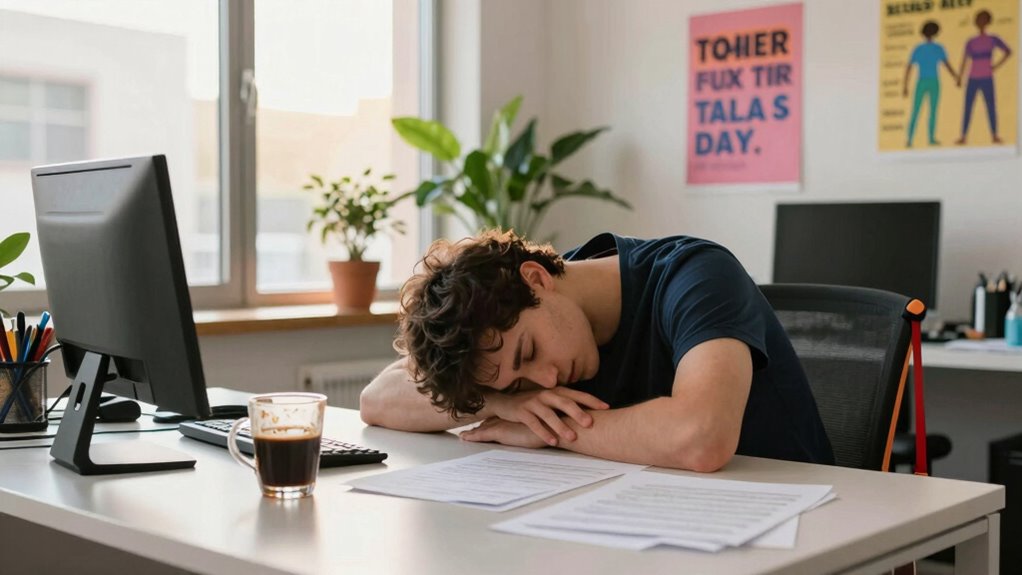
After fueling your body with the right foods, staying active can help keep your focus sharp during the afternoon slump. Simple breathing exercises, like deep inhales through your nose and slow exhales through your mouth, can boost oxygen flow and clear mental fog. Incorporate quick stretching routines—touch your toes, stretch your arms overhead, or rotate your neck—to release tension and increase blood circulation. These easy exercises break up long periods of sitting and refresh your mind. Practicing mindfulness during these routines can further enhance your mental clarity and focus. Incorporating movement techniques from essential tips for packing and styling can also boost your energy levels throughout the day. By incorporating breathing exercises and stretching routines into your routine, you’ll improve your focus and energy levels, helping you push through the afternoon with clarity and renewed motivation.
How Better Sleep and Rest Prevent Energy Dips

Getting enough quality sleep and rest is essential for maintaining steady energy levels throughout the day. Good sleep hygiene—like sticking to a consistent sleep schedule, avoiding screens before bed, and creating a comfortable sleep environment—helps your body recover and recharge. When you prioritize rest strategies such as short naps, relaxation techniques, or winding down before bedtime, you prevent energy dips caused by fatigue. Proper sleep guarantees your brain stays alert, and your body functions at their best, reducing the likelihood of an afternoon slump. By making these adjustments, you support sustained focus and productivity, eliminating the need to rely solely on caffeine or willpower to get through the day’s lows. Better sleep truly acts as a foundation for consistent energy.
Simple Strategies to Stay Productive Without Relying on Motivation

To stay productive when motivation wanes, start by establishing routines early in your day. Breaking large tasks into smaller, manageable steps makes them less overwhelming and easier to complete. These strategies help you maintain momentum, even when your energy dips.
Establish Routines Early
Establishing routines early can set the tone for a productive afternoon, especially when motivation wanes. Your morning routines help you start the day with focus and clarity, making it easier to maintain momentum. Consistently following a set sequence of tasks in the morning reduces decision fatigue and creates a sense of discipline. Evening preparation complements this by helping you plan ahead and set clear goals for the next day. When you prepare your workspace, outline your priorities, and organize your tasks in advance, you create a seamless progression from day to night. These routines build habits that don’t rely on motivation; instead, they become automatic cues that keep you moving forward, even during those sluggish afternoon hours.
Break Tasks Into Steps
Breaking tasks into smaller, manageable steps is one of the most effective ways to stay productive even when motivation dips. This approach, called task segmentation, helps you avoid feeling overwhelmed and keeps momentum steady. Start by breaking a large goal into specific, actionable tasks with clear outcomes, a process known as goal breakdown. Focus on completing one step at a time, which makes progress feel more attainable. When motivation wanes, you’re less likely to procrastinate because each small task offers quick wins. By simplifying complex projects into bite-sized pieces, you create a clear path forward. This method not only boosts your confidence but also helps maintain consistent productivity, even during the afternoon slump.
How to Adjust Your Environment to Boost Your Afternoon Energy

If your workspace feels dull or cluttered, it can drain your energy and make the afternoon slump worse. Start by optimizing your environment: increase ambient lighting to mimic natural daylight, which can help keep you alert. Consider adding a desk lamp with adjustable brightness if overhead lighting is insufficient. Be mindful of your caffeine consumption—moderate intake can boost alertness without leading to a crash later. Keep your workspace organized; clutter can be distracting and drain mental energy. Incorporate small changes like a plant or fresh air to refresh your surroundings. These adjustments can make your environment more stimulating and help sustain your energy levels during the afternoon, making it easier to stay focused and productive without relying solely on motivation.
When to Seek Help for Persistent Energy Problems
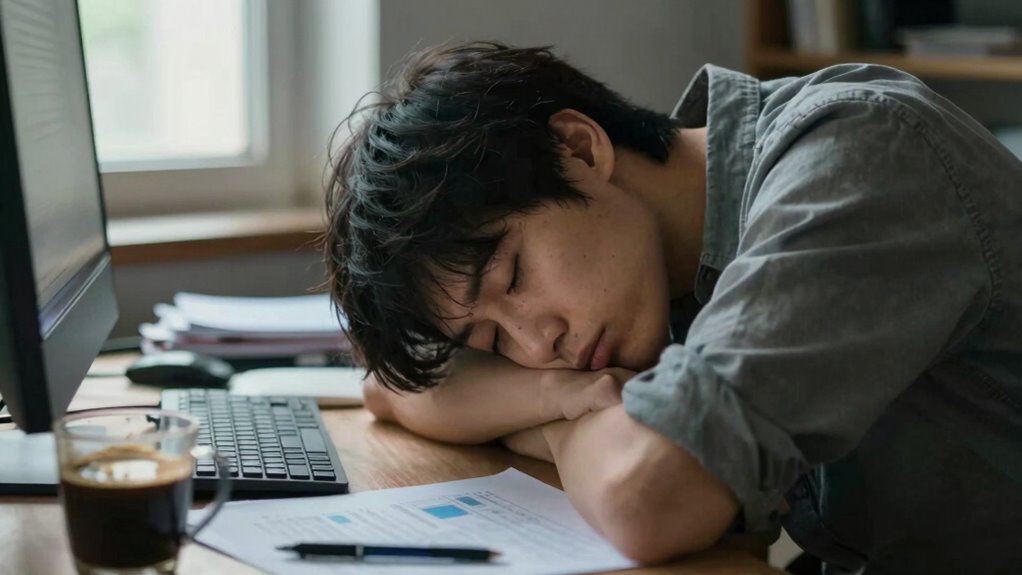
While optimizing your environment can help boost energy temporarily, persistent fatigue may signal underlying issues that require professional attention. If you find that your energy dips despite making lifestyle adjustments, it’s time to evaluate your mental resilience and emotional regulation. Chronic tiredness might stem from mental health concerns like anxiety or depression, which can drain your energy levels and impair focus. Recognizing these signs early allows you to seek support from a healthcare provider or mental health professional. Improving emotional regulation skills can also enhance your resilience to stress, reducing fatigue caused by emotional exhaustion. Don’t ignore ongoing energy problems; addressing them professionally can restore your vitality and help you maintain a balanced, energized life.
Frequently Asked Questions
Can Certain Medications Cause Afternoon Energy Dips?
Yes, certain medications can cause afternoon energy dips due to medication side effects or prescription impacts. You might notice fatigue or sluggishness as your body reacts to the drugs, especially if they affect your central nervous system or blood sugar levels. If you suspect your medication is causing this slump, talk to your healthcare provider. They can adjust dosages or suggest alternatives to help you maintain consistent energy throughout the day.
How Does Hydration Affect Midday Alertness?
Hydration levels directly impact your midday alertness. When you’re well-hydrated, your electrolyte balance stays in check, helping your brain stay focused and energized. Dehydration can cause fatigue, headaches, and decreased concentration, making the afternoon slump worse. To stay alert, drink plenty of water throughout the day and consider electrolyte-rich beverages if you’re active or sweating. Keeping hydrated is a simple, effective way to boost your midday productivity.
Are There Specific Personality Traits Linked to Afternoon Slumps?
Certain personality traits, like high conscientiousness or perfectionism, can make you more prone to afternoon slumps. If you’re detail-oriented or highly responsible, you might experience dips in energy levels as mental fatigue sets in. Conversely, more extroverted or adaptable individuals often maintain higher energy levels throughout the day. Recognizing these traits helps you plan breaks or energizing activities to combat the slump effectively.
Does Caffeine Intake Influence the Afternoon Energy Cycle?
Caffeine dependence can give you a quick lift, but it often leads to energy crashes that deepen your afternoon slump. You might notice a temporary boost, yet soon you’re left feeling more drained. To smooth out your energy cycle, consider reducing caffeine intake or timing it strategically. This way, you avoid the rollercoaster of highs and lows, helping you stay steady and focused during those vital afternoon hours.
Can Mental Health Issues Contribute to Energy Dips?
Yes, mental health issues can contribute to energy dips, making you feel more fatigued during the day. When your mental health struggles, it affects your emotional resilience, leading to decreased motivation and increased exhaustion. Addressing emotional resilience through self-care, therapy, or mindfulness practices can help stabilize your energy levels. Recognizing these links allows you to take proactive steps, improving your overall well-being and reducing afternoon slumps.
Conclusion
Remember, everyone hits a quiet patch now and then—it’s just your body’s gentle way of asking for a little care. By tuning into your rhythms, adjusting habits, and making small changes, you can turn those sluggish moments into moments of renewed focus. Don’t hesitate to seek support if the dips linger—sometimes, a subtle nudge is all you need to keep your energy flowing smoothly. Your best days are just ahead.