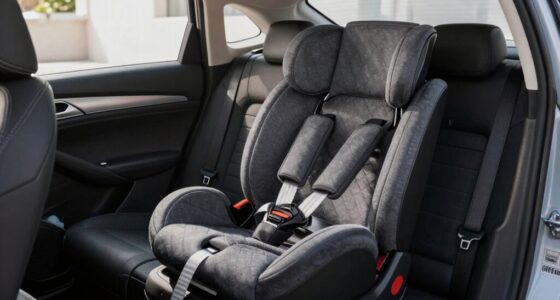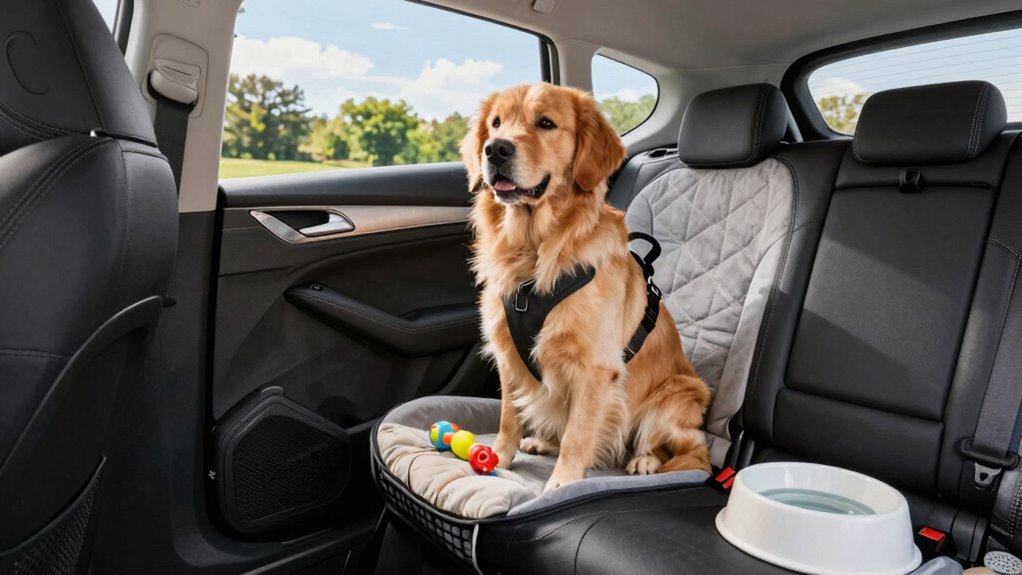

To make car rides less miserable for your pet, start by understanding their individual needs and behaviors, like stress triggers or comfort preferences. Prepare your vehicle with safety gear such as harnesses or car seats, and secure your pet properly. Use familiar toys or blankets to soothe them, plan regular breaks for water and bathroom stops, and monitor their comfort throughout the trip. If you want practical tips to keep your furry friend calm and safe, there’s more to discover.

Get health and wellness essentials delivered free — and shop member deals
- Fast, free delivery on millions of items
- Access to Prime Big Deal Days deals on October 6–7
- Prime Video, Amazon Music and more included
Key Takeaways
- Understand your pet’s unique behavior and triggers to tailor travel plans and reduce stress.
- Use appropriate restraints like crash-tested harnesses or car seats for safety.
- Provide familiar toys, blankets, and calming accessories to create a comfortable environment.
- Schedule regular breaks for hydration, bathroom needs, and stretching to prevent anxiety.
- Monitor your pet closely during the trip and address signs of stress or discomfort promptly.
As an affiliate, we earn on qualifying purchases.
How to Understand Your Pet’s Travel Needs and Behavior
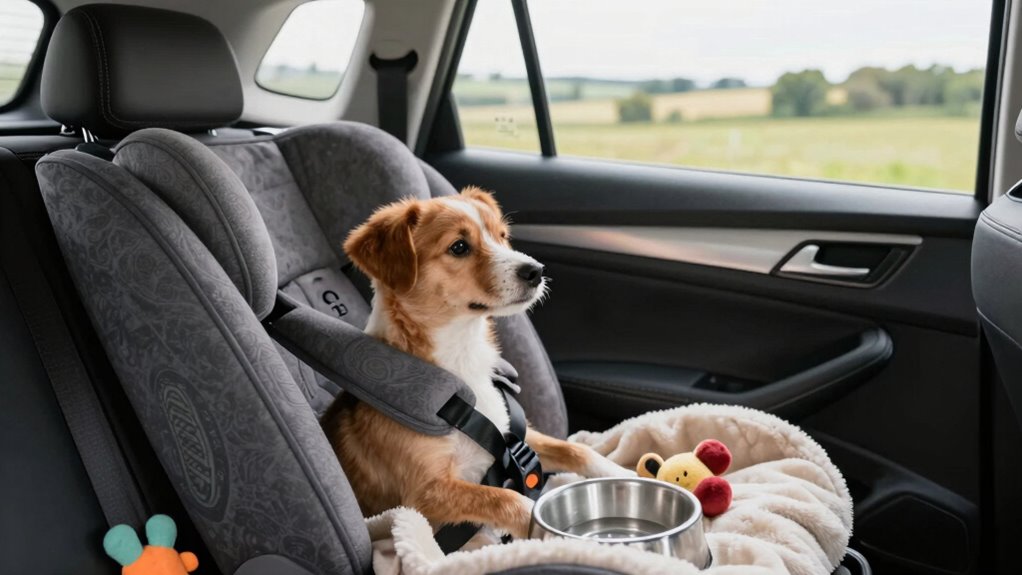
Understanding your pet’s travel needs and behavior is essential to ensuring a smooth trip. Every pet has a unique personality that influences how they handle car rides. Some may be naturally anxious or easily startled, while others are more relaxed. Recognizing your pet’s personality helps you anticipate their reactions and plan accordingly. Pay attention to potential travel triggers, such as loud noises, sudden stops, or unfamiliar scents, which can cause stress or discomfort. By observing how your pet responds to different situations, you’ll learn what comforts them and what causes distress. This knowledge allows you to tailor your approach, whether it’s providing familiar toys, calming techniques, or choosing the best travel times. Additionally, understanding your pet’s behavioral cues can help you detect early signs of stress and intervene appropriately. Being aware of dog breed characteristics can also give insights into their specific needs and tendencies during travel. Recognizing individual personality traits further helps in customizing travel plans that reduce anxiety and promote comfort. Understanding these factors is the first step to making travel less stressful for your furry friend, especially when considering special needs that some pets might have during trips. It’s also helpful to learn how travel accessories can support their comfort and safety throughout the journey.
As an affiliate, we earn on qualifying purchases.
Getting Your Pet and Vehicle Ready for a Safe Trip
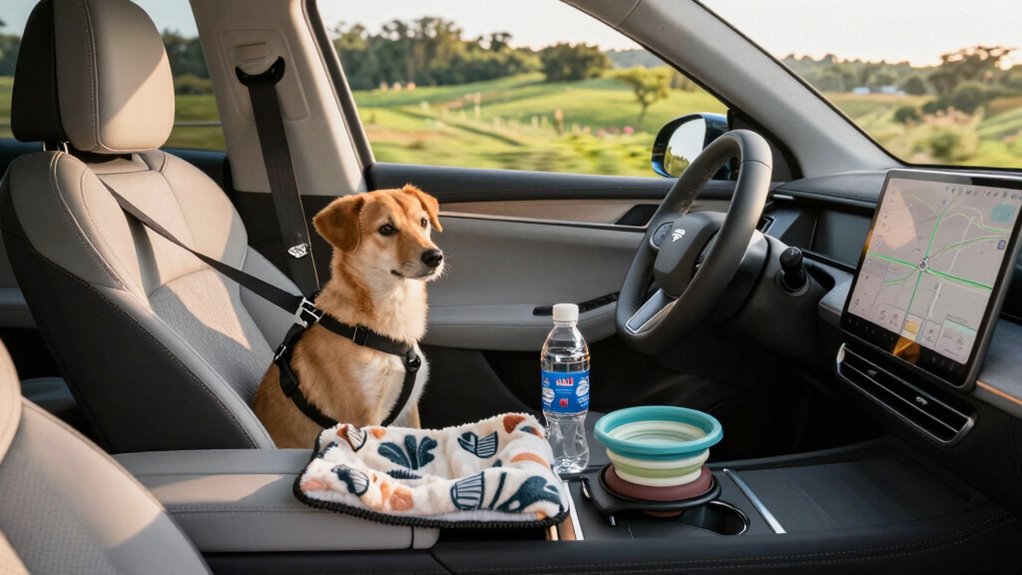
Before hitting the road, it’s important to prepare both your pet and your vehicle to guarantee a safe and comfortable trip. Start with pet grooming to ensure your pet is clean and free of loose fur or debris that could cause discomfort or mess during travel. Well-groomed pets are also easier to handle and less likely to become anxious. Next, check your vehicle maintenance—inspect tire pressure, fluid levels, and brakes to prevent breakdowns or accidents. Clear out clutter to create a safe space for your pet, and secure loose items that could become projectiles. Additionally, using essential airless paint spraying tips and gear can inspire you to organize your vehicle efficiently and safely for travel. These steps reduce stress for both of you and help avoid unexpected issues on the road, making your trip smoother and safer from start to finish. Proper vehicle safety checks are essential to ensure your trip remains worry-free and enjoyable. Incorporating DIY safety tools into your preparations can further enhance your vehicle’s readiness and your peace of mind. Understanding how to optimize your vehicle setup, such as considering projection technology for entertainment during stops, can also contribute to a more enjoyable journey. Taking the time to perform these pre-travel inspections can save you time and expense during your trip.
As an affiliate, we earn on qualifying purchases.
Choosing the Best Gear for Pet Travel Safety
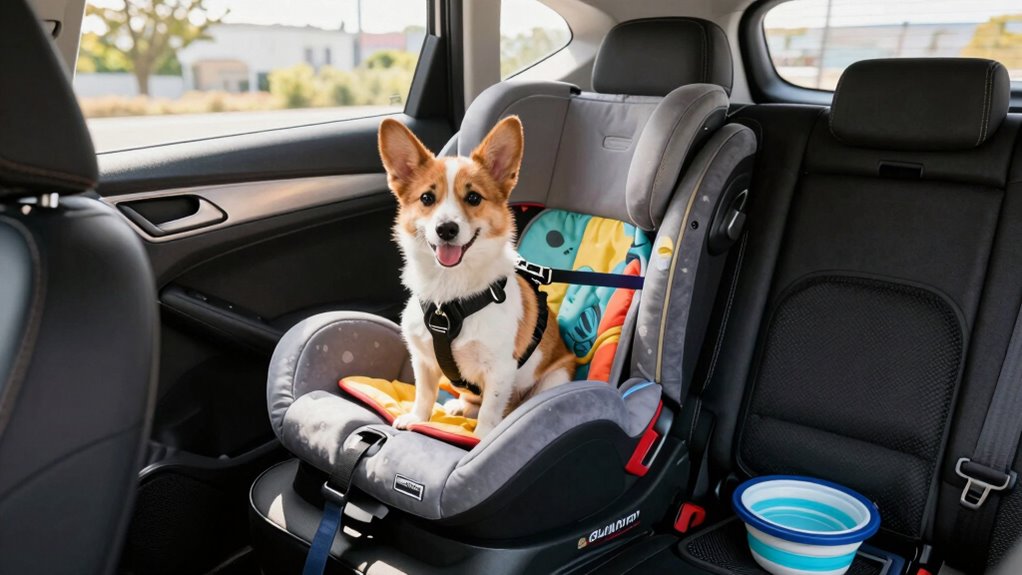
Choosing the right gear is key to keeping your pet safe during travel. You should explore proper restraint options, pick safe car seats, and make sure seat belts are used correctly. These steps help prevent injuries and guarantee a smooth journey for your furry friend. Additionally, ensuring your pet has proper microchipping/ID can help reunite you if they get lost during travel. Using travel accessories designed for pets can also enhance comfort and security during the trip. To further improve safety, consider tracking devices that allow you to monitor your pet’s location in real-time. Incorporating soundproofing measures into your vehicle can also reduce noise stress and create a calmer environment for your pet.
Proper Restraint Options
Selecting the right restraint gear is essential for keeping your pet safe and secure during travel. A proper pet restraint prevents distractions and minimizes injury risks in sudden stops or accidents. A travel harness is a popular option, designed to comfortably secure your pet while offering freedom of movement. Look for a harness that fits snugly without restricting breathing or causing discomfort, and ensure it’s made from durable, crash-tested materials. Some harnesses attach directly to seat belts, providing a reliable and straightforward restraint solution. Avoid using collars alone, as they offer less security and can cause injury if your pet lunges or pulls. Choosing the best gear means prioritizing quality, fit, and ease of use to keep your furry friend safe and calm throughout the ride. Additionally, considering water safety features can help prevent accidental slips or falls when pets are near pools or other bodies of water during travel. Ensuring your pet’s vehicle restraint system is properly installed and compatible with your vehicle enhances overall safety and peace of mind. Properly securing your pet also involves understanding pet behavior to select the most effective restraint option for their personality and comfort. Being aware of vehicle crash safety standards can further guide you in choosing equipment that offers optimal protection in case of an accident.
Selecting Safe Car Seats
A well-fitted car seat is key to keeping your pet safe and secure during travel. When selecting a seat, prioritize options that are designed with airbag safety in mind; some seats are engineered to minimize injury if airbags deploy. Verify the seat fits your pet’s size and weight, providing comfort and stability. Check that the seat is crash-tested and meets safety standards, giving you confidence on the road. Remember, investing in pet travel insurance can offer extra peace of mind, covering unexpected incidents or injuries. Always choose a seat that attaches securely to your vehicle, avoiding loose or makeshift solutions. The right car seat helps protect your pet and ensures a smoother, safer journey for everyone involved. Incorporating digital safety standards into your choice can further enhance travel security, especially when considering cabling failures or other vehicle safety features. Additionally, selecting a seat with proper ventilation can improve your pet’s comfort during longer trips, and choosing a seat with shock absorption features can further reduce the impact of sudden stops or bumps. Moreover, paying attention to material durability ensures the seat remains reliable over time and through various travel conditions.
Using Seat Belts Correctly
To guarantee your pet’s safety during travel, using seat belts correctly is essential, as improper use can compromise their protection. Proper seat belt safety ensures your pet remains secured and minimizes injury risks during sudden stops or accidents. Always use a harness or specialized pet seat belt that attaches securely to your vehicle’s seat belt system. Make sure the restraint fits snugly without restricting movement or causing discomfort. Avoid attaching the seat belt to collars, as this can cause neck injuries; instead, use harnesses designed for restraint effectiveness. Regularly check that the seat belt is in good condition and properly fastened before each trip. Incorporating appropriate restraint systems can further enhance your pet’s safety during car rides. Using advanced safety features and ensuring proper restraint use can significantly reduce injury risks. Properly installing seat belts and regularly inspecting them ensures maximum safety. Correct usage not only keeps your pet safe but also helps you drive more confidently, knowing they are secured properly.
As an affiliate, we earn on qualifying purchases.
How to Make Car Rides Comfortable and Stress-Free for Your Pet
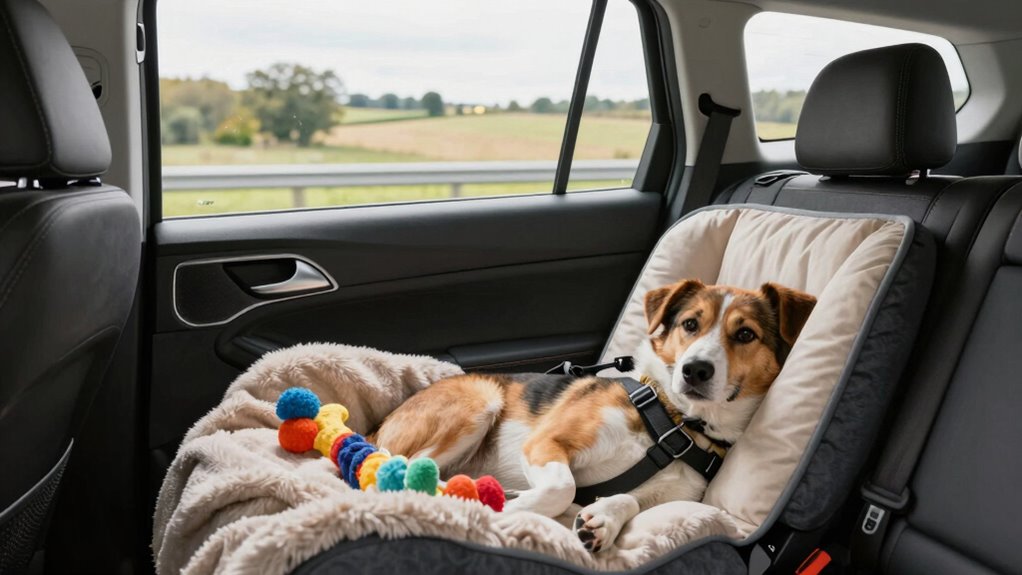
Ensuring your pet feels comfortable and relaxed during car rides starts with understanding their needs and habits. Many pet travel myths suggest that dogs and cats inevitably get stressed, but with the right approach, you can ease their anxiety. Using pet travel accessories like cozy beds, calming sprays, or familiar blankets helps create a sense of security. Keep the environment calm and quiet, and avoid sudden movements or loud noises. Make frequent stops for water and bathroom breaks, and never force your pet into a carrier or seat. By prioritizing comfort and dispelling common myths, you’ll make car rides more enjoyable for your furry friend, reducing stress and helping them feel safe and secure throughout the journey.
Keeping Your Pet Safe and Monitored During Travel
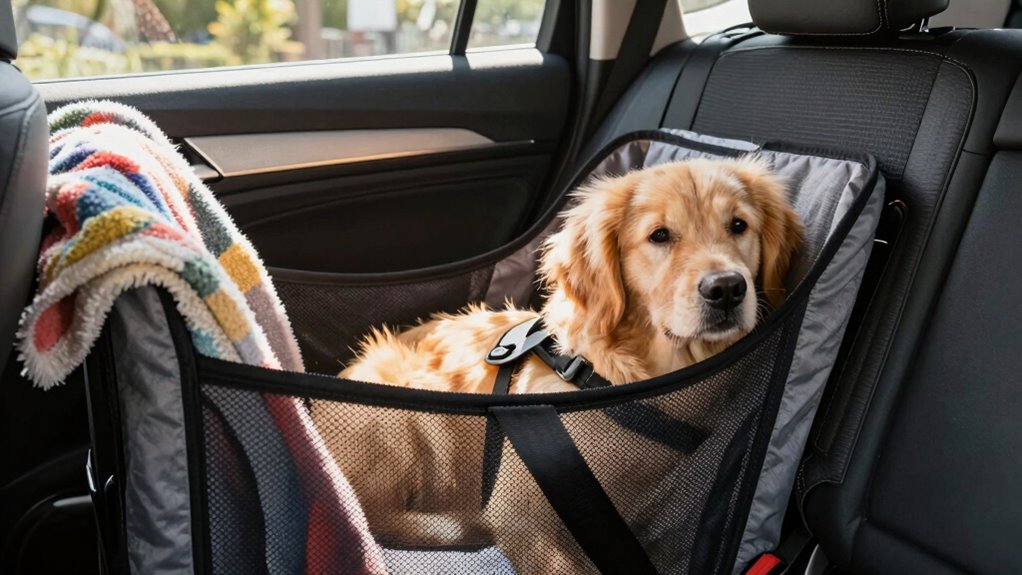
Keeping your pet safe and monitored during travel requires constant vigilance and proper planning. Always keep pet hydration in mind; offer water regularly to prevent dehydration, especially on long trips. Use a secure harness or crate to keep your pet restrained and prevent distractions while driving. Keep essential travel documentation, like vaccination records and ID tags, easily accessible in case of emergencies or stops. Regularly check on your pet to ensure they’re comfortable and not showing signs of distress. Monitoring their behavior helps you respond quickly if they need reassurance or medical attention. By staying attentive and prepared, you minimize risks and ensure your pet’s safety throughout the journey. Proper hydration and documentation are key to a smooth, stress-free travel experience.
Planning Breaks and Stops to Keep Your Pet Calm
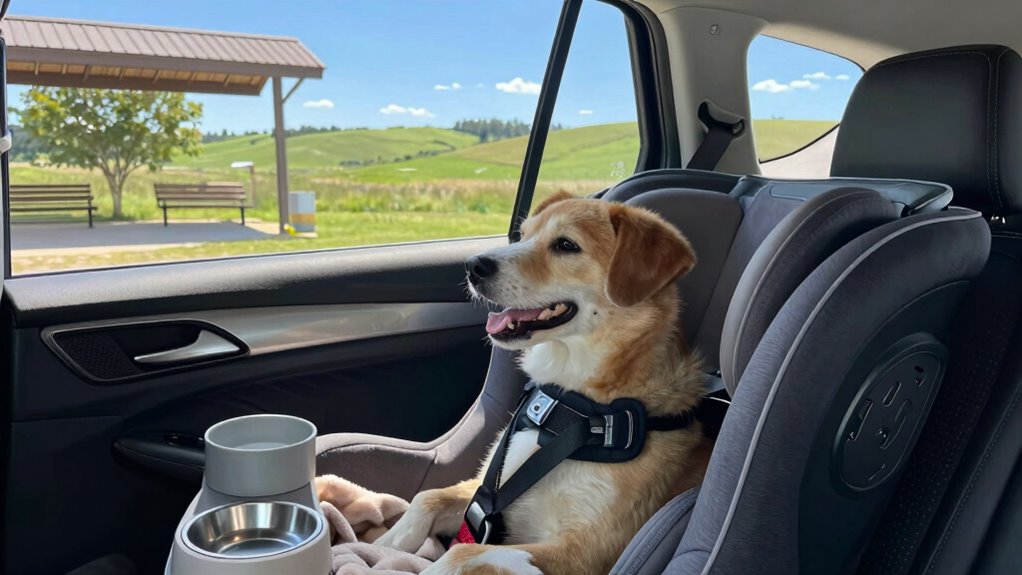
Planning regular breaks and stops during your trip can considerably reduce your pet’s stress and prevent discomfort. When you pause, offer fresh water to keep your pet hydrated, which helps maintain their energy and reduces anxiety. During breaks, provide pet entertainment like toys or a familiar blanket to create a calming environment. These stops also give your pet a chance to stretch, move around, and relieve themselves, making the journey more comfortable. Keep the stops brief but frequent enough to prevent restlessness. Remember to keep your pet secure in a harness or crate during stops to avoid accidents. By integrating hydration, entertainment, and regular breaks into your travel plan, you’ll help keep your pet calm and content throughout the trip.
Troubleshooting Common Pet Travel Issues, Like Anxiety or Nausea
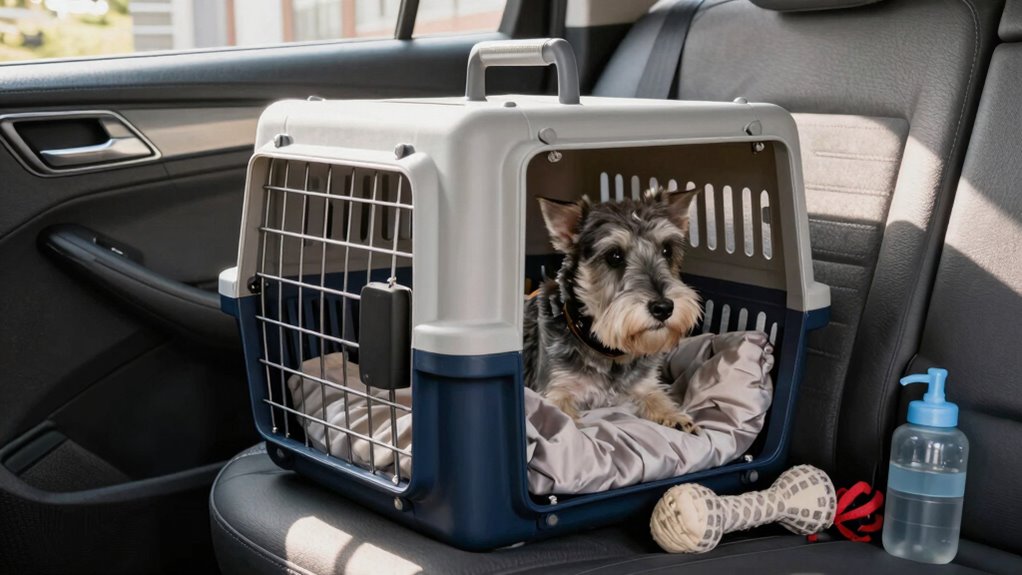
When your pet shows signs of anxiety or nausea during travel, addressing these issues promptly can make a big difference in their comfort. Pet anxiety can cause restlessness, whining, or panting, while nausea may lead to drooling or vomiting. To ease pet anxiety, consider calming techniques like pheromone sprays or gentle reassurance. For nausea, try nausea remedies such as ginger treats or over-the-counter remedies approved by your vet. Keeping your pet comfortable with a familiar blanket or toy can also help reduce stress. Guarantee proper ventilation and avoid feeding too close to travel time. If symptoms persist, consult your veterinarian for tailored solutions. Tackling pet anxiety and nausea remedies early ensures a smoother, less stressful journey for both you and your furry friend.
Post-Trip Tips: Caring for Your Pet After the Journey
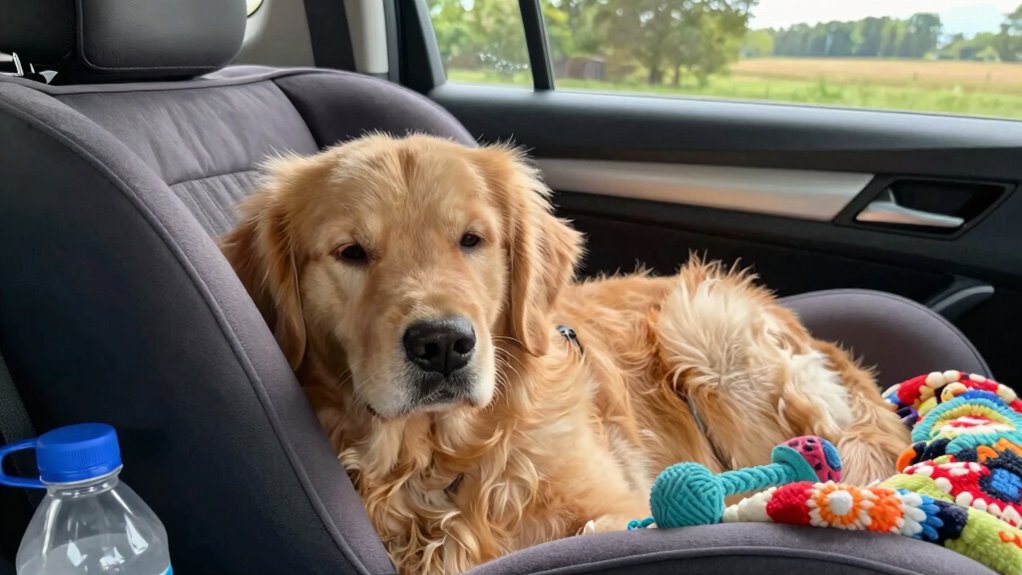
After your trip, it’s important to help your pet recover and adjust to being back home. Start by offering some pet travel snacks to ease their transition and make sure they’re well-hydrated. Then, perform a thorough post trip cleaning of your car and pet’s belongings to remove any odors or messes. Give your pet some quiet time to relax and re-establish their routine. Monitor them for signs of stress or discomfort, and provide extra affection if needed. Finally, check your pet for any signs of discomfort or injury that may have occurred during travel. These steps help your pet feel safe, comfortable, and cared for after the journey. Proper post-trip care ensures a smooth return to normalcy for both of you.
Frequently Asked Questions
How Can I Prevent My Pet From Escaping During Travel?
To prevent your pet from escaping during travel, start with leash training so they stay close. Use secure crates or harnesses that fit well and keep your pet safely contained. Never leave your pet unsupervised in the car, especially if windows are open or the door is unlatched. Regularly check that all barriers are secure before hitting the road. Consistent training and proper containment will give you peace of mind and keep your pet safe.
What Are the Signs of Travel Sickness in Pets?
Imagine your pet’s stomach as a roller coaster, signaling pet anxiety and motion sickness symptoms. Watch for drooling, whining, or vomiting, which are telltale signs of travel sickness. They may also become restless or seem disoriented, like a ship lost at sea. Recognizing these signs early helps you soothe their discomfort, making the ride smoother and less stressful for your furry friend.
How Do I Introduce My Pet to Car Travel Gradually?
Start by letting your pet explore the car while it’s parked, rewarding them with treats and praise to boost pet comfort. Gradually introduce short trips, keeping travel accessories like cozy blankets and familiar toys nearby to create a comforting environment. Increase the duration gradually, always monitoring their behavior. This slow process helps your pet associate car travel with positive experiences, easing anxiety and making future rides much more enjoyable.
Can I Feed My Pet Before a Long Car Trip?
Feeding your pet before a long car trip is tricky—wait at least 2-3 hours to prevent nausea, as 60% of pets experience motion sickness. Plan feeding timing carefully, giving travel snacks instead of a big meal just before departure. This keeps their stomach settled and energy up, making the ride more comfortable. Pack favorite snacks to keep your pet happy and distracted during the journey.
What Should I Do if My Pet Gets Car Sick Unexpectedly?
If your pet gets car sick unexpectedly, stay calm and gently comfort them. Use pet calming techniques like soft music, a familiar blanket, or calming sprays to soothe anxiety. Stop the car safely if needed and offer water. Keep emergency vet contacts handy in case symptoms worsen. Consider consulting your vet about medication or additional calming aids for future trips. Always prioritize your pet’s safety and comfort during the ride.
Conclusion
Traveling with your pet can be a rewarding experience when you prioritize their safety and comfort. Did you know that 8 out of 10 pets become anxious during car trips? By understanding their needs, choosing the right gear, and planning breaks, you can make every journey calmer and more enjoyable. Remember, a happy pet makes for a happier trip—so take the time to prepare and look after your furry friend every step of the way.
Fall Picks
fall essentials
As an affiliate, we earn on qualifying purchases.