
To break the social media loop without deleting everything, set clear boundaries by scheduling specific times for scrolling and turning off non-essential notifications. Be intentional about what you consume, focusing on quality over quantity, and unsubscribe from accounts that boost fatigue. Instead of constantly engaging online, try offline activities like hobbies or exercise to reset your attention span. Understanding how algorithms work helps you make smarter choices. Keep exploring to discover more ways to regain control and build healthier habits.
Key Takeaways
- Set specific time limits and scheduled breaks to prevent endless scrolling and regain control over social media use.
- Disable non-essential notifications to reduce constant triggers and minimize impulsive engagement.
- Curate your feed by unsubscribing from accounts that contribute to content fatigue or negatively impact well-being.
- Engage in offline activities like hobbies or exercise to diversify focus and lessen dependency on digital stimuli.
- Increase awareness of algorithms and content delivery to make informed, mindful choices about consumption habits.
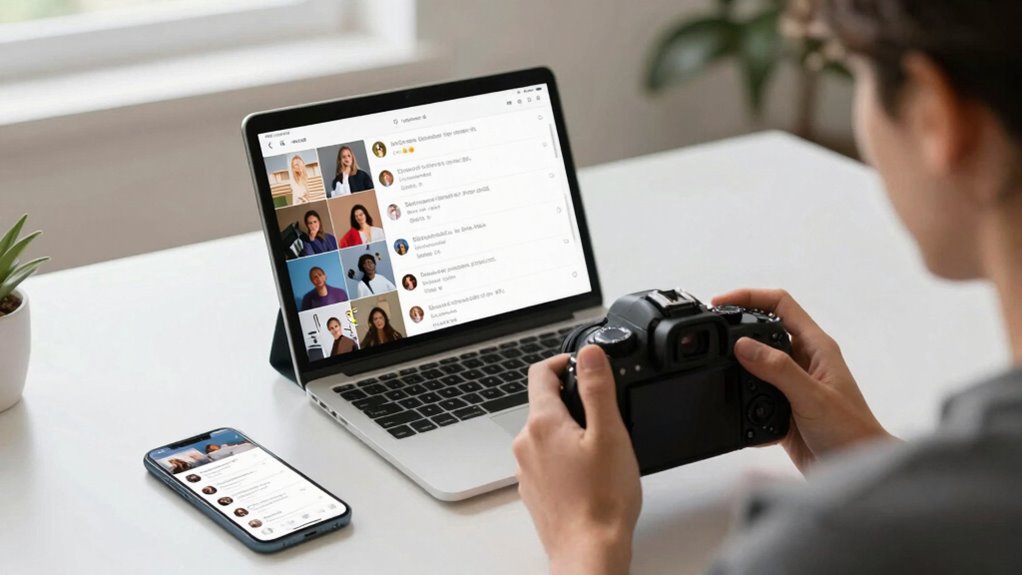
Have you ever wondered how social media keeps you hooked in a never-ending cycle? It’s not just about catchy posts or entertaining videos; it’s the way algorithms are designed to keep you scrolling. This phenomenon, known as algorithm overload, bombards you with endless content tailored to your interests, but it can quickly lead to content fatigue. You find yourself mindlessly scrolling, consuming more than you intended, yet feeling increasingly drained. The algorithms learn your habits and push more of what you click on, creating an addictive loop that’s hard to escape.
That overload of content makes it tough to find meaningful breaks. You might start out intending to check social media for a few minutes, but before you know it, hours have slipped by. The constant stream of updates, notifications, and new posts keeps your brain engaged and craving more. This cycle feeds into your desire for instant gratification, making it difficult to step away without feeling like you’re missing out. Over time, this content fatigue can sap your energy, diminish your ability to focus, and even distort your perception of reality, as you’re bombarded with curated highlight reels instead of authentic moments.
Breaking free from this loop doesn’t mean you have to delete your accounts altogether. Instead, you can take control by recognizing the role of algorithm overload in your digital habits. Start by setting boundaries on your social media use—designate specific times for checking your feeds rather than scrolling aimlessly throughout the day. Turn off non-essential notifications so you’re not constantly pulled back into the cycle. When you do log in, be intentional about what you consume; choose quality content over quantity, and avoid falling into the trap of endless scrolling. You can also clear your feeds of clutter—unsubscribe from accounts that add to your content fatigue or don’t serve your well-being.
Another effective strategy is to diversify your offline activities. Spend time engaging in hobbies, exercise, or simply disconnecting from screens altogether. This shift not only reduces the overload of digital stimuli but also helps you regain control over your attention span. Remember, social media is a tool, not a trap. It’s designed to be engaging, but you have the power to set limits. By becoming more mindful of your habits, you can break the social media loop and reclaim your time and mental clarity without having to delete everything. Small, consistent changes can create a healthier relationship with your digital world, helping you enjoy social media without falling into the trap of algorithm overload and content fatigue.
Additionally, understanding how content delivery is optimized can help you make more informed choices about your digital consumption habits.

Social Media Planner: 6-Month Social Media Planning and Tracking Tool for Influencers, Content Creators, and Business Owners | Includes Content … Daily Templates, and Growth Analytics
As an affiliate, we earn on qualifying purchases.
As an affiliate, we earn on qualifying purchases.
Frequently Asked Questions
How Can I Measure My Social Media Impact Effectively?
You can measure your social media impact effectively by focusing on analytics tracking and engagement metrics. Regularly review data like likes, shares, comments, and click-through rates to see what resonates with your audience. Use tools like platform analytics or third-party apps to monitor trends over time. By analyzing these metrics, you’ll identify what’s working and adjust your strategy accordingly, ensuring your efforts lead to genuine growth and engagement.
What Are Signs I’M Trapped in the Social Media Loop?
You’re trapped in the social media loop when you notice increasing social media fatigue, spending hours scrolling without purpose. Signs include feeling anxious, losing focus, or neglecting real-life interactions. A digital detox helps you break free by reducing screen time and refocusing on meaningful activities. If you feel overwhelmed or stuck in this cycle, taking intentional breaks is essential to regain control and restore your mental well-being.
Can Limiting Social Media Improve My Mental Health?
Limiting social media can boost your mental health. For example, someone who took a weekly digital detox reported reduced anxiety and better focus. By setting boundaries and practicing mindfulness, you can lessen the negative impact of constant notifications. Regular breaks help you reconnect with yourself, lower stress, and improve overall wellbeing. So, try reducing your screen time and incorporate mindfulness practices to enjoy a healthier, more balanced digital life.
Are There Tools to Help Manage Social Media Time?
Yes, there are tools to help manage your social media time. You can use content scheduling tools like Buffer or Hootsuite to plan your posts in advance, reducing spontaneous scrolling. Usage analytics from platforms like Instagram or Facebook help you understand your habits, so you can set limits. These tools empower you to control your social media engagement, making it easier to break the loop and improve your mental health.
How Do I Rebuild My Online Presence After Deleting Accounts?
You can rebuild your online presence by developing a solid content strategy that aligns with your goals. Focus on creating valuable, consistent content to attract and engage your audience. Use analytics to understand what resonates and adjust accordingly. Engage actively with your followers through comments and messages to foster community. Over time, this approach will help you regain visibility, strengthen your brand, and rebuild trust with your audience.

ZenTag Phone Jail Compatible with iOS 17+ – NFC App Blocker for Deep Focus, Phone Blocker, Phone Locker with Timer for Study and Reflection, Cell Phone Locker for Family Time, Limits Screen Time
What is ZENTAG: ZENTAG is a pocket-sized tool that breaks your phone addiction by blocking distractions via a…
As an affiliate, we earn on qualifying purchases.
As an affiliate, we earn on qualifying purchases.
Conclusion
Breaking free from the social media loop isn’t just a good idea—it’s your ultimate secret weapon to reclaim hours every day. Imagine waking up tomorrow and realizing you’ve conquered an addiction that’s secretly stealing your life, happiness, and sanity. It’s like escaping a never-ending maze with a superpower you didn’t know you had. So, stop scrolling, take control, and release your true potential—because life’s too incredible to be spent trapped in an endless digital whirlpool.

You Are What you Read: Why Changing Your Media Diet Can Change the World
As an affiliate, we earn on qualifying purchases.
As an affiliate, we earn on qualifying purchases.

A4 Task Planner & Activity Log Notepad – 8.5" x 11" Spiral Activity Log Book for Office Productivity, 50 Sheets/100 Pages Undated Daily & Hourly Planning Pad, To-Do List, Checklist, Track Time & Tasks
TASK PLANNER & ACTIVITY LOG BOOK – This planner includ structured to-do list (Top Priority, Follow-Up, General Tasks)…
As an affiliate, we earn on qualifying purchases.
As an affiliate, we earn on qualifying purchases.