TL;DR
Fitness trackers estimate activity, heart rate, sleep, and sometimes other health signals, with accuracy that varies by device and situation. Use them to spot patterns and support habits, not to diagnose a condition or react to one surprising number. Comfort, privacy, cost, and your own response to tracking matter as much as the sensor list.
Your wrist can count a brisk walk, estimate last night’s sleep, and buzz when you’ve been sitting too long. It can also show a number that looks alarming but says less than you think. Fitness trackers for health monitoring have evolved from step counters into wrist-worn devices that estimate several parts of your daily routine.

Get health and wellness essentials delivered free with Prime
- Fast, free delivery on millions of items
- Prime Video, Amazon Music and more included
- Member-only deals all year
This guide explains what the sensors measure, why their readings can vary, and how to use the information without treating a watch as a doctor. You’ll also find practical ways to choose a tracker, protect your data, and decide when a reading deserves a conversation with a health professional.
Trackers estimate activity, heart rate, and sleep from sensors; sleep stages and clinical-style readings need particular caution.
Compare readings across similar situations and look for patterns over days or weeks, rather than reacting to one unusual number.
Pick a device around the activities you do, your phone, comfort, battery life, privacy settings, and ongoing costs.
Use goals and reminders as optional prompts; take a break or change settings if tracking creates guilt or worry.
Discuss persistent abnormal readings or symptoms with a qualified health professional, and seek urgent care for severe symptoms.
See what your tracker can actually measure
Fitness trackers for health monitoring use wrist sensors and software to estimate activity, heart rate, sleep, and, on some models, signals such as blood oxygen or skin temperature. The feature list depends on the device, and each measure has its own limits. A tracker can offer a useful daily snapshot, but it does not directly measure every part of your health.
Most bands count steps, record active minutes, and estimate distance from movement and profile details. Optical sensors shine light into the skin to estimate heart rate; motion sensors help a device infer when you may be asleep or awake. A higher-end watch might include an ECG function, but availability and regulatory status vary by country and model, so check the current details before buying.
Imagine you take the same lunchtime walk every weekday. Your tracker may show that you usually reach 3,000 steps before returning to your desk, even if its distance estimate is a little off. That repeated pattern can help you plan a longer route. It cannot tell you, on its own, whether a symptom or heart rhythm is medically significant.
Sleep stages and scores need extra caution. The device infers them from signals such as movement and heart rate; it does not watch your brain activity like a sleep study. Treat the result as a rough clue about your routine, not a precise account of every minute you slept.
Products Worth Considering

Therabody Theragun Prime 6th Generation Deep Tissue Massage Gun, Navy

Philips Sonicare 5950 Rechargeable Electric Toothbrush with 2 Brush Heads, Pink

Levoit Core 400S-P Smart Air Purifier for Large Rooms
As an affiliate, we earn on qualifying purchases.
Trust long-term patterns more than one surprising number
A tracker is generally more useful for broad trends than precise clinical values, because readings vary with the device, fit, activity, and the measure itself. A heart-rate estimate during a quiet walk may be more stable than one recorded during intervals, when your arm is moving quickly. Step counts and sleep-stage estimates can also be imperfect.
For example, you finish a hard workout and see a heart-rate number that looks unusually high. A loose strap, vigorous arm movement, or a sensor’s delay may affect the result. If you feel well, repeating a reading when you are still and checking how it compares with your usual pattern gives you more context than treating one number as a verdict.
Use a simple routine to make comparisons more meaningful:
- Wear the device consistently, with a comfortable fit in the position the maker recommends.
- Compare similar situations, such as morning resting readings with other morning readings.
- Look at several days or weeks before deciding that a pattern has changed.
- Write down relevant context, such as illness, travel, a tough workout, or a poor night’s sleep.
Even a steady pattern cannot diagnose a condition. If readings remain concerning, or you have symptoms, discuss them with a qualified health professional rather than changing treatment based on an app.
Use reminders to make movement easier to repeat
Fitness trackers can support activity by making routines visible, but wearing one alone does not guarantee better health or fitness. Step goals, movement prompts, and workout records may help you notice how your day unfolds. Whether they help depends on your needs, habits, and circumstances.
Say you work from home and often discover at 4 p.m. that you have barely left your chair. A gentle reminder could prompt a ten-minute walk around the block. You come back with a clearer head and a few more minutes of movement—not because the tracker prescribed a cure, but because it made an easy opportunity harder to miss.
Start with a target that fits your life. If you already walk 5,000 steps on an average day, adding a short evening stroll may be more practical than chasing a dramatic number you saw online. A tracker’s streak can feel satisfying, but rest days, disability, illness, and changing schedules all matter. The device cannot see every part of your life.
Research on activity tracking has found that feedback and prompts can help some people move more, though the effects depend on the person and the program. Think of the tracker as a nudge, like a note on the fridge, rather than the source of motivation itself. If tracking starts to create guilt or pressure, adjust the goals, mute prompts, or take a break.
Choose features you’ll use, not the longest spec sheet
The best tracker for you is the one that fits your routine, phone, budget, and comfort. A longer sensor list can sound impressive, but it matters only if you can use the device easily and understand what its readings mean. Battery life, display readability, and ongoing fees can shape daily satisfaction more than an extra score.
Consider two common situations. If you mainly want to count walks and see activity, a simple band may be enough and may need charging less often. If you want GPS for runs, phone notifications, or an ECG feature on a supported model, a smartwatch may suit you better. Neither option is automatically more useful.
| What matters to you | What to compare | Why it matters |
|---|---|---|
| Daily activity | Step and workout tracking | Choose measures that match the movement you do. |
| Sleep routine | Comfort overnight and battery life | A feature helps only if you can wear the device comfortably. |
| Health alerts | Supported features, country availability, and regulatory status | Capabilities differ by model and region. |
| Long-term value | Price, subscriptions, phone compatibility, and app access | Ongoing costs and setup can outweigh a discount. |
Try to read the screen in your usual lighting and check how the strap feels after several hours. A tracker that irritates your skin or needs charging every night may stay in a drawer. Before buying, confirm that the app works with your phone and that any feature you care about is available where you live.
Protect your health data before you start tracking
A fitness tracker may collect activity, sleep, heart-rate, and location data, then store some of it in a phone app or cloud service. Who can access that information depends on the product, your settings, and the company’s policies. A few minutes reviewing those controls can help you make a more informed choice.
For instance, a running route can reveal more than your pace if it shows where you live or work. Before sharing a workout publicly, check whether the app displays the start and end points of your route. You might be happy to share a weekend run while keeping your home location private.
Review the app’s privacy settings and policy for what the company collects, whether it shares data with other services, and how long it keeps information. Check options to export or delete data, and review connected apps you no longer use. If your tracker offers family, coaching, or clinician sharing, make sure you understand what the recipient can see and how to stop sharing.
Ask yourself whether a feature is worth the data it needs. You may want GPS for outdoor runs but not want to share every route. Settings can change, so revisit them after app updates or when you connect a new service. A tracker can support your habits while you keep reasonable control over the details it records.
Know when an alert calls for a person, not an app
Some trackers can record an ECG or flag certain irregular rhythms, but they cannot detect every heart problem. Alerts depend on the device, its software, the user, and where the feature is approved. Treat an alert as a reason to seek appropriate advice, not as a diagnosis.
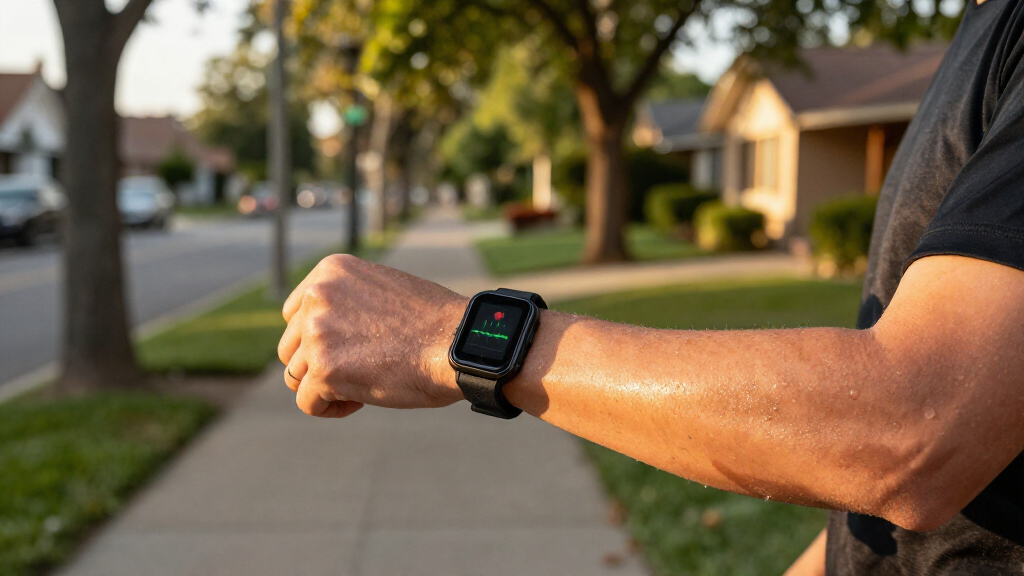
Imagine your watch reports an unusual rhythm while you are sitting at home. Check that it fits correctly and follow the manufacturer’s instructions for repeating the reading, if appropriate. Make a note of when it happened and any symptoms, then contact a qualified health professional to ask what to do. Do not start, stop, or change medication based on a wearable alert.
If you have severe symptoms, such as chest pain, fainting, or severe trouble breathing, seek urgent medical care. A normal-looking tracker reading cannot rule out a problem when you feel seriously unwell. Conversely, a single odd reading without symptoms can reflect a measurement error or a temporary change, but persistent concerns still deserve professional advice.
Some devices also estimate blood oxygen or offer blood-pressure features, but accuracy and availability differ. A consumer estimate should not replace a validated medical device or clinical assessment. Before relying on a health feature, check what it is designed to do and ask your clinician how to interpret it in your own situation.
Frequently Asked Questions
How accurate are fitness trackers?
Accuracy varies by device, sensor, fit, activity, and the measure being tracked. A reading may help you follow a broad pattern, while still being too imprecise for a medical decision. Use clinical equipment and professional guidance when you need a health assessment.
Can a fitness tracker detect heart problems?
Some supported models can record an ECG or flag certain irregular rhythms, but they do not detect every heart problem. Availability and regulatory status vary by model and country. Ask a health professional about an alert, especially if you have symptoms.
How does a tracker estimate sleep?
A tracker uses signals such as movement and heart rate to infer when you may be asleep or awake. Its sleep duration can be a useful rough summary, but sleep-stage estimates are less certain than measurements from a clinical sleep study. If sleep problems persist, discuss them with a health professional.
Can I share tracker data with my doctor?
Many apps let you share or export some information, though the format and usefulness vary. Ask your clinician whether a specific measure or time period would help with your care. A chart from a tracker is supporting information, not a substitute for an assessment.
What should I do if a reading looks alarming?
Check the fit and repeat the measurement if that is appropriate for the device and situation. If the result stays unusual or you have concerns, contact a qualified health professional; seek urgent care for severe symptoms. Do not change treatment based only on a tracker reading.
Conclusion
Use a fitness tracker as a notebook for patterns, not a judge of your health. Choose the features you’ll actually wear, compare like with like, and bring persistent concerns to a qualified professional.
The most useful number may be the one that gets you out the door for a short walk—not the one glowing on your wrist at midnight.