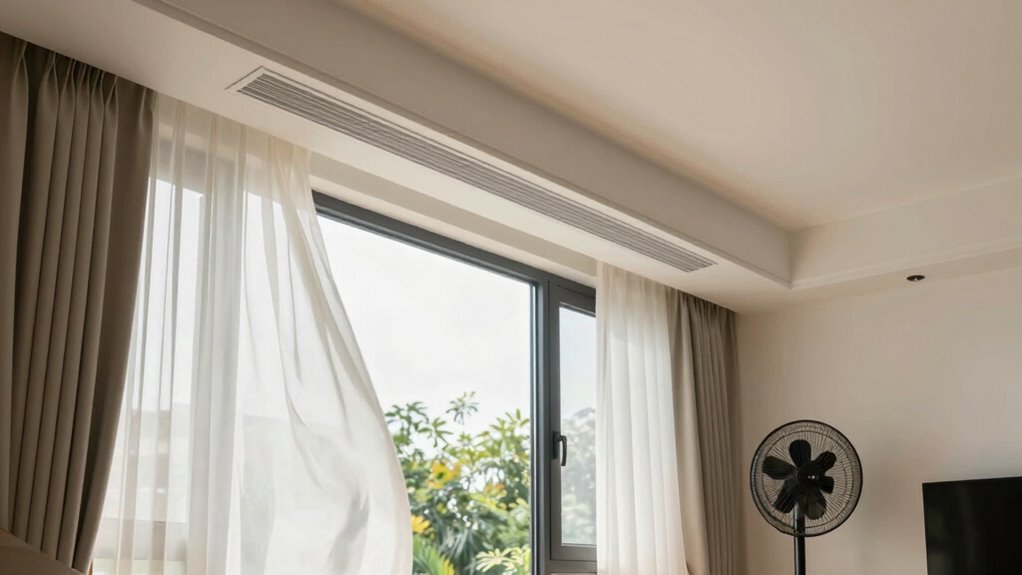
Most people ventilate incorrectly by not establishing proper airflow patterns. Instead of random air movement, you should create a steady flow that pulls fresh air in from one side and pushes stale air out from another. Keep doors open, position vents strategically, and use fans near windows to improve circulation. This simple adjustment prevents stagnant pockets, reduces odors, and boosts indoor air quality. If you’re ready to optimize your home’s airflow, stay tuned for some practical tips.
Key Takeaways
- Ensure fresh air enters from one side of the home while stale air exits from another to promote proper airflow.
- Open doors and position vents strategically to create a steady, directional airflow pattern.
- Use exhaust fans in kitchens and bathrooms to effectively remove moisture and pollutants.
- Avoid sealing your home too tightly; maintain balanced intake and exhaust to prevent stagnation.
- Regularly check and adjust vents, filters, and fans to optimize circulation and indoor air quality.

Are you ventilating your home the right way? Many people overlook how vital proper airflow patterns are to achieving effective ventilation. If your home feels stuffy, humid, or has lingering odors, it’s often due to poor airflow management rather than a lack of ventilation altogether. Understanding how airflow patterns work can dramatically improve your ventilation efficiency, making your indoor environment healthier and more comfortable.
First, consider how air moves through your space. Proper airflow patterns ensure fresh air reaches every room and stale air is expelled efficiently. If air circulates in a circular or stagnant manner, it creates pockets where pollutants, allergens, and moisture can accumulate. To avoid this, you should aim for a consistent flow that pulls fresh air in from one area, like a window or vent, and pushes stale air out through another. This simple change can prevent the air from swirling around in dead zones, which diminishes ventilation effectiveness.
Ensure consistent airflow by pulling fresh air in and pushing stale air out for better ventilation.
Your home’s layout plays a critical role in how airflow patterns develop. Narrow hallways, closed doors, and obstructed vents can disrupt proper circulation. To optimize ventilation efficiency, open doors where possible, and position vents or fans strategically to encourage a steady, directional airflow. For instance, placing a fan near a window can help draw fresh air in, while an exhaust fan in the kitchen or bathroom pulls stale air out. This creates a pressure difference that promotes a more controlled and beneficial airflow pattern.
Another key point is to avoid creating negative or positive pressure imbalances. If your home is too tightly sealed without proper exhaust or intake, airflow can become stagnant or unbalanced. This not only hampers ventilation efficiency but can also lead to moisture buildup and mold growth. Make sure your ventilation system includes balanced intake and exhaust points, ideally with mechanical systems like HRVs or ERVs, which are designed to optimize airflow patterns and maintain consistent air exchange rates.
Additionally, understanding airflow patterns can help you troubleshoot common ventilation issues and select the right equipment for your home. Regularly check your vents, filters, and fans to ensure they’re working correctly. Use airflow indicators, if needed, to verify that fresh air is circulating properly throughout your home. Small adjustments, like repositioning a vent or adding a ceiling fan, can greatly enhance airflow patterns and, ultimately, your home’s ventilation efficiency. When you focus on these aspects, you’ll breathe easier knowing your home is properly ventilated, healthier, and more energy-efficient.
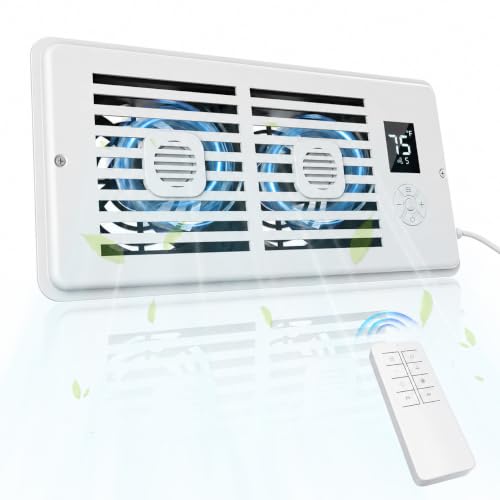
Orabriz AC Vent Booster Fan 4" x 10" Register, Quiet 10-Speed Air Booster with Thermostat Control, Remote & LCD Display, Aroma Pad Slot, Improves Airflow for Small Rooms
【Installation Note for Ceiling Vents 】Before purchasing, please measure your register opening and choose the correct size, as…
As an affiliate, we earn on qualifying purchases.
As an affiliate, we earn on qualifying purchases.
Frequently Asked Questions
Can I Ventilate Effectively With Just Windows?
Yes, you can ventilate effectively with just windows if you create proper cross airflow. Open windows on opposite sides of your space to allow fresh air to enter and stale air to escape. This improves ventilation by promoting natural airflow. Make sure to adjust window positions and opening sizes to maximize airflow, especially during mild weather. Properly managed window ventilation helps reduce indoor pollutants and improves overall air quality.
How Often Should I Change My Air Filters?
To keep your air fresh, it’s best to change your air filters before they reach the end of their lifespan, usually every 1 to 3 months. Following a regular ventilation schedule ensures your indoor air stays clean and healthy. Don’t wait for visible dirt—routine replacements help maintain ideal airflow and efficiency. By staying proactive, you ensure your space remains comfortable and well-ventilated all year round.
Is Natural Ventilation Enough During Winter?
During winter, natural ventilation alone often isn’t enough because cold air can reduce indoor humidity and compromise insulation. To maintain a healthy balance, you should open windows briefly for fresh air, but rely on other methods like humidifiers and proper insulation to keep indoor humidity levels comfortable. This way, you prevent drafts and heat loss while ensuring good airflow, making your home more comfortable and energy-efficient during colder months.
What Are Signs of Poor Indoor Air Quality?
Noticing persistent odors, unexplained allergies, or lingering stuffiness? These are signs your indoor air quality might be suffering. Air pollutant sources like dust, mold, or chemicals can accumulate unnoticed, while poor ventilation effectiveness traps these pollutants inside. If you suspect trouble, it’s time to check your airflow. Proper ventilation helps remove pollutants, improve air quality, and keep your environment fresh—don’t ignore these subtle clues before they worsen.
Are There Any Smart Devices to Improve Ventilation?
Yes, there are smart devices that can improve your ventilation. Smart air purifiers with sensors monitor air quality and automatically adjust their operation to keep the air clean. Ventilation sensors detect indoor air quality and airflow issues, alerting you when ventilation needs improvement. These devices work together to optimize airflow, reduce pollutants, and maintain healthier indoor environments, making your home safer and more comfortable.

iLIVING 12" Wall Mounted Shutter Exhaust Fan, Automatic Shutter, with Thermostat and Variable Speed controller, 0.6A, 960 CFM, 1400 SQF Coverage Area Silver (ILG8SF12V-ST)
POWERFUL AIR VENTILATOR – 960 CFM, 115V, 0.6A, 1/20 Horse Power, 1650 RPM, Coverage up to 1400 square…
As an affiliate, we earn on qualifying purchases.
As an affiliate, we earn on qualifying purchases.
Conclusion
Remember, proper ventilation isn’t just about opening windows; it’s about mastering the airflow dance. Like a skilled conductor guiding an orchestra, you control the movement of air to create a healthier space. Think of it as channeling the wisdom of ancient architects who understood that good airflow is the foundation of a thriving home. Get it right, and you’ll breathe easier, knowing you’re keeping your environment as balanced and harmonious as a symphony in perfect tune.

Kinetheme 12000BTU Mini Split AC/Heating System, 17 SEER2 115V Inverter Air Conditioner Cools/Heats Up to 750 Sq.Ft, Complete Installation Kit
𝐑𝐚𝐩𝐢𝐝 𝐂𝐨𝐨𝐥𝐢𝐧𝐠 & 𝐇𝐞𝐚𝐭𝐢𝐧𝐠 𝐟𝐨𝐫 𝐈𝐧𝐬𝐭𝐚𝐧𝐭 𝐂𝐨𝐦𝐟𝐨𝐫𝐭: This mini split AC unit delivers 12000BTU powerful cooling and heating,…
As an affiliate, we earn on qualifying purchases.
As an affiliate, we earn on qualifying purchases.

Comfort Zone Window Fan for Bedroom, 9 inch 3 Speed Dual Fans with Auto-Locking Expanders, 3 Modes (Cool, Circulate, Exhaust), Remote Control, Fabric Cover plus Bug Screen, White
ADJUSTABLE 3-SPEED CONTROL: Tailor the airflow and optimize air circulation in any environment with the 3-speed functionality of…
As an affiliate, we earn on qualifying purchases.
As an affiliate, we earn on qualifying purchases.