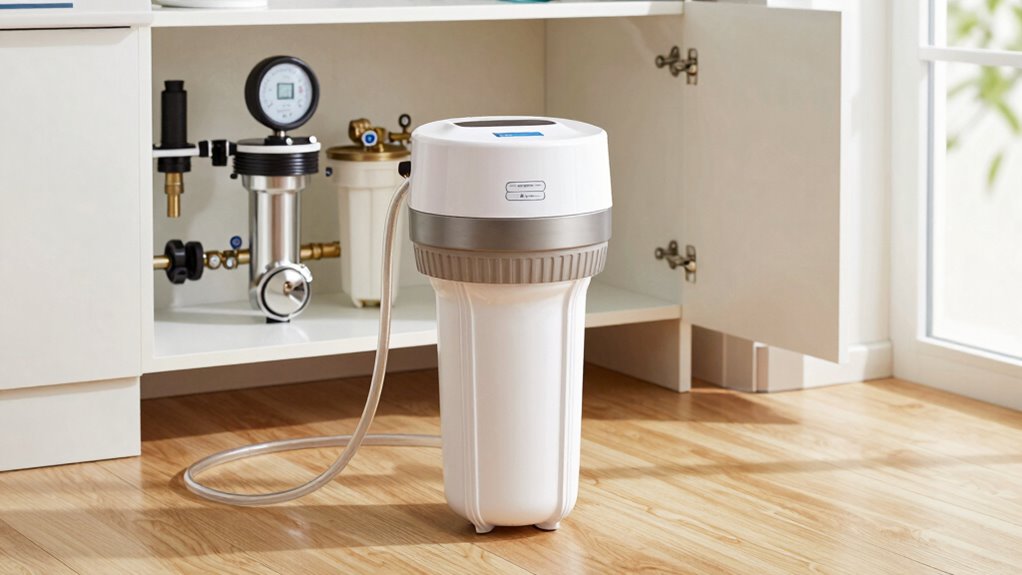

To find the right size for your whole-house water filter in just three minutes, start by measuring your household’s peak water flow using your water meter or container during busy times. Determine your flow rate in gallons per minute (GPM) and note your daily consumption. Match these numbers with a filter that offers adequate capacity without restricting flow. Proper sizing prevents pressure drops and ensures longevity—stay tuned to learn more about matching filters perfectly to your home’s needs.

Get health and wellness essentials delivered free — and shop member deals
- Fast, free delivery on millions of items
- Access to Prime Big Deal Days deals on October 6–7
- Prime Video, Amazon Music and more included
Key Takeaways
- Measure your household’s peak water flow by timing fixture usage during busy periods to determine required GPM.
- Calculate daily water consumption by recording meter readings during high-demand times to estimate filter capacity needs.
- Match the filter’s flow rate (GPM) and capacity to your household’s peak usage and water quality requirements.
- Ensure filter housing size aligns with your plumbing pipe diameters and flow demands for proper fit and performance.
- Consider manufacturer guidelines and professional advice to select a filter that maintains pressure, efficiency, and longevity.
As an affiliate, we earn on qualifying purchases.
Why Choosing the Right Water Filter Size Matters for Your Home
Choosing the right water filter size is essential because an improperly sized filter can lead to poor water flow or inadequate filtration. If your filter is too small, it won’t effectively improve your water quality, leaving contaminants behind. Conversely, an oversized filter might last longer but could cause unnecessary expense and installation challenges. Proper sizing guarantees your system maintains peak water quality by removing impurities efficiently. Additionally, the right size directly impacts the filter lifespan; a well-matched filter reduces stress on the system and extends its operational life. When you select the correct filter size, you ensure consistent water flow, better filtration, and longer-lasting performance. This way, your whole-house system works reliably, providing clean, safe water for years to come.
As an affiliate, we earn on qualifying purchases.
The Basics: Flow Rate and Filter Capacity Explained
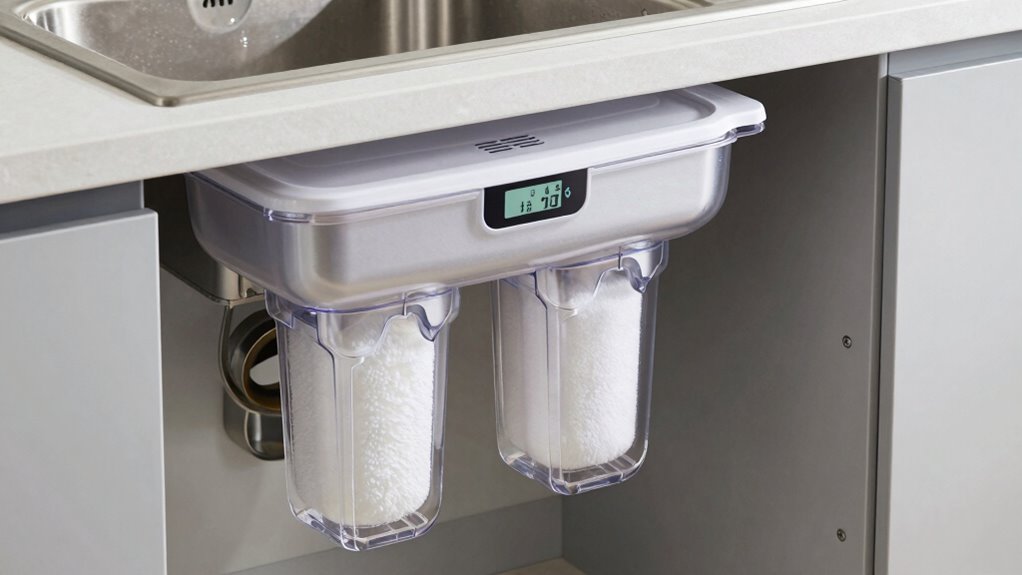
Understanding flow rate and filter capacity is key to guaranteeing your whole-house water filter functions effectively. Flow rate measures how much water passes through the system, usually in gallons per minute (GPM), which depends on your water pressure. If your pressure drops, flow rate decreases, affecting performance. Filter capacity indicates how much water the filtration media can handle before needing replacement. Choosing a filter with the right capacity assures you won’t have to change it too often or risk reduced filtration. Keep in mind that a higher flow rate requires a larger filter or more advanced filtration media to maintain water quality. Additionally, considering your household’s water usage patterns helps select the most suitable system. Properly assessing system sizing ensures your filter maintains optimal performance and longevity. Balancing these factors ensures your system provides steady, clean water without unnecessary maintenance or pressure drops. Monitoring your system demands over time can help you make adjustments as your household’s water needs change. Regularly checking your filter’s lifespan can prevent unexpected failures and ensure consistent water quality.
large capacity water filter cartridge
As an affiliate, we earn on qualifying purchases.
As an affiliate, we earn on qualifying purchases.
How to Quickly Measure Your Household’s Water Usage

To determine your household’s water needs, start by tracking your daily water usage over a few days. This helps you identify peak times and understand when your water demand is highest. With this information, you can assess your family’s water needs and choose a filter that matches your usage patterns.
Track Daily Water Volume
Tracking your household’s daily water usage is simpler than you might think. Start by observing your water meter first thing in the morning and again at the end of the day. Subtract the initial reading from the final one to determine your total daily water volume. This quick method helps you identify patterns and areas where water conservation is possible. If you notice high usage, consider plumbing upgrades like low-flow fixtures or fixing leaks to reduce waste. Monitoring daily water volume also guides you in choosing the right-sized whole-house water filter, ensuring efficient performance without overpaying. Regular tracking keeps you aware of your consumption habits, saving both water and money while supporting your conservation efforts. Being aware of early warning signs can help prevent costly repairs and inefficiencies. Additionally, understanding your water usage patterns can boost your overall curiosity about home systems and encourage proactive maintenance. Tracking your water consumption data regularly enhances your ability to optimize water efficiency, making your home more sustainable and cost-effective. Incorporating goal tracking strategies can motivate you to maintain consistent habits and achieve long-term savings. It’s a straightforward step toward smarter water management in your home.
Calculate Peak Usage Times
Identifying your household’s peak water usage times is essential for optimizing your plumbing and choosing the right water filtration system. To do this quickly, observe when multiple fixtures are used simultaneously, like mornings or evenings. Track water flow during these periods to pinpoint your highest demand. This practice aligns with best vacuum principles of assessing performance under real-world conditions, ensuring your system can handle the load. Use a simple timer or a water meter to measure flow during typical busy times. Here’s a quick reference:
| Time of Day | Typical Usage | Notes |
|---|---|---|
| Morning | Showers, dishes | Highest demand |
| Afternoon | Laundry, cooking | Moderate demand |
| Evening | Bathing, cleaning | Peak water use |
Knowing these times ensures your water filtration system is right-sized for your household’s needs.
Assess Family Water Needs
Once you’ve observed when your household peaks in water use, the next step is to measure just how much water your family consumes during those busy times. You can do this quickly by timing how long it takes to fill a known container, like a gallon jug, during peak hours. This helps you determine your household’s daily water usage, which is essential for choosing the right whole-house water filter size. Remember, understanding your water needs also involves considering your water quality—if your water has high mineral content or contaminants, you’ll need a filter capable of handling those issues. Accurate measurement assures proper filter installation, preventing under- or over-filtering and ensuring your family always has clean, safe water. Additionally, knowing your household’s water demand can guide you in selecting a filter with the appropriate flow rate to meet your daily needs efficiently.
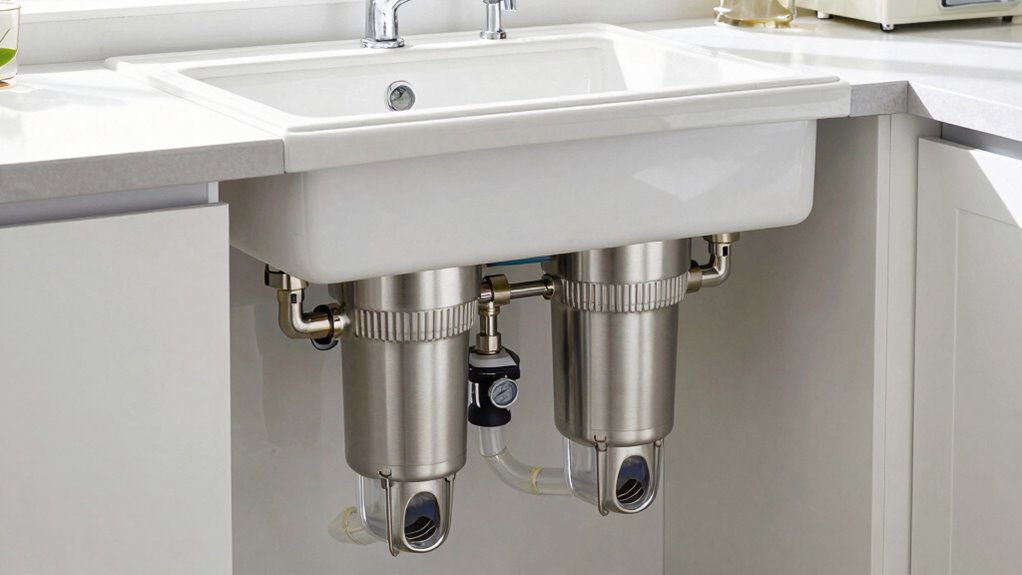
plumbing compatible water filter housing
As an affiliate, we earn on qualifying purchases.
As an affiliate, we earn on qualifying purchases.
Match Your Water Needs to the Perfect Filter Size

Choosing the right filter size is essential to effectively meet your water needs. Your water quality influences the size of the filter you need; higher mineral content or contaminants often require a larger or more robust system. If your household uses a lot of water daily, opt for a filter with a higher flow rate to prevent pressure drops. Smaller filters might save space but can lead to more frequent filter maintenance and replacement, which affects overall efficiency. Matching your water needs ensures you get clean, consistent water without overpaying for an oversized system. Proper sizing minimizes strain on your water system and keeps your filter functioning at its best longer. Additionally, understanding your water’s contaminant levels can help you select the most effective filter size for your situation. Considering filter lifespan can also help you choose a system that reduces overall maintenance and replacement costs. Being aware of your water consumption patterns helps you select a system that balances capacity and efficiency. Regularly monitoring your water quality can help you adjust your filter choice as your household’s needs change, ensuring ongoing optimal performance. Keeping in mind microplastic presence in your water can further inform your filtering needs for improved health and safety. Remember, selecting the right size helps maintain water quality and reduces maintenance hassles, saving you time and money.
Common Mistakes to Avoid When Picking a Whole-House Water Filter
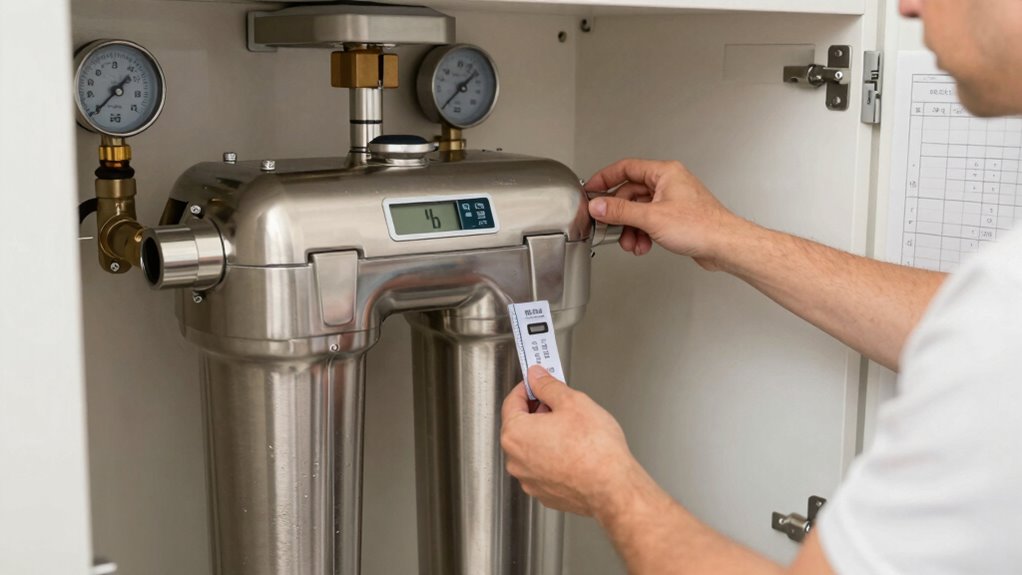
Selecting the right filter size is just one part of guaranteeing your whole-house water system works effectively. A common mistake is rushing into DIY installation without understanding your home’s specific water treatment needs. Skipping proper research can lead to choosing a filter that’s either too small, reducing flow and efficiency, or too large, wasting resources. Another mistake is neglecting flow rate requirements, which can cause pressure drops and poor water quality. Also, avoid assuming all filters are the same; each system has unique specifications that should be carefully considered. Failing to follow manufacturer instructions or ignoring professional advice can compromise your water treatment process. Be cautious and informed—taking the time to select the correct filter size and understand installation ensures your system performs at its best and lasts longer. Properly considering your flow rate needs can prevent system failure and ensure consistent water pressure throughout your home. Additionally, understanding system capacity helps in choosing a filter that maintains optimal performance over time. To maximize efficiency, it’s essential to evaluate your home’s water usage patterns and select a filter that aligns with those needs. Moreover, understanding filter lifespan can help you plan for timely maintenance and replacements.
How to Ensure Your Water Filter Fits Your Plumbing and Flow Requirements
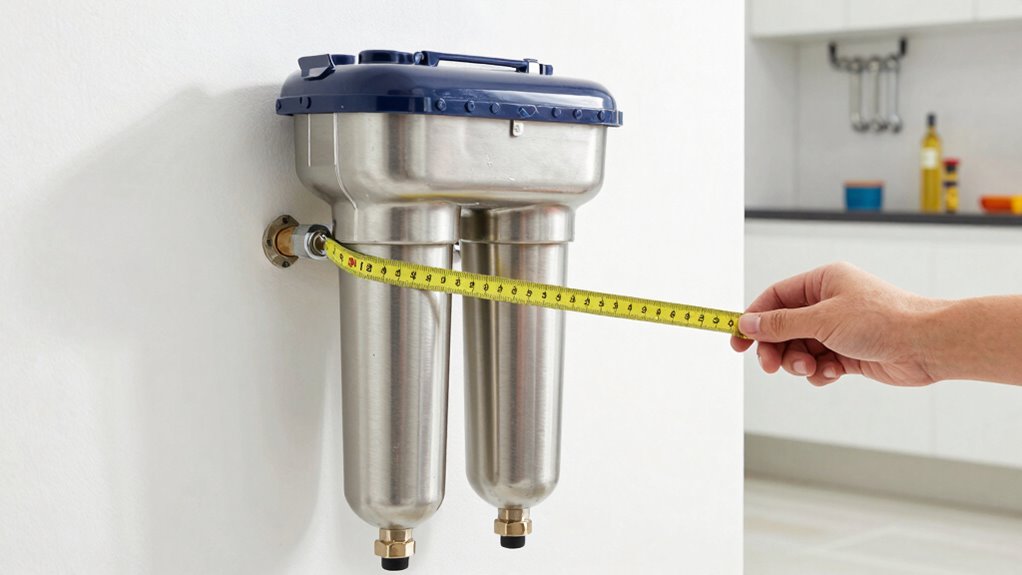
To guarantee your water filter fits your plumbing and flow needs, start by measuring your home’s water pressure and flow rate accurately. This ensures plumbing compatibility, preventing issues like low flow or pressure drops. Use a flow meter and pressure gauge to gather precise data. When selecting your filter, check its flow rate capacity to match your household’s demands. Proper filter installation tips include ensuring the filter housing aligns with your pipe sizes and is installed in a location that allows easy access for maintenance. Confirm the connections are secure and leak-free. Matching your filter’s specifications with your plumbing system guarantees ideal performance and longevity. Additionally, understanding your water pressure helps you choose a filter designed to operate efficiently within your home’s system. Being aware of your flow rate is equally important to prevent undersized filters that could lead to inadequate filtration or system strain. Conducting a system assessment allows you to identify any potential issues before installation, ensuring your whole-house water filter functions optimally and lasts longer. Taking these steps helps you avoid future problems and ensures your whole-house water filter effectively meets your household’s flow and plumbing requirements.
Maintaining Your Water Filter for Peak Performance
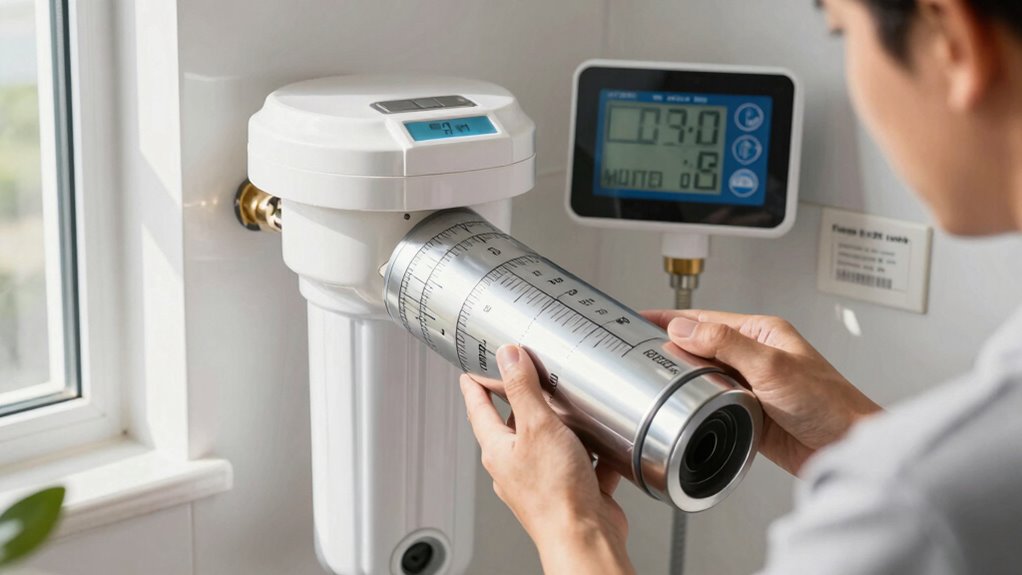
Regular maintenance is essential to keep your whole-house water filter working at its best. Performing regular filter maintenance ensures your water quality remains high and contaminants are effectively removed. Check your filter according to the manufacturer’s recommended schedule—most need replacement every 6 to 12 months. Keep an eye out for signs of reduced water flow or changes in water taste, which indicate it’s time to replace the filter. Clean any filter housing components as needed to prevent buildup. Proper maintenance not only prolongs your filter’s lifespan but also guarantees peak performance. Consistent care helps you enjoy clean, safe water and prevents costly repairs. Remember, a well-maintained filter is key to maintaining superior water quality throughout your home.
Frequently Asked Questions
Can a Larger Filter Improve Water Quality Beyond Capacity Limits?
A larger filter won’t necessarily improve water quality beyond its capacity limits. If the filter’s capacity is exceeded, it can’t effectively remove contaminants, regardless of size. Using a properly sized filter ensures ideal water quality by maintaining filtration efficiency. So, instead of opting for a bigger filter, focus on selecting one that matches your water usage and contaminant levels for the best results.
How Often Should I Replace My Whole-House Water Filter?
On average, you should replace your whole-house water filter every 6 to 12 months. Did you know that a filter’s lifespan can vary based on water quality and usage? Sticking to a consistent replacement schedule guarantees peak filtration and prevents contaminants from passing through. Regular maintenance keeps your water clean and safe, so mark your calendar and stay ahead of filter wear to maintain the best water quality.
Are There Specific Filters for Well Water Versus City Water?
Yes, there are specific filters for well water versus city water. Well water often contains sediments, bacteria, and minerals that require specialized filters like sediment or UV filters. City water generally has chlorine and other chemicals, so activated carbon filters work well. You should choose a filter designed for your water source to guarantee effective purification and protect your plumbing and health. Always check your water quality before selecting a filter type.
What Signs Indicate My Filter Needs an Upgrade?
If you notice reduced water pressure, strange tastes, or mineral buildup on fixtures, it’s time to upgrade your filter. These signs indicate your filter’s lifespan is ending, and it can’t handle mineral buildup effectively anymore. An older filter may also struggle to remove contaminants properly. Upgrading guarantees cleaner water, maintains flow, and prevents issues caused by a saturated or clogged filter. Regular checks help you stay ahead of the need for replacement.
Does Water Temperature Affect Filter Performance and Sizing?
Yes, water temperature impacts filter performance and sizing. Hotter water can reduce filter efficiency by causing materials to degrade faster, while colder water may slow filtration processes. If your water temperature varies considerably, you might need a larger or more durable filter to maintain ideal performance. Always consider temperature impact when choosing a filter size, ensuring it can handle your specific water conditions for consistent, effective filtration.
Conclusion
Choosing the right water filter size is quick and easy once you know your household’s needs. When you match your flow rate and capacity accurately, you’ll discover the secret to crystal-clear, pure water—faster than you can say “spotless”! Don’t settle for a filter that’s too small or too big; it’s your home’s water quality at stake. Take a few minutes to get it right, and enjoy endless, pristine water flowing effortlessly every day.
Fall Picks
fall essentials
As an affiliate, we earn on qualifying purchases.