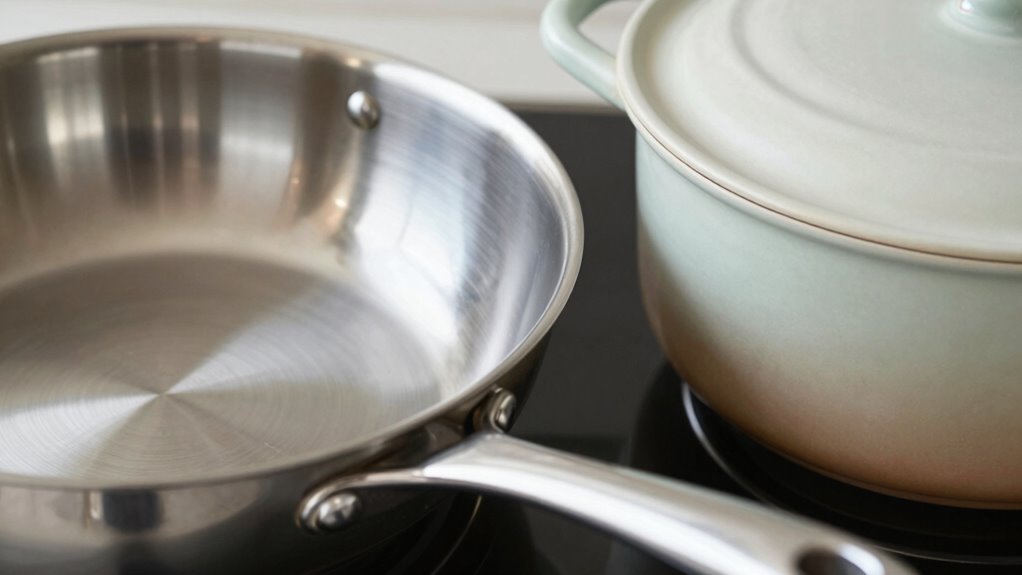

Stainless steel cookware offers durability, excellent heat conduction, and long-term value, but can scratch and requires proper maintenance. Ceramic cookware provides a non-stick experience and gentle heating but is more fragile, prone to chipping, and less durable over time. The tradeoffs often skipped include how each handles temperature changes, their impact on food safety, and environmental factors. To make the best choice for your needs, explore these key differences below.

Get health and wellness essentials delivered free with Prime
- Fast, free delivery on millions of items
- Prime Video, Amazon Music and more included
- Member-only deals all year
Key Takeaways
- Stainless steel offers excellent durability and even heat distribution, while ceramic cookware provides a non-stick surface but is more prone to chipping.
- Ceramic coatings are less resistant to scratching and impact, making them more fragile compared to stainless steel’s scratch and warp resistance.
- Stainless steel tends to be more expensive upfront but lasts longer, whereas ceramic cookware is more affordable but may require replacement sooner.
- Proper cleaning and handling are crucial; stainless steel is easier to maintain, while ceramic coatings can degrade with abrasive cleaning.
- Both materials are generally safe and non-reactive, but ceramic chips can expose reactive layers, potentially affecting food safety over time.
As an affiliate, we earn on qualifying purchases.
What Are the Construction and Materials Differences Between Stainless Steel and Ceramic Cookware?

Stainless steel and ceramic cookware differ markedly in their construction and materials. Material composition is key: stainless steel is made from an alloy of iron, chromium, and other metals, giving it strength and resistance to rust. Ceramic cookware, on the other hand, is typically made from clay or other natural materials fused at high temperatures. Manufacturing techniques also vary considerably. Stainless steel involves forging or rolling sheets into pots and pans, often with multi-layered cores for heat distribution. Ceramic cookware is produced through shaping clay or similar materials, followed by firing at high temperatures to create a durable, non-stick surface. These differences influence not only their appearance but also how they perform in your kitchen, shaping their suitability for various cooking styles. Additionally, understanding the material durability of each type can help you choose cookware that will last longer with proper care. The manufacturing process also impacts the overall quality and longevity of the cookware, which is essential to consider when making a purchase. For example, the firing temperature in ceramic manufacturing affects the strength and resistance to chipping of the final product.
As an affiliate, we earn on qualifying purchases.
What Are the Durability Tradeoffs of Stainless Steel and Ceramic Cookware?
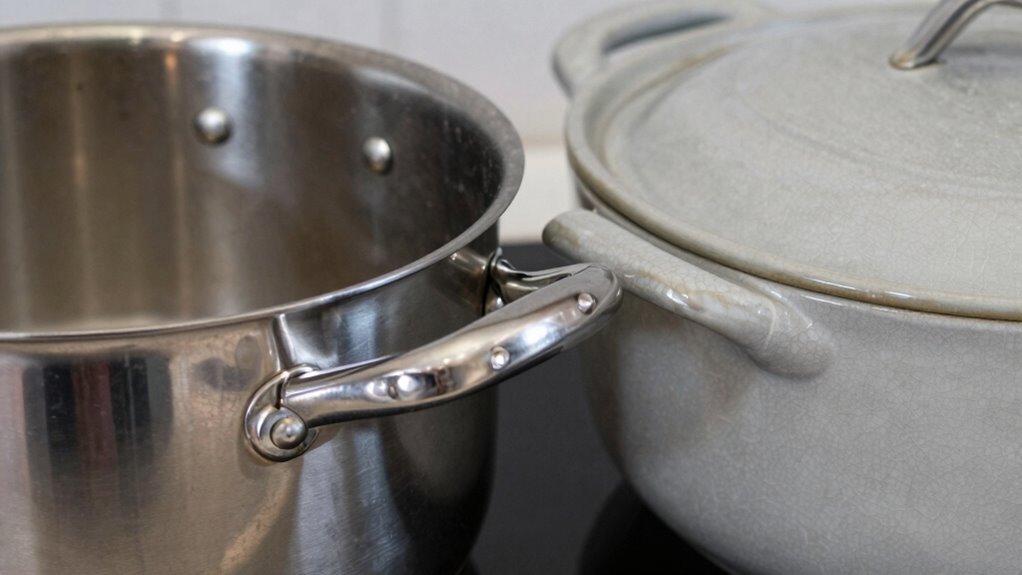
You should consider how each material handles surface damage, as ceramic coatings can chip more easily than stainless steel. Long-term, corrosion risks differ, with stainless steel offering better resistance but still vulnerable if damaged. Surface durability is a crucial aspect, as the integrity of the coating can affect lifespan and performance. Additionally, the presence of engine performance parts can influence the wear and longevity of cookware materials by exposing them to higher temperatures and stress. It’s also important to account for thermal expansion, since different materials expand at varying rates when heated, impacting their overall durability.
Resistance to Surface Damage
While both stainless steel and ceramic cookware offer durability, their resistance to surface damage varies considerably. Stainless steel is highly resistant to dents and warping, but it can develop surface scratches over time, especially if you use metal utensils. These scratches may mar its appearance but usually don’t affect performance. Ceramic cookware, on the other hand, has a fragile coating that’s susceptible to chipping and scratching if not handled carefully. Its coating durability is generally lower, making it more vulnerable to surface damage from abrasive cleaning or metal tools. If you’re looking for cookware that can withstand rough handling without visible damage, stainless steel is the better choice. However, if you prioritize a smooth, scratch-free surface, you’ll need to treat ceramic cookware with extra care.
Long-Term Corrosion Risks
Although both stainless steel and ceramic cookware are designed for long-term use, their susceptibility to corrosion presents important durability considerations. Stainless steel generally offers good corrosion resistance, but it can still develop surface degradation if exposed to harsh chemicals or prolonged moisture. Over time, this can lead to pitting or staining, weakening the material. Proper care and maintenance can significantly reduce these risks and extend the lifespan of stainless steel cookware. Additionally, factors like metal composition influence how well stainless steel resists corrosion, with high-quality alloys offering better durability. Ceramic cookware, on the other hand, tends to resist corrosion better initially, thanks to its non-reactive surface. However, cracks or chips in the ceramic coating can expose underlying materials, increasing the risk of corrosion and surface degradation. While neither type is immune, stainless steel’s durability depends on maintenance, and ceramic’s longevity hinges on careful handling. Understanding these corrosion risks helps you choose cookware that withstands the test of time. Proper cleaning techniques and avoiding sudden temperature changes can also significantly extend the lifespan of both materials, especially in the context of gear care tips relevant to cookware maintenance.
Impact of Thermal Expansion
Both stainless steel and ceramic cookware face challenges related to thermal expansion, which can impact their durability over time. As they heat and cool, their materials expand and contract at different rates, risking warping or cracking if not properly managed. Poor material compatibility can exacerbate these issues, leading to weakened cookware. To minimize problems, manufacturers often select materials with similar thermal expansion properties or incorporate layered designs.
- Differences in thermal expansion rates can cause stress at material interfaces
- Warping may occur if cookware isn’t designed for high thermal expansion
- Ceramic coatings may crack if subjected to rapid temperature changes
- Proper material compatibility reduces the risk of damage over time
- Consistent heating practices help manage thermal expansion effects
As an affiliate, we earn on qualifying purchases.
How Do Heat Conductivity and Distribution Compare in Stainless Steel and Ceramic Cookware?
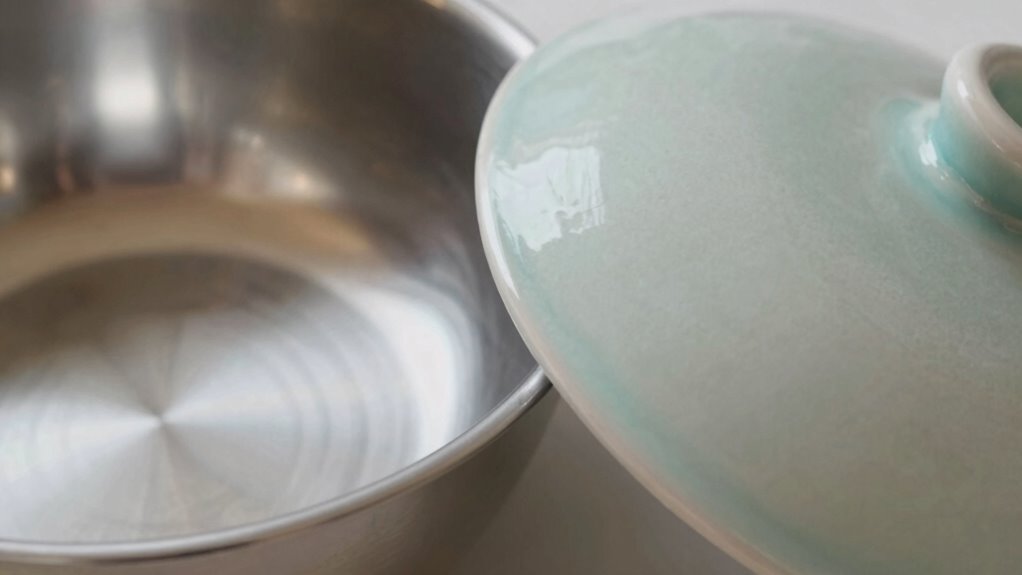
Heat conductivity and distribution are key factors to weigh when choosing between stainless steel and ceramic cookware. You’ll notice that stainless steel generally offers better heat transfer due to its layered construction, often with an aluminum or copper core, which enhances thermal performance. This means your food cooks more evenly and quickly. Ceramic cookware, on the other hand, tends to have lower thermal conductivity, leading to hotspots and uneven heat distribution. While ceramics can retain heat well once heated, they don’t transfer it as efficiently as stainless steel. If precise temperature control and even cooking are priorities, stainless steel’s superior heat transfer makes it a strong choice. However, ceramic’s slower, more gentle heat can be advantageous for delicate dishes.
As an affiliate, we earn on qualifying purchases.
How Do Maintenance and Cleaning Differ for Stainless Steel and Ceramic Cookware?

Cleaning and maintaining stainless steel and ceramic cookware require different approaches to keep them in top shape. You’ll find that tools and methods vary, with some surfaces needing gentler care than others. Understanding these differences helps extend their lifespan and maintain their appearance. Additionally, selecting the appropriate capacity of your cookware can impact its durability and ease of maintenance over time. Proper cleaning techniques also involve considering the material properties of each type, which influence how they respond to various cleaning agents and methods. Being aware of surface finishes can also aid in choosing suitable cleaning tools that won’t scratch or damage the cookware. Moreover, thermal conductivity differences between materials can affect cleaning practices, especially when removing stubborn residues or burns.
Cleaning Methods and Tools
Maintaining your cookware requires different approaches depending on the material. When it comes to cleaning techniques, stainless steel often benefits from routine scrubbing with non-abrasive cleaning tools, like soft sponges or brushes, to preserve its shine. Ceramic cookware, on the other hand, should be cleaned gently with non-abrasive cloths or sponges to avoid scratching the delicate coating. For stubborn stains, stainless steel can handle baking soda pastes or vinegar solutions, while ceramic requires mild detergents. Avoid harsh abrasives on either type to prevent damage. Proper cleaning tools are essential—use microfiber cloths for ceramic and stainless steel scrubbers for stainless steel. These methods help maintain cookware performance and appearance over time.
Maintenance Frequency and Tips
Because of their different materials, stainless steel and ceramic cookware require varying maintenance schedules to stay in top condition. Stainless steel benefits from regular cleaning routines, such as polishing and removing stains, to maintain its shine and prevent corrosion. You should clean ceramic cookware after each use with gentle, non-abrasive tools to avoid damaging the surface. For storage tips, keep stainless steel pots and pans stacked carefully to prevent scratches, and avoid storing heavy items on ceramic pieces to prevent chipping. While stainless steel can handle more frequent cleaning, ceramic cookware needs gentle, infrequent washing to preserve its non-stick properties. Adjust your maintenance frequency based on usage, ensuring both types stay in good shape without unnecessary wear.
Durability and Longevity
While both stainless steel and ceramic cookware are designed to last, their durability heavily depends on how well you care for them. Proper maintenance ensures they retain their strength and appearance over time, affecting their longevity. Stainless steel cookware is known for its robustness and resistance to scratches, but aggressive cleaning can damage the surface. Ceramic cookware may be more prone to chipping or cracking if mishandled. Brand reputation influences quality, so investing in reputable brands can maximize lifespan. Additionally, the aesthetic appeal diminishes if cookware becomes stained or scratched. To extend durability, avoid metal utensils on ceramic surfaces and clean stainless steel with non-abrasive pads. Regularly inspecting for damage and following manufacturer instructions helps maintain both cookware’s performance and appearance. Material properties also play a significant role in how well each type withstands everyday use and cleaning practices. Understanding care and maintenance techniques can significantly impact how long your cookware remains in optimal condition. Proper cleaning methods, such as avoiding harsh chemicals, can further prevent damage and prolong the lifespan of both types of cookware. Using appropriate cleaning tools can help prevent unnecessary wear and tear over time. Incorporating proper storage practices can also help prevent unnecessary wear and tear over time.
How Do Non-Stick Coatings Affect Performance and Safety?
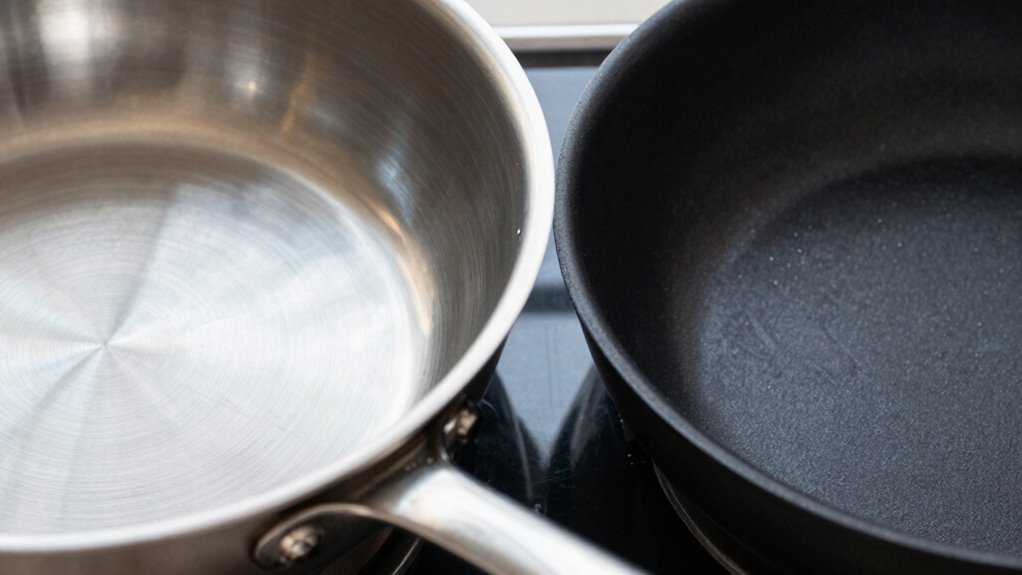
Non-stick coatings considerably influence both the performance and safety of cookware. They help you cook with less oil, making meals healthier, but can also raise concerns about non stick safety if the coating wears or chips. A durable coating ensures longer coating longevity, meaning fewer worries about particles mixing into your food. When the coating degrades, it can impact non-stick effectiveness and safety, possibly releasing harmful fumes if overheated. To maximize safety, avoid metal utensils and high heat. Here’s a quick glance:
| Aspect | Effect on Performance | Safety Considerations |
|---|---|---|
| Coating Quality | Better non-stick | Less risk of chips |
| Durability | Longer coating life | Reduced health concerns |
| Temperature Tolerance | Maintains non-stick | Prevents coating breakdown |
| Maintenance | Easy cleaning | Preserves non stick safety |
| Replacement Time | Less frequent | Ensures safety integrity |
Additionally, selecting cookware with high-quality coating durability can significantly extend the lifespan and safety of your pots and pans. Maintaining coating integrity is essential to prevent wear and ensure ongoing safety and performance. Proper care and avoiding abrasive cleaning methods further help preserve the non-stick surface and its safety features. Regularly inspecting your cookware for signs of damage can also help prevent the release of harmful fumes.
What Are the Price and Long-Term Value Differences?
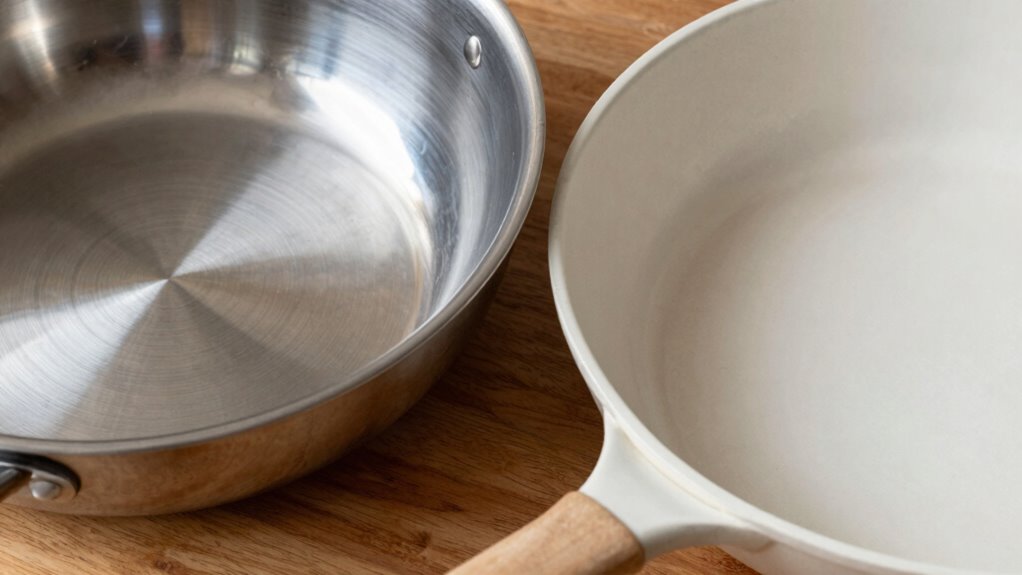
When comparing stainless and ceramic cookware, you’ll notice differences in initial costs and ongoing expenses. Stainless options often come with higher purchase prices but may require less maintenance, while ceramic cookware can be more affordable upfront but might need replacing sooner. Considering how long each lasts and what it costs to keep them in good shape helps you determine their true long-term value. Additionally, understanding butter storage can inform how you preserve and care for your cookware to maximize its lifespan.
Purchase Price Variations
The purchase price of stainless steel cookware generally falls between $100 and $500 per set, depending on brand, quality, and features. Higher-end brands with strong reputation often command premium prices due to durability and performance. You’ll also notice that aesthetic appeal influences cost, as sleek designs and polished finishes add to the price. Ceramic cookware tends to be cheaper upfront, with prices ranging from $50 to $200, but may require replacement sooner. When considering long-term value, stainless steel offers better longevity, justifying its higher initial expense. Additionally, premium brands may include features like better heat distribution and ergonomic handles, enhancing overall value. Keep in mind that investment in reputable brands can pay off through improved durability and aesthetics.
Maintenance and Upkeep Costs
Maintaining stainless steel cookware typically involves periodic cleaning to remove stains and prevent corrosion, but it generally requires less frequent attention than ceramic options. You’ll spend less on cleaning supplies and repairs, which boosts long-term value. Ceramic cookware may need more delicate handling and specialized cleaning methods, increasing maintenance costs. Additionally, ceramic coatings can chip or degrade, leading to more frequent replacements. From an environmental impact perspective, stainless steel’s longer lifespan reduces waste and resource consumption. Proper care and maintenance can further extend the longevity of stainless steel cookware, ensuring it remains a cost-effective choice over time. Moreover, stainless steel’s resistance to scratches and staining means it often stays looking new longer, which adds to its long-term durability. Overall, stainless steel offers a more cost-effective and eco-friendly maintenance profile, making it a smarter investment if you prioritize low upkeep and sustainability.
Longevity and Replacement Needs
Stainless steel cookware is known for its durability, often lasting decades with proper care. Its robust build means you typically won’t need to replace it frequently, which can save money over time. Brand reputation and user testimonials reveal that high-quality stainless steel brands tend to outperform cheaper options, offering better longevity and fewer replacement needs. However, lower-quality brands may wear out faster, especially if exposed to harsh cleaning or cooking conditions. Ceramic cookware, on the other hand, often shows signs of wear sooner, such as chipping or losing non-stick properties, leading to more frequent replacements. When considering long-term value, stainless steel generally offers better cost efficiency despite higher upfront prices. Proper care and choosing reputable brands are key to maximizing your cookware’s lifespan.
Which Cookware Is Better for Different Cooking Scenarios?
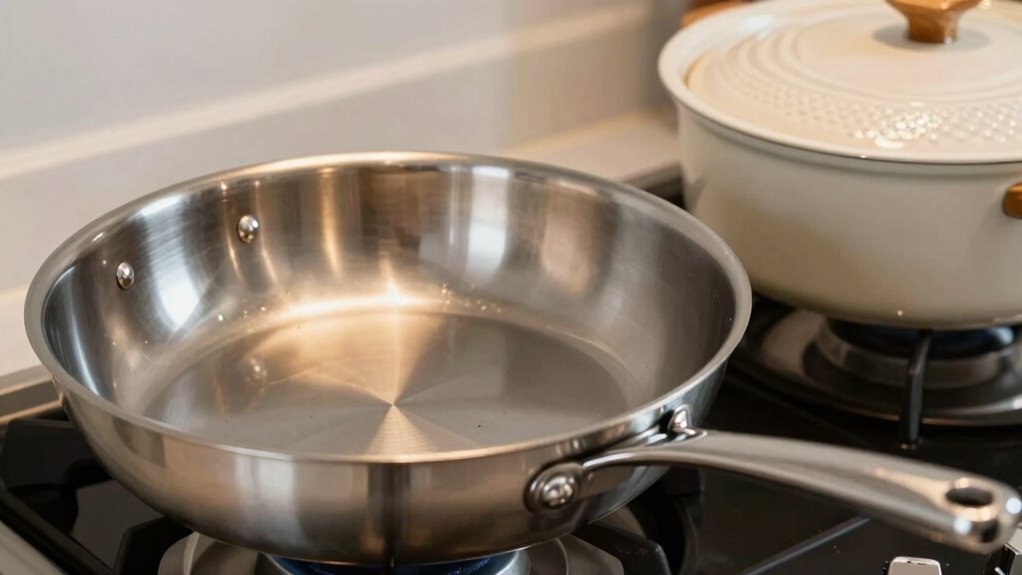
Choosing the right cookware depends on what you’re cooking and your priorities in the kitchen. For delicate sauces or searing meats, stainless steel offers quick heat response and durability. Ceramic cookware excels in slow, even heating, ideal for simmering or baking. Consider your focus on cooking safety—ceramic’s non-reactive surface is less likely to cause chemical reactions. If aesthetics matter, ceramic offers vibrant colors and a sleek look, enhancing your kitchen’s style. Use this guide to visualize your options:
| Cooking Scenario | Best Cookware | Key Benefit |
|---|---|---|
| Searing steaks | Stainless steel | High heat response |
| Slow simmering | Ceramic | Even heat distribution |
| Baking or roasting | Ceramic | Aesthetic appeal and safety |
| Quick boiling or frying | Stainless steel | Durability and safety |
Are Stainless Steel and Ceramic Cookware Reactive With Food?
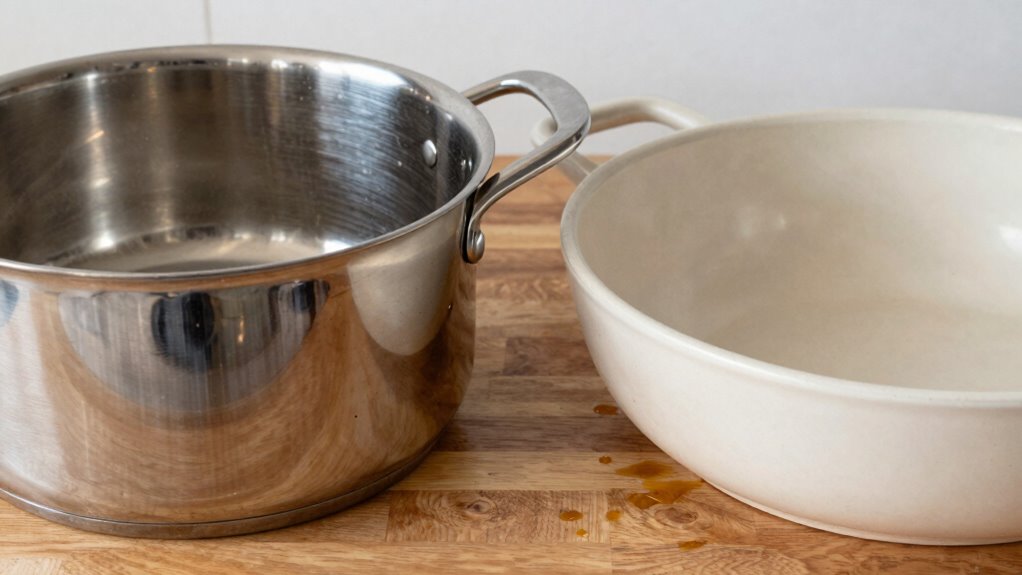
When considering cookware options, it’s important to understand how they interact with the food you prepare. Stainless steel is generally non-reactive, making it a safe choice for food safety, as it doesn’t leach chemicals into your meals. Ceramic cookware is also considered non-reactive, but some lower-quality versions may contain glazes or additives that could pose risks. Chemical reactivity varies between materials and can affect taste or safety.
Understanding cookware reactivity helps ensure safe, flavorful meals and reduces chemical leaching risks.
- Stainless steel resists corrosion and doesn’t alter food flavors
- Ceramic coatings can sometimes chip, exposing reactive materials
- Acidic foods may react with reactive metals, affecting taste
- Proper maintenance reduces the risk of chemical leaching
- Food safety depends on the quality and condition of the cookware
What Are the Environmental Impacts of Stainless Steel and Ceramic Cookware?
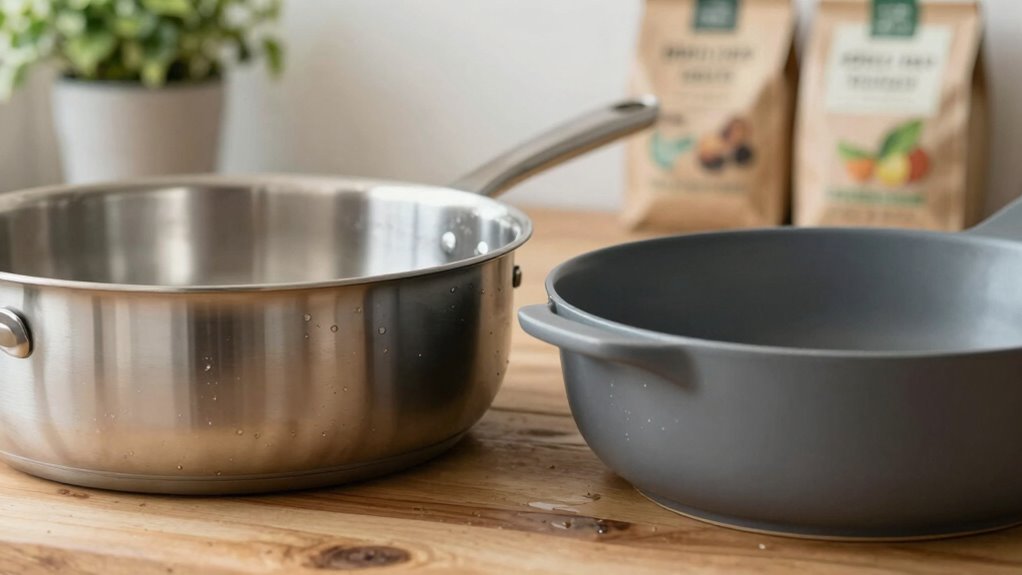
While both stainless steel and ceramic cookware have environmental impacts, their manufacturing and disposal processes differ markedly. Stainless steel involves eco friendly manufacturing, which often requires significant energy and resource use, but it’s highly durable and recyclable. Recycling and disposal of stainless steel are straightforward; most scrap can be melted down and reused, reducing waste. Ceramic cookware, on the other hand, is made from natural materials like clay and silica, which have lower environmental footprints during production. However, its disposal is less eco-friendly, as ceramics are difficult to recycle and tend to break down into non-biodegradable waste. Over time, ceramic cookware may contribute more to landfill waste unless properly repurposed or recycled. Your choices impact the environment through both manufacturing and disposal practices.
Which Cookware Is Better for Beginners, and What Common Mistakes Should You Avoid?
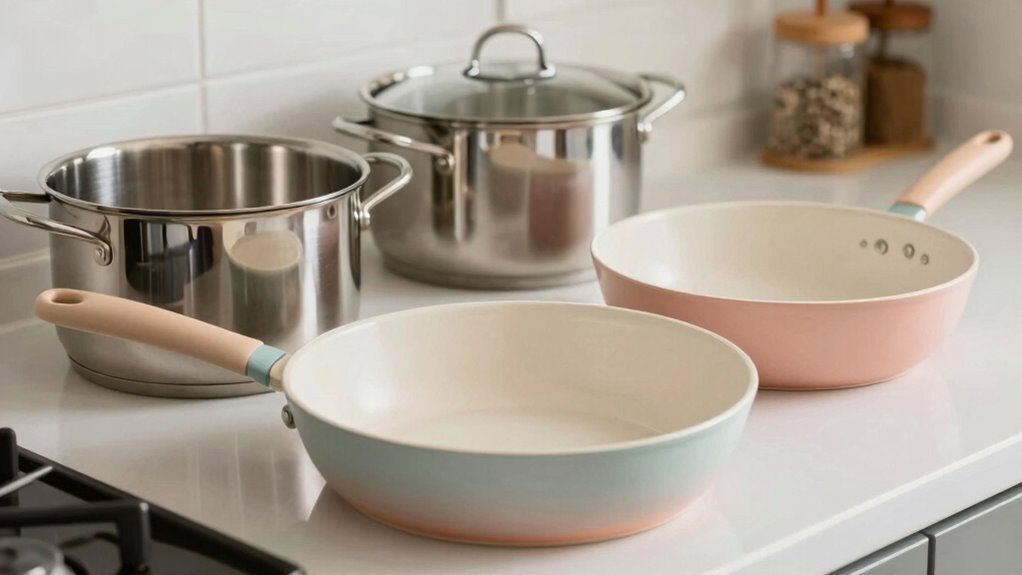
Both stainless steel and ceramic cookware can be good options for beginners, but understanding their strengths and common pitfalls can help you make the right choice. Look for beginner-friendly features like non-reactive surfaces and easy-to-clean designs. To avoid common cooking mistakes, focus on proper heat management and using adequate oils or fats. Stainless steel is durable but can cause sticking if not used correctly, while ceramic offers easy release but may chip over time. Keep in mind that mastering basic techniques is key to success.
Choosing the right cookware depends on understanding durability, ease of cleaning, and proper technique.
- Choose cookware with comfortable handles for better control
- Avoid high heat settings until you’re familiar with your cookware
- Use the right utensils to prevent damage
- Practice preheating your pan for even cooking
- Don’t neglect proper cleaning to extend lifespan
Frequently Asked Questions
How Do Stainless Steel and Ceramic Cookware Perform at High Temperatures?
Stainless steel cookware handles high temperatures well, offering excellent heat retention and durability, making it ideal for searing and browning. It withstands thermal expansion without warping or damage. Ceramic cookware, on the other hand, heats evenly but can be sensitive to sudden temperature changes, risking cracking. While ceramic may struggle at very high temperatures, stainless steel maintains performance, ensuring you can cook at high heat safely and effectively.
Are There Health Risks Associated With Ceramic or Stainless Steel Cookware?
You might wonder if ceramic or stainless steel cookware poses health risks. Generally, stainless steel is safe but can cause chemical leaching if scratched or heated excessively, and allergy concerns may arise from nickel content. Ceramic cookware typically avoids chemical leaching unless damaged, but some glazes contain trace metals. Always inspect your cookware regularly, avoid using damaged pieces, and follow manufacturer’s cleaning instructions to minimize health risks.
Can Ceramic Cookware Withstand Metal Utensils Without Damage?
Did you know that ceramic cookware’s surface durability is often rated as medium? You can generally use metal utensils with ceramic cookware, but it’s not recommended for long-term use. Metal utensil compatibility might cause scratches or chips, reducing its lifespan. To keep your ceramic surface in top shape, opt for wooden or silicone tools. This way, you prevent damage and extend the cookware’s usability.
How Does Cookware Weight Influence Handling and Cooking Comfort?
You’ll find that heavier cookware, with its balanced weight distribution, offers more stability while cooking, but it can be tiring to handle for extended periods. A handle grip that feels secure and comfortable is essential for safe maneuvering. If the cookware is too heavy, your grip might slip, making cooking less comfortable. Choose a weight that balances stability and ease of handling to improve your overall cooking experience.
What Are the Best Storage Practices to Prolong Cookware Lifespan?
To prolong your cookware’s lifespan, you should store pans carefully. Use pan storage solutions like stacking techniques that prevent scratches and dents. Place a soft cloth or paper towel between pans to avoid scraping. Keep heavier pots on the bottom and lighter ones on top. Avoid overcrowding cabinets, and hang some cookware if possible. Proper storage not only protects your investment but also keeps your kitchen organized and efficient.
Conclusion
Ultimately, choosing between stainless steel and ceramic cookware is like selecting your culinary canvas. Picture yourself crafting a perfect stir-fry or delicate sauce—each material offers unique strokes. By understanding their strengths and tradeoffs, you can select the right tool for your kitchen adventure. Whether you prefer the gleam of stainless or the matte finish of ceramic, your cookware shapes every flavorful story you create. Make your choice wisely, and let your cooking shine.
Halloween Picks
halloween
As an affiliate, we earn on qualifying purchases.