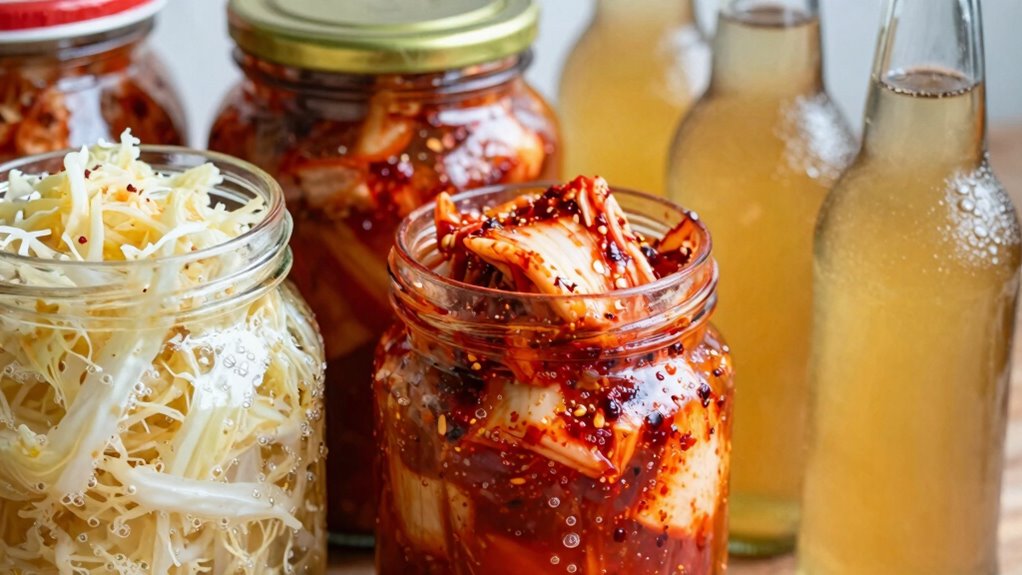

Fermented foods are only truly beneficial if they contain active probiotics, which grow during proper fermentation. Many products are labeled as “fermented,” but some are just pickled or pasteurized, removing live bacteria. To get the health benefits, look for unpasteurized options like kimchi, sauerkraut, or yogurt with live cultures. Understanding the fermentation process helps you choose authentic products—keep exploring to discover how to verify their probiotic power.

Get health and wellness essentials delivered free with Prime
- Fast, free delivery on millions of items
- Prime Video, Amazon Music and more included
- Member-only deals all year
Key Takeaways
- Authentic fermented foods contain live probiotics resulting from proper fermentation processes, not just pickled or flavored products.
- Pasteurization and heating often destroy beneficial microbes, so labeled “fermented” products may lack probiotic content.
- Check labels or ask about fermentation methods to ensure the presence of unpasteurized, traditionally fermented foods.
- Genuine fermentations require specific conditions like temperature and pH to promote probiotic growth.
- Not all marketed “fermented” foods provide health benefits; verify their production process for true probiotic content.
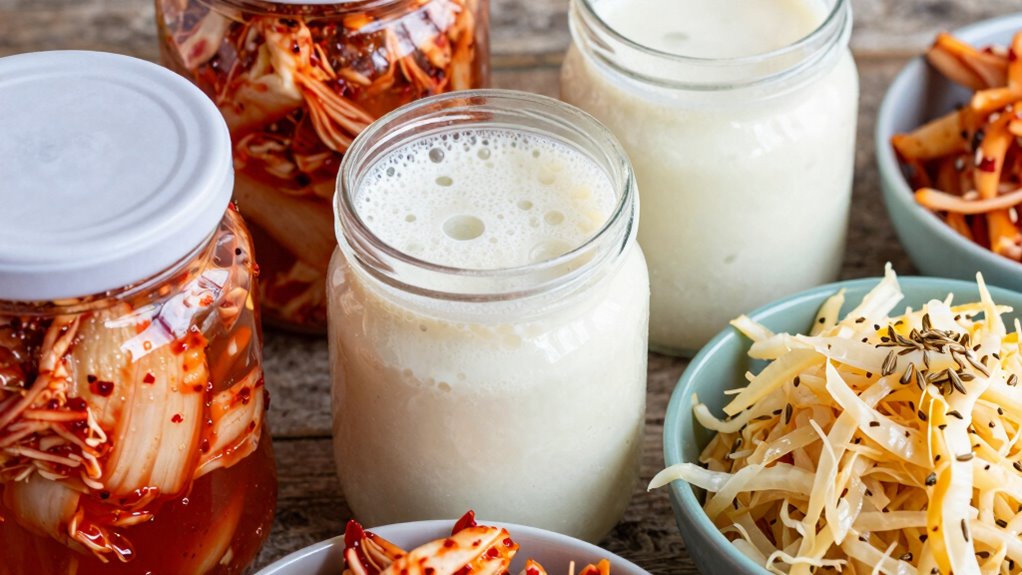
Fermented foods, prized for their unique flavors and health benefits, have been a staple in many cultures for centuries. When you look at these foods, you’re often drawn to their tangy taste, complex textures, and rich aroma. But beyond the sensory appeal, what truly makes fermented foods special is the fermentation process. During fermentation, naturally occurring or added microorganisms, especially probiotic strains, transform the food. This process not only enhances flavor but also boosts nutritional value and introduces beneficial bacteria into your gut. These probiotic strains are live microorganisms that support your digestive health, strengthen your immune system, and may even improve mental well-being.
Understanding the fermentation process helps you distinguish between genuinely fermented foods and those simply marketed as such. Proper fermentation involves specific conditions—like the right temperature, pH, and time—that allow beneficial microbes to thrive and outcompete harmful bacteria. For example, in making sauerkraut, shredded cabbage is salted and left to ferment in a controlled environment. During this period, naturally occurring bacteria on the cabbage, or added starter cultures, convert sugars into lactic acid. The lactic acid acts as a preservative, giving sauerkraut its tangy flavor and creating an environment where probiotic strains flourish. This process is what differentiates authentic fermented foods from those that are merely pickled or flavored artificially. Additionally, maintaining proper fermentation conditions is essential to ensure the growth of beneficial microbes and prevent contamination.
It’s important to recognize that not all foods labeled as “fermented” actually contain active probiotics. Some products undergo a quick fermentation or are pasteurized afterward, destroying the probiotic strains. For example, many commercially available yogurts are heated to kill bacteria, which eliminates the live cultures you’re after. On the other hand, traditional ferments like kimchi, kefir, or real unpasteurized sauerkraut are more likely to retain their probiotic content. Always check labels or ask about the fermentation process to make sure you’re getting the health benefits associated with live probiotic strains.
unpasteurized fermented foods with live probiotics
As an affiliate, we earn on qualifying purchases.
As an affiliate, we earn on qualifying purchases.
Frequently Asked Questions
Can All Fermented Foods Improve Gut Health Equally?
Not all fermented foods improve gut health equally. The benefits depend on probiotic diversity and fermentation methods used. Some, like yogurt and kefir, contain specific probiotic strains, while others, like sauerkraut and kimchi, offer a broader range. Choosing a variety ensures better gut health, but be mindful that not all fermented foods have live probiotics. So, diversify your intake for maximum benefits and check labels for live cultures.
Are Store-Bought Fermented Foods as Healthy as Homemade?
Store-bought fermented foods can be just as healthy as homemade, but it depends on their fermentation techniques and store-bought authenticity. Look for products with live, raw, unpasteurized ingredients, and check labels for probiotics. While store-bought options offer convenience, homemade ferments often contain more diverse strains and active cultures. Ultimately, choose high-quality products and consider making your own to maximize health benefits.
How Long Do Fermented Foods Stay Fresh?
Fermented foods typically stay fresh for a few weeks to several months, depending on their type and storage. Check expiration dates and store them in airtight containers in the refrigerator to maintain freshness. Proper storage conditions, like maintaining a consistent cold temperature, slow down spoilage. Always look for signs of spoilage—off smells, mold, or discoloration—and consume within the recommended timeframe to enjoy their health benefits safely.
Do Fermented Foods Contain Alcohol?
Yes, fermented foods can contain small amounts of alcohol due to the fermentation processes. During fermentation, yeasts convert sugars into alcohol and carbon dioxide, so products like sauerkraut, kimchi, and kombucha might have trace alcohol levels. However, the alcohol content in most fermented foods is usually very low, often less than 0.5%, making them safe for most people, but it’s good to be aware if you’re sensitive to alcohol.
Are Fermented Foods Safe for Everyone to Eat?
Fermented foods are generally safe for most people, but you should consider food safety and allergy concerns. If you have allergies to ingredients like soy, dairy, or gluten, check labels carefully. Also, those with compromised immune systems or certain health conditions should consult a healthcare provider before adding fermented foods to their diet. Being cautious guarantees you enjoy the benefits without risking adverse reactions or food safety issues.
authentic probiotic yogurt with live cultures
As an affiliate, we earn on qualifying purchases.
As an affiliate, we earn on qualifying purchases.
Conclusion
Now that you know what truly counts as fermented foods, you can spot the real deal like a hawk. Think of fermented foods as a treasure chest of probiotics hidden in everyday eats—some are genuine, others just shiny marketing tricks. By staying informed, you’ll enjoy the health benefits without falling for the hype. So, next time you pick up a jar, you’ll know exactly what’s fermented and what’s just marketing magic.
fermentation starter cultures for vegetables
As an affiliate, we earn on qualifying purchases.
As an affiliate, we earn on qualifying purchases.
fermented foods with active probiotics
As an affiliate, we earn on qualifying purchases.
As an affiliate, we earn on qualifying purchases.
Columbus Day / Indigenous Peoples' Day Picks
long weekend sales
As an affiliate, we earn on qualifying purchases.