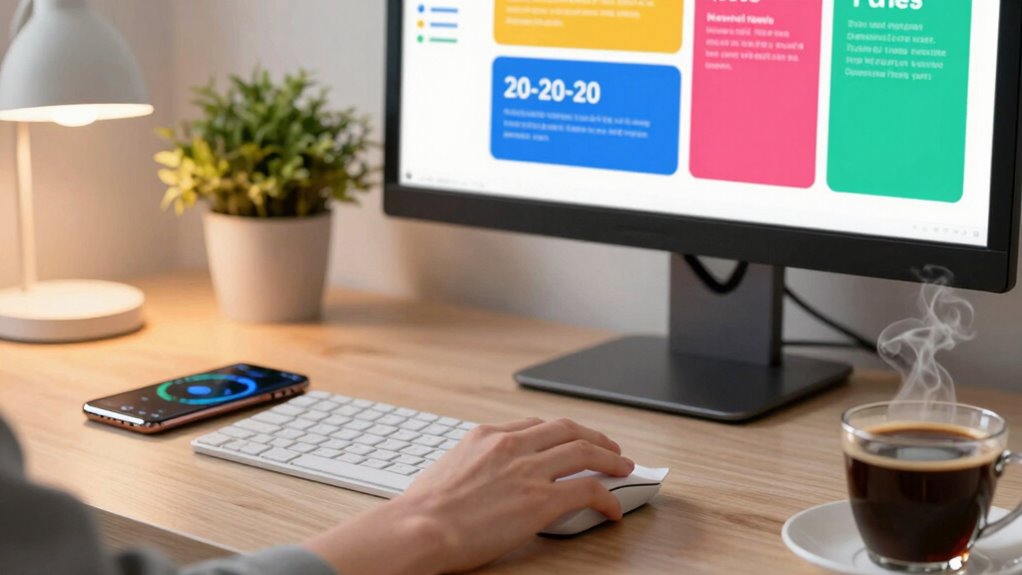

To turn the 20-20-20 rule into a real habit, it’s important to make it seamless in your routine. Use timers or alarms to prompt you consistently, and pair breaks with simple activities like stretching or eye exercises. Adjust your screen settings to support eye health, and keep reminders visible. When you make breaks a routine part of your day, it becomes automatic, helping you protect your vision long-term. Keep going—there’s more you can do to make this stick.
Listen free for 30 days with Audible
Thousands of audiobooks and originals — cancel anytime.
As an affiliate, we earn on qualifying purchases.
Key Takeaways
- Integrate the 20-20-20 breaks seamlessly into your daily routine using timers or alarms.
- Pair the rule with habits like adjusting screen brightness or blue light filters for added effectiveness.
- Use visual cues or apps as consistent reminders to reinforce break habits.
- View the breaks as essential wellness practices, not just temporary pauses, to foster long-term commitment.
- Celebrate small successes and recognize the health benefits to maintain motivation and make the habit stick.
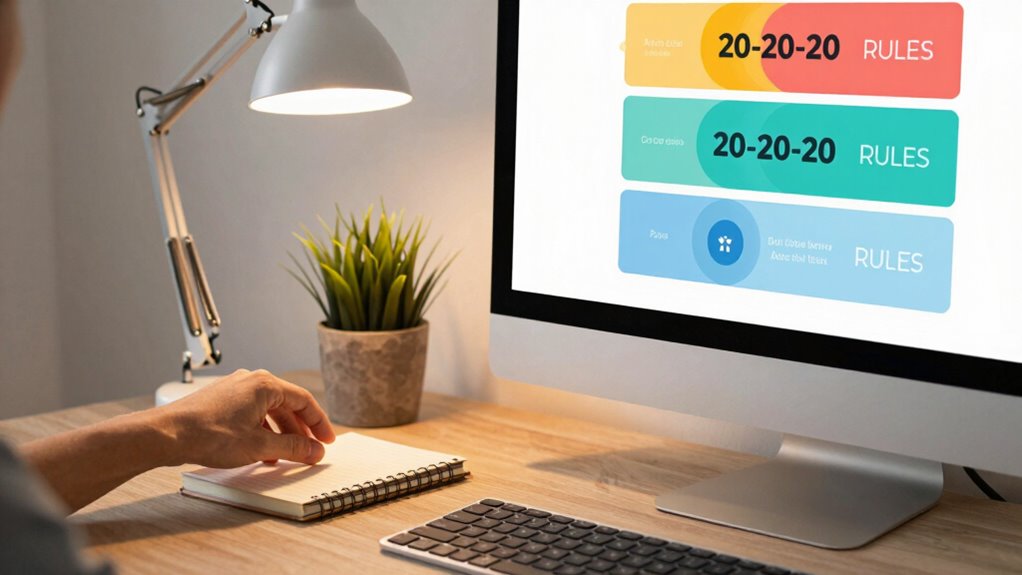
Ever wondered how to reduce eye strain from hours spent in front of screens? It’s a common problem in today’s digital age, where many of us spend long stretches staring at computers, tablets, or smartphones. The constant focus on digital devices can lead to discomfort, blurred vision, headaches, and even fatigue. To combat this, many eye care experts recommend the 20-20-20 rule, a simple yet effective method to give your eyes a much-needed break. But knowing about it isn’t enough—you need to make it a regular habit, not just a fleeting reminder you ignore. That’s where the challenge lies.
The key to turning the 20-20-20 rule into a habit is consistency. Every 20 minutes, you should look at something 20 feet away for at least 20 seconds. This brief pause helps relax the eye muscles that constantly strain when focusing on close-up screens. Instead of thinking of it as a chore, view it as an essential part of your digital routine. Incorporate it seamlessly into your workflow by setting timers or alarms, or using apps designed to remind you. When you actively commit to these short breaks, you’re effectively reducing eye strain and preventing the buildup of digital fatigue. Over time, this habit will become second nature, making your screen time more comfortable and less damaging.
Making the 20-20-20 rule stick also involves understanding its role in promoting a digital detox. When you step away from screens regularly, you’re not just giving your eyes relief—you’re also reducing overall digital overload. It encourages you to take mental breaks, stretch, or even briefly engage in offline activities. These pauses help you reset mentally and physically, leading to less eye strain and improved focus. To make it sustainable, pair the rule with other healthy habits, like adjusting your screen brightness, using blue light filters, or practicing eye exercises. When you view these breaks as part of a broader strategy for eye health and digital well-being, you’re more likely to stick with them. Additionally, choosing the right projector technology can further support your eye health by providing high-quality images with accurate color and contrast, reducing strain during extended viewing sessions.
Ultimately, transforming the 20-20-20 rule from a fleeting reminder into a habit takes intention and reinforcement. Keep reminders visible—on your phone, computer, or workspace—and celebrate small victories when you successfully follow through. Remember, it’s about safeguarding your vision and mental health in a digital world that demands prolonged screen use. By making these brief, intentional breaks a routine part of your day, you’ll reduce eye strain, improve your comfort, and foster a healthier relationship with your digital devices. In the long run, your eyes will thank you for making this simple habit a priority.
blue light blocking glasses for computer
As an affiliate, we earn on qualifying purchases.
As an affiliate, we earn on qualifying purchases.
Frequently Asked Questions
Can the 20-20-20 Rule Prevent Digital Eye Strain?
Yes, the 20-20-20 rule helps prevent digital eye strain by giving your eyes regular breaks from blue light exposure. When you follow this rule, you reduce eye fatigue caused by staring at screens for too long. Taking 20-second breaks every 20 minutes allows your eyes to rest and recover, lowering discomfort and preventing long-term vision issues related to prolonged screen time.
How Long Does It Take to Develop a Habit With This Rule?
You can develop a habit with the 20-20-20 rule in about three to four weeks. For example, Sarah started setting a timer every 20 minutes, and over time, it became automatic, reducing her eye strain. This is because habit formation involves consistent behavioral change. By sticking to your routine daily, you reinforce the new behavior, making it more natural and ingrained in your daily work habits.
Are There Specific Eye Exercises to Complement the 20-20-20 Rule?
Yes, you can add eye yoga and vision exercises to support your 20-20-20 routine. Try gently rolling your eyes, focusing on near and far objects, or practicing palming to relax your eyes. These exercises strengthen eye muscles and reduce strain. Incorporate them daily for better results, making them a natural part of your routine. Consistency helps your eyes adapt and improves overall eye comfort and vision health.
Is the Rule Effective for All Age Groups and Vision Types?
Think of the 20-20-20 rule as a universal lighthouse guiding all ages and vision types through foggy days. While it generally benefits everyone, age considerations and vision diversity mean you might need additional eye care. Younger eyes adapt faster, but older eyes may require more frequent breaks or specific exercises. Stay attentive to your unique needs, and adapt the rule to keep your vision clear and healthy across life’s journey.
What Are Common Barriers to Consistently Following the Rule?
You might struggle with habit formation due to behavioral barriers like forgetfulness or losing focus during work. Distractions, workload, or feeling too busy can make it hard to remember the 20-20-20 rule consistently. You may also find it challenging to prioritize eye breaks over urgent tasks. Recognizing these barriers helps you develop strategies, like setting alarms or associating breaks with specific activities, to make following the rule easier.
digital eye strain relief products
As an affiliate, we earn on qualifying purchases.
As an affiliate, we earn on qualifying purchases.
Conclusion
So, next time you’re glued to your screen, remember the 20-20-20 rule—because nothing says “healthy habits” like taking a break you’re probably about to forget. Ironically, it’s the simple trick that can save your eyes, yet so many ignore it. Make it a habit, not just a reminder, and prove that even a tiny pause can make a big difference. After all, your eyes deserve a break—don’t they?
As an affiliate, we earn on qualifying purchases.
As an affiliate, we earn on qualifying purchases.
NFL season / tailgating Picks
team gear
As an affiliate, we earn on qualifying purchases.