When you fall asleep quickly after drinking, alcohol initially sedates you, making it easier to doze off. However, your body is busy processing alcohol, which interrupts your natural sleep cycles. This causes sleep to become fragmented, with less deep and REM sleep. You might wake up feeling tired or groggy despite falling asleep fast. To understand how alcohol’s metabolic effects disrupt your restorative sleep, keep exploring what really happens during the night.

Get health and wellness essentials delivered free — and shop member deals
- Fast, free delivery on millions of items
- Access to Prime Big Deal Days deals on October 6–7
- Prime Video, Amazon Music and more included
Key Takeaways
- Alcohol initially induces sleepiness but disrupts sleep architecture as metabolism progresses.
- It shortens or fragmentizes REM and deep sleep stages, leading to less restorative rest.
- Alcohol increases urine production and relaxes throat muscles, causing frequent awakenings.
- The sedative effects are temporary; rebound alertness results in more wakefulness later.
- Despite falling asleep quickly, alcohol’s effects cause poorer sleep quality and daytime tiredness.
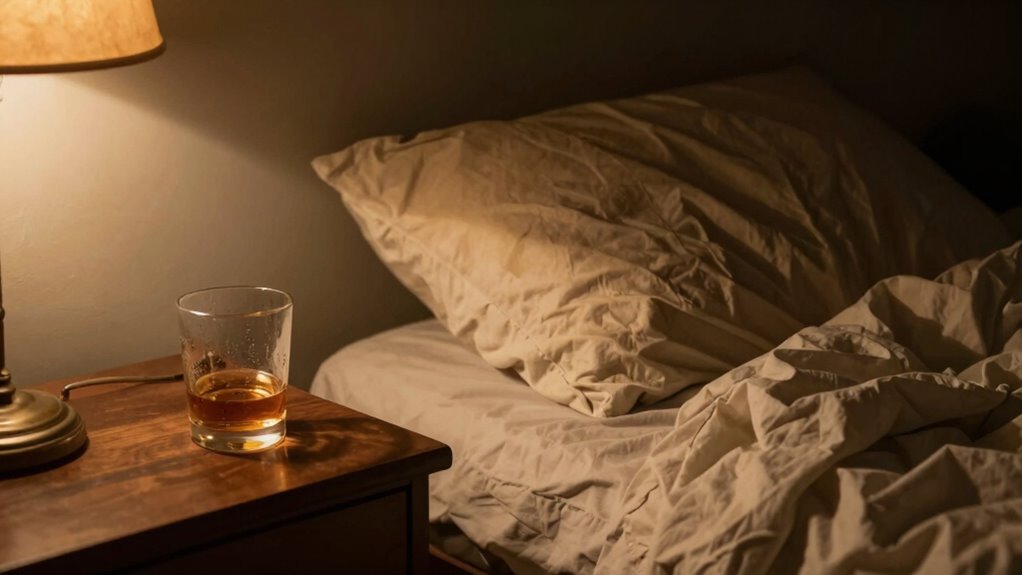
Have you ever wondered how alcohol affects your sleep? When you drink, your body begins to process it through alcohol metabolism, a complex process that breaks down alcohol into harmless compounds. But this process doesn’t happen quietly or quickly. Instead, it can interfere with your natural sleep patterns, leading to sleep cycle disruption. As your liver works to clear alcohol from your system, it releases chemicals that can disturb your sleep architecture. This disruption makes it harder for you to enter deep, restorative sleep stages, causing fragmented and less restful nights.
Alcohol metabolism disrupts sleep cycles, causing fragmented, less restorative rest and affecting your overall sleep quality.
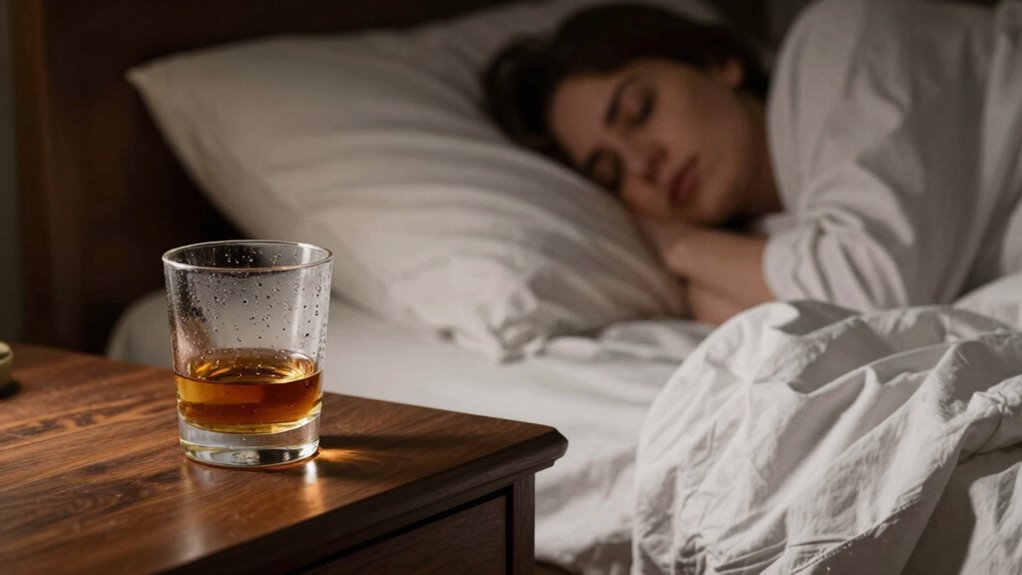
You might notice that you fall asleep quickly after drinking, which can feel like a relief. However, this rapid onset of sleep isn’t always a good sign. Alcohol initially acts as a sedative, helping you relax and drift off faster. But as your body continues to metabolize the alcohol, its sedative effects wear off, and the stimulant-like rebound effect kicks in. This shift can cause you to wake up frequently during the night, often feeling less refreshed than when you went to bed. The disruption of your sleep cycle means your REM sleep and deep sleep stages become shorter or irregular, leading to poorer sleep quality overall.
Furthermore, alcohol’s impact on your sleep isn’t limited to the initial hours. As it’s processed, alcohol triggers a series of physiological responses that can impair your ability to stay asleep. For example, alcohol increases urine production, which may cause you to wake up multiple times to use the bathroom. It also relaxes your throat muscles, increasing the risk of snoring and sleep apnea episodes, which further fragment your sleep. All these factors combined mean that even if you do manage to fall asleep quickly, the quality of that sleep is compromised.
It’s important to recognize that alcohol’s sedative effects are misleading. While it might help you nod off initially, the subsequent sleep fragmentation and cycle disruption leave you feeling tired, groggy, and less alert the next day. This pattern can perpetuate a cycle where you rely on alcohol not just to fall asleep but to mask the poor quality of your rest. Understanding how alcohol metabolism influences sleep cycle disruption helps you realize that the short-term relief isn’t worth the long-term consequences. If you want truly restorative sleep, it’s better to avoid drinking close to bedtime or to limit your alcohol intake altogether.
Frequently Asked Questions
Can Alcohol Consumption Improve Sleep Quality Temporarily?
No, alcohol consumption won’t improve your sleep quality long-term. While it may make you fall asleep faster, it lowers your alcohol tolerance, leading to disrupted sleep cycles. If you’re experiencing sleep deprivation, alcohol might seem like a quick fix, but it actually worsens your rest. Over time, it causes you to wake up feeling worse, leaving you tired and less refreshed. For better sleep, focus on healthy habits instead.
How Does Alcohol Affect REM Sleep Cycles?
Imagine you’re in a 1920s speakeasy when alcohol hits your system. It suppresses REM sleep, causing dream deprivation and disrupting your sleep architecture. You might fall asleep quickly, but your REM cycles become fragmented, reducing restorative sleep. This interference prevents you from completing essential dreaming phases, leading to poorer sleep quality overall. So, alcohol may seem to help you unwind, but it ultimately hampers your REM sleep cycles and recovery.
Is Occasional Drinking Harmful to Long-Term Sleep Health?
Occasional drinking isn’t usually harmful to your long-term sleep health if you practice good sleep hygiene. However, it can lead to alcohol dependence if you rely on alcohol regularly to fall asleep. Alcohol disrupts sleep cycles and reduces sleep quality over time. To protect your sleep health, limit alcohol intake, especially close to bedtime, and maintain consistent sleep routines. This helps prevent dependency and preserves restful sleep.
What Are the Best Ways to Mitigate Alcohol’s Sleep Disruption?
Picture a calm lake before dawn—still, but with ripples beneath. To minimize alcohol’s impact, pace your drinking slowly to give your body time to metabolize alcohol, helping maintain healthier sleep architecture. Hydrate well and avoid drinking close to bedtime. Creating a relaxing sleep environment and sticking to a consistent schedule can also help your body process alcohol better, leading to more restorative sleep despite occasional indulgence.
Does Alcohol Influence Sleep Apnea Severity?
Yes, alcohol influences sleep apnea severity by relaxing your throat muscles, which worsens breathing issues. This relaxation can cause frequent airway obstructions, leading to more severe sleep apnea episodes. Alcohol’s impact on breathing makes it harder for you to maintain open airways during sleep, increasing the risk of snoring and interruptions. If you have sleep apnea, it’s best to limit alcohol to avoid exacerbating your condition.
Conclusion
Think of alcohol as a cunning thief that steals you into a deep sleep quickly, only to leave behind a restless night’s wake. It promises peaceful slumber but often ransacks your restorative rest, leaving you tired and foggy. Remember, true rest is a garden you tend with care—watering it with healthy habits, not shortcuts. Choose wisely tonight, for your sleep’s the treasure that truly recharges your soul and body.
Fall Picks
fall essentials
As an affiliate, we earn on qualifying purchases.