When choosing a portable AC, make certain you pick the right BTU capacity to match your room size for effective cooling. Consider hose types—dual-hose units usually work better and are more efficient than single-hose models. Proper placement near a window and sealing gaps is key, as incorrect setup can leave your room hot. If rooms still feel warm, it might be due to sizing, venting issues, or poor insulation. Keep exploring these tips to cool your space more efficiently.
Listen free for 30 days with Audible
Thousands of audiobooks and originals — cancel anytime.
As an affiliate, we earn on qualifying purchases.
Key Takeaways
- Proper BTU sizing is essential; choose a unit with enough capacity based on your room size and heat sources.
- Dual-hose portable ACs generally offer better efficiency and cooling performance than single-hose models.
- Correct venting, sealing gaps, and optimal placement prevent hot air leaks and improve cooling effectiveness.
- Inadequate insulation or improper installation can cause rooms to stay hot despite a powerful unit.
- Regular maintenance and filter cleaning ensure consistent cooling and prevent system inefficiencies.
portable air conditioner BTU calculator
As an affiliate, we earn on qualifying purchases.
As an affiliate, we earn on qualifying purchases.
What Is a Portable Air Conditioner and How Does It Work?
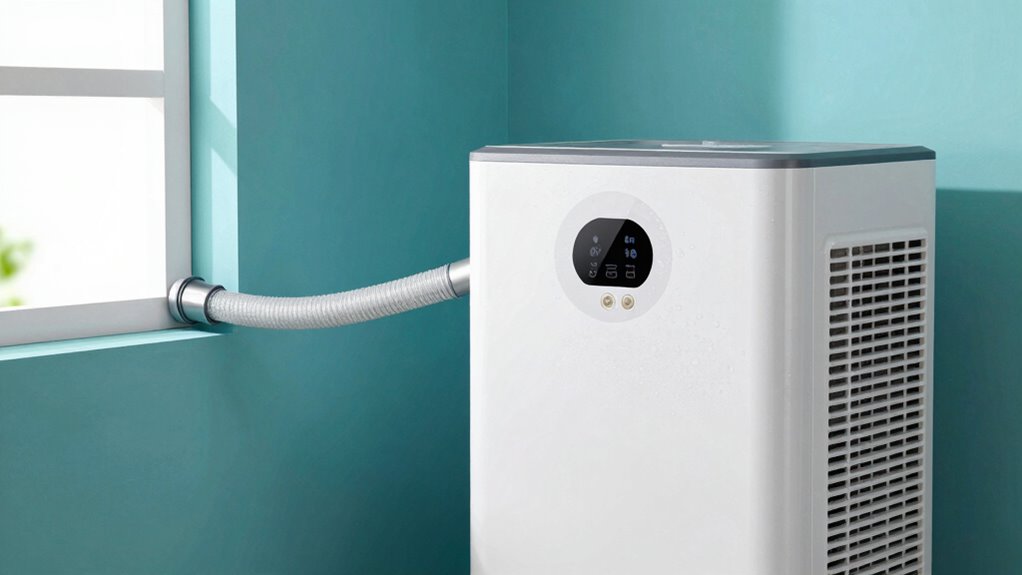
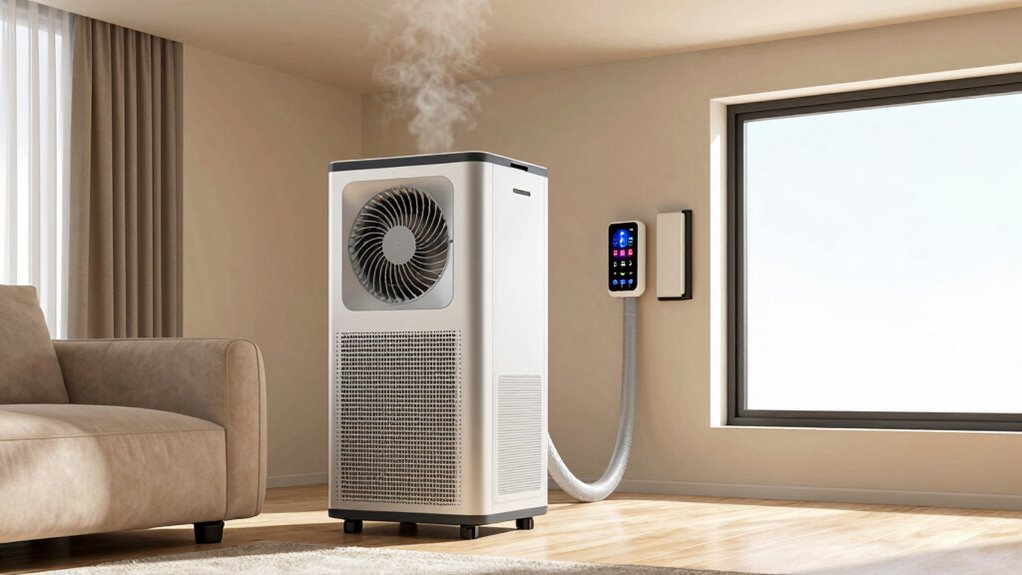
A portable air conditioner is a compact cooling unit you can move from room to room, providing quick relief from heat without permanent installation. It works by drawing warm air from your space, passing it through a cooling coil that reduces its temperature, and then circulating the cooled air back into the room. The unit also features a hose that vents hot air outside, helping maintain a comfortable environment. Portable cooling units are designed to improve air circulation, which helps evenly distribute cooled air and prevent hot spots. They typically include a fan to enhance air movement and ensure consistent cooling. Because they don’t require permanent setup, portable ACs are convenient solutions for temporary or adjustable cooling needs. Additionally, proper venting and choosing the right BTU capacity are essential for optimal performance. Proper installation of the venting system is crucial to maximize efficiency and prevent warm air from re-entering the room. Effective venting techniques, such as using the correct hose length and sealing connections, can significantly improve cooling efficiency and energy savings. Ensuring correct hose types can also impact how well your portable AC performs and how easily it vents hot air outside. Moreover, selecting the appropriate hose material can further enhance venting effectiveness and durability.
As an affiliate, we earn on qualifying purchases.
How Do I Size a Portable AC for My Room?
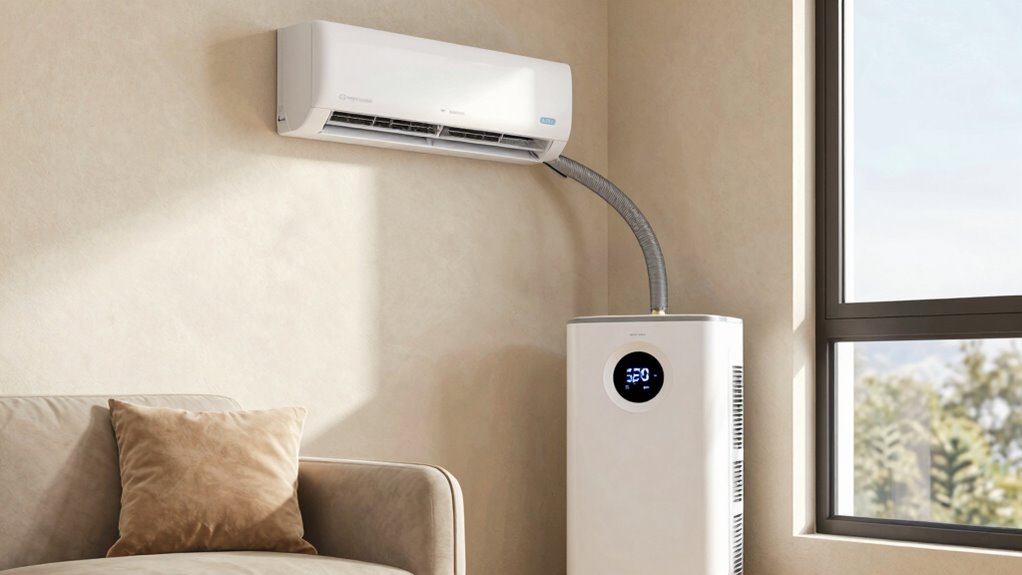
To find the right portable AC size, start by calculating your room’s square footage. Keep in mind that good insulation can reduce the cooling power you need, while poor insulation might require a more powerful unit. Knowing these factors helps guarantee you select an AC that keeps your room comfortable without wasting energy. Additionally, understanding artistic expression can encourage you to explore creative solutions for optimizing your space’s comfort and energy efficiency. For instance, incorporating energy-efficient materials can improve overall insulation and reduce cooling costs. Implementing AI-powered smart home technology can enhance your cooling strategies and help maintain a consistent temperature throughout your space. Considering best woods for farmhouse tables can also inspire you to choose materials that improve your home’s aesthetic and functionality, contributing to a more comfortable environment. Incorporating smart home automation can further optimize your cooling and energy management, ensuring your space remains comfortable and efficient year-round.
Calculate Room Size
Wondering how to determine the right size portable AC for your room? It all starts with calculating your room size to ensure proper cooling capacity. Measure the length and width of your space in feet, then multiply these numbers to find the square footage. This helps you select an AC unit with the right cooling capacity. Keep these factors in mind:
- Room size in square feet
- Ceiling height (if above 8 feet)
- Sunlight exposure
- Number of occupants
- Electronic devices adding heat
Choosing an AC with the correct cooling capacity ensures efficient cooling and energy savings. Too small, and your room remains hot; too large, and it can cause unnecessary energy use. Accurate room size measurement is key to finding the perfect portable AC.
Consider Insulation Level
Your room’s insulation level plays a crucial role in determining the right size portable AC. If your space has poor insulation levels or is poorly sealed, it’ll lose cooled air more quickly, requiring a unit with higher BTUs. Proper room sealing, such as sealing gaps around windows and doors, helps retain cool air and improves efficiency. Well-insulated rooms stay cooler longer, so you might need a smaller AC. Conversely, poorly insulated spaces need a larger unit to compensate for heat gain through walls, windows, or leaks. Consider the overall quality of your room’s insulation and sealing to avoid over- or under-sizing. Additionally, air leakage can significantly impact cooling performance, so addressing leaks can reduce the required BTU size. Improving insulation quality and sealing reduces heat transfer, ensuring your portable AC performs at its best, keeps your room comfortable, and helps you avoid unnecessary energy costs. Paying attention to thermal efficiency can further optimize your cooling setup. Moreover, understanding how natural ventilation impacts indoor temperatures can help you make smarter cooling choices.
As an affiliate, we earn on qualifying purchases.
Which Hose Type Is Better: Single-Hose or Dual-Hose?
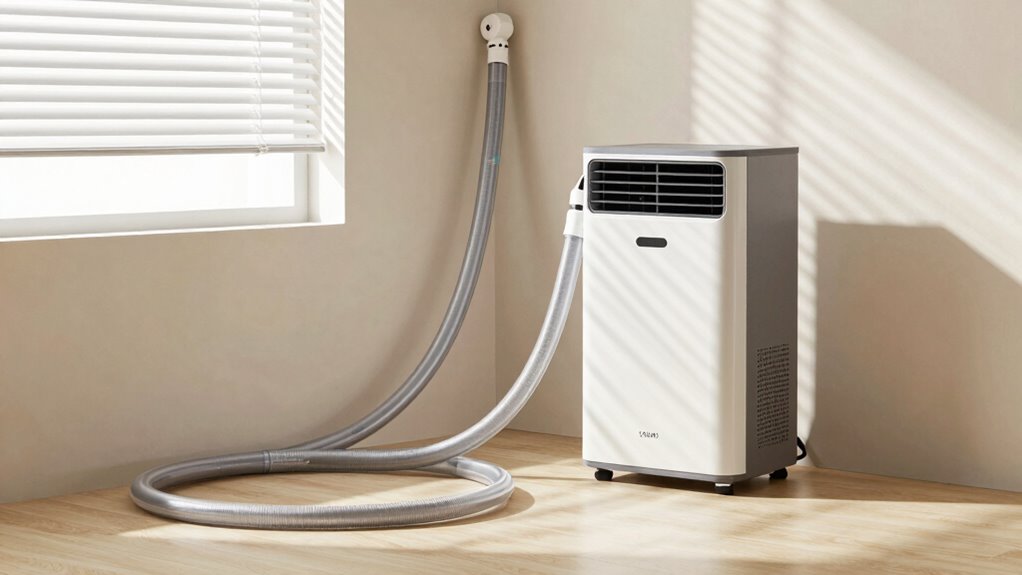
When choosing between single-hose and dual-hose portable air conditioners, understanding their differences can help you make an informed decision. Single-hose units vent hot air through one hose, which can reduce energy efficiency and cause the room to feel less cool. Dual-hose models use one hose to exhaust warm air and another to draw in fresh air, improving overall efficiency and cooling performance. Consider these points:
- Dual-hose units are generally more energy-efficient.
- Single-hose models tend to be lighter and more portable.
- Dual-hose designs can handle larger rooms better.
- Single-hose units may struggle with room temperature stability.
- Dual-hose options often cost more but save energy over time.
- Being aware of venting technology can help you better understand how these units operate and their impact on cooling efficiency.
- Additionally, air exchange methods significantly influence the effectiveness of each system and their suitability for different room sizes.
Your choice depends on energy efficiency priorities and portability concerns.
best portable air conditioners for large rooms
As an affiliate, we earn on qualifying purchases.
As an affiliate, we earn on qualifying purchases.
How Do I Choose the Best Features When Buying a Portable AC?
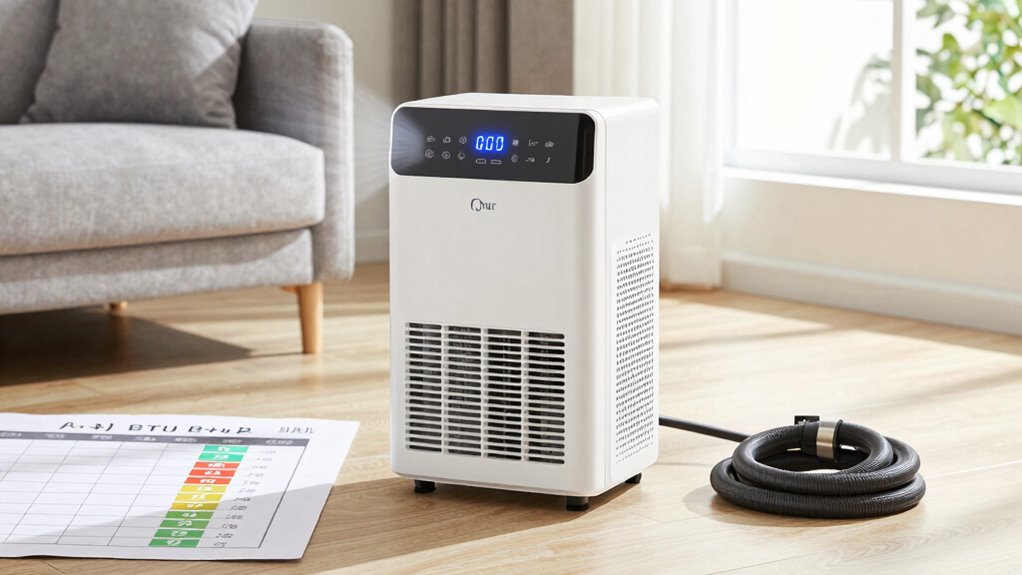
Choosing the right features for a portable AC guarantees you get the most comfort and convenience. Look for models with high energy efficiency to save on power bills and reduce environmental impact. Check for adjustable fan speeds and multiple cooling modes to customize comfort levels. Noise levels matter—opt for units with quieter operation if you plan to use the AC in bedrooms or shared spaces. Features like programmable timers and remote controls add convenience, allowing you to set your desired temperature and schedule cooling times easily. Some models include washable filters for easier maintenance. Prioritize features that match your lifestyle and room size to ensure effective cooling without unnecessary energy consumption or disruptive noise. Additionally, selecting a unit with proper airflow management can significantly enhance cooling performance and efficiency. Ensuring the unit has effective ventilation options can help improve overall cooling effectiveness, especially in rooms with limited airflow. Incorporating ventilation techniques into your setup can further optimize the cooling process, making your portable AC a reliable, efficient cooling solution. Moreover, understanding air quality benefits can help you choose models with features that improve indoor air by reducing pollutants and allergens. Considering proper insulation and sealing can also prevent cool air from escaping and warm air from entering, maximizing your unit’s efficiency.
Where Should I Place My Portable AC for Maximum Cooling?
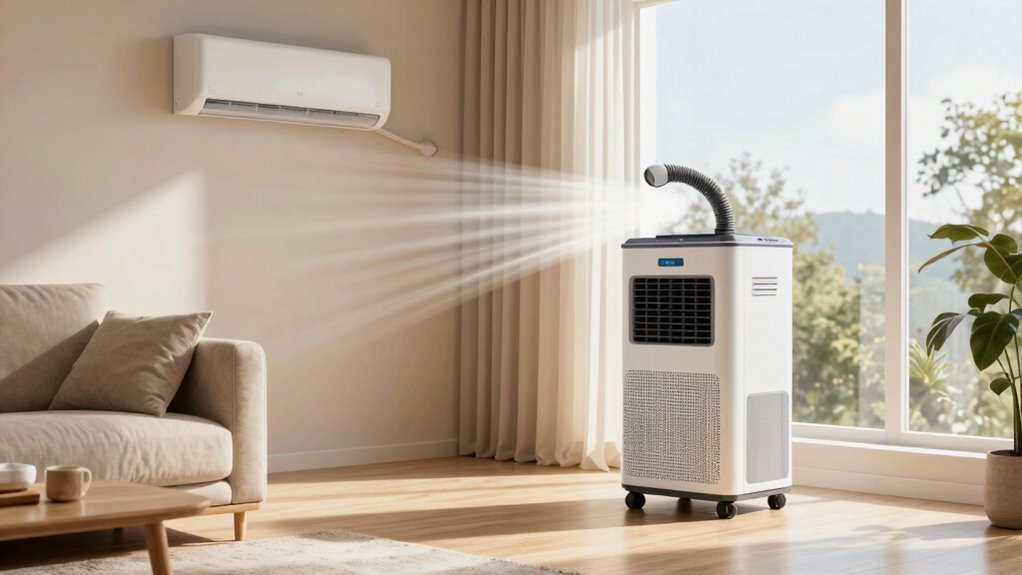
To achieve maximum cooling from your portable AC, placing it in the right spot is essential. Proper room placement guarantees effective airflow optimization and cools your space efficiently. Position your unit near a window to vent hot air outside, but avoid placing it in direct sunlight or behind furniture that blocks airflow. Keep it away from heat sources like ovens or electronics that can interfere with cooling. Place it on a flat, stable surface to prevent vibrations. For best results, avoid corners or cramped areas that hinder airflow. Additionally, understanding the importance of proper placement can help prevent inefficient cooling and ensure your portable AC performs optimally. Ensuring proper airflow is crucial for effective cooling and energy efficiency. Recognizing ventilation strategies can further enhance your unit’s performance and prevent heat buildup in your space. Incorporating air circulation principles can also improve overall cooling effectiveness.
Why Do Some Rooms Stay Hot Despite Using a Portable AC?
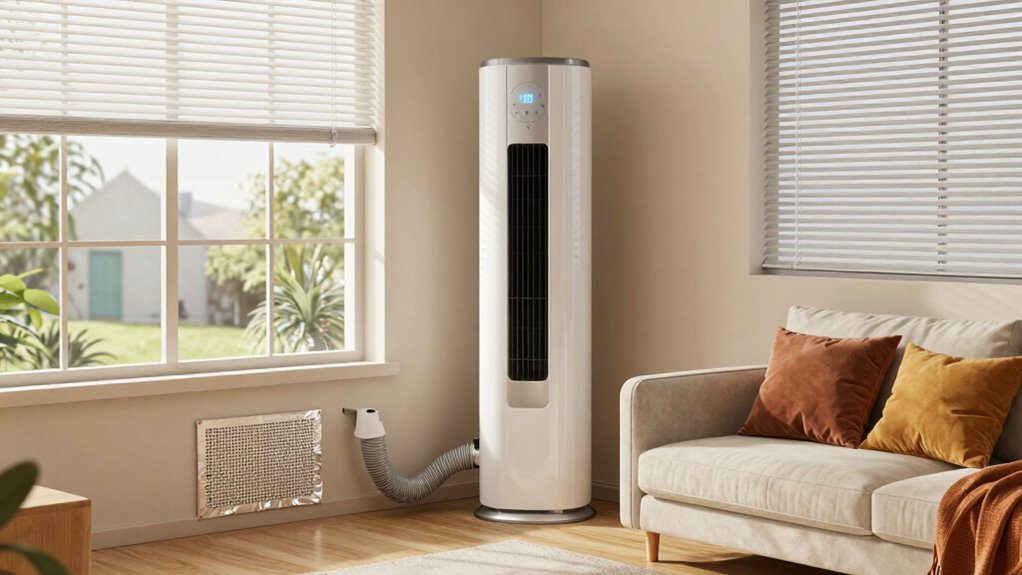
If your room stays hot even with a portable AC, the issue might be with how you’ve set it up. Poor installation, like improper venting or sealing, can let hot air in and cool air out. Make sure your setup is correct to get the best cooling performance.
Incorrect Installation Procedures
Even when you have a portable AC, improper installation can cause the room to stay hot despite the unit running. Common installation mistakes and user errors can undermine cooling performance. For example, failing to secure the exhaust hose properly can leak warm air back into the room. Incorrect placement of the unit, such as placing it in direct sunlight or near heat sources, reduces efficiency. Not sealing windows or doors tightly allows hot air to enter, making cooling harder. Using the wrong size or type of hose can also hinder airflow. Ultimately, ignoring manufacturer instructions or rushing setup can lead to ineffective cooling. To avoid these issues, double-check your installation steps, ensure proper sealing, and follow all guidelines carefully. Proper setup makes a significant difference in your portable AC’s performance.
Insufficient Ventilation Setup
When a room stays hot despite running your portable AC, insufficient ventilation setup is often the culprit. Proper ventilation setup is essential for effective airflow, allowing the cool air to circulate and the hot air to escape. If the exhaust hose isn’t positioned correctly or leaks, hot air can re-enter the room, reducing cooling efficiency. Additionally, poor airflow optimization can create stagnant spots where cool air doesn’t reach. To fix this, ensure the exhaust hose is securely connected and vented outside through a window or vent. Keep doors and windows closed to prevent warm air from entering. Improving your ventilation setup helps your portable AC work more efficiently, keeping your room cooler and ensuring you get the full cooling power you’re paying for.
Inadequate Insulation or Seals
Inadequate insulation or seals can substantially undermine your portable AC’s ability to cool a room effectively. If you haven’t sealed gaps around windows, doors, or outlets, cool air escapes, and warm air seeps in, making it harder to maintain a comfortable temperature. Similarly, poorly insulated walls allow heat transfer, keeping the room hot despite your efforts. To improve efficiency, consider sealing gaps and insulating walls properly.
Some steps to take include:
- Sealing gaps around windows and doors
- Adding weather stripping or caulking
- Insulating exterior walls and attic spaces
- Using draft stoppers for gaps under doors
- Installing insulation panels if needed
These measures help keep cool air inside and block heat from entering, making your portable AC more effective.
How Do I Maintain and Troubleshoot My Portable Air Conditioner?
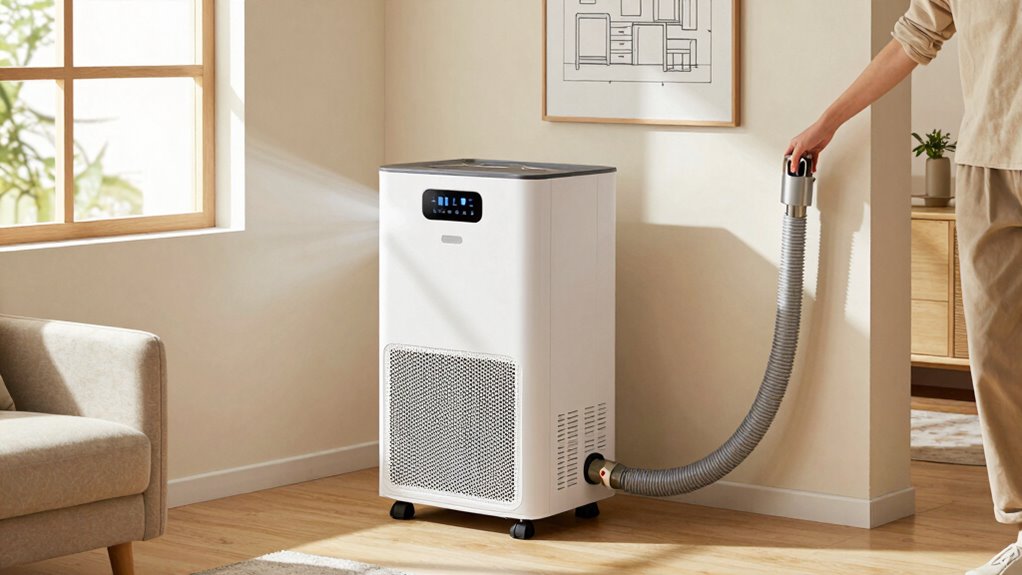
Maintaining and troubleshooting your portable air conditioner regularly can keep it running efficiently and extend its lifespan. Start with filter maintenance—clean or replace filters every few weeks to ensure ideal airflow and cooling. For remote troubleshooting, ensure batteries are fresh and the remote is pointed directly at the unit. If the AC isn’t turning on, check the power cord and outlet. For persistent issues, consult your user manual or contact support.
| Issue | Solution | Tips |
|---|---|---|
| Remote not responding | Replace batteries, reset remote | Use line of sight for signals |
| Poor airflow | Clean or replace filters | Check for obstructions |
| Unit not cooling | Check hose connections | Clear any blocked vents |
| Strange noises | Inspect fan and internal parts | Schedule professional service |
| Water drainage issues | Empty or clean water tray | Ensure proper hose setup |
How Much Does It Cost to Run a Portable AC and How Can I Save Energy?
Running a portable air conditioner costs varies depending on usage and energy rates, but understanding how much it consumes can help you manage your utility bills. To improve energy savings and reduce power consumption, consider these tips:
- Keep doors and windows closed to prevent cool air from escaping
- Use a programmable timer to avoid running the unit when not needed
- Regularly clean filters to ensure peak efficiency
- Set the thermostat higher when you’re not in the room
- Ensure hoses and vents are properly sealed for maximum cooling efficiency
Being mindful of these factors helps you cut down on energy costs and prolongs your unit’s lifespan. Monitoring your usage patterns can make a significant difference in keeping your room cool while saving money.
What Common Mistakes Should I Avoid When Using a Portable AC?
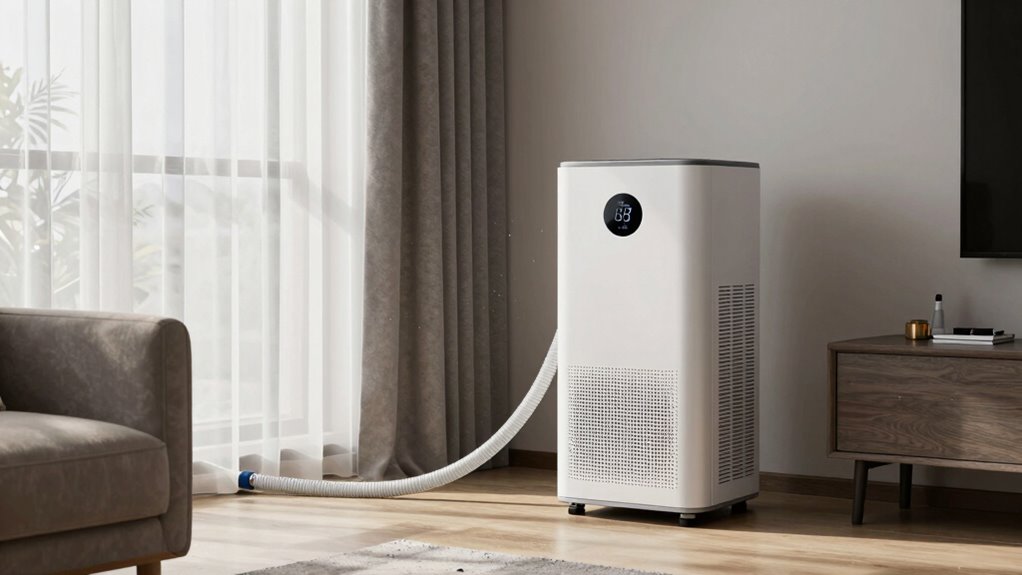
One common mistake is placing the exhaust hose incorrectly, which can reduce your unit’s efficiency. You also need to stay on top of regular maintenance to keep it running smoothly. Ignoring these issues can lead to higher energy bills and decreased cooling performance.
Incorrect Hose Placement
Incorrect hose placement is one of the most common mistakes that can reduce your portable AC’s efficiency. When the hose isn’t positioned correctly, it hampers air circulation and causes the unit to work harder, increasing energy use and reducing cooling effectiveness. To avoid this, verify the hose is securely attached and directed outside without kinks or bends. Keep the hose straight and free of obstructions to maximize airflow. Additionally, check that the hose is the right length—too long or too short can impact performance. Avoid sealing the hose openings tightly or blocking airflow around the unit, as this disrupts proper air circulation. Proper hose placement ensures your portable AC cools effectively and conserves energy.
Ignoring Maintenance Needs
Neglecting regular maintenance can markedly reduce your portable AC’s efficiency and lifespan. Failing to replace filters or clean components leads to poor airflow and increased energy use. To avoid this, schedule routine filter replacements and inspections. Maintenance neglect often results in buildup that hampers cooling performance.
| Maintenance Step | Frequency | Impact of Ignoring |
|---|---|---|
| Filter replacement | Every 1-2 months | Reduced airflow, higher energy bills |
| Coil cleaning | Every 3-6 months | Decreased cooling efficiency |
| Drainage check | Monthly | Water leaks, mold risk |
Stay proactive—proper maintenance guarantees your portable AC runs smoothly and effectively.
When Is It Time to Upgrade or Consider Other Cooling Options?
Knowing when to upgrade your portable AC or switch to other cooling options is essential for maintaining comfort and energy efficiency. If your unit struggles to cool the room effectively, or if indoor air quality declines, it’s a clear sign it’s time to reconsider. High noise levels can also become disruptive, indicating your AC may be outdated or undersized. Additionally, if you notice persistent humidity or mold issues, upgrading could improve air circulation and health. Consider switching if your current system can’t handle your room size or if energy bills spike unexpectedly. Keep an eye on these signs:
- Inadequate cooling despite proper maintenance
- Excessive noise that disrupts comfort
- Poor indoor air quality or mold growth
- Rising energy costs
- Room size increases or layout changes
Frequently Asked Questions
Can Portable AC Units Effectively Cool Large Open-Plan Spaces?
Portable AC units can cool large open-plan spaces, but their effectiveness depends on the unit’s BTU capacity and the room’s size. For ideal large space cooling, choose a model with high BTUs and proper airflow. Keep in mind that open plan effectiveness may require multiple units or strategic placement. While some portable ACs handle big areas well, they might struggle if the space is exceptionally large or poorly ventilated.
What Is the Noise Level of Most Portable Air Conditioners?
Most portable air conditioners have noise levels ranging from 50 to 70 decibels, similar to a conversation or background music. You’ll notice some units are quieter, especially those with advanced sound insulation or quieter compressors. When shopping, check the decibel ratings to find a model that won’t disturb your daily activities or sleep. Keep in mind, higher BTU units might be noisier due to increased power.
Are Portable ACS Safe for Use Around Children and Pets?
Portable ACs are generally safe around children and pets if you follow proper precautions. To guarantee child safety and pet safety, keep the unit out of reach, secure the power cord, and avoid blocking vents. Always supervise when in use, and choose models with safety features like automatic shut-off. Regularly inspect the unit for leaks or damage to prevent accidents, making your space safer for everyone.
How Do I Prevent Mold and Mildew Growth With My Portable AC?
To prevent mold and mildew growth with your portable AC, focus on air filter maintenance and humidity control. Regularly clean or replace filters to keep air fresh and dry out excess moisture. Use the built-in dehumidifier or an external one to maintain ideal humidity levels—ideally between 30-50%. Also, guarantee proper drainage and keep the area well-ventilated to inhibit mold growth effectively.
Do Portable Air Conditioners Emit Ozone-Depleting Chemicals?
You won’t believe it, but portable ACs generally don’t emit ozone-depleting chemicals or dangerous chemical emissions. They’re designed with eco-friendly refrigerants that avoid ozone depletion, keeping our atmosphere safe. Unlike old appliances, modern units prioritize environmental health, so you can cool your room without risking the ozone layer. Rest assured, your portable AC is a friend to both your comfort and the planet!
Conclusion
Now that you’re armed with all the secrets of portable ACs, you’re practically a cooling guru! With the right BTUs, hose, and placement, you’ll beat the heat like a superhero in a pool of ice. Say goodbye to sweaty days and hello to a room so cool, it’ll make your freezer jealous. Just remember, with these tips, you’ll turn your hotbox into a chill paradise—faster than you can say “air conditioning hero”!
Flea & tick season Picks
flea and tick prevention
As an affiliate, we earn on qualifying purchases.