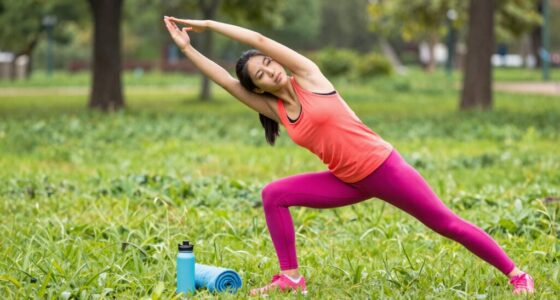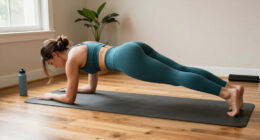

Focusing on your breath during exercise instantly boosts your control and stability. Exhale during exertion like lifting or pushing, and inhale during easier phases such as lowering or resetting. This synchronized breathing improves oxygen flow, prevents strain, and keeps your movements smooth. Proper breathing also sharpens your focus, helping you stay aware of your form and efforts. Keep practicing these cues, and you’ll discover even more ways to enhance your performance with every move.

Get health and wellness essentials delivered free — and shop member deals
- Fast, free delivery on millions of items
- Access to Prime Big Deal Days deals on October 6–7
- Prime Video, Amazon Music and more included
Key Takeaways
- Synchronizing exhalation during exertion and inhalation during easier phases enhances movement control and stability.
- Proper breathing ensures steady oxygen flow, reducing fatigue and maintaining consistent muscle engagement.
- Rhythmic breathing acts as a mental cue, improving focus and awareness of body positioning during exercise.
- Controlled breathing prevents irregular patterns like breath-holding, increasing exercise precision and safety.
- Developing automatic, deep breathing techniques boosts overall control and performance efficiency.

Have you ever wondered how proper breathing can enhance your workout? It might seem simple, but paying attention to your breathing patterns can make a significant difference in your exercise efficiency. When you focus on your breathing, you’re not just supplying your muscles with oxygen; you’re also controlling your movements, reducing fatigue, and improving overall performance. By mastering the right breathing techniques, you can turn a good workout into a great one.
Start by understanding that your breathing patterns should synchronize with your movements. For example, during strength training or high-intensity exercises, exhale during the exertion phase—that’s when you lift, push, or pull— and inhale during the easier phase—when you lower the weight or reset. This pattern helps maintain stability and supports proper core engagement. When you breathe in smoothly and deeply, you provide your body with the oxygen it needs to sustain effort, helping you stay focused and energized throughout your session.
Proper breathing also influences your exercise efficiency. If you hold your breath or breathe irregularly, you risk unnecessary strain, early fatigue, and even dizziness. Instead, aim for controlled, rhythmic breathing; it ensures a steady flow of oxygen, which fuels your muscles and keeps your heart rate steady. When your breathing is aligned with your movement, you optimize oxygen intake and carbon dioxide removal, which means your muscles can work longer and more effectively. This balance reduces the likelihood of burnout and helps you recover quicker between sets.
Moreover, paying attention to your breathing patterns can improve your mental focus during workouts. It acts as a cue that keeps you present and aware of your body’s signals. For instance, if you notice your breath becoming shallow or irregular, it’s a reminder to slow down, reset, and breathe consciously. This mindfulness not only enhances your exercise efficiency but also makes your workout more enjoyable and less stressful.
Implementing proper breathing during your routines is simple but powerful. Practice inhaling deeply through your nose, filling your lungs completely, and exhaling fully through your mouth or nose, depending on the activity. Over time, this becomes second nature, allowing your body to perform at its best, with less effort and more control. Additionally, using advanced filtration systems can help you breathe cleaner air, especially in environments with pollutants or allergens. By focusing on your breathing patterns, you’re giving yourself a cue that instantly improves your exercise efficiency, keeps you calm under pressure, and ultimately, helps you achieve your fitness goals more effectively.
breath control exercise equipment
As an affiliate, we earn on qualifying purchases.
As an affiliate, we earn on qualifying purchases.
Frequently Asked Questions
How Does Breathing Affect Muscle Fatigue During Exercise?
Your breathing directly impacts muscle fatigue by enhancing muscle oxygenation. When you practice breath control, you guarantee a steady flow of oxygen to your muscles, delaying fatigue and improving performance. Proper breathing helps remove carbon dioxide efficiently, preventing buildup that can cause tiredness. By focusing on controlled breaths during exercise, you optimize muscle function, sustain energy levels longer, and reduce the risk of premature exhaustion.
Can Breathing Techniques Prevent Exercise-Induced Injuries?
Yes, proper breath control can help prevent exercise-induced injuries by maintaining stability and reducing strain on your muscles and joints. When you focus on steady breathing, you enhance your core engagement and avoid excessive pressure that could lead to injury. Incorporate techniques like diaphragmatic breathing and controlled exhalations during your workout to support injury prevention and improve overall safety and performance.
What Role Does Breathing Play in Mental Focus During Workouts?
Breathing plays a essential role in your mental focus during workouts by strengthening the mind-body connection. When you breathe intentionally, you regulate emotions and stay present, which sharpens concentration. Deep, controlled breaths help manage stress and prevent distractions, keeping you engaged in your exercise. By mastering your breath, you enhance emotional regulation, allowing you to maintain mental clarity and focus, ultimately boosting your workout efficiency and results.
Are There Specific Breathing Methods for Different Types of Exercise?
Yes, different exercises benefit from specific breathing methods. For strength training, focus on diaphragmatic breathing to stabilize your core and prevent injury. During cardio, use rhythmic inhalation to maintain stamina and control your pace. Yoga or stretching often incorporates deep, slow breaths to enhance flexibility and relaxation. Adjust your breathing pattern based on the activity—deep, steady breaths for endurance and controlled, rhythmic inhalation for power and precision.
How Can I Correct My Breathing if I Feel Dizzy?
Imagine your breath is a gentle wave, guiding oxygen intake smoothly. If you feel dizzy, slow down and focus on deep, controlled breathing patterns—inhale through your nose, filling your lungs fully, then exhale steadily. This helps restore oxygen flow and calm your body. By consciously managing your breathing, you regain control, preventing dizziness and ensuring your muscles get the oxygen they need to perform safely and effectively.
As an affiliate, we earn on qualifying purchases.
Conclusion
By focusing on your breathing during exercise, you gain immediate control and confidence. It might seem tricky at first, but with practice, it becomes second nature. Don’t let the idea of “perfect” breathing hold you back—just start by inhaling and exhaling steadily. Remember, even small adjustments can make a big difference in your workout. Embrace your breath, enjoy the process, and watch how your performance and comfort improve effortlessly.
fitness breathing training device
As an affiliate, we earn on qualifying purchases.
As an affiliate, we earn on qualifying purchases.
As an affiliate, we earn on qualifying purchases.
Fall Picks
fall essentials
As an affiliate, we earn on qualifying purchases.