
To figure out how many mesh Wi-Fi nodes you need, consider your home’s size, layout, and materials. Small apartments often only need two nodes, while larger or multi-story homes typically require three or more. Walls, especially thick concrete ones, can block signals, so you might need extra nodes in those areas. Proper placement guarantees seamless coverage. If you want to learn exactly how to optimize your setup, keep exploring this guide.

Get health and wellness essentials delivered free — and shop member deals
- Fast, free delivery on millions of items
- Access to Prime Big Deal Days deals on October 6–7
- Prime Video, Amazon Music and more included
Key Takeaways
- Larger or multi-floor homes typically require 3 or more nodes for seamless coverage.
- Thick walls and obstructions demand additional nodes to prevent dead zones.
- High-traffic areas and home offices benefit from strategically placed nodes for reliable signals.
- Signal strength assessments help identify weak zones, indicating the need for more mesh nodes.
- Place nodes centrally and near key zones, considering layout and interference sources for optimal performance.
mesh Wi-Fi system with 3 or more nodes
As an affiliate, we earn on qualifying purchases.
As an affiliate, we earn on qualifying purchases.
How to Assess Your Home’s Wi-Fi Coverage Needs

Understanding your home’s Wi-Fi coverage needs begins with identifying the areas where you use the internet most often. Pinpoint spaces like your living room, home office, or bedrooms where a strong, reliable connection is essential. Consider whether your current setup supports your activities, such as streaming, gaming, or working from home. To improve mesh security, guarantee your network is protected with strong passwords and encryption, especially in high-traffic zones. For performance optimization, check for dead zones or weak signals, which can be addressed by adding nodes strategically. Knowing which areas demand the most bandwidth helps you decide how many mesh nodes you’ll need, ensuring seamless coverage and enhanced security throughout your home. Proper network configuration can also provide insights into optimizing your network setup for different digital concepts. Additionally, evaluating your mesh Wi-Fi system’s scalability ensures your network can grow with your needs and adapt to future devices. Moreover, understanding the coverage area requirements of your home can help you select the right number of nodes for optimal performance.
best mesh Wi-Fi router for large homes
As an affiliate, we earn on qualifying purchases.
As an affiliate, we earn on qualifying purchases.
How Your Home’s Size and Layout Influence Mesh Wi-Fi Setup

How Your Home’s Size and Layout Influence Mesh Wi-Fi Setup
Your home’s size and layout directly affect how many mesh nodes you need and where to place them. A larger or more complex floor plan may require additional units to guarantee complete coverage. Obstructions like walls and interference from electronics can also impact signal strength and placement decisions. Considering effective soundproofing techniques can help minimize noise disruptions, creating a quieter living environment. Additionally, understanding home network design principles can assist in optimizing your mesh Wi-Fi setup for better performance. It’s also beneficial to evaluate wireless interference sources in your home that could affect signal quality and plan accordingly. Recognizing signal propagation characteristics can further improve your node placement strategy for optimal coverage.
Home Size and Coverage
Have you ever wondered how the size and layout of your home affect your mesh Wi-Fi setup? Larger homes require more nodes to guarantee seamless coverage, especially in areas far from the main router. The number of nodes you need depends on your home’s square footage and how large open spaces or thick walls might interfere with signals. Using the latest wireless standards, like Wi-Fi 6, can boost speed and efficiency across multiple devices. Keep in mind, adding more nodes also improves network security by reducing dead zones where hackers could target. Proper placement maximizes coverage and performance, so consider your home’s size when choosing the number of mesh units. Additionally, mesh network design considerations can help optimize your setup for the best performance. Just like adding more mesh nodes enhances your Wi-Fi coverage, car performance upgrades, such as installing a better flywheel or engine modifications, can significantly improve your vehicle’s responsiveness—this demonstrates how strategic enhancements boost overall functionality. To ensure reliable connectivity, it’s also helpful to evaluate your home’s signal interference sources, which can impact your mesh Wi-Fi performance. This way, you’ll enjoy a strong, secure connection throughout your space.
Floor Plan Complexity
The complexity of your home’s floor plan substantially impacts how you set up your mesh Wi-Fi system. If your home has multiple rooms, thick walls, or unique layouts, you’ll need more nodes to guarantee seamless coverage. Consider these factors:
- Room layout and size – Larger or irregularly shaped spaces may require additional nodes for proper mesh security and consistent signal strength.
- Wall materials – Thick concrete or metal walls can obstruct signals, prompting the need for extra nodes placed strategically.
- Node aesthetics – Choose aesthetically pleasing nodes that blend into your home’s design without compromising coverage or mesh security.
Adjusting node placement based on floor plan complexity assures a reliable network, balancing performance with visual appeal.
Obstructions and Interference
Obstructions and interference within a home’s layout can substantially affect mesh Wi-Fi performance. Thick walls, metal surfaces, and large furniture can weaken signal strength, requiring you to place nodes strategically for maximum coverage. Interference from other electronic devices, like microwaves or cordless phones, can also disrupt your network, leading to inconsistent connections. These obstacles can reduce device compatibility, making some gadgets struggle to connect or maintain stable links. To mitigate this, position nodes in open areas away from potential interference sources and consider using mesh systems that adapt to your environment. Additionally, understanding signal attenuation caused by various obstructions can help you optimize node placement for better coverage. Recognizing the home’s layout and how it influences signal flow allows for more effective network design. By understanding how obstructions impact signal strength, you can design a setup that ensures reliable coverage throughout your home, minimizing dead zones and maintaining strong connectivity for all your devices. Considering the home’s size and shape can also guide you in determining the appropriate number of nodes needed for comprehensive coverage. Properly assessing building materials can further enhance your placement strategy, ensuring a robust and reliable Wi-Fi network.
mesh Wi-Fi nodes for thick walls
As an affiliate, we earn on qualifying purchases.
As an affiliate, we earn on qualifying purchases.
How Building Materials and Walls Affect Mesh Node Placement
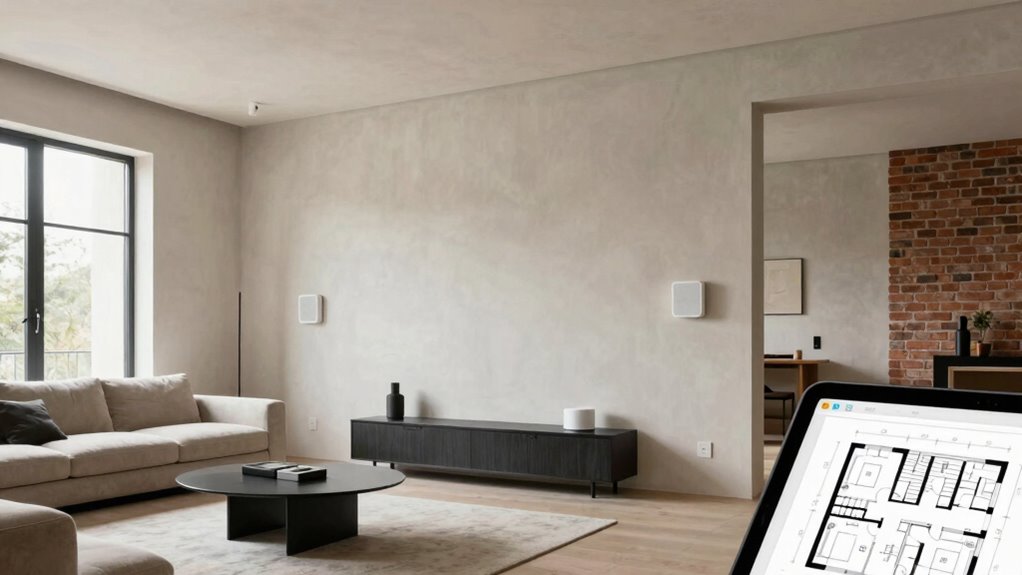
Building materials and wall types play an essential role in determining the effectiveness of your mesh Wi-Fi network. Different materials can block or weaken signals, affecting placement decisions. For example:
Building materials influence Wi-Fi signal strength and placement strategies.
- Concrete or brick walls markedly hinder signal strength, so place nodes closer to these barriers for better coverage.
- Wood or drywall, being less dense, allow signals to pass more easily, giving you more flexibility in placement.
- Interior aesthetics and aesthetic integration matter—hide nodes behind decor or within cabinetry without sacrificing performance by considering wall materials.
- The signal attenuation caused by various building materials impacts overall network coverage, so understanding these effects helps optimize node placement.
- Additionally, knowing how wall composition influences signal strength can guide you in choosing the best locations for your nodes. Being aware of the building layout also assists in planning an effective network setup that minimizes dead zones.
- Considering the distance between nodes, especially in large spaces, is crucial to maintain a strong and reliable connection throughout your environment. Proper understanding of wireless propagation can further enhance placement strategies for optimal coverage.
- Understanding these factors helps you optimize node placement, ensuring seamless connectivity while maintaining your interior aesthetics. Proper placement balances network performance with the aesthetic appeal of your space, making your mesh network both functional and visually pleasing.
wireless signal booster for home
As an affiliate, we earn on qualifying purchases.
As an affiliate, we earn on qualifying purchases.
How Many Mesh Wi-Fi Nodes Do You Need for Small Apartments and Condos?

In small apartments and condos, the goal is to guarantee reliable Wi-Fi coverage without overcrowding the space with unnecessary devices. Usually, one or two mesh nodes are sufficient to cover the entire area, ensuring seamless connectivity. When choosing your mesh system, prioritize mesh compatibility to make sure all nodes work smoothly together. Also, consider mesh security features that protect your network from threats, especially when adding multiple nodes. If your apartment has thick walls or multiple floors, a third node might be needed to improve coverage. Keep in mind that more nodes can complicate management and potentially reduce performance if not properly configured. Additionally, understanding mesh coverage areas can help you determine the optimal number of nodes for your space. For optimal performance, it’s important to evaluate your floor plan layout to decide how many nodes will best serve your needs. Properly assessing your signal strength requirements can prevent over- or under-provisioning your mesh system. To ensure consistent coverage, consider interference sources that might impact your Wi-Fi signals. Ultimately, select the minimum number of nodes that provide strong, consistent signals across your entire living space.
How to Place Mesh Nodes Effectively in Your Floor Plan

To place your mesh nodes effectively, start by analyzing your floor plan to identify key areas that need strong Wi-Fi signals, such as living rooms, bedrooms, and home offices. Position your nodes to create overlapping coverage, guaranteeing seamless connectivity. Keep in mind the wireless standards your devices support for optimal performance. Place nodes away from thick walls or metal objects that can interfere with signals. Also, position some nodes centrally to improve network security by minimizing dead zones. Here’s a quick guide:
- Place nodes near high-traffic areas for better coverage.
- Avoid placing nodes next to electronic devices that cause interference.
- Ensure nodes are within range of each other for stable mesh networking.
- Consider wireless interference sources in your environment to optimize placement and maintain reliable connections.
Effective placement maximizes coverage, supports faster speeds, and maintains secure network connections.
How Many Mesh Nodes for Large or Multi-Story Homes?

When planning how many mesh nodes you’ll need, consider the total floor space you want to cover and how many floors your home has. Building materials like brick or concrete can reduce signal strength, so you might need extra nodes in those areas. Evaluating these factors helps ensure your Wi-Fi reaches every corner reliably.
Floor Space Coverage
Determining the right number of mesh nodes for large or multi-story homes hinges on the total floor space you need to cover. To guarantee strong coverage, consider the impact of Wi Fi interference and signal attenuation, which can reduce signal strength over distance. Larger spaces require more nodes to maintain a reliable connection everywhere.
Here are key ideas to keep in mind:
- Larger floor areas often need additional nodes to prevent dead zones.
- Thick walls and multiple floors increase signal attenuation, requiring strategic placement.
- Avoid placing nodes too close together to reduce Wi Fi interference, which can weaken your network.
Proper planning helps ensure your mesh network provides seamless coverage across your entire home.
Number of Floors
If your home has multiple floors, you’ll need to install enough mesh nodes to guarantee reliable coverage across all levels. Multi-story challenges, like stairway interference, can weaken signals between floors, creating dead zones. To prevent this, place nodes on each floor, especially near stairways where signals often struggle. Using a node on each level ensures the Wi-Fi signal remains strong and consistent throughout your home. Keep in mind that stairways can act as barriers, so positioning nodes strategically around these areas helps improve coverage. Avoid placing nodes too close to thick walls or metal objects that could cause interference. By planning your node placement for each floor, you’ll create a seamless Wi-Fi experience, eliminating dead spots caused by multi-story challenges.
Building Materials Impact
Building materials play a significant role in how many mesh nodes you’ll need for a large or multi-story home. Thick walls, concrete, brick, or metal framing can block Wi-Fi signals, requiring additional nodes to guarantee coverage. Conversely, homes with open floor plans and lightweight materials tend to need fewer nodes. When considering interior design and aesthetic considerations, placement becomes vital; you’ll want nodes that blend seamlessly without disrupting the look.
Here are some key points:
- Heavy materials like concrete demand more nodes for consistent coverage.
- Open, lightweight structures reduce the number of nodes needed.
- Placement should balance signal strength with interior design for seamless integration.
Signs You Need to Add More Mesh Wi-Fi Nodes

When your Wi-Fi signal drops or becomes unreliable in certain areas of your home, it’s a clear sign that you might need to add more mesh nodes. Poor coverage often results from an ineffective mesh configuration or suboptimal node placement. If you notice dead zones or slow speeds in specific rooms, consider expanding your network. Proper node placement is essential; they should be positioned centrally and away from obstructions to guarantee even coverage. Additionally, if devices frequently disconnect or buffering occurs during streaming, it’s time to evaluate your current setup. Adding more nodes can strengthen your mesh network and improve overall performance. Keep an eye on signal strength and coverage gaps to determine when extra nodes are necessary for seamless internet access throughout your home.
Frequently Asked Questions
Can Mesh Wi-Fi Systems Support Smart Home Devices Effectively?
Yes, mesh Wi-Fi systems support smart home devices effectively. They offer strong smart home compatibility, ensuring your devices stay connected across your home. Plus, with device prioritization features, you can give important gadgets, like security cameras or smart thermostats, higher bandwidth. This setup helps prevent lag or disconnections, making your smart home more reliable and seamless. You’ll enjoy smooth operation and better control over all your smart devices.
How Do Mesh Nodes Impact Internet Speed and Bandwidth?
Think of mesh nodes as filters that can slow your internet if they’re too close. They impact speed and bandwidth by sharing signals, which can cause interference and reduce overall performance. When you add more nodes, they split bandwidth, potentially creating congestion. To keep your speed intact, place nodes strategically, avoiding signal interference, and limit unnecessary nodes to balance coverage and bandwidth sharing for a faster, more reliable connection.
Is Professional Installation Necessary for Optimal Mesh Coverage?
Professional installation isn’t always necessary, but it can considerably improve coverage quality and offer installation benefits. When you hire experts, they optimize node placement for the best signal strength and eliminate dead zones. This ensures your mesh network functions efficiently across your entire floor plan. If you’re comfortable with setup, you can try installing it yourself, but for seamless coverage and maximum performance, professional help is often worth the investment.
How Often Should I Update or Upgrade My Mesh Wi-Fi System?
Think of your mesh Wi-Fi like a garden that needs tending. You should update your firmware regularly to patch security flaws and improve performance. Hardware upgrades become necessary when your current system can’t keep up with your streaming or gaming needs. Usually, check for updates every few months, and plan upgrades every 2-3 years to guarantee your network stays strong and reliable, just like a thriving garden.
Can Mesh Wi-Fi Extend Coverage Outdoors or in Garages?
Yes, mesh Wi-Fi can extend outdoor coverage and enhance garage connectivity. You should place outdoor nodes or weatherproof extenders strategically to maximize coverage. This setup ensures a strong signal in your yard, patio, or garage. Keep in mind, outdoor environments may require more robust equipment. Regularly check signal strength and adjust node placement as needed to maintain reliable outdoor coverage and seamless connectivity in your garage area.
Conclusion
Don’t assume you need dozens of nodes to cover your home—smart placement and understanding your space often do the trick. Yes, it might seem tempting to add more nodes for perfect coverage, but more isn’t always better and can even cause interference. Focus on your floor plan, walls, and building materials to find the right balance. With a strategic approach, you’ll enjoy seamless Wi-Fi without unnecessary clutter or expense.
Halloween Picks
halloween
As an affiliate, we earn on qualifying purchases.