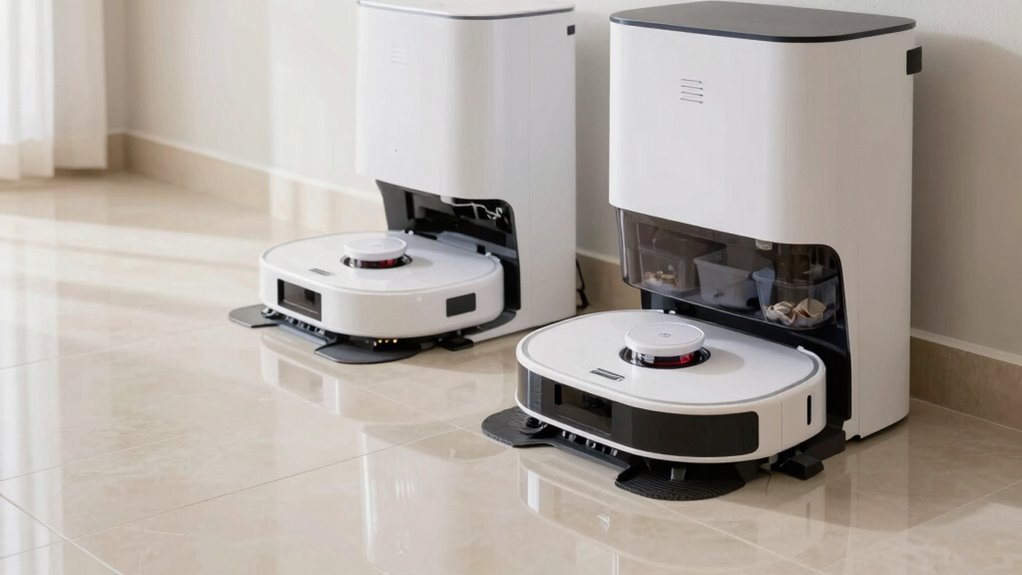

Self-cleaning robot mops use a built-in station with water reservoirs and brushes to rinse and dry the mop pads automatically, reducing manual maintenance and keeping your device hygienic. Self-emptying mops, on the other hand, have docks that automatically dispose of dirt into sealed bins, saving you time on trash removal. Understanding these differences helps you choose what’s best for your household, and you’ll discover more details if you keep exploring.

Get health and wellness essentials delivered free with Prime
- Fast, free delivery on millions of items
- Prime Video, Amazon Music and more included
- Member-only deals all year
Key Takeaways
- Self-cleaning robot mops rinse and dry their pads at a dedicated station, reducing manual maintenance but requiring ongoing water management.
- Self-emptying robot mops automatically dispose of debris into sealed bins, minimizing manual trash removal and suitable for large or busy households.
- Self-cleaning models focus on maintaining hygiene and pad freshness, while self-emptying models handle debris disposal from cleaning sessions.
- Both systems involve different maintenance tasks: self-cleaning needs water refills and filter replacements, while self-emptying requires bin emptying and system checks.
- Choosing between them depends on household size, cleaning needs, and preference for manual vs. automated debris and pad management.
self-cleaning robot mop with dock
As an affiliate, we earn on qualifying purchases.
As an affiliate, we earn on qualifying purchases.
Which Robot Mop Is Right for You? A Quick Guide to Self-Cleaning and Self-Emptying Models
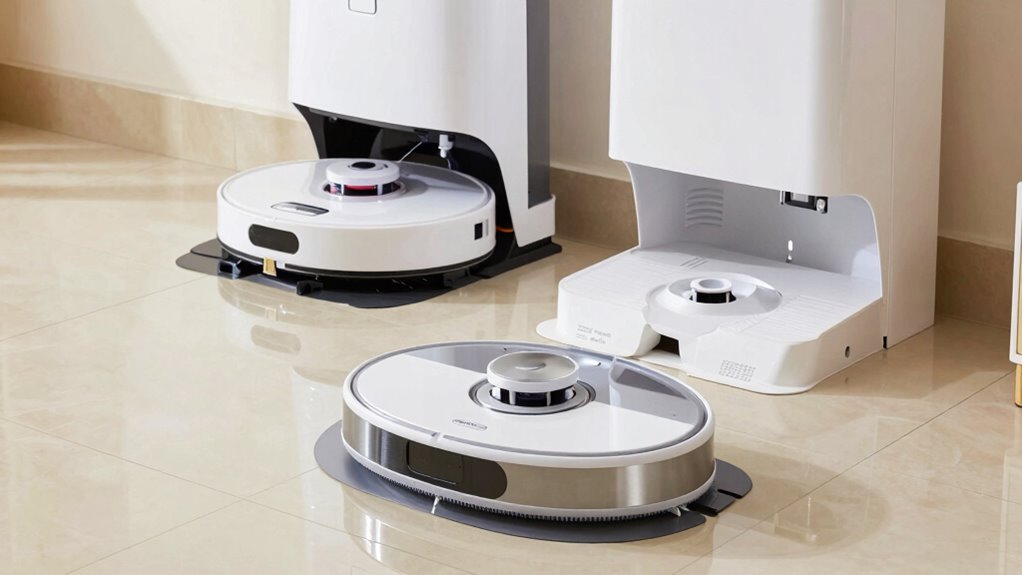
Choosing the right robot mop depends on your cleaning needs and lifestyle. Consider the robot mop technology that suits your home, whether you prefer self-cleaning or self-emptying features. Self-cleaning models are ideal if you want a low-maintenance solution, as they automatically handle their cleaning process, saving you time. If you have a busy schedule, look for a robot mop with a customizable cleaning schedule, so it can clean when you’re not home. Think about the size of your space and the types of floors you have. Some models excel at deep cleaning, while others focus on daily touch-ups. By matching these features to your routine, you’ll find a robot mop that keeps your floors spotless with minimal effort. Additionally, understanding the technology behind home cleaning can help you select a model with the most effective features for your environment.
self-emptying robot mop for large homes
As an affiliate, we earn on qualifying purchases.
As an affiliate, we earn on qualifying purchases.
How Do Self-Cleaning and Self-Emptying Robot Mops Work?
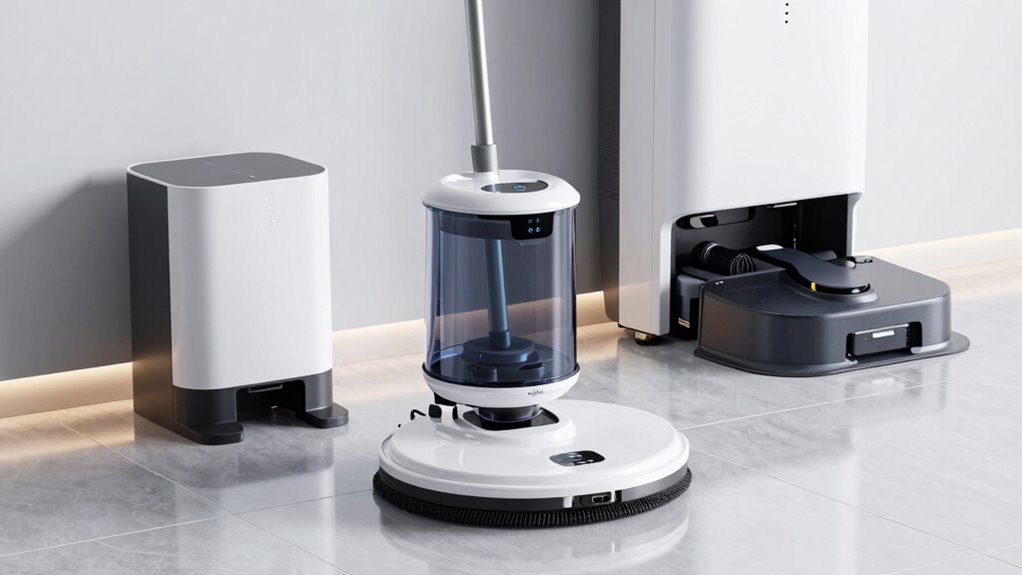
Self-cleaning and self-emptying robot mops automate different parts of the cleaning process to reduce your maintenance effort. Self-cleaning models use built-in stations to rinse and dry the mop pad automatically, often involving a water reservoir and cleaning brushes. Self-emptying mops, on the other hand, have docks that automatically empty the collected debris into a sealed bin, saving you from manual trash removal. Both systems rely on a stable battery life to operate efficiently, especially during longer cleaning sessions. Noise levels vary: self-cleaning stations tend to be quieter, while self-emptying docks can produce more sound during operation. Additionally, system reliability is essential for maintaining consistent cleaning performance over time. Incorporating Free Floating technology can further enhance the flexibility and adaptability of these systems, allowing for more efficient navigation around obstacles and varied flooring types.
automatic mop pad cleaning station
As an affiliate, we earn on qualifying purchases.
As an affiliate, we earn on qualifying purchases.
What Are the Essential Features of Self-Cleaning Robot Mops?
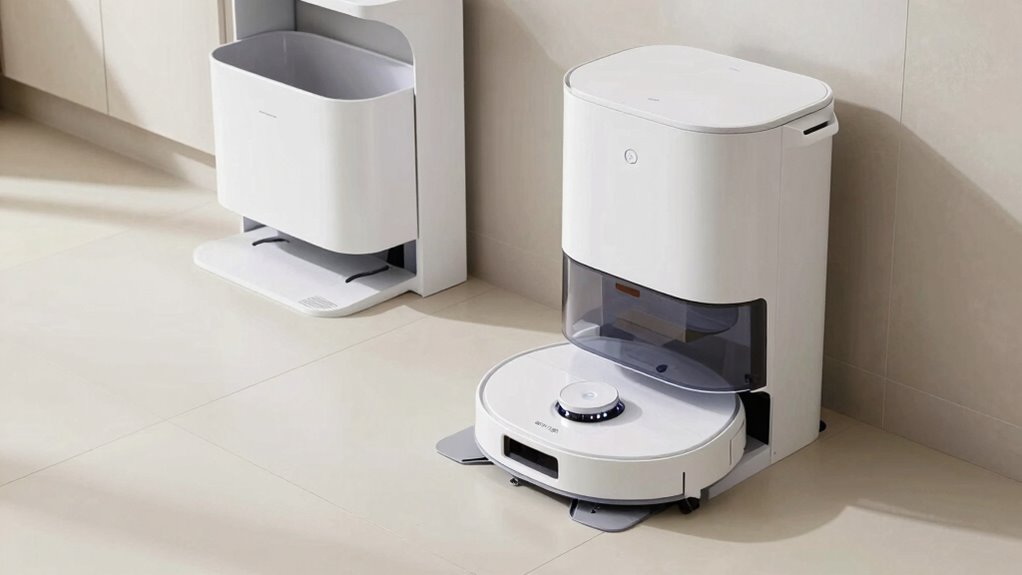
Self-cleaning robot mops should have automatic cleaning cycles that keep the device ready for use without manual effort. Managing the water tank efficiently is also vital to guarantee continuous operation and avoid messes. These features make maintaining your robot mop simple and hassle-free.
Automatic Cleaning Cycles
Automatic cleaning cycles are a essential feature that guarantees your robot mop stays hygienic and ready to use without constant manual intervention. They guarantee your floors are consistently clean while you focus on other tasks. Look for models with customizable schedules, so you can set cleaning times that suit your routine. Battery life is paramount here—longer cycles mean fewer interruptions for recharging, keeping your robot operational longer. Additionally, consider noise levels; quieter cycles let you run cleaning sessions without disturbing your household. A well-designed cycle also prevents overuse of brushes and pads, extending their lifespan. Finally, some models include smart sensors to detect dirtier areas and focus cleaning efforts, maximizing efficiency during each automatic session.
Water Tank Management
Effective water tank management is essential for maintaining the performance and hygiene of self-cleaning robot mops. You want a system that guarantees water filtration to prevent dirt and debris from clogging the mop’s mechanisms, keeping cleaning efficient and hygienic. Look for models that offer easy tank refilling, ideally with features like automatic water refill or notifications when the tank is low. Some mops also include filters that trap fine particles, improving water quality throughout cleaning cycles. Regularly managing the water tank prevents build-up and maintains peak operation. Additionally, choosing a model with advanced filtration systems can significantly enhance water quality and overall cleaning performance. By choosing a robot mop with effective water filtration and simple refilling options, you ensure consistent cleaning performance and extend the lifespan of your device.
robot mop with sealed debris bin
As an affiliate, we earn on qualifying purchases.
As an affiliate, we earn on qualifying purchases.
What Makes Self-Emptying Robot Mops Stand Out?
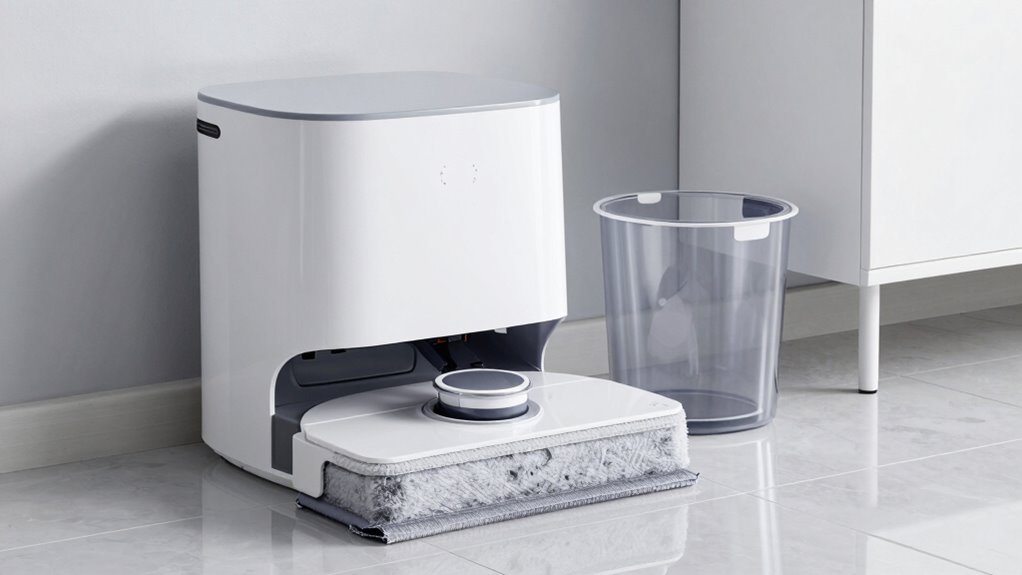
Self-emptying robot mops excel in durability and capacity, so you won’t need to empty the bin as often. They also offer unmatched convenience, reducing your maintenance routine. By understanding these features, you can choose a model that fits your cleaning needs perfectly. Additionally, understanding basic maintenance tasks like filter replacement can help keep your robot mop functioning smoothly over time. Incorporating features like advanced motor technology can further enhance cleaning efficiency and longevity. Being aware of cookie categories and managing your preferences can also improve your browsing experience when researching these products. For optimal performance, considering smart lock integration can add an extra layer of security and automation to your smart home setup. To ensure long-term reliability, paying attention to routine maintenance practices is essential.
Durability and Capacity
What sets self-emptying robot mops apart is their impressive durability and capacity to handle extended cleaning sessions without frequent interruptions. You’ll find that their durability comparison with traditional models shows enhanced build quality, allowing them to last longer under frequent use. Their capacity limits mean they can store more debris and dirty water, reducing the need for constant emptying. This makes them ideal for larger homes or busy households. Features like reinforced components and robust motors contribute to their longevity. Additionally, larger water tanks and waste bins maximize cleaning efficiency, so you spend less time maintaining your device. Overall, these factors ensure your robot mop can handle prolonged, thorough cleaning without breaking down or requiring frequent attention.
- Reinforced build for longevity
- Larger waste and water tanks
- Robust motors for heavy-duty use
- Fewer interruptions during cleaning
Convenience and Maintenance
Have you ever wondered how self-emptying robot mops make daily maintenance easier? They markedly reduce your hands-on tasks by automatically discarding dirty water and debris, saving you time. Plus, their impressive battery life ensures longer cleaning sessions without frequent recharges, so you don’t have to worry about interruptions. Noise levels are also managed carefully, so these mops operate quietly, even during extended cleaning cycles. This combination of features means less hassle and more convenience, especially in busy households. The self-emptying dock takes care of the dirty work, letting you focus on other things. Overall, these mops deliver seamless maintenance with minimal effort, making your cleaning routine more efficient and less disruptive.
How Do Maintenance Efforts Compare Between These Robot Mops?
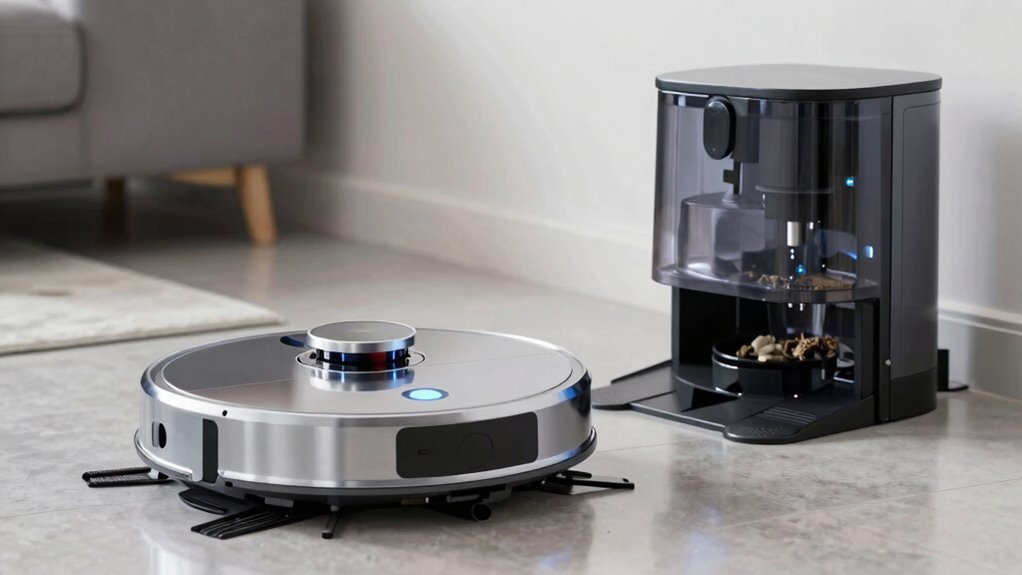
When comparing maintenance efforts, self-cleaning robot mops generally require more frequent attention because you need to regularly empty their dirty water tanks and clean their brushes. This ongoing upkeep can impact your convenience, especially if the device has shorter battery life or higher noise levels during operation. Self‑emptying models reduce manual effort by automatically disposing of debris, but you still need to check for clogging or empty bins periodically. In contrast, self-cleaning mops handle water tank and brush cleaning automatically, saving you time but increasing routine checks for water levels and system cleanliness.
- Regularly empty water tanks and clean brushes
- Monitor battery life for longer cleaning sessions
- Manage noise levels during operation
- Check for system clogs or malfunctions
How to Choose the Best Robot Mop for Your Cleaning Needs
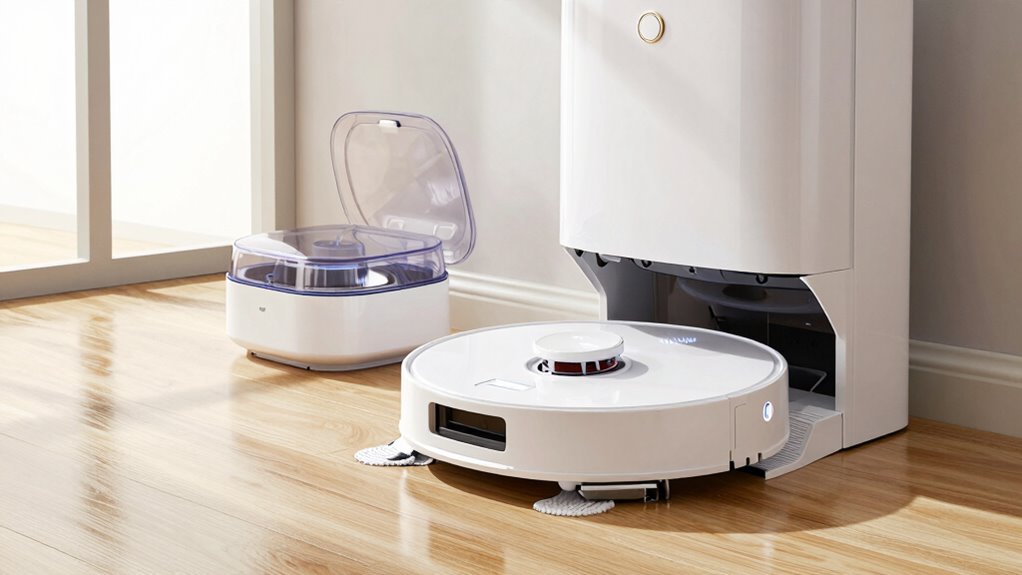
Choosing the right robot mop depends on your specific cleaning needs and lifestyle. If you want a device that seamlessly covers large areas, look for one with smart navigation, which guarantees efficient cleaning paths without missing spots. Consider whether you need a robot vacuum combined with mopping features, as this can save time and simplify your cleaning routine. Think about your floor types—hardwood, tile, or laminate—and select a model with suitable mopping capabilities. Battery life also matters; longer run times mean fewer interruptions. If you have pets or allergies, opt for a robot with strong suction and effective mopping systems. Additionally, self‑cleaning features can help maintain the device’s performance with less manual effort. When evaluating different models, pay attention to navigation technologies that enhance cleaning efficiency and coverage. Incorporating maintenance features can further prolong the lifespan and performance of your robot mop. Ensuring your robot has automatic docking can also make recharging and readiness more convenient. A smart scheduling feature allows you to set cleaning times that fit your routine, making maintenance even more effortless. By matching features like smart navigation and multi-functionality to your home’s requirements, you’ll find a robot mop that makes cleaning easier and more effective.
Pros and Cons of Self-Cleaning Robot Mops for Home Use

Self-cleaning robot mops can save you time on maintenance, but they still require some effort to keep them functioning well. They often improve cleaning effectiveness and hygiene, yet their higher cost can impact your long-term value. Understanding these pros and cons helps you decide if they fit your cleaning needs and budget. Mattress toppers and bedding can enhance sleep comfort, similar to how reliable cleaning tools improve home hygiene. Additionally, regular maintenance and inspection of the robot ensures optimal performance and extends its lifespan.
Maintenance Requirements and Effort
Self-cleaning robot mops are designed to reduce the amount of regular maintenance you need to perform, but they still require some effort to keep them running smoothly. You’ll need to oversee battery life, as it impacts cleaning cycles and may require recharging or replacement. The replacement frequency of parts like filters or brushes can vary, depending on usage. Regularly check for clogs or buildup to prevent performance issues. Keep the docking station clean to ensure proper operation. Since these mops often have longer intervals between maintenance, you save time, but occasional attention is still necessary. Staying on top of these tasks helps extend your robot’s lifespan and ensures it functions efficiently. Proper maintenance ultimately keeps your robot mopping reliably with minimal effort on your part.
- Monitor battery life and recharge when needed
- Replace filters or brushes periodically
- Clean the docking station regularly
- Check for clogs or debris buildup
Cleaning Effectiveness and Hygiene
Self-cleaning robot mops enhance cleaning effectiveness by automatically removing dirt and grime from their mops and brushes, helping maintain consistent performance over time. This feature reduces dust buildup, ensuring that dirt isn’t transferred back onto your floors. By keeping components clean, these mops improve overall hygiene and help control allergens like pet dander and dust mites. You won’t need to manually clean the brushes frequently, which minimizes the risk of mold or bacteria growth. However, while self-cleaning systems promote better hygiene, they may not eliminate all stubborn stains or deeply embedded dirt. For *ideal* cleanliness, regular manual spot cleaning remains essential. Overall, self-cleaning robot mops support more effective, hygienic floor maintenance, especially for allergy sufferers.
Cost and Long-Term Value
While self-cleaning robot mops often come with a higher upfront cost, they can save you money over time by cutting down on manual cleaning and replacing worn parts. Their pricing strategies may seem steep initially, but the long-term savings can outweigh the initial investment. Investing in a reputable brand boosts reliability and resale value, enhancing overall long-term value. Consider these factors:
- Reduced maintenance costs with durable components
- Fewer replacements due to consistent cleaning performance
- Enhanced convenience saving time and effort
- Better durability from trusted brand reputation
Benefits and Drawbacks of Self-Emptying Robot Mops
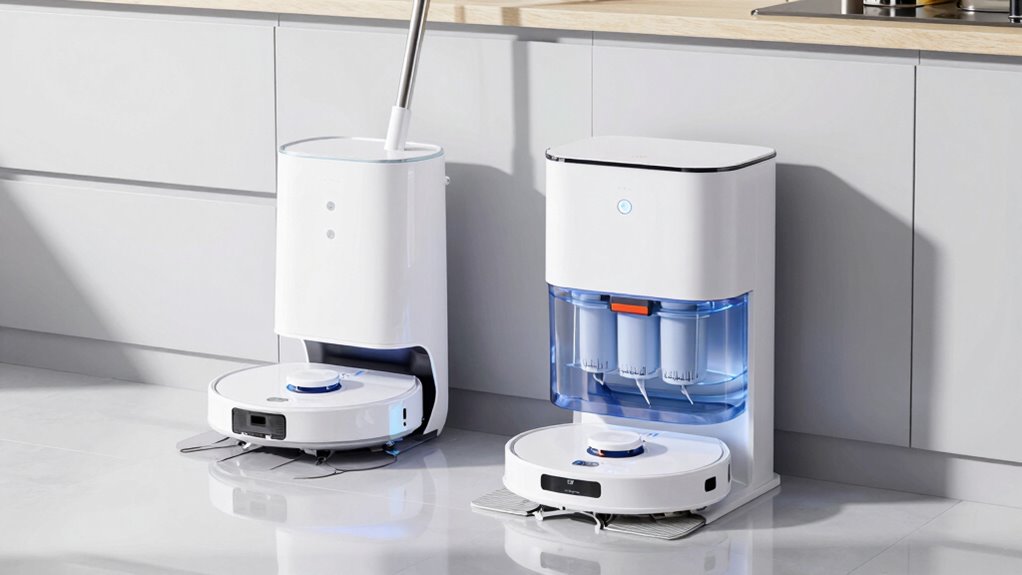
Self-emptying robot mops offer the convenience of automatically disposing of collected dirt and debris, saving you time and effort. They reduce frequent emptying chores, but consider that they may have higher noise levels during operation, which could disturb your household. Additionally, their battery longevity might be affected over time due to the extra workload of emptying functions.
| Benefit | Drawback |
|---|---|
| Saves time on emptying chores | Noise levels can be higher |
| Maintains cleaner floors | Battery life may decline faster |
| Reduces manual handling | Increased maintenance needs |
| Convenient for large spaces | Costlier initial investment |
Are Self-Emptying Robot Mops Worth the Cost?
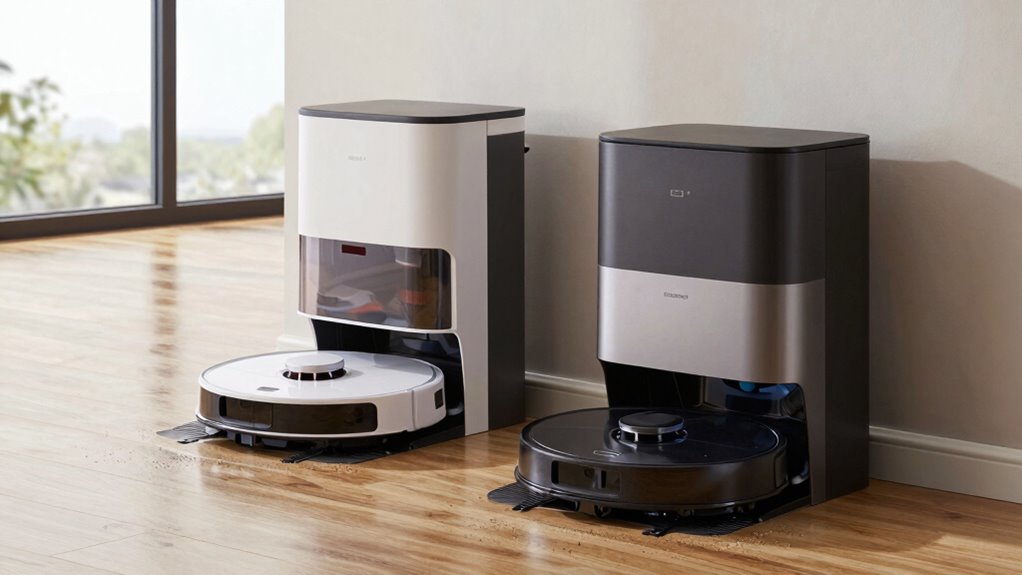
Are self-emptying robot mops worth the investment? If you value convenience, they can be a great addition. They save you time by automatically emptying the clean water and debris, reducing manual maintenance. When considering cost, think about robot mop compatibility with your floors and cleaning solution types—some models work better with specific solutions. The initial price is higher, but the time saved and reduced effort can justify it. Plus, they often feature smart navigation, ensuring thorough cleaning. Keep in mind, not all models have the same capacity for handling different cleaning solution types, so choose one suited to your needs. For busy households or those with pets, the convenience of self-emptying can outweigh the price difference.
Troubleshooting Common Dock and Maintenance Issues
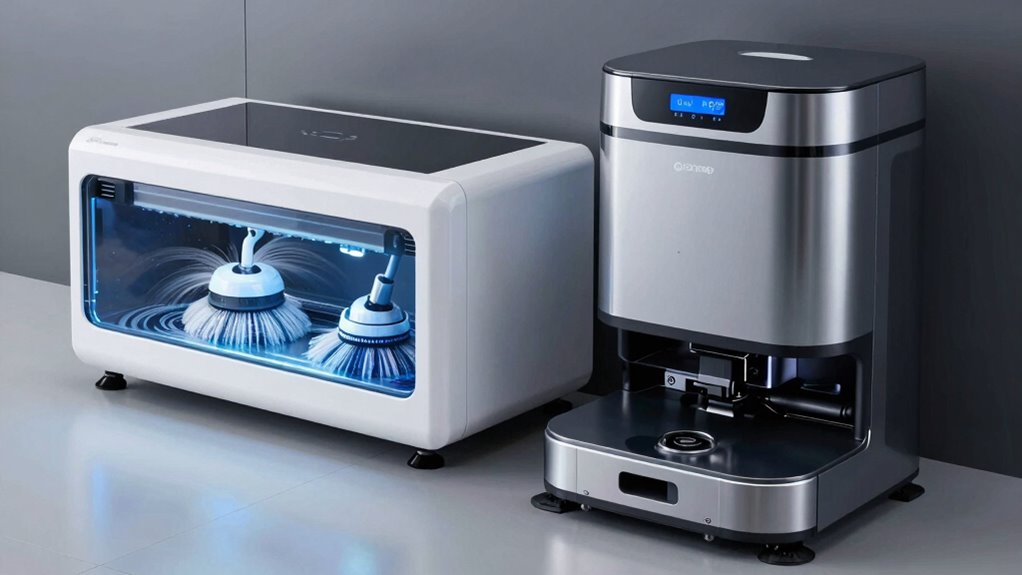
Dock and maintenance issues can disrupt your robot mop’s performance, but most problems are easy to troubleshoot with some basic steps. If you encounter dock issues, start by checking that the dock’s power source is working and the connections are secure. Clean the charging contacts on both the dock and the robot to guarantee proper charging. For general maintenance tips, regularly remove hair, dust, and debris from the dock and the robot’s sensors. Make sure the dock is placed on a flat, stable surface and not obstructed. If your robot isn’t docking or emptying properly, reset it and update its firmware. Routine cleaning and proper placement usually resolve most dock and maintenance issues quickly, keeping your robot mop running smoothly. To optimize performance, ensure your storage and connectivity gear like high-speed SSDs or reliable internet connections are functioning properly, as these can influence firmware updates and overall operation. Additionally, inspecting water-related components such as filters and seals can prevent issues related to water damage or leaks that might affect the robot’s functionality. Regularly checking the battery health can also help prevent unexpected shutdowns or charging problems. Furthermore, maintaining consistent software updates ensures your robot operates with the latest features and bug fixes, reducing potential issues. Being aware of potential hardware malfunctions can help you diagnose and address problems more efficiently before they escalate.
Frequently Asked Questions
Can I Use Self-Cleaning and Self-Emptying Robot Mops Simultaneously?
Yes, you can use self-cleaning and self-emptying robot mops simultaneously. Doing so helps maintain ideal hygiene and reduces your maintenance frequency. Just keep in mind that using both features together might impact battery life, so ensure your robot is fully charged before long cleaning sessions. Regularly check the docks to prevent any issues, and you’ll enjoy cleaner floors with less manual effort.
How Long Does the Self-Cleaning or Self-Emptying Process Take?
Did you know self-cleaning and self-emptying processes typically take between 30 to 60 minutes? You’ll find that cleaning duration varies based on your robot’s model and dock setup. During this time, dock maintenance is minimal, but regular checks help keep everything running smoothly. You can plan your cleaning schedule around this window, ensuring your robot stays efficient and your home stays spotless without long interruptions.
Are There Specific Floor Types Incompatible With These Robot Mops?
Some robot mops have flooring restrictions and may be incompatible with certain surfaces like thick carpets, hardwood with gaps, or uneven flooring. Check the manufacturer’s guidelines to confirm your surfaces aren’t incompatible. You might need to avoid using these mops on delicate or textured floors that can be damaged or won’t clean properly. Always verify compatibility before purchasing or using to get the best cleaning results.
How Often Do the Docks Require Professional Servicing?
You typically need professional maintenance for your dock every 6 to 12 months, depending on usage. During this time, dock troubleshooting may be necessary to keep your robot mop functioning smoothly. Regular checkups guarantee that the charging contacts, sensors, and seals are in top shape, preventing issues. If you notice connectivity or charging problems, scheduling professional maintenance can resolve these quickly and keep your robot mop running efficiently.
Do These Robot Mops Work Effectively on Textured or Uneven Floors?
Yes, robot mops work effectively on textured surfaces and uneven flooring. They’re designed with adaptable mopping pads and sensors that help navigate and clean these challenging areas. You’ll find they adjust their movements to handle bumps and irregularities, ensuring thorough cleaning. Keep in mind, some models perform better on certain textures, so choose one with features tailored for textured surfaces and uneven flooring for ideal results.
Conclusion
Think of self-cleaning and self-emptying robot mops as your home’s loyal but busy helpers. The self-cleaning model is like a diligent housekeeper tidying up after each task, while the self-emptying one is a dedicated butler handling the trash and washings seamlessly. Choosing between them depends on how much effort you’re willing to invest. Either way, they’re your trusty allies, keeping your floors spotless without you having to lift a finger.
Halloween Picks
halloween
As an affiliate, we earn on qualifying purchases.