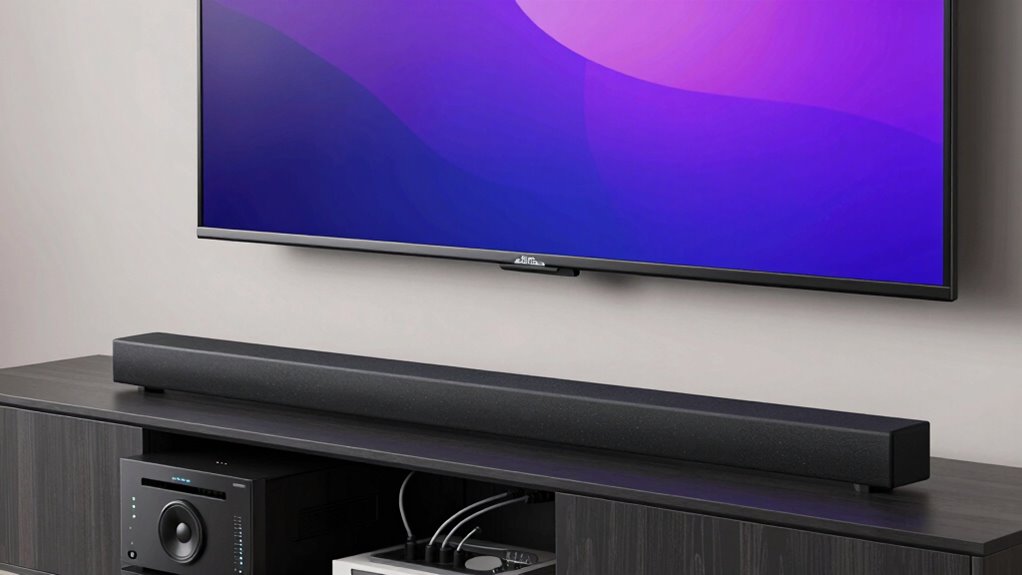

Choosing between a soundbar and an AV receiver depends on your space, budget, and desire for surround sound. A soundbar offers quick setup, compact design, and decent audio, but it may lack immersive depth. An AV receiver provides a true surround experience, expandability, and better customization, though it’s more complex and costly. If you’re ready to upgrade your sound, understanding these options helps you pick the best fit—more details lie ahead.
Key Takeaways
- An AV receiver supports true surround sound with multiple speakers, offering a more immersive experience than most soundbars.
- Upgrading to a surround sound system with an AV receiver involves complex setup and calibration for optimal performance.
- Soundbars are a simpler, cost-effective upgrade for better TV audio but generally lack the full surround sound capability of AV systems.
- Larger rooms benefit from AV receivers and multiple speakers to fill the space, while small rooms are better suited for soundbars.
- For the best surround sound experience, an AV receiver provides greater flexibility, expandability, and precise audio calibration over soundbars.

Assistrust Sound Bar for Smart TV, Soundbar with Bluetooth/ARC/Opt/AUX Connect, Auto Volume Boost, 3 Equalizer Modes, 2 in 1 Detachable Soundbar for TV/PC/Gaming/Projectors
【𝐈𝐦𝐩𝐚𝐜𝐭𝐟𝐮𝐥 𝐕𝐨𝐥𝐮𝐦𝐞 𝐁𝐨𝐨𝐬𝐭】: Elevate faint sounds to vibrant with automatic loudness boost. Experience immersive sound through 4 versatile…
As an affiliate, we earn on qualifying purchases.
As an affiliate, we earn on qualifying purchases.
What’s the Difference Between Soundbars and AV Receivers?
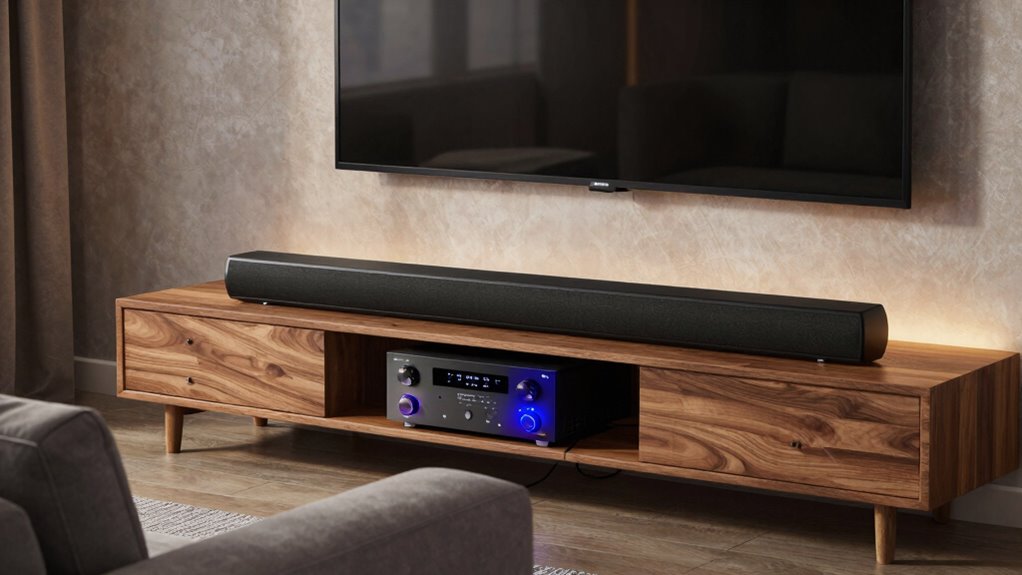
When deciding between a soundbar and an AV receiver, it’s important to understand their core differences. A soundbar offers a simple setup with a single unit that sits beneath or above your TV, making speaker placement straightforward. It often features wireless connectivity options like Bluetooth or Wi-Fi, allowing you to stream music easily. In contrast, an AV receiver acts as a hub for multiple speakers, requiring careful speaker placement around your room for ideal surround sound. AV receivers typically lack built-in wireless connectivity but can connect to wireless speakers or adapters. This setup offers more immersive audio but demands more space and configuration. Understanding these distinctions helps you choose the system that best fits your space, preferences, and technical comfort level. Exploring digital concepts can also enhance your understanding of how these systems integrate into modern entertainment setups.

Pyle 5.2 Channel Hi-Fi Home Theater Receiver – 1000W MAX Wireless BT Surround Sound Stereo Amplifier System with 4k Ultra HD Support, MP3/USB/DAC, Ideal for Immersive Home Audio Experience
4K ULTRA HD SUPPORT – Elevate your home entertainment with stunning visual clarity. This Speaker amplifier seamlessly passes…
As an affiliate, we earn on qualifying purchases.
As an affiliate, we earn on qualifying purchases.
How Do You Decide Which System Fits Your Home Theater?
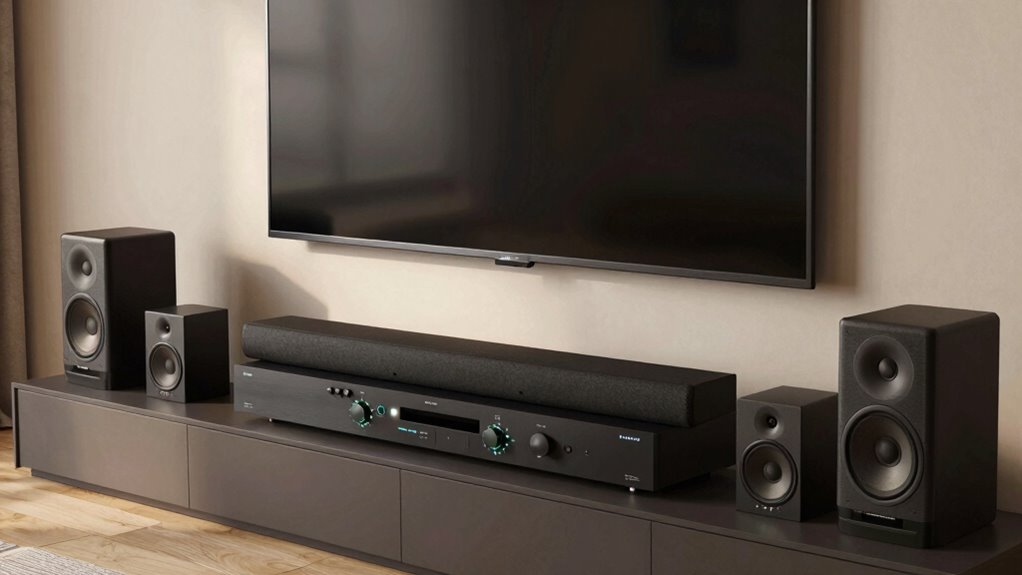
Choosing the right home theater system depends on your space, budget, and how you prioritize audio quality. If your room is small, a soundbar offers an easy, space-saving upgrade with seamless connectivity options like Bluetooth and HDMI. Larger rooms benefit from an AV receiver, which can power multiple speakers for immersive surround sound. Consider these factors:
| Room Size | Connectivity Options |
|---|---|
| Small | Simple, wireless, minimal setup |
| Medium | Moderate speaker setup, multiple inputs |
| Large | Full surround sound, extensive connections |
Evaluate your space to decide if you need a sleek, straightforward soundbar or a comprehensive AV receiver setup for true home theater experience. Your room size and desired connectivity will guide your choice effectively. Incorporating indoor air quality considerations, such as proper ventilation and humidity control, can also enhance your home theater environment for comfort and health. Additionally, understanding sound healing science and the significance of specific frequencies might inspire you to integrate sound therapy elements into your entertainment space for added relaxation. Selecting equipment that minimizes acoustic interference can further improve sound clarity. Furthermore, optimizing your whole-home water systems can contribute to a healthier indoor environment, indirectly supporting your home theater experience by ensuring a comfortable living space. Keeping your indoor environment in balance can help prevent issues like humidity imbalance that might affect equipment performance and longevity.
Assistrust Sound Bar for Smart TV, Soundbar with Bluetooth/ARC/Opt/AUX Connect, Auto Volume Boost, 3 Equalizer Modes, 2 in 1 Detachable Soundbar for TV/PC/Gaming/Projectors
【𝐈𝐦𝐩𝐚𝐜𝐭𝐟𝐮𝐥 𝐕𝐨𝐥𝐮𝐦𝐞 𝐁𝐨𝐨𝐬𝐭】: Elevate faint sounds to vibrant with automatic loudness boost. Experience immersive sound through 4 versatile…
As an affiliate, we earn on qualifying purchases.
As an affiliate, we earn on qualifying purchases.
Pros and Cons of Using a Soundbar

Soundbars offer a simple and space-efficient way to upgrade your home audio without the complexity of traditional stereo systems. They’re easy to install and blend seamlessly into your living space, thanks to their space-saving design. Plus, many models feature wireless connectivity, making setup even more straightforward without bulky cables. However, there are some trade-offs. You might not get the same immersive sound as with a full surround system, and upgrading can be limited compared to adding components to an AV receiver. Additionally, soundbars tend to be less customizable, and their built-in speakers may not deliver the same depth and clarity. Still, for convenience and a cleaner look, they’re a solid choice for quick upgrades and modest budgets. As technology advances, sound quality continues to improve, narrowing the gap between soundbars and traditional surround sound systems. Moreover, advancements in home audio technology are making soundbars an increasingly viable alternative for immersive listening experiences, especially as speaker design improves. Additionally, ongoing innovations in audio technology are helping soundbars deliver richer, more dynamic sound that closely mimics traditional setups.

Yamaha RX300A 5.2-Channel Home Theater AV Receiver with Dolby Atmos, 4K120/8K HDMI and Bluetooth Multipoint (Black)
Beyond the basics – This 5.2-channel home theater AV receiver delivers standout performance and value with Dolby Atmos,…
As an affiliate, we earn on qualifying purchases.
As an affiliate, we earn on qualifying purchases.
Advantages and Limitations of AV Receivers
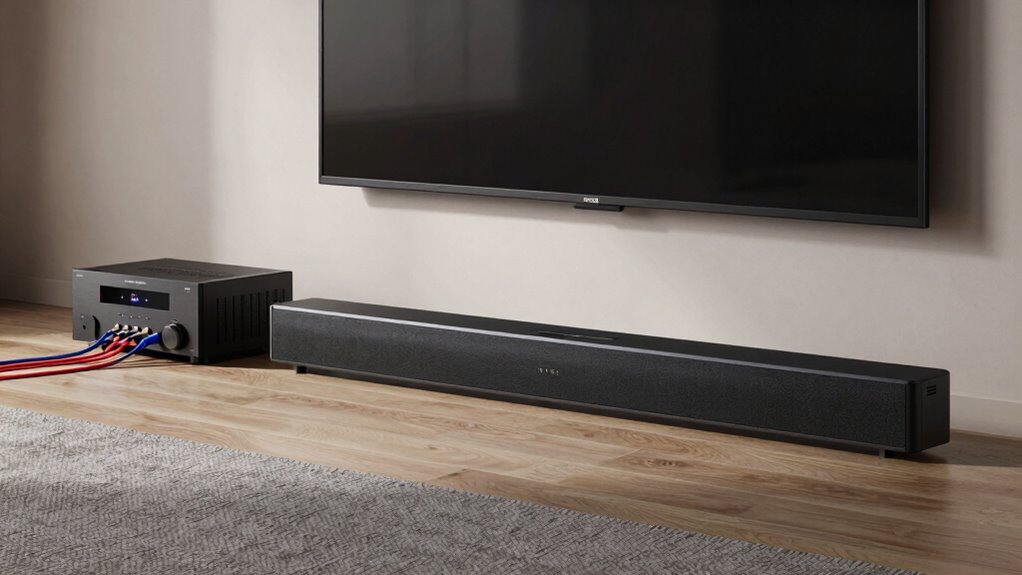
AV receivers bring a level of flexibility and power that soundbars often can’t match, making them a popular choice for serious home theater enthusiasts. They excel in managing multiple speakers, allowing you to optimize speaker placement for immersive sound. With higher power handling, AV receivers deliver clearer audio at higher volumes without distortion. However, they can be complex to set up and require space, which might be a limitation if you prefer a clean look. Additionally, selecting the right speakers and configuring the system can be intimidating. Here’s a quick comparison:
| Feature | Advantage | Limitation |
|---|---|---|
| Speaker placement | Precise positioning for surround sound | Can be difficult in small spaces |
| Power handling | Supports high volume, dynamic sound | Needs careful calibration |
| Customization | Fully customizable sound setup | More complex setup |
| Connectivity | Multiple input options | Can be overwhelming for beginners |
| Flexibility | Expandable with more speakers | Larger footprint |
Moreover, understanding system calibration and configuration is essential for achieving optimal sound quality with AV receivers. Proper system calibration allows you to fine-tune the sound for your specific room environment, which is crucial for the best listening experience. Choosing the right speakers is also vital to complement your AV receiver for a truly immersive experience. Additionally, an AV receiver’s ability to support various audio formats ensures compatibility with the latest surround sound technologies, enhancing overall audio fidelity. For optimal performance, considering room acoustics can significantly improve the listening environment and overall sound quality.
Cost, Setup, and Flexibility: Which Is Better Value?

When evaluating value, cost, setup, and flexibility, soundbars often present a more straightforward and budget-friendly option for most users. They’re quick to install, require less space, and typically have a lower initial cost. Plus, many models now feature wireless connectivity, making setup even easier without cables cluttering your room. Additionally, soundbars are generally compatible with a variety of devices, offering ease of integration for a seamless home entertainment experience. Moreover, the regional sound profiles available in some models can enhance your audio experience by tailoring sound to your environment. Soundbars also tend to have a simpler configuration process, which is ideal for those who want quality sound without extensive technical adjustments. However, if you plan to upgrade later, consider the upgrade cost—adding components or moving to a surround sound system can become expensive. AV receivers offer greater flexibility, supporting multiple components and tailored speaker arrangements, but they demand more time and technical know-how during setup.
How to Choose the Best Audio System for Your Home Theater
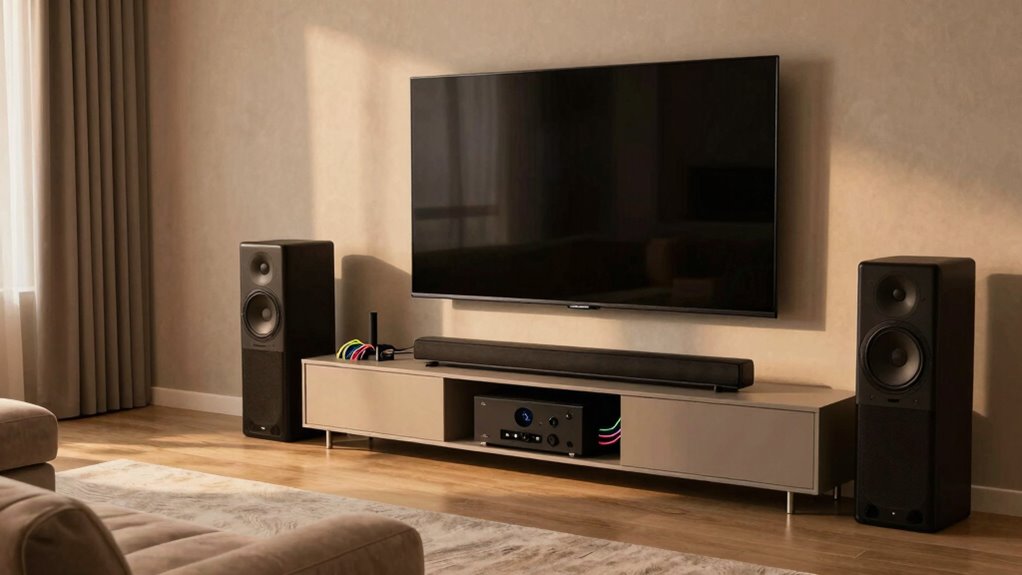
Choosing the right audio system for your home theater depends on your priorities, space, and technical comfort level. Start by considering speaker placement; proper positioning ensures ideal sound coverage and immersion. If you have limited space, a soundbar may be a straightforward choice, but for a more immersive experience, an AV receiver with surround speakers is ideal. Acoustic treatment plays a vital role; adding rugs, curtains, or wall panels can reduce sound reflections and improve clarity. Think about your room’s size and shape—larger rooms benefit from strategic speaker placement and acoustic adjustments. If you’re comfortable with setup and calibration, an AV receiver offers flexibility. If simplicity and minimal setup are your goals, a soundbar might be better suited. Balance your preferences with your room’s characteristics to choose the best system. Additionally, understanding audio system components can help you make more informed decisions about your setup.
Frequently Asked Questions
Can a Soundbar Truly Replace a Full Surround Sound System?
A soundbar can’t truly replace a full surround sound system if you want an immersive experience. A single speaker, even a high-quality soundbar, often lacks the multiple channels and precise placement needed for authentic surround sound. While soundbars are simpler and space-saving, they can’t match the depth and clarity of a full system with separate speakers, making them less ideal for those seeking a fully immersive home theater experience.
How Does Room Size Impact Soundbar Versus AV Receiver Performance?
Room size markedly impacts soundbar and AV receiver performance. In larger rooms, room acoustics and speaker placement become critical; a soundbar might struggle to fill the space evenly, while an AV receiver with multiple speakers offers better coverage. For small rooms, a soundbar can provide solid sound with minimal setup. Consider your room’s size, acoustics, and placement options to choose the best audio solution for immersive sound.
What Are the Long-Term Maintenance Differences Between Soundbars and AV Receivers?
You’ll find that AV receivers generally require more long-term maintenance than soundbars. They often need software updates to fix bugs and add features, and their components tend to be more durable due to their build quality. Soundbars, on the other hand, usually have fewer moving parts, making them easier to maintain. However, both devices benefit from regular cleaning and proper ventilation to guarantee peak performance over time.
Are There Hybrid Systems Combining Soundbars and AV Receivers?
Think of hybrid systems as a bridge connecting soundbars and AV receivers, blending their strengths. Yes, you can find hybrid systems that combine the sleek simplicity of soundbars with the power and flexibility of AV receivers. These setups offer seamless integration options, allowing you to upgrade easily while enjoying immersive sound. They’re perfect if you want a versatile home theater without choosing between a soundbar or a full receiver.
Which System Offers Better Compatibility With Emerging Audio Formats?
An AV receiver offers better compatibility with emerging audio formats like Dolby Atmos and DTS:X. You can connect multiple speakers and add height channels for immersive sound, ensuring future-proofing. Soundbars may support these formats but often have limited channels. If you want the latest surround sound experience and flexibility for future upgrades, choosing an AV receiver gives you the most extensive compatibility with emerging audio formats.
Conclusion
Choosing between a soundbar and an AV receiver is like selecting your home theater’s heartbeat. A soundbar offers simplicity and sleekness, while an AV receiver delivers a symphony of immersive sound. Think of your space and dreams—do you want a quick tune-up or a full-on concert? Whichever path you choose, let your decision be the bridge to your perfect audio sanctuary, turning everyday movies into unforgettable journeys of sound.