
If you want a turntable that’s easier to handle, a direct drive model might suit you better because it’s durable, easier to maintain, and responds quickly. Belt drive turntables offer quieter operation and better sound quality but can be more sensitive to shocks and require more upkeep. Your choice depends on whether you prefer convenience or ultimate sound fidelity. For more tips on picking the right turntable, keep exploring what fits your needs.

Get health and wellness essentials delivered free with Prime
- Fast, free delivery on millions of items
- Prime Video, Amazon Music and more included
- Member-only deals all year
Key Takeaways
- Belt drive turntables offer quieter operation and better vibration isolation, ideal for audiophiles focused on sound quality.
- Direct drive turntables are more durable, easier to maintain, and preferred for DJing due to their high torque and quick response.
- Belt drives are more sensitive to external shocks and require belt replacement, making them slightly less convenient for casual use.
- Direct drive models tend to be more straightforward for beginners, thanks to their robustness and fewer maintenance needs.
- Overall, direct drive turntables are generally easier to live with for everyday use and durability, while belt drives excel in sound fidelity.
best belt drive turntable for audiophiles
As an affiliate, we earn on qualifying purchases.
As an affiliate, we earn on qualifying purchases.
What Are Belt Drive and Direct Drive Turntables?
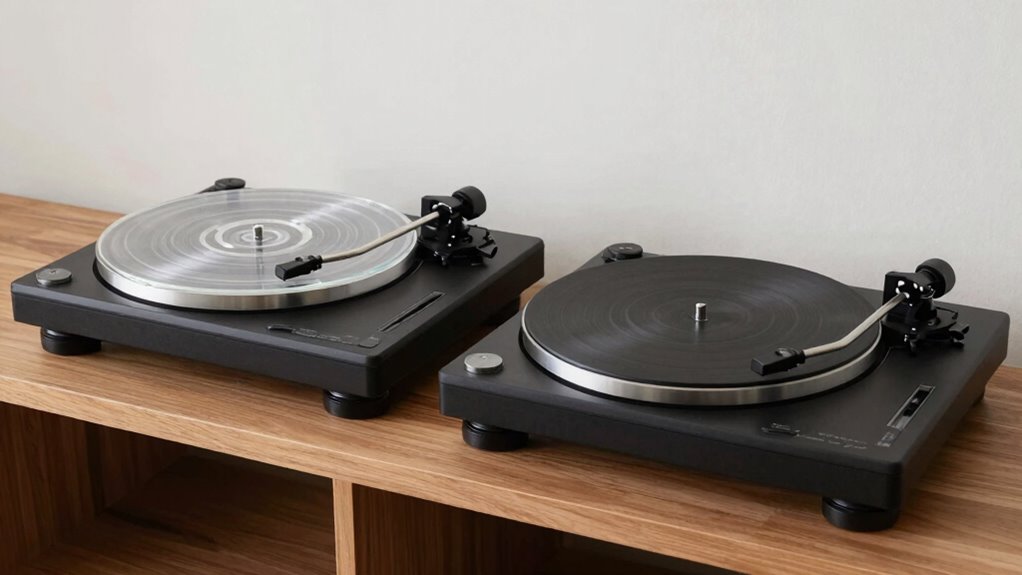
When choosing a turntable, understanding the difference between belt drive and direct drive models is essential. Belt drive turntables typically have a rubber belt that connects the motor to the platter, which can influence cartridge compatibility by providing smoother, quieter operation. They often feature heavier platter materials like aluminum or acrylic, helping to absorb vibrations and improve sound quality. Direct drive turntables, on the other hand, have a motor directly attached to the platter, offering more consistent torque. This design can impact cartridge compatibility by supporting quicker start-up times and stability. The platter materials in both types affect resonance and overall sound clarity. Knowing these distinctions helps you select a turntable that suits your listening preferences and ensures compatibility with your cartridge and desired audio experience.
As an affiliate, we earn on qualifying purchases.
How Do Belt Drive and Direct Drive Turntables Work?
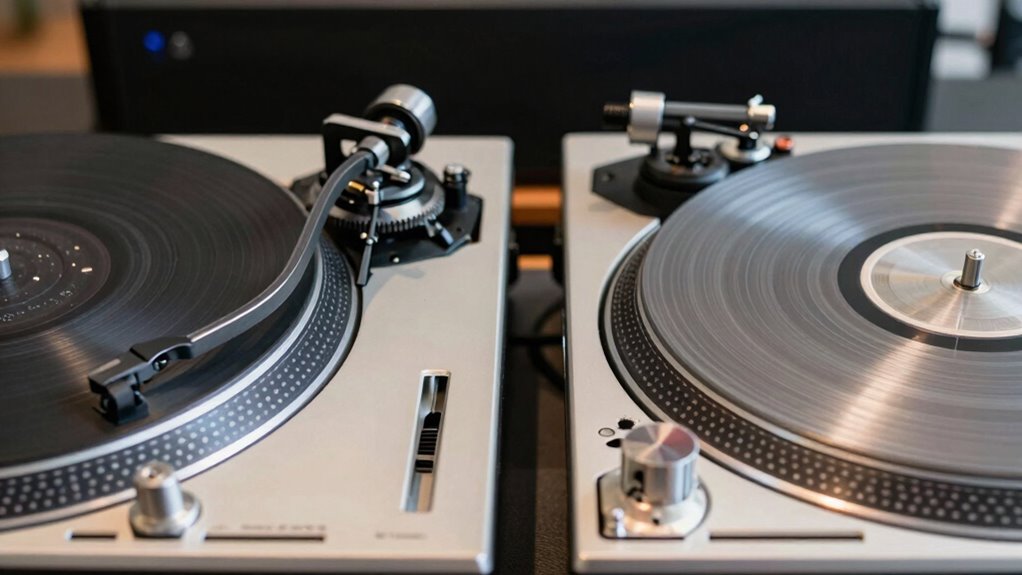
You might wonder how the motor powers your turntable and how the drive system affects sound quality. Belt drive turntables use a belt to transfer power smoothly, while direct drive models connect the motor directly to the platter for instant response. These differences impact the clarity and stability of your listening experience. Additionally, the drive mechanism plays a significant role in influencing factors like motor noise and vibration, which can further affect audio fidelity. Understanding the drive system design can help you choose a turntable that best suits your listening preferences. For example, some models incorporate sound dampening features to reduce unwanted vibrations and improve sound clarity.
How Motor Powers Turntable
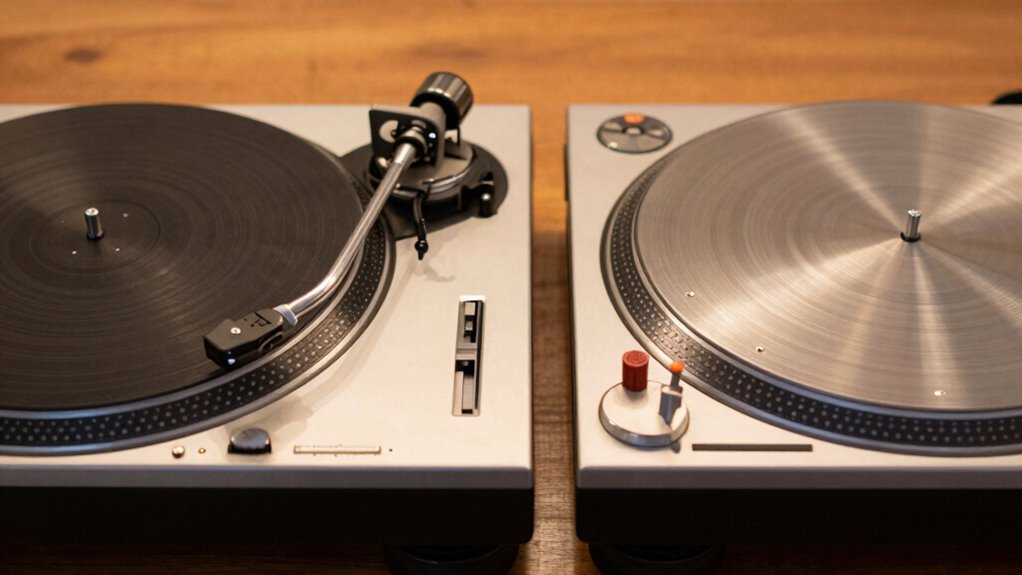
Turntables are powered by motors that drive the platter, but they do so in different ways depending on the turntable design. In belt drive systems, the motor spins a pulley connected to a belt, which then turns the platter. This setup isolates motor vibrations, providing smoother playback. The vibration damping in belt drive turntables enhances audio fidelity by reducing unwanted noise. Direct drive turntables, on the other hand, have the motor attached directly to the platter, offering instant start-up and consistent motor power. Understanding how motor power influences performance helps you choose the right turntable. Here’s a quick comparison:
| Feature | Belt Drive | Direct Drive | Common Use |
|---|---|---|---|
| Motor placement | Off-center, isolated from platter | Attached directly to platter | Audiophile, DJ, casual listening |
| Motor power | Moderate, less torque | High torque, quick response | DJing, precise control |
| Vibration isolation | Better due to design | More vibration transfer | High-fidelity listening |
| Maintenance | Less frequent | Slightly more maintenance | Professional use |
Additionally, motor durability varies between types, affecting long-term performance and maintenance needs.
Belt vs. Direct Drive Mechanics
Belt drive and direct drive turntables operate through different mechanical systems that influence their performance. In a belt drive system, a rubber belt connects the motor to the platter, isolating vibrations and offering smooth operation. Conversely, direct drive turntables have the motor directly attached to the platter, providing quick start-up and consistent speed. Here’s how they differ:
- Belt drives use a belt to transfer motor power, reducing motor noise.
- Direct drives have the motor mounted beneath the platter for stability.
- Cartridge types can vary; some are better suited for the steady torque of direct drives.
- Platter materials impact vibration absorption, affecting overall sound clarity.
Understanding these mechanics helps you choose a turntable that matches your needs and desired sound quality.
Impact on Sound Quality
The way a turntable’s drive system influences sound quality hinges on how effectively it manages vibrations and maintains consistent speed. Belt drive turntables generally excel at reducing motor vibrations, resulting in cleaner sound that preserves vinyl mastering details. This often leads to higher sound fidelity, especially for audiophiles seeking accurate reproduction. Direct drive turntables, with their powerful motors, can produce more stable speeds, but sometimes introduce subtle motor noises or vibrations that affect sound clarity. The drive system’s ability to minimize unwanted vibrations is essential for capturing the nuances of your records. Additionally, sound fidelity can be affected by the design and quality of the components used in the turntable. Ultimately, your choice impacts the authenticity and richness of your listening experience, shaping how faithfully your turntable reproduces the original recording’s nuances.
easy to use turntable for beginners
As an affiliate, we earn on qualifying purchases.
As an affiliate, we earn on qualifying purchases.
Which Turntable Is Easier for Beginners?
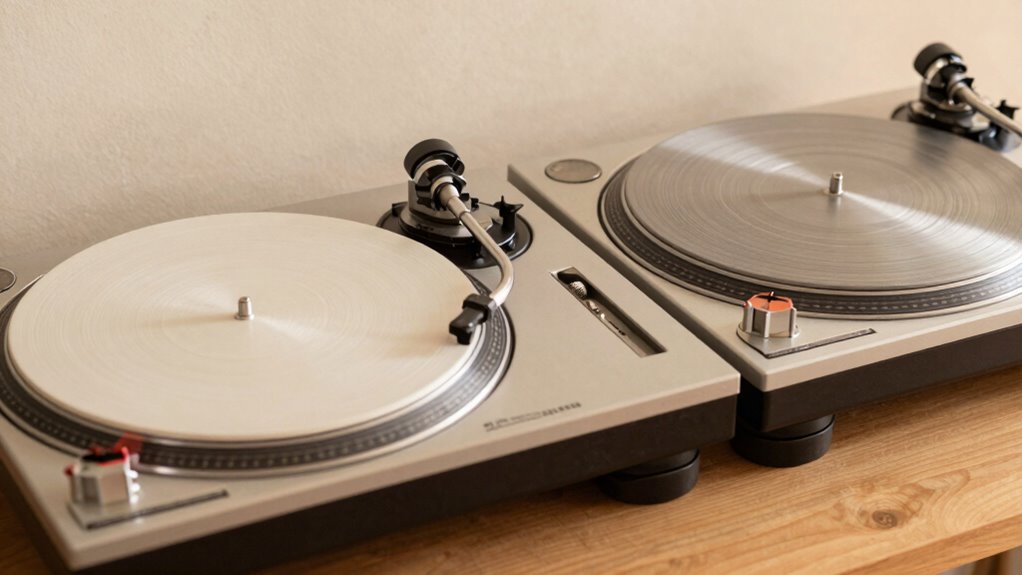
If you’re new to vinyl and want an easy entry point, choosing a beginner-friendly turntable makes all the difference. These models are straightforward, reliable, and easy to set up. To help, consider these key factors:
Starting with a beginner-friendly turntable ensures a smooth, enjoyable vinyl experience.
- Ease of use – Look for simple controls and automatic functions. Minimal pain points can make your experience more enjoyable and less frustrating. Incorporating user-friendly features can further simplify operation.
- Compatibility with music genres – Select a turntable that suits your preferred styles, from jazz to rock.
- Built-in features – Opt for models with integrated speakers or basic turntable accessories for convenience.
- Price point – Choose an affordable option that still offers good sound quality without complex adjustments.
- AI technology is increasingly being integrated into modern audio equipment, enhancing user experience and providing smarter features. Understanding digital integration can help you select a turntable that adapts to your tech preferences.
Such turntables help you focus on enjoying music without fuss. They’re perfect for beginners exploring different genres and learning about turntable accessories.
turntable with vibration damping
As an affiliate, we earn on qualifying purchases.
As an affiliate, we earn on qualifying purchases.
Pros and Cons of Belt Drive Turntables

While belt drive turntables are popular for their quiet operation and smooth playback, they also come with certain disadvantages that you should consider. One challenge is maintaining proper cartridge alignment; since belt drive systems rely on a belt to spin the platter, any stretching or wear can affect playback accuracy. Additionally, the platter material plays a role in sound quality and stability—some materials may absorb vibrations or cause slight resonances, impacting sound clarity. Belt drive turntables generally require more maintenance, such as replacing belts over time, which can be inconvenient. They also tend to be more sensitive to external vibrations, making placement important. Despite these drawbacks, many appreciate the quieter operation and reduced motor noise, which can enhance your listening experience when properly maintained. Moreover, understanding market reputation and customer support can help you choose a reliable model that minimizes these issues. Proper maintenance practices can extend the lifespan of belt drive turntables and ensure consistent performance. Regularly checking and adjusting belt tension can prevent playback issues and improve sound quality. Keeping an eye on technological advancements can also provide newer solutions to common belt drive challenges.
Pros and Cons of Direct Drive Turntables
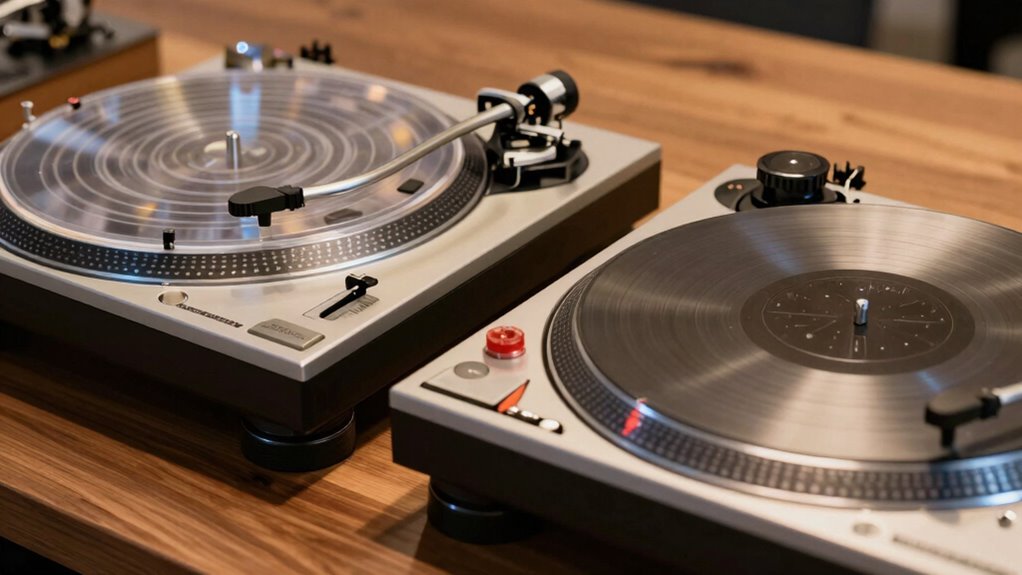
You’ll find that direct drive turntables are known for their durability and reliable performance, making them a popular choice for DJs and enthusiasts alike. However, they can require more maintenance and occasional repairs over time. Considering these factors helps you decide if their strengths outweigh the potential upkeep. Additionally, their design often makes them easier to maintain and repair, which can be a significant advantage for users who prefer hands-on management of their equipment. Because of their simple mechanical setup, they tend to have fewer parts that might fail, simplifying troubleshooting and repairs. This straightforward design also means that users can often perform DIY repairs more easily compared to other types. Furthermore, the minimal component complexity of direct drive turntables reduces the likelihood of mechanical issues, enhancing their longevity and user-friendliness. In fact, the robust construction of these turntables often contributes to their longevity and consistent performance over many years.
Durability and Reliability
Direct drive turntables are renowned for their durability and reliable performance, making them a popular choice among DJs and audiophiles alike. Their robust motors and sturdy construction assure long-lasting use. When considering durability, keep these factors in mind:
- Cartridge compatibility – Many direct drive models support a wide range of cartridges, but ensure compatibility to prevent unnecessary replacements.
- Platter materials – Heavy, high-quality platters like aluminum or acrylic resist warping and enhance stability.
- Motor endurance – The powerful motors are built for continuous operation, reducing the risk of failure over time.
- Build quality – Solid construction minimizes vibrations and wear, extending the turntable’s lifespan.
- Maintenance routines – Regular upkeep and proper handling can significantly extend the lifespan and maintain optimal performance of a direct drive turntable.
Maintenance and Repairs
Maintenance and repairs for direct drive turntables are generally straightforward, thanks to their simple, robust design. You’ll find that keeping the motor and platter in good shape is manageable, with fewer moving parts to worry about. Regularly checking needle alignment guarantees ideal sound quality and prevents unnecessary wear. The platter weight, often heavy and stable, helps reduce vibrations and makes it easier to maintain proper tracking. If you notice speed fluctuations, adjusting the belt or motor components is usually simple. Unlike belt drives, direct drive turntables don’t require frequent belt replacements. Additionally, the motor’s durability** and overall design contribute to fewer repairs over time. Overall, their durability means fewer repairs over time. Just keep an eye on the motor’s condition and ensure your needle is correctly aligned for the best performance with minimal upkeep. Additionally, understanding the environmental impact of tissue paper** can inspire eco-friendly craft choices when working on your projects.
Which Turntable Is Better for Listening or DJing?
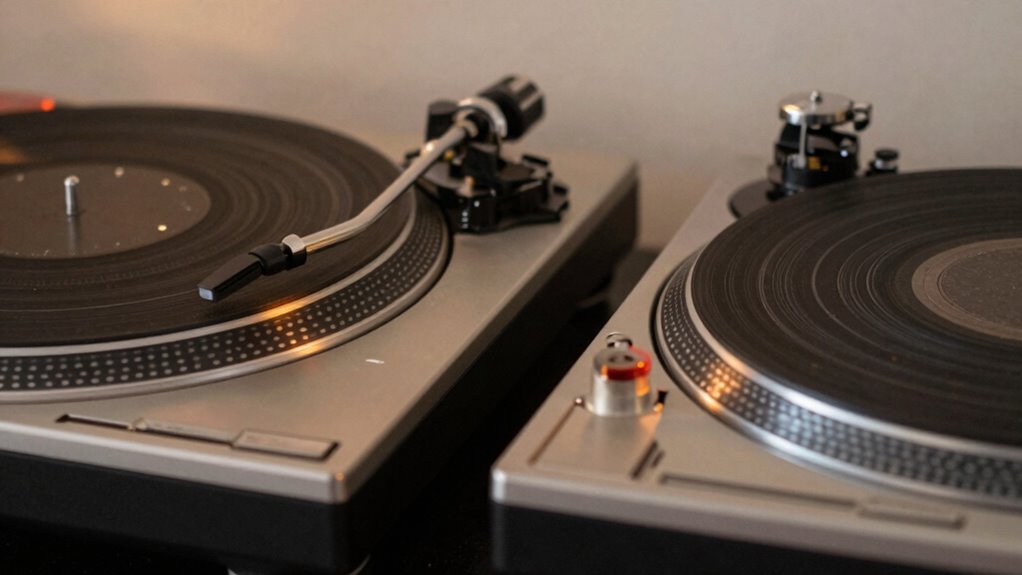
When choosing a turntable for listening or DJing, it’s important to contemplate how you’ll use it most often. For listening, you’ll prioritize tone quality and a smooth user experience. For DJing, durability and quick response matter more. Consider these points:
- If you want superior tone quality for casual listening, a belt drive turntable offers quieter operation and better sound clarity.
- DJs benefit from direct drive turntables, which provide higher torque for scratching and beatmatching.
- Ease of use is key—automatic functions simplify playback, especially for beginners.
- Build quality influences user experience—robust models withstand heavy use without sacrificing sound integrity.
Choosing the right turntable depends on whether your focus is rich sound or performance agility.
What Factors Should You Consider When Picking a Turntable?
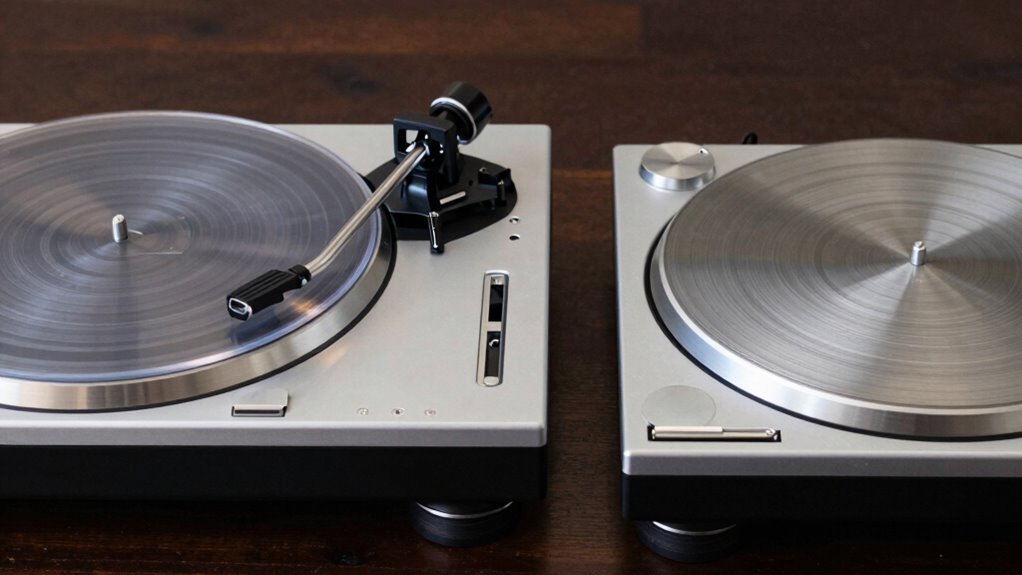
Choosing the right turntable involves considering several key factors to guarantee it meets your needs. First, check cartridge compatibility to ensure you can upgrade or replace cartridges easily. Second, pay attention to platter material, as it affects sound quality and durability—common options include acrylic and metal. Other factors include motor type, tonearm quality, and build stability. Additionally, understanding the importance of audio quality can help you select a turntable that delivers optimal sound performance.
Final Tips for Choosing Your First Turntable
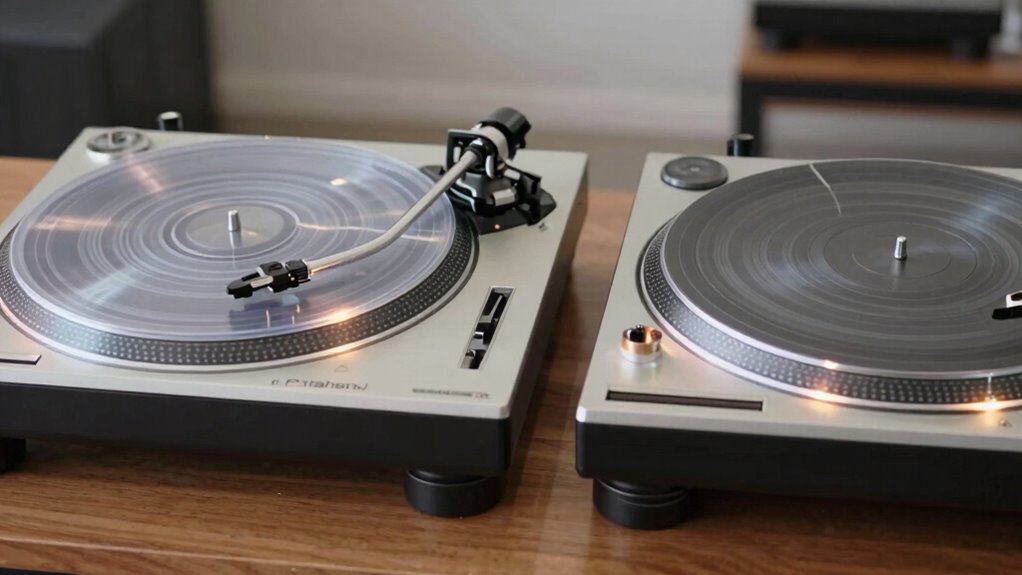
To guarantee you select the perfect first turntable, prioritize your budget and listening goals. Consider whether you want vintage aesthetics or modern features, as this guides your style choice. Keep these tips in mind:
- Set a clear budget—know your maximum spend to narrow options.
- Decide if you prefer vintage aesthetics or sleek, contemporary designs.
- Assess whether you want a belt drive or direct drive system, based on your listening habits.
- Think about ease of use and maintenance to ensure it fits your lifestyle.
Balancing budget considerations with desired features helps you find a turntable that’s both enjoyable and sustainable. Whether you’re after a classic look or modern convenience, these tips will help you make a confident, informed decision.
Frequently Asked Questions
How Long Do Belt Drive Turntables Typically Last?
Belt drive turntables typically last around 10 to 20 years, depending on maintenance requirements and how often you use them. You’ll need to regularly replace the belt as it wears out, which is simple and affordable. Aesthetic differences might influence your choice, but overall, proper care extends their lifespan. With minimal upkeep, your belt drive turntable can serve you well for many years, providing reliable playback and sound quality.
Are Direct Drive Turntables More Expensive Than Belt Drive?
They say you get what you pay for, and yes, direct drive turntables are often more expensive than belt drive models. You’ll notice that direct drives usually have higher motor noise and may require more maintenance, but they’re built for durability and constant use. Belt drives tend to be more affordable, quieter, and easier to maintain. So, your choice depends on your budget and how much you value longevity versus convenience.
Can I Upgrade My Turntable From Belt to Direct Drive Later?
You can’t upgrade your turntable from belt to direct drive later because these systems have different motors and internal designs. If you’re interested in a motor upgrade, it’s better to buy a turntable with the drive system you prefer from the start. Doing so guarantees you’ll get the sound comparison you want, as belt and direct drive offer distinct audio qualities and performance.
Which Turntable Type Offers Better Sound Quality Overall?
Think of your turntable as a musical garden. Belt drives often provide a serene, quiet atmosphere, reducing noise levels for pure sound clarity. Direct drives, like a lively stream, deliver more power but can introduce slight vibrations. Overall, belt drive turntables tend to offer better sound quality with cleaner, crisper audio, making them ideal if you prioritize sound clarity and minimal noise in your listening experience.
Do Turntable Types Affect Vinyl Record Longevity?
Your turntable type can impact vinyl record longevity by influencing record preservation and stylus wear. Belt drive turntables tend to be gentler on records, reducing wear and helping preserve them longer. Direct drive models might cause more vibration, potentially accelerating stylus wear and affecting record quality over time. So, choosing a belt drive turntable generally offers better protection for your records, ensuring they stay in good condition longer.
Conclusion
Choosing between belt drive and direct drive turntables is like picking the right tool for a job—you want what fits your needs best. If you’re just starting out, ease of use might tip the scales. Remember, your perfect turntable should feel like a trusty companion, ready to spin your favorite records without fuss. Trust your instincts, weigh the pros and cons, and you’ll find a turntable that makes vinyl listening feel as smooth as butter.
Cold & flu season Picks
humidifiers
As an affiliate, we earn on qualifying purchases.