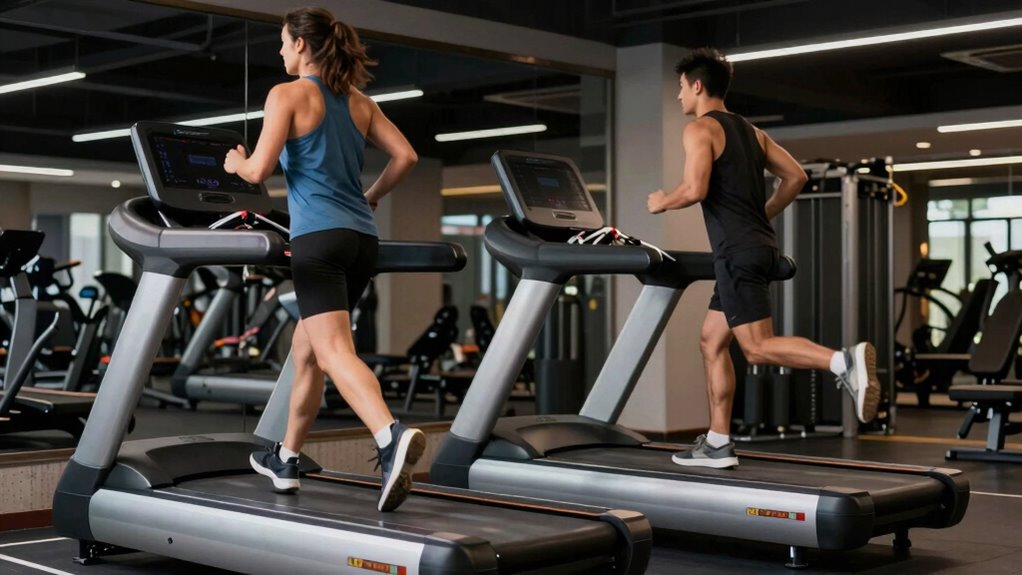

Incline treadmills boost calorie burn, strengthen glutes, hamstrings, and calves, making them ideal if you want to build leg and core strength or tackle hill workouts. Decline treadmills simulate downhill running, engaging stabilizers and core muscles while reducing joint impact, great for improving balance and training for hilly terrains. Both can benefit your fitness, but understanding your goals and safety tips guarantees you select the right setting. Keep exploring to learn how to incorporate them safely into your routine.
Key Takeaways
- Incline treadmills mainly benefit those aiming to increase muscle engagement, calorie burn, and endurance by simulating uphill terrains.
- Decline treadmills are ideal for strengthening stabilizer muscles, improving downhill running skills, and reducing joint impact.
- Both incline and decline workouts are unsuitable for beginners or individuals with joint issues due to increased intensity and strain.
- Proper progression and technique are essential; abrupt changes or high levels can lead to injury or overexertion.
- Fitness goals like muscle building, cardiovascular health, or training for hilly terrains determine who gains the most from each treadmill type.
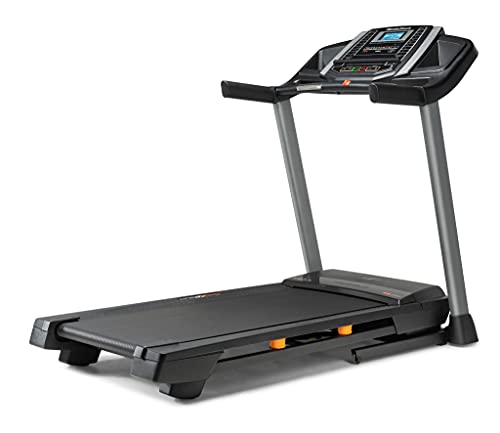
NordicTrack T Series 6.5 S Treadmill
- Display and Device Shelf: 5-inch LCD screen with device holder
- Speed Range: 0 to 10 MPH for running and walking
- Incline Range: 0 to 10% incline for varied workouts
As an affiliate, we earn on qualifying purchases.
As an affiliate, we earn on qualifying purchases.
What Are Incline and Decline Treadmills and How Do They Work?
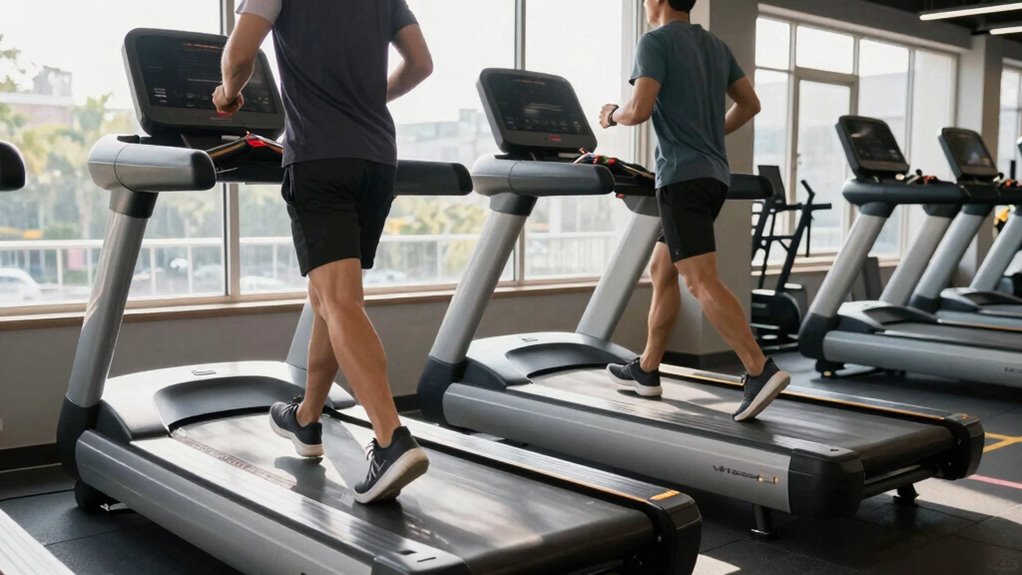
Have you ever wondered how incline and decline treadmills work? These machines feature a motorized incline that adjusts the belt’s angle, allowing you to simulate uphill or downhill walking or running. The motorized incline is controlled via a panel, making it easy to set and change your workout intensity. Decline settings tilt the treadmill downward, mimicking downhill terrain, which can help strengthen different muscles and improve balance. When you select an incline or decline, the motor adjusts the deck’s angle accordingly, giving you a more varied workout. This versatility not only challenges different muscle groups but also enhances calorie burn and cardiovascular benefits. Understanding how these settings work helps you better tailor your workouts for specific fitness goals.

Walking Pad Treadmill with Incline 9% & Decline -4% 5 Level and Handle Bar
- Incline and Decline Range: -4% to 9% for varied terrain
- Adjustable Handlebar Heights: 6 levels from 31.5" to 41.3"
- Quiet 2.5HP Motor: Smooth, powerful, low noise operation
As an affiliate, we earn on qualifying purchases.
As an affiliate, we earn on qualifying purchases.
Who Should Use Incline and Decline Treadmills? (Are They Right for Your Fitness Goals?)

Whether you’re aiming to build strength, burn more calories, or improve your balance, incline and decline treadmills can be valuable tools in your fitness routine. They add terrain variety, making your workouts more engaging and effective. If you want to challenge different muscle groups or increase workout diversity, these machines are a great choice. Incline settings help simulate uphill walking or running, targeting glutes and calves, while decline settings mimic downhill terrain, engaging different stabilizers and core muscles. Additionally, incorporating these features can enhance your overall projector setup by providing varied training intensities and visual cues for different workout levels. For those seeking to optimize their training, understanding terrain variation can help tailor workouts to meet specific fitness goals. Recognizing the importance of safety precautions is essential, especially when using high incline or decline settings to prevent injury. Proper instructional guidance can also ensure you use these features effectively and safely. However, if you have joint issues or are just starting out, these features might be too intense. Incline and decline treadmills suit those seeking to elevate their training, add variety, or push their limits. They’re ideal for fitness goals that benefit from muscle engagement and dynamic workout options.
Walking Pad Treadmill with Incline 9% & Decline -4% 5 Level and Handle Bar
- Incline and Decline Range: -4% to 9% for varied terrain
- Adjustable Handlebar Heights: 6 levels from 31.5" to 41.3"
- Quiet 2.5HP Motor: Smooth, powerful, low noise operation
As an affiliate, we earn on qualifying purchases.
As an affiliate, we earn on qualifying purchases.
What Are the Main Benefits of Incline Treadmill Workouts?
Incline treadmill workouts offer several key benefits that can enhance your fitness routine. One major advantage is increased calorie burning, helping you maximize your workout in less time. Walking or running at an incline forces your body to work harder, elevating your heart rate and boosting calorie expenditure. Additionally, incline workouts improve muscle engagement, targeting your glutes, hamstrings, calves, and core more effectively than flat surfaces. This heightened muscle activation not only builds strength but also enhances endurance and stability. Incline training is especially beneficial if you want to challenge yourself without increasing speed, making it a versatile option for different fitness levels. Incorporating incline workouts can also boost overall calorie burn and provide a more exhaustive, effective workout. To further optimize your training, maintaining proper form and posture during incline sessions is essential to prevent injury and maximize benefits. Additionally, adjusting the incline level can help simulate hill running, providing a more varied and engaging workout experience. Using proper training techniques can also help you avoid overexertion and injury while gaining the most from your incline sessions. Being aware of equipment setup and ensuring your treadmill is properly adjusted can further improve safety and effectiveness during your workouts.
Walking Pad Treadmill with Incline 9% & Decline -4% 5 Level and Handle Bar
- Incline and Decline Range: -4% to 9% for varied terrain
- Adjustable Handlebar Heights: 6 levels from 31.5" to 41.3"
- Quiet 2.5HP Motor: Smooth, powerful, low noise operation
As an affiliate, we earn on qualifying purchases.
As an affiliate, we earn on qualifying purchases.
What Are the Risks and Safety Tips for Incline and Decline Treadmill Training?

While incline and decline treadmill training can boost your workouts, they also come with specific risks if not approached carefully. Pushing too hard or ignoring proper form can lead to muscle strain or joint issues. To stay safe, gradually increase incline levels and listen to your body. Always warm up before starting and cool down afterward to protect your joints and muscles. Proper footwear is essential for joint safety and stability. Avoid overtraining, and if you experience pain, stop immediately. Use the following tips to minimize risks:
| Risk | Prevention | Focus Area |
|---|---|---|
| Muscle strain | Stretch and warm up properly | Muscles |
| Joint safety | Use appropriate footwear | Knees and hips |
| Overexertion | Monitor intensity | Whole body |
| Poor posture | Maintain correct form | Back and neck |
| Sudden stops or falls | Use handrails when needed | Overall safety |
Additionally, paying attention to proper form during incline and decline training helps prevent injury and ensures you gain the maximum benefit from your workout. Incorporating technique cues can further enhance safety and effectiveness during your sessions. Properly engaging muscle groups is crucial for balanced development and reducing strain. Understanding muscle engagement can help optimize your workout and reduce the risk of strain. Being aware of body mechanics during treadmill exercises further supports injury prevention and promotes proper technique.
Which Incline and Decline Settings Are Best for Weight Loss and Cardio?

Choosing the right incline or decline setting on your treadmill can substantially boost your weight loss and cardio efforts. For ideal results, incorporate interval training at varying inclines to challenge your body and maximize calorie burn. Alternating between higher inclines for muscle activation and flat or decline settings for recovery keeps your workout dynamic and effective. Inclines activate glutes, hamstrings, and calves more intensely, helping you build strength while shedding fat. Decline settings can also improve cardiovascular fitness by increasing intensity without overloading joints. To lose weight and boost cardio, combine moderate inclines with short bursts of steep inclines or declines. This approach keeps your workout engaging, improves muscle activation, and accelerates calorie expenditure. Remember to adjust the settings based on your fitness level for safe, sustainable progress.
How Do I Safely Incorporate Incline and Decline Workouts Into My Routine?
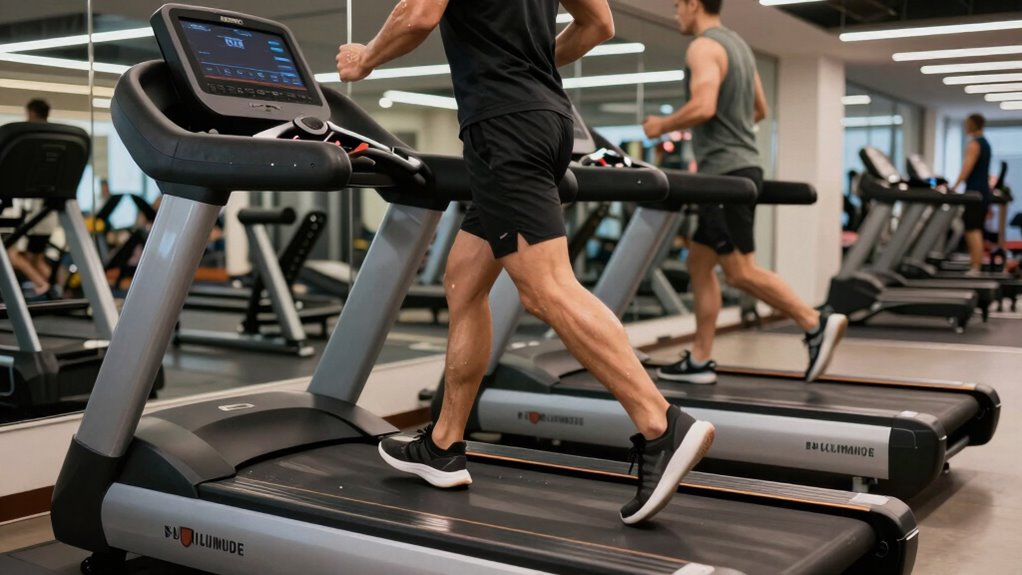
To safely include incline and decline workouts, start with a gradual increase in intensity and duration. Make sure you use proper technique to avoid strain and listen to your body’s signals. Incorporating these strategies consistently to build strength while minimizing injury risk. Additionally, selecting luxury lifestyle products such as high-quality mats or supportive footwear can enhance comfort and safety during your workouts. Paying attention to training progression helps ensure safe adaptation and prevents overexertion. Incorporating proper biomechanics and maintaining a mindful approach during exercises can further support injury prevention. Engaging in mindful practice of sound healing science principles, such as focusing on specific frequencies, can also promote relaxation and recovery post-workout. Furthermore, understanding the importance of proper technique can significantly reduce the risk of overuse injuries and improve overall workout effectiveness.
Gradual Progression Strategies
Incorporating incline and decline workouts into your routine requires a careful, gradual approach to prevent injury and build strength safely. Start with progression planning by adding small increases in incline or decline over several sessions. Focus on intensity escalation gradually; don’t jump to high inclines or declines too quickly. Begin with a slight incline or decline for a few minutes, then slowly increase the duration and intensity as your body adapts. Pay attention to how your muscles respond and avoid overexertion. Consistent, incremental adjustments allow your body to build endurance and strength without risking strain. Remember, patience is key—progression should be steady and deliberate, helping you safely incorporate these challenging workouts into your overall fitness plan. Additionally, understanding proper home exercise techniques can enhance your safety and effectiveness during these workouts. Incorporating appropriate safety precautions such as proper footwear and warm-up routines can further reduce the risk of injury. Gradual progression is also supported by training principles that emphasize consistent, manageable increases to optimize results and minimize setbacks. Recognizing and respecting your individual fitness level ensures that you avoid pushing beyond your current capabilities, which is essential for safe progress. Incorporating listening to your body can help prevent overtraining and ensure sustainable improvements.
Proper Technique and Safety
Before adding incline or decline workouts to your routine, it’s important to learn proper technique to stay safe and prevent injury. Start with footwear selection that provides good support and cushioning to absorb impact on inclines and declines. Maintain an upright posture, engaging your core, and avoid leaning forward or backward. Adjust your speed gradually to accommodate changes in terrain. Hydration strategies are essential—drink water before, during, and after your workout to prevent dehydration, especially when working at higher intensities. Listen to your body and avoid pushing through pain or fatigue. Incorporate warm-up and cool-down periods to reduce strain. By focusing on proper form and staying hydrated, you’ll maximize benefits while minimizing the risk of injury on incline and decline treadmill workouts.
Incline vs. Decline Treadmills: Which Is Better for Your Fitness Goals?
Choosing between incline and decline treadmills depends on your specific fitness goals. If you aim to boost endurance and burn calories efficiently, incline training is ideal for increasing intensity and engaging more muscle activation in your glutes, hamstrings, and calves. It’s perfect for interval training, allowing you to alternate between high and low intensities to maximize fat loss and cardiovascular health. Conversely, decline treadmills mimic downhill running, which reduces joint impact and targets different muscles, such as your quadriceps and stabilizers. Decline workouts can improve your downhill running ability, making them useful if you’re training for hilly terrains or races. Ultimately, your goals—whether building strength, improving speed, or enhancing endurance—will determine which treadmill incline suits you best.
Final Tips: Choosing the Right Treadmill Features for Your Exercise Routine
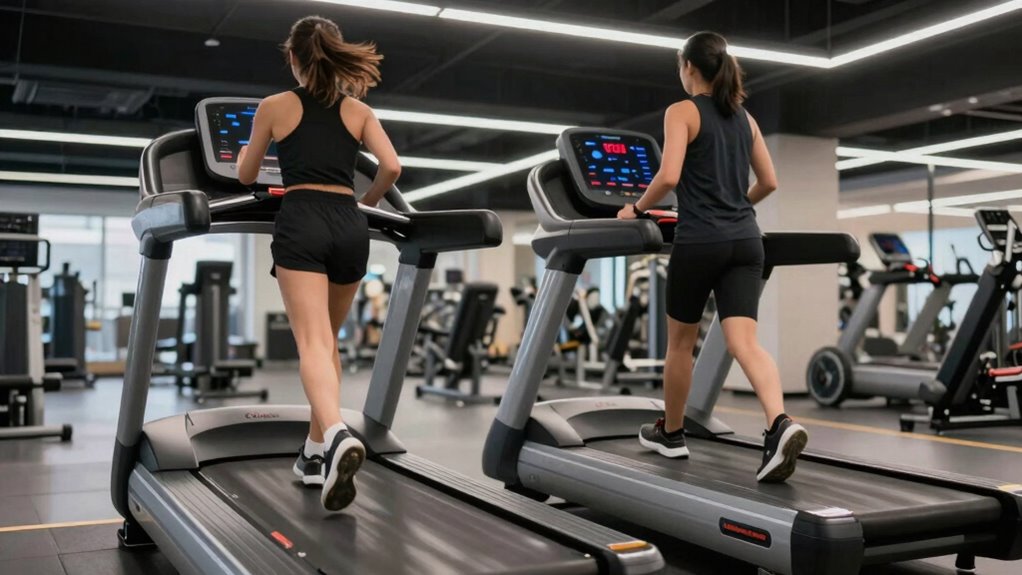
When choosing a treadmill, you should match its features to your fitness goals and daily routine. Prioritize safety and comfort to make your workouts enjoyable and reduce injury risk. Don’t forget to take into account your budget and space to find a machine that fits seamlessly into your home.
Match Features to Goals
Selecting the right treadmill features depends on your specific fitness goals, whether you’re aiming for weight loss, endurance building, or interval training. To match features effectively, consider terrain variety and equipment durability. If you want diverse workouts, look for adjustable incline and decline options to simulate different terrains. For durability, choose sturdy frames and high-quality belts that withstand frequent use. The table below highlights key features aligned with common goals:
| Goal | Terrain Variety | Durability | Recommended Features |
|---|---|---|---|
| Weight Loss | Incline, decline options | Heavy-duty frame, reinforced belt | Multiple speed settings, shock absorption |
| Endurance | Continuous, steady-state workouts | Long-lasting motor | Large deck, reliable electronics |
| Interval Training | Rapid incline/decline shifts | Robust construction | Quick keys, program flexibility |
| Muscle Building | Hills, varied terrain | High-quality components | Adjustable incline, durable build |
| General Fitness | Moderate terrain options | Overall sturdy design | Versatile features, easy controls |
Prioritize Safety and Comfort
Ensuring safety and comfort should be at the top of your treadmill priorities, especially during intense or long workouts. Focus on treadmill ergonomics to reduce strain and prevent injuries, ensuring the console height, handrails, and stride space suit your body. Look for models with adjustable features that allow you to customize your workout position for ideal comfort. Safety harnesses or emergency stop cords are essential additions, providing quick shutdowns if you need to stop suddenly. A stable, cushioned running surface helps absorb impact, protecting your joints. Remember, a comfortable, well-designed treadmill encourages consistency and reduces the risk of discomfort or accidents, making your workouts safer and more enjoyable. Prioritizing these features helps you maintain motivation and achieve your fitness goals safely.
Consider Budget and Space
Choosing a treadmill that fits your budget and space constraints helps you stay consistent with your workouts without feeling overwhelmed or restricted. Assess your available area and financial limits to find options that meet your needs. Consider storage considerations, such as foldability or compact design, to maximize space. Here’s a quick comparison:
| Feature | Benefits |
|---|---|
| Budget constraints | Focus on essential features, avoid costly extras |
| Storage considerations | Look for foldable models or slim profiles |
| Space availability | Measure your area and choose accordingly |
Frequently Asked Questions
Can Incline and Decline Treadmill Workouts Improve Running Speed?
Yes, incline and decline treadmill workouts can improve your running speed. They enhance interval training and boost muscle activation, helping you build strength and endurance. Incorporating incline runs increases your stamina, while declines improve your stride efficiency. Alternating between these intensities challenges your muscles differently, leading to faster progress. Consistently using incline and decline workouts can make you a more powerful, efficient runner over time.
Are There Specific Health Conditions Contraindicating Incline or Decline Treadmill Use?
If you have heart conditions or balance issues, you should consult your doctor before using incline or decline treadmills. These workouts can strain your heart or increase fall risks if you’re unstable. Always start slow, use safety features, and listen to your body. Avoid steep inclines or declines if you feel dizzy or short of breath, and prioritize professional guidance to guarantee safe, effective exercise tailored to your health needs.
How Do Incline and Decline Settings Affect Calorie Burn Differently?
You might think incline and decline settings don’t make much difference, but they actually boost your calorie expenditure differently. Increasing the incline ramps up your effort, raising your metabolic rate and burning more calories during your workout. Conversely, decline settings engage different muscles and can help break plateaus. So, adjusting these settings strategically maximizes calorie burn, helping you reach your fitness goals faster and more efficiently.
What Are the Best Duration and Frequency for Incline/Decline Treadmill Sessions?
You should aim for 3 to 5 sessions weekly, lasting 20 to 45 minutes, depending on your fitness level. Focus on training consistency by gradually increasing duration or incline for workout progression. Listen to your body to avoid overtraining, and incorporate rest days. Regular use boosts endurance and calorie burn, helping you see results faster while reducing injury risk. Adjust frequency and duration as you improve to keep challenging yourself.
Do Incline and Decline Workouts Help Prevent Joint Pain?
Incline and decline workouts can help prevent joint pain by promoting joint protection through varied movements, reducing impact stress on knees and hips. They strengthen stabilizing muscles, which supports joint health and enhances overall stability. If you use proper form and avoid overexertion, these workouts can be effective for pain prevention, making your exercise routine safer and more comfortable. Just listen to your body and progress gradually to maximize benefits.
Conclusion
Choosing between incline and decline treadmills depends on your fitness goals and safety preferences. Both can boost your workout, but are you leveraging the right settings to maximize benefits? Remember to listen to your body and start slowly. With the right approach, these machines can elevate your fitness journey. So, are you ready to step up your routine and make the most of your treadmill workouts? Your best workout is just a step away.