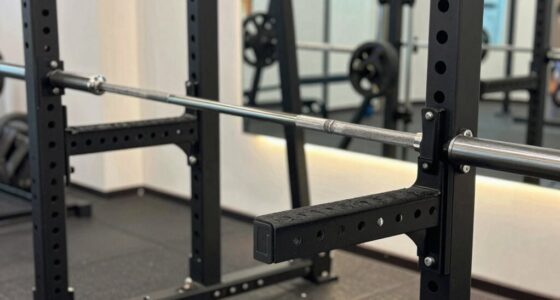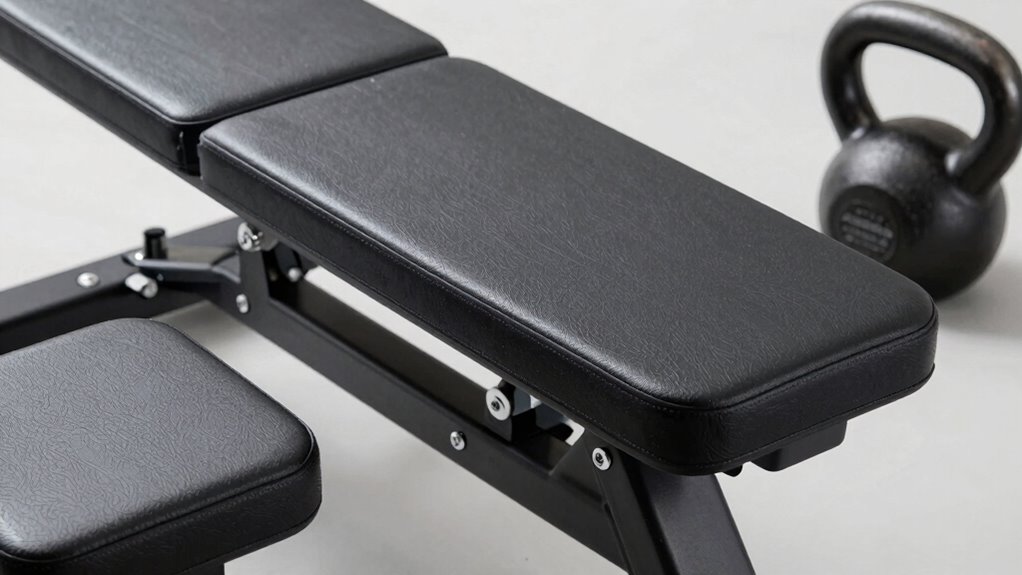

To quickly spot wobble in your weight bench, focus on three movements: gently shake the sides to check for lateral instability, push down on the front and back to test for any rocking, and bounce lightly on the pad to see if there’s any creaking or movement. These simple actions reveal whether your bench is stable enough. Keep going, and you’ll discover even more ways to guarantee your setup stays secure during every lift.

Get health and wellness essentials delivered free with Prime
- Fast, free delivery on millions of items
- Prime Video, Amazon Music and more included
- Member-only deals all year
Key Takeaways
- Gently rock the bench side to side to detect lateral wobbling indicating loose joints or frame issues.
- Push the bench forward and back to check for front-to-back movement or instability.
- Apply downward pressure on the seat or backrest to see if the frame shifts or creaks under load.
- Shake the legs or base to identify any looseness or wobbling in the support structure.
- Observe if the bench feels uneven or unstable when weight is applied, signaling possible structural problems.
weight bench stability testing kit
As an affiliate, we earn on qualifying purchases.
As an affiliate, we earn on qualifying purchases.
How to Test Your Bench for Wobble Effectively
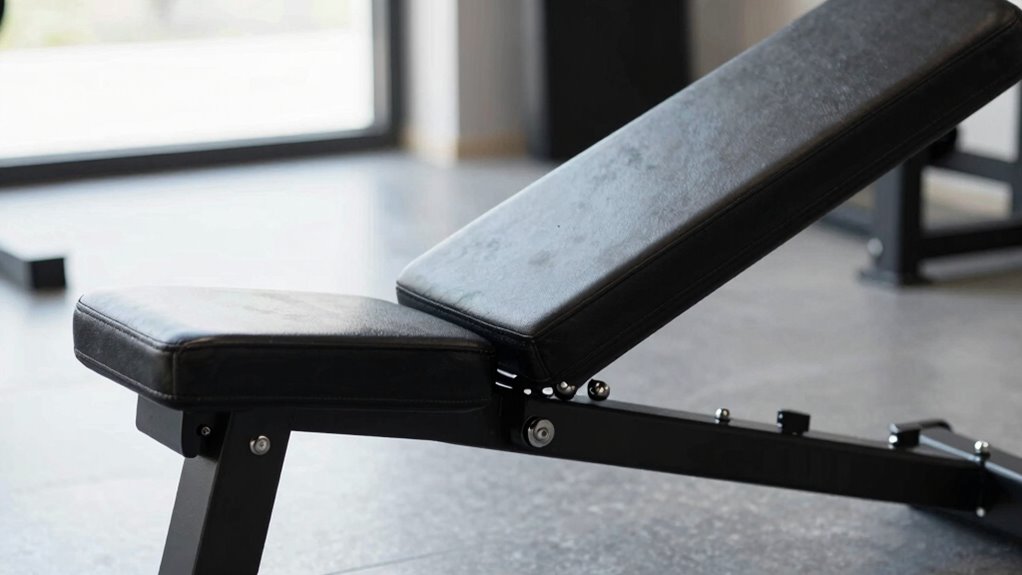
To make certain your weight bench is stable enough for safe workouts, you need to test it for wobble. Begin by inspecting the bench surface—look for any uneven spots or signs of damage, as these can affect stability. Next, focus on the frame integrity by gently pushing or rocking different parts of the frame to see if it shifts or wobbles. A solid, secure frame shouldn’t move or creak under light pressure. Check all joints, screws, and bolts to ensure they’re tight and properly connected. If the bench surface feels uneven or the frame wobbles during your test, it’s a sign that stability may be compromised. Properly testing these elements helps prevent accidents and ensures your workouts are safe and effective. Additionally, understanding structural stability and how it impacts your safety can help you identify issues more effectively. Regular maintenance and tightening of connections contribute to ongoing bench stability and safety during use. Recognizing signs of wear and tear can also help you determine when repairs or replacements are necessary to maintain optimal safety.
adjustable weight bench with solid frame
As an affiliate, we earn on qualifying purchases.
As an affiliate, we earn on qualifying purchases.
Signs That Show Your Bench Might Be Unstable
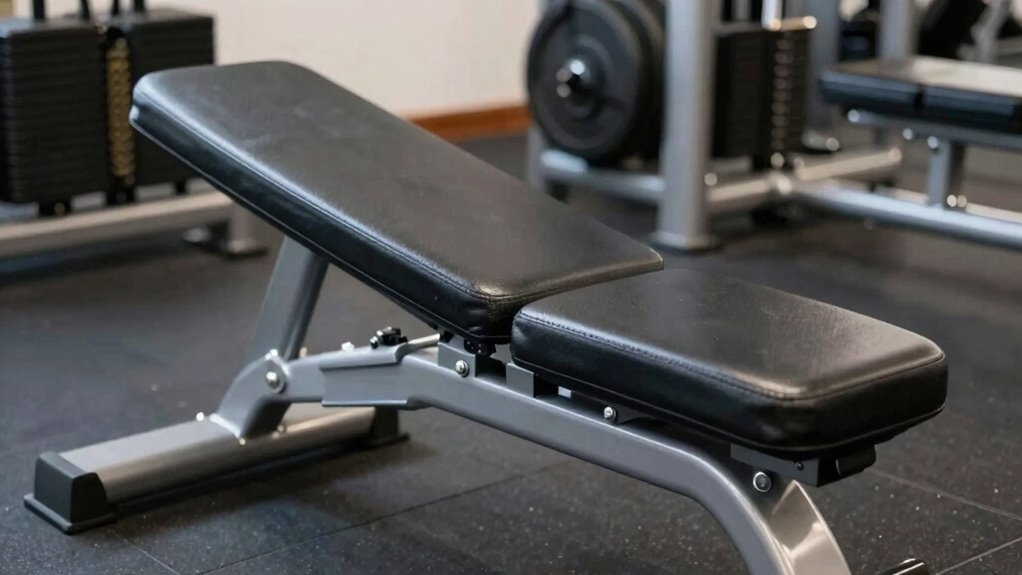
If your weight bench shows any movement or shifts during use, it’s a clear sign that it might be unstable. Pay attention to frame integrity—if the frame wobbles or creaks, it indicates structural issues. Poor material quality can cause panels or joints to weaken or crack over time, increasing wobble. Look for any signs of loose bolts or screws; these can compromise stability even if the frame appears solid. Uneven surfaces or bending metal also point to compromised frame integrity or subpar materials. If your bench feels unsteady despite proper assembly, it’s likely due to inferior material quality or a weak frame. Material durability is crucial for maintaining long-term stability. Additionally, sound therapy principles suggest that vibrations from unstable equipment can negatively impact your workout experience and safety. Regularly inspecting the structural integrity of your bench helps catch issues before they become serious. Ensuring that the proper assembly techniques are followed can also make a significant difference in stability and safety. Conducting stability tests can help identify hidden issues that might not be immediately apparent during routine checks.
weight bench bolts and screws tightening tools
As an affiliate, we earn on qualifying purchases.
As an affiliate, we earn on qualifying purchases.
Quick Checks to Confirm Your Bench’s Stability Before Lifting
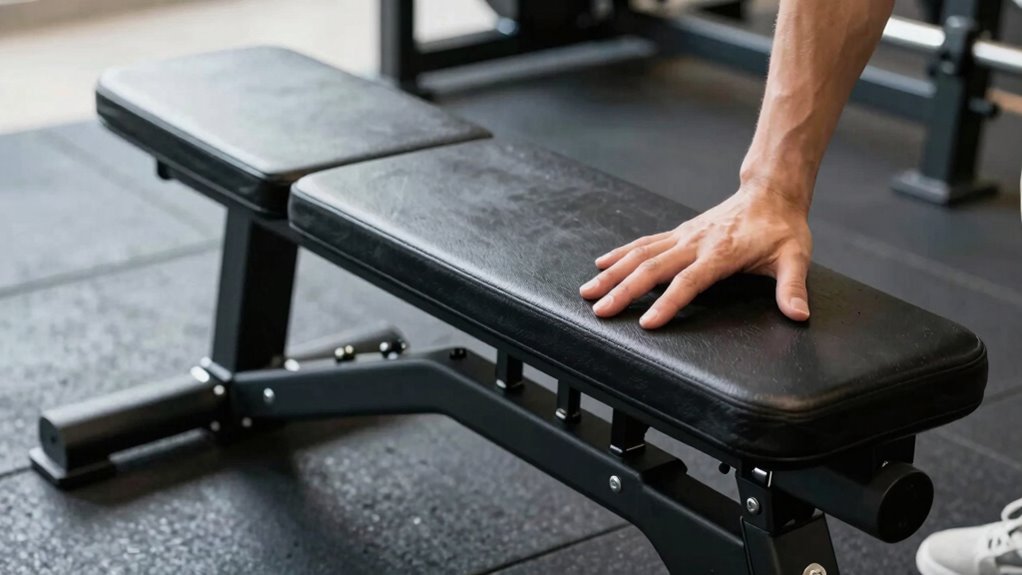
Before lifting, it’s essential to perform quick checks to guarantee your bench is stable. Start by inspecting the adjustment techniques of the bench, ensuring all pins and locks are securely in place. Check that the legs and frame are level and not wobbly; gently shake the bench to feel for any movement. Confirm that the pads are firmly attached and not slipping. Always follow safety precautions—if anything feels loose or unstable, don’t lift until it’s fixed. For added security, reposition the bench on a flat, non-slip surface. Incorporating weatherproof tool storage can also help monitor your equipment’s stability and ensure safe workouts. Regularly inspecting the hardware components of your bench can prevent unexpected failures during use. Using a durable survival gear mindset can help you identify potential wobble issues early, preventing accidents or injuries during your workout. Being aware of regional hardware standards can further inform you about the quality and safety features of your equipment. Taking a moment to verify stability ensures a safer, more effective lifting session.
heavy-duty workout bench for home gym
As an affiliate, we earn on qualifying purchases.
As an affiliate, we earn on qualifying purchases.
Frequently Asked Questions
What Are the Safest Methods to Stabilize a Wobbly Weight Bench?
To stabilize a wobbly weight bench safely, start by checking the frame and tightening all bolts. Use DIY repairs like adding shims or rubber pads under legs for better weight distribution. Guarantee the bench is on a flat, even surface. If wobbling persists, consider reinforcing the joints or replacing worn-out parts. Always prioritize safety, and avoid risky fixes that could compromise stability during your workout.
How Often Should I Test My Bench’s Stability?
Think of your bench like a well-balanced ship—regular checks keep it steady. You should test your bench’s stability weekly or bi-weekly, especially before heavy lifts. During surface assessment, look for uneven weight distribution and wobbling. If you notice any movement, tighten bolts or adjust the surface. Consistent testing guarantees safety and peak performance, preventing accidents and prolonging your bench’s lifespan.
Can Uneven Flooring Cause Bench Wobble?
Yes, uneven flooring can cause your bench to wobble. When the surface has unevenness, it affects the floor’s surface grip, making the bench unstable during workouts. To prevent wobble, make sure your floor is level and firm, or place a sturdy mat underneath. Regularly check for floor unevenness, especially on hard surfaces, to maintain stability and safety during your exercises.
Are There Specific Exercises That Reveal Bench Instability?
To test your bench’s balance, try stability testing with dynamic movements like push-ups, dumbbell presses, or planks. These exercises shake up your routine and quickly reveal bench wobble. As you press or hold, watch for any shifting or instability. If your bench wobbles during these tasks, it’s a clear sign to tighten the bolts or find a more stable spot. Stay vigilant and keep your workout safe!
What Accessories Can Enhance Bench Stability During Workouts?
You can boost your bench’s stability with accessories like adjustable supports, which help level uneven surfaces and prevent wobbling. Non-slip mats placed under the bench or weights also guarantee it stays firmly in place during your workout. These accessories provide extra grip and balance, reducing wobble and enhancing safety. Incorporate them into your setup to maintain proper form and get the most out of your lifting sessions.
Conclusion
Now that you’ve uncovered the wobble lurking in your weight bench, think of it as tightening the screws of a ship before setting sail. These quick tests are your compass, guiding you to steady ground so your lifts stay confident and safe. Don’t let a shaky bench be the storm that capsizes your progress—fortify it now, and keep your fitness journey sailing smoothly, no matter how heavy the waves of weight or doubt.
Halloween Picks
halloween
As an affiliate, we earn on qualifying purchases.