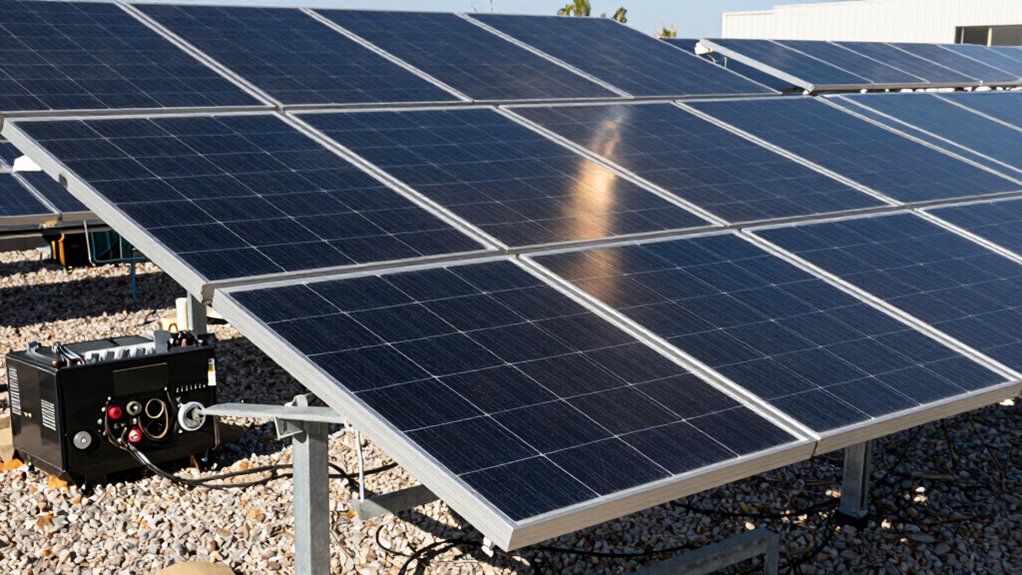

The main setup mistake that halves your solar generator’s charging efficiency is improper panel placement or wiring. If panels aren’t facing the sun correctly, have shading issues, or are installed at incorrect angles, they won’t absorb enough sunlight. Poor wiring—like mismatched voltage or loose connections—also reduces energy transfer. Ensuring proper placement, wiring, and system configuration can make a big difference. Keep exploring to understand how to optimize your solar setup for maximum power.

Get health and wellness essentials delivered free with Prime
- Fast, free delivery on millions of items
- Prime Video, Amazon Music and more included
- Member-only deals all year
Key Takeaways
- Improper panel orientation or tilt angle reduces sunlight exposure, halving charging efficiency.
- Shading from trees or structures blocks sunlight, significantly decreasing energy collection.
- Incorrect wiring or voltage mismatches cause energy loss and limit proper charge transfer.
- Using panels with incompatible voltage or wattage ratings prevents optimal system performance.
- Dirty or poorly maintained panels hinder sunlight absorption, reducing charging capacity.
As an affiliate, we earn on qualifying purchases.
Why Is My Solar Panel Not Charging My Generator Efficiently?
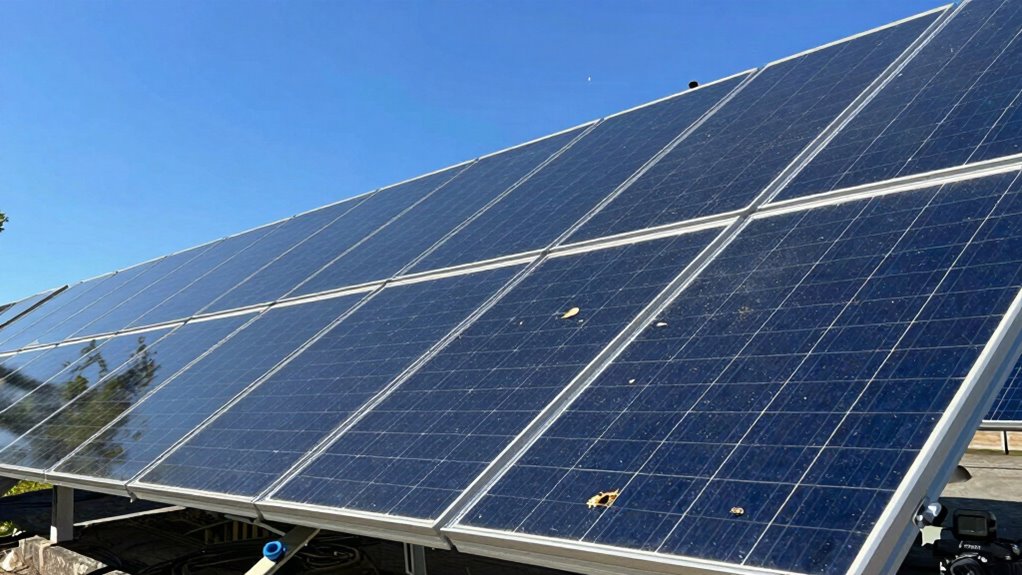
If your solar panel isn’t charging your generator efficiently, several factors could be at play. Poor battery maintenance can cause your batteries to hold less charge, reducing overall efficiency. Make sure your batteries are clean, properly connected, and not past their lifespan. Inverter efficiency also plays a vital role—if the inverter isn’t functioning correctly or has a low conversion rate, it wastes energy during the transfer process. Check that your inverter is suitable for your system and is operating within its ideal range. Additionally, ensure your solar panel is clean and positioned correctly for maximum sunlight exposure. Proper system maintenance can help prevent many common issues and optimize your setup. Regularly inspecting system components and ensuring they are in good condition can further enhance overall efficiency. Incorporating high-quality components such as reliable inverters and durable batteries can also make a significant difference. Moreover, understanding the solar system’s capacity ensures your setup is appropriately scaled to meet your generator’s power needs. To maximize efficiency, it’s also important to consider air quality considerations that can impact the performance of your solar setup, especially if dust or humidity interfere with the panels.
As an affiliate, we earn on qualifying purchases.
The Common Solar Panel Setup Mistake That Halves Your Charging Power
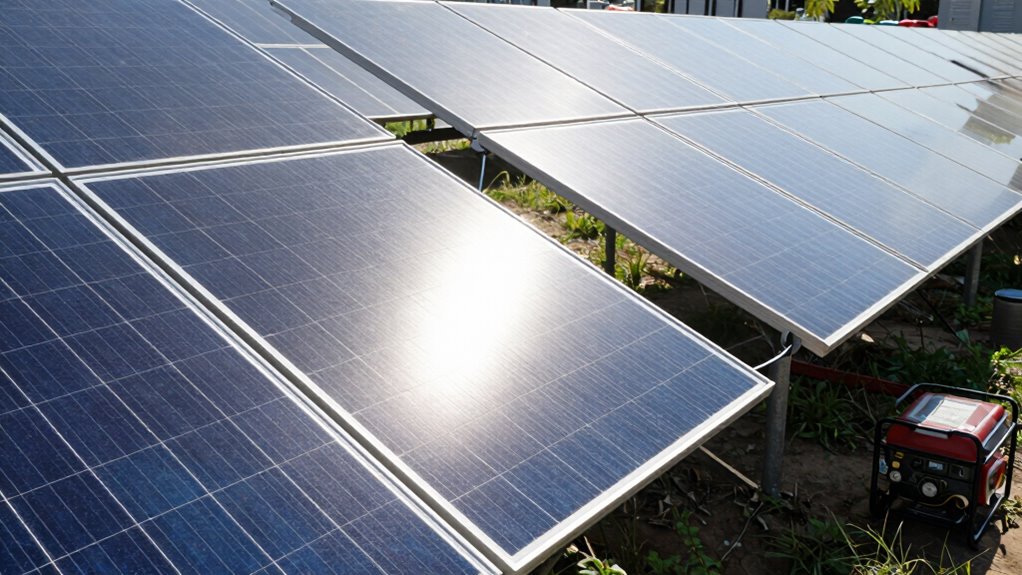
One common mistake that substantially reduces your solar panel’s charging power is improper panel placement. If your panels aren’t oriented correctly, you’re not capturing maximum sunlight, which cuts your energy input in half. Make sure the panel orientation is optimized for your location—generally facing true south in the northern hemisphere and true north in the southern hemisphere. Additionally, an incorrect panel angle can further decrease efficiency. Poor placement also affects inverter efficiency; if panels aren’t positioned to generate enough voltage, the inverter struggles to convert power effectively. This mismatch results in less usable energy for your generator. Always ensure your panels are correctly oriented and angled to maximize sunlight exposure, optimizing both panel output and inverter performance.
As an affiliate, we earn on qualifying purchases.
How to Properly Connect Solar Panels for Maximum Generator Charging
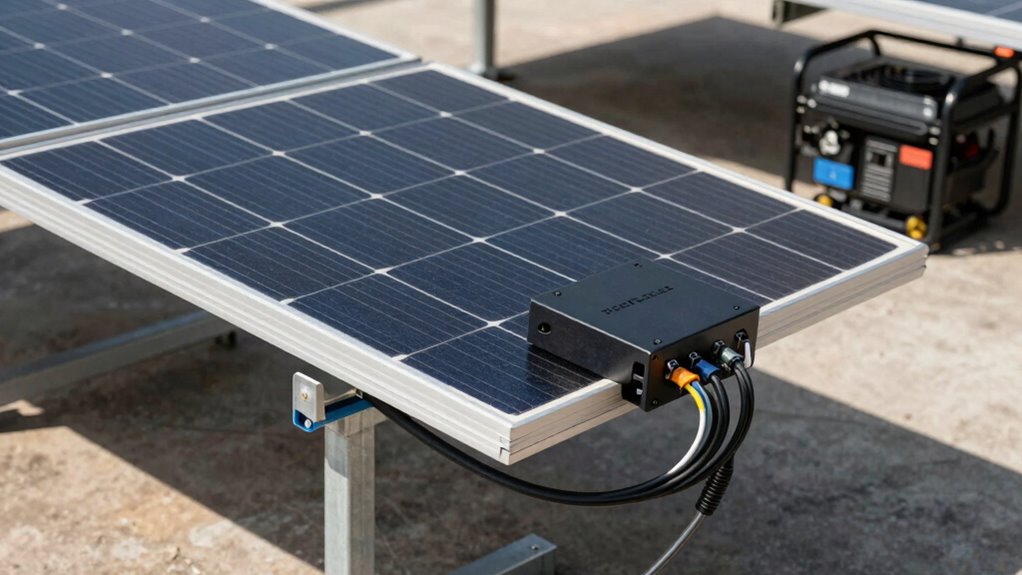
To guarantee your solar panels charge your generator efficiently, you need to connect them correctly from the start. First, understand your battery chemistry—whether lithium, AGM, or flooded lead-acid—as this affects how you wire the panels for ideal charging. Proper wiring ensures the voltage and current match your battery’s needs, preventing damage and maximizing capacity. Use series or parallel connections based on your system’s voltage requirements. Additionally, consider inverter efficiency; a well-matched setup minimizes energy losses during conversion. Ensuring your panels are wired correctly will improve charging speed and longevity of your generator’s battery. Proper setup is key to harnessing the full potential of your solar power system. Understanding battery chemistry is essential for tailoring your wiring configuration and maximizing efficiency. Properly configuring your system also involves matching system components to ensure seamless operation and system voltage considerations, which can significantly impact overall performance and system reliability.
As an affiliate, we earn on qualifying purchases.
Choosing the Right Charge Controller and Wiring for Your Solar System
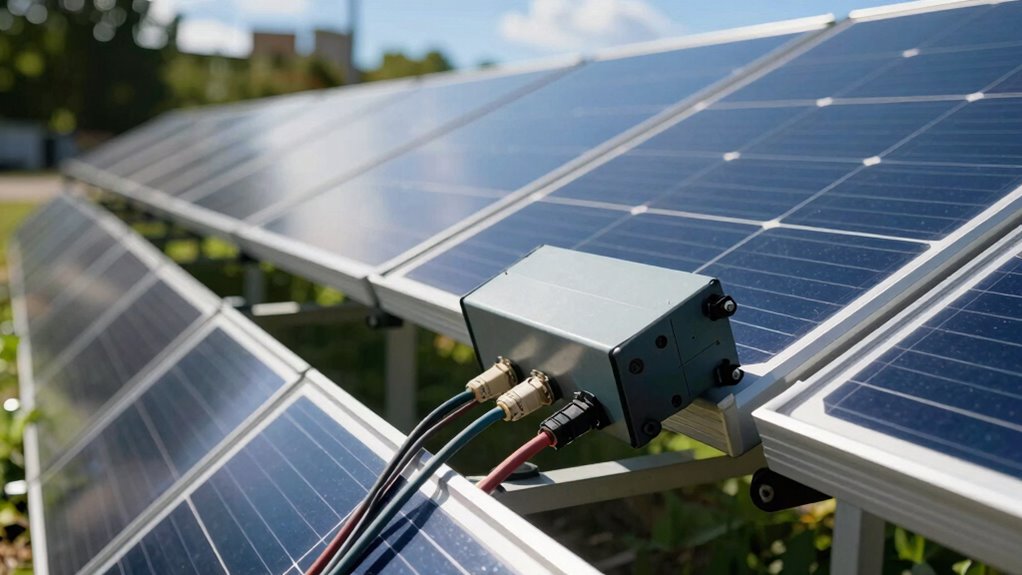
Choosing the right charge controller guarantees your solar system charges efficiently and safely. You also need proper wiring techniques to prevent losses and damage. Pay attention to voltage compatibility to keep your setup running smoothly and reliably. Additionally, understanding smart thermostat setup can help optimize overall home energy use and comfort. Proper system configuration, including system monitoring, is essential for early detection of issues and maintaining optimal performance. Incorporating proper wiring practices ensures minimal energy loss and enhances system longevity.
Correct Controller Selection
Selecting the right charge controller is crucial to guarantee your solar panels operate efficiently and safely. The controller must match your solar panel orientation and the total system output to prevent overcharging or underperformance. For larger systems, especially those with an inverter size that can handle higher loads, choose a controller with appropriate amperage capacity. A PWM controller works well for smaller setups, but for larger, more complex systems, MPPT controllers maximize energy harvest. Proper matching ensures your panels operate at their ideal voltage and current. Additionally, consider future expansion—select a controller that can handle increased capacity if you plan to add more panels later. This careful selection keeps your system safe, efficient, and reliable, avoiding pitfalls that can cut your charging efficiency in half. Paying attention to system compatibility is essential to optimize overall performance.
Proper Wiring Techniques
Ensuring proper wiring techniques is essential for maximizing your solar system’s efficiency and safety. Correct wiring reduces power loss, supports battery maintenance, and improves inverter efficiency. Use appropriately gauged wires to handle current and prevent overheating. Properly connect your charge controller, battery bank, and inverter, guaranteeing secure connections. Here’s a quick guide:
| Component | Connection Tip | Importance |
|---|---|---|
| Charge Controller | Use proper gauge wire | Prevents voltage drops |
| Batteries | Connect in correct series/parallel | Supports battery health |
| Inverter | Keep wiring short and secure | Ensures inverter efficiency |
Additionally, understanding proper wiring techniques can prevent common mistakes that cut charging in half and guarantee your solar setup performs at its best.
Voltage Compatibility Tips
How do you make sure your charge controller and wiring match your solar system’s voltage? First, verify the system’s voltage rating—whether it’s 12V, 24V, or 48V—and select a charge controller designed for that voltage. A voltage mismatch can cause inefficient charging or damage your equipment. Check your wiring connections carefully; wiring errors can lead to improper voltage flow, reducing system performance. Use appropriately rated wiring to handle the current without overheating, and double-check all connections before powering up. Matching your charge controller’s specifications with your solar array’s voltage prevents issues and maximizes charging efficiency. Avoid common pitfalls like connecting panels in series or parallel incorrectly, which can create dangerous voltage mismatches and impair your setup’s effectiveness. Proper system configuration ensures safe and optimal operation of your entire solar setup. To ensure safety and efficiency, always consult solar system guidelines and adhere to best practices during installation. Additionally, understanding voltage compatibility is crucial for preventing system failures and extending the lifespan of your components. Incorporating proper wiring techniques can further enhance the reliability of your solar power system. Remember that regular system maintenance is essential for detecting potential issues early and maintaining peak performance over time.
How to Avoid Shadows and Get the Best Exposure for Your Solar Panels
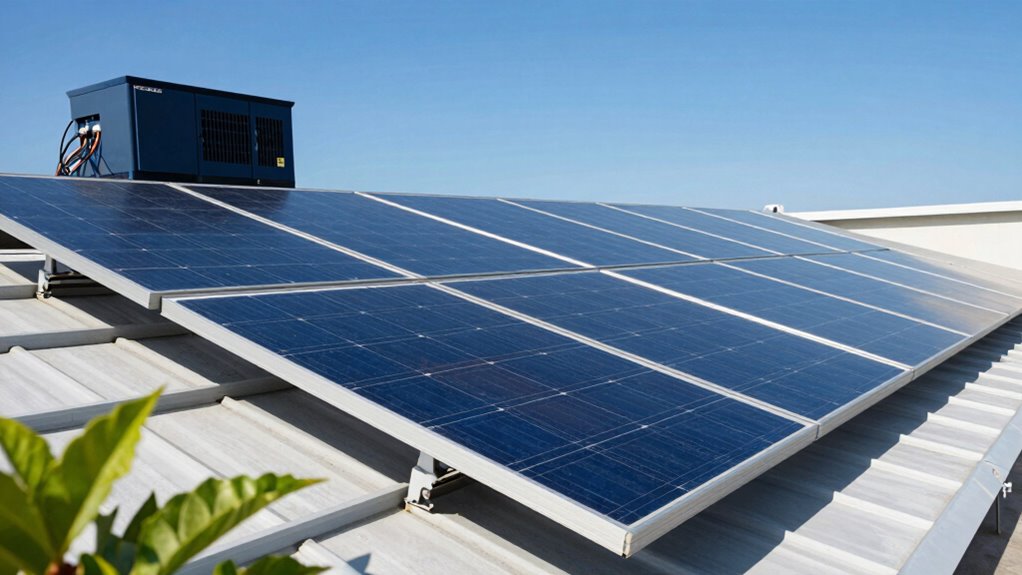
Shadows cast on your solar panels can substantially reduce their efficiency, so it’s essential to position them carefully. To maximize exposure, focus on proper panel orientation—aiming your panels toward the sun’s peak angles, usually south in the northern hemisphere. Avoid shading by placing panels away from trees, buildings, or other obstructions that cast shadows during peak sunlight hours. Regularly check for new shading sources, especially as the seasons change. Clean surrounding areas to prevent debris from blocking sunlight. Consider adjustable mounts to enhance tilt angles and maintain ideal exposure throughout the year. Additionally, understanding the environmental impact of tissue paper can inspire eco-friendly choices in your overall setup. By prioritizing shading avoidance and setting your panels correctly, you’ll ensure they receive the maximum sunlight, boosting charging efficiency and overall system performance. Maintaining awareness of solar panel positioning can further help optimize energy absorption throughout different times of the year.
Troubleshooting Slow Charging: What to Check and How to Fix It
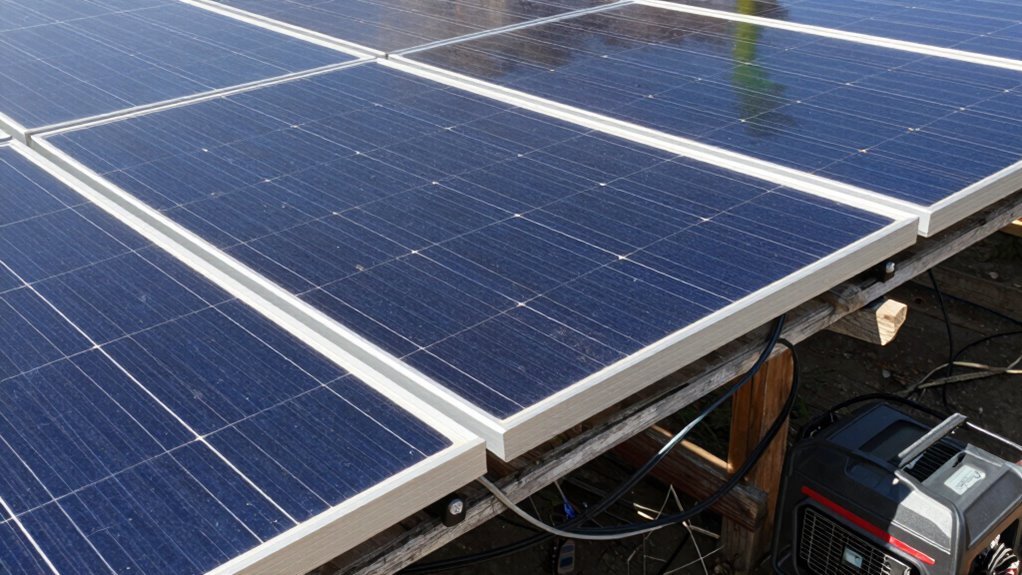
If your solar panels aren’t charging your generator as quickly as expected, there may be issues beyond just shading. Start by checking your solar panel maintenance—dirty panels reduce efficiency. Also, examine your battery health, as degraded batteries slow charging. Use this quick checklist:
| Issue | Solution |
|---|---|
| Dirt or debris on panels | Clean panels gently with water and soft cloth |
| Poor connections | Tighten or replace loose wiring |
| Battery deterioration | Replace or improve the battery’s capacity |
Regular maintenance boosts performance, and understanding your battery’s condition helps guarantee ideal charging. Additionally, ensuring your solar panel alignment is correct can significantly impact charging efficiency. Proper airflow around your setup can prevent overheating that reduces efficiency. Furthermore, inspecting your charge controller settings can optimize power transfer and prevent unnecessary power loss. Being aware of potential system inefficiencies can help you identify and address issues more effectively. Addressing these factors can notably improve your solar setup’s efficiency, cutting down charging times and extending system life.
Tips for Maintaining and Monitoring Your Solar Generator Setup
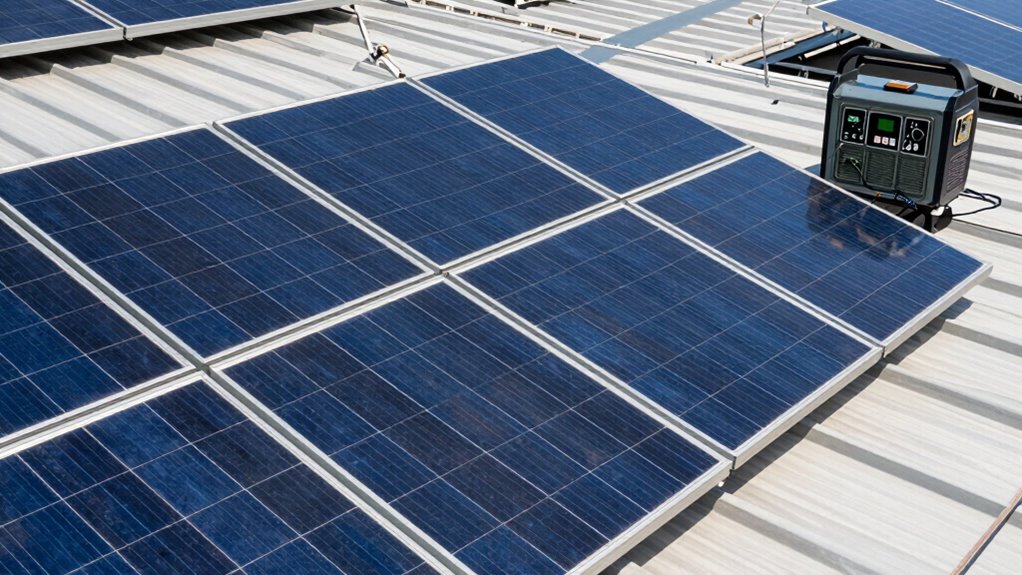
Regularly maintaining and monitoring your solar generator setup guarantees it operates efficiently and lasts longer. Focus on these key areas:
- Check the solar panel orientation regularly to ensure maximum sunlight exposure, especially as seasons change.
- Clean your solar panels gently to prevent dust and debris from reducing efficiency.
- Perform battery maintenance by inspecting for corrosion, ensuring connections are tight, and monitoring voltage levels.
- Use a monitoring system to track performance and identify drops in charging efficiency early.
Frequently Asked Questions
Can Using Mismatched Solar Panels Affect Charging Efficiency?
Using mismatched solar panels can substantially impact your charging efficiency due to panel compatibility and voltage mismatch. When panels aren’t compatible, they won’t work together effectively, causing power losses. Voltage mismatch can lead to reduced current flow, slowing down your generator’s charging process. To maximize efficiency, make sure your panels are compatible in voltage and wattage, and avoid mixing different types or brands that aren’t designed to work together.
How Does Temperature Impact Solar Panel Performance?
You might notice your solar panels underperforming when the temperature rises or drops unexpectedly. Hot temperatures cause solar panel materials to become less efficient, reducing energy output, while shading effects can further decrease performance. As the temperature fluctuates, the panels struggle to generate consistent power, so avoid placing them in direct sunlight during the hottest parts of the day and guarantee shading is minimized for maximum charging.
Is It Necessary to Upgrade My Generator’s Battery for Better Solar Charging?
Upgrading your generator’s battery can improve your solar charging efficiency, especially if you increase the battery capacity. A larger capacity allows for storing more energy and boosts charging speed, making your system more effective. If you notice slow charging or limited run time, consider upgrading to a higher-capacity battery. This guarantees your solar panels work effectively, providing faster charging and longer-lasting power, especially during extended cloudy periods.
What Safety Precautions Should I Follow During Solar Panel Installation?
Ever wonder what could go wrong if you skip safety? Always wear personal protective equipment like gloves and safety glasses, and guarantee proper grounding safety to prevent electrical shocks. Double-check all connections and secure panels firmly. Do you want a safe, efficient setup? Follow manufacturer instructions carefully, and work in dry conditions to avoid hazards. Staying cautious ensures your solar installation is both safe and effective.
How Often Should I Clean My Solar Panels for Optimal Performance?
You should clean your solar panels at least twice a year for peak performance, but cleaning frequency depends on your environment. Regular solar panel maintenance includes removing dirt, leaves, and debris that block sunlight. If you notice dirt or dust buildup, clean them more often. Use a soft brush or sponge with mild soap and water, avoiding harsh chemicals. Proper cleaning guarantees your panels operate efficiently and generate maximum power.
Conclusion
Avoid common setup mistakes like incorrect wiring or poor panel placement to maximize your solar generator’s charging efficiency. For example, imagine installing panels in the shade—your system might only charge half as fast. By properly connecting your panels, choosing the right components, and maintaining your setup, you’ll guarantee faster, more reliable power. Take these steps, and you’ll keep your generator ready whenever you need it, saving time and frustration in the long run.
Fall Picks
fall essentials
As an affiliate, we earn on qualifying purchases.