
The “One Tab” rule helps you minimize digital clutter by encouraging you to keep only one tab open at a time, boosting your focus and reducing distractions. Digital clutter from multiple open tabs and scattered notifications can overwhelm your mind and derail productivity. By practicing this rule, you train your brain to prioritize quality over quantity and create a more intentional online environment. Keep going, and you’ll discover effective strategies to reclaim your focus and stay productive.
Open a free Amazon Business account
Business pricing, bulk buying and tax-exempt orders.
As an affiliate, we earn on qualifying purchases.
Key Takeaways
- Excessive open tabs create visual and cognitive clutter, overwhelming the mind and reducing focus on priority tasks.
- Multitasking and frequent tab switching fragment attention, lowering productivity and increasing mental fatigue.
- Digital clutter distracts by triggering curiosity and notifications, hijacking attention from important work.
- Practicing the “One Tab” Rule fosters mindful browsing, minimizes distraction, and enhances sustained concentration.
- Regular digital decluttering and tab management improve mental clarity, efficiency, and overall focus.
digital declutter browser extension
As an affiliate, we earn on qualifying purchases.
As an affiliate, we earn on qualifying purchases.
What Is the “One Tab” Rule and How Can It Help You Focus?

The “One Tab” rule is a simple but powerful technique to improve your focus by limiting distractions. When you adopt this rule, you commit to keeping only one tab open at a time, encouraging mindful browsing. This habit helps you become more aware of your digital environment and reduces the urge to switch constantly between multiple tabs. Over time, practicing this rule fosters habit formation, making it easier to stay focused on one task without succumbing to digital clutter. By consciously limiting your open tabs, you train your brain to prioritize quality over quantity, enhancing concentration and productivity. This small change creates a more intentional browsing experience, helping you stay present and avoid the chaotic pull of endless open windows. Understanding digital habits can further support your efforts to create a more focused digital environment. Additionally, adopting the single-tasking mindset can significantly boost your efficiency and mental clarity. Developing digital discipline can help reinforce these habits and maintain long-term focus. Incorporating mindful browsing practices can deepen your awareness and prevent unnecessary distractions from creeping in. Recognizing the role of software quality assurance in maintaining focused workflows can also inspire better management of digital tools and reduce clutter.
As an affiliate, we earn on qualifying purchases.
Why Digital Clutter Disrupts Your Productivity
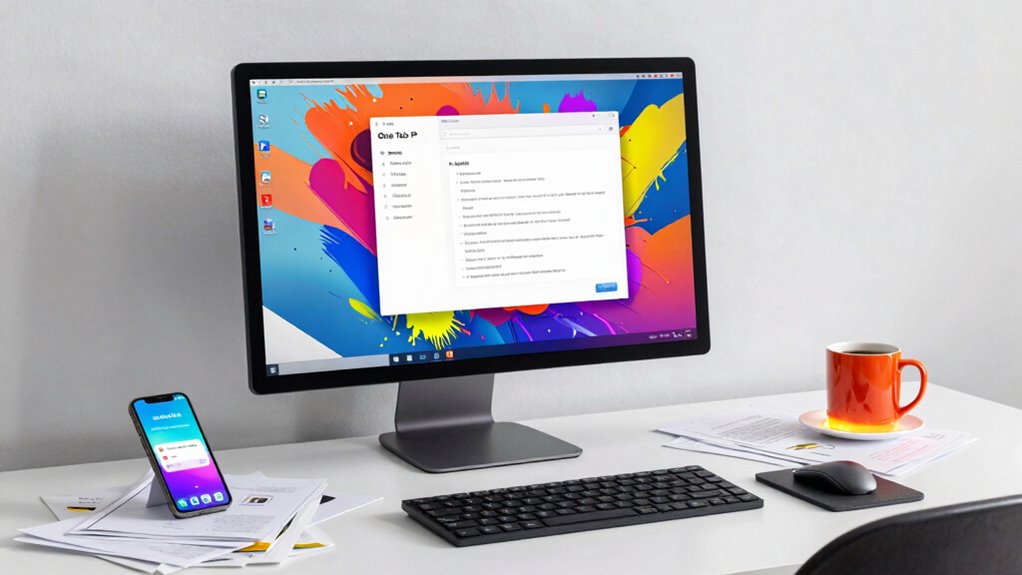
Digital clutter can sabotage your productivity by overwhelming your mind with unnecessary stimuli. When you have multiple tabs, notifications, and apps open, your brain struggles to process everything at once, leading to mental overload. This constant influx of information causes fatigue, making it harder to concentrate on important tasks. Managing your digital environment is essential to prevent this overload and maintain focus. As your mental resources are drained, you become less efficient, more distracted, and prone to errors. The clutter creates a chaotic environment that hampers your ability to prioritize and makes focusing a challenge. Over time, this persistent distraction diminishes your overall productivity, leaving you feeling frustrated and unaccomplished. Reducing digital clutter helps clear your mental space, allowing you to work more effectively and regain control over your attention. Additionally, understanding the concept of mental energy can help you better manage your focus and avoid burnout, ultimately supporting your mental well-being and resilience. Incorporating practices like focused work sessions can further minimize distractions and enhance your concentration.
As an affiliate, we earn on qualifying purchases.
The Psychology Behind Distractions and Multitasking

Distractions hijack your attention because your brain is wired to seek novelty and respond to interruptions. This tendency causes cognitive overload, making it harder to focus and diminishing your attention span. When you multitask, your brain switches rapidly between tasks, draining mental resources and reducing efficiency. This constant shifting fosters a cycle of distraction, impairing deep work. To visualize this, consider the following ideas:
| Concept | Explanation |
|---|---|
| Cognitive Overload | Overwhelmed by too many stimuli, reducing clarity |
| Attention Span | Shortens with frequent interruptions, hampers focus |
| Multitasking | Diverts mental resources, lowers productivity |
| Distraction Triggers | Notifications, alerts, or curiosity that break focus |
Understanding this psychology highlights why limiting tabs helps preserve your cognitive resources and attention span. Recognizing how mental resources are depleted during multitasking underscores the importance of managing distractions effectively. Additionally, incorporating natural focus techniques can further enhance concentration by aligning with your brain’s wiring, thus supporting sustained attention and reducing cognitive overload. Being aware that attention span can be trained and improved through mindful practices reinforces the value of focused work sessions. Developing habits that minimize visual clutter can also help create calmer work environments that foster better focus.
As an affiliate, we earn on qualifying purchases.
How to Start Using the “One Tab” Rule in Your Daily Routine

Implementing the “One Tab” rule into your daily routine is a straightforward way to regain focus and reduce cognitive overload. Start by consciously closing all unnecessary tabs after completing a task, leaving only the one relevant to your current work. This helps you develop focus habits that reinforce your ability to concentrate on single tasks without distraction. Incorporate this practice into your digital discipline by setting specific times to review open tabs or digital clutter, rather than allowing your browser to fill up automatically. Consistency is key—make it a daily ritual to clear out tabs regularly. Over time, this simple habit will strengthen your focus muscles and make it easier to resist the urge to multitask or get sidetracked. Additionally, practicing media literacy can help you discern which information is truly relevant and worth keeping open, further supporting your focus.
Tools and Techniques to Support Your Focus

To effectively support your focus, leveraging the right tools and techniques can make a significant difference. Start by practicing mindful browsing—pause before clicking links or opening new tabs, asking yourself if it’s necessary. Use browser extensions that promote digital minimalism, such as tools that limit open tabs or block distracting sites. Implement time-blocking techniques to dedicate focused periods for specific tasks, reducing the urge to multitask. Consider using apps that help you track and review your digital habits, so you become aware of patterns that undermine focus. Recognizing the importance of deals buy can also help you avoid impulsive purchases that distract you from your priorities. Being aware of digital clutter and its impact on your concentration is essential for maintaining focus. Incorporating digital decluttering strategies can further enhance your ability to concentrate and stay organized. Additionally, understanding the role of privacy policy and cookie management can help you control your online environment and minimize distractions. Developing an understanding of hamster care costs and other distractions can help you set boundaries for better focus. The goal is to create a digital environment that encourages intentionality, minimizes unnecessary clutter, and nurtures sustained concentration. These tools and techniques support your commitment to the “One Tab” rule, reinforcing mindful engagement with your digital world.
Common Challenges When Adopting the “One Tab” Approach: And How to Overcome Them

Adopting the “One Tab” approach can be challenging because it requires breaking habits ingrained in multitasking and digital clutter. Many people believe multitasking boosts productivity, but it’s a myth that can lead to constant switching and distraction triggers. You might find yourself tempted to open multiple tabs or apps, thinking it’s more efficient, but this only fragments your focus. Overcoming these challenges means recognizing that multitasking wastes time and increases errors. To stay committed, set clear boundaries for your digital environment and remind yourself that focusing on one task at a time improves quality and efficiency. Be aware of distraction triggers like notifications and unsolicited alerts, and turn them off to reinforce your new focus habits. Additionally, understanding the importance of Vacuums for Dust Removal in 2024 can help you create a clutter-free environment that supports your focus. Consistency is key to making the “One Tab” rule stick.
How to Measure Your Progress in Focus and Productivity

To see how well you’re improving in focus and productivity, you need to track specific metrics that matter. Setting clear milestones helps you measure progress and stay motivated along the way. By regularly reviewing these points, you can adjust your approach and keep moving forward.
Tracking Key Metrics
Tracking your key metrics is essential for understanding how well your focus and productivity strategies are working. By monitoring specific data, you can identify which digital habits boost or hinder your progress. To do this effectively, consider tracking:
- Time spent on tasks versus distractions
- Number of completed tasks daily
- Frequency of tab switching
- Duration of focused work sessions
- Impact of digital clutter on your workflow
Regularly assessing your digital environment can reveal opportunities for improvement and help you create a more streamlined workspace. Implementing data-driven adjustments allows you to make informed decisions about your digital habits. Additionally, analyzing digital clutter can provide insights into how it affects your workflow and focus. Being aware of essential oils for productivity and their potential calming and focus-enhancing effects can also inform your environment optimization. These metrics help you refine your productivity strategies and stay accountable. Continuous review of this data reveals patterns, enabling you to eliminate unnecessary distractions and optimize your digital environment. Remember, the goal is to develop healthier digital habits that support sustained focus. Consistent tracking empowers you to make informed adjustments, ensuring your efforts lead to measurable progress.
Setting Clear Milestones
Setting clear milestones gives you concrete benchmarks to measure your progress in focus and productivity. When you establish specific goals, you can track how well you’re practicing mindful browsing and embracing digital minimalism. Break larger tasks into smaller, manageable milestones that mark significant steps forward. These milestones keep you motivated and help you avoid distractions that derail your focus. By setting deadlines and reviewing progress regularly, you’ll recognize patterns and adjust your habits accordingly. This approach prevents you from wandering aimlessly online and encourages intentional use of your time. Ultimately, clear milestones serve as visual cues of your progress, reinforcing your commitment to reducing digital clutter and maintaining a sharper, more focused mind.
Extra Tips for Reducing Digital Clutter Beyond the “One Tab” Rule

Using digital decluttering tools can help you quickly organize and delete unnecessary files and tabs. Establishing a daily cleanup routine makes it easier to maintain a clutter-free digital space. Incorporating these habits guarantees your devices stay streamlined and your focus remains sharp.
Use Digital Decluttering Tools
Have you ever felt overwhelmed by digital clutter despite sticking to the “One Tab” rule? Digital decluttering tools can help you achieve digital minimalism and boost focus enhancement. These tools automate organization, reduce distractions, and streamline your digital environment. For example, browser extensions can block distracting sites, while apps like Evernote or Notion help organize notes and tasks. Email management tools such as SaneBox or Unroll.Me can declutter your inbox efficiently. Additionally, cloud storage services like Google Drive keep files tidy and accessible. Using these tools saves time and mental energy, making it easier to stay focused. Incorporating digital decluttering tools into your routine is a powerful way to support the “One Tab” rule and maintain a clutter-free, focused digital space.
Establish Daily Cleanup Routine
Implementing a daily cleanup routine is a simple but effective way to keep your digital space organized and reduce clutter. By dedicating a few minutes each day to review and close unnecessary tabs, delete outdated files, and organize your bookmarks, you reinforce digital minimalism. This habit helps prevent overwhelm and sharpens your focus, making it easier to concentrate on important tasks. Consistent cleanup also minimizes distractions caused by digital clutter, enhancing focus enhancement. Set a specific time each day—perhaps after work or before bed—to perform this routine. Over time, it becomes second nature, ensuring your digital environment stays streamlined. A tidy digital space supports mental clarity and productivity, allowing you to stay focused on what truly matters.
Why Practicing the “One Tab” Rule Regularly Boosts Mental Clarity

Practicing the “One Tab” rule regularly helps clear mental clutter by reducing the number of open tabs in your mind. When you limit distractions, your focus sharpens, making it easier to think clearly. Incorporating mindfulness meditation can reinforce this habit, helping you stay present and aware of when your mind wanders. Additionally, a well-organized workspace supports mental clarity by minimizing chaos and visual clutter.
Consider these benefits:
- Enhances concentration and productivity
- Reduces overwhelm and stress
- Promotes disciplined thinking
- Improves overall mental health
- Reinforces habits of workspace organization
Frequently Asked Questions
How Long Should I Stay Focused on One Tab Before Switching?
You should aim to stay focused on one tab for about 25 to 30 minutes before switching. This focus duration helps maintain productivity and prevents burnout. Keep in mind, frequent task switching can disrupt your flow, so set timers or use techniques like the Pomodoro method to manage your work sessions. Sticking to this limit allows you to stay engaged without feeling overwhelmed, improving your overall focus and efficiency.
Is the “One Tab” Rule Effective for All Types of Tasks?
Sure, the “One Tab” rule works wonders for tasks requiring deep focus, like complex problem-solving or writing. Ironically, it’s less effective for quick, multitasking myths that need rapid shifts. You might find task prioritization benefits from sticking with one task, but flexibility is key. Some tasks demand switching, while others thrive on undivided attention. Know when to apply the rule and when to break it to stay productive.
Can This Rule Help Reduce Anxiety Caused by Digital Clutter?
Yes, the “one tab” rule can help reduce anxiety caused by digital overload by encouraging mindful browsing. When you limit yourself to one tab, you focus better, avoid feeling overwhelmed, and stay present with your tasks. This simple habit minimizes digital clutter, making your online experience calmer and more manageable. Over time, it promotes a healthier relationship with technology and eases the stress that often accompanies digital overload.
How Do I Handle Urgent Notifications While Practicing the Rule?
To handle urgent notifications while practicing the rule, prioritize notification management by setting specific times to check alerts. Use digital discipline to mute or disable non-essential alerts, so they don’t interrupt your focus. When an urgent notification arises, pause your work briefly, assess its importance, and respond only if necessary. This approach helps you maintain focus while effectively managing digital interruptions without compromising productivity.
What Are Common Mistakes to Avoid When Implementing the “One Tab” Rule?
When implementing the “one tab” rule, avoid multitasking pitfalls like switching between tabs or checking notifications frequently. These distraction triggers break your focus and hinder productivity. Don’t keep tempting tabs open because they lure you into constant interruptions. Instead, focus solely on one task at a time, closing all other tabs, and resist the urge to multitask. This helps you stay engaged and reduces the chances of distraction.
Conclusion
By embracing the “One Tab” rule, you’ll notice clearer focus and less mental fatigue. While some believe multitasking boosts productivity, research suggests it actually hampers efficiency and increases errors. Practicing this rule consistently can help you build better habits and boost mental clarity. Remember, reducing digital clutter isn’t just about organization; it’s about rewiring your brain for sustained concentration—proving that sometimes, less truly is more for your mind.
Fall Picks
fall essentials
As an affiliate, we earn on qualifying purchases.