
TL;DR

Get health and wellness essentials delivered free with Prime
- Fast, free delivery on millions of items
- Prime Video, Amazon Music and more included
- Member-only deals all year
A randomized trial involving 453 adults aged 65 and older with advanced chronic kidney disease found that those offered a video decision aid and asked to record their preferences had more advance care planning documented after 12 months. The study also found fewer participants were undecided about treatment after viewing the aid; whether the approach leads to care that matches patients’ goals remains unknown.
A 12-clinic randomized trial found that older adults with advanced chronic kidney disease who received a video decision aid and recorded their treatment preferences had more advance care planning documented in their medical records than those receiving usual care. At 12 months, documentation was reported for 56.6% of the intervention group, compared with 40.0% of the control group, according to the study published in JAMA Internal Medicine.
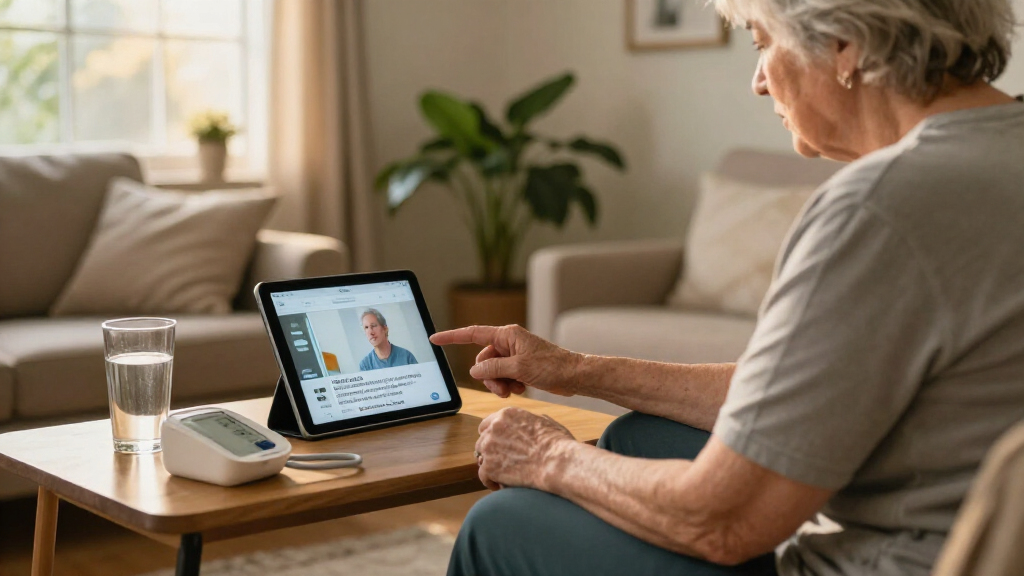
The trial included 453 adults aged 65 or older with advanced chronic kidney disease. Researchers assigned 228 participants to the intervention and 225 to usual medical care. The intervention group watched a certified video describing three treatment options for advanced kidney disease, then recorded a video declaration of their goals, values and treatment preferences. The declaration was sent to each participant’s treating clinician.
At the 12-month assessment, the intervention group was also more likely to have a discussion of kidney failure treatment options documented: 46.1%, compared with 31.6% in the control group. After watching the video, 13.2% of intervention participants were undecided about treatment, versus 41.3% of control participants. A larger share of the intervention group preferred conservative kidney management: 50.7%, compared with 31.8%.
The study was led by Angelo E. Volandes, M.D., of Dartmouth Health in Lebanon, New Hampshire, and colleagues. The findings were published as “Video Decision Support and Advance Care Planning in Older Adults With Advanced Kidney Disease” in JAMA Internal Medicine. The report was published to coincide with the American Society of Nephrology’s Kidney Week meeting, held October 21–25 in Denver.
More Preferences Reached the Medical Record
Advance care planning can give patients and clinicians a documented account of a person’s priorities when discussing possible future treatment. In this trial, the intervention was associated with higher rates of recorded planning and documented conversations about kidney failure treatment. That matters because preferences may be easier for care teams to find and discuss when they are included in the medical record.
The results also suggest that a standardized video, followed by a statement made by the patient, may help people engage with choices that can otherwise leave them uncertain. The difference in undecided participants was substantial in the reported results. However, the trial measured documentation and reported treatment preferences; it does not establish that patients received care consistent with those preferences or that the intervention improved health outcomes.
Products Worth Considering

Fitbit Sense 2 Advanced Health and Fitness Smartwatch, Blue Mist/Pale Gold

Levoit Core 600S-P Smart Air Purifier for Large Rooms

LEVOIT Vital 200S-P Smart Air Purifier for Large Rooms
As an affiliate, we earn on qualifying purchases.
How the Kidney Care Trial Worked
The study focused on older adults with advanced CKD, not people with kidney disease at every stage. Conducted as a parallel-group randomized clinical trial at 12 ambulatory clinics, it compared usual care with a specific package: an educational video showing three treatment options and a patient-created recording sent to the treating clinician.
That design means the findings apply to the combined intervention as tested. The reported results do not separate the effect of watching the video from the effect of recording preferences, nor do they establish that the same approach would produce similar results in other age groups or care settings. The study appeared in JAMA Internal Medicine in 2026, with the publication timed to Kidney Week.
“Further research is needed to determine whether increased documentation translates into goal-concordant care.”
— The study authors
Whether Care Matched Patient Goals
The reported findings do not show whether the increased documentation led to treatment that aligned with participants’ stated goals. The authors said further research is needed to answer that question. The available report also does not provide results on patient or clinician experiences, the long-term persistence of recorded preferences, or whether the approach affected clinical outcomes.
Because the intervention combined a video aid with a recorded declaration, it is also unclear which element contributed most to the differences. The findings describe the participants and clinics in this trial; the source does not establish how well the approach would work in other populations or health systems.
Testing Whether Preferences Guide Care
The next evidence needed is whether higher rates of planning documentation translate into treatment consistent with patients’ goals as kidney disease progresses. The study authors called for further research on that outcome. The report provided no specific timeline for additional studies or for wider adoption of the video and declaration process.
For now, the trial offers evidence that the approach was associated with more documented planning and treatment discussions over 12 months in the clinics studied. Whether routine care systems adopt a similar process, and how they would maintain or update patients’ recorded preferences, remains to be established.
Key Questions
What did the video decision aid include?
It depicted three treatment options for advanced chronic kidney disease. Participants assigned to the intervention then recorded their goals, values and treatment preferences for their clinician.
How many people took part in the trial?
The trial included 453 adults aged 65 and older with advanced CKD: 228 in the intervention group and 225 receiving usual medical care.
Did the intervention increase advance care planning documentation?
Yes. At 12 months, documentation was reported for 56.6% of the intervention group and 40.0% of the control group. The study reported an association under the trial’s conditions; it does not show that every participant benefited.
Does the study prove patients received care matching their preferences?
No. The authors said more research is needed to determine whether increased documentation leads to care aligned with patients’ goals.
Source: medicalxpress.com