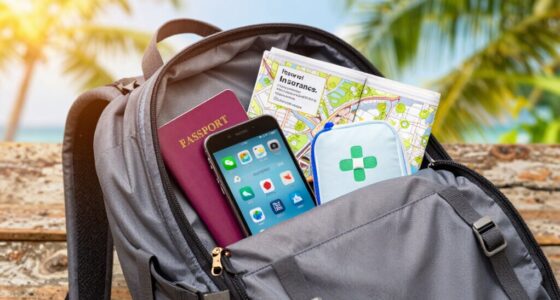

To effectively fix jet lag based on your flight time, align your schedule with local daylight hours upon arrival. For westward trips, try to stay awake during your destination’s evening; for eastward flights, seek morning light to reset your clock. Stay hydrated, avoid caffeine or alcohol close to sleep, and use sleep aids like melatonin if needed. Adjusting quickly is possible with these strategies—you’ll discover more tips to beat jet lag fast as you continue.
Key Takeaways
- Schedule flights to arrive during daytime hours to align better with your body’s natural sleep cycle.
- Use sleep aids like melatonin and blackout masks to improve rest during night or long-haul flights.
- Stay hydrated and avoid caffeine or alcohol to prevent dehydration and sleep disruption.
- Expose yourself to natural light upon arrival to help reset your internal clock faster.
- Adjust your sleep schedule gradually before traveling and maintain consistent routines to ease adaptation.

ZzzQuil, Pure Zzzs Melatonin Gummies, Sleep Aid, Melatonin 2mg, with Chamomile and Lavender, Melatonin Sleep Gummies, Sleep Aids for Adults, Wildberry Vanilla Flavored, 72 Sleep Gummies
- Fast Sleep Onset: Helps you fall asleep quickly
- Longer Sleep Duration: Supports staying asleep longer
- Natural Sleep Support: Helps you fall asleep naturally
As an affiliate, we earn on qualifying purchases.
As an affiliate, we earn on qualifying purchases.
How Does Flight Timing Affect Your Jet Lag and Recovery?
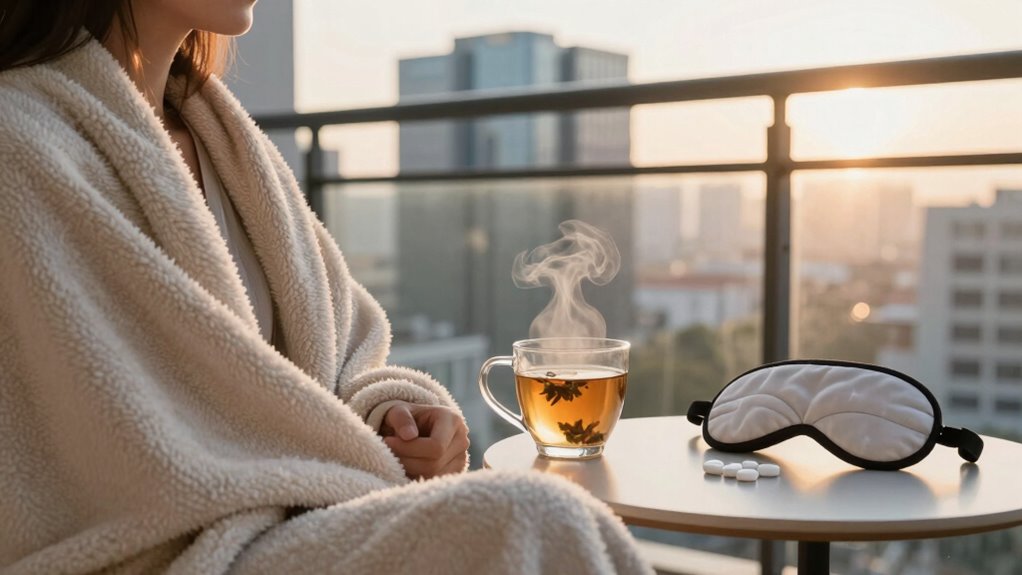
The timing of your flight can considerably influence how quickly you recover from jet lag. Your flight schedule determines whether you arrive during daylight hours or late at night, directly impacting your body’s internal clock. Traveling westward tends to cause less sleep disruption because it aligns more naturally with your usual bedtime, allowing easier adaptation. Conversely, eastward flights often disrupt your sleep cycle, making it harder to adjust. When you arrive at an inconvenient time, your body struggles to sync with the local time zone, prolonging jet lag symptoms. Planning your flight schedule to match your destination’s daytime hours can help minimize sleep disruption, making recovery faster and less uncomfortable. Being strategic about your flight timing gives you a head start on adjusting smoothly.

MyHalos® Sleep Mask for Men and Women, 3D Blackout Eye Masks for Sleep
- Complete Blackout Design: Blocks 100% light with contoured shape
- Enhanced Light Blocking: Improved 23mm nose bridge for better coverage
- Zero Eye Pressure: Deep 16mm eye cups prevent eyelid contact
As an affiliate, we earn on qualifying purchases.
As an affiliate, we earn on qualifying purchases.
What Are the Best Remedies for Night Flights?
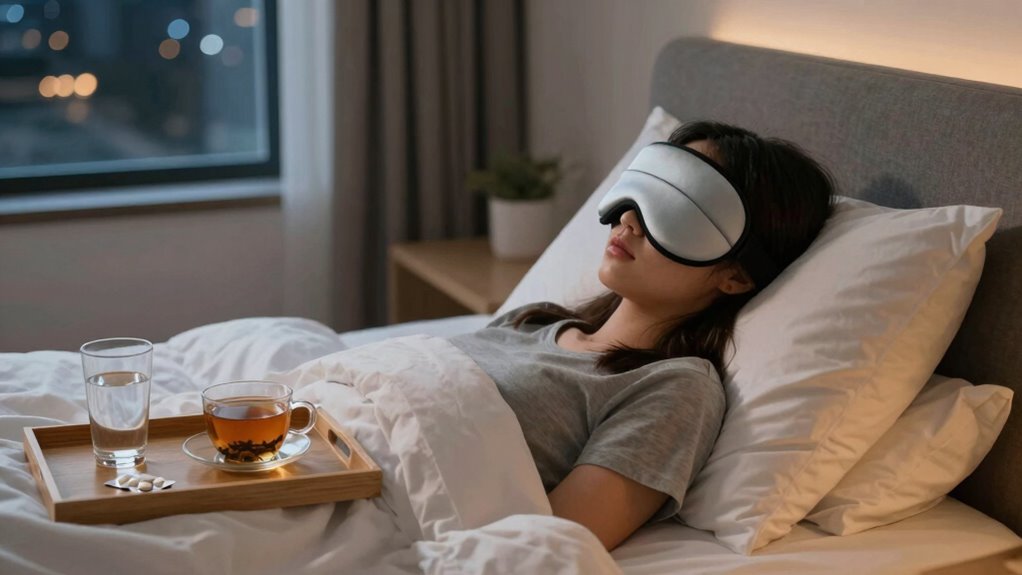
Facing a night flight can be challenging, but there are effective remedies to help you stay comfortable and rested. Using sleep aids, like melatonin or natural supplements, can help signal your body to relax and fall asleep more easily in the unfamiliar environment. It’s also essential to focus on hydration strategies—drinking plenty of water before and during the flight prevents dehydration, which worsens fatigue and discomfort. Avoid excessive caffeine or alcohol, as they can disrupt your sleep cycle and dehydrate you further. Bring a neck pillow and eye mask to create a more restful environment, and consider gentle stretching during the flight to reduce stiffness. These remedies work together to improve your comfort and make it easier to rest during night flights, especially when selecting the right sleep environment can significantly impact your rest quality. Additionally, maintaining awareness of air quality considerations can help you choose the best in-flight accessories or room conditions that promote better sleep, and keeping your personal safety in mind ensures you remain alert and secure throughout your journey. Incorporating calming essential oils for sleep, such as lavender or chamomile, can further enhance relaxation and improve your chances of restful sleep on the plane. Using water-based relaxation techniques can also help reduce anxiety and promote calmness during your flight.

SAIREIDER Travel Pillow 100% Pure Memory Foam Travel Neck Pillow, Airplane Pillow for Traveling、Car、Home、Office,Washable Cover(Black)
- All-around neck support: 360° support for neck, head, and chin
- Premium materials: 100% pure memory foam and soft fabric
- Adjustable sizes: Three sizes for a customized fit
As an affiliate, we earn on qualifying purchases.
As an affiliate, we earn on qualifying purchases.
How Can You Manage Jet Lag During Long-Haul, Multi-Time Zone Flights?
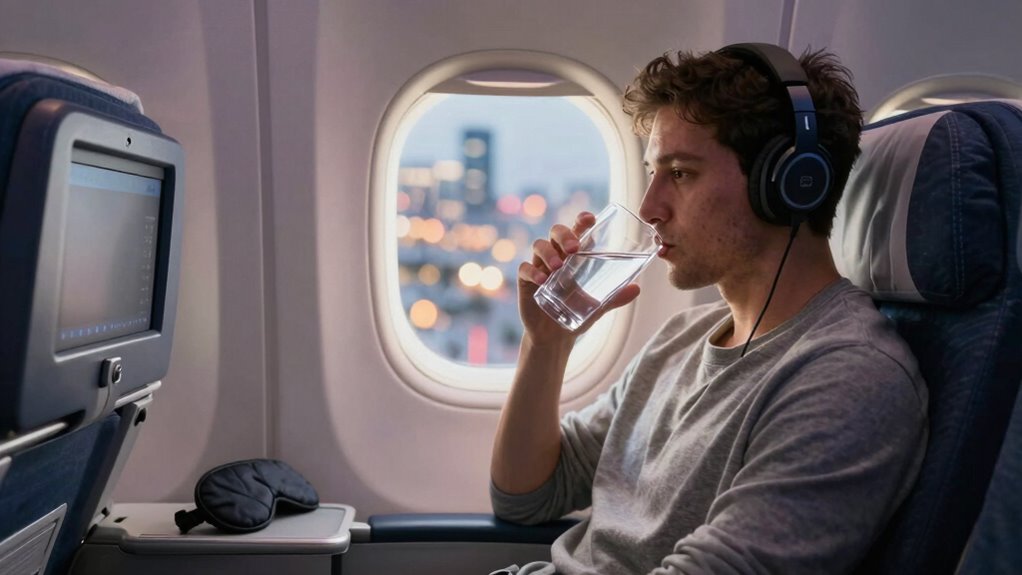
Managing jet lag during long-haul, multi-time zone flights requires strategic planning to help your body adjust more smoothly. Start with sleep strategies like using a neck pillow, eye mask, and noise-canceling headphones to create a comfortable environment. Aim to sleep during local nighttime hours at your destination to sync your internal clock. Stay hydrated by drinking plenty of water throughout the flight, avoiding alcohol and caffeine, which can dehydrate you and disrupt sleep. Consider light stretching or walking periodically to improve circulation. Adjust your watch to your destination’s time early on, so your mind begins to adapt. Prioritize hydration and sleep to reduce fatigue and jet lag symptoms, setting a solid foundation for a smoother *shift* once you arrive. Additionally, being mindful of sauna safety tips can help you recover more comfortably upon arrival, especially if you plan to use a sauna to relax and rejuvenate. Incorporating exfoliation techniques like glycolic acid may also enhance your skin’s resilience to environmental changes during travel. For example, using electric bikes with features like adjustable speeds and comfortable seating can help you explore your new environment more easily upon arrival. Staying mindful of your hydration levels throughout your journey can significantly improve your overall comfort and recovery. Remember that light exposure at appropriate times can also help reset your internal clock more effectively.

Horbäach Lavender Chamomile Fragrance Oil | 4 fl oz (118ml)
- Premium Fragrance Oils: Ideal for DIY projects and more
- Durable Amber Glass Bottle: Easy to open and store
- Versatile Aromatic Scents: Perfect for diffusers, candles, and crafts
As an affiliate, we earn on qualifying purchases.
As an affiliate, we earn on qualifying purchases.
How to Adjust Quickly After Morning or Afternoon Flights?
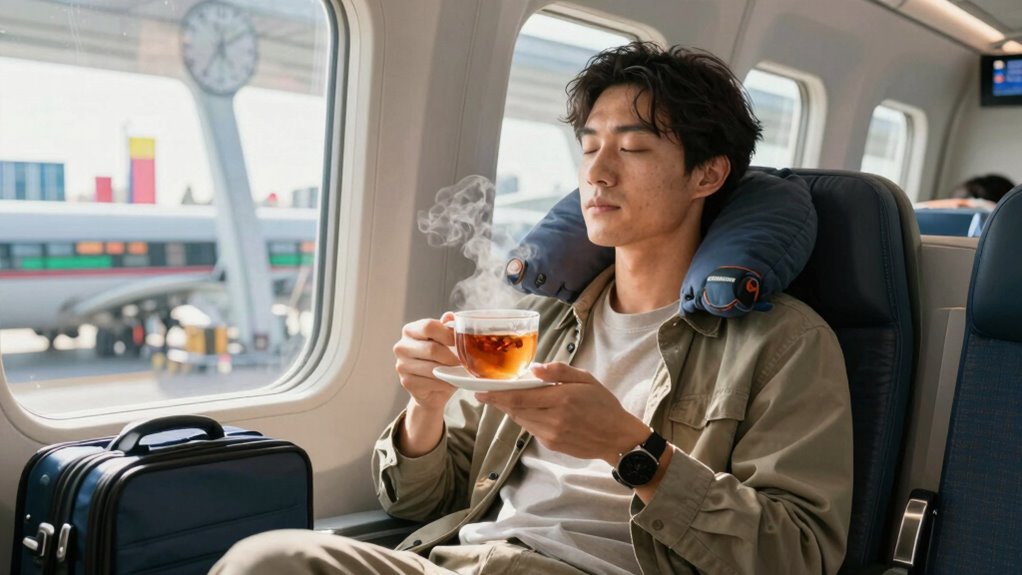
Adjusting quickly after morning or afternoon flights hinges on your ability to reset your internal clock promptly. To do this, focus on good sleep hygiene by exposing yourself to natural light upon arrival—this helps signal your body to adjust. Keep your sleep environment comfortable and avoid naps that could disrupt your nighttime rest. Caffeine strategies also play a key role; if you arrive in the morning, limit caffeine intake early in the day to prevent interference with sleep. Conversely, if you arrive in the afternoon, moderate caffeine can boost alertness without affecting your ability to fall asleep at night. Staying consistent with your sleep schedule and managing light exposure will help your body adapt faster, minimizing jet lag symptoms after morning or afternoon flights. Incorporating early socialization techniques, such as engaging your senses or familiar routines, can also aid in a smoother transition. Additionally, understanding how light exposure influences your circadian rhythm allows you to optimize your environment for quicker adjustment. Recognizing the importance of circadian rhythm alignment can further enhance your recovery process. Moreover, setting a consistent sleep schedule before and after travel can significantly improve your adjustment speed. Being mindful of your sleep environment to create a dark, quiet space also supports faster circadian realignment.
What Lifestyle Hacks Help Minimize Jet Lag Based on Your Travel Schedule?
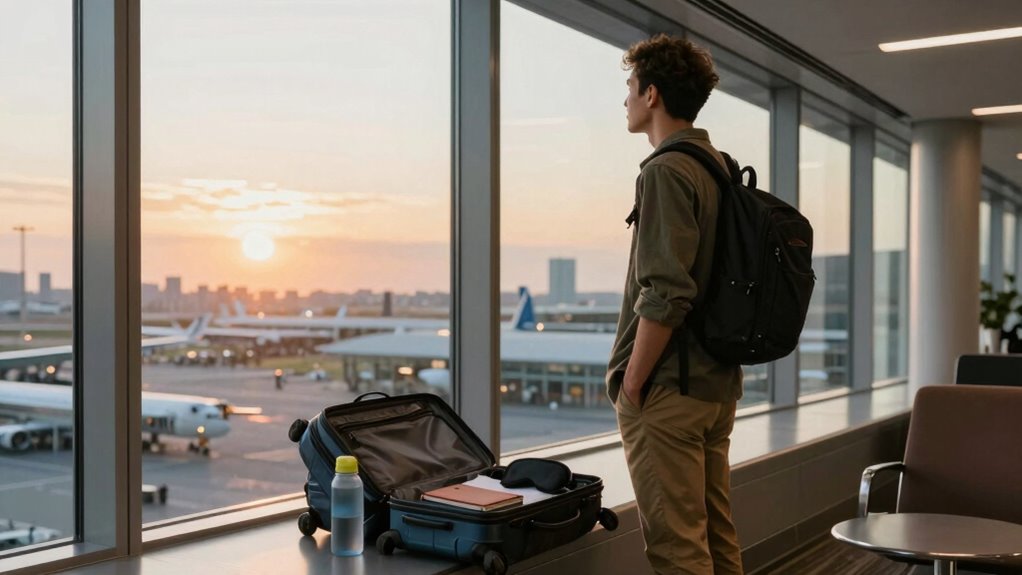
Your daily habits and travel routines can considerably influence how smoothly you recover from jet lag. Maintaining consistent sleep routines before and during your trip helps your body adapt more quickly to new time zones. Aim to go to bed and wake up at the same times, even while traveling. Hydration strategies are equally important; drinking plenty of water keeps your body hydrated and can reduce fatigue. Avoid alcohol and caffeine close to bedtime, as they disrupt sleep and dehydrate you. Additionally, staying active during travel and exposing yourself to natural light at appropriate times supports your internal clock. Incorporating sound healing techniques into your routine can help manage stress and improve sleep quality, further reducing jet lag symptoms. Establishing sleep hygiene practices such as limiting screen time before bed can significantly enhance your sleep quality. Practicing deep breathing exercises can also help relax your mind and body, making it easier to fall asleep after travel. Incorporating Hydration strategies that focus on maintaining electrolyte balance can further support your recovery process. Combining these lifestyle hacks—regular sleep routines and proper hydration—can notably minimize jet lag symptoms and help you adjust faster to your destination’s schedule.
Frequently Asked Questions
Can Adjusting Sleep Schedules Before Travel Reduce Jet Lag?
Adjusting your sleep schedule before travel can notably reduce jet lag. By implementing pre-travel routines, you help your body adapt to the new time zone early. Start shifting your sleep times gradually, going to bed and waking up closer to your destination’s schedule a few days before departure. This sleep adjustment makes the changeover smoother, helping you feel more alert and rested upon arrival.
Are There Specific Foods That Help Combat Jet Lag Symptoms?
Foods that help combat jet lag are like natural energizers. You should focus on meal timing to sync with your destination’s day, eating light and balanced meals. Incorporate foods rich in melatonin, like cherries, or try food supplements such as magnesium and vitamin B6, which support sleep and alertness. Avoid heavy, greasy foods that can cause sluggishness. Staying hydrated also helps, so drink plenty of water along with your chosen foods.
How Does Hydration Impact Recovery From Jet Lag?
Maintaining proper hydration levels is vital for recovering from jet lag because it helps regulate your body’s internal clock and reduces fatigue. Drinking plenty of water keeps your electrolyte balance in check, preventing dehydration symptoms like headaches and dizziness. When you stay well-hydrated, your body adapts more quickly to new time zones, boosting energy and alertness. Make hydration a priority during your trip for faster jet lag recovery.
Is Caffeine Effective in Managing Jet Lag During Flights?
Caffeine can provide quick stimulation during flights, helping you stay alert, but it’s not a long-term jet lag solution. Be aware that caffeine stimulation might lead to dehydration, especially if you don’t drink enough water, which can worsen jet lag symptoms. Use caffeine wisely—limit intake to avoid dehydration and avoid consuming it late in your flight to prevent disrupting your sleep schedule.
What Role Does Light Exposure Play in Resetting Your Internal Clock?
Light exposure plays a vital role in resetting your circadian rhythm, helping your internal clock adapt to new time zones. You should seek natural sunlight during the day and consider light therapy lamps if sunlight’s limited. Consistent light exposure at strategic times signals your body when to wake and sleep, aligning your circadian rhythm. By managing light exposure, you effectively reset your internal clock and reduce jet lag symptoms.
Conclusion
By understanding how your flight timing affects your body, you can choose remedies that work, adjust quickly to new time zones, and adopt lifestyle hacks that minimize jet lag. Whether you’re facing night flights or multi-time zone journeys, being proactive, staying hydrated, and syncing your schedule can make all the difference. Ultimately, managing jet lag is about aligning your habits with your travel schedule, ensuring you arrive refreshed, recharged, and ready to enjoy your destination.