

Micro-habits that compound faster than motivation focus on small, consistent actions linked to your daily routines. By attaching tiny behaviors to cues, keeping habits simple, and reinforcing progress through tracking, you create automatic momentum. These micro-actions rewire your brain quickly via neuroplasticity, making habits easier over time. As they align with your values, they become self-reinforcing, leading to faster growth. Keep exploring to discover how to turn these small steps into powerful routines.
Key Takeaways
- Micro-habits leverage repetition and neuroplasticity to rewire neural pathways, making behaviors automatic faster than relying on motivation.
- Habit stacking links new micro-habits to existing routines, accelerating their integration and compound effect.
- Environmental cues serve as automatic triggers, reinforcing habits and speeding up their development without conscious effort.
- Consistent tiny actions build momentum over time, creating exponential progress beyond motivation-driven efforts.
- Tracking and accountability reinforce micro-habits, ensuring steady growth and compound benefits independent of motivation levels.
What Are Micro-Habits and Why They Matter
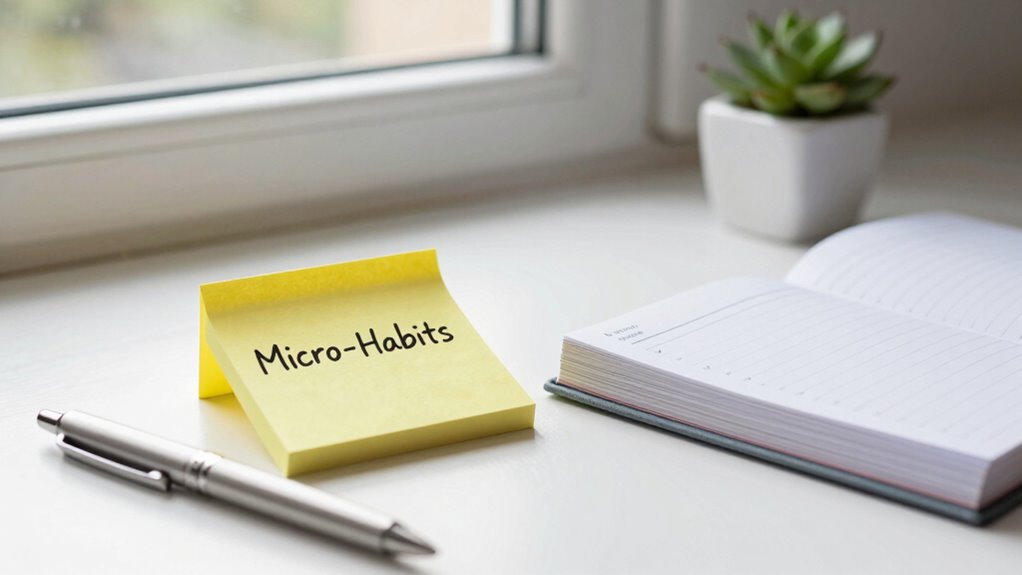
Micro-habits are small, intentional behaviors you can easily incorporate into your daily routine. They serve as building blocks for behavior change, making it simpler to develop new habits without feeling overwhelmed. Because micro-habits are so manageable, they foster consistent habit formation, which is key to long-term success. Instead of trying to overhaul your entire routine at once, you focus on tiny actions that gradually reshape your habits. These small steps reduce resistance and increase your chances of sticking with them. Over time, these micro-habits compound, creating meaningful progress without relying on motivation alone. Recognizing how micro-habits support growth mindset development can enhance their effectiveness and promote resilience. Additionally, fostering resilience through micro-habits encourages persistence during setbacks, making change more sustainable. Incorporating habit stacking can help you connect micro-habits more effectively within your routines, leveraging the power of behavior reinforcement to strengthen consistency. Incorporating consistent repetition ensures these micro-habits become ingrained and automatic over time. By understanding what micro-habits are and why they matter, you set yourself up for sustainable growth and lasting change.
How Small Actions Lead to Big Results (The Science)

Small actions add up over time, creating powerful long-term results you can’t ignore. Your brain’s plasticity makes it easier to form new habits quickly, reinforcing these tiny steps. As you consistently act, you’ll see how rapidly habits develop and accelerate your progress. Incorporating micro-habits such as daily hydration or brief stretching can significantly boost your overall well-being. Recognizing the brain’s capacity for change emphasizes how even small, consistent efforts can lead to meaningful improvements. Understanding neuroplasticity helps explain why these small actions can lead to substantial transformations. Proper battery maintenance, like monitoring charger settings and avoiding low-voltage cutoffs, demonstrates how attention to small details can extend the lifespan of your investments.
Cumulative Effects of Small Actions
Even the tiniest actions, when performed consistently over time, can produce remarkable results. Small habits accumulate, creating a ripple effect that leads to big changes. By stacking habits—linking new ones to existing routines—you reinforce progress effortlessly. Reward systems further solidify these behaviors, making it more likely you’ll stick with them. Over days and weeks, these micro-actions build momentum, transforming fleeting efforts into lasting habits. The science shows that consistency outperforms motivation because progress compounds silently but powerfully. Additionally, engaging in juice extraction techniques like blending or juicing can become simple daily routines that contribute to overall health improvements over time. Incorporating research-backed strategies enhances the likelihood of sustaining these micro-habits and amplifies their long-term benefits.
Brain Plasticity and Habits
When you consistently engage in tiny actions, your brain begins to adapt through a process called neuroplasticity. Neuroplasticity research shows that your brain rewires itself based on new experiences and repeated behaviors. This means that small habits can reshape neural pathways, making habits easier to perform over time. By applying effective habit formation strategies, you can accelerate this process and embed new routines more deeply. When you stick to micro-habits, your brain recognizes these actions as part of its normal wiring, reducing effort and increasing automaticity. This ongoing neural adaptation explains why tiny habits can lead to significant long-term changes, often faster than relying solely on motivation. Your brain’s remarkable ability to change underscores the power of starting small and staying consistent. Additionally, understanding personality assessments can help tailor habits to individual traits, improving their effectiveness. Incorporating neuroplasticity principles into your routine can further enhance the speed and durability of habit formation. Engaging in consistent, small actions also promotes long-term mental resilience, allowing you to better adapt to new challenges over time. Furthermore, actively practicing mindfulness techniques can help reinforce neural pathways associated with positive behaviors, speeding up the habit formation process. Moreover, maintaining proper piercing care and hygiene during habit formation can prevent setbacks and support sustained progress.
Velocity of Habit Formation
The speed at which habits form hinges on how quickly your brain rewires itself through repeated actions. By using habit stacking, you link new behaviors to existing routines, making it easier to integrate small changes. Environment cues also play a vital role; they serve as triggers that prompt your brain to act without conscious effort. When you set up your surroundings to cue desired habits—like placing workout clothes nearby or leaving a book on your pillow—you reinforce the behavior‘s velocity. The more consistently you pair these cues with small actions, the faster your neural pathways strengthen. This process accelerates habit formation, allowing tiny actions to compound into significant results over time, often faster than relying solely on motivation.
How to Find Micro-Habits That Fit Your Goals

To choose micro-habits that support your goals, start by identifying actions that align with your core values. Keep these habits simple and specific, so they’re easy to integrate into your daily routine. When your habits reflect what truly matters to you, you’ll stay motivated and make steady progress. Incorporating practical tools rooted in ancient wisdom can help you cultivate resilience and clarity as you develop these habits. Additionally, focusing on habit stacking can enhance consistency and reinforce positive behaviors over time. Recognizing the importance of routine checkups and health awareness can also reinforce your commitment to sustained progress. Embracing cultural insights can provide a broader perspective that supports your growth and consistency in habit formation. Leveraging top-rated vacuums of 2024 as part of a cleaning routine exemplifies how integrating effective tools can make daily tasks more manageable and rewarding.
Align With Your Values
Aligning your micro-habits with your core values makes it easier to stay motivated and consistent. When your habits reflect what truly matters to you, habit tracking becomes more meaningful, reinforcing your commitment. Value alignment helps you choose micro-habits that naturally fit into your daily life, reducing resistance and increasing adherence. For example, if you value health, small daily actions like stretching or drinking water can feel purposeful. By regularly tracking these habits, you see how they support your bigger goals and reinforce your values. This connection fuels intrinsic motivation, making it easier to maintain consistency over time. Ultimately, aligning micro-habits with your core beliefs turns routine actions into expressions of your identity, boosting long-term progress. Additionally, understanding the importance of environmental considerations, such as sustainable camping practices, can help you incorporate eco-friendly habits into your routine that align with your values of protecting nature. Incorporating environmentally conscious choices into your routine can further strengthen your commitment to sustainability and personal growth, especially when these choices resonate with your environmental values. Recognizing the role of power quality and monitoring in sustainable habits can optimize your off-grid routines and ensure your efforts are both effective and eco-friendly.
Start Small and Specific
Starting small and being specific are essential when choosing micro-habits that support your goals. Focus on habit stacking by attaching your new micro-habit to an existing routine or environmental cue. For example, if you want to read more, decide to read one sentence right after brushing your teeth. Keep your habit simple—something easily achievable in less than a minute. Use environmental cues to trigger your micro-habit, like placing a book on your pillow to remind you to read before bed. By starting small and specific, you reduce resistance and make the habit feel effortless. Over time, these tiny, targeted actions build momentum, creating a foundation for larger changes that align with your goals.
Proven Strategies to Make Micro-Habits Stick

Making micro-habits stick requires more than just wishful thinking; it involves applying proven strategies that reinforce your behavior over time. One effective approach is developing mindful routines—deliberately paying attention to your actions, which increases consistency. Incorporate habit stacking by attaching your new micro-habit to an existing routine, making it easier to remember and execute. For example, after brushing your teeth, do a quick stretch or jot down a gratitude note. This creates a reliable cue, anchoring your new habit to something familiar. Tracking your progress also boosts commitment, providing visual proof of your efforts. These strategies help your micro-habits become ingrained, turning small actions into powerful, lasting changes without relying solely on motivation.
Powerful Micro-Habits You Can Start Today

You don’t need to overhaul your entire routine to see meaningful change; small, powerful micro-habits can have an immediate impact. Start by habit stacking, linking a new habit to an existing one. For example, after brushing your teeth, do a quick stretch or breathe deeply. Use environmental cues to trigger these habits—place a book on your pillow to remind you to read before bed or set a water glass on your desk to hydrate regularly. These cues serve as reminders, making it easier to act without relying on motivation. Keep it simple and consistent. Over time, these micro-habits will become automatic, creating momentum that accelerates your progress far beyond what motivation alone can sustain. Small changes, when strategically stacked and triggered by cues, lead to lasting transformation.
Common Mistakes When Developing Micro-Habits: And How to Avoid Them

While micro-habits can accelerate your progress, many people stumble by making common mistakes that hinder their success. One major error is neglecting habit fatigue, which occurs when you push too hard without allowing enough recovery, leading to burnout and loss of motivation. To avoid this, keep habits simple and sustainable over time. Overcomplication is another pitfall—trying to add too many new habits at once or making them overly complex can make it difficult to stay consistent. Focus on one small change at a time and streamline your approach. Remember, micro-habits thrive on simplicity and consistency, not on overwhelming yourself with elaborate routines. By avoiding habit fatigue and overcomplication, you’ll set yourself up for lasting success.
Track Your Micro-Habits and Stay Motivated Without Willpower

Tracking your micro-habits is essential because it provides clear evidence of progress, which naturally boosts motivation without relying on sheer willpower. When you log your habits, you can see how small actions add up over time. To stay consistent, consider these strategies:
- Use habit stacking to pair new micro-habits with existing routines, making them easier to track.
- Share your progress with accountability partners who can encourage you and keep you honest.
- Regularly review your tracking data to celebrate milestones, reinforcing your commitment.
How Micro-Habits Accelerate Growth Faster Than Motivation

Micro-habits don’t just keep you consistent—they can accelerate your growth at a pace that motivation alone can’t match. By making small, intentional changes daily, you create powerful mindset shifts that reinforce your progress. These tiny behaviors build momentum, turning effort into automatic actions that compound over time. Having accountability partners amplifies this effect, providing external motivation and honest feedback. They keep you committed during dips in motivation and help you stay focused on your long-term goals. Unlike relying solely on motivation, micro-habits create a sustainable engine for growth. This approach ensures continuous development, regardless of fluctuating motivation levels, making your progress unstoppable. Small steps, consistent effort, and accountability accelerate your journey far faster than motivation alone ever could.
Frequently Asked Questions
How Long Does It Typically Take for Micro-Habits to Produce Noticeable Results?
You can usually see noticeable results from habit formation within 21 to 30 days, but it varies depending on the micro-habit and your consistency. Small, daily actions compound quickly, so sticking to your micro-habit even when motivation wanes speeds up progress. Over time, these tiny changes become part of your routine, leading to significant improvements faster than you might expect, especially with steady effort and patience.
Can Micro-Habits Replace Traditional Goal-Setting Methods Effectively?
Micro-habits can effectively replace traditional goal-setting methods when you focus on habit formation. Instead of setting distant, large goals, you develop small, consistent actions that gradually shift your behavior. Over time, these micro-habits build momentum and produce lasting change. By integrating them into your daily routine, you replace the need for constant goal adjustments, making progress feel natural and sustainable, ultimately leading to more consistent success.
What Psychological Factors Influence the Success of Micro-Habits?
You’re on the right track; your mindset plays a vital role in habit formation. Self-efficacy boosts your confidence, making it easier to stick with micro-habits even when motivation wanes. When you believe in your ability, habits become ingrained faster. Factors like consistency, small wins, and your environment influence success. Remember, success is 10% inspiration and 90% perspiration, so stay persistent and trust the process.
How Do Micro-Habits Differ Across Various Personal Development Areas?
You’ll find that micro-habits vary across personal development areas due to habit diversity and contextual adaptation. In health, you might focus on short workouts, while in learning, quick review sessions work best. These habits adapt to your environment and goals, making them easier to sustain. By customizing micro-habits to fit different areas, you create seamless progress, leveraging small actions that quickly compound into meaningful growth.
Are There Any Common Pitfalls When Scaling Micro-Habits Into Larger Routines?
You’ll face consistency challenges that feel like climbing an endless mountain when scaling micro-habits into routines. Beware of habit stacking too aggressively; it’s easy to overload your day and lose focus. Small errors compound rapidly, causing setbacks. To avoid this, keep your routines simple, integrate habits gradually, and stay patient. If you push too hard too fast, you risk burnout and losing momentum, sabotaging your progress.
Conclusion
By focusing on micro-habits, you build consistency, create momentum, and release growth. Small actions become powerful catalysts, transforming your goals into realities. Embrace the process, refine your routines, and track your progress. Because when you commit to tiny steps daily, you harness the true power of steady progress. Micro-habits accelerate your journey, sustain your motivation, and turn potential into achievement—faster than relying on motivation alone. Start small, stay consistent, and watch success compound.