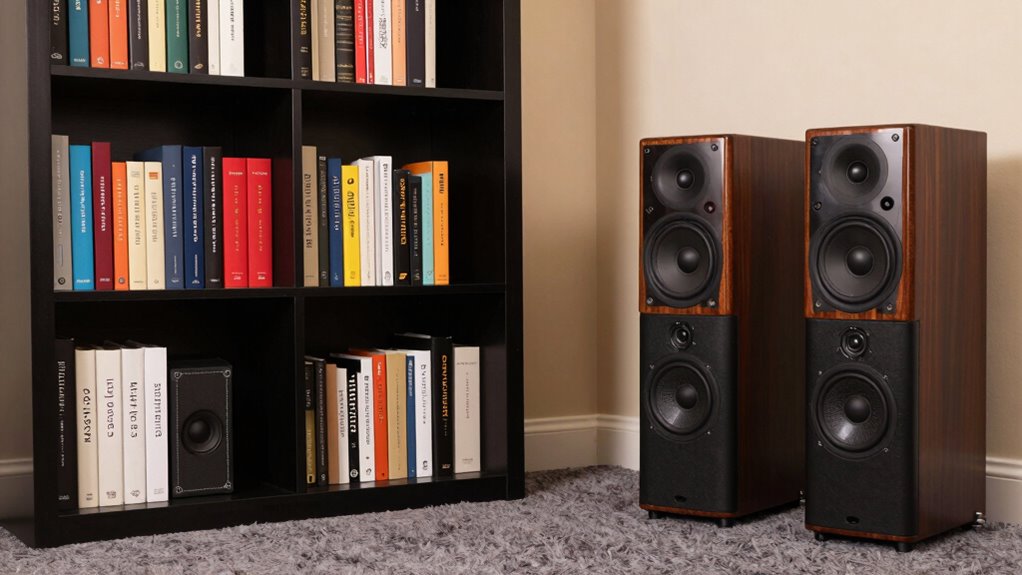

In small rooms, bookshelf speakers are often the better choice because they are compact, easier to position, and minimize clutter. They deliver clear highs and mids, while floorstanding speakers tend to produce deeper bass but can overwhelm limited space and cause muddiness. Proper placement and acoustics matter greatly, so considering your room size, budget, and sound preferences can help. Keep exploring to discover the best strategies for optimizing your small-room sound setup.
Key Takeaways
- Bookshelf speakers are more space-efficient and easier to position, ideal for small rooms with limited space.
- Floorstanding speakers deliver deeper bass but can cause muddiness in small, acoustically reflective environments.
- Bookshelves provide clearer sound with less reflection, enhancing overall sound clarity in confined spaces.
- Proper placement and acoustic treatments are crucial for maximizing sound quality regardless of speaker type.
- Budget and aesthetic preferences often favor bookshelves for small rooms due to their compact size and versatility.
How Do Small Room Acoustics Affect Speaker Choice?
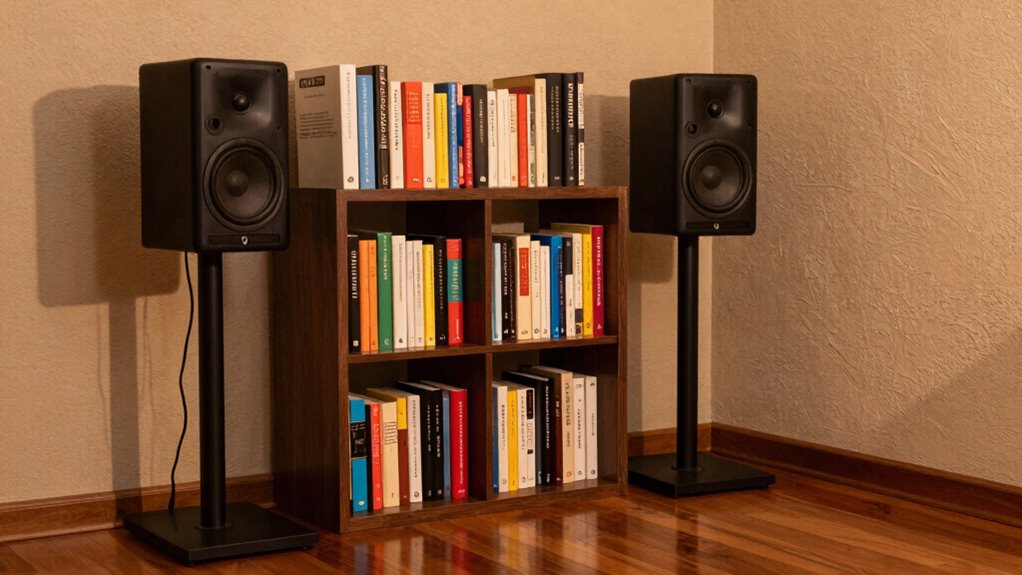
Small room acoustics can considerably influence your speaker choice because they often cause sound reflections and muddiness. High room reverberation leads to echo effects that blur sound clarity, making it harder to enjoy precise audio. In such spaces, you’ll want speakers with a flatter and more controlled speaker frequency response, which helps minimize exaggerated bass or treble that can become overwhelming. Smaller rooms tend to amplify certain frequencies, so choosing speakers that handle room acoustics well ensures a balanced sound. Moreover, speaker placement plays a crucial role in optimizing sound quality in small environments. To further improve sound clarity, consider incorporating acoustic treatments that absorb or diffuse reflected sound waves. Additionally, proper speaker positioning can significantly reduce unwanted reflections and improve overall sound fidelity. By understanding how room reverberation impacts sound, you can select speakers that deliver clearer, more accurate audio even in confined spaces. Room acoustic considerations are essential for optimizing sound quality in small environments.
What Are the Main Differences in Sound Quality Between Bookshelf and Floorstanding Speakers?

Have you ever wondered how bookshelf and floorstanding speakers differ in sound quality? The main difference lies in bass response and sound clarity. Floorstanding speakers typically produce deeper, more powerful bass due to their larger size and multiple drivers, filling a room with richer sound. In contrast, bookshelf speakers often have limited bass, which can make the sound seem less full. However, they usually excel in sound clarity, offering crisp, detailed highs and mids that make vocals and instruments stand out. Floorstanders can sometimes be overwhelming in small rooms, causing bass muddiness, while bookshelves provide cleaner sound without overpowering the space. Your choice depends on whether you prioritize deep bass or precise sound clarity. Additionally, room size and acoustics play a significant role in determining which type of speaker will perform best in your environment.
Which Size Speakers Work Best in Small Rooms?
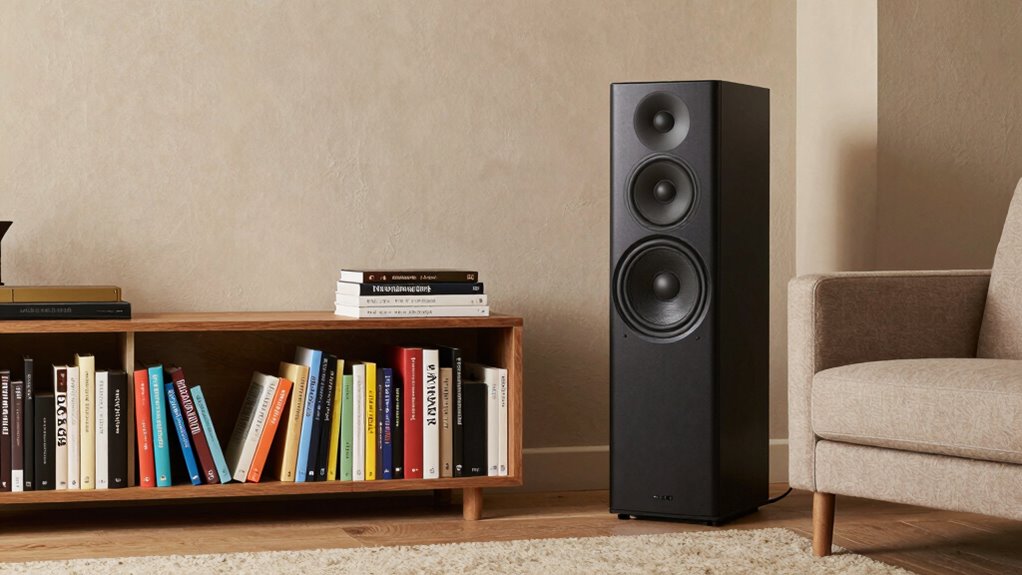
In small rooms, choosing the right speaker size is vital for ideal sound. You need to think about space efficiency, how sound disperses, and whether the speakers can handle your listening volume. Let’s explore which options fit best and how these factors influence your setup. Considering air quality benefits and energy-saving tips can also help optimize your overall home environment alongside your audio choices. Additionally, understanding the contrast ratio can assist in selecting speakers that deliver clearer and more vibrant sound, especially in varied lighting conditions. When selecting speakers, it’s also important to evaluate sound dispersion to ensure even coverage throughout your space. Recognizing the importance of acoustic treatment can further enhance sound quality by minimizing unwanted reflections and echoes in small rooms. Moreover, assessing speaker placement is crucial to achieving balanced acoustics and avoiding sound muddiness.
Space Efficiency Considerations
When space is limited, choosing the right speaker size becomes essential to maintaining both functionality and comfort. Wall mounting can be a game-changer, freeing up valuable floor space and allowing you to position your speakers at ideal angles. Bookshelf speakers are often easier to wall mount, helping you maximize room efficiency. Additionally, consider cable management; neatly organizing wires reduces clutter and prevents tripping hazards, especially in tight spaces. Floorstanding speakers tend to require more room for placement and may need special stands or furniture, which can encroach on your available space. Opting for compact, wall-mounted options makes your room feel less crowded and more organized, improving overall usability without sacrificing sound quality.
Sound Dispersion Patterns
Are your small room’s acoustics and speaker placement strategies affecting sound quality? Sound dispersion plays a key role here. Smaller speakers, like bookshelves, typically produce a more focused sound, leading to less unwanted acoustic reflections and clearer audio. Floorstanding speakers, with larger drivers and wider dispersion patterns, can fill a room more effectively but may cause more acoustic reflections that muddy the sound. In tight spaces, precise sound dispersion helps minimize echo and reverberation, ensuring your music sounds natural. The goal is to choose speakers with dispersion patterns suited to small rooms, where controlling sound reflections is essential. By understanding how speakers disperse sound, you can optimize placement and improve overall clarity, making your listening experience more enjoyable. Additionally, choosing speakers with suitable sound dispersion patterns can help prevent safety issues like acoustic overload or distortion in confined spaces. Proper awareness of Sound dispersion also assists in avoiding excessive sound levels that could lead to hearing damage or discomfort in small environments.
Power Handling Capabilities
Choosing the right speaker size for a small room depends heavily on their power handling capabilities. If your amplifier isn’t powerful enough, large floorstanding speakers might struggle to produce clear sound without distortion, risking damage over time. Conversely, bookshelf speakers typically have lower power handling, making them more compatible with smaller amps. Making certain amplifier compatibility is vital to prevent overdriving your speakers, which can compromise speaker durability. Small rooms don’t require high wattage, so selecting speakers with appropriate power ratings helps maintain sound quality and longevity. Overestimating power handling can lead to unnecessary expense, while underestimating risks damaging your speakers. Additionally, understanding the power handling capabilities of your speakers ensures you select the right match for your amplifier, optimizing performance and preventing potential damage. Proper matching also helps avoid distortion and overload, which can harm both the speakers and the amplifier. Being aware of speaker specifications can further assist in making an informed choice. For example, considering the speaker impedance ensures compatibility with your amplifier’s output. Ultimately, matching your amplifier’s output with your chosen speakers ensures peak performance and durability in a compact space.
How Should I Position Speakers in a Small Space for Optimal Sound?
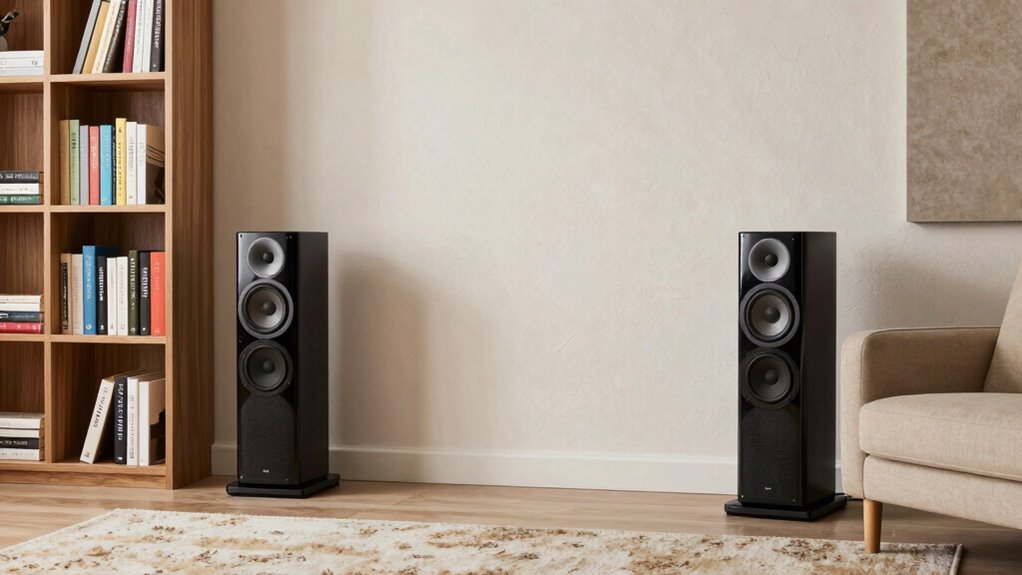
To get the best sound in a small space, start by placing your speakers at ear level and equidistant from your listening spot. Adjust your room‘s acoustics with rugs, curtains, or panels to reduce echoes and improve clarity. Experiment with your listening position and speaker angles to find the setup that delivers the clearest, most balanced sound.
Optimal Speaker Placement Tips
In a small space, proper speaker placement can make a significant difference in sound quality. To optimize your setup, start by positioning your speakers at ear level, adjusting their height to match your listening position for clearer sound. Keep them roughly 6 to 12 inches away from walls to reduce bass booms and reflections. Since room size is limited, avoid placing speakers directly against corners, which can cause muddiness. Instead, bring them slightly inward and angle them toward your listening spot. Use a symmetrical setup to balance sound, and experiment with slight adjustments to find the sweet spot. Remember, small shifts in placement can greatly improve clarity and stereo imaging without overcrowding your space. Proper speaker placement is essential to achieving optimal sound performance in confined areas. Additionally, employing acoustic treatments such as panels or diffusers can further enhance sound quality by minimizing unwanted reflections.
Room Acoustics Adjustment
Ever wonder how room acoustics impact your speaker setup in a small space? Proper room treatment can make a huge difference in sound clarity. To optimize your setup, consider adding acoustic panels to absorb reflections and reduce echo. Position your speakers away from walls to avoid bass buildup and reflections. Use furniture and rugs to help diffuse sound waves naturally. Keep the listening area free of large objects that can interfere with sound flow. Remember, small adjustments in placement and room treatment can considerably improve audio quality. Here are some tips to get started:
- Install acoustic panels on walls behind and beside speakers
- Keep speakers at ear level when seated
- Avoid placing speakers directly against walls
- Use soft furnishings to absorb excess sound
- Experiment with speaker angles for the best sound dispersion
Listening Position Strategies
Positioning your speakers correctly is essential for achieving balanced and clear sound in a small space. Your listening position should be directly in line with the speakers, forming an equilateral triangle for ideal speaker alignment. Sit about 1 to 2 meters away, ensuring you’re centered between the two speakers. Avoid placing your listening position too close to walls or corners, which can cause unwanted bass boost or reflections. Angle the speakers slightly inward, so they face your ears directly, creating an immersive stereo image. Adjust the height so the tweeters are roughly at ear level when seated. Proper speaker alignment and a well-considered listening position will help you enjoy clearer sound and better stereo imaging in confined spaces.
What Budget Should I Consider for Small Room Speakers?
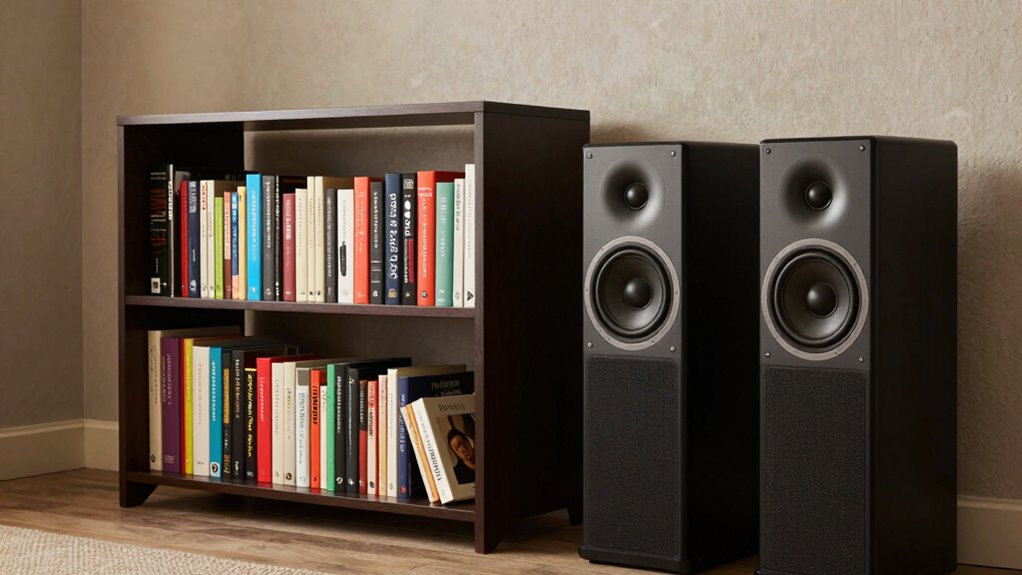
Choosing the right budget for small room speakers depends on what you want to achieve and how much you’re willing to invest. Your budget considerations will influence the quality, features, and size of your speakers, impacting overall sound experience. To keep speaker affordability manageable, consider these points:
- Set a clear spending limit based on your finances
- Prioritize essential features over extras
- Explore reputable brands within your price range
- Consider used or refurbished speakers for better value
- Balance upfront cost with long-term durability and performance
Are Bookshelf or Floorstanding Speakers Easier to Install in Small Rooms?
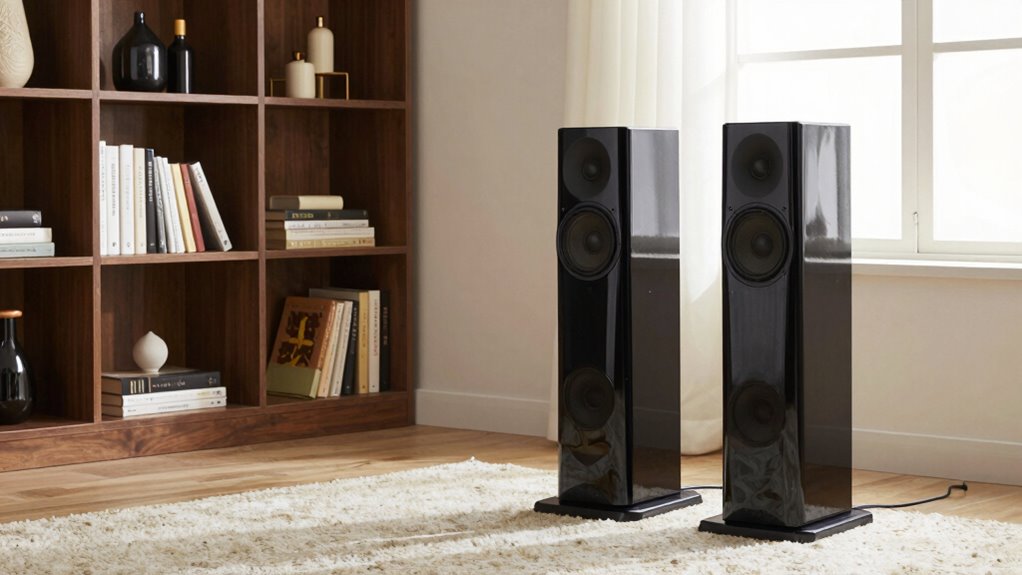
In small rooms, bookshelf speakers are typically easier to install because their compact size allows for flexible placement options without cluttering the space. You can easily position them on shelves, stands, or mounted on walls, offering multiple mounting options that suit your room’s layout. This flexibility simplifies the installation process and minimizes the need for extensive furniture rearrangement. Aesthetic considerations also favor bookshelf speakers, as they can blend seamlessly into your decor, reducing visual clutter. Floorstanding speakers, on the other hand, often require more space and may need dedicated stands or furniture to support them properly. Overall, bookshelf speakers provide a straightforward, less invasive setup, making them the more convenient choice for small rooms.
Which Type of Speaker Offers Better Value for Small Room Setups?
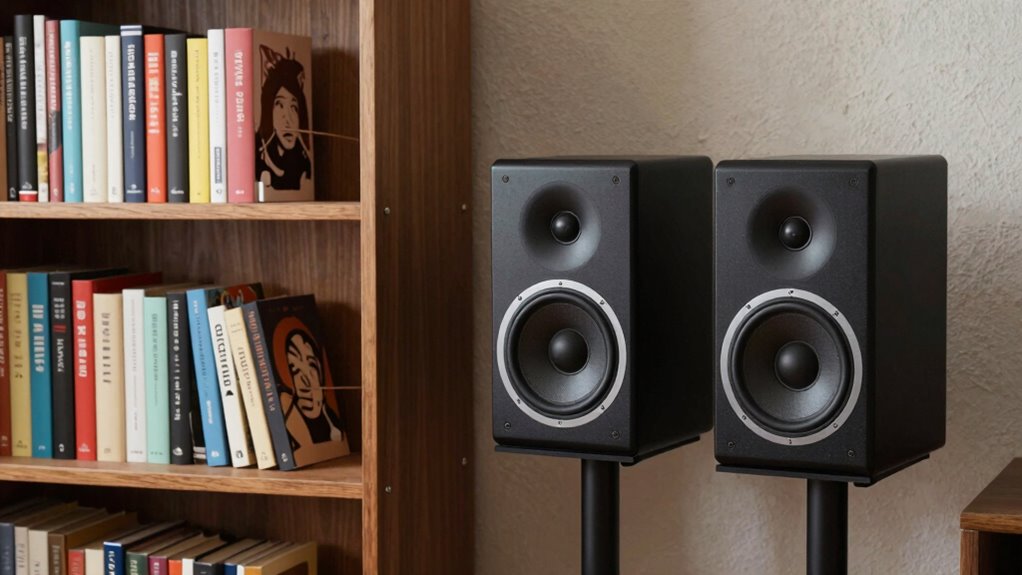
When evaluating which speakers provide the best value for small room setups, it’s important to think about both initial costs and long-term benefits. Budget considerations play a key role, as bookshelf speakers usually cost less upfront and are more affordable to upgrade or replace. Aesthetic preferences also matter; compact bookshelves blend easily into most decor, while floorstanding speakers tend to be larger and more imposing. To help you decide, consider these points:
- Bookshelf speakers often cost less initially
- Floorstanding speakers may offer better sound for larger budgets
- Bookshelves save space and complement modern decor
- Floorstanders provide fuller sound, reducing the need for additional equipment
- Your aesthetic preferences influence the overall feel of your room
- Additionally, some multi-unit speaker setups can enhance sound coverage in small spaces, providing a more immersive experience without compromising space.
Choosing the right option depends on your budget and style priorities.
Tips to Maximize Sound Quality in Small Rooms
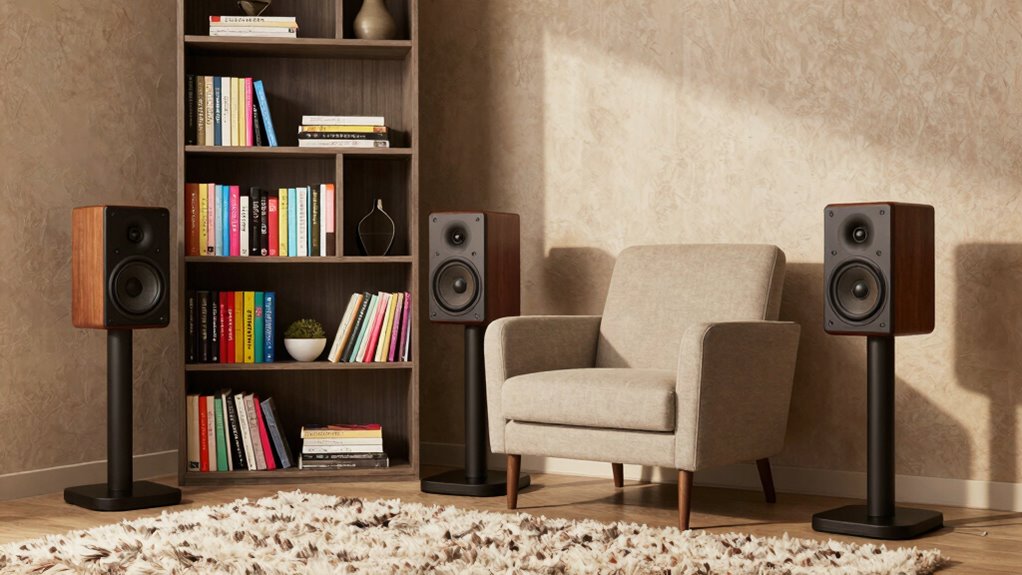
Maximizing sound quality in small rooms requires strategic placement and careful adjustments. First, consider your room size—smaller spaces benefit from positioning speakers away from walls and corners to reduce unwanted reflections and bass boost. Speaker dimensions matter too; opt for compact bookshelf speakers if space is tight, as they fit better and minimize visual clutter. Place speakers at ear level, forming an equilateral triangle with your listening position for balanced sound. Use rugs, curtains, or acoustic panels to absorb excess sound reflections and improve clarity. Adjust speaker angles slightly inward to focus sound toward your listening spot. Keep equipment minimal and avoid overcrowding the room, which can cause sound muddiness. These tips help you get the most out of your small space’s acoustics.
Common Mistakes to Avoid When Choosing Speakers for Small Spaces
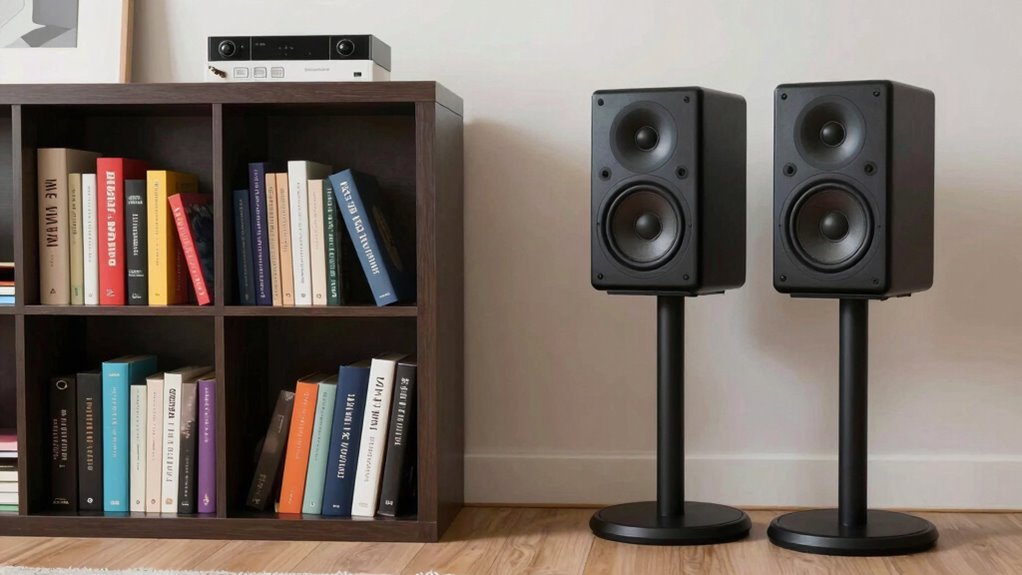
Choosing the right speakers for small spaces often leads to common pitfalls that can compromise your listening experience. One mistake is ignoring room size, which affects how sound travels; oversized speakers can overwhelm a small room, causing distortion. Another error is neglecting speaker weight—heavy models might be difficult to reposition or place correctly. You should also avoid choosing speakers without considering placement, which impacts sound quality. Overlooking the importance of matching speaker type to your space can lead to poor acoustics. Ultimately, don’t ignore your budget—expensive doesn’t always mean better for small rooms.
To prevent these mistakes, keep in mind:
- Match speaker size to room dimensions
- Consider speaker weight for placement ease
- Prioritize sound quality over brand names
- Test for proper placement before buying
- Avoid oversized speakers for small spaces
Frequently Asked Questions
Can Bookshelf Speakers Handle High-Volume Listening in Small Rooms?
Yes, bookshelf speakers can handle high-volume listening in small rooms, but their volume capacity and speaker durability matter. You should choose models designed for higher power handling to prevent distortion or damage. Keep in mind, pushing them too hard may reduce their lifespan. For ideal sound at high volumes, select bookshelf speakers with robust construction and good power ratings, ensuring they match your listening needs without compromising durability.
How Important Is Speaker Material for Small Room Acoustics?
Speaker material is vital for small room acoustics, as it directly impacts sound clarity and resonance. Did you know that some materials can reduce unwanted vibrations by up to 50%? Choosing the right speaker material with ideal acoustic properties helps minimize echo and muddiness, making your listening experience clearer. In small spaces, your speaker’s material greatly influences sound quality, so opt for those with strong acoustic properties to optimize your setup.
Do Floorstanding Speakers Require More Maintenance Than Bookshelves?
Floorstanding speakers generally require more maintenance than bookshelves because of their larger size and complex components. You’ll need to pay attention to speaker placement to avoid dust buildup and guarantee ideal sound, which can be more challenging. Maintenance costs tend to be higher due to possible repairs or upgrades. With proper care, though, both types can stay in good shape, but floorstanders typically demand more ongoing upkeep.
Are Wireless Speakers Suitable for Small Room Setups?
Wireless speakers are a great choice for small room setups thanks to their wireless connectivity and portable design. You can easily place them anywhere without cluttering your space with cables. They’re simple to set up and move around, making them perfect for small rooms where space is limited. Plus, their wireless features allow you to stream music seamlessly from your devices, enhancing your listening experience without sacrificing space.
How Do Aesthetic Factors Influence Speaker Choice in Small Spaces?
Aesthetic factors greatly influence your speaker choice in small spaces, as studies show decor aesthetic impacts 68% of purchasing decisions. You want speakers that blend seamlessly with your decor aesthetic and enhance your room’s visual appeal. Opt for compact, stylish designs that complement your furniture and color scheme. When your speakers look good, they become part of your room’s design, making your space feel more cohesive and inviting.
Conclusion
So, whether you choose bookshelf or floorstanding speakers, remember that size isn’t everything—unless you’re trying to impress your friends with your massive, unobstructed sound system. Ultimately, it’s about making the most of your tiny space without turning it into a concert hall. After all, who needs room for furniture when you can have the perfect balance of good sound and good sense? Happy listening, tiny room conquerors!