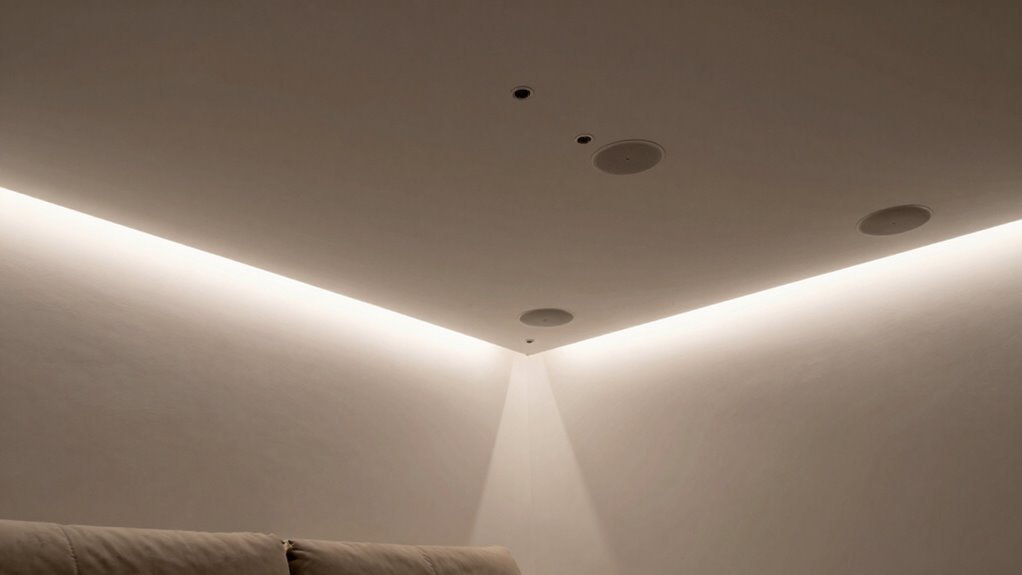

Dolby Atmos creates immersive sound by adding a vertical dimension, using ceiling speakers or upfiring modules that bounce sound off the ceiling to simulate overhead effects. Ceiling speakers provide more accurate overhead sound, but upfiring speakers are easier to install. Proper setup, calibration, and room acoustics are key to achieving true 3D audio. If you want to know which method really works and how to get the best experience, keep exploring.
Key Takeaways
- Ceiling speakers provide direct overhead sound for more accurate Atmos effects than upfiring modules.
- Upfiring speakers reflect sound off the ceiling to simulate overhead audio, offering easier setup.
- Proper calibration and placement are crucial for both ceiling and upfiring systems to achieve immersive Atmos sound.
- Content compatibility varies; not all movies or streaming services support Dolby Atmos.
- Ceiling speakers generally deliver more precise overhead effects, but upfiring can still enhance immersion with correct setup.
What Is Dolby Atmos and How Does It Improve Your Home Sound?
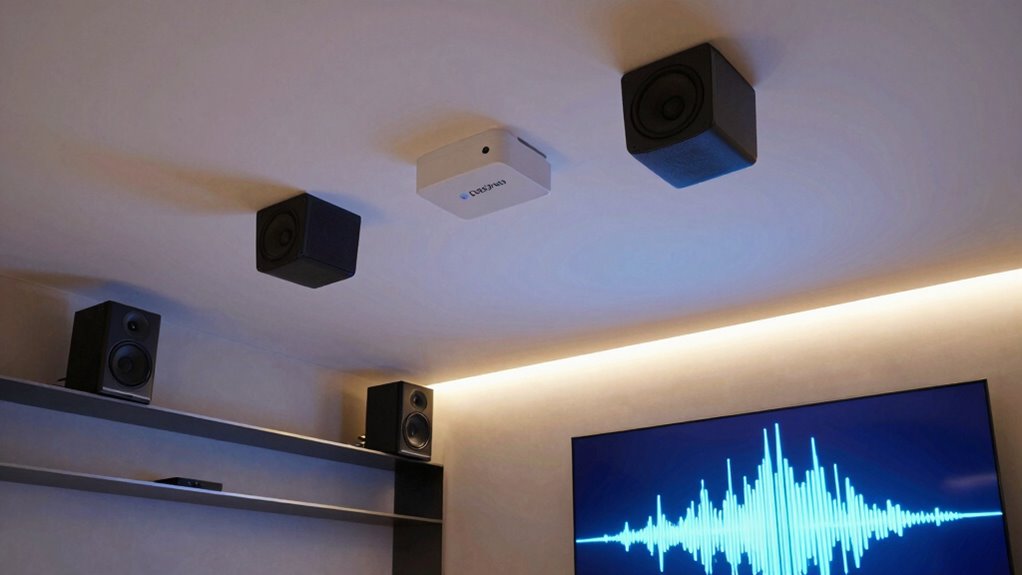
Dolby Atmos transforms your home sound system by adding a new dimension of audio, making it more immersive and realistic. It achieves this through advanced sound calibration, which guarantees your speakers work together seamlessly. Proper speaker calibration is essential to optimize how sound moves around your space, creating a three-dimensional audio experience. Dolby Atmos doesn’t just rely on traditional stereo or surround sound; it introduces overhead sound elements for height, heightening realism. When setting up, you’ll need to fine-tune your sound calibration to ensure each speaker, including ceiling or upfiring units, delivers accurate, balanced sound. This calibration process enhances clarity and depth, so you feel fully immersed in movies, music, or games. Additionally, understanding the importance of speaker placement can significantly improve your overall sound quality. Optimizing sound calibration through precise adjustments ensures the full benefits of Dolby Atmos are realized, elevating your listening experience to a more lifelike level. Proper calibration also helps prevent audio distortion, ensuring a clean and precise sound environment. Taking the time to learn about advanced sound calibration techniques can further enhance your system’s performance and immersion. Moreover, paying attention to cabling and connections ensures your setup maintains optimal audio quality without signal loss or interference.
How Does Dolby Atmos Create Overhead Sound? (Ceiling vs. Upfiring)
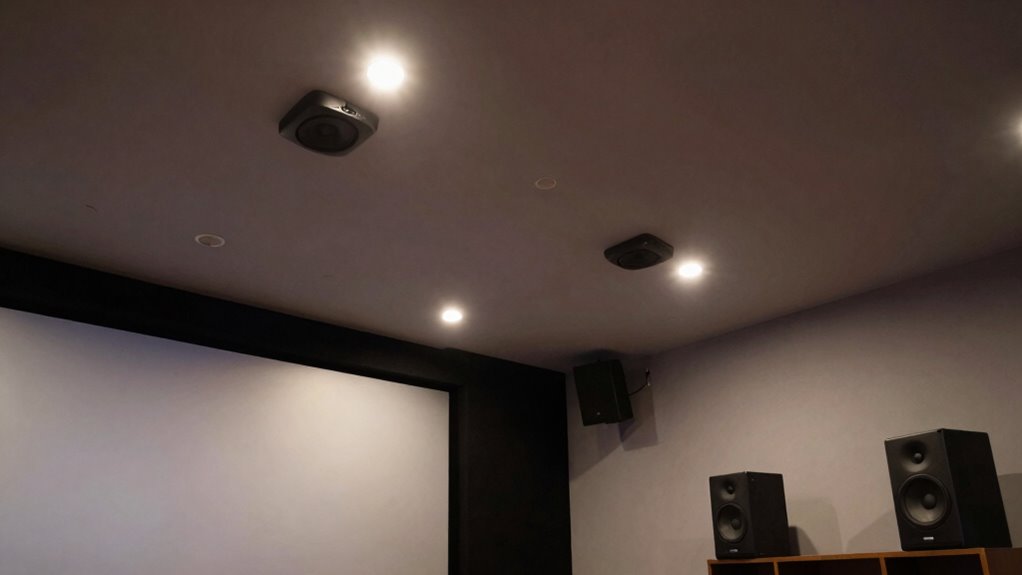
To achieve the immersive overhead sound in Dolby Atmos, the system needs to introduce sound from above your listening position. Ceiling speakers directly bounce sound downward, creating precise overhead effects that enhance the soundstage. Upfiring speakers, on the other hand, reflect sound off the ceiling, mimicking overhead audio without requiring installation. Proper speaker calibration guarantees each method works seamlessly, optimizing sound placement and clarity. The table below breaks down the differences:
| Method | Sound Path | Pros | Cons | Best Use Case |
|---|---|---|---|---|
| Ceiling Speakers | Directly emit sound from above | Precise overhead sound | Installation required | Dedicated home theaters |
| Upfiring | Reflect sound off ceiling | Easy setup, flexible | Less precise, ceiling height impacts | Room flexibility, existing setups |
Both methods aim for soundstage enhancement, but ceiling speakers usually deliver more accurate overhead effects. Understanding the different sound paths helps optimize your Dolby Atmos setup for the best listening experience. Additionally, advancements in speaker calibration techniques can further improve the accuracy and immersion of either method. Incorporating room acoustics considerations can also significantly enhance overall sound quality and overhead effects.
Why Are Ceiling Speakers Important for True 3D Audio?
Why Are Ceiling Speakers Important for True 3D Audio?
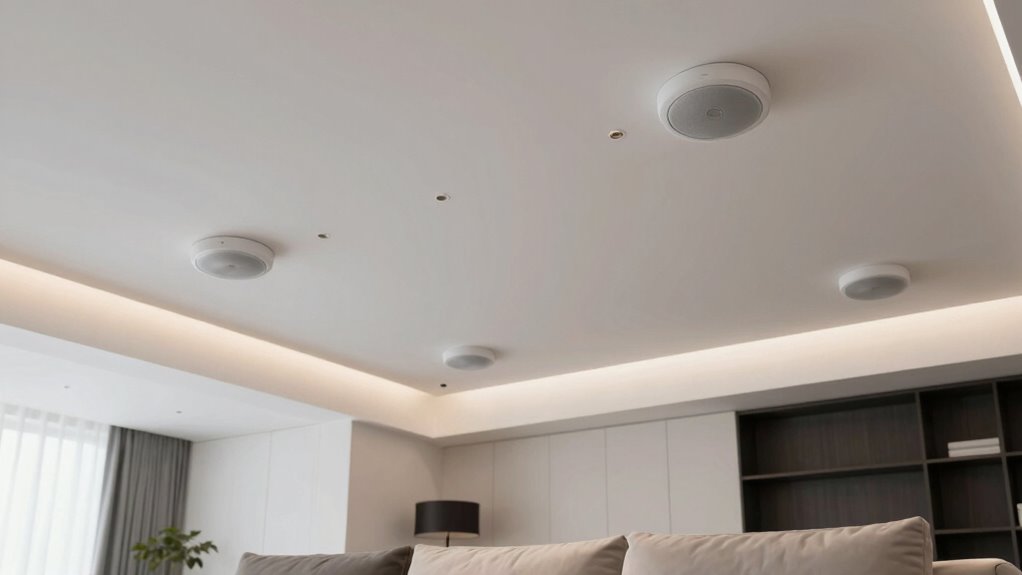
Have you ever wondered why ceiling speakers are essential for achieving true 3D audio? The key lies in proper ceiling speaker placement, which allows sound to come from overhead, creating a more immersive sound perception. Unlike traditional speakers, ceiling speakers are positioned to deliver direct overhead sound, filling the room from above. This setup helps you experience audio that surrounds you naturally, enhancing clarity and spatial accuracy. When ceiling speakers are correctly placed, they integrate seamlessly with your existing setup, providing a consistent and realistic sense of depth. Proper speaker placement is vital for achieving the best soundstage and ensuring the overhead effects aren’t disjointed or imprecise. Additionally, understanding the importance of sound dispersion can make a significant difference in how well the 3D effect is achieved. Using upfiring speakers can further enhance the sense of height in your audio environment, making the experience even more immersive. By optimizing speaker angles and positioning, you can maximize the effectiveness of ceiling speakers and elevate your listening experience. Ultimately, ceiling speakers are crucial for recreating the full sense of height and dimension that true 3D audio offers.
How Do Upfiring Speakers Simulate Overhead Sound? Are They Effective?
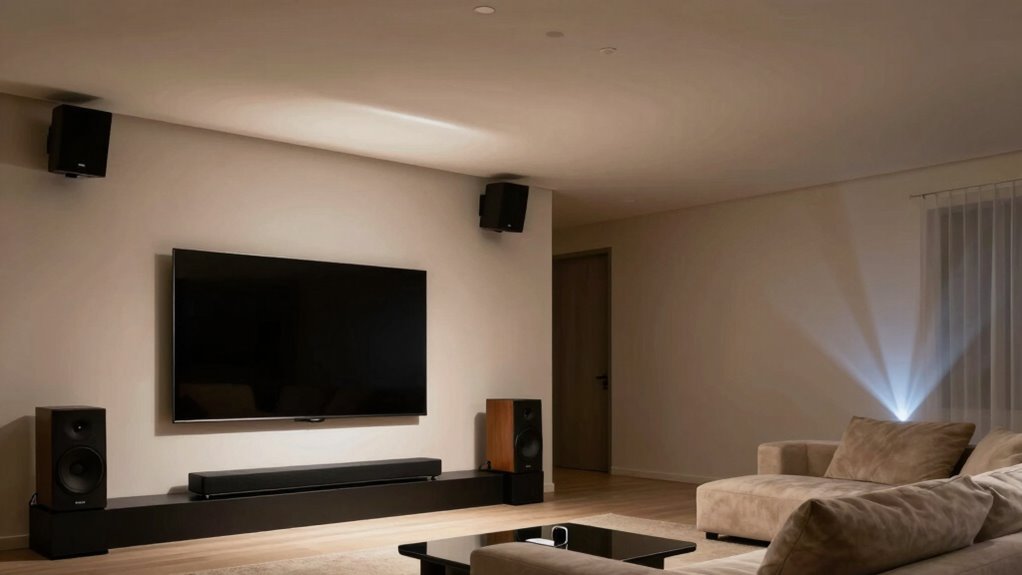
Ever wondered how upfiring speakers create the sensation of overhead sound without actual ceiling speakers? They bounce sound off the ceiling, simulating overhead effects, which works best when the ceiling installation is suitable. Proper speaker calibration ensures the reflected sound aligns with front channels, enhancing immersion. However, their effectiveness varies based on room shape and ceiling height. Some users find upfiring speakers convincing, but others notice a less precise overhead effect compared to true ceiling speakers. To understand their role better, consider this table:
| Aspect | Effectiveness |
|---|---|
| Ceiling Reflection | Creates overhead illusion via bouncing sound |
| Room Conditions | High ceilings may reduce效果 |
| Calibration Needs | Precise calibration improves experience |
| Overall Realism | Generally effective but less immersive than ceiling installation |
While upfiring speakers offer a convenient solution, they aren’t a perfect substitute for true overhead speakers.
How to Set Up a Dolby Atmos System: Components and Placement Tips
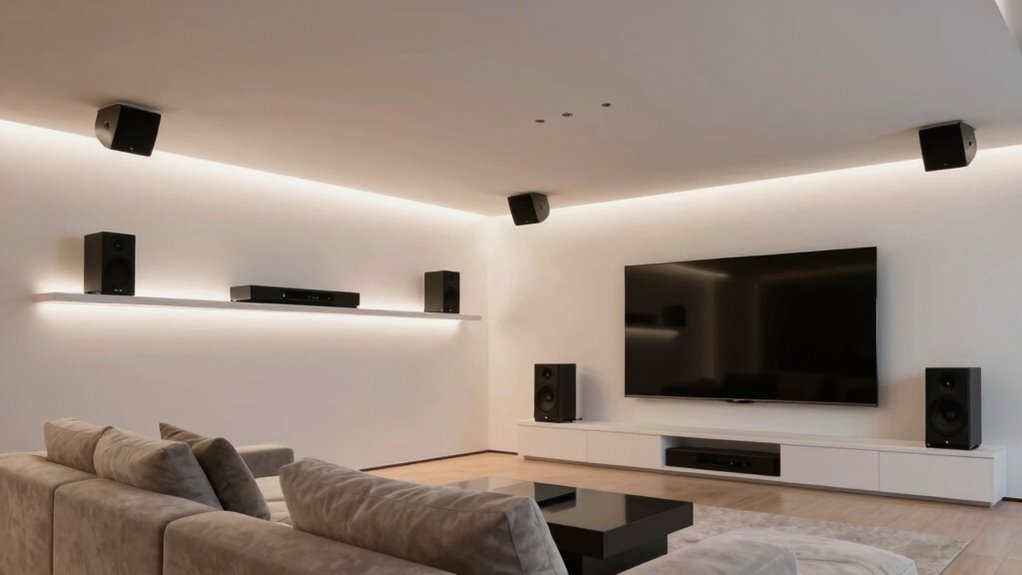
Setting up your Dolby Atmos system starts with knowing where to place your speakers for peak sound. You’ll want to check off the essential equipment and arrange your speakers according to best practices. This guarantees you get the immersive experience Dolby Atmos promises.
Speaker Placement Strategies
Proper speaker placement is essential for experiencing the full immersive effect of Dolby Atmos. You want to contemplate your room acoustics to avoid sound reflections that can muddy the soundstage. Position your ceiling or upfiring speakers so they’re aimed directly at your listening area, ensuring clear overhead effects. For ideal results, calibrate your speakers carefully; this adjusts for room size, furniture, and speaker height, enhancing sound accuracy. Keep rear and side speakers slightly behind your seating area to create a seamless surround experience. Avoid placing speakers too close to walls or corners, which can cause sound distortion. Proper placement and calibration work together to produce a balanced, immersive Atmos experience, letting you enjoy precise overhead sounds and a more realistic environment.
Essential Equipment Checklist
To set up a Dolby Atmos system effectively, you’ll need to gather essential equipment that guarantees immersive sound quality. Start with high-quality speakers, including front, surround, and ceiling or upfiring modules. A compatible AV receiver with Atmos support is vital for processing the signals correctly. Proper speaker calibration ensures peak sound, adjusting volume and timing for each speaker. Additionally, consider room acoustics—adding diffusers or bass traps improves sound clarity and reduces echoes. Understanding room acoustics and their impact on sound quality is crucial for achieving optimal Atmos performance. Paying attention to speaker placement can significantly enhance the immersive experience by ensuring the sound reaches listeners precisely where intended.
Common Myths About Dolby Atmos: What’s Real, What’s Not?
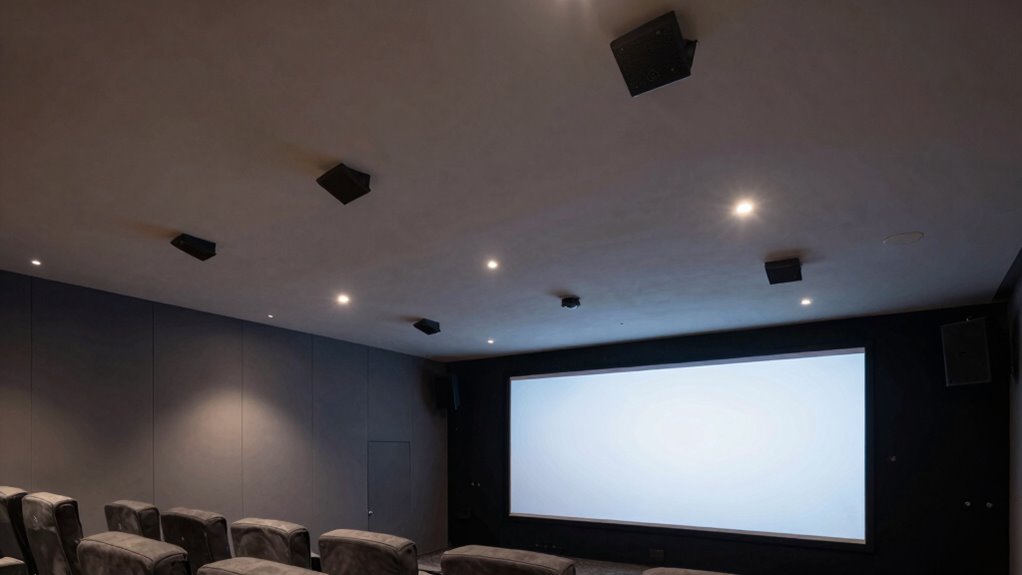
Many people have misconceptions about Dolby Atmos, often believing myths that can lead to confusion about its capabilities. To clear things up, it’s important to do some myth busting and address misinformation spread about this technology. Here are four common myths:
Many misconceptions about Dolby Atmos can lead to confusion; let’s bust some myths for clearer understanding.
- You need ceiling speakers for Atmos – While ideal, upfiring speakers can create a convincing overhead effect. Proper speaker placement is crucial for optimal sound immersion.
- All content supports Atmos – Not true; Atmos content is still limited, but growing.
- Any speaker setup can deliver Atmos sound – Proper placement and compatible equipment matter.
- Atmos guarantees theater-quality sound – It enhances immersion but depends on setup and content quality.
Knowing the facts helps you avoid falling for misinformation spread by misconceptions, ensuring you get the most out of Dolby Atmos. Additionally, understanding the style of speaker setup can significantly impact the overall audio experience.
What Features Make a Dolby Atmos Setup Truly Immersive?
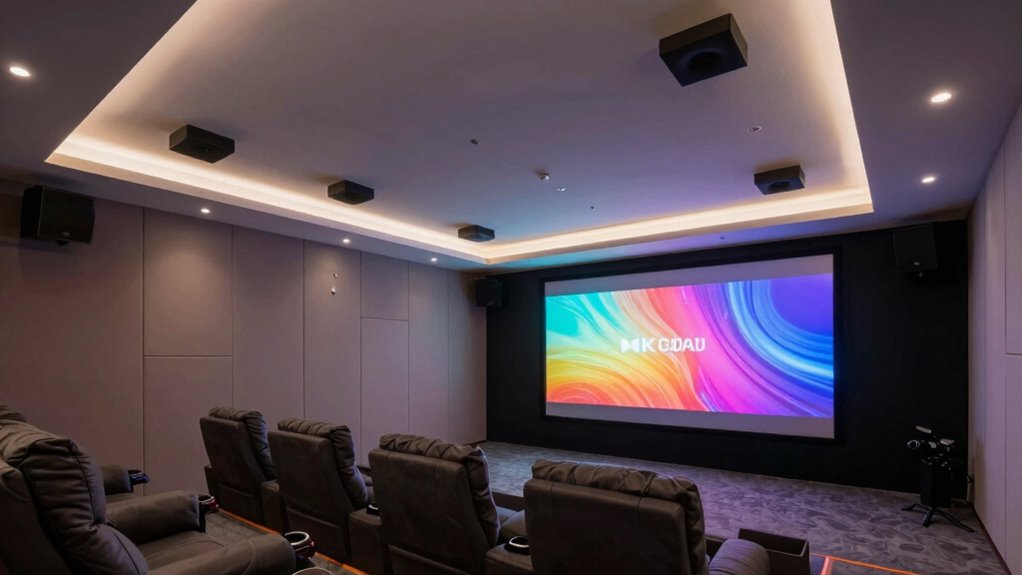
Creating a truly immersive Dolby Atmos setup hinges on several key features that work together to deliver a mesmerizing sound experience. Proper speaker calibration is essential; it ensures each speaker is balanced and positioned correctly, allowing the system to accurately reproduce sound layers. Equally important are room acoustics, which influence how sound waves travel and reflect within your space. Treating surfaces with acoustic panels or diffusers can reduce unwanted echoes and enhance clarity. Ceiling speakers or upfiring modules must be integrated seamlessly, with calibration tools used to optimize their placement and output. When you prioritize precise calibration and consider your room’s acoustics, you create an environment where Atmos’s height effects and spatial audio truly shine, immersing you in a richer, more realistic soundscape. Additionally, using measurement microphones can help fine-tune your system for optimal performance.
Should You Budget or Invest in a Premium Dolby Atmos System?

Deciding between budget-friendly options and premium Dolby Atmos systems depends on your priorities and budget. While affordable setups can still deliver impressive sound, investing in a premium system often enhances clarity and immersion. Consider what level of audio quality you want to experience and how much you’re willing to spend. Incorporating sound quality considerations into your decision-making process can help you choose the best option for your needs. Additionally, understanding home theater protocols can ensure optimal setup and performance for your system. Being aware of system scalability can also help you choose a configuration that can evolve with your preferences and technological advancements. Exploring multi-unit setups can further expand your audio experience and accommodate larger or more versatile home theater spaces. Moreover, paying attention to calibration techniques can significantly improve overall sound performance and balance within your system.
Budget-Friendly Options
Are you wondering whether to opt for a budget-friendly Dolby Atmos setup or invest in a premium system? If budget’s a concern, consider these options:
- Choose a soundbar with built-in Dolby Atmos compatibility to save space and money.
- Explore wireless options to avoid clutter and simplify installation.
- Prioritize models with upfiring speakers that deliver immersive sound without extra components.
- Focus on versatile setups that work with existing equipment, making upgrades more feasible.
- Keep in mind that commercial kitchen equipment like globes and freezers can sometimes be repurposed for audio setup storage or organization, offering creative solutions.
While budget setups may lack the depth of high-end systems, they still provide a noticeable Atmos experience. By selecting versatile, compatible, and wireless solutions, you can enjoy Atmos effects without breaking the bank. It’s about balancing affordability with effective sound quality.
Premium Investment Benefits
While budget-friendly options make Dolby Atmos accessible, investing in a premium system offers significant advantages for true audiophiles. A high-end setup delivers richer, more immersive surround sound, transforming your home theater experience. You’ll notice clearer dialogue, more precise instrument placement, and a sense of depth that budget systems can’t match. Plus, premium equipment often features better build quality and future-proofing, ensuring your system remains relevant as technology advances. Consider the following benefits:
| Benefit | Description |
|---|---|
| Superior Sound Quality | Enhanced clarity and surround sound immersion |
| Longevity | Durable components for lasting performance |
| Customization | Tailored setup for your space and preferences |
| Resale Value | Higher value if you upgrade later |
Additionally, understanding the acoustic design of your space can maximize the benefits of a premium Dolby Atmos system.
Do You Need Special Content or Equipment for Dolby Atmos?

To experience Dolby Atmos, you don’t necessarily need special content or equipment, but having the right setup can make a significant difference. Most Atmos-compatible content meets specific content requirements and adheres to technical specifications, ensuring proper sound placement. Here are four key points to consider:
- Not all movies or shows are Atmos-enabled, so check for compatible content.
- Streaming platforms may require specific subscriptions or app versions.
- Your equipment must support Atmos decoding—this includes receivers and players.
- Dolby Atmos files often have higher bitrates, demanding better bandwidth or storage.
While special content enhances the experience, many modern devices can process Atmos soundtracks without extra fuss. Focusing on compatible content and equipment ensures you get the immersive audio Dolby Atmos promises.
Is Upgrading to Dolby Atmos Worth It? (Pros, Cons, and Real Benefits)
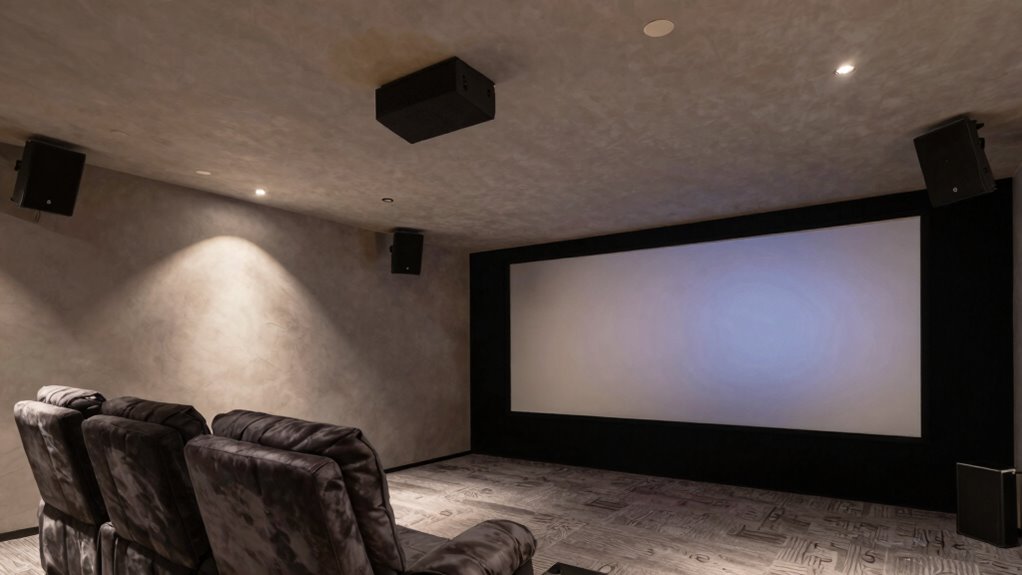
Upgrading to Dolby Atmos can considerably boost your audio quality and create a more immersive listening experience. However, it often involves installation challenges and higher costs that you should consider. Weighing these pros and cons will help you decide if the upgrade is truly worth it for you.
Audio Quality Improvements
Dolby Atmos considerably enhances audio quality by creating a more immersive and dynamic listening experience. It improves spatial accuracy, making sounds seem to come from specific directions and heights, and boosts sound clarity, so details are sharper. This upgrade offers four key benefits:
- Precise localization of sound, enriching your sense of space.
- Clearer dialogue and effects, reducing muddiness.
- Greater depth, adding realism to movies and music.
- Consistent quality across various content, ensuring a more engaging experience.
Installation Challenges and Costs
While the audio improvements of Dolby Atmos are impressive, installing the system can pose several challenges and involve significant costs. One major factor is installation costs, which can vary depending on your room size and existing setup. You might need additional equipment like ceiling speakers or upfiring modules, increasing expenses. Plus, a professional setup is often necessary to guarantee ideal placement and calibration, adding to overall costs. If you attempt a DIY installation, you risk poor sound quality or damage to your equipment. Keep in mind that upgrading to Dolby Atmos isn’t just about buying new gear; it requires careful planning and potentially costly modifications to your space. Weighing these installation challenges and expenses against the benefits will help determine if Atmos is a worthwhile investment for you.
Immersive Experience Benefits
Experiencing sound that surrounds you from all directions is one of the biggest advantages of Dolby Atmos. It creates a truly immersive surround sound experience, making you feel like you’re inside the action. Proper speaker calibration is key to maximizing this benefit, ensuring sound is evenly distributed and positioned accurately. Here are four ways Dolby Atmos enhances your experience:
- Precise audio placement, for a realistic soundstage
- Height channels add vertical dimension, heightening immersion
- Dynamic sound movement, making scenes more engaging
- Enhanced clarity, allowing you to catch subtle details
These benefits make your viewing or listening sessions more mesmerizing and realistic. The immersive experience relies heavily on correct speaker calibration and a well-designed setup, amplifying the magic of surround sound.
Frequently Asked Questions
Can Existing Speakers Be Upgraded to Support Dolby Atmos?
You can upgrade your existing speakers to support Dolby Atmos by checking their compatibility and considering upgrade options. If your current setup isn’t compatible, you might need to replace or add upward-firing or ceiling speakers designed for Atmos. Some receivers also support Atmos processing, so upgrading your AV receiver can enhance your system’s capabilities. Make sure to research your specific equipment to guarantee seamless integration and ideal sound performance.
How Does Room Size Affect Dolby Atmos Performance?
Room size profoundly impacts Dolby Atmos performance because larger rooms can weaken sound clarity if not properly managed. You need to optimize room acoustics and speaker placement to guarantee immersive audio. In bigger spaces, consider adding more ceiling or upfiring speakers to fill the area evenly. Properly tuning your system and adjusting speaker positions help maintain the desired surround effect, regardless of room size.
Are Dolby Atmos Soundbars as Effective as Dedicated Speakers?
You’ll find that Dolby Atmos soundbars can be quite effective, especially with wireless connectivity that simplifies setup. However, dedicated speakers often deliver richer, more precise sound because of ideal speaker placement and customization options. While soundbars provide a sleek, all-in-one solution, for the best Atmos experience, placing dedicated speakers correctly and ensuring good wireless connectivity can make a significant difference.
What Is the Difference Between Dolby Atmos and Other Surround Sound Formats?
You know what they say, “seeing is believing.” Dolby Atmos differs from other surround sound formats because it employs object-based audio, creating immersive sound that moves freely around you. Unlike traditional channels, Atmos adds height and dimension, making sounds come from above. This results in a richer, more realistic experience, elevating your home theater to new heights. It’s all about delivering a more lifelike, three-dimensional soundscape.
How Can I Optimize My Room for the Best Atmos Experience?
To optimize your room for the best Atmos experience, start with proper speaker placement, ensuring your ceiling or upfiring speakers are correctly positioned for immersive sound. Add acoustic treatments like panels and bass traps to reduce echoes and improve clarity. Keep furniture away from walls, and consider a dedicated space for better sound control. These steps enhance your setup, delivering richer, more accurate Atmos audio.
Conclusion
Now that you know how Dolby Atmos works and the best setup options, you can make an informed decision. Whether you go all-in or stick with a simpler system, it’s worth giving a shot—you might just find your home theater truly comes alive. Remember, Rome wasn’t built in a day, so take your time to choose the right components and placement. With patience, you’ll be enjoying immersive sound that truly elevates your movie nights.