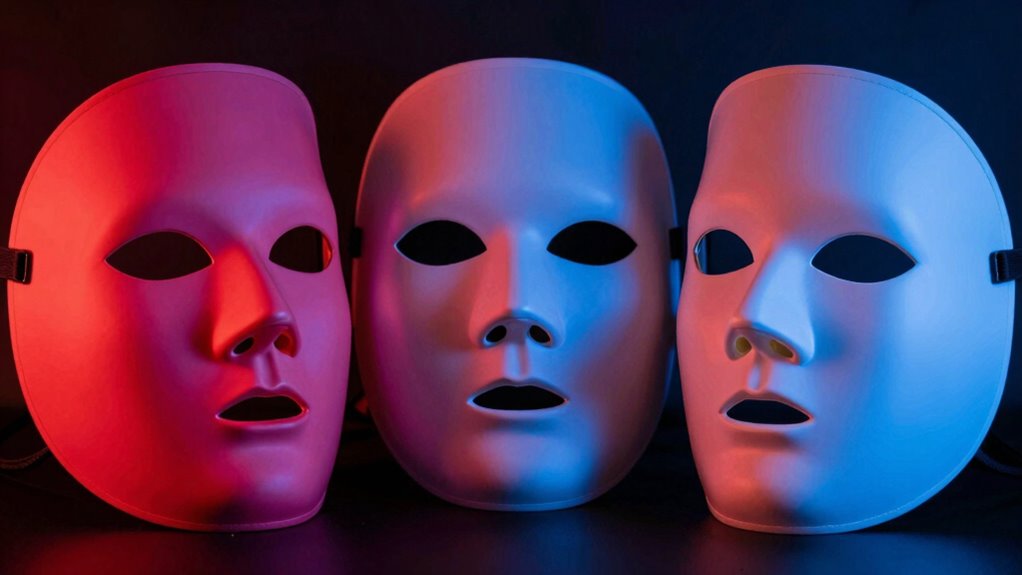

LED face masks use different light colors to target various skin concerns. Red light stimulates collagen production and promotes skin renewal, helping with aging signs. Blue light targets bacteria, reducing acne and inflammation. Near-infrared penetrates deeper, boosting healing and circulation for overall skin health. Each color offers specific benefits, so choosing the right one depends on your goals. Keep exploring to discover how these lights can transform your skin effectively.
Key Takeaways
- Red light stimulates collagen production, promoting skin firmness and reducing wrinkles.
- Blue light targets acne-causing bacteria, helping clear skin without medication.
- Near-Infrared (Near-IR) light penetrates deeper, enhancing skin healing and reducing inflammation.
- Light color choice depends on skin goals like anti-aging, acne treatment, or skin healing.
- Proper absorption of specific wavelengths ensures effective, targeted skin benefits.
How Do LED Face Masks Work on Your Skin?
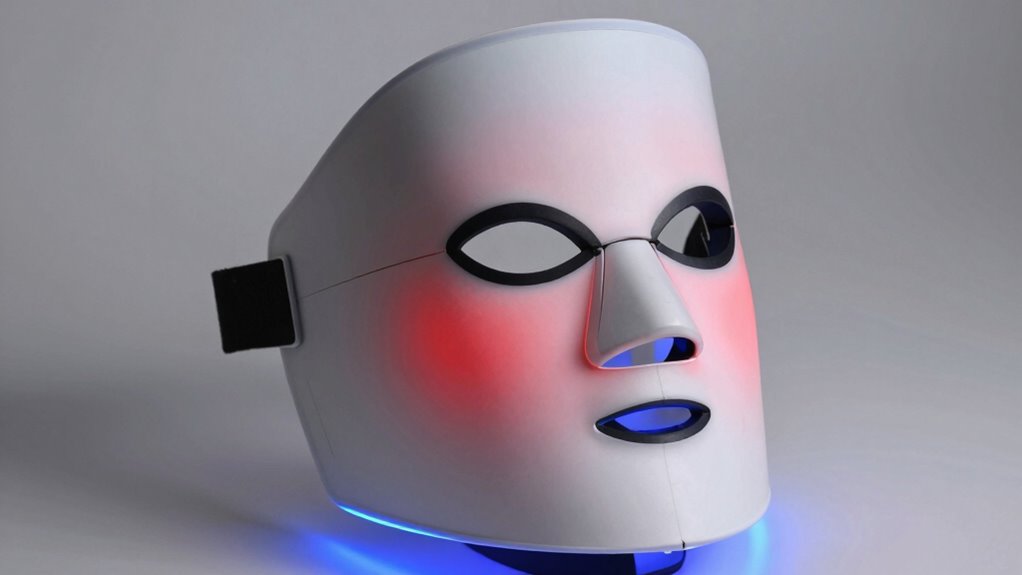
LED face masks work by emitting specific wavelengths of light that penetrate your skin at different depths. This process relies on how well your skin absorbs the light, which determines how effectively the treatment works. When you turn on the mask, the light penetrates your skin layers, reaching cells that respond to particular wavelengths. Light penetration varies based on the color and intensity of the light, allowing targeted effects. For example, certain wavelengths are absorbed more readily by skin tissues, stimulating cellular activity or triggering responses that can improve your skin’s appearance over time. Your skin’s ability to absorb the light is vital for maximizing the benefits of LED therapy. Proper skin absorption ensures the light reaches the deeper layers where it can promote healing or rejuvenation. Additionally, the contrast ratio of the light source can influence how effectively the skin responds to treatment by affecting the brightness and clarity of the emitted light. Understanding the light absorption properties of your skin can help optimize treatment outcomes and ensure safety.
Furthermore, individual differences in skin type can affect how well the light penetrates and responds to therapy, emphasizing the importance of personalized treatment plans.
What Does Red Light Therapy Do for Your Skin?
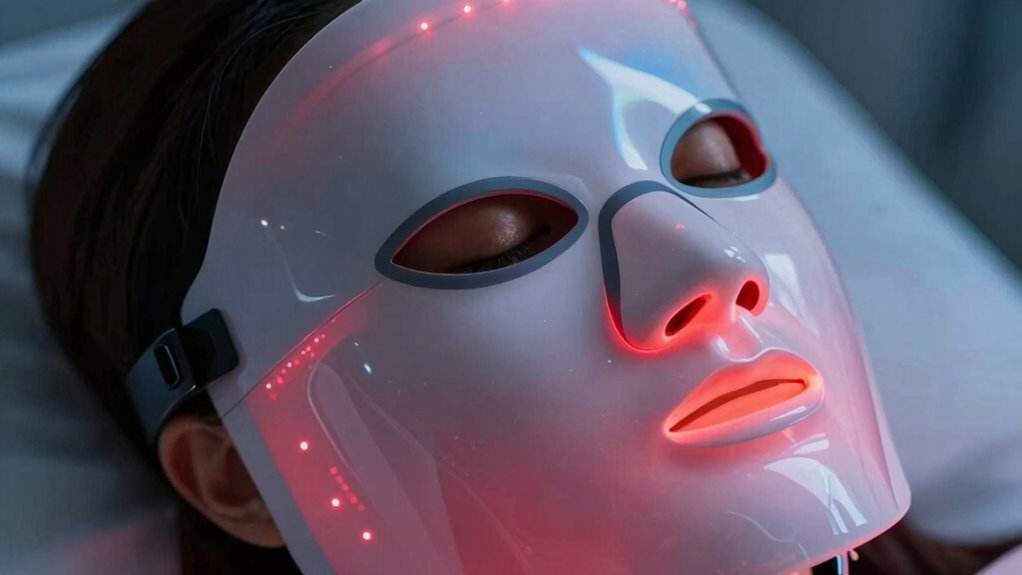
Red light therapy targets your skin by penetrating its layers to stimulate cellular activity. This process promotes skin rejuvenation by encouraging your cells to produce more energy, which helps repair damage and improve overall skin health. One of the key benefits is collagen stimulation, a crucial protein that keeps your skin firm and elastic. As you age, collagen production declines, leading to sagging and wrinkles. Red light therapy helps reverse this process, smoothing fine lines and restoring a more youthful appearance. It’s a non-invasive way to boost your skin’s natural healing abilities, making it look fresher and more vibrant. Regular use can enhance texture, reduce signs of aging, and support your skin’s ongoing renewal process without harsh chemicals or downtime. Additionally, understanding the cosmetically beneficial effects of light therapies can help you make more informed decisions about skincare treatments. Understanding light therapy can further optimize your skincare routine and results. Research shows that consistent treatment can lead to long-term improvements in skin quality and resilience, especially when combined with other skin health strategies. Incorporating light therapy devices into your skincare routine can maximize these benefits.
How Blue Light Helps Clear Acne and Bacteria?
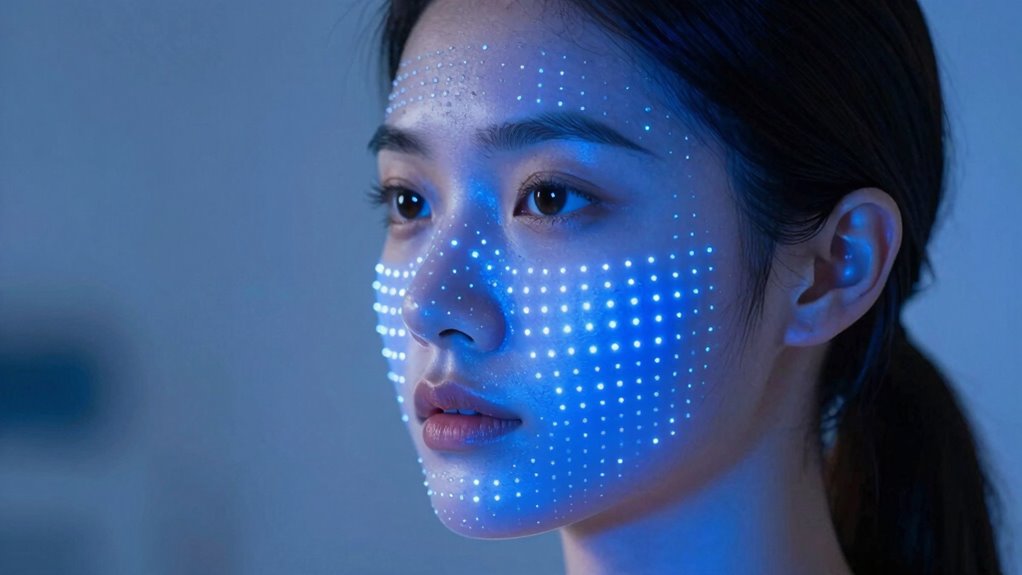
Blue light penetrates your skin to target the bacteria responsible for acne, effectively reducing breakouts. Acne bacteria, known as Propionibacterium acnes, thrive in clogged pores and contribute to inflammation. When exposed to blue light, these bacteria absorb the light energy, which destroys them without harming your skin. This process decreases the bacteria count on your skin, leading to fewer pimples and less redness. Blue light therapy is a non-invasive, drug-free method that can be integrated into your skincare routine. Regular use helps control acne-causing bacteria and prevents future breakouts. You’ll notice clearer skin over time as the blue light reduces bacterial load and calms inflammation, making it a popular choice for those seeking a safe, effective acne treatment. Additionally, blue light is used in smart home technology devices to promote relaxation and improve sleep quality through circadian support.
Blue light therapy is also appreciated for its minimal side effects, making it suitable for sensitive skin types without significant risk of irritation. Moreover, studies show that blue light can support skin healing and promote overall skin health when used appropriately. The wavelength specificity of blue light ensures that it targets bacteria effectively while minimizing damage to surrounding tissue. As research advances, the development of combination light therapies offers promising enhancements to traditional blue light treatment.
What Is Near-Infrared Light Used for in Facial Masks?

Have you wondered how near-infrared light enhances your skincare routine? Near-infrared light penetrates deeper into your skin than visible light, reaching layers that other wavelengths can’t access. This infrared penetration stimulates cellular activity, promoting skin rejuvenation and healing. It helps boost circulation, which delivers oxygen and nutrients more efficiently to your skin cells, supporting repair and renewal. Many users turn to near-infrared in facial masks for its ability to reduce inflammation and improve skin texture over time. Unlike visible light, near-infrared doesn’t cause redness or irritation, making it suitable for sensitive skin. Additionally, microbiome health can be supported by safe light therapies that avoid disrupting the skin’s natural bacteria balance. By encouraging natural regenerative processes, near-infrared light can contribute to a healthier, more youthful complexion with consistent use. Understanding light therapy benefits can help you maximize your skincare results safely. Moreover, penetration depth varies among light wavelengths and influences their effectiveness in skin treatments. Properly understanding wavelength properties can help you choose the most effective light therapy for your skin concerns.
How to Choose the Best LED Mask for Your Skin Goals
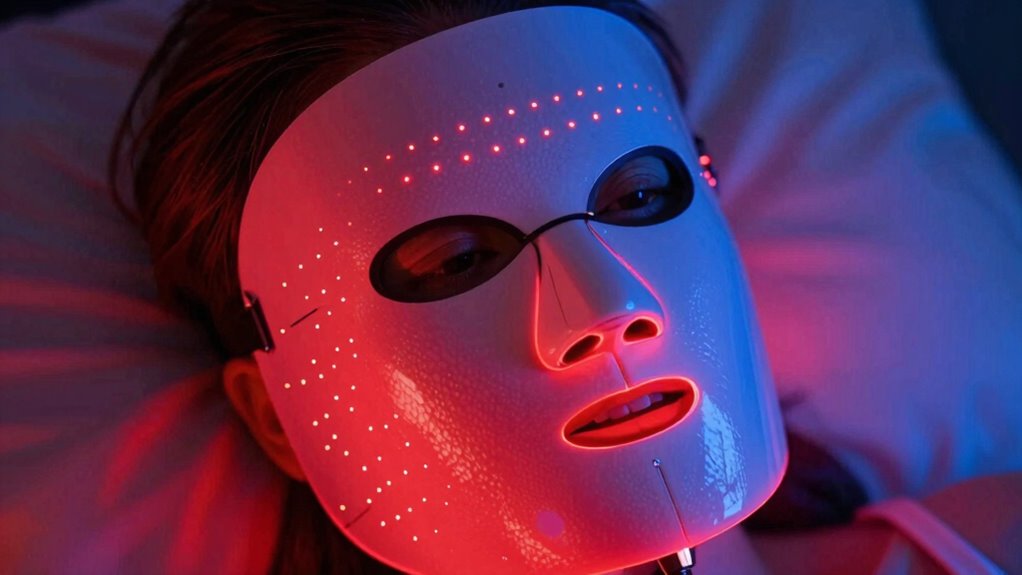
Choosing the right LED mask depends on your specific skin goals and concerns. If you’re aiming for skin rejuvenation, look for masks that use red or near-infrared light, which stimulate collagen production and improve skin elasticity. For pigmentation correction, blue light masks are effective at targeting acne-causing bacteria and reducing dark spots. Consider your skin type and sensitivity—some masks offer multiple wavelengths for thorough treatment. Read product descriptions carefully to make certain they target your goals. Also, check the mask’s intensity and session duration to avoid overexposure. Consistency is key, so select a mask you can use regularly. By matching the light color to your skin concerns, you’ll maximize benefits and achieve healthier, more radiant skin.
Frequently Asked Questions
Are LED Masks Suitable for All Skin Types and Tones?
Yes, LED masks are generally suitable for all skin types and tones. Their device versatility allows you to customize treatments based on your skin’s needs, making them safe for sensitive or darker skin tones. However, it’s important to follow the manufacturer’s guidelines and consult a dermatologist if you have specific skin concerns. With proper use, LED masks can effectively improve your skin regardless of your skin tone.
How Often Should I Use an LED Face Mask for Optimal Results?
You should use your LED face mask 3 to 5 times a week, striking a balance that fits your skin’s needs. Following the frequency guidelines, you’ll see the best results by establishing an ideal scheduling routine. Consistency is key, so set aside time for your sessions, but avoid overdoing it, as giving your skin time to recover enhances the benefits. Stick with this plan, and you’ll notice improvements over time.
Can LED Masks Cause Any Side Effects or Skin Irritation?
LED masks can cause side effects or skin irritation if you have sensitive skin or if the device isn’t used properly. Skin sensitivity varies, so start with shorter sessions and monitor your skin’s response. Make sure to follow the manufacturer’s instructions for device safety. If you notice redness, irritation, or discomfort, stop use and consult a dermatologist. Proper use minimizes risks and guarantees safe, effective results.
What Safety Precautions Should I Follow During LED Light Therapy Sessions?
During LED light therapy sessions, you should wear eye protection to shield your eyes from the light. Keep your sessions within the recommended duration to avoid overexposure, which can cause skin irritation or discomfort. Follow the manufacturer’s instructions carefully, and if you experience any redness or irritation, stop using the device and consult a dermatologist. Always make certain your skin is clean and free of products before starting.
Do LED Face Masks Replace Professional Dermatological Treatments?
LED face masks don’t replace professional dermatological treatments, but they’re a handy DIY alternative for skin maintenance. While professional sessions offer tailored, intensive care, masks are more affordable and convenient for regular use. Think of them as supplements, not substitutes. You can enjoy cost comparisons and ease of use, but for complex skin issues, consulting a dermatologist remains essential. Use masks for routine care, but don’t rely on them solely for serious concerns.
Conclusion
Understanding the different LED light colors helps you choose the right mask for your skin goals. Red light boosts collagen, blue fights bacteria, and near-infrared promotes healing. Did you know that over 80% of users see noticeable improvements in their skin after just a few weeks? By selecting the right LED therapy, you can confidently target your skin concerns and enjoy healthier, clearer skin without the hype—just proven results.